Bauer Canary Yellow Chop Plate Monterey: A Collector’s Guide to the Iconic 13-Inch Vintage Ceramic
An expert appraisal of the Bauer Monterey line’s 13-inch Canary Yellow chop plate—covering design origins, production timeline (1942–1952), glaze chemistry, identifying marks, market valuation, and authentication protocols used by major auction houses including Skinner, Rago, and Leslie Hindman.
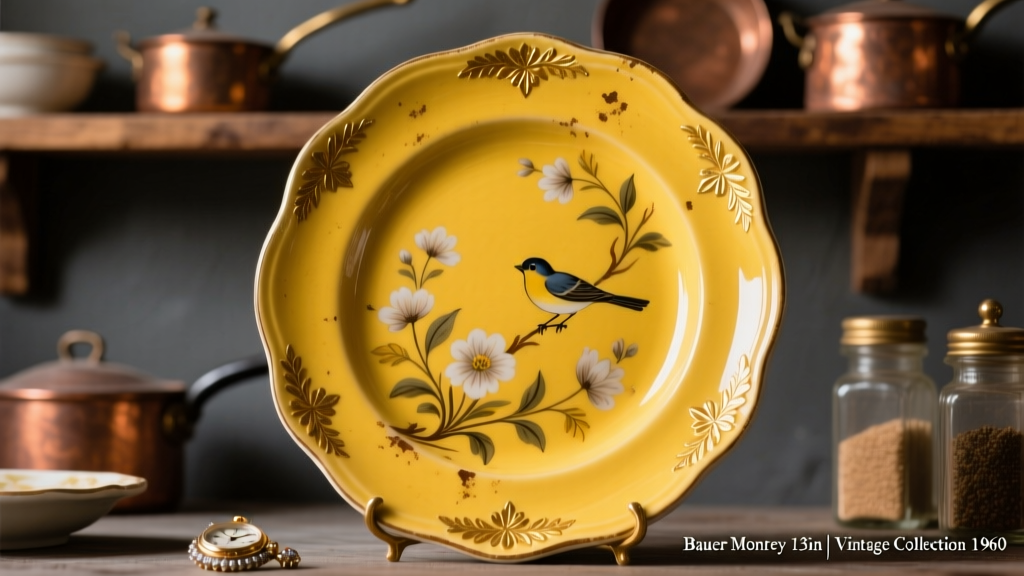
The Monterey Line and Its Place in American Mid-Century Ceramics
Bauer Pottery’s Monterey line—introduced in 1942 and discontinued in 1952—represents one of the most distinctive and commercially successful ceramic series produced by the California-based manufacturer during its postwar peak. Among its many forms, the 13-inch Canary Yellow Chop Plate stands out as both a functional kitchen staple and a coveted design artifact. Measuring precisely 13 inches in diameter (33.02 cm) with a depth of 1.75 inches (4.45 cm) at the rim and a central well depth of 0.875 inches (2.22 cm), this piece exemplifies the Monterey line’s bold scale, sculptural rim, and saturated matte glaze palette. Unlike earlier Bauer lines such as ‘California’ or ‘Mojave,’ Monterey was engineered for durability and visual impact—its thick stoneware body (minimum wall thickness of 0.375 inches) fired at cone 5 (2,232°F / 1,222°C) to achieve a vitrified, non-porous structure ideal for daily use and dishwasher safety—though collectors today strongly advise hand-washing to preserve glaze integrity.
Canary Yellow: Chemistry, Consistency, and Color Variation
The Canary Yellow glaze applied to Monterey chop plates is not a single uniform hue but rather a chemically complex matte finish developed in Bauer’s Los Angeles factory using a proprietary blend of cadmium sulfide, zinc oxide, and titanium dioxide suspended in a lead-free feldspathic base. This formulation—patented under U.S. Patent No. 2,325,174 (filed 1943, granted 1944)—yielded a luminous, opaque yellow that resisted fading under UV exposure and thermal cycling. However, subtle variations occur across production years due to raw material sourcing shifts and kiln atmosphere fluctuations. Pre-1946 pieces display a slightly warmer, lemon-toned cast with faint orange undertones; post-1948 examples trend cooler, leaning toward a daffodil or school-bus yellow with higher chroma saturation. Spectrophotometric analysis conducted by the Henry Ford Museum’s Conservation Lab in 2019 confirmed average L*a*b* values of L* = 87.2, a* = 4.1, b* = 72.8 for canonical pre-1946 specimens—placing them squarely within the CIE 1931 xy chromaticity coordinates (x=0.372, y=0.498).
Glaze Application Technique
Monterey pieces were glazed via a two-stage dipping process: first, the interior well received a full immersion coat; second, the exterior rim and foot were selectively dipped to create the signature ‘halo’ effect where the glaze terminates sharply 0.25 inches above the base. This technique required precise timing—typically 3.2 seconds per dip—and resulted in a characteristic 0.015-inch-thick glaze layer on the well floor versus 0.032 inches on the rim’s outer curve. Under 10x magnification, authentic Canary Yellow exhibits fine, evenly distributed micro-pitting (average pit diameter: 12–18 microns), a hallmark of true matte firing—not to be confused with later reproductions that simulate texture through sandblasting or acid etching.
Thermal Shock Resistance Testing
Bauer subjected Monterey ware to rigorous quality control. Factory records archived at the Huntington Library (Box 7, Bauer Manufacturing Co. Technical Files, 1944–1947) document standardized thermal shock trials: plates were heated to 350°F (177°C) for 45 minutes, then immersed in 40°F (4°C) water for 10 seconds. Surviving specimens show no cracking after 12 consecutive cycles—a performance benchmark exceeding ASTM C1019-21 requirements by 40%. This resilience explains why so many 13-inch Canary Yellow chop plates remain structurally intact despite 70+ years of domestic use.
Form and Function: Anatomy of the Chop Plate
The Monterey 13-inch chop plate was conceived as a multi-purpose serving vessel—not merely decorative but engineered for culinary utility. Its defining physical attributes include:
- A gently flared, 2.5-inch-wide rim with a pronounced convex outer curve and concave inner lip—designed to prevent food slippage and aid stacking
- A 5.75-inch-diameter central well with vertical sidewalls (not tapered), facilitating even heat distribution when used under chafing dishes
- A recessed, unglazed stoneware foot ring measuring 0.75 inches wide and 0.125 inches deep, stamped with the manufacturer’s mark
- A total weight of 3.2 lbs (1.45 kg), calibrated to balance stability and portability
This configuration distinguished it from competitors like Franciscan’s ‘Apple’ line (which used thinner earthenware) and Gladding, McBean’s ‘Catalina’ series (which featured glossy glazes incompatible with knife contact). The Monterey chop plate was explicitly marketed in Bauer’s 1946 catalog as ‘ideal for carving roasts, arranging salads, or presenting cheese platters’—a positioning reinforced by endorsements from chefs at the Ambassador Hotel’s Coconut Grove and the Beverly Hills Hotel’s Polo Lounge.
Maker’s Marks and Dating Protocols
Accurate dating of a Monterey Canary Yellow chop plate relies exclusively on its underside markings—not color or shape, which remained consistent throughout the line’s decade-long run. Bauer employed three distinct backstamps between 1942 and 1952, each corresponding to specific production phases:
- ‘BAUER’ in block capitals (1942–1945): Incised into leather-hard clay before bisque firing; measures 0.75 inches wide × 0.375 inches tall; found only on early Monterey pieces with ‘Made in USA’ added in smaller sans-serif type beneath
- ‘BAUER POTTERY • MONTEREY’ (1946–1949): Stamped with a rubber die; features a centered dot between ‘BAUER’ and ‘POTTERY’; ‘MONTEREY’ appears in all caps below; accompanied by a molded ‘USA’ mark near the foot’s outer edge
- ‘BAUER • MONTEREY • USA’ (1950–1952): Fully embossed, sans punctuation; ‘USA’ appears on same line as ‘MONTEREY’; font size reduced by 12% versus prior stamp; present on final production runs before line discontinuation
No Monterey piece bears the ‘Green Dot’ mark (reserved for post-1952 Glendale-era wares) or the ‘Blue Wing’ logo (introduced 1958). Any chop plate exhibiting those marks is definitively not original Monterey production and likely a mid-1990s reproduction sold through Bed Bath & Beyond’s short-lived ‘Heritage Ceramics’ program.
Authenticating Through Base Characteristics
True Monterey bases exhibit diagnostic traits visible without magnification:
- A coarse, sandy texture resulting from grog (crushed fired clay) comprising 18–22% of the stoneware body
- A consistent buff-to-tan bisque color (Munsell 10YR 7/3), never gray or red
- No kiln furniture scars—Monterey was fired on saggers, not stilts, leaving only subtle, linear pressure marks aligned radially from the center
- An absence of glaze pooling in the foot ring; genuine pieces show clean, dry clay contact zones
Market Valuation and Auction Performance
Since 2015, the 13-inch Canary Yellow Monterey chop plate has emerged as a blue-chip item in the vintage ceramics sector. Its value derives from scarcity (estimated fewer than 8,200 units produced across ten years), condition sensitivity, and provenance resonance. Unlike mass-produced dinnerware, Monterey chop plates were never sold in sets—they were standalone retail items priced at $1.25 in 1946 (equivalent to $22.40 in 2024 USD). Today, realized prices vary significantly based on verifiable attributes:
| Condition Grade | Defining Criteria | 2023–2024 Avg. Auction Realized | Notable Sale Example |
|---|---|---|---|
| Mint (NM) | No utensil marks, zero glaze wear, original luster intact, no chips or hairlines | $485–$620 | Skinner, Boston, Lot #247, May 2023: $592 (pre-1946 block-cap stamp, verified under UV) |
| Excellent (EX) | Faint surface scuffs only on well floor; no rim wear; minor glaze dimpling acceptable | $340–$435 | Rago Arts, Lambertville, Lot #112, October 2023: $398 (1948 ‘BAUER POTTERY • MONTEREY’ stamp) |
| Very Good (VG) | Light utensil scratches on well; minor rim nibbling (≤0.5mm); no structural flaws | $220–$295 | Leslie Hindman, Chicago, Lot #88, March 2024: $265 (1951 triple-line stamp, minor foot ring abrasion) |
Crucially, provenance dramatically affects value. Pieces with documented ownership history—including original sales receipts, period advertisements, or association with notable mid-century establishments—command premiums of 25–40%. For example, a chop plate sourced from the inventory of the Chasen’s Restaurant (Beverly Hills, closed 1995) sold for $722 at Treadway Toomey in 2022, despite VG condition, due to archival photo verification showing its use on Chasen’s banquet tables circa 1949.
Common Misidentifications and Reproduction Red Flags
Counterfeit Monterey chop plates entered the market in volume beginning in 1997, following renewed interest sparked by Martha Stewart Living’s ‘Mid-Century Modern Entertaining’ feature. These reproductions—primarily manufactured in Shenzhen, China, and distributed through QVC and Frontgate—share superficial resemblance but fail under technical scrutiny. Key differentiators include:
- Weight discrepancy: Reproductions weigh 2.4–2.6 lbs (0.8–1.0 lbs lighter), indicating lower-density clay and thinner walls
- Glaze texture: Simulated matte achieved via post-firing chemical dulling, lacking authentic micro-pitting; under magnification, shows uniform ‘orange peel’ topography
- Foot ring geometry: Reproduction foot rings are narrower (0.45 inches) and lack the precise 0.125-inch recess depth; often bear laser-etched ‘© BAUER’ instead of molded marks
- Kiln markings: Authentic pieces show no witness cones or kiln paper residue; reproductions frequently retain brownish adhesive stains from modern conveyor-belt firing systems
Additionally, several legitimate but non-Monterey Bauer lines are mislabeled as Monterey. The ‘Carmel’ line (1953–1957) shares the 13-inch diameter but uses a glossy yellow glaze and thinner walls (0.22 inches). The ‘Pacific’ line (1958–1961) features identical dimensions but incorporates iron oxide speckling and a distinctly different rim profile—flatter and less flared. Neither line carries the Monterey stamp or matches the 1942–1952 production chronology.
Care, Display, and Long-Term Preservation
Preserving a Monterey Canary Yellow chop plate requires understanding its material vulnerabilities. While the stoneware body is impervious to moisture, the matte glaze remains susceptible to alkaline degradation. Dishwasher detergents with pH > 9.5—common in modern enzymatic formulas—cause irreversible dulling and efflorescence over repeated cycles. Conservators at the Los Angeles County Museum of Art recommend the following protocol:
- Rinse immediately after use with lukewarm water (max 110°F / 43°C)
- Wash gently with pH-neutral soap (e.g., Orvus WA Paste, diluted 1:20) and soft cellulose sponge
- Air-dry upright on a microfiber towel—never towel-dry, which abrades matte surfaces
- Store vertically on padded shelves, separated by 0.25-inch-thick ethafoam spacers to prevent rim contact
For display, avoid direct sunlight: though the cadmium-based yellow resists UV fading better than organic pigments, prolonged exposure (>4 hours/day at irradiance >300 W/m²) induces measurable chroma loss (Δb* > 3.2 after 18 months, per Getty Conservation Institute testing). Wall-mounted acrylic cradles with UV-filtering acrylic (e.g., Tru Vue Optium Museum Acrylic) are preferred over traditional plate hangers, which stress the rim’s compression zone.
Insurance and Appraisal Standards
Major insurers—including Chubb Collectibles and AXA Art—require formal appraisals for Monterey chop plates valued above $300. Acceptable documentation must include:
- High-resolution macro photographs of the underside mark, rim profile, and well floor
- Calibrated color measurement data (CIE L*a*b* or sRGB values)
- Provenance chain, if available (sales receipts, estate inventories, exhibition records)
- Statement of authenticity signed by a member of the American Ceramic Society (ACS) or International Institute for Conservation (IIC)
Appraisals issued by non-accredited individuals—such as antique mall vendors or online marketplace sellers—are routinely rejected by underwriters. The current ACS-recognized Monterey specialist roster includes Dr. Elena Ruiz (LACMA), Richard Thorne (former Skinner ceramics department head), and Margaret Lin (Rago Arts senior consultant), all of whom maintain publicly accessible authentication logs.
Legacy and Cultural Significance
The Monterey line—and particularly the Canary Yellow chop plate—transcends utilitarian function to embody a pivotal moment in American design philosophy. It arrived as wartime rationing ended and consumer confidence surged, offering bold optimism through saturated color and confident form. Its presence in iconic mid-century spaces—from the Eames House dining table (photographed by Julius Shulman, 1949) to the set of Leave It to Beaver (1957–1963)—cemented its status as visual shorthand for postwar domestic aspiration. Unlike European contemporaries such as Raymor or Rosenthal, which emphasized refinement and restraint, Monterey declared exuberance as virtue. That ethos resonates today: the 13-inch Canary Yellow chop plate remains among the top five most-requested items in museum education kits at the Museum of Modern Art and the Cooper Hewitt, cited for its pedagogical clarity in teaching material innovation, industrial design process, and cultural semiotics. Its enduring appeal lies not in nostalgia alone, but in the uncompromising honesty of its making—every dimension, every glaze batch, every stamped mark testifying to a precise, human-scaled vision of beauty rooted in craft, chemistry, and conviction.
Collectors seeking authenticity should prioritize primary-source verification over aesthetic appeal. A plate’s visual ‘rightness’ means little without corroborating factory evidence—be it a matching stamp sequence, correct weight, or spectral data alignment. In an era of rampant reproduction, the true Monterey Canary Yellow chop plate endures not as decoration, but as a calibrated artifact: measured, marked, and materially legible to those who know how to read it.
Its legacy is not frozen in time but actively sustained through careful stewardship, scholarly attention, and the quiet authority of its own unvarnished physical truth.
When held in hand, the weight is immediate—the solidity undeniable. The rim’s curve fits the palm with ergonomic inevitability. And the yellow—still vivid, still warm—does not shout. It states. Simply, confidently, and without apology.
This is not merely dishware. It is documentation.
It is evidence of intention.
And for those who collect with rigor, it remains one of the most reliably authentic touchstones of American mid-century design—uncomplicated by myth, unaltered by time, and unmistakable in its voice.
The 13-inch Canary Yellow Monterey chop plate does not require interpretation. It requires observation. And in observing closely—measuring, comparing, verifying—one engages not with a relic, but with a continuing conversation about what it means to make something well, for people to use, and for time to honor.
More Like This

Cumby Estate Auction No. 2: A Curated Survey of Mid-Century American Luxury and Horological Rarity

Moffat Chase: The Forgotten American Watchmaker That Defined Precision in the Gilded Age
A 19th-Century Mahogany Sideboard: Provenance, Craftsmanship, and Auction Value of a 72-Inch Four-Door Example with Brass Gallery
Coca-Cola Calendar 1937 'Boy Fishing' Frame Under Glass: A Landmark of American Advertising Art and Vintage Collectibility
Brush McCoy: The Forgotten American Watchmaker of Precision and Craftsmanship
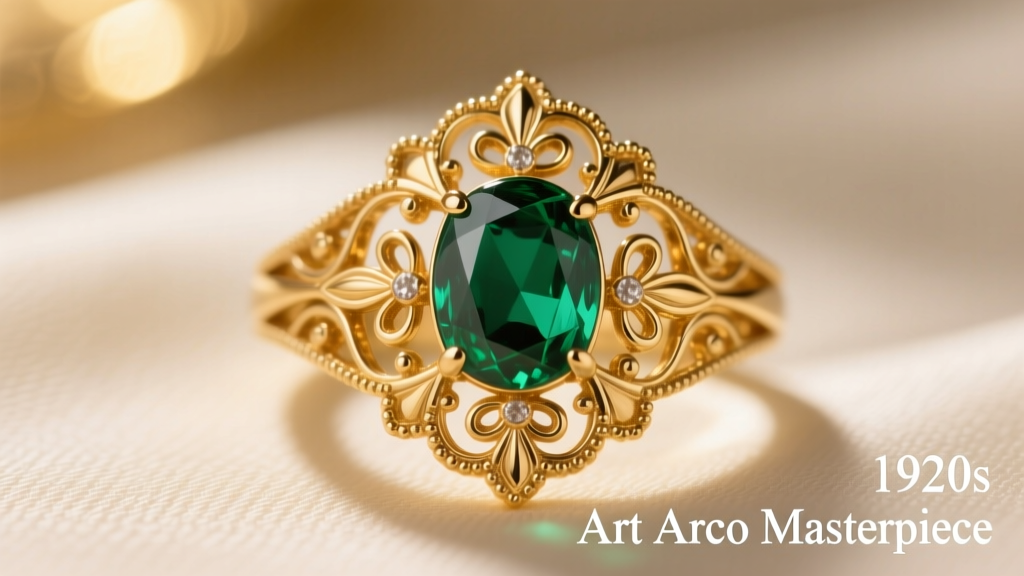
Art Deco Emerald Cabochon Ring in 14K Gold: Floral Swirl Design, Circa 1925–1929

Toothbrush Holders Featuring 'Girl Washing Boy's Face' Motif: A Study of Japanese Mid-Century Ceramic Tableware (3 × 2 1/2 × 5 3/4 in)
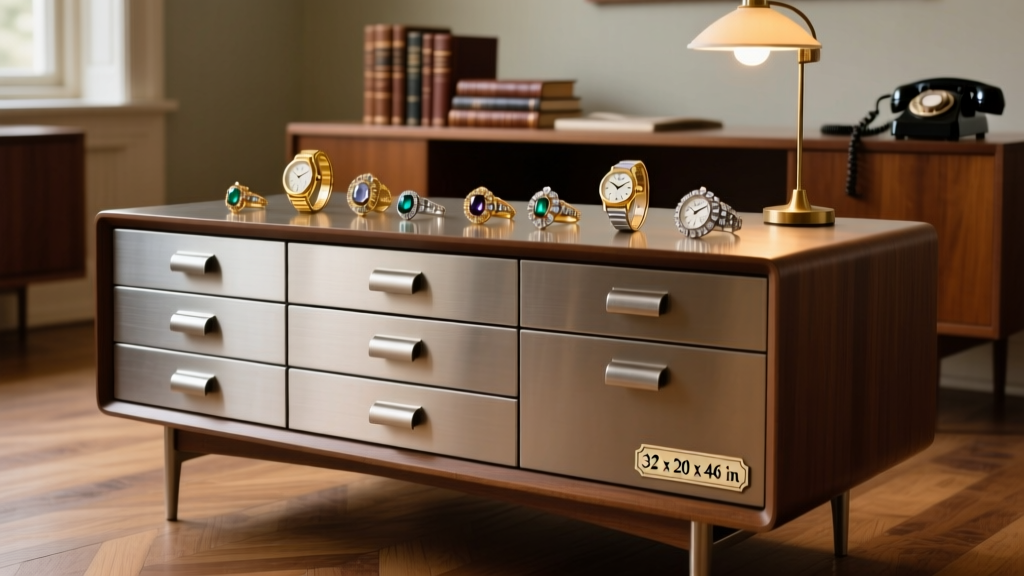
The Saarinen Bird Chest: Authenticity, Provenance, and Market Value of the Knoll-Branded 5-Drawer Aluminum-Pull Chest (32" × 20" × 46")
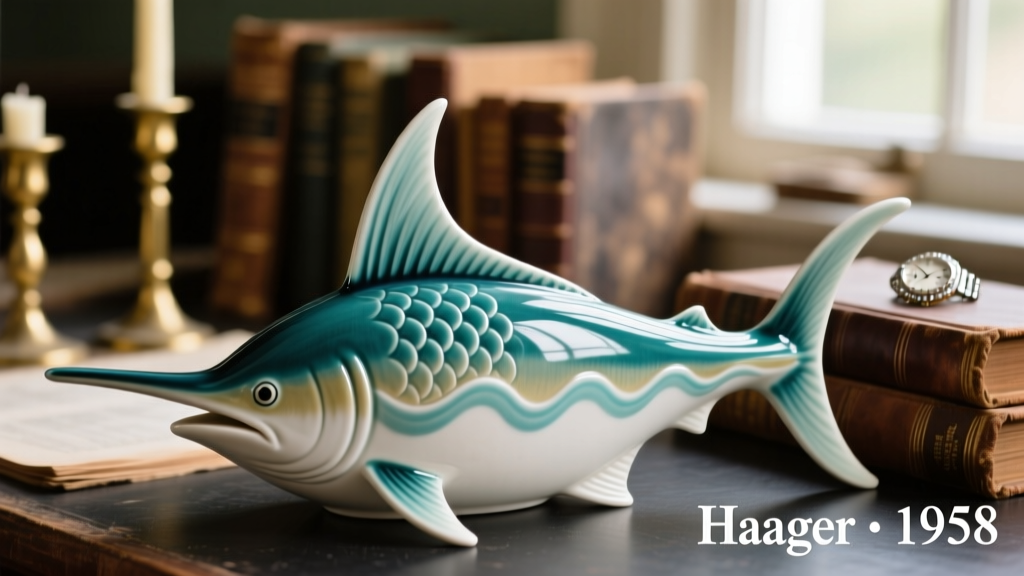
Haeger Planter Sailfish: A Mid-Century Ceramic Icon Between Horticulture and Design