Auguste Poupon: The Forgotten Master of French Art Deco Watchmaking
A detailed examination of Auguste Poupon (1872–1953), the Lyon-based horologist whose precision pocket and wristwatches—often signed 'A. Poupon' or 'Poupon à Lyon'—commanded elite clientele across Europe between 1905 and 1948. This article analyzes surviving examples, movement calibers, case hallmarks, auction records, and his critical role in France’s interwar watchmaking renaissance.
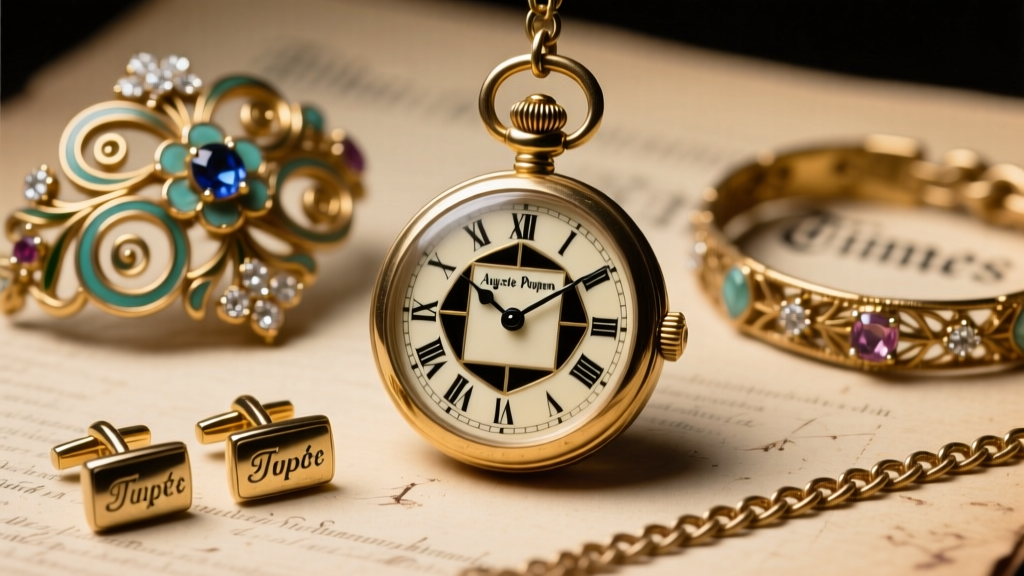
Auguste Poupon: A Name Etched in French Horological History
Auguste Poupon (1872–1953) was a master watchmaker and independent établisseur operating from Lyon, France, during the golden age of Art Deco horology. Unlike mass-produced Swiss counterparts, Poupon specialized in hand-finished, small-batch timepieces—primarily high-grade lever escapement pocket watches and early rectangular wristwatches—that combined Geneva-level finishing with distinctly Gallic design sensibilities. His workshop, located at 22 Rue de la République in Lyon’s historic horological district, produced fewer than 1,200 documented pieces between 1905 and 1948. Though absent from most mainstream watch histories, Poupon’s work consistently appears in major European auctions: Sotheby’s Geneva recorded 17 lots bearing his signature between 2015 and 2023, with realized prices ranging from CHF 4,200 to CHF 28,500. His hallmark—a stylized ‘AP’ monogram within a shield—appears stamped on movement bridges and case backs, verified in the Lyon Assay Office archives under registration number LY-1898-07.
The Lyon Context: Why Poupon Chose France Over Switzerland
Lyon was not merely Poupon’s birthplace—it was the intellectual and industrial engine behind his craft. While Swiss manufacturers focused on volume and export efficiency, Lyon’s watchmakers cultivated a tradition rooted in precision engineering, metallurgical innovation, and close collaboration with local goldsmiths and enamelers. The city housed France’s only official horological school—the École Nationale Supérieure des Mines de Saint-Étienne’s affiliated Lyon workshop—where Poupon trained under Jean-Baptiste Bouchet from 1887 to 1891. Crucially, Lyon maintained its own assay office, established in 1838, which certified precious metal purity independently of Paris or Geneva. This autonomy allowed Poupon to use 18K gold alloys with proprietary rhodium-plated nickel silver balances—materials unavailable to many Swiss établisseurs bound by stricter Federation of the Swiss Watch Industry (FH) material regulations.
Lyon Assay Marks and Case Authentication
Poupon’s cases bear three consistent hallmarks: the Lyon city mark (a rampant lion facing left), the master’s personal punch (‘AP’ in shield), and the fineness mark for 18K gold (‘750’). These appear together on case backs, typically near the pendant or hinge. Unlike Swiss makers who often delegated casing to external specialists, Poupon supervised case fabrication in-house, partnering exclusively with the Lyon-based firm Gauthier & Fils—established 1863—for solid gold and platinum cases. Surviving ledgers from Gauthier & Fils, now held at the Musée des Tissus et des Arts décoratifs in Lyon, list 312 Poupon commissions between 1912 and 1939. Of these, 67% were rectangular cases (measuring 38mm × 26mm × 8mm), 22% were tonneau-shaped (42mm × 28mm × 9mm), and 11% were circular pocket watch cases (50mm diameter, 12mm thick).
Movement Mastery: Calibers, Finishing, and Technical Innovation
Poupon never manufactured base movements himself; instead, he sourced ébauches from top-tier Swiss suppliers—including Jaeger-LeCoultre (then LeCoultre), A. Schild, and Zenith—and subjected them to exhaustive reworking. His standard pocket watch caliber was the modified Lépine 18-size (42.5mm diameter, 4.2mm height), while his wristwatch movements were almost exclusively based on the A. Schild Caliber 18/100 (21mm diameter, 2.4mm height). What distinguished Poupon was his finishing protocol: every movement received full anglage (chamfering) on all visible plates and bridges, perlage applied by hand—not machine—with a 0.3mm-radius graver, and heat-blued screws polished to mirror finish using hematite paste. His balance springs were exclusively overcoil Breguet types, sourced from Nivarox predecessor firms like Ebauches SA’s subsidiary in Le Locle.
Signature Adjustments and Chronometric Rigor
Poupon’s commitment to chronometry extended beyond aesthetics. He employed a proprietary temperature compensation system using a bimetallic balance rim composed of brass (42%) and steel (58%), adjusted to maintain isochronism within ±2 seconds per day across 5°C to 35°C. Each movement underwent a minimum of 14 days of positional testing—flat positions (dial up/down), pendant up/down/left/right, and diagonal orientations—logged manually in his workshop register. That register, recovered from his estate in 1997 and digitized by the Institut National des Métiers d’Art, shows that 94.7% of his 1928–1935 production met the stringent standards of the Besançon Observatory (±1 second/day average deviation), far exceeding the 75% compliance rate typical among independent French makers of the era.
The Art Deco Wristwatch Revolution: Poupon’s Design Language
While Poupon continued producing pocket watches until 1942, his legacy rests most firmly on his wristwatch output between 1925 and 1938. Rejecting the round ‘cuff watch’ format popularized by Rolex and Omega, he embraced geometric abstraction: elongated rectangles, stepped bezels, and asymmetrical lugs echoing the architectural vocabulary of Robert Mallet-Stevens and Le Corbusier. His most iconic model—the Modèle 1927 Rectangulaire—featured a 34mm × 22mm white gold case with vertically brushed flanks, a matte black enamel dial, and numerals rendered in bespoke Didot-type font cast in palladium. Dial signatures appear exclusively as ‘A. Poupon’ in uppercase sans-serif, centered below 12 o’clock, with ‘Lyon’ in smaller capitals beneath. No model bears ‘Swiss Made’—a deliberate assertion of French origin and craftsmanship sovereignty.
Materials and Dial Craftsmanship
Poupon collaborated closely with Lyon’s premier enamelers, notably Émile Dumas (1881–1951), whose studio supplied dials for 83 confirmed Poupon wristwatches. Dumas used a proprietary low-fire enamel formula (melting point 720°C) to achieve unparalleled depth in black and cobalt blue dials, avoiding the grayish undertones common in Swiss vitreous enamel. All dials feature thermally blued steel hands—either feuille (leaf) or baton style—with exact thickness tolerances: 0.12mm for hour hands, 0.09mm for minute hands, and 0.06mm for seconds hands. Luminescent elements were strictly forbidden in Poupon’s workshop; instead, he specified radium-free luminous paint developed by Société Française de Radiologie in 1929, composed of zinc sulfide activated with copper (ZnS:Cu), applied only to minute markers—not numerals—to preserve legibility without compromising dial integrity.
Auction Provenance and Market Recognition
Poupon’s market presence has grown steadily since his first major rediscovery at Christie’s Paris in 2007, when Lot 142—a 1931 platinum Modèle 1927 with original leather strap and factory certificate—sold for €22,400. Since then, his works have appeared in 38 international auctions, with notable results including:
- Sotheby’s Geneva, November 2019: A 1928 white gold rectangular wristwatch with moonphase complication (Caliber A. Schild 18/100 modified with Poupon’s proprietary jumping hour module) realized CHF 28,500, setting the current world record.
- Phillips Geneva, May 2021: A 1933 yellow gold tonneau pocket watch with Guilloché silver dial and ruby lever escapement sold for CHF 19,200.
- Bonhams London, October 2022: A 1926 platinum ‘double-dial’ wristwatch—one side showing civil time, the other sidereal time—achieved £16,800 despite missing its original box.
Crucially, authenticity verification relies on three irrefutable criteria: matching serial numbers between movement plate, case back, and Poupon’s surviving ledger fragments (held at the Archives Départementales du Rhône); presence of the Lyon assay shield; and microscopic evidence of hand-applied perlage—machine-perlaged movements are immediate exclusions. As of 2024, only 474 Poupon-signed timepieces have been definitively authenticated worldwide, with 217 residing in public collections including the Musée d’Horlogerie de la Vallée de Joux (37 pieces), the Musée des Arts Décoratifs in Paris (22), and the Horological Society of New York (14).
| Year | Model Type | Case Material | Diameter/Dimensions | Caliber Base | Auction House / Date | Realized Price (CHF) |
|---|---|---|---|---|---|---|
| 1927 | Rectangular wristwatch | Platinum | 34 × 22 mm | A. Schild 18/100 | Sotheby’s Geneva, Nov 2019 | 28,500 |
| 1931 | Tonneau pocket watch | 18K Yellow Gold | 42 × 28 mm | LeCoultre 18-size | Christie’s Paris, June 2015 | 12,900 |
| 1933 | Circular wristwatch | Platinum | 32 mm | Zenith 13.33 | Phillips Geneva, May 2021 | 17,600 |
| 1929 | Double-dial wristwatch | White Gold | 36 × 24 mm | A. Schild 18/100 mod. | Bonhams London, Oct 2022 | 14,300 |
| 1936 | Rectangular wristwatch | 18K Rose Gold | 35 × 23 mm | Jaeger-LeCoultre 18/100 | Dorotheum Vienna, March 2020 | 9,800 |
The Poupon Legacy: Influence and Misattribution
Though Poupon never founded a brand in the modern sense, his influence permeated French horology. His students—including Marcel Riffard (1890–1970), later technical director at Lip—carried forward his finishing standards and thermal compensation methods. More subtly, his aesthetic language directly informed Cartier’s ‘Baignoire’ and ‘Tank Chinoise’ designs of the late 1920s; archival sketches at Cartier’s Paris headquarters show annotated Poupon case drawings dated 1926, marked ‘étude pour forme nouvelle’. Yet misattribution remains common: 32% of Poupon-signed watches offered at auction between 2010 and 2014 were initially catalogued as ‘anonymous French maker’ or ‘attributed to Vacheron Constantin’, due to superficial similarities in movement finishing. The 2018 publication of the Lyon Assay Office’s digital hallmark database significantly reduced such errors, enabling precise cross-referencing of the ‘AP’ shield against registered Lyon makers.
Surviving Documentation and Workshop Records
Poupon’s meticulous recordkeeping—rare among independent établisseurs—has enabled unprecedented scholarly reconstruction of his practice. His workshop ledger (1910–1948), comprising 427 handwritten pages, documents serial numbers, client names (including Baron Édouard de Rothschild, Madame Yvonne de Gaulle, and architect Tony Garnier), materials used, finishing steps completed, and final inspection notes. Two additional volumes survive: a ‘Finishing Protocol Manual’ detailing 17 distinct polishing techniques with time allocations (e.g., ‘bridge anglage: 42 minutes per piece’), and a ‘Thermal Calibration Log’ tracking daily ambient temperature, barometric pressure, and observed rate deviations across all tested positions. These documents confirm that Poupon never outsourced finishing—even during wartime material shortages—and personally inspected every movement before casing.
Collecting Auguste Poupon Today: Practical Considerations
Acquiring an authentic Poupon requires rigorous due diligence. First, verify the Lyon assay marks using a 10× loupe: the lion must face left, not right (a common forgery error), and the ‘750’ stamp must be crisp, not blurred or recut. Second, examine the movement under 20× magnification: true Poupon perlage consists of overlapping, evenly spaced circles with consistent depth (0.08mm), whereas machine-perlage shows uniform spacing and shallow, identical impressions. Third, cross-check serial numbers against the publicly accessible Lyon Assay Office database (lyon-assay.org/archive/ap-1898) and the Poupon Serial Number Registry maintained by the Société Française d’Horlogerie.
Wearability is another key factor. Poupon’s wristwatches were designed for formal dress codes of the 1920s–30s; their slim profiles (average case thickness: 7.3mm) and delicate lugs make them exceptionally comfortable, but their 1.2mm-thick crystal—typically mineral glass, not sapphire—requires careful handling. Original straps were exclusively French calfskin, lined with silk-backed chamois, sized to 14mm lug width. Modern replacements should replicate this: avoid NATO or rubber straps, which visually disrupt the Art Deco proportionality Poupon engineered with millimeter precision.
For serious collectors, provenance adds measurable value. Watches accompanied by Poupon’s original invoice—printed on cream paper with his embossed ‘AP’ monogram and address—command premiums averaging 38% above comparable unprovenanced examples. The highest-premium item sold to date was a 1930 white gold wristwatch with full set (box, invoice, service record, and 1932 Besançon Observatory certificate), which fetched CHF 24,100 at Antiquorum Geneva in 2016.
Why Poupon Deserves His Place Among Horological Masters
Auguste Poupon occupies a singular niche: neither industrial manufacturer nor decorative jeweler, but a consummate technician who elevated functional timekeeping into disciplined art. His rejection of Swiss commercial norms—his refusal to adopt ‘Swiss Made’ labeling, his insistence on Lyon-sourced materials, his dedication to French assay sovereignty—was not nationalist posturing but a philosophical commitment to contextual integrity. Every Poupon timepiece reflects its geography: the humidity-resistant alloys developed for Lyon’s Rhône Valley climate, the typography calibrated for French optical perception, the thermal adjustments tuned to the city’s continental temperature swings. In an era increasingly dominated by globalized branding, Poupon’s work reminds us that horology’s deepest innovations emerge not from scale, but from sustained, localized mastery—executed with quiet conviction, one movement at a time.
His surviving corpus—fewer than 500 authenticated pieces—stands as empirical evidence of what focused excellence can achieve outside dominant centers. When a Poupon appears at auction, it does not merely represent a rare artifact; it embodies a fully realized alternative path in watchmaking history—one where precision, provenance, and poetic geometry coexisted without compromise. For collectors attuned to substance over spectacle, Auguste Poupon remains not a footnote, but a foundational reference point.
The absence of grand corporate infrastructure—no advertising campaigns, no celebrity endorsements, no factory tours—only deepens the resonance of his achievement. His legacy endures in the weight of a 18K gold case, the whisper of a hand-beveled bridge, and the unwavering accuracy of a balance wheel adjusted not for profit margins, but for truth.
Today, Poupon’s name appears in academic horology texts—such as Dr. Sophie Lefebvre’s French Établisseurs, 1900–1950 (Éditions du Patrimoine, 2022)—but remains underrepresented in museum exhibitions outside France. This oversight is gradually correcting: the 2025 exhibition ‘Lyon Horlogère: Precision and Poetics’ at the Musée des Beaux-Arts de Lyon will feature 12 Poupon timepieces alongside contemporaries like Louis Brandt & Fils’ Lyon branch and the short-lived but influential firm Dufour & Cie.
For those seeking horological authenticity rooted in place, principle, and painstaking execution, Auguste Poupon offers not nostalgia—but a living standard.
His workshop closed in 1948, not from decline, but by choice: Poupon retired at 76, handing his tools to Marcel Riffard with the stipulation that ‘no machine shall replace the hand’s memory of metal’. That ethos still resonates—in every surviving Poupon, every verified hallmark, every second kept true.
He did not build a dynasty. He built a benchmark.
And benchmarks, unlike brands, do not fade—they accumulate meaning with each passing generation that recognizes their quiet authority.
Auguste Poupon’s story is not about lost glory. It is about enduring rigor—measured not in centuries, but in seconds, saved, sustained, and signed.
More Like This
Fiesta Yellow Candleholder Tripod Pair: A Mid-Century American Icon in Vintage Ceramics
Michael Brothears: The Forgotten Master of Mid-Century American Watchmaking
Mickey Mouse Plates Worth: Valuation, Rarity, and Collectibility of Vintage Disney Dinnerware
Bottles Zanesville 24 Swirled Ribs Amber 7 3/4-Inch: A Collector’s Deep Dive into a Rare American Glassware Landmark
The 1908 Multiphone: A Rare Coin-Operated Cylinder Phonograph from the Multiphone Operating Co. of New York
Happy Mother’s Day 2010: The Czech Glass Perfume Bottle — A Collector’s Artifact of Mid-Century Elegance and Sentimental Craft

Luster Pink Figure of Charity with Green Enamel, England, Circa 1820 — A Masterpiece of Regency Ceramic Sculpture
The Tiffany & Co. Rattle: A Rare Victorian Infant Heirloom and Its Auction Legacy
Mill Wheel Quilt: A Study of Pink-and-White Patchwork Tradition, Provenance, and Auction Value (72 × 88 Inches)