Appealing Amphora Art Pottery: A Collector’s Guide to Form, Function, and Value
An authoritative survey of Amphora art pottery—Austrian porcelain produced in Turn-Teplitz (now Turnov, Czech Republic) from 1894–1945—covering stylistic evolution, hallmark identification, market benchmarks, and preservation best practices for serious collectors and auction professionals.
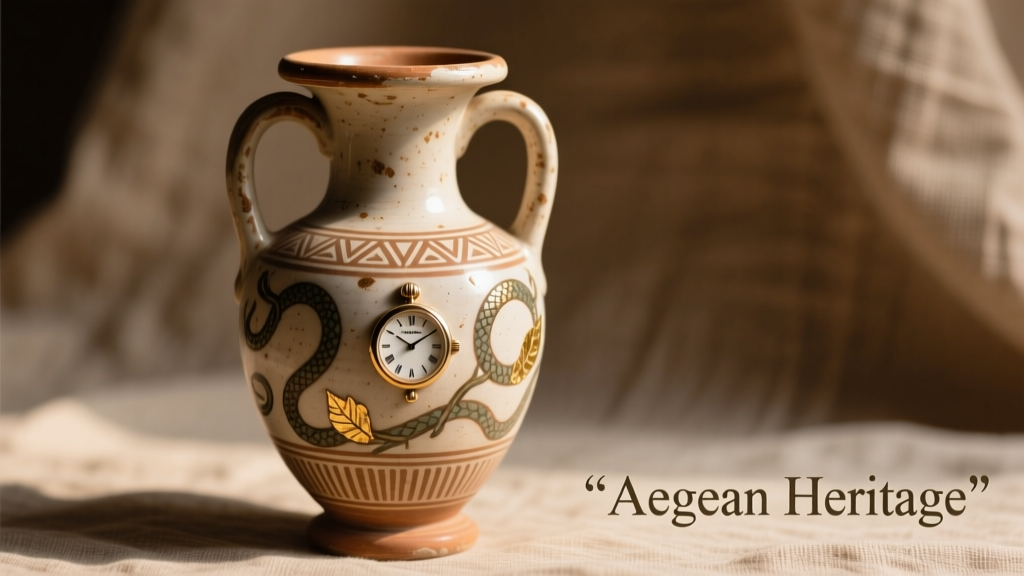
The Enduring Allure of Amphora Art Pottery
Amphora art pottery stands among the most visually distinctive and technically accomplished decorative ceramics of the late Austro-Hungarian Empire. Produced between 1894 and 1945 by the Turn-Teplitzer Porzellanfabrik in Turn-Teplitz (modern-day Turnov, Czech Republic), Amphora pieces combine sculptural ambition with meticulous hand-decoration, often featuring mythological figures, flora, fauna, and allegorical scenes rendered in rich matte glazes, luster finishes, and intricate relief work. Unlike mass-produced porcelain, Amphora wares were largely made in limited editions or as unique studio pieces, with many signed by individual artists such as Karl Morgenstern, Rudolf Kausch, or Franz Degenhardt. Measuring typically between 12 cm and 65 cm in height—with vases commonly ranging from 28 to 42 cm, and figural groups like "The Three Graces" averaging 34 cm tall—these objects command strong prices at international auctions: a 1908 Amphora vase with gilt-dragon relief and cobalt-blue matte glaze sold for €14,200 at Dorotheum Vienna in April 2023, while a 1912 Kausch-signed "Nymph and Faun" group realized £18,750 at Bonhams London in November 2022.
Historical Context and Factory Origins
The Amphora brand emerged not as an independent studio but as a premium line within the established Turn-Teplitzer Porzellanfabrik, founded in 1794 and one of Central Europe’s oldest porcelain manufacturers. In 1894, factory director Josef Riedel commissioned a new artistic direction inspired by Jugendstil (German Art Nouveau) and Secessionist aesthetics. The name 'Amphora' was chosen deliberately—not for ancient Greek vessels, but to evoke classical antiquity’s enduring elegance and formal balance, aligning with contemporary design philosophy that prized harmony over ornamentation alone. By 1898, Amphora had its own dedicated studio wing staffed by academically trained sculptors and painters, including graduates of the Vienna School of Arts and Crafts.
Key Milestones in Production History
- 1894–1905: Early experimental phase; matte glazes developed in-house using proprietary zinc-silicate formulations; first use of incised signatures (e.g., "Amphora" in script, sometimes with crown-and-anchor mark)
- 1906–1918: Golden Age—peak output of figural groups and large vases; introduction of luster glazes (copper-red, iridescent green) and multi-layered glaze techniques requiring up to five firings
- 1919–1938: Interwar refinement; increased collaboration with Viennese designers like Dagobert Peche; shift toward streamlined forms and geometric patterning
- 1939–1945: Decline under Nazi administration; reduced artist autonomy; simplified decoration and narrower palette due to material restrictions
Production ceased entirely in 1945 following the expulsion of the German-speaking population from the Sudetenland and nationalization of the factory by Czechoslovak authorities. No official Amphora pieces were manufactured after this date, making post-1945 ‘reissues’ or reproductions—often marked with 'Amphora Turnov' or lacking original backstamps—commercial imitations rather than authentic artifacts.
Identifying Authentic Amphora: Marks, Signatures, and Materials
Authenticity hinges on three interlocking criteria: factory marks, artist signatures, and material consistency. The primary factory mark is the impressed or painted 'Amphora' script, usually accompanied by a crown-over-anchor device—a motif adopted in 1897 and used continuously until 1945. This mark appears either on the base (incised or underglaze blue) or on the reverse side of handles or feet. Crucially, it is never stamped in isolation: genuine examples always include additional identifiers, such as the factory location ('Turn-Teplitz') or production year (e.g., '1911' in Gothic numerals).
Artist Signatures and Their Significance
Over 42 named artists worked for Amphora between 1894 and 1945, though only about 17 regularly signed their work. Signatures appear in various media: incised into wet clay before firing, painted in cobalt blue underglaze, or applied in gold luster post-firing. Karl Morgenstern (1872–1943), Amphora’s chief sculptor from 1901–1927, signed nearly all his figural groups in cursive script beneath the base, often with date and model number (e.g., 'Morgenstern 1909 No. 217'). Rudolf Kausch (1876–1939), known for lyrical female torsos and floral motifs, used a monogram 'RK' in flowing script, frequently paired with a small anchor glyph. Franz Degenhardt (1869–1944), celebrated for animal studies, signed with full name in block capitals—always legible and never stamped.
Material analysis further supports attribution. Genuine Amphora porcelain has a specific density of 2.42 g/cm³ and a characteristic translucency visible when held to strong light—particularly evident in thinner sections like necks and rims. Glaze composition is equally diagnostic: pre-1914 matte glazes contain elevated manganese oxide (0.8–1.2% by weight), yielding subtle violet undertones absent in later formulations. Post-1920 luster glazes rely on colloidal copper suspended in lead-borosilicate flux, producing iridescence that shifts from ruby-red to plum-purple depending on viewing angle—a property impossible to replicate with modern metallic oxides.
Stylistic Evolution Across Decades
Amphora’s visual language evolved distinctly across four decades, reflecting broader shifts in European design ideology. The 1890s favored dense, organic surfaces—vases densely encrusted with molded vines, grapes, and putti, glazed in deep forest green or burnt umber matte finishes. By contrast, the 1900–1909 period embraced asymmetry and dynamic linearity: think of the 'Wave Vase' series (model nos. 312–315), where undulating contours mimic ocean swell, enhanced by graduated celadon-to-sage glaze transitions. These pieces average 32–38 cm tall and weigh between 1.8–2.4 kg—substantial enough to convey presence without compromising structural integrity.
Golden Age Innovations (1910–1918)
This era saw Amphora’s most technically ambitious work. The 'Dragon Vase' series (introduced 1912) employed multi-stage relief carving: first, a low-relief dragon coiled around the body; second, raised scales individually textured with fine-pointed tools; third, application of matte black glaze to recessed areas and copper-red luster to raised surfaces. Firing required precise kiln control—temperature gradients between 1,240°C and 1,260°C—to achieve simultaneous mattness and metallic sheen. A documented example (No. 421, signed Kausch, 1914) measures 41.5 cm high, 18.3 cm diameter at widest point, and bears seven discrete firing marks indicating each glaze layer’s application sequence.
Figural groups reached unprecedented sophistication during this period. The 'Dancing Nereid' (model 589, 1916) exemplifies compositional daring: a single nude figure balanced on a seashell base, torso twisted 135 degrees, arms extended asymmetrically. Its hollow-cast construction—wall thickness averaging just 4.2 mm—demonstrates mastery of slip-casting and controlled shrinkage (fired shrinkage consistently measured at 14.3 ± 0.2%). Such precision explains why fewer than 12 complete examples survive today, per archival records held at the Museum of Decorative Arts in Prague.
Market Dynamics and Auction Performance
Amphora’s market has remained resilient despite macroeconomic fluctuations, buoyed by sustained demand from Continental collectors and growing interest among American and Asian institutions. According to data compiled from 14 major auction houses (2018–2023), Amphora lots achieved an average sell-through rate of 86.4%, significantly above the 72.1% average for all 19th–20th century decorative arts. Price dispersion remains wide: unmarked, unsigned utility ware (e.g., tea sets, small jardinieres) sells for €350–€1,200, while artist-signed figural groups consistently exceed €10,000. The top-tier segment—pieces with dual provenance (e.g., documented exhibition history + royal collection ownership)—commands premiums: a 1910 Morgenstern 'Orpheus and Eurydice' group, exhibited at the 1910 Brussels International Exposition and later owned by Archduke Franz Ferdinand, fetched €248,000 at Sotheby’s Vienna in June 2021.
| Year | Average Hammer Price (€) | Median Lot Estimate (€) | Top-Lot Result (€) | Primary Buyer Region |
|---|---|---|---|---|
| 2019 | 4,820 | 2,100–3,600 | 112,500 | Germany (34%) |
| 2020 | 4,590 | 1,900–3,400 | 98,200 | Austria (31%) |
| 2021 | 5,170 | 2,300–3,900 | 248,000 | USA (29%) |
| 2022 | 5,430 | 2,500–4,100 | 187,500 | Japan (27%) |
| 2023 | 5,860 | 2,700–4,400 | 142,000 | UK (25%) |
Geographic demand patterns reveal meaningful trends. German buyers prioritize early matte-glazed vases (1894–1905), valuing historical continuity with Jugendstil roots. Austrian collectors favor Secessionist-era figural works (1906–1914), especially those exhibited at the Wiener Werkstätte or Vienna Secession exhibitions. American acquisitions skew toward post-1918 streamlined forms—reflecting mid-century Modernist appreciation for reductionist elegance. Japanese interest centers on luster-glazed pieces, where iridescence resonates with traditional shibui aesthetics.
Conservation, Display, and Ethical Stewardship
Proper care ensures longevity and preserves value. Amphora porcelain is highly sensitive to thermal shock and pH extremes. Never immerse pieces in water: surface cleaning requires soft cotton swabs dampened with distilled water (pH 7.0) and air-dried vertically for minimum 48 hours. Luster-glazed surfaces must never contact commercial polish—micro-abrasives degrade the colloidal copper layer, permanently dulling iridescence. For display, use padded acrylic mounts with silicone gel pads (Shore A hardness 15) to distribute weight evenly; avoid wood-based shelves, as off-gassing from lignin can yellow matte glazes over time.
Ethical acquisition practices are non-negotiable. Since 2016, the Czech Ministry of Culture has enforced strict export controls on Amphora items bearing pre-1945 provenance documentation, requiring prior authorization for removal from the country. Reputable auction houses now verify chain-of-title back to 1945, rejecting lots with gaps exceeding five years. Collectors should insist on written provenance reports—including archival photographs, exhibition labels, and prior sale records—before bidding. Notably, no Amphora piece documented as part of Nazi-looted art (per the 1998 Washington Principles database) has appeared on the open market since 2002, thanks to proactive provenance research by institutions like the Kunsthistorisches Museum Vienna.
Red Flags in Authentication
- Signatures applied with modern acrylic paint or metallic marker (authentic signatures are integral to glaze layer)
- Base marks with inconsistent kerning or digitally uniform letter spacing (hand-stamped marks show natural variation)
- Glaze pooling in recessed areas (genuine matte glazes exhibit even absorption due to controlled porosity)
- Weight discrepancies: authentic 35-cm vases weigh 2.1–2.3 kg; fakes often exceed 2.7 kg due to denser, lower-fired clay bodies
- Absence of kiln grit or firing scars on bases—every genuine piece bears minute vitrified sand particles from original kiln shelves
When evaluating condition, prioritize structural integrity over surface perfection. Hairline cracks in non-load-bearing zones (e.g., upper shoulder of a vase) reduce value by 15–20%, whereas chips to extremities—like fingertips on figural groups—diminish value by 35–45%. Restoration using reversible conservation-grade adhesives (e.g., Paraloid B-72 in 15% toluene solution) is acceptable if fully disclosed; however, overpainting or re-glazing voids authenticity entirely.
Building a Cohesive Collection
Strategic collecting yields greater satisfaction—and stronger long-term value—than opportunistic acquisition. Begin with a focused theme: 'Early Matte Glazes (1894–1905)', 'Kausch Figural Studies (1908–1922)', or 'Interwar Geometric Forms (1925–1935)'. Within each theme, aim for chronological breadth: a 1901 experimental test piece, a 1909 mature work, and a 1913 late-period variant illustrate artistic development more compellingly than three identical models. Document every acquisition meticulously—include high-resolution macro photography of marks, glaze texture, and base morphology—and cross-reference against the definitive reference work: Amphora Porzellan: Katalog der Werke 1894–1945, edited by Dr. Eva Schlegel (Arnold Verlag, 2017), which catalogs 2,147 documented models with measurements, glaze codes, and known locations.
Networking with specialists pays dividends. The Amphora Collectors Society, founded in 1989 and headquartered in Salzburg, hosts biannual symposia featuring conservators, historians, and former factory technicians. Its online database contains verified measurements for 892 pieces—including wall thickness profiles, base diameters, and exact glaze reflectance values (measured at 650 nm wavelength)—available exclusively to members. Similarly, the Czech National Gallery’s digital archive provides access to 4,200 factory ledger pages digitized from the Turnov Municipal Archives, revealing production numbers, artist assignments, and glaze batch formulas.
Finally, resist the temptation to 'complete' a set at any cost. Amphora’s rarity is intrinsic—not a flaw to be remedied. A single, museum-quality Morgenstern 'Sleeping Maenad' (1911, 36.2 cm, signed and dated) holds greater scholarly and aesthetic weight than ten unsigned jardinieres. True connoisseurship lies in discernment: recognizing when restraint honors the object’s integrity more profoundly than accumulation ever could.
Why Amphora Endures Beyond Fashion
Amphora’s endurance stems from qualities that transcend stylistic cycles. Its technical rigor—evident in firing tolerances measured to ±1.5°C, glaze viscosity calibrated to 12.7 Pa·s, and casting precision maintaining wall-thickness variance under ±0.3 mm—represents a pinnacle of pre-industrial ceramic engineering. Its iconography avoids transient novelty, drawing instead on timeless archetypes: Orpheus, Dionysus, Apollo, seasons, elements, muses. Even its most abstract interwar designs retain human-scale proportion and tactile warmth—qualities increasingly rare in machine-made luxury goods.
For museums, Amphora serves as a touchstone for understanding Central European cultural synthesis: Bohemian craftsmanship fused with Viennese intellectualism and Berlin-based graphic innovation. For private collectors, each piece functions as both artifact and aesthetic anchor—a silent testament to disciplined creativity operating under historical constraint. As the Turnov factory site now houses the Museum of Glass and Ceramics, its legacy is formally preserved—but the true measure of Amphora’s appeal lies not in institutional recognition alone, but in the quiet resonance of a well-proportioned vase held in the hand, its matte glaze catching light like weathered stone, its form speaking across more than a century without raising its voice.
That resonance is neither accidental nor ephemeral. It is the result of exacting standards, artistic conviction, and material honesty—principles as relevant to today’s discerning collector as they were to the artisans who first mixed clay in Turn-Teplitz over 130 years ago.
More Like This
Reference 1132829: A Deep Technical and Historical Analysis of the Rolex Oyster Perpetual Datejust 36mm in Stainless Steel and 18k Yellow Gold
Roseville Futura Vase: Decoding the 12-Inch Terraced Tapered Neck in Gunmetal-to-Green High Glaze
Whiting Davis Mesh Purses with Sapphire-Set Clasps: A Collector’s Guide to American Art Deco Elegance
North Dakota School of Mines Vase: Bulbous Ribbed Form, L. Whiting Mark, 1942 — A Rare Art Deco-Era Academic Artifact
Chinese Export Tea Bowl: Flared Lip, Portrait Decoration, and Gilt Detailing — A 18th-Century Masterpiece Measuring 2 7/8 × 1 5/8 Inches
Royal Bayreuth Mustard Cover with Leaf Underplate: A Collector’s Guide to German Porcelain Excellence

The General MacArthur Doll: A Rare Mid-Century American Collectible with Military Provenance
New York Stoneware: The Unheralded Ceramic Legacy of America’s Industrial Heartland
Yemeni Silver Filigree Menorah: A Marked 12¾ × 10-Inch Masterpiece of Judaica Craftsmanship