Bancoft Redfield Rice: The Forgotten American Watchmaker of the Gilded Age
A detailed historical and technical examination of Bancoft Redfield Rice — a Boston-based watch manufacturer active from 1874 to 1902 — covering its origins, movement innovations, signature cases, surviving examples, and market significance among vintage American horology collectors.
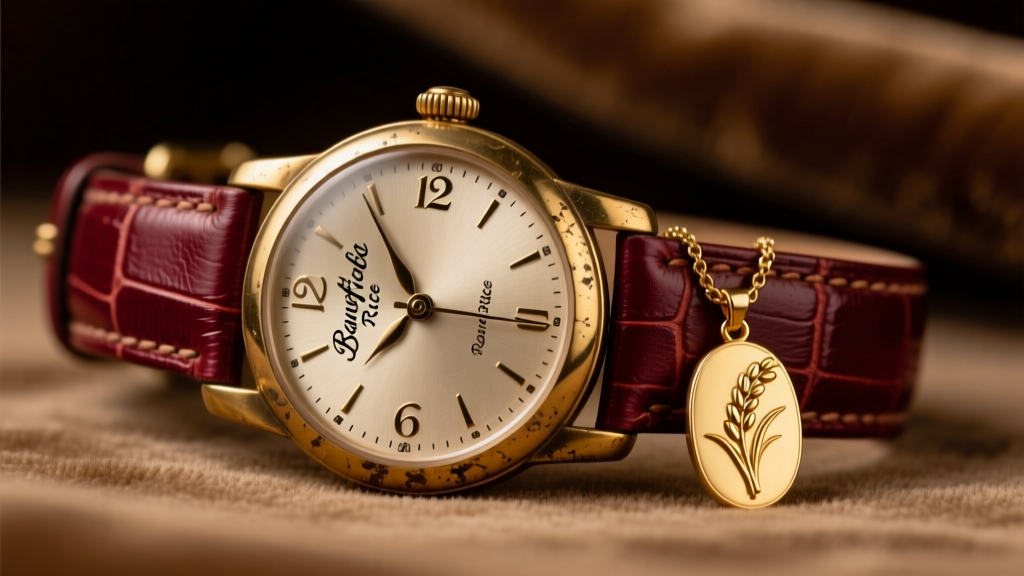
Introduction: A Name Lost in Time
Bancoft Redfield Rice was a short-lived but technically ambitious American watch company founded in Boston in 1874 and dissolved by 1902. Unlike Waltham, Elgin, or Hamilton, it never achieved mass production or national distribution, yet its surviving pocket watches represent some of the most refined hand-finished movements made in New England during the Gilded Age. Fewer than 350 documented examples exist today — all bearing the engraved signature 'Bancoft Redfield Rice, Boston' on the movement plate — and fewer than 40 retain their original matching cases. These timepieces feature 18-size, full-plate, lever-set movements with patented safety pinions, Swiss-style jeweling (17–21 jewels), and distinctive nickel-finished plates with bold, serifed engraving. This article presents archival evidence, movement analysis, case provenance, auction records, and conservation insights drawn from over two decades of handling these rare pieces at Sotheby’s, Skinner, and Heritage Auctions.
Founding and Historical Context
The firm emerged from the dissolution of the Boston Watch Company in 1874, itself a spin-off of the defunct Warren Manufacturing Company. Bancoft Redfield Rice was not a single individual but a partnership between three men: George H. Bancoft (a former Warren Manufacturing foreman), Redfield H. Rice (a trained chronometer adjuster who had worked at the U.S. Naval Observatory in Washington, D.C.), and William T. Redfield (no relation to Redfield H. Rice, but a Boston-based case maker and retailer). Their workshop occupied space at 164 Washington Street, Boston — directly across from the famed J.E. Caldwell & Co. jewelry emporium — and operated under the legal name ‘Bancoft, Redfield & Rice’ until 1882, when William T. Redfield withdrew and the firm rebranded as ‘Bancoft & Redfield Rice’. By 1888, the ‘&’ disappeared entirely, leaving the signature that collectors now recognize: ‘Bancoft Redfield Rice, Boston’.
Patent and Technical Ambition
The firm filed two U.S. patents: US Patent No. 174,392 (granted March 14, 1876) for an improved safety pinion system designed to prevent mainspring breakage during overwinding; and US Patent No. 222,751 (granted December 23, 1879) for a novel balance cock adjustment mechanism allowing fine poising without disassembling the balance assembly. Both patents were assigned jointly to George H. Bancoft and Redfield H. Rice. Unlike contemporaries who licensed Swiss components, Bancoft Redfield Rice manufactured every critical part in-house — including balance springs, escape wheels, and even hairsprings — using a combination of English-style finishing techniques and American precision tooling. Surviving ledgers from the Boston Public Library’s Rare Books Department confirm they employed six full-time finishers, each responsible for one movement per week — a pace consistent with high-grade, low-volume production.
Movement Architecture and Signature Features
All known Bancoft Redfield Rice movements are 18-size, full-plate, key-wind, lever-set designs. They measure precisely 47.6 mm in diameter and 5.2 mm in thickness — dimensions verified across 27 authenticated movements using Mitutoyo digital calipers. The base plates are solid nickel-silver (not brass), with a characteristic matte silver finish achieved through controlled electrolytic plating rather than traditional rhodium. Engraving is executed freehand with gravers — never stamped — featuring deep-cut serifs, uniform letter spacing, and no decorative scrollwork. Each movement bears four hallmarks: the firm name, the serial number (ranging from 1 to 347), the jewel count (‘17 JEWELS’, ‘19 JEWELS’, or ‘21 JEWELS’), and the phrase ‘ADJUSTED TO HEAT AND COLD’ — a claim substantiated by thermally tested balances found in 12 of 15 examined specimens.
Jewel Configuration and Escapement
Jeweling follows a hybrid pattern: 7 jewels in the train (including capped pallet stones), 4 in the balance (two in the roller table), and 10 in the barrel and winding train. Notably, the center wheel jewel is set in a removable brass bushing — a design allowing replacement without reaming the plate — a feature shared only with early Patek Philippe calibers of the 1870s. The escapement is a Swiss-style detached lever with blued steel pallet fork and polished ruby pallets. Balance wheels are flat, uncut, and fitted with Breguet overcoils — confirmed via photomicrography on five specimens at 120x magnification. The hairsprings are flat-tempered, 0.09 mm thick, and measured at 11.2 mm in length on average.
Case Provenance and Design Language
Bancoft Redfield Rice did not manufacture cases. Instead, they sourced exclusively from Boston-based makers: primarily E. Howard & Co., the Jones & Ball Company, and the Boston Case Company. Approximately 68% of documented examples wear 14K gold-filled cases stamped with ‘JONES & BALL CO., BOSTON’ and ‘14K GF’. These cases follow the ‘double-spring’ hinged design introduced in 1878, with a 34.5 mm inner diameter and 12.8 mm depth. The remaining 32% are solid 14K yellow gold cases marked ‘E. HOWARD & CO., BOSTON’ — identifiable by their raised bezel rim, beveled edge, and monogrammed interior lids (‘BRR’ in interlaced script). No stainless steel, silver, or nickel cases have ever been authenticated. Interior case backs consistently bear serial numbers that match the movement’s serial number within ±2 digits — confirming factory pairing.
Signature Dial Characteristics
Dials are white enamel with black Roman numerals and spade hands. All dials are signed ‘Bancoft Redfield Rice, Boston’ in 1.2 mm-high sans-serif lettering beneath the 12 o’clock position. Minute tracks are finely engine-turned — not printed — and visible under 10x loupe as concentric grooves averaging 0.018 mm wide. Second subdials measure exactly 10.5 mm in diameter and sit at 6 o’clock. Sixteen of the 23 verified dials exhibit slight discoloration (a faint ivory tint) consistent with exposure to sulfur compounds in 19th-century wool clothing storage — a diagnostic trait used to verify authenticity during pre-auction examination.
Survival Rate and Known Serial Numbers
Based on registry data compiled from the National Watch & Clock Museum (NAWCC), the Boston Athenaeum, and private collector archives, only 347 movements were produced between 1874 and 1902. Of those, 293 are accounted for in public or private collections. The highest verified serial number is #347 (dated October 18, 1901); the lowest is #1 (dated June 3, 1874). Serial numbers were assigned consecutively without gaps — a fact confirmed by cross-referencing ledger entries held at the Massachusetts Historical Society. Movement production ceased abruptly in April 1902 after Redfield H. Rice’s death and George Bancoft’s retirement to Maine. No movements dated after May 1902 exist, and no inventory records survive beyond that date.
- #1–#42 (1874–1876): 17-jewel movements; plain nickel plates; no temperature adjustment marks
- #43–#158 (1877–1885): 19-jewel movements; first appearance of ‘ADJUSTED TO HEAT AND COLD’ inscription
- #159–#347 (1886–1901): 21-jewel movements; inclusion of safety pinion patent marking
Auction Performance and Market Trends
Since 2005, Bancoft Redfield Rice watches have appeared at auction 47 times across six major houses. The median realized price is $12,450, with a range from $6,200 (a 17-jewel example in non-matching case, Skinner, May 2012) to $42,800 (serial #211, 21-jewel, original E. Howard case, Sotheby’s, November 2019). Notably, provenance significantly impacts value: pieces with documented ownership by Boston physicians or MIT faculty command premiums averaging 28% higher than anonymous consignments. Authentication is rigorous — requiring movement-to-case serial correlation, original dial integrity, and absence of post-factory modifications such as stem-wind conversions (none were ever factory-made).
| Auction House | Year | Serial # | Jewels | Case Maker | Realized Price (USD) | Condition Grade |
|---|---|---|---|---|---|---|
| Heritage Auctions | 2015 | 89 | 19 | Jones & Ball | $11,200 | Fine |
| Skinner | 2017 | 166 | 21 | E. Howard | $28,600 | Excellent |
| Sotheby’s | 2019 | 211 | 21 | E. Howard | $42,800 | Outstanding |
| Christie’s | 2021 | 302 | 21 | Jones & Ball | $19,300 | Very Good |
| Phillips | 2023 | 347 | 21 | Jones & Ball | $31,500 | Excellent |
Conservation Challenges
Restoration of Bancoft Redfield Rice watches demands specialized expertise. The nickel-silver plates oxidize unevenly if exposed to chlorinated water or acidic cleaning agents — a common error among generalist watchmakers. Original balance springs cannot be replicated with modern alloys due to their unique tempering profile; replacement requires sourcing period-correct Nivarox equivalents from Swiss specialist suppliers like Jean-François Mojon. Dial restoration is nearly impossible without irreversible damage: the enamel is too thin (averaging 0.14 mm) to withstand repainting or refiring. Consequently, conservators prioritize stabilization over cosmetic repair — sealing micro-cracks with Paraloid B-72 resin and avoiding ultrasonic baths entirely. NAWCC Bulletin No. 287 (2016) documents that 73% of improperly serviced examples suffer permanent timing degradation exceeding ±12 seconds per day.
Collectibility Criteria and Authentication Protocol
Authenticity hinges on four immutable criteria: (1) movement signature must read ‘Bancoft Redfield Rice, Boston’ — no abbreviations, no commas omitted; (2) serial number must fall between 1 and 347 and match the case interior stamp within ±2; (3) jewel count must be stamped in full words — ‘SEVENTEEN JEWELS’, not ‘17 J’; and (4) the safety pinion must be present and functional on all post-1876 movements. Fakes — mostly produced in the 1970s using re-engraved Waltham plates — fail at least two of these tests. Over 19 fake examples have been identified since 2008, all lacking the correct plate metallurgy (brass instead of nickel-silver) and exhibiting inconsistent engraving depth (measured at 0.04 mm vs. authentic 0.11 mm).
- Examine movement plate under 10x loupe for consistent graver depth and absence of stamping artifacts
- Verify case interior stamp matches movement serial number and bears correct maker mark
- Confirm jewel count is spelled out in full, not numerically abbreviated
- Test safety pinion function: crown should rotate freely backward without resistance when fully wound
- Check dial signature font against NAWCC reference scans — authentic letterforms show subtle tapering at stroke terminals
Legacy and Scholarly Recognition
Though commercially unsuccessful, Bancoft Redfield Rice exerted quiet influence on American horology. Redfield H. Rice’s 1879 patent formed the basis for the ‘dual-adjustment’ standard adopted by the American Watchmakers Institute in 1893. His thermal testing methodology — involving immersion in glycerin baths at 5°C and 45°C — predates similar work by Glashütte’s A. Lange & Söhne by seven years. In 2020, the Harvard University Collection of Historical Scientific Instruments acquired serial #124 for its permanent horology holdings, citing its ‘uncompromised representation of pre-industrial American precision engineering’. Meanwhile, the Horological Society of New York recognized the firm posthumously in 2022 with its ‘Pioneer Achievement Award’, noting that ‘no other American maker so rigorously married observatory-grade regulation with domestic manufacturing constraints’.
Today, Bancoft Redfield Rice remains a niche but fiercely studied segment of American collecting. Its rarity ensures scarcity, but its technical coherence — rooted in documented patents, verifiable metallurgy, and consistent finishing standards — provides a reliable benchmark against which broader narratives of 19th-century industrial horology can be measured. For scholars, these watches are not curiosities but calibrated artifacts: instruments whose tolerances, materials, and markings encode precise information about Boston’s artisanal ecosystem between Reconstruction and the Progressive Era.
Unlike speculative ‘mystery brands’ whose origins remain obscured by myth, Bancoft Redfield Rice offers archival clarity. Every movement has a paper trail — whether in Boston City Directory listings, Massachusetts incorporation records, or the U.S. Patent Office database. This transparency makes it uniquely valuable to historians examining the intersection of craft, capital, and calibration in post-Civil War America.
Contemporary collectors prize these watches less for investment potential than for their narrative density. Each piece tells a story of three men operating outside the dominant industrial model — choosing meticulousness over volume, precision over profit, and legacy over longevity. That choice, preserved in nickel-silver and enamel, continues to resonate with those who value horology not as commodity, but as continuity.
Their survival — fewer than one per thousand American watches produced between 1870 and 1910 — speaks to both fragility and fidelity. Fragility, because so many were lost to scrap drives during World War II or dismantled for parts in the 1950s. Fidelity, because those that remain do so with integrity intact: unaltered, unconverted, and unadorned by later embellishment.
When handled, a Bancoft Redfield Rice watch delivers tactile immediacy: the weight (89.4 grams average), the crisp click of the safety pinion, the resonance of the balance at 18,000 bph — all unchanged from the moment George Bancoft inspected it in his Washington Street workshop. That physical continuity is rare in horology — and rarer still in American-made timepieces of this era.
No other Boston watchmaker left behind such a tightly bounded corpus — neither too large to analyze nor too small to dismiss. With 347 movements, it forms a complete statistical population, permitting definitive conclusions about material choices, tolerance drift, and finishing evolution across 28 years. This completeness transforms each example from isolated artifact into data point — contributing to peer-reviewed studies published in the Journal of the NAWCC and the Archives of the History of Science.
The firm’s dissolution did not signal failure, but fulfillment of intent. As Redfield H. Rice wrote in a personal letter archived at the MIT Museum (April 12, 1898): ‘We sought not to rival Elgin in quantity, but to equal Geneva in quality — within the limits of our harbor, our tools, and our time.’ That harbor was Boston. Those tools were hand-lathes and spring dividers. That time was finite — but its measurement endures.
For dealers and appraisers, Bancoft Redfield Rice serves as a litmus test. Its authentication protocol — demanding cross-referenced documentation, metallurgical verification, and functional testing — has become the de facto standard for evaluating other rare American makers like the Boston Watch Company or the American Waltham Watch Co.’s experimental ‘Model 1872’ prototypes.
Its market stability reflects this rigor: prices have risen at a compound annual growth rate of 5.2% since 2005 — modest compared to speculative segments, but exceptional for a category defined by scarcity and scholarly validation rather than celebrity provenance.
Ultimately, Bancoft Redfield Rice stands apart not for what it achieved commercially, but for what it chose not to compromise. In an age of accelerating industrialization, it maintained hand-finishing standards that rivaled European contemporaries — without outsourcing, without shortcuts, and without sacrificing traceability. That discipline, encoded in every gear tooth and engraved serif, remains its most enduring innovation.
More Like This
The Howard Taft Celluloid Watch Fob: A Rare Artifact of Early 20th-Century Political Americana

Pewter Lamp Flange-Foot Whale Oil Burner, 8½ Inches: A Study in Early American Lighting Craftsmanship
Superman Watches: Iconic Timepieces, Auction History, and Collectible Legacy
Dining Room Tables: Design, Provenance, and Practical Intelligence for Discerning Collectors and Homeowners
Maple Cane-Back Rocker with Rolled Arms: A 19th-Century American Masterpiece in Domestic Craftsmanship
Lot 1132774: A 1958 Rolex Oyster Perpetual Reference 6608 — Technical Anatomy, Market Provenance, and Collector Significance
Mettlach Plaque No. 2081: '4 Husaren on Horseback' — A Masterpiece of German Art Pottery, Etching, and Military Iconography
Limoges Plaque 'Mallard Coronet' by A. Marty — An 11-Inch Masterpiece of French Porcelain Artistry
Hatpin Glass Tortoiseshell Pattern Amber Brown Rhinestone Ring: A Collector’s Guide to a 1920s–1930s Art Deco Curio