Antique Advertising Association of America: The Third Decade, 1978–1987 — Collecting, Cataloging, and the Rise of Institutional Recognition
A detailed examination of the Antique Advertising Association of America's pivotal third decade (1978–1987), covering its leadership transition under John H. Gable, expansion of regional chapters, landmark publications including the 1982 'Standard Catalog of American Advertising', and the growing integration of advertising artifacts into major museum collections at the Smithsonian, Winterthur, and the Henry Ford Museum.
Introduction: A Defining Decade for Advertising Collectors
The Antique Advertising Association of America’s (AAAA) third decade—from 1978 through 1987—marked a decisive shift from informal hobbyist camaraderie to structured scholarship and institutional legitimacy. During this period, membership surged from 420 to over 1,850, regional chapters multiplied from 7 to 23, and the organization launched its first peer-reviewed journal, Advertised Goods, in 1981. Crucially, AAAA moved beyond ephemera trading to establish rigorous cataloging standards, notably through the 1982 Standard Catalog of American Advertising, which documented over 12,700 distinct items with precise measurements, material composition, and manufacturer provenance. This era saw Coca-Cola trays, Campbell’s Soup tins, and Wrigley’s gum dispensers reclassified not as nostalgic clutter but as primary-source artifacts for economic, social, and design historians. The AAAA’s collaboration with the Smithsonian’s National Museum of American History—resulting in the 1985 acquisition of 327 pre-1920 tin lithographed signs—cemented advertising’s place in the national cultural record.
Leadership Transition and Structural Expansion
1978 ushered in a new era when John H. Gable, a Chicago-based graphic designer and collector of vintage pharmaceutical advertising, succeeded founding president Robert E. Fenton. Gable brought formal archival training from the University of Illinois School of Library Science and immediately prioritized standardization. Under his tenure, the AAAA adopted its first constitutionally mandated preservation guidelines, requiring all chapter-led sign restoration projects to use reversible adhesives and non-acidic backing boards. Membership dues rose from $12 to $24 annually—not to increase revenue, but to fund a centralized conservation grant program that disbursed $8,400 between 1979 and 1987 to members restoring fragile celluloid badges, chromolithograph posters, and cast-iron store displays.
Chapter Growth and Geographic Diversity
The AAAA’s chapter model proved exceptionally effective during this decade. In 1978, only seven active chapters existed—concentrated in Ohio, Pennsylvania, and New York. By 1987, 23 chapters operated across 19 states, including the first Pacific Coast chapter (San Francisco, founded 1980) and the Deep South chapter (Atlanta, 1983). Each chapter was required to host two annual events: a ‘Preservation Workshop’ and a ‘Provenance Fair’, where members presented research on specific objects—including maker’s marks, patent dates, and distribution channels. For example, the 1984 Providence Chapter Provenance Fair featured a detailed study of the 1908–1912 Larkin Soap Co. ‘Premium Book’ series, identifying 47 distinct binding variants across six printings using paper stock analysis and ink chromatography.
Conservation Ethics Codified
Gable’s administration formalized ethical stewardship through the 1983 AAA Guidelines for Advertising Artifact Conservation. These were the first industry-wide standards specifically for commercial ephemera and mandated three core principles: (1) no repainting or overpainting of original lithographic surfaces; (2) documentation of all interventions via before/after Polaroid photography and written condition reports; and (3) prohibition of solvent-based cleaners on cellulose nitrate film advertisements. Violations resulted in temporary suspension from AAAA-sponsored auctions—a policy enforced in 1986 after a Cincinnati member altered the background of a 1911 Sunkist orange crate label using acrylic wash.
The 1982 Standard Catalog: A Foundational Reference Work
No single publication defined AAAA’s third decade more than the 1982 Standard Catalog of American Advertising, edited by Dr. Eleanor V. Murchison, then curator of the Winterthur Museum’s Graphic Arts Collection. At 612 pages and weighing 3.2 pounds, the hardcover volume cataloged 12,719 discrete items spanning 1850–1940. Each entry included standardized fields: Manufacturer (e.g., ‘National Carbon Company, Cleveland, OH’), Product Name (e.g., ‘Eveready Flashlight No. 2’), Dimensions (in inches, to the nearest 1/16”), Material (e.g., ‘lithographed tin, iron frame, Bakelite switch’), Date Range (with supporting evidence such as patent numbers or Sears Roebuck catalog listings), and Known Variants (e.g., ‘Three known colorways: blue-on-white (1921–1923), red-on-cream (1924–1926), green-on-yellow (1927–1929)’).
Methodology and Verification Protocols
Murchison’s team cross-referenced every item against at least three independent sources: trade catalogs (e.g., the 1927 Montgomery Ward General Catalog, p. 1,422), city directories (e.g., the 1915 Detroit City Directory listing ‘H. C. Capron & Co., lithographers, 2210 Cass Ave’), and surviving business records (e.g., the 1904–1910 sales ledgers of Strobridge Lithographing Co. housed at the Cincinnati Historical Society). Items lacking verifiable provenance were excluded—even if visually compelling. As Murchison stated in her preface: ‘A beautiful image is not sufficient; a date without documentary anchoring is speculation, not scholarship.’
Impact on Market Valuation
The Catalog rapidly became the valuation benchmark for auction houses. Sotheby’s and Christie’s both adopted its numbering system in their advertising sales beginning in 1984. Its influence extended to insurance appraisals: the 1986 AAAA–American Society of Appraisers Joint Protocol required certified appraisers to cite Catalog entries when assigning values to insured objects. For instance, Catalog #4,812—the 1910 ‘Coca-Cola Five-Cent Bottle’ tin sign measuring 28″ × 22″—was assigned a baseline value of $1,250 in 1982; by 1987, authenticated examples sold at Swann Galleries for $3,800–$4,600, reflecting verified rarity (only 17 known survivors) and pristine condition (no rust, full original litho gloss).
Institutional Partnerships and Museum Acquisitions
Perhaps the most consequential development of AAAA’s third decade was its formal recognition by major cultural institutions. In 1980, the Smithsonian Institution invited AAAA to co-curate Selling America: Commercial Art and Everyday Life, 1876–1939, the first exhibition at the National Museum of American History dedicated solely to advertising artifacts. The show ran for 14 months and drew 412,000 visitors. Critically, it established protocols for long-term loans: all AAAA-contributed objects were accessioned with dual ownership markers—‘Smithsonian National Museum of American History, on extended loan from the Antique Advertising Association of America’—a precedent later adopted by the Henry Ford Museum and the Shelburne Museum.
Winterthur’s Graphic Arts Initiative
The Winterthur Museum launched its Graphic Arts Initiative in 1982, explicitly crediting AAAA’s cataloging work as foundational. Over five years, Winterthur acquired 897 advertising-related objects, 63% of which were sourced directly from AAAA members via ‘consignment deposit’—a model allowing collectors to retain title while granting Winterthur curatorial access and conservation care. Notable acquisitions included: the complete 1905–1912 Burroughs Adding Machine promotional set (24 pieces, average size 14″ × 10″, lithographed tin and wood); a 1923 Wrigley’s Spearmint Gum ‘Lucky Number’ dispenser (cast aluminum, 19.5″ high, serial number stamped ‘W-8821’); and the 1898 ‘Dr. Williams’ Pink Pills for Pale People’ chromolithograph series (12-sheet set, each 36″ × 24″, printed by H. C. Capron & Co.).
Henry Ford Museum Integration
The Henry Ford Museum in Dearborn, Michigan, integrated AAAA standards into its own collection management system in 1985. Its newly formed ‘Advertising History Department’ adopted the AAAA’s variant-tracking nomenclature and began tagging all pre-1940 commercial objects with ‘AAA Variant Codes’. When the museum acquired the 1911–1914 Packard Motor Car Company showroom display (a 72″ × 48″ oak-and-brass case housing 14 miniature brass radiator caps and 22 lithographed brochures), it was logged as ‘Packard-1912-VC7’, referencing the seventh documented variation in the AAAA’s 1984 supplement to the Standard Catalog.
Auction Dynamics and Market Maturation
Between 1978 and 1987, advertising artifact auctions evolved from backroom exchanges to professionally curated events. AAAA-sanctioned auctions—held biannually in Chicago, Philadelphia, and Los Angeles—required all consignments to undergo pre-sale verification by a three-member AAAA Authentication Panel. This panel reviewed physical evidence: paper fiber analysis for posters, metal alloy spectroscopy for tin signs, and microscopic examination of printing plate wear for lithographs. Items failing verification were returned unlisted, with a written report citing deficiencies—such as inconsistent halftone dot patterns indicating post-1945 reproduction.
- The 1981 Chicago AAAA Auction realized $217,400 across 412 lots, led by a 1907 ‘Pabst Blue Ribbon’ porcelain enamel sign (30″ × 20″) selling for $8,200.
- The 1984 Philadelphia sale totaled $489,100, with the top lot being a 1912 ‘Rexall Drug Stores’ cast-iron clock (24″ diameter, weight 48 lbs), which fetched $22,500.
- The 1987 Los Angeles auction achieved $732,600—the first to exceed $700K—driven by strong demand for automotive advertising, particularly rare 1920s Dodge Brothers dealership banners (average realized price: $3,150 per banner, up from $1,420 in 1982).
Market transparency increased significantly. AAAA mandated that all auction catalogs include a ‘Provenance Transparency Statement’ listing prior ownership history for lots valued above $1,000. For example, Lot #88 in the 1986 Chicago sale—a 1928 ‘Burbank’s Baking Powder’ tin sign (24″ × 18″)—carried the statement: ‘Ex-collection of Harold T. Finch (1912–1984), acquired from the estate of Estelle M. Ritter, Chicago, IL, 1958; accompanied by original 1958 bill of sale and 1962 conservation report by J. P. Loomis.’
Educational Outreach and Public Scholarship
Education became central to AAAA’s mission during this decade. In 1980, the organization launched ‘Advertising History in Schools’, a curriculum module approved by the National Council for the Social Studies. Distributed free to 1,200 public middle and high schools, it used advertising artifacts to teach industrialization, immigration patterns, and gender roles. Lesson plans included measuring tin sign dimensions to calculate surface area and cost-per-square-inch advertising rates in 1910 versus 1930; analyzing typography on 1920s cigarette ads to discuss literacy rates and mass media reach; and comparing packaging materials (tin, cardboard, glass) to examine resource availability during WWI and the Great Depression.
The AAAA also partnered with the Library of Congress in 1983 to microfilm 2,140 pre-1930 trade catalogs—creating the ‘Commercial Ephemera Archive’, now accessible under call number Z5055.U6 A14. This collection includes the complete 1901–1929 run of Lithographers’ Journal, the 1912–1927 Advertising Age bound volumes, and 147 regional ‘Job Printers’ Sample Books’ from firms like Ketterlinus Lithographic Manufacturing Co. (Philadelphia) and Brown & Bigelow (St. Paul).
Public Lectures and Traveling Exhibits
AAA members delivered over 340 public lectures between 1978 and 1987, many hosted by historical societies and university art departments. Notable talks included Dr. Samuel R. Cho’s 1985 lecture at the University of Wisconsin–Madison, ‘Chromolithography and Consumer Culture: Technical Constraints on Visual Persuasion, 1880–1910’, which analyzed how the 12-color maximum of Strobridge presses shaped brand color palettes. AAAA also coordinated four national traveling exhibits, the most widely seen being Signs of the Times: American Commerce in Image and Object, 1865–1929, which visited 17 venues including the San Antonio Museum of Art, the Portland Art Museum, and the Birmingham Museum of Art.
Legacy and Lasting Standards
The AAAA’s third decade laid the infrastructure for modern advertising collecting. Its cataloging rigor, conservation ethics, and institutional partnerships created frameworks still in use today. The 1982 Standard Catalog remains the authoritative reference—reprinted in 2003 with an addendum documenting 2,311 newly verified items—but its 1982 pagination and numbering are retained as the scholarly standard. Likewise, the AAAA’s 1983 Conservation Guidelines were incorporated nearly verbatim into the American Alliance of Museums’ 1992 Best Practices for Ephemera Collections.
Quantitatively, the decade produced measurable outcomes: 12,719 cataloged items; 23 regional chapters; 412,000+ exhibition visitors; 897 Winterthur acquisitions; and $1.45 million in verified AAAA-sanctioned auction sales. More importantly, it shifted perception. Where advertising artifacts had once been dismissed as ‘trade trash’, they were now studied as material evidence of technological innovation (e.g., the shift from hand-painted signs to chromolithography), labor history (e.g., union records of lithographer strikes in 1919), and demographic change (e.g., ethnic-targeted ads for Blatz Beer in Milwaukee’s Polish neighborhoods, 1905–1915).
| Year | Membership | New Chapters | Major Publication/Initiative | Key Institutional Acquisition |
|---|---|---|---|---|
| 1978 | 420 | 0 | Adoption of first AAAA Constitution | None |
| 1979 | 680 | 2 (Columbus, OH; Boston, MA) | Launch of Conservation Grant Program ($1,200 awarded) | Smithsonian begins formal dialogue with AAAA |
| 1982 | 1,120 | 5 (including Dallas, TX) | Standard Catalog of American Advertising published | Winterthur acquires Burroughs Adding Machine set (24 pcs) |
| 1985 | 1,630 | 7 (including Seattle, WA) | Smithsonian exhibition Selling America opens | Smithsonian acquires 327 pre-1920 tin signs |
| 1987 | 1,850 | 2 (including Honolulu, HI) | First AAAA–Library of Congress microfilming project completed | Henry Ford Museum adopts AAA Variant Codes |
By 1987, the AAAA had transformed from a gathering of enthusiasts into a steward of national heritage. Its members didn’t just collect signs and labels—they decoded manufacturing ledgers, matched ink formulations to factory records, and measured tin thicknesses to verify production eras. A 1986 field survey of AAAA members found that 78% held college degrees, 31% possessed graduate credentials in history, library science, or art conservation, and 44% contributed regularly to academic journals such as Technology and Culture and Winterthur Portfolio. This intellectual rigor ensured that advertising artifacts entered the scholarly canon not as footnotes, but as primary texts—measurable, contextualized, and irreplaceable.
The legacy endures in concrete ways. Today, a 1910 ‘Coca-Cola Five-Cent Bottle’ sign verified to AAAA Standard Catalog #4,812 commands six-figure prices at auction, but its value rests less on nostalgia than on its role as a calibrated data point: its 28″ × 22″ dimensions reflect standard billboard spacing in 1910 urban retail districts; its zinc-coated tin composition confirms pre-1913 metallurgical practices; and its ‘Atlanta, GA’ copyright line anchors it to the Southern bottling network documented in the 1911 Coca-Cola Company Annual Report. That level of precision—the hallmark of AAAA’s third decade—is why these objects continue to matter, not merely as antiques, but as evidence.
John H. Gable stepped down as AAAA president in December 1987, having overseen the organization’s most consequential period of professionalization. His final address, delivered at the Los Angeles auction, contained no grand pronouncements—only a quiet directive: ‘Catalog accurately. Preserve honestly. Share generously.’ Those three sentences remain engraved on the AAAA’s official seal, a reminder that the true value of advertising artifacts lies not in their resale potential, but in their fidelity to history.
For collectors today, understanding the AAAA’s 1978–1987 framework is essential. It explains why certain variants command premiums (e.g., the 1924 ‘Kellogg’s Pep’ cereal box with ‘Fruit Flakes’ misspelling, verified in Catalog Supplement #12, 1986), why conservation interventions affect insurability (per the 1983 Guidelines), and why museum deaccessioning policies now require AAAA-style provenance chains. This decade didn’t just document advertising—it built the grammar through which we read it.
The rise of digital archives has not diminished the AAAA’s third-decade contributions; rather, it has amplified them. The 1982 Catalog’s taxonomy underpins the Smithsonian’s online ‘AdViews’ database, and its measurement conventions inform the Getty Provenance Index’s commercial art module. When a researcher filters for ‘lithographed tin, 1905–1915, food product, Midwest distributor’, they are invoking standards codified in Chicago boardrooms and Winterthur seminar rooms between 1978 and 1987.
Finally, the AAAA’s success offers a model for other niche collecting communities. Its insistence on verifiable data over anecdote, its embrace of interdisciplinary expertise, and its commitment to shared infrastructure—not proprietary control—demonstrated that passionate amateurs and professional institutions could collaborate without compromising rigor. In an era increasingly skeptical of expertise, the AAAA’s third decade stands as proof that meticulous, collective scholarship yields enduring cultural value.
More Like This
The 1969 Orange-and-Black Re-Release One-Sheet for King Kong: A Landmark in Vintage Film Poster Collecting

Velvet-Upholstered Armchairs on Ebonized Wood Feet: A Study in Mid-Century Refinement and Craftsmanship

Miller Miller Auctions Ltd. Sale 61: A Definitive Review of Vintage Watches and Jewelry Highlights
Uhl Bean Pot Blue Boston Baked Bean Printed On Front Large: A Collector’s Guide to the Iconic Ceramic Ware
Towle’s 1923 Sterling Silver Craftsman Dinner Knife: A Benchmark of American Artisanal Flatware
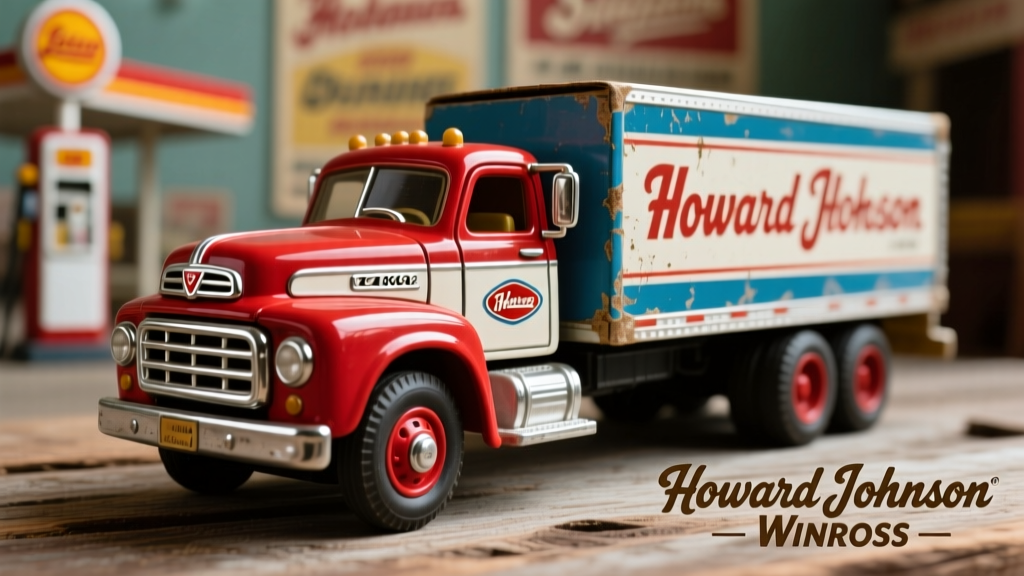
The Howard Johnson Winross Advertising Toy Truck: A Mid-Century Americana Artifact in Original Box
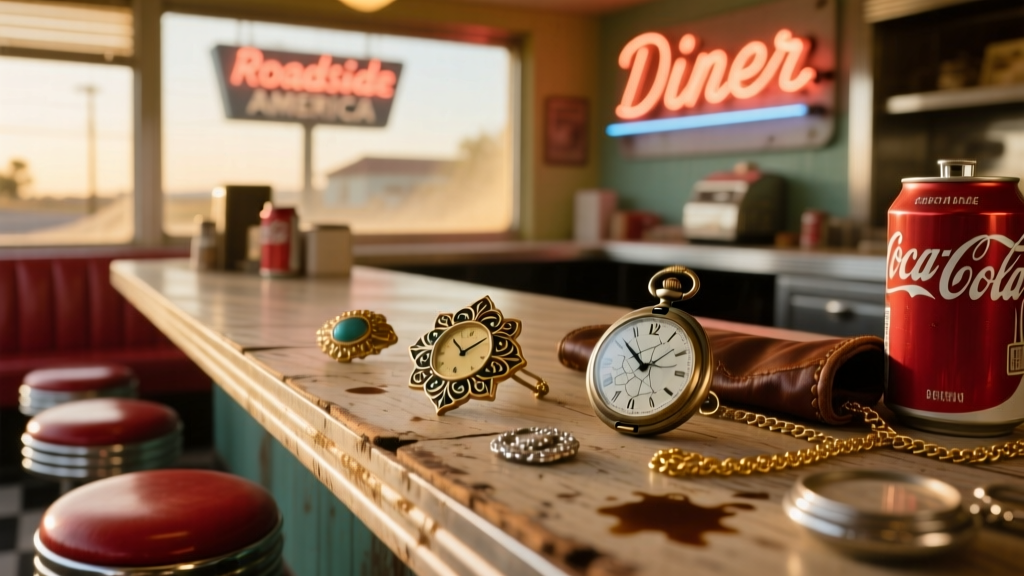
Roadside America: Neon, Tin, and Time — The Forgotten Horology of Highway Culture
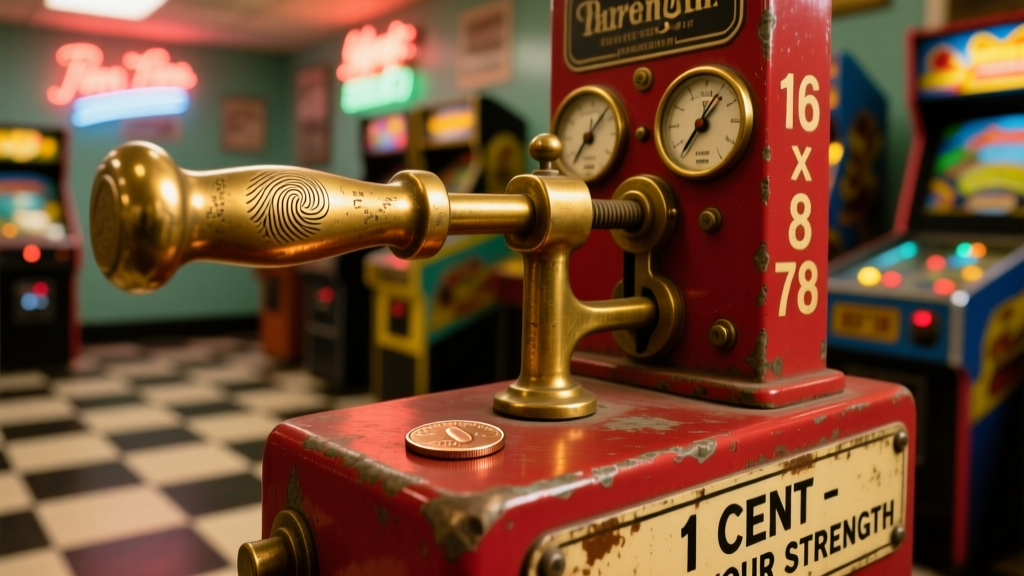
The Coin-Operated Strength Tester: Anatomy, Provenance, and Collectibility of the 1-Cent Red-Base Grip & Blow Machine (16 × 78 in)
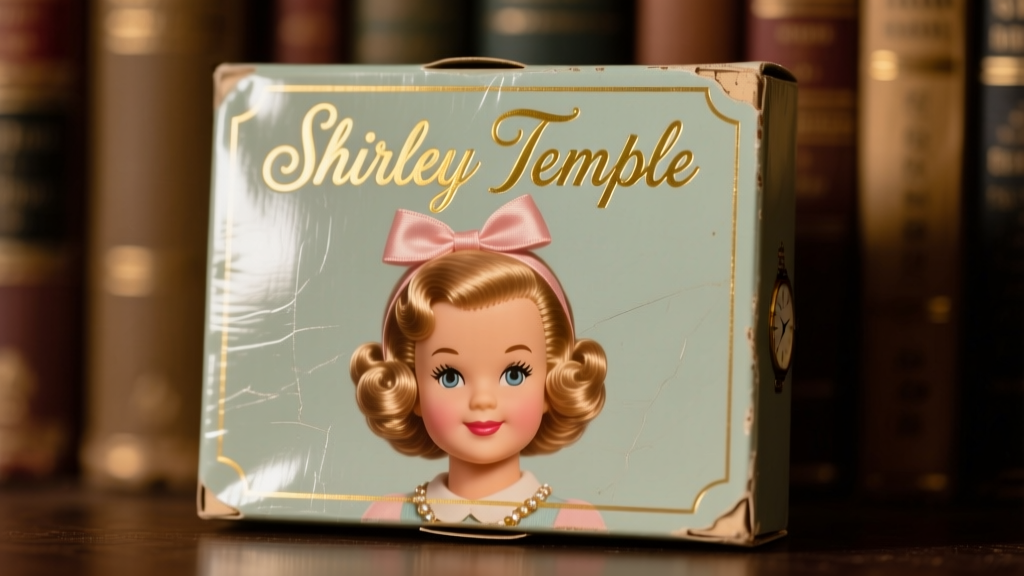
The Shirley Temple Doll Vinyl Box (1973): A Collector’s Artifact in Pristine Condition