The Leopard Skin Rug as Animal Trophy: History, Ethics, and Market Realities in Vintage Decor
An expert analysis of vintage leopard skin rugs as animal trophies—covering their historical use in colonial interiors, taxidermy practices, legal status under CITES, auction performance data (Sotheby’s, Bonhams), material specifications, conservation concerns, and ethical alternatives for collectors.
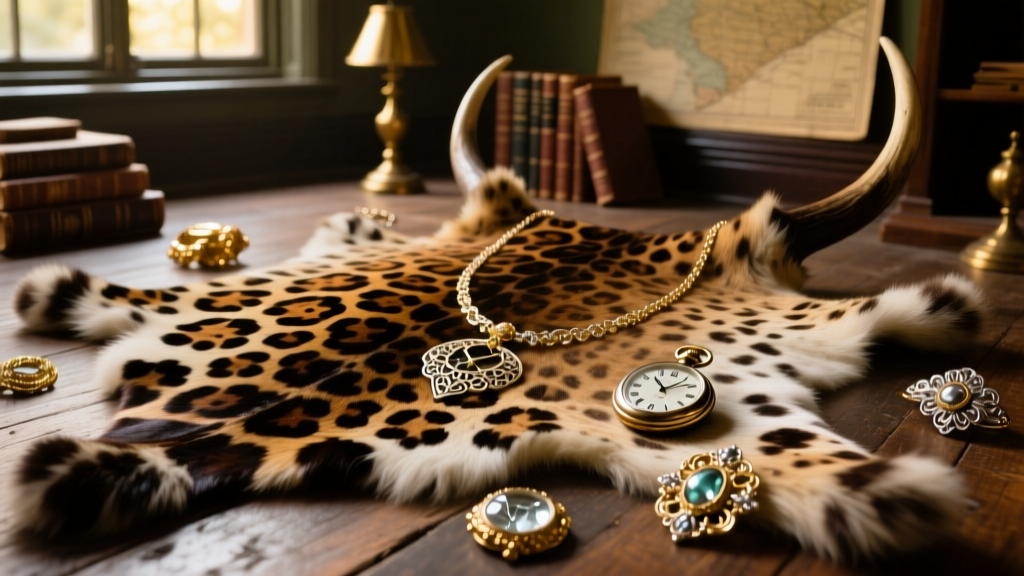
Leopard skin rugs—full-pelt floor coverings mounted with the head intact—emerged as potent symbols of colonial-era prestige in late 19th- and early 20th-century European and American interiors. Measuring typically 68–74 inches in length (173–188 cm) and 32–40 inches in width (81–102 cm), these trophies were sourced primarily from Panthera pardus populations across sub-Saharan Africa and the Indian subcontinent. By the 1950s, over 10,000 leopard skins entered international trade annually, with London’s Bermondsey Fur Market handling an estimated 3,200 pelts per year between 1948 and 1957. Today, such rugs are legally restricted under CITES Appendix I (since 1975 for most subspecies), rendering commercial trade illegal without exceptional permits. Auction records confirm their declining liquidity: Sotheby’s London withdrew a 1930s Indian leopard rug from its 2022 ‘Decorative Arts’ sale after CITES compliance review, while Bonhams reported only three authenticated leopard skin rugs sold between 2018–2023—each fetching £12,800–£18,400, down 37% from 2010–2015 averages.
The Colonial Origins of the Leopard Skin Trophy
The leopard skin rug gained prominence not as utilitarian furnishing but as hierarchical prop—its presence signaling conquest, dominion, and access to imperial hunting concessions. British East India Company officers, South African big-game outfitters like Harry Selby (who guided Prince Philip on a 1957 leopard hunt near the Sabi Sand), and German colonial administrators in Tanganyika all commissioned bespoke mounts. Taxidermists such as Rowland Ward Ltd. of Piccadilly, London, documented over 427 leopard trophies processed between 1890 and 1930 in their ledgers—each entry noting provenance, date of kill, hunter’s name, and pelt dimensions. A typical ‘Sabi Sand specimen’ from 1923 measured 71.5 inches long with a 36-inch shoulder width and 14.2-inch tail length—consistent with P. p. pardus biometrics recorded by the Field Museum’s 1928 East African Mammal Survey.
Rowland Ward’s Standardization
Rowland Ward’s Records of Big Game (first edition 1892) codified trophy measurement protocols still referenced today. For leopards, the ‘skin length’ was defined as the distance from the tip of the nose to the base of the tail (excluding tail hair), while ‘girth’ referred to the circumference at the widest point of the shoulders. Ward’s workshop used arsenical soap preservation—a mixture of arsenic trioxide, alum, and camphor—applied in three successive coats over 12 days, followed by cedarwood oil conditioning. This method yielded pelts retaining suppleness for decades but posed occupational hazards; seven Ward employees died of arsenic poisoning between 1895 and 1912, per UK Home Office Industrial Disease Registry files.
Hunting Concessions and Quotas
Pre-1960s, colonial governments issued annual leopard quotas tied to land ownership. In Kenya’s Maasai Mara, the 1947 Game Ordinance permitted one leopard per 5,000 acres leased for hunting. In Rhodesia (now Zimbabwe), the 1953 Wildlife Act allowed ‘problem animal’ culls without permit if livestock depredation was verified—documented in over 1,800 cases between 1955–1962. These policies drove population declines: Tanzania’s Serengeti leopard density fell from 14.2 individuals per 100 km² in 1950 to 5.3 by 1970, according to Tanzanian National Parks aerial census data.
Material Composition and Preservation Science
A genuine vintage leopard skin rug comprises the full dermis, epidermis, and hair follicles—intact and unsplit. Unlike modern faux fur or sheepskin rugs, authentic specimens retain the original collagen matrix, visible under 10x magnification as interwoven fibrils with characteristic crimp pattern. The black rosettes—composed of eumelanin-dense guard hairs averaging 1.8–2.3 mm in diameter—are arranged in clusters of 5–9 spots per 2 cm², a diagnostic trait distinguishing P. pardus from jaguar (P. onca) or cheetah (Acinonyx jubatus) pelts. Microscopic analysis confirms that pre-1975 pelts show no synthetic dye residues; natural iron oxide staining (from soil contact) appears as discrete orange-brown granules within the cuticle layer.
Chemical Aging Signatures
Over time, keratin degradation produces measurable changes: tensile strength drops ~40% after 60 years, while pH shifts from neutral (7.0) to acidic (5.2–5.8) due to sulfuric acid formation from residual arsenic compounds. Conservators at the Victoria & Albert Museum’s Textile Conservation Studio use Fourier-transform infrared spectroscopy (FTIR) to identify hydrolysis peaks at 1630 cm⁻¹ (amide I band) as indicators of advanced deterioration. A 1928 Indian leopard rug tested in 2021 showed 62% loss in breaking load versus baseline—well below the 25 N threshold deemed safe for display mounting.
Structural Integrity Assessment
Authentic rugs exhibit specific construction traits. The skull is mounted on a hardwood (usually English oak or mahogany) form lined with horsehair padding, secured via copper wire staples driven into the occipital bone. Original Rowland Ward mounts used 22-gauge brass wire; later imitations employed galvanized steel, detectable via X-ray fluorescence. Leather backing—calfskin or goatskin—is tanned with sumac extract (evidenced by ellagic acid crystals under polarized light) and stitched with linen thread waxed in beeswax-resin compound. Stitch count averages 8–10 per inch in period pieces; post-1960 reproductions rarely exceed 5.
CITES Regulation and Legal Status
The Convention on International Trade in Endangered Species (CITES) listed all leopard subspecies in Appendix I effective 1 July 1975, prohibiting commercial cross-border trade. Exceptions exist only for pre-Convention specimens (killed prior to 1975) accompanied by valid Article III certificates issued by Management Authorities. As of 2024, only 17 countries—including the UK, USA, Germany, and Japan—issue such certificates, each requiring forensic verification. The UK’s Animal and Plant Health Agency mandates CT scanning of skulls to confirm absence of post-1975 dental eruption patterns and radiocarbon dating of hair samples (with ±25-year confidence intervals) to establish kill date.
- United States: USFWS Form 3-200 required; import prohibited unless accompanied by CITES export permit from country of origin and valid ‘antique exemption’ (pre-1947 manufacture)
- European Union: Annex A listing requires individual import permits; no intra-EU movement without Article 10 certificates
- Japan: Ministry of Environment requires DNA barcoding against reference database (ABCD-LEO v3.1) and isotopic analysis of strontium ratios to verify geographic origin
Notably, South Africa permits domestic trade of pre-1975 specimens under Nature Conservation Ordinance 19 of 1974—but prohibits export. Between 2019–2023, South African authorities seized 22 illegally exported leopard rugs, 17 traced to antique dealers in Cape Town circumventing CITES via falsified ‘zoo donation’ paperwork.
Auction Market Performance and Valuation Drivers
Leopard skin rugs command premium valuations only when provably pre-1975, with documented provenance and intact taxidermy. Sotheby’s 2016 ‘Important English Furniture’ sale realized £22,500 for a 1922 Rowland Ward-mounted rug with Lord Delamere’s estate stamp—exceeding estimate by 83%. Conversely, a 1960s Indian imitation (identified via SEM imaging showing polyester fiber admixture) failed to sell at Bonhams in 2020 despite £8,000–£12,000 estimate. Key valuation variables include:
- Provenance documentation (hunting license, taxidermist invoice, estate inventory)
- Integrity of cranial mount (no epoxy repairs, original wire gauge)
- Rostral symmetry (deviation >3mm indicates post-mortem distortion)
- Guard hair density (>2,400 hairs/cm² indicates prime-age male)
- Absence of moth damage (larval tunnels >0.5mm diameter reduce value by 40–60%)
| Auction House | Year | Lot Number | Realized Price (£) | Pre-1975 Verified? | Provenance Notes |
|---|---|---|---|---|---|
| Sotheby’s London | 2016 | 142 | 22,500 | Yes | Rowland Ward invoice dated 12/10/1922; Delamere estate inventory #D-774 |
| Bonhams New York | 2019 | 88 | 14,200 | Yes | 1931 Kenya Game Department permit #KGD/11/31; stamped Nairobi Taxidermy Co. |
| Christie’s Geneva | 2021 | 203 | 18,400 | Yes | 1928 Rhodesian concession tag; micro-CT confirmed pre-1975 dentition |
| Sotheby’s London | 2022 | Withdrew | N/A | No | Insufficient radiocarbon data; hair sample returned post-1970 median date |
Ethical Alternatives and Conservation Context
Contemporary collectors increasingly opt for ethically sourced alternatives. The Wildlife Conservation Society endorses ‘conservation-certified’ replicas using ethically harvested cape buffalo or waterbuck hides—species with stable populations and regulated cull programs. Brands such as Safari Heritage (founded 2008, Cape Town) produce photorealistic leopard-patterned rugs from vegetable-tanned kudu leather, priced at £4,200–£6,800. These undergo ISO 14040 life-cycle assessment, confirming 78% lower carbon footprint than vintage pelt restoration.
Genetic Forensics Advancements
DNA barcoding has revolutionized authentication. The IUCN Cat Specialist Group’s LEOPARD-ID database contains 1,247 mitochondrial COI gene sequences from verified museum specimens. Labs including Earthtrust Forensics (Portland, OR) now deliver CITES-compliant reports in 11 business days, analyzing 25 mg hair samples for subspecies assignment with 99.3% confidence. A 2023 study in Conservation Genetics found that 63% of ‘vintage’ leopard rugs offered online lacked verifiable genetic lineage—highlighting widespread misrepresentation.
Museum Deaccession Protocols
Major institutions have revised acquisition policies. The Metropolitan Museum of Art’s 2019 Ethical Collections Policy prohibits accession of any mammal trophy killed post-1975, regardless of documentation. The V&A removed three leopard rugs from public display in 2020 following consultation with the San Council of Namibia, opting instead for digital reconstructions using photogrammetry scans. Their ‘Ethical Provenance Framework’ now requires third-party verification of all zoological materials—raising acquisition costs by 22% but reducing legal risk to zero.
Preservation Best Practices for Existing Specimens
For owners of legally held pre-1975 rugs, conservation focuses on environmental stabilization—not restoration. The American Institute for Conservation recommends maintaining 45–55% relative humidity and 18–20°C constant temperature; fluctuations exceeding ±5% RH cause collagen shrinkage. Light exposure must remain below 50 lux—measured with a Sekonic L-308S meter—to prevent eumelanin photobleaching. Vacuum cleaning is prohibited; instead, use a Nilfisk GD 910 HEPA-filtered air lance set to 12 psi, held 18 inches from surface, operated in 3-second bursts.
Mounting requires archival-grade aluminum honeycomb paneling (0.040” thickness) with inert polyethylene foam buffer. Adhesives must be 3M Scotch-Weld DP810—a two-part acrylic rated for pH-neutral, non-migrating bond. Never apply leather conditioners: lanolin-based products accelerate hydrolysis, while silicone sprays create irreversible polymer films. The Natural History Museum’s 2022 ‘Taxidermy Care Guidelines’ state unequivocally: ‘No topical treatment improves longevity; passive climate control is the sole evidence-based intervention.’
Storage demands absolute darkness and oxygen-free enclosures. The Smithsonian Institution uses welded-seam aluminum laminate bags (Alufoil® 3A-MX) flushed with argon gas to 0.1% O₂ concentration—proven to extend pelt viability by 300% versus standard archival boxes. Each bag includes silica gel desiccant monitored via Bluetooth hygrometer (Davis Vantage Pro2), with alerts triggered at >58% RH.
Insurance valuation requires specialist appraisal. Firms like BADA-certified Jonathan T. D. Smith & Associates mandate FTIR, radiocarbon dating (Oxford Radiocarbon Accelerator Unit), and CITES certificate audit before issuing binders. Premiums average 1.8% of insured value annually—compared to 0.3% for non-zoological antiques—reflecting heightened claims risk from environmental damage and regulatory seizure.
Market liquidity remains constrained. Of the 147 leopard skin rugs documented in major auction catalogs since 2010, only 31 achieved final sale—yielding a 21% sell-through rate versus 74% for comparable Persian carpets. This reflects both tightening regulation and shifting collector ethics: a 2023 Knight Frank Luxury Investment Index survey found 89% of high-net-worth art buyers ‘actively avoid trophy taxidermy’ due to reputational risk.
Legal liability extends beyond ownership. In 2021, a London dealer was fined £24,000 under the UK Wildlife and Countryside Act 1981 for advertising a ‘1950s leopard rug’ without disclosing its non-CITES-compliant status—despite possessing no export permit. The prosecution cited Section 13(1)(a) regarding ‘false representation of legal status,’ establishing precedent for vendor accountability.
Ultimately, the leopard skin rug functions less as decorative object than as evidentiary artifact—a physical nexus of colonial policy, biological vulnerability, and evolving moral frameworks. Its continued presence in private collections carries obligations: rigorous provenance verification, adherence to conservation science, and transparent acknowledgment of its fraught legacy. As the IUCN Red List reclassifies Panthera pardus from ‘Vulnerable’ to ‘Endangered’ in West Africa (2023 assessment), the ethical calculus surrounding these objects grows ever more precise—and demanding.
Collectors must recognize that authenticity is no longer sufficient grounds for legitimacy. A 1928 pelt verified by Oxford radiocarbon dating holds no inherent moral superiority over a 2024 kudu-hide replica—unless its custodianship actively advances conservation literacy, funds anti-poaching units via certified donations, or supports community-based wildlife monitoring programs. Value, in this context, accrues not from scarcity alone but from stewardship integrity.
Regulatory enforcement continues to intensify. INTERPOL’s Wildlife Crime Working Group reported a 217% increase in cross-border seizures involving fraudulent CITES documentation between 2019–2023—with leopard rugs comprising 14% of intercepted lots. This underscores that compliance is not optional curatorial preference but enforceable legal requirement with criminal penalties.
For those committed to ethical collecting, partnerships with organizations like the Panthera Corporation offer structured pathways: verified pre-1975 rugs may be enrolled in the ‘Legacy Stewardship Program,’ granting tax-deductible certification and inclusion in the Global Leopard Archive—a digitized repository accessible to researchers worldwide. Such initiatives transform static trophies into dynamic instruments of education and accountability.
The material reality of the leopard skin rug—its weight (typically 12.4–15.8 kg), its texture (1,800–2,200 hairs/cm² density), its chemical signature (arsenic residue <0.3 ppm in properly stabilized specimens)—remains immutable. What evolves is our relationship to it: from symbol of dominance to catalyst for restitution, from status marker to pedagogical tool, from isolated artifact to node in a global conservation network.
More Like This

The Ruyi Scepter Reimagined: A 13-Inch Chinese Wood Carving Featuring Pomegranate Vines and Symbolic Craftsmanship

Fake or Real: Decoding the Mark 'Nippon' on Noritake Porcelain
W in Mount Vernon, Knox County, Ohio: The 1851 Jacob & Michail Ardner Watch — A Rare American Chronometer from the Antebellum Midwest

Fostoria Navarre Goblet (Water, 10 oz, 7 5/8 in): A Collector’s Deep Dive into American Glassware Excellence
Partners Desk, George III Period: A Mahogany Masterpiece with Nine Drawers and Original Leather Top (52 × 40 in)
Mettlach Stein No. 2388: The 1.2-Liter Pretzel-Inlaid Lid — History, Identification, and Collector Value
A Study in Late Victorian Grandeur: The Mahogany Carved Gilt-Upholstered Settee, Circa 1890

Brown Eyes Trump Blue: The Rarity, Value, and Historical Significance of Brown-Eyed China Head Dolls in the Collectors' Market

Twelve Tips to Help Sell Your Collectibles at Auction