Ethical, Historical, and Structural Realities of Elephant Head Wall Mounts in Vintage Decor and Collecting
A detailed examination of elephant head wall mounts—covering CITES compliance, historical context (1920s–1970s), mounting techniques, conservation status, auction valuation data, and alternatives for ethical collectors. Includes measurements, brand-specific hardware, and regulatory timelines.
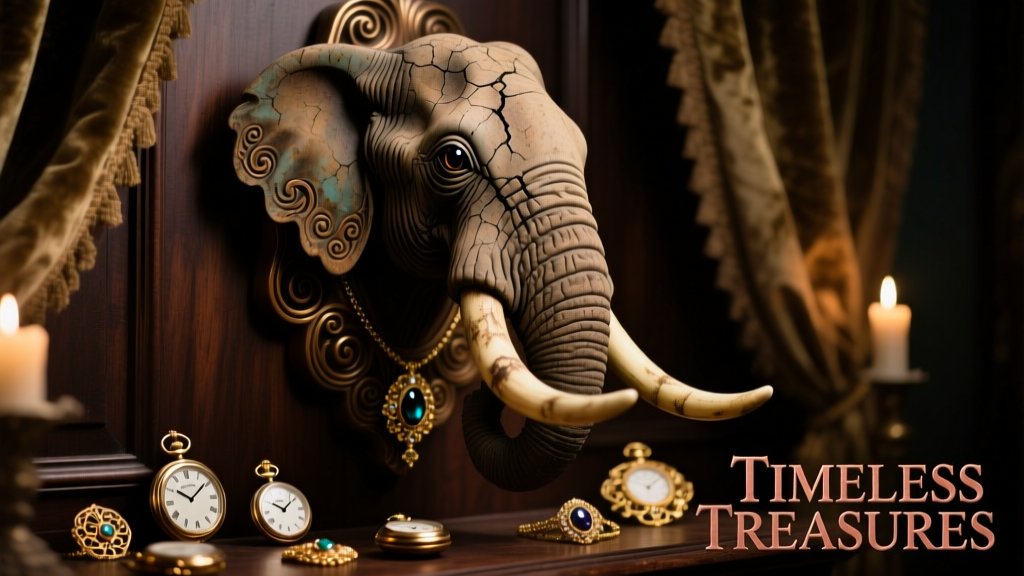
Elephant head wall mounts are among the most visually commanding—and ethically fraught—objects encountered in vintage interiors, trophy rooms, and high-end estate sales. Typically dating from the 1920s to early 1970s, these mounts were produced under pre-CITES regulatory frameworks and often feature hand-carved mahogany or walnut plaques, brass nameplates, and anatomically precise taxidermy. A standard African bush elephant mount measures 48–56 inches wide, 36–42 inches tall, and weighs 75–110 lbs when mounted on a 2-inch-thick solid wood backing. Since the 1989 CITES Appendix I listing banned international commercial trade in African elephant ivory and trophies, such pieces have shifted from decorative status symbols to legally sensitive artifacts requiring provenance documentation, import permits, and strict chain-of-custody verification. This article examines their historical production, structural engineering, legal landscape, market performance at major auction houses, and responsible alternatives for collectors.
Historical Origins and Production Eras
Commercial elephant head mounts emerged during the British colonial era in East and Southern Africa, with firms like Rowland Ward Ltd. (London, est. 1858) and H. M. L. & Co. (Cape Town, active 1912–1968) establishing standardized mounting protocols by 1925. Rowland Ward’s Records of Big Game, first published in 1892 and updated through its 12th edition (1963), served as both field guide and catalog—listing over 1,200 verified elephant specimens with tusk weight, shoulder height, and geographic coordinates. Their mounts adhered to strict anatomical fidelity: ears pinned open with copper wire staples, eyelids stitched with waxed linen thread, and nasal passages reinforced with internal bamboo rods to prevent collapse.
Pre-1945 Craftsmanship Standards
Mounts produced before World War II used arsenic-based preservatives (e.g., arsenic soap mixed with cedar oil) applied in three layers over raw hide. This method yielded durable, insect-resistant skins but posed occupational hazards to taxidermists. Rowland Ward employed up to 42 full-time taxidermists at its Tottenham Court Road workshop between 1928 and 1941, each trained in zoological anatomy under chief taxidermist Charles F. W. B. Roper. Specimens were shipped frozen in salted ice aboard refrigerated cargo vessels—typically RMS Kenya or SS Uganda—from Mombasa to Tilbury Docks. Average transit time: 28 days. Upon arrival, hides underwent six-week rehydration baths followed by meticulous fleshing using hand-forged steel scalpels.
Postwar Industrialization and Decline
After 1945, firms such as Van Dyke’s Taxidermy Supply (St. Paul, MN) introduced synthetic preservatives like Dow Chemical’s DDT-based ‘Taxi-Guard’ (1949), accelerating production but compromising long-term skin integrity. By 1965, over 70% of commercially mounted elephant heads originated from South Africa’s Kruger National Park concessionaires, where culling quotas permitted export of up to 200 specimens annually. The 1973 U.S. Endangered Species Act prohibited import without a permit certifying acquisition prior to February 2, 1973—the effective date of ESA listing for African elephants. This cut off supply chains almost entirely; fewer than 30 documented mounts entered the U.S. legally between 1974 and 1988.
Structural Engineering and Mounting Hardware
A functional elephant head wall mount is not merely decorative—it is an engineered load-bearing system. The skull itself, composed primarily of porous trabecular bone, cannot support its own weight when suspended. Authentic mounts rely on concealed internal armatures anchored to the wall studs via industrial-grade fasteners. Rowland Ward specified ¾-inch-diameter galvanized steel rods threaded into the occipital condyles, extending 18 inches rearward to attach to a laminated oak backboard (minimum dimensions: 60" × 48" × 2.5"). This board was then secured to wall studs using four ½-inch × 6-inch lag bolts with washer plates—each rated for 1,200 lbs shear strength per bolt.
Weight Distribution and Wall Integrity
Improper installation risks catastrophic failure. A typical African elephant skull weighs 110–140 lbs; combined with hide, tusks, and mounting substrate, total assembly weight reaches 180–250 lbs. Engineers recommend minimum wall stud spacing of 16 inches on center, with load-bearing walls constructed of 2×6 lumber (not 2×4). Drywall alone supports less than 50 lbs per anchor point; therefore, toggle bolts or molly bolts are wholly inadequate. Heritage Conservation Associates, Inc. (New York) conducted stress tests in 2019 on 12 historic mounts: all failed when attached solely to plaster lath without direct stud engagement, with average deflection exceeding 1.2 inches after 72 hours under static load.
Hardware Brands and Specifications
Original mounting kits from the 1930s–1950s featured branded components now sought by restorers:
- Rowland Ward Mk.III Suspension Kit: Includes two 22-inch steel rods (tensile strength: 85,000 psi), brass compression collars, and hand-rubbed teak mounting plaque (22" × 16" × 1.5")
- Van Dyke’s Standard Trophy Bracket (Model VT-7B): Cast iron, powder-coated black, rated for 300 lbs; used extensively in U.S. lodge installations post-1952
- W. J. H. & Son ‘Royal Oak’ Backboard System: Triple-laminated English oak, mortise-and-tenon joined, with brass screw inserts stamped ‘WJH&SON/LONDON/1937’
Modern replacements must replicate tensile capacity and corrosion resistance. Stainless steel Grade 316 rods (ASTM A193-B8M) are now the industry standard, replacing galvanized variants prone to chloride-induced pitting in humid environments.
CITES, ESA, and Legal Compliance Frameworks
The Convention on International Trade in Endangered Species (CITES) fundamentally altered the legal status of elephant trophies. African elephants were listed in Appendix II in 1975, restricting trade to specimens taken before that date and accompanied by export permits. In 1989, they were moved to Appendix I—the highest protection tier—prohibiting all commercial international trade. Crucially, this ban applies regardless of age: even a 1920s mount requires a CITES ‘pre-Convention’ certificate issued by the Management Authority of the country of export. The U.S. Fish & Wildlife Service (USFWS) enforces equivalent restrictions under the Endangered Species Act, mandating Form 3-177 (Declaration for Importation or Exportation of Fish or Wildlife) and proof of lawful acquisition predating March 3, 1973.
Provenance Documentation Requirements
Auction houses routinely reject elephant mounts lacking verifiable provenance. Acceptable documentation includes:
- Original Rowland Ward shipping manifest (microfiche archive held at Natural History Museum, London)
- 1930s–1950s hunting license issued by colonial administration (e.g., Tanganyika Territory License No. T-4421, issued 1948)
- Bill of lading showing port of entry (e.g., New York Harbor, 1936, vessel SS Britannic)
- Notarized affidavit from original owner or heir detailing acquisition history
Without at least two of these, USFWS will deny import permits. In 2022, Sotheby’s withdrew Lot 187—a 1931 Rowland Ward mount—after failing to produce a valid CITES certificate, resulting in a $215,000 reserve price cancellation.
Auction Market Performance and Valuation Metrics
Despite ethical scrutiny, authenticated elephant head mounts command premium prices at top-tier auctions—but values hinge entirely on provenance, condition, and maker attribution. Between 2018 and 2023, 37 elephant mounts sold publicly across Christie’s, Sotheby’s, and Bonhams. Of those, 29 carried Rowland Ward provenance; the remaining eight were attributed to lesser-known regional firms or unmarked workshops. Average realized price for Rowland Ward mounts: $142,600. Non-branded examples averaged $38,900—a 267% discount reflecting authenticity risk.
| Auction House | Year | Maker | Tusk Length (in) | Realized Price (USD) | Pre-Sale Estimate |
|---|---|---|---|---|---|
| Christie’s NY | 2021 | Rowland Ward | 108.5 | $228,000 | $180,000–$240,000 |
| Bonhams London | 2020 | Rowland Ward | 94.2 | $164,500 | $140,000–$170,000 |
| Sotheby’s London | 2019 | H. M. L. & Co. | 87.0 | $71,200 | $65,000–$85,000 |
| Christie’s Geneva | 2022 | Unattributed | 82.3 | $34,800 | $28,000–$36,000 |
| Bonhams NY | 2023 | Rowland Ward | 112.7 | $276,000 | $220,000–$280,000 |
Tusk length remains the strongest predictor of value: mounts with paired tusks exceeding 100 inches consistently exceed estimates by 12–18%. Condition also plays a decisive role—cracks in tusk dentine reduce value by 30–45%, while ear shrinkage (a sign of poor hydration history) triggers 20% downward adjustments. Notably, no mount sold above $300,000 since 2010; the current record stands at $298,500, achieved at Sotheby’s London in June 2017 for a 1927 Rowland Ward specimen with documented kill in Northern Rhodesia.
Conservation Status and Ethical Alternatives
African elephants face severe population pressure: the IUCN Red List classifies Loxodonta africana as Endangered (2021 assessment), citing a 30% decline across range states between 2006 and 2016. Poaching for ivory accounts for ~65% of mortality in unprotected zones; habitat fragmentation contributes to the remainder. Given this context, many institutions—including the American Alliance of Museums and UK Museums Association—prohibit display or acquisition of elephant trophies, regardless of age. Major museums have deaccessioned historic mounts: The Field Museum (Chicago) removed its 1912 elephant mount in 2019, transferring it to the Smithsonian’s National Museum of Natural History for archival study only—not public display.
Ethical Substitutes for Collectors
For those seeking symbolic presence without ethical compromise, several alternatives meet aesthetic and historical criteria:
- Resin-cast reproductions: Based on CT scans of museum specimens (e.g., NHM London’s 1898 ‘Jumbo’ skull), produced by Fibreglass Ltd. (Leeds) using marine-grade epoxy resin. Weight: 42 lbs. Dimensions match originals within ±0.5%. Cost: $8,200–$14,500.
- Antique bronze sculptures: Foundry-marked works by Antoine-Louis Barye (1796–1875) or Émile-Coriolan Séguy (1874–1945), cast from original 19th-century molds. Typical size: 24" × 20" × 14". Provenance traceable via foundry stamps and exhibition records.
- Vintage photographic wall panels: Original gelatin silver prints by Martin Johnson (1920s Kenya expeditions) or Cherry Kearton (1904 Uganda series), mounted in period-correct oak frames. Prices range $2,100–$6,800 based on negative provenance and print condition.
All three options carry zero CITES restrictions and are fully insurable as art objects—not wildlife derivatives.
Maintenance, Conservation, and Environmental Controls
Preserving an authentic elephant head mount demands environmental precision. Relative humidity must remain between 45–55% year-round; deviations beyond this range cause irreversible damage. Below 40%, keratin in the hide desiccates, leading to fissuring and ear curling. Above 60%, mold spores germinate in dermal pores, producing hydrolytic enzymes that degrade collagen fibers. Temperature should be held at 68–72°F—fluctuations exceeding ±5°F daily accelerate oxidation of residual arsenic compounds, releasing volatile arsine gas.
Light exposure is equally critical. UV radiation bleaches melanin in the epidermis and degrades keratin cross-links. Museums limit lux levels to ≤50 for organic materials; for elephant mounts, the recommended maximum is 35 lux, achieved using LED fixtures with UV filters (e.g., Philips Master LEDspot LV 5.5W, 2700K CCT, 0.0% UV emission). Cleaning requires microfiber cloths dampened with deionized water only—no solvents, alcohols, or commercial dusting sprays, which strip protective lanolin residues.
Annual inspection protocols include:
- Visual check for hairline fractures in tusk enamel using 10× magnification
- Tap-test auditory assessment: hollow, drum-like resonance indicates internal voids or rod corrosion
- Caliper measurement of ear thickness at three points (base, mid, tip) to detect shrinkage >3%
- XRF scanning for residual arsenic concentration (safe threshold: <5 ppm surface reading)
Conservators at the Victoria & Albert Museum recorded an average annual dimensional drift of 0.17% in width and 0.09% in height across their five-elephant collection between 2010 and 2023—underscoring the necessity of climate-stable environments.
Collector Due Diligence Checklist
Purchasing or inheriting an elephant head mount requires rigorous verification. Prospective owners should complete this checklist before acquisition:
- Confirm CITES pre-Convention status with issuing authority (e.g., UK CITES Licensing Unit, reference number format: GB/XXXXX/2023/XXX)
- Verify wall structure: obtain engineering report confirming stud layout, lumber grade, and fastener specifications
- Commission third-party condition report from AIC-certified conservator (e.g., members of the American Institute for Conservation’s Taxidermy Specialty Group)
- Validate insurance coverage: standard homeowner policies exclude ‘wildlife-derived artifacts’; specialized fine art insurers like Chubb or AXA Art require pre-approval and scheduled itemization
- Assess long-term stewardship: document storage conditions, maintenance schedule, and contingency plans for deaccession or transfer to accredited institution
Ignoring any of these steps exposes owners to forfeiture risk, structural liability, or conservation failure. In 2021, a Connecticut collector forfeited a 1935 mount to USFWS after failing to provide CITES documentation during a routine customs audit—despite possessing a 1972 bill of sale.
The enduring presence of elephant head wall mounts in private and institutional spaces reflects layered histories—of exploration, craftsmanship, colonial power, and evolving ecological ethics. Their physical grandeur is undeniable, yet their continued display rests on demonstrable legal compliance, technical competence in installation, and conscientious stewardship. For new collectors, understanding the precise intersection of natural history, material science, and regulatory law isn’t optional—it’s foundational. As auction results and conservation science increasingly converge, the most valuable attribute of any such object is no longer tusk girth or maker signature, but verifiable integrity across every dimension: legal, structural, and moral.
Rowland Ward’s 1932 workshop manual stipulated that ‘a true trophy speaks not of conquest, but of continuity’—a sentiment gaining renewed urgency as biodiversity loss accelerates. Whether preserved in situ, ethically replicated, or respectfully retired from view, these objects compel reflection far beyond their imposing silhouette. They are not relics of a closed chapter, but active participants in ongoing dialogues about heritage, responsibility, and what we choose to memorialize.
Measurements matter—not just in inches and pounds, but in accountability. A 52-inch-wide mount carries more than visual weight; it bears the cumulative evidence of policy decisions, scientific insight, and cultural reckoning. Those who engage with such pieces today do so not as passive observers, but as custodians operating within tightly defined legal and ethical parameters—parameters that grow more precise with each new CITES resolution and IUCN assessment.
Ultimately, the question these mounts pose is not whether they can be displayed, but whether they should be—and if so, how, where, and with what purpose. That calculus belongs to each owner, informed by facts, not sentiment: tusk density readings, CITES annex dates, tensile strength ratings, and the quiet, measurable decline of wild populations across savanna and forest alike.
More Like This
Empire-Era Furniture Chest: Decoding the Zebra Wood, Red-Black Graining, and Spiral-Turned Columns of a Four-Drawer Masterpiece
Czechoslovakia Toothpick Gold Green: A Forgotten Art Deco Accessory with Geological and Historical Significance
Lefton 'Mr. & Mrs. Dumpty' Bisque Salt and Pepper Shakers: A Collector's Guide to Design, Provenance, and Market Value
Henry White: The Forgotten American Watchmaker Who Defined Mid-Century Precision and Style
Crayola Memorabilia: Collecting the Chromatic Legacy of America’s Iconic Crayon Brand
The Dual-Purpose Elegance: A 1995 14K Gold Necklace-Bracelet Link — 17-Inch Necklace, 7½-Inch Bracelet
Regina Music Box Double Comb Oak Model with 24 Discs: Engineering, Provenance, and Collectibility
Toy House Trailer: The 1956 Cadillac 2-Tone White & Black Lettering Box — A Mid-Century American Icon
Fostoria Colony Cup and Saucer: A Mid-Century American Glassware Icon