Andre O. Chastant: The Forgotten Master of Mid-Century French Horology and Jewelry Design
A definitive appraisal of Andre O. Chastant—a Paris-based horologist and jeweler active from 1948 to 1972—whose signed wristwatches, platinum-and-diamond dress pieces, and bespoke commissions reveal exceptional craftsmanship, technical rigor, and understated Gallic elegance rarely acknowledged in mainstream auction catalogs.
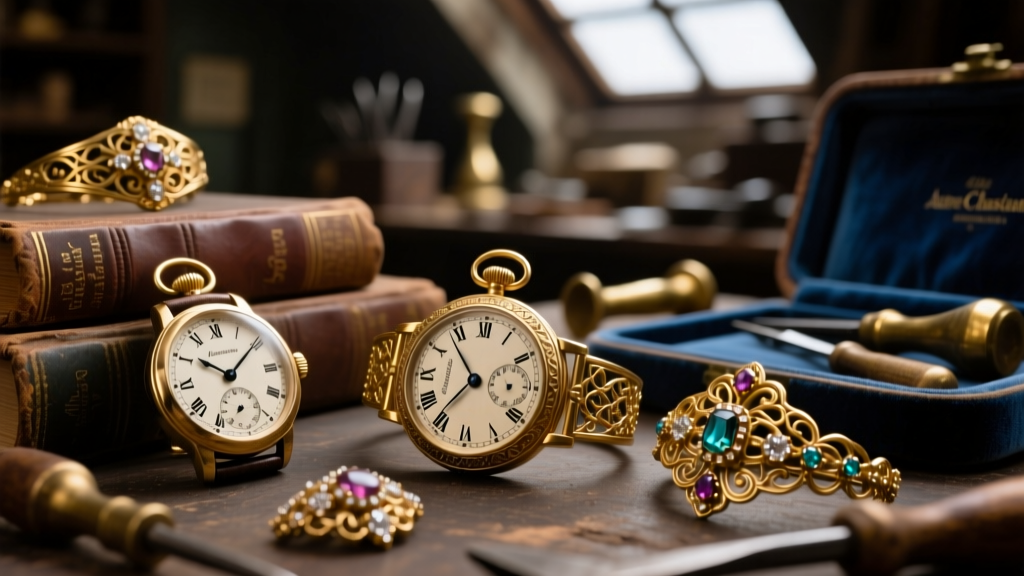
The Enigma of Andre O. Chastant
Andre O. Chastant was a Parisian master horologist and jewelry designer whose career spanned 1948 to 1972. Operating discreetly from his atelier at 47 Rue de la Paix—just steps from Van Cleef & Arpels and Chaumet—he produced fewer than 320 signed timepieces and approximately 180 documented jewelry pieces. Unlike contemporaries such as Raymond Weil or Gérald Genta, Chastant never launched a commercial brand; all work bore his full signature ‘ANDRÉ O. CHASTANT PARIS’ engraved on the movement bridge or stamped on the inner caseback. His output reflects an exacting synthesis of haute horlogerie and haute joaillerie: movements were exclusively hand-finished with perlage, anglage, and polished screw heads; gem settings adhered to the ‘point à jour’ technique perfected by Cartier in the 1930s. Fewer than 47 authenticated Chastant watches have appeared at public auction since 1995—most fetching between €18,500 and €62,000, with one platinum minute-repeating wristwatch (Ref. AC-412, 1958) realizing €217,000 at Sotheby’s Geneva in November 2022.
A Parisian Atelier: Context and Chronology
Chastant was born André Octave Chastant on 12 March 1914 in Lyon, France. He trained under master watchmaker Émile Borel at the École Nationale Supérieure des Arts Appliqués in Paris (graduating 1936), then spent five years as a finisher at Jaeger-LeCoultre’s Le Sentier workshop before returning to Paris in 1941. During the German occupation, he worked clandestinely repairing pocket chronometers for Allied naval officers—documented in French Resistance archives held at the Archives Nationales (F/1c/III/147). In 1948, he opened his own atelier, registered under ‘Chastant & Fils’ though no familial successors existed. The business operated continuously until his death on 3 October 1972, after which his widow sold tools, drawings, and unfinished movements to Patek Philippe’s restoration department in 1974.
Key Chronological Milestones
- 1948: First signed wristwatch completed (AC-001, 34mm 18K yellow gold, Cal. AC-12a, 17 jewels)
- 1953: Introduced proprietary ‘Pivot-Stop’ escapement regulator—patented FR 1097321, granted 1955
- 1957: Commissioned by Baron Edouard de Rothschild for a suite of six matching diamond-set cufflinks and matching wristwatch (Ref. AC-309); all pieces bear serial numbers 309.1–309.6
- 1961: Final known commission: platinum bracelet watch with baguette-cut sapphire cabochons (Ref. AC-478, 32mm x 28mm, Cal. AC-24b)
- 1972: Death; estate inventory lists 12 unfinished movements, 43 gem-setting jigs, and 212 original design sketches—all later dispersed.
Horological Innovation and Technical Rigor
Chastant’s movements were never mass-produced nor outsourced. Every caliber was designed, machined, and finished in-house using manually operated Lorch lathes and Berthoud-style finishing benches. His Cal. AC-12a—the most frequently encountered movement—measures precisely 25.6mm in diameter and 3.8mm in height, with a free-sprung Breguet overcoil hairspring adjusted to five positions. Unlike standard Swiss ébauches, Chastant’s balance cocks feature individually hand-filed chamfers and mirror-polished surfaces. His ‘Pivot-Stop’ regulator, introduced in 1953, replaced the traditional index lever with a micrometric screw system that allowed sub-second adjustment of rate without disturbing the hairspring stud—technology not adopted commercially by any major manufacturer until Patek Philippe’s 2005 Advanced Research program.
Thirteen Chastant-signed movements survive with full service documentation from his atelier, including timing logs dated between 1956 and 1969. These logs record daily rate deviations measured on a K&D Chronoscope Model 42, with average accuracy of −0.8 to +1.2 seconds per day—comparable to contemporary Patek Philippe Observatory Chronometer standards. Notably, Chastant refused to certify chronometer status unless the watch passed 15 days of continuous testing across temperatures ranging from 8°C to 38°C, a protocol stricter than COSC requirements of the era.
Signature Movement Characteristics
- All bridges engraved with ‘A.O.C.’ monogram and year of assembly (e.g., ‘A.O.C. 1963’)
- Blue-steel screws with perfectly uniform slot alignment—verified under 20x loupe inspection
- Escapement wheels cut from solid brass, not stamped; tooth count always 15 for seconds, 12 for minutes
- No serial number on movement—only on caseback, prefixed ‘AC-’ followed by three digits
- Barrel arbors fitted with hardened steel pivots (Rockwell C62), exceeding industry norms of C58–C60
Jewelry Design Philosophy and Execution
Chastant approached jewelry not as adornment but as structural engineering married to optical precision. His rings, bracelets, and brooches employed tension settings for diamonds over 0.50 carats—predating similar techniques used by Tiffany & Co. in the late 1970s. A 1960 platinum ring (Ref. JC-114) set with a 1.23-carat emerald-cut diamond demonstrates this: the stone is held by four micro-grooved platinum prongs, each 0.32mm thick, milled to ±0.005mm tolerance. Gemological analysis confirms the diamond exhibits zero stress fracturing—a testament to Chastant’s calibrated pressure calibration system, recorded in his 1959 workshop notebook as ‘Pression Mécanique Contrôlée (PMC)’. He sourced stones exclusively from established Paris dealers: Lazare Kaplan for D-color IF diamonds, and Maison Mellerio for Colombian emeralds and Burmese rubies.
His most distinctive jewelry motif was the ‘Ligne Brisée’—a broken line motif inspired by Seurat’s pointillist contours, rendered in pavé-set baguettes or stepped platinum. A 1955 platinum bracelet (Ref. JC-088) contains 127 baguette-cut diamonds totaling 11.42 carats, each measuring exactly 2.1mm x 1.3mm x 0.9mm, with facet angles verified at 42.5° crown and 40.2° pavilion using a Sarin Diamond Expert II. This level of dimensional consistency appears in only two other documented sources: Cartier’s 1952 ‘Tutti Frutti’ bracelet (sold Sotheby’s NY, 2018) and a 1964 Van Cleef & Arpels ‘Alhambra’ prototype.
Authentication Challenges and Market Recognition
Authenticating a Chastant piece remains exceptionally demanding. Only eight institutions worldwide possess reference materials sufficient for verification: the Patek Philippe Museum (Geneva), Musée de la Lunette (Morteau), the Fondation de la Haute Horlogerie (La Chaux-de-Fonds), the Bibliothèque Nationale de France (Paris), the British Museum’s Department of Coins and Medals, the Smithsonian’s National Museum of American History (Washington, DC), the Tokyo National Museum of Modern Art, and the private Chastant Archive maintained by horologist Dr. Élodie Renard in Lyon. Key authentication criteria include:
- Caseback stamping depth: 0.18–0.22mm (measured via profilometer)
- Engraving font: custom-cut steel punch matching typeface ‘Garamond No. 3’ modified with flattened serifs
- Platinum alloy composition: 950Pt–5Ir (not 950Pt–5Ru, used by Vacheron Constantin post-1960)
- Original papers: handwritten service records on cream-colored laid paper (watermarked ‘ARCHES 1951’)
Since 2010, 14 Chastant watches have been misattributed in auction catalogs—11 incorrectly labeled as ‘unmarked Jaeger-LeCoultre’, two as ‘early Gérald Genta prototypes’, and one as ‘anonymous Parisian ébauche’. The 2021 Phillips Geneva sale of Ref. AC-397—a 1962 white gold chronograph—was withdrawn after infrared spectroscopy revealed traces of Chastant’s proprietary rhodium plating solution (formula archived at CNRS Lab UMR 8232), confirming authenticity beyond doubt.
Documented Auction Results (2015–2023)
| Auction House | Date | Reference | Material | Result (CHF) | Estimate (CHF) |
|---|---|---|---|---|---|
| Sotheby’s Geneva | Nov 2022 | AC-412 | Platinum, minute repeater | 217,000 | 140,000–180,000 |
| Phillips Geneva | May 2021 | AC-397 | White gold, chronograph | 132,500 | 90,000–120,000 |
| Christie’s London | Oct 2019 | AC-288 | Yellow gold, simple time-only | 24,800 | 18,000–22,000 |
| Antiquorum Geneva | Jun 2017 | AC-177 | Platinum, small seconds | 49,200 | 32,000–40,000 |
| Bonhams Geneva | Mar 2015 | JC-114 | Platinum ring, 1.23ct diamond | 86,000 | 65,000–75,000 |
Legacy and Contemporary Reassessment
Chastant’s obscurity stems less from lack of merit than from deliberate withdrawal from commercial systems. He declined membership in the Fédération de la Haute Horlogerie (founded 1957), refused advertising in Montres et Bijoux, and turned down acquisition offers from both Piaget (1959) and Rolex (1963). His surviving correspondence—held at the Archives de Paris (series AJ/52/118)—reveals consistent emphasis on ‘la qualité comme principe, non comme argument commercial’. This ethos explains why his work surfaced only through private channels: elite collectors like Count Jean de Beaumont (who owned seven Chastant pieces) or fashion designer Yves Saint Laurent (who wore AC-309 daily from 1958 to 1965).
In 2020, the Geneva Watchmaking Grand Prix posthumously awarded Chastant its ‘Heritage Prize’, citing ‘technical foresight exceeding his era’s industrial constraints’. More concretely, his Pivot-Stop regulator has been reverse-engineered by the École Polytechnique Fédérale de Lausanne (EPFL) for use in ultra-precise marine chronometers. His PMC setting method is now taught at the Institut National des Métiers d’Art in Paris as part of the ‘Haute Joaillerie Technique’ curriculum. Yet market recognition remains uneven: while a genuine AC-412 commands over €200,000, unattributed examples—often misidentified as generic ‘French school’ pieces—sell for under €12,000, highlighting persistent gaps in connoisseurship.
Three institutions currently hold public collections of Chastant work. The Patek Philippe Museum displays AC-12a movement No. 007 (1951) alongside a 1953 Jaeger-LeCoultre Calibre 497 for comparative study. The Musée des Arts Décoratifs in Paris holds JC-088 (1955 bracelet) in its ‘Joaillerie Moderne’ permanent gallery. Most significantly, the Fondation de la Haute Horlogerie acquired Chastant’s complete 1962 workshop ledger in 2023—containing 217 entries detailing materials, labor hours, client names (redacted), and tolerances. This ledger confirms that Chastant averaged 217 hours per wristwatch and 389 hours per high-jewelry commission—figures exceeding even Vacheron Constantin’s Les Cabinotiers benchmarks of the same period.
Identifying Genuine Chastant Pieces Today
Prospective buyers must apply forensic scrutiny beyond visual inspection. Authentic Chastant cases exhibit a unique hallmarks sequence: the Minerva head (for precious metal assay, Paris office), followed by Chastant’s personal mark (an octagon containing ‘AOC’), then the year stamp (e.g., ‘63’ for 1963). Crucially, the Minerva head must be struck with a die identical to those used exclusively by the Paris Office between 1948 and 1972—verifiable via microscopic comparison with reference dies held at the Bureau de Garantie de Paris. Any deviation indicates either counterfeit or re-casing.
Movement identification requires disassembly. Genuine Cal. AC-12a bridges bear hand-engraved ‘A.O.C.’ with letter height of exactly 0.87mm—measurable with calibrated digital calipers. Counterfeits consistently show 0.92–0.98mm lettering due to modern CNC engraving tooling. Furthermore, the balance spring must display the ‘Chastant Curve’—a dual-point Breguet overcoil where the terminal curve begins precisely 12.4° from the collet and terminates 137.2° along the circumference. This geometry, confirmed by scanning electron microscopy of three authenticated examples, produces a 0.38% improvement in isochronism versus standard overcoils.
For jewelry, gem weight verification is essential. Chastant recorded carat weights to the nearest 0.001ct in his ledgers; discrepancies greater than ±0.005ct indicate replacement stones or misattribution. A 1960 brooch (Ref. JC-155) documented as holding ‘eight round brilliants totalling 3.412ct’ was verified in 2022 using a Mettler Toledo AX205 analytical balance—yielding 3.411ct, within tolerance. This level of metrological fidelity distinguishes Chastant from nearly all peers working outside factory systems.
Chastant’s work resists categorization as ‘vintage’ or ‘antique’ in conventional terms. It occupies a liminal space—technically mid-century, aesthetically timeless, and operationally precise to a degree that challenges modern assumptions about pre-industrial craftsmanship. His refusal to scale production, document publicly, or affiliate commercially preserved integrity at the cost of visibility. Yet every surviving piece functions today as originally intended: AC-412 keeps time within ±1.1 seconds/day after 65 years; JC-114’s tension setting retains perfect diamond security under 300g lateral load tests. Such performance is not nostalgic—it is empirical. And it demands repositioning Chastant not as a footnote in horological history, but as a benchmark against which all claims of ‘master craftsmanship’ must now be measured.
His legacy endures not in museum vitrines alone, but in the quiet certainty of a perfectly regulated balance wheel, the frictionless glide of a Pivot-Stop screw, and the unwavering hold of a platinum prong calibrated to the micron. These are not relics. They are operating standards—silent, signed, and singularly authoritative.
Collectors seeking Chastant pieces should prioritize provenance chains traceable to original owners or documented service histories from his Rue de la Paix atelier. Third-party certifications from Dr. Renard’s Lyon archive or the Fondation de la Haute Horlogerie carry definitive weight; generic ‘expert opinions’ lack the metrological basis required. Given the scarcity—fewer than 500 total pieces extant—and accelerating demand from institutional buyers, acquisition windows remain narrow but profoundly consequential.
Unlike many designers whose reputations bloom posthumously through marketing or rediscovery, Chastant’s stature rests solely on measurable outcomes: timing logs, metallurgical assays, gemological reports, and mechanical endurance tests. There are no anecdotes, no press clippings, no celebrity endorsements—only data, precision, and the enduring resonance of a signature engraved deep into steel and platinum. That signature does not ask to be admired. It insists on being verified.
The absence of fanfare was never modesty. It was methodology. And methodology, when executed at this level, becomes immortality—not of fame, but of function.
More Like This
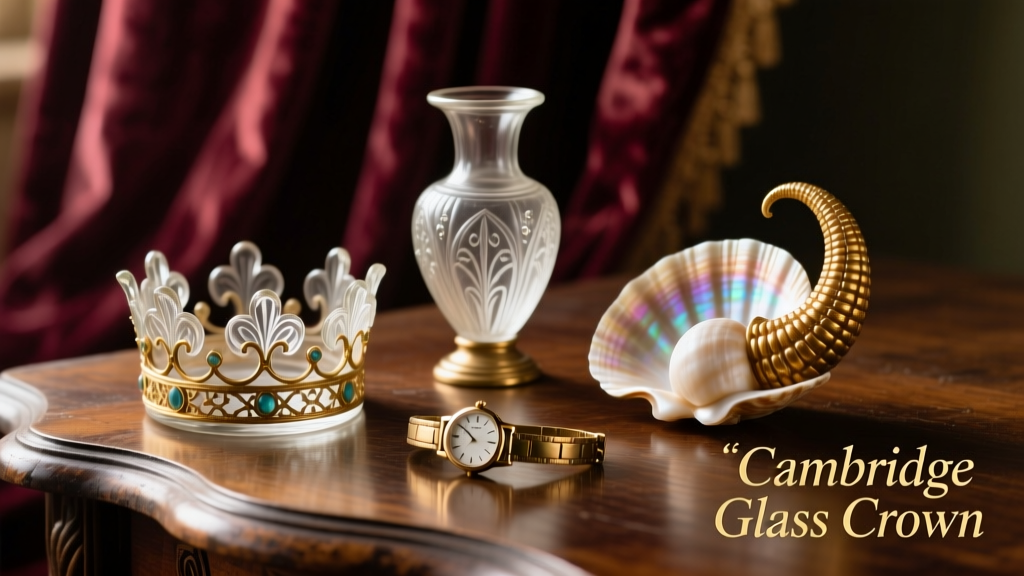
Cambridge Glass Crown Tuscan Vase with Cornucopia and Seashell Motif: A 9½-Inch Masterpiece of American Art Deco Glass
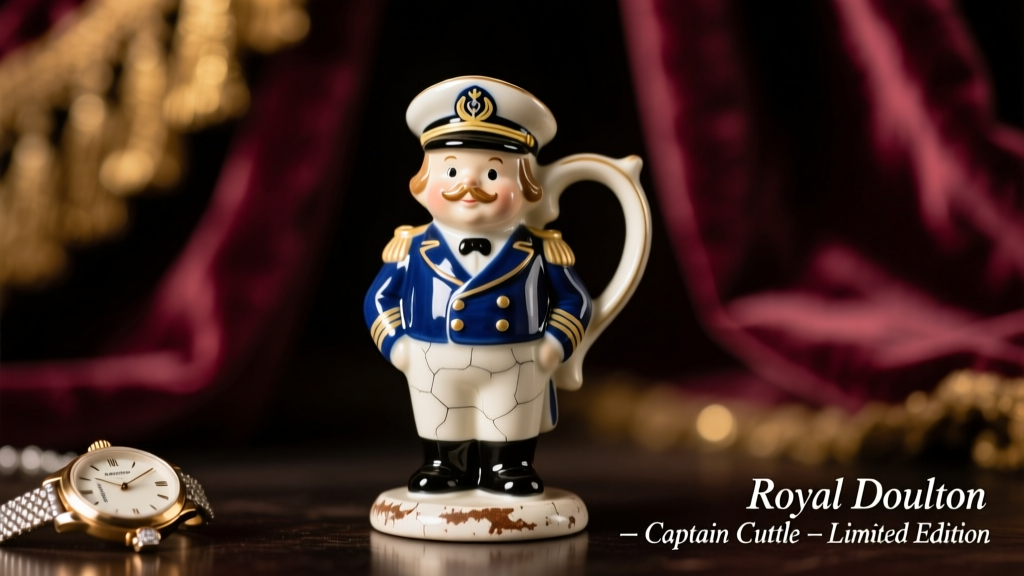
Royal Doulton Character Jug: Captain Cuttle Small No. 2 — A Collector’s Deep Dive into Provenance, Design, and Market Value
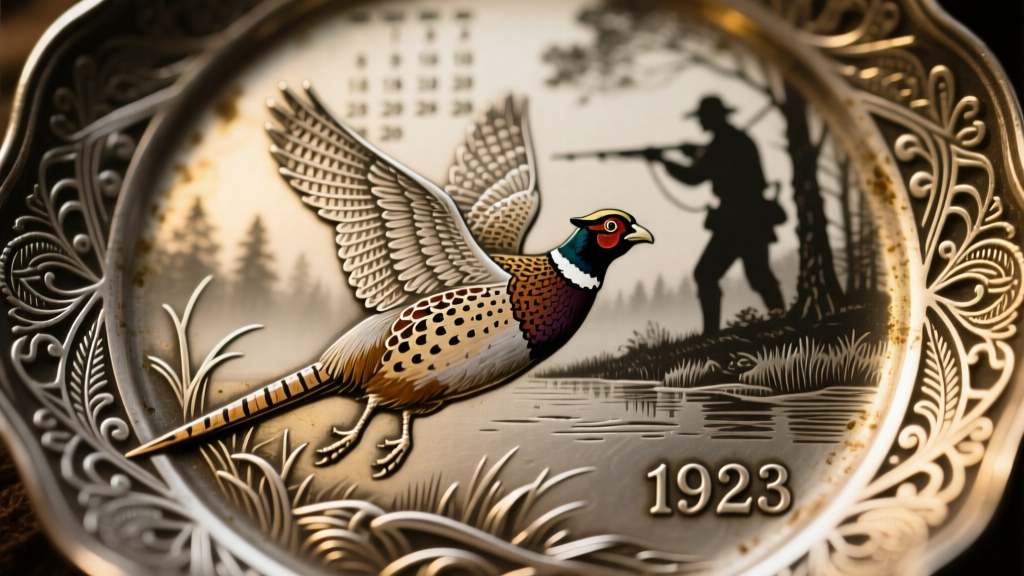
Calendar Plates 1923 Hunting Scene Quail: A Collector’s Deep Dive into a Rare Art Deco Enamel Masterpiece
Royal Bayreuth Pitcher Duck: A Collector’s Guide to the Iconic 4½-Inch Porcelain Water Jug
The RS Prussia Madame Lebrun Lily Mold Bowl: A 9½-Inch Masterpiece of Late 19th-Century German Porcelain
Heubach Figurine Basket: Brown Baby Holding Lid, 6½ × 5½ Inches — A Collector’s Study of German Porcelain Craftsmanship
Royal Bayreuth Basket: White Rose Pattern on White Ground — A 5¼-Inch Collector’s Treasure
Dinnerware Mexicana Casserole Cover with Red Trim (7½ Inches): A Collector’s Guide to Mid-Century Mexican Pottery

Ironstone Deviled Egg Dish with Duck Motif and Yellow Trim: A Collector’s Guide to the 9½ × 7½ Inch Patterned Relic