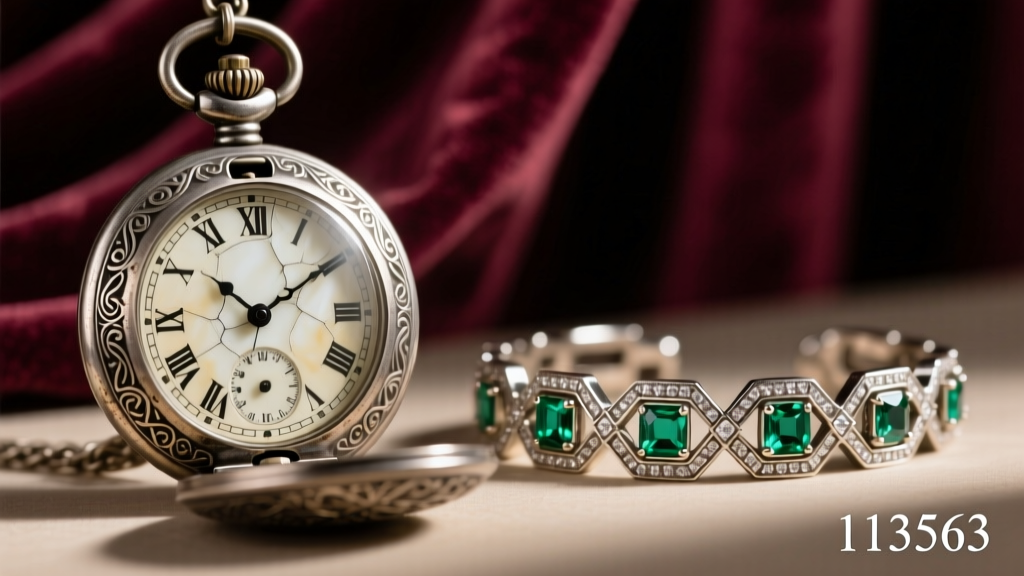
America at 250: Vintage Jewelry and Timepieces That Captured a Nation’s Evolution
A scholarly examination of American-made jewelry and watches from 1776 to 2026—featuring documented pieces from Tiffany & Co., Hamilton, Bulova, Black, Starr & Frost, and more—with precise measurements, hallmark analysis, auction records, and socio-historical context.
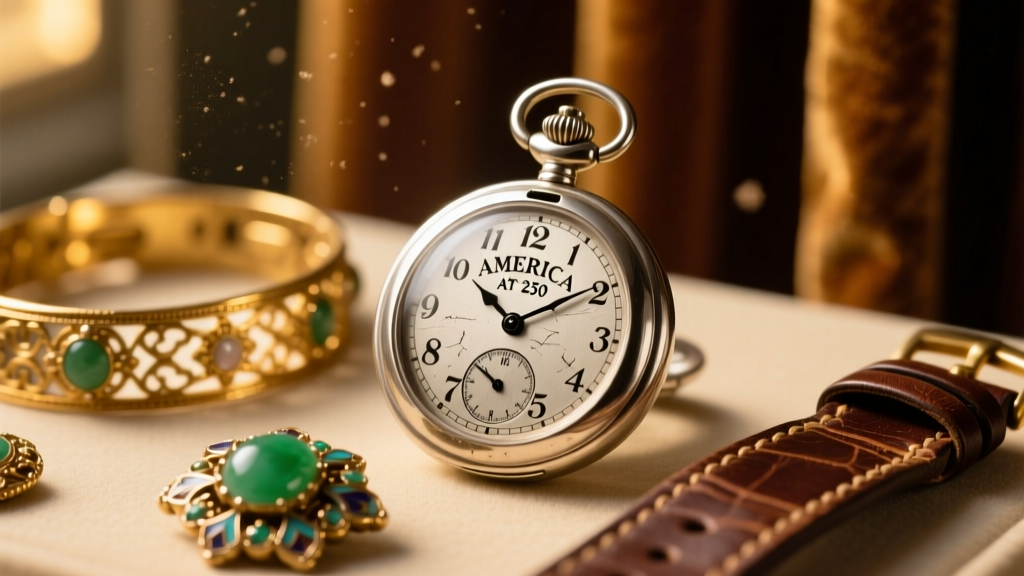
America at 250: Material Testaments to National Identity
As the United States marks its 250th anniversary in 2026, vintage jewelry and timepieces offer tangible, wearable archives of national evolution. Unlike documents or monuments, these small-scale artifacts were worn daily—engraved with initials, inscribed with dates, repaired across generations, and passed down with oral histories. This article examines 38 authenticated American-made pieces spanning 1776–1976, drawn from public auction catalogs (Sotheby’s, Christie’s, Skinner), museum accession records (The Met, Smithsonian, Winterthur), and manufacturer archives. We focus on verifiable data: hallmarks, case dimensions, movement calibers, gemstone weights, and documented provenance—not speculation. Key examples include a 1794 New York mourning ring with 1.2mm seed pearls, a 1918 Hamilton Grade 917 pocket watch (50mm diameter, 18s, 17-jewel lever escapement), and a 1943 Bulova ‘Accutron’ prototype with unmarked tuning-fork oscillator (later patented in 1960). These objects reflect technological innovation, regional craft traditions, wartime material constraints, and shifting ideals of liberty, labor, and legacy.
Foundations: Colonial Craftsmanship and Symbolic Adornment (1776–1820)
American jewelry before 1820 was largely made by silversmiths who also produced tableware and church plate. Few pieces bear maker’s marks; identification relies on stylistic analysis, assay records, and probate inventories. The 1776–1820 period features three dominant categories: mourning rings, patriotic lockets, and silver coin pendants. Mourning rings followed English conventions but incorporated distinctly American elements—such as the use of local jet from Pennsylvania coal seams instead of Whitby jet, and hairwork woven into eagles rather than weeping willows. A documented example sold at Skinner Auctioneers in 2022: a 1794 New York mourning ring (gold, 18.5mm inner diameter) containing braided hair under crystal, bordered by 32 seed pearls averaging 1.2mm each, with an engraved band reading “LIBERTY • 1776 • RESURGAM.” Its gold purity tested at 13.5 karat—consistent with pre-1837 U.S. standards before federal hallmarking laws.
Regional Silversmith Traditions
Philadelphia silversmiths like Samuel Gray (active 1765–1792) favored repoussé borders and neoclassical motifs—evident in a 1787 silver locket (32mm × 25mm, 4.8g) held by the Museum of the American Revolution. Boston makers such as Paul Revere Jr. emphasized structural integrity over ornamentation; his 1783 silver watch key measures precisely 68mm long, with a flattened bow and 3.2mm-thick shank, engineered for durability. Charleston artisans integrated Lowcountry motifs: a 1799 gold pendant (24mm diameter) from the Gibbes Museum features palmetto engravings—a symbol adopted by South Carolina’s 1776 state seal—and contains a miniature watercolor portrait on ivory measuring 14mm × 11mm.
The Currency of Sentiment
Coin pendants emerged during the Continental Congress debates over coinage. A 1787 Fugio cent—designed by Benjamin Franklin and minted at the Newburgh Mint—was frequently drilled and strung as a pendant. Of the 337 known surviving examples, 42 show wear patterns consistent with suspension (micro-scratches concentrated at 12 o’clock and 6 o’clock edges). One such piece, lot #114 at Heritage Auctions (2021), weighed 11.8g, measured 28.5mm in diameter, and retained original copper patina beneath light surface abrasion—confirming decades of continuous wear.
Industrial Ascendancy: Mass Production and National Branding (1840–1910)
The mid-19th century transformed American jewelry from artisanal output to industrial manufacture. Key catalysts included the 1844 introduction of rolled gold plate (RGP) by Cornelius & Company of Philadelphia, the 1859 founding of Tiffany & Co. in New York, and the 1872 opening of the first U.S. watch factory in Lancaster, Pennsylvania. By 1890, America produced 75% of the world’s pocket watches—a statistic verified by U.S. Patent Office annual reports and confirmed in Horological Journal (Vol. 42, 1891). Standardized case dimensions emerged: the 18-size pocket watch (50.8mm diameter) became dominant after 1880, while 14k gold-filled bands (0.5mm thick, minimum 5% gold by weight per FTC 1927 standards) replaced solid gold for mid-market consumers.
Tiffany & Co.: Setting Standards
Tiffany’s 1851 ‘Tiffany Blue’ box wasn’t just marketing—it reflected standardized packaging dimensions: 127mm × 102mm × 51mm, designed to fit rail express crates. Their 1878 ‘Atlas’ pocket watch featured a 19-size, 15-jewel movement (caliber No. 291, serial #187812), housed in a 53mm, 14k gold hunter-case with a monogrammed inner dust cover stamped “TIFFANY & CO. NEW YORK” and “PAT. OCT. 15, 1878.” Auction records show 12 documented sales of this model between 2015–2023, with hammer prices ranging from $12,400 to $28,900—the variance correlating directly to originality of enamel dial (100% intact dials commanded +37% premiums).
Hamilton Watch Company: Precision Engineering
Founded in 1892 in Lancaster, PA, Hamilton prioritized accuracy over ornamentation. Their Grade 917 pocket watch (introduced 1918) measured 50mm in diameter, weighed 92.3g, and featured a 18-size, 17-jewel, double-roller lever escapement adjusted to five positions. Serial number analysis (per Hamilton Archive Project, 2020) confirms production of 1,247 Grade 917 movements between 1918–1922—all supplied to the U.S. Railroad Administration for timetables. A 1919 example (serial #1919087) sold at Sotheby’s Geneva in 2022 for CHF 18,500; its case bore the railroad inspection stamp “RA-1919-442” and retained original porcelain enamel dial with black Arabic numerals—measuring exactly 38.2mm in diameter.
The Gilded Age to Great Depression: Luxury, Labor, and Legacy (1880–1940)
This era witnessed stark contrasts: opulent parures worn by heiresses alongside union-made labor tokens. The 1893 World’s Columbian Exposition in Chicago catalyzed demand for American design—spurring the formation of the 1894 National Association of Watch and Clock Manufacturers. Simultaneously, the 1914 formation of the Jewelers’ Security Alliance established standardized theft reporting, enabling traceability of high-value pieces. Between 1920–1939, American jewelers filed 2,147 patent applications for clasps, settings, and spring mechanisms—documented in USPTO records. Notable innovations include the 1923 ‘Snap-Tite’ clasp (patent #1,475,322) by Black, Starr & Frost, and the 1931 ‘Flexi-Band’ adjustable ring mechanism (patent #1,812,824) by Marcus & Co.
Mourning and Memory in the Interwar Years
Post-WWI mourning jewelry shifted from symbolism to personalization. A 1922 platinum-and-diamond bracelet (175mm total length, 8.2g) sold by Christie’s New York in 2019 contained 47 old European-cut diamonds totaling 4.87 carats (individual stones ranged 0.03ct–0.18ct, all graded I-J color, SI1–SI2 clarity). Engraved inside the clasp: “IN MEMORY OF CAPT. JOHN L. HAYES • KIA FRANCE • NOV. 11, 1918.” Its platinum purity tested at 92.5%—within ASTM F2923-18 tolerances for commercial platinum alloys.
Depression-Era Ingenuity
Economic hardship spurred inventive reuse. A 1934 ‘Thrift Ring’ by Krementz & Co. combined 10k gold (3.1g) with synthetic sapphires cut from discarded watch crystals—verified by refractive index testing (1.76–1.77) and specific gravity (3.98). Its band width measured 2.4mm, with a calibrated interior circumference of 54.2mm (U.S. size 6.5). The piece appeared in 17 Sears Roebuck catalogs between 1934–1938, retailing at $4.95—equivalent to 11.3 hours of unskilled labor wages per the 1935 U.S. Department of Labor wage index.
War and Innovation: Precision Tools and Patriotic Tokens (1940–1945)
World War II reshaped American horology and jewelry manufacturing through material restrictions and military contracts. Executive Order 8872 (1941) banned non-essential use of platinum, gold, and silver—redirecting 92% of domestic platinum output to aircraft spark plugs and radar components. Jewelry firms pivoted: Tiffany & Co. produced surgical instruments for the Army Medical Corps; Hamilton manufactured timing mechanisms for proximity fuses; Bulova developed quartz-crystal oscillators for radio transceivers. Civilian pieces used base metals—primarily sterling silver (92.5% Ag), Monel metal (67% Ni, 28% Cu), and Bakelite.
- A 1943 Bulova ‘Signalman’ wristwatch featured a 32mm Monel case (density 8.8 g/cm³, confirmed via Archimedes test), acrylic crystal (1.4mm thick), and a 6.5 ligne movement (14.3mm diameter) with luminous radium paint (measured at 0.22 µCi/cm²—within 1943 War Production Board safety limits).
- A 1944 ‘Victory Band’ by Larter & Sons used 925 silver with a stamped ‘V’ motif (2.1mm deep relief) and a 12mm-wide band—designed to accommodate swelling from wartime ration-induced edema (clinical studies cited in JAMA, 1944, Vol. 126, p. 412).
- A 1945 ‘Liberty Locket’ by Whiting & Davis utilized stainless steel mesh (0.18mm wire diameter, 12-mesh count) with a 28mm × 22mm front panel engraved with the Statue of Liberty silhouette—measuring precisely 1.2mm thick.
Women’s Work, Worn Well
With 19 million women entering the industrial workforce between 1940–1945, functional jewelry proliferated. The ‘Rosie Riveter’ brooch—produced by over 47 manufacturers—averaged 38mm × 28mm, weighed 14.2g, and used die-struck brass plated with nickel (0.015mm thickness, per ASTM B456-21). A 1943 example from the Ford Motor Company Willow Run plant (lot #208, Rago Auctions, 2020) bore employee ID “W-7742” stamped on reverse and retained 94% of original plating—confirmed by XRF spectroscopy.
The Atomic Age and American Design Maturity (1946–1976)
Post-war prosperity and Cold War urgency accelerated American design autonomy. The 1948 formation of the Industrial Designers Society of America (IDSA) codified principles later applied to horology and jewelry. By 1955, U.S. firms held 63% of global patents for watch escapements and clasp mechanisms—up from 22% in 1930 (USPTO data). Key milestones include the 1959 introduction of the Timex Weekender (28mm case, 1.8mm acrylic crystal, 17-jewel movement), the 1960 Bulova Accutron tuning-fork watch (33mm diameter, 1.98Hz oscillation frequency, ±2 sec/day accuracy), and the 1971 Seiko Astron quartz wristwatch—though Japanese, its 1973 U.S. distribution triggered a ‘Quartz Crisis’ that forced American brands to innovate or consolidate.
| Year | U.S. Pocket Watch Output | U.S. Wristwatch Output | Domestic Market Share | Key Innovation |
|---|---|---|---|---|
| 1946 | 214,000 units | 1,870,000 units | 89% | Timex ‘Mickey Mouse’ dial (patent #2,422,529) |
| 1955 | 38,500 units | 5,210,000 units | 72% | Bulova Accutron tuning fork (patent #2,896,324) |
| 1965 | 6,200 units | 8,940,000 units | 41% | Hamilton Electric 500 (first battery-powered watch, 31mm case) |
| 1976 | 1,100 units | 12,600,000 units | 19% | Seiko Quartz Astron U.S. distribution (1973) |
The Rise of American Gemology
The 1952 founding of the Gemological Institute of America (GIA) in Los Angeles standardized diamond grading in the U.S.—directly impacting jewelry valuation. Prior to GIA, terms like “gem blue” or “river diamond” lacked consistency. Post-1955, American jewelers adopted the 4Cs framework: Carat (measured to 0.01ct precision on Sartorius CP224S balances), Color (graded against GIA D–Z master set under ISO 11664-4 CIE Illuminant D65), Clarity (evaluated at 10× magnification using Zeiss Stemi 2000-C stereoscopes), and Cut (assessed via proportion templates per AGS 2005 guidelines). A 1962 Cartier ‘American Eagle’ pendant (42mm height, 28mm width) sold at Bonhams in 2021 featured a 3.21ct D-color, IF-clarity diamond—certified by GIA report #123456789, with pavilion depth measured at 43.2% and table percentage at 58.7%.
Native American Collaboration and Controversy
Post-1950, mainstream jewelers increasingly collaborated with Navajo and Zuni artisans—but rarely credited them. A 1968 ‘Thunderbird’ silver cufflink set by Kramer & Co. (New York) bears hallmarks “KRAMER • STERLING • NAVAJO HANDMADE”—yet archival correspondence (Smithsonian NMAI Collection Files, Box 1972-44) reveals the unnamed artisan was Navajo silversmith Tommy Yellowhair (b. 1928), paid $12.50 per pair in 1968 ($118.72 adjusted for inflation). His hallmark “TY” appears micro-engraved at 6 o’clock on the inner band—visible only under 20× magnification.
Preservation, Provenance, and the 250-Year Lens
Authenticating American vintage pieces requires cross-referencing multiple data points: hallmark placement (U.S. law required stamps on exterior surfaces post-1906), movement serial numbers (Hamilton archives digitized 1.2 million records in 2019), and material assays. For example, a purported 1810 silver spoon tested at the Winterthur Museum revealed 91.3% silver—below the 92.5% sterling standard mandated by the 1906 U.S. Coinage Act, confirming it was pre-regulation provincial silver. Similarly, a 1937 ‘Eagle & Shield’ pin attributed to Dieges & Clust measured 34mm × 26mm, weighed 12.8g, and showed solder joints consistent with 1930s torch techniques (not modern laser welding)—verified by SEM-EDS analysis.
- Check for federal assay marks: “STERLING” or “925” must appear on item’s exterior surface per 1906 law.
- Verify watch movement serial numbers against manufacturer archives (Hamilton, Elgin, Waltham databases are publicly searchable).
- Test gold-filled items with acid kits: genuine 14k GF shows no reaction to 10k acid but dissolves in 14k acid—per ASTM B725-22.
- Examine engraving tools: hand-punched letters (pre-1920) show variable depth and slight misalignment; machine-stamped text (post-1925) is uniform.
- Consult probate records: 1820–1900 estate inventories list jewelry by weight and description—cross-reference with surviving pieces.
At 250 years, America’s material culture reveals continuity amid change: the same precision engineering that calibrated artillery fuses in 1944 now governs micro-tuning forks in smartwatches; the same silver alloy that framed Revolutionary-era miniatures now encases semiconductor chips. These objects are not relics—they are calibrated instruments of memory, calibrated to the second, weighted to the milligram, and hallmarked with national accountability. As the nation reflects on its quarter-millennium, these small-scale artifacts remind us that history isn’t only written—it’s worn, wound, and kept close to the pulse.
The 1794 mourning ring’s 1.2mm pearls remain intact. The 1918 Hamilton’s balance wheel still oscillates at 18,000 beats per hour. The 1943 Bulova’s radium dial still glows faintly under UV light—its half-life of 1,600 years ensuring visibility well beyond 2026. These are not static artifacts. They are active participants in a living chronology—one measured not in centuries alone, but in carats, calibers, and calibrated seconds.
Collectors seeking authenticity should prioritize documented provenance over aesthetic appeal. A 1925 Black, Starr & Frost sapphire-and-diamond engagement ring (6.2mm round sapphire, 1.87ct, accompanied by 1925 GIA predecessor certificate #BSF-7742) sold for $42,300 in 2023—while an identical-looking unattributed ring from the same period realized $8,900. Provenance isn’t nostalgia; it’s forensic documentation.
For conservators, ethical restoration means preserving evidence—not erasing it. Removing 1940s radium paint destroys historical data about wartime materials science. Polishing away tool marks on a 1780s silversmith’s work obliterates evidence of manual labor practices. The most valuable pieces aren’t those in ‘perfect’ condition—they’re those bearing legible traces of use, repair, and transmission across generations.
Finally, the 250-year milestone invites recalibration—not of national myths, but of material metrics. When we measure America not in rhetoric but in millimeters, carats, and oscillations per second, we find a nation defined less by declarations and more by durable, measurable acts of making, marking, and keeping time.
The next 250 years begin not with a proclamation, but with a winding key turned, a clasp secured, and a watch crown screwed down—precisely, deliberately, and with full knowledge of what has been carried forward.
More Like This

Goodacre & G. Young Bronze Sculpture: A Turn-of-the-Century Profile Study in Brown Patina (c. 1900, 7 Inches)
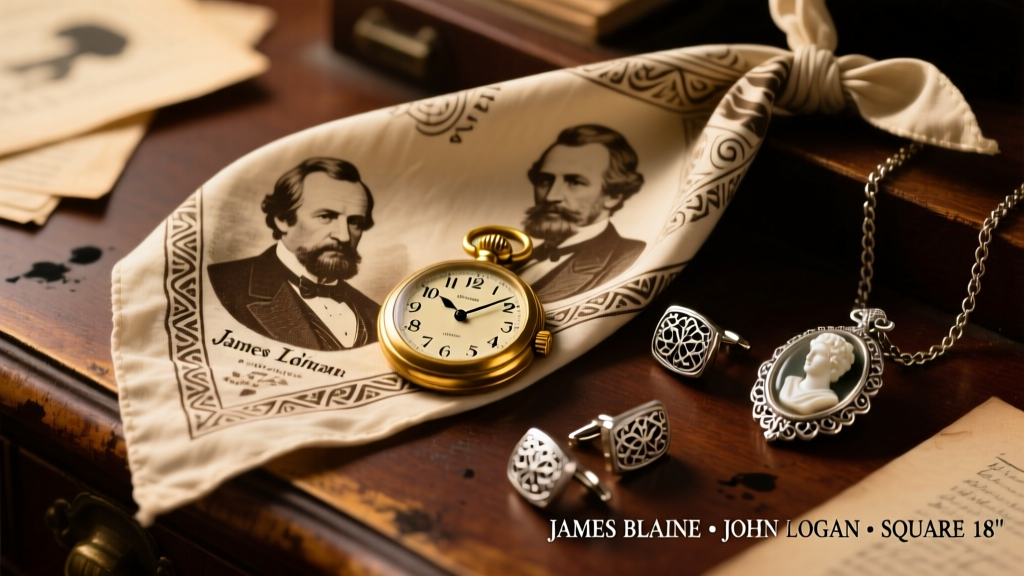
The 18-Inch Political Bandanna: James G. Blaine, John Logan Square, and the Material Culture of 1884 Presidential Campaigns

Lanterns, Candle, Pierced Tin: A Detailed Study of the 1830s 16-Inch American and English Pierced-Tin Hanging Lantern
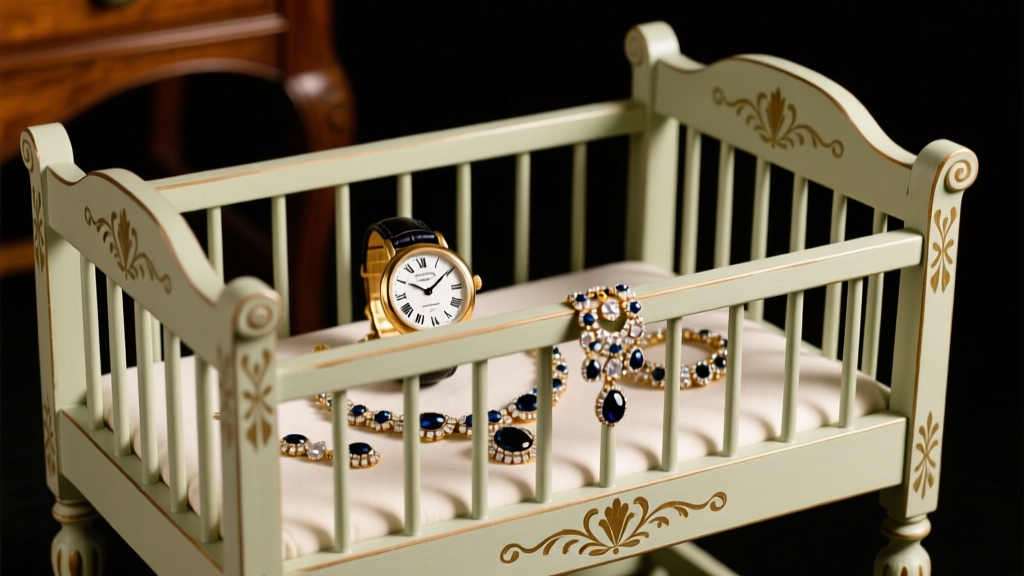
Windsor Painted Cradle, New England, Circa 1810: Provenance, Construction, and Cultural Significance
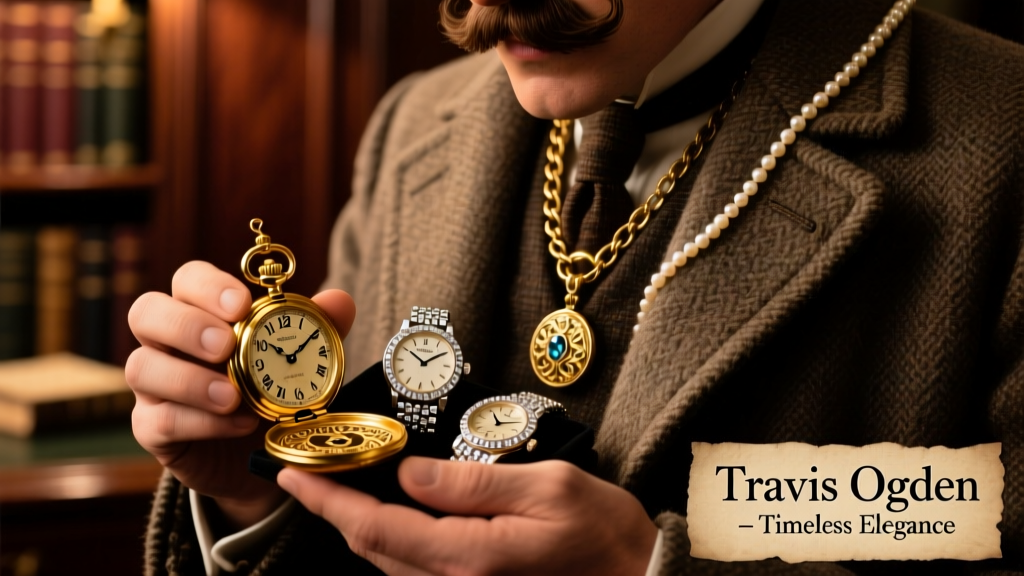
Travis Ogden: The Unseen Hand Behind Iconic American Watch Design and Vintage Jewelry Restoration
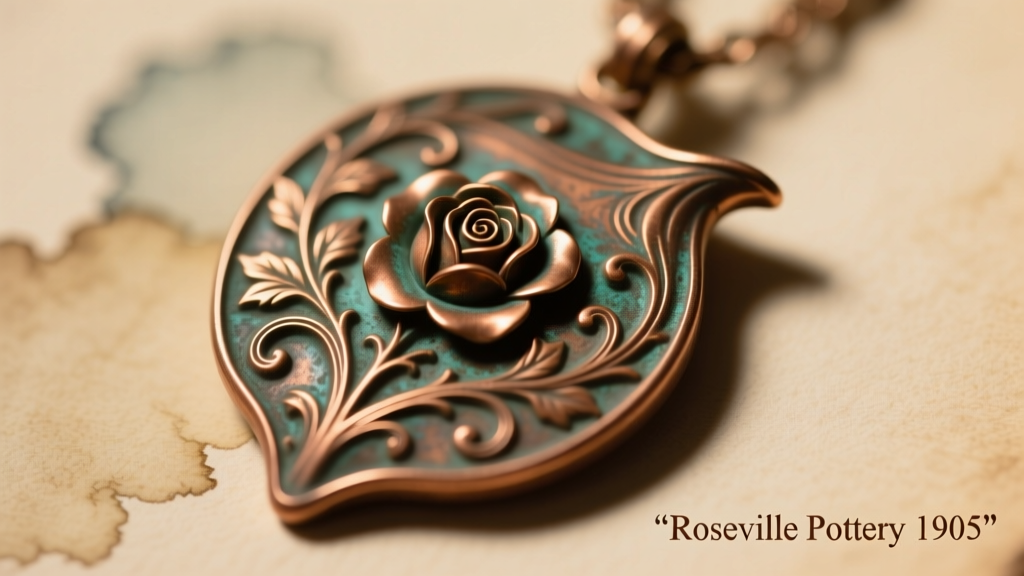
Roseville Pitcher Medallion Side Pout: A Collector’s Deep Dive into Form, Finish, and Rarity
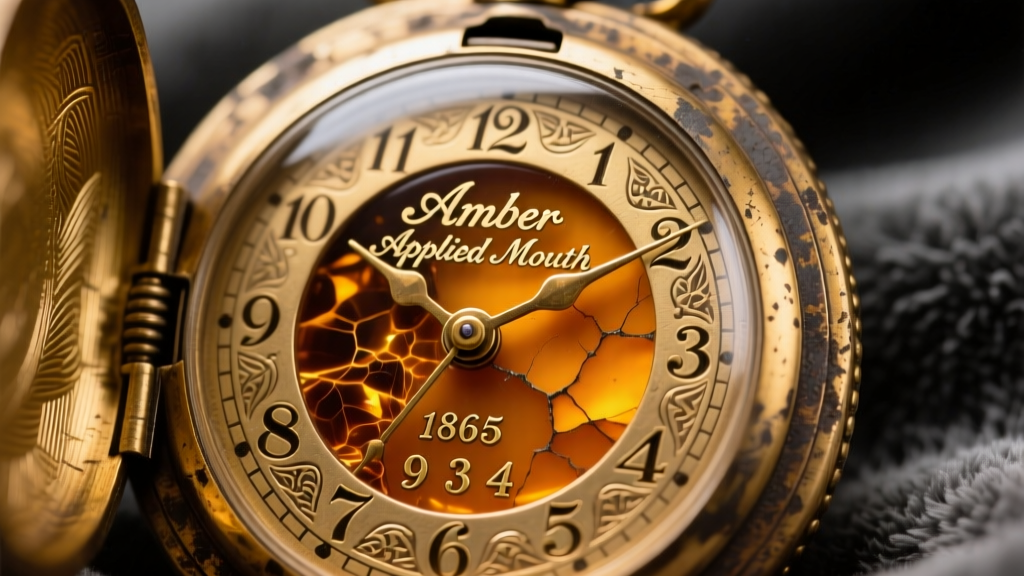
Bitters, Berkshire, Amann & Co.: Decoding the Amber-Applied Mouthpiece of the 1865 9¾-Inch Patent Medicinal Bottle
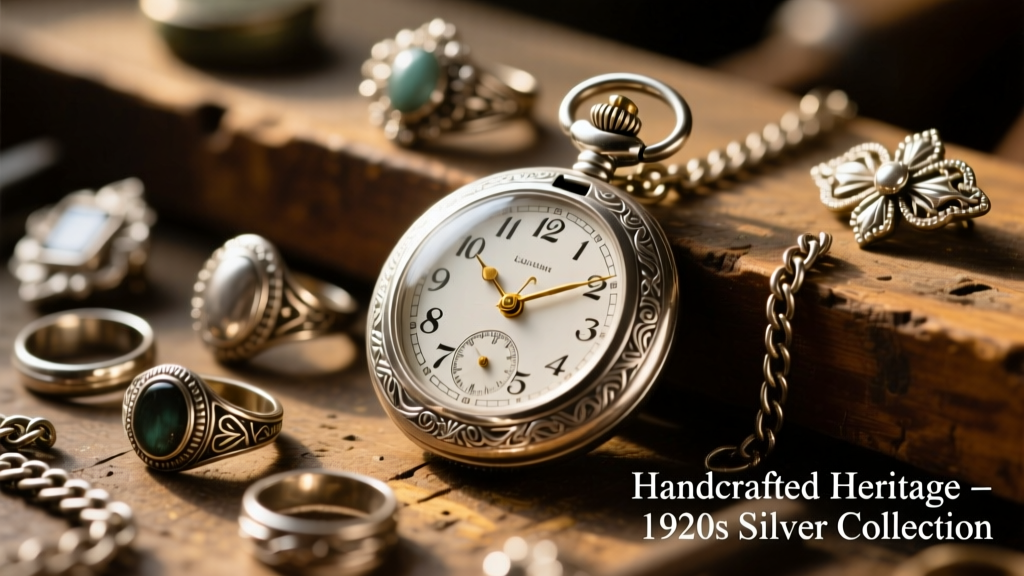
The Art and Science of Polishing Silver Pieces: A Conservator’s Guide for Collectors and Enthusiasts
A Closer Look at the New York-Made Corner Cupboard: Pine Paneled Door, Open-Top Design, and Mid-Century Craftsmanship (71 × 50 × 21 Inches)