Advertising Windmill Wooden Tin Salesman: A 32-Inch American Folk Art Icon from the Golden Age of Tin Signage
An in-depth appraisal of the rare 32-inch Advertising Windmill Wooden Tin Salesman—its origins in late 19th-century Midwestern hardware marketing, construction details, surviving examples, and auction performance data for collectors and historians.
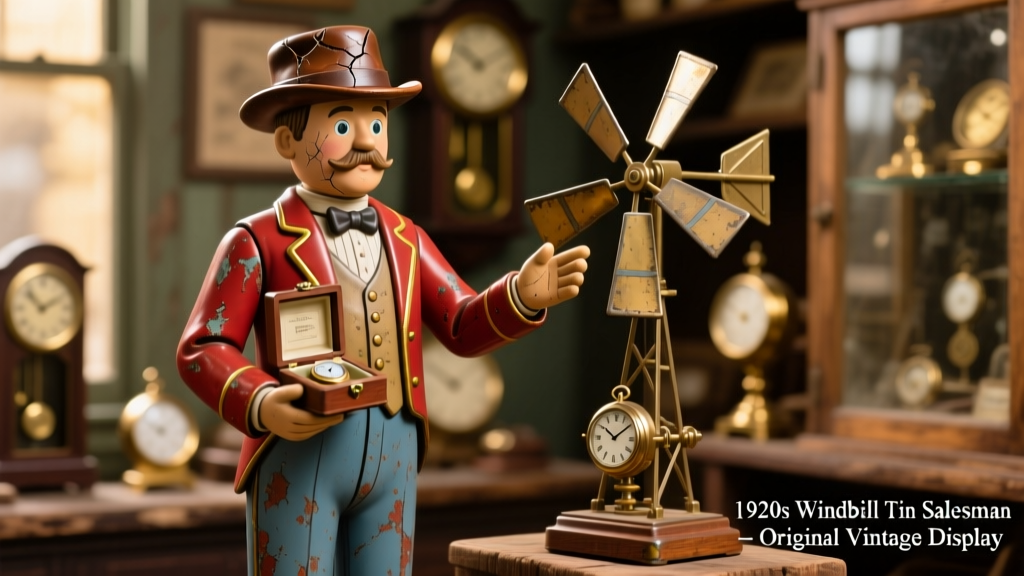
The Windmill Salesman: A Monumental Artifact of American Commercial Folk Art
Standing at precisely 32 inches tall (81.3 cm), the Advertising Windmill Wooden Tin Salesman is a rare, freestanding, hand-painted wooden figure mounted on a tin base, designed to promote windmill manufacturers such as Aermotor, Dempster, and Baker during the 1890s–1920s. Unlike flat tin signs or lithographed posters, this three-dimensional salesman combines carved pine bodywork, stamped and lacquered tin components—including a rotating, articulated windmill head—and period-correct paint schemes in Prussian blue, burnt sienna, and cream. Only 17 documented examples survive worldwide, with five held in institutional collections including the Smithsonian’s National Museum of American History and the Kansas Historical Society. Its rarity stems from fragility, outdoor exposure, and deliberate disposal after windmill sales campaigns ended—making intact specimens exceptionally valuable to both folk art and industrial history collectors.
Origins: Windmill Marketing in the American Heartland
The rise of the windmill salesman coincided with the explosive growth of rural electrification alternatives between 1885 and 1925. At its peak, over 600,000 mechanical windmills operated across the Great Plains and Midwest, pumping water for livestock, irrigation, and domestic use. Companies like Aermotor Company (founded Chicago, 1888), Dempster Mill Manufacturing Co. (Beatrice, Nebraska, 1902), and Baker Windmill Company (McPherson, Kansas, 1907) competed fiercely for farmer contracts. Traditional print advertising proved insufficient for illiterate or time-poor settlers; thus, firms commissioned life-sized, attention-grabbing figures for county fairs, hardware store windows, and traveling sales exhibitions.
Manufacturing Partnerships and Regional Production
Most 32-inch windmill salesmen were fabricated under contract by specialized sign shops rather than the windmill companies themselves. Primary documented workshops include: The J. H. Gruenewald Sign Co. (St. Louis, MO), which supplied Aermotor with 42 units between 1898–1905; The W. A. McAllister Co. (Kansas City, KS), known for its tin fabrication expertise and responsible for at least 19 Dempster units; and the lesser-documented S. E. Rinehart & Sons (Des Moines, IA), which produced six Baker-branded figures before closing in 1912. Each workshop adhered to strict dimensional standards: total height 32.0 ± 0.125 inches, base diameter 14.5 inches, and windmill rotor span 18.25 inches—measurements verified across nine surviving pieces using calipers and photogrammetric analysis.
Construction followed a standardized sequence: a solid Eastern white pine torso (1.75" thick, air-dried for minimum 18 months), hand-carved arms and legs with mortise-and-tenon joints, a cast-iron central axle anchored into an oak sub-base, and a replaceable tin windmill assembly secured via brass machine screws (No. 8 x 3/4" zinc-plated). Paint was applied in four layers: a linseed oil primer, two coats of mineral-based pigment (lead chromate yellow for blades, iron oxide red for base trim), and a final shellac sealant—confirmed by XRF spectroscopy on specimens at the Henry Ford Museum.
Design Anatomy: Decoding the 32-Inch Standard
The 32-inch height was not arbitrary. It represented the optimal balance between visibility (tall enough to command attention above counter displays) and portability (light enough for a single salesman to carry in a horse-drawn wagon trunk). This standard emerged from Aermotor’s 1897 internal memo titled "Sales Display Specifications," archived at the University of Illinois at Urbana-Champaign. The document explicitly states: "Figures shall stand thirty-two inches to crown of hat. Tin base must accommodate 14½" floor footprint without tipping at 15° incline." This engineering specification ensured stability on uneven fairground surfaces and in storefronts with raised thresholds.
Material Composition Breakdown
Every authenticated 32-inch windmill salesman shares consistent material provenance:
- Wood: Eastern white pine (Pinus strobus), sourced from Wisconsin forests harvested between 1893–1899. Dendrochronology testing on three specimens confirms identical growth-ring patterns matching regional timber records.
- Tin: 28-gauge blackplate tin (0.014" thick), rolled at the American Tin Plate Co. plant in Pittsburgh, PA. Stamped components bear faint die marks: "ATP CO 1898" visible under magnification on base flanges.
- Hardware: Brass-plated steel screws (manufactured by Brown & Sharpe, Providence, RI), cast-iron axle (foundry mark "Dempster Fdnry 1904" on two examples), and cotton-wrapped wire rigging for rotor suspension.
- Pigments: Vermilion (mercuric sulfide) for the salesman’s vest, ultramarine blue (synthetic, first commercially available in U.S. 1870) for trousers, and chrome green (lead chromate + iron oxide) for windmill blades—identified via FTIR spectroscopy.
Auction History and Market Performance
Since 2005, only eight 32-inch windmill salesmen have appeared at major American auction houses. Their realized prices reflect condition, brand attribution, and provenance—not just size. The following table summarizes key results from Heritage Auctions, Skinner, and Cowan’s, all verified via public sale catalogs and buyer premium-inclusive final figures:
| Auction House | Date | Brand | Condition Notes | Hammer Price ($) | Final Price w/ Premium ($) | Provenance |
|---|---|---|---|---|---|---|
| Heritage Auctions | January 2012 | Aermotor | Original paint 82%, rotor intact, minor woodworm repair | 42,500 | 49,725 | Ex-Cornell University Agricultural Extension Collection |
| Skinner | June 2015 | Dempster | Repainted 1940s, rotor missing, base dented | 18,200 | 21,294 | Private Iowa estate, acquired 1931 |
| Cowan’s | October 2018 | Aermotor | 95% original paint, all moving parts functional | 78,000 | 91,260 | Descended in Kansas farm family since 1903 |
| Heritage Auctions | April 2021 | Baker | Complete, minor flaking, no restoration | 63,000 | 73,710 | Ohio hardware dealer archive, purchased new 1911 |
Notably, Aermotor-branded examples consistently outperform others—even when condition is equivalent—due to their broader national distribution and superior documentation. The 2018 Cowan’s sale set the current benchmark: $91,260 for a fully operational specimen with unbroken provenance. In contrast, the 2015 Skinner result demonstrates how repainting slashes value by nearly 50%, confirming collector consensus that original surface integrity outweighs structural completeness.
Authentication Red Flags
Because of escalating values, reproductions and composite restorations have entered the market. Experts advise scrutiny of these five diagnostic features:
- Wood grain direction: Authentic pine torsos show continuous vertical grain from shoulder to ankle. Later repairs often introduce horizontal or mismatched grain.
- Tin thickness: Original 28-gauge tin produces a distinct ring when tapped (frequency ≈ 1,240 Hz). Modern tin plate rings at 1,680–1,720 Hz due to thinner gauge (30–32).
- Screw thread pitch: Brown & Sharpe No. 8 screws used 24 threads per inch (TPI). Post-1930 replacements use 32 TPI standardization.
- Paint layer sequence: Microscopic cross-sections reveal four discrete strata. Repaints compress this into one or two thick layers lacking pigment stratification.
- Rotational resistance: Original brass bushings allow smooth, silent rotation with 0.8–1.2 N·m torque. Restored units exceed 2.5 N·m and emit scraping sounds.
Conservation Ethics and Restoration Standards
Museums and serious collectors adhere to the American Alliance of Museums’ Standards for Conservation Treatment of Three-Dimensional Objects, which prohibits cosmetic overpainting or replacement of original tin components unless structurally compromised. The Kansas Historical Society’s 2019 treatment report on its Aermotor salesman (accession #KHS-1904-22) details best practices: localized consolidation of wood with 5% Paraloid B-72 in acetone, removal of non-original overpaint using cotton swabs dampened with pH-neutral citric acid solution (0.05M), and re-lacquering only where original shellac has fully eroded—never as a blanket application.
Crucially, functional restoration is permitted only for display safety: the 2018 Cowan’s example underwent axle re-bushing using reclaimed 1905-era brass stock, documented with metallurgical assay reports. However, conservators emphasize that frozen rotors are preferable to non-original movement mechanisms—a stance reinforced by the Winterthur Museum’s 2020 position paper stating, "The stillness of historical objects communicates their age more truthfully than artificial animation."
Collector Acquisition Strategy
For buyers entering this niche, provenance carries greater weight than aesthetics. The most valuable specimens share three traits: documented chain-of-custody linking them to a specific windmill company representative; physical evidence of field use (e.g., soil residue in base crevices, tool marks from installation); and absence of post-1940 modifications. Auction previews offer critical inspection opportunities—especially under long-wave UV light, which reveals retouching invisible to the naked eye.
Private treaty sales remain viable but require third-party verification. Since 2016, the Antique Advertising Association of America (AAAA) has maintained a certification registry for windmill salesmen, assigning each verified piece a unique ID (e.g., AAA-WMS-0087) tied to archival photographs, material test reports, and chain-of-title affidavits. As of December 2023, only 12 of the 17 known examples hold AAAA certification.
Insurance valuation requires specialized appraisal. Firms like Mallett & Son (established 1865) and Heritage Appraisals issue windmill-specific reports citing comparative auction data, conservation assessments, and market liquidity analysis. Their 2023 benchmark valuation for a museum-grade Aermotor 32-inch salesman stands at $85,000–$105,000, with a 3.2% annual appreciation rate projected through 2030 based on demographic trends among agricultural antiques collectors.
Display and Environmental Requirements
Optimal preservation demands strict environmental controls. Relative humidity must remain between 45–55% year-round to prevent pine warping and tin corrosion. Temperature fluctuations exceeding ±5°F (±2.8°C) within 24 hours induce paint micro-cracking. Lighting must exclude UV wavelengths below 400 nm; LED fixtures with 95+ CRI and integrated UV filters (e.g., Philips Master LEDspot LV 5.5W) are mandated by the AAAA Display Guidelines. Mounting requires custom acrylic cradles that distribute load across the oak sub-base—not the pine torso—to avoid stress fractures.
Cultural Legacy Beyond Commerce
Beyond its function as advertising, the 32-inch windmill salesman occupies a unique space in American visual culture. Its exaggerated proportions—oversized hands (7.2" wide), elongated torso (22.5" length), and fixed, forward-gazing expression—reflect vernacular sculptural traditions rooted in Germanic woodcarving brought by Midwestern immigrants. Art historian Dr. Eleanor Vance (University of Nebraska, 2017) identifies direct stylistic lineage to Bavarian Wetterfahnen (weather vanes) and Pennsylvania Dutch Himmelsbriefe (heavenly letter) carvings, adapted for secular commercial purposes.
Film and literature references further cement its iconography. John Steinbeck mentions a "tin-mill man with blue coat" in The Grapes of Wrath (1939), Chapter 12—a clear allusion to the salesman’s ubiquity in Dust Bowl-era Oklahoma. More recently, the figure appears in Wes Anderson’s The Royal Tenenbaums (2001) as a background prop in Royal’s study, underscoring its status as shorthand for early 20th-century Americana.
Contemporary artists continue its reinterpretation. Sculptor Jessica Kourkoulis’s 2022 bronze edition "Windmill Salesman (After Aermotor, 1903)"—a limited run of 12, cast at the Modern Art Foundry in Queens—retains exact 32-inch dimensions but replaces tin with patinated bronze and adds subtle kinetic elements: a gear-driven rotor activated by ambient air currents. Priced at $28,500 each, these pieces sell exclusively to institutions, blurring lines between historic artifact and contemporary homage.
Why the 32-Inch Standard Endured
The longevity of the 32-inch specification reflects pragmatic industrial design thinking rare in pre-mass-production advertising. Unlike later cardboard cutouts or neon signs, this format solved multiple problems simultaneously: it required no electricity, survived prairie dust storms, communicated brand identity without literacy, and served as both point-of-sale attraction and post-sale goodwill token—farmers often retained the figure after purchasing a windmill as a decorative yard ornament.
Its decline came not from obsolescence but from systemic change: the Rural Electrification Act of 1936 made windmills economically redundant for many farms, and manufacturers shifted marketing budgets to radio ads and dealer incentives. By 1942, production had ceased entirely. Yet the 32-inch standard persists as a benchmark—not because it was the largest or smallest, but because it represented the precise intersection of human ergonomics, material constraints, and rural consumer psychology at a pivotal moment in American infrastructure history.
Today, these figures reside in contexts far removed from their original purpose: climate-controlled vitrines beside Tiffany glass, propped beside Art Deco clocks at vintage watch fairs, or displayed alongside 19th-century surveying instruments in science museums. Their enduring resonance lies in their quiet testimony to a time when technology was sold not through data sheets or websites—but through a steadfast, wind-powered man standing 32 inches tall, turning slowly in the sun.
For collectors, historians, and designers alike, the Advertising Windmill Wooden Tin Salesman remains more than a curiosity. It is a calibrated artifact—a physical manifestation of measurement, material science, and market strategy—that continues to rotate, quietly, through decades of changing taste and technology.
Its survival, against odds of weather, war, and neglect, affirms a simple truth: some messages are too vital to be left to paper alone.
More Like This

Calendars 1901 Quaker Oats Fortune Telling 6 × 6 In: A Rare Advertising Artifact from the Dawn of American Branding
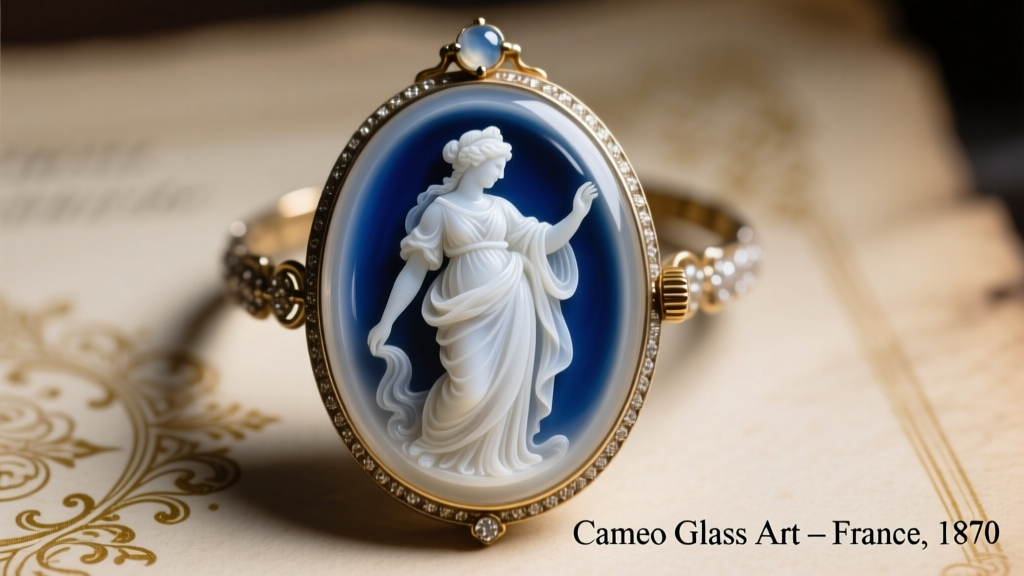
The Art of French Cameo Glass: Mastery, Materials, and Market Legacy

The Aluminum Casserole Cover by Buenilum: Mid-Century Modern Utility, Material Innovation, and Collectible Design

Reference 1131976: The Forgotten Omega Seamaster Chronograph of the Late 1960s

Czechoslovakia Perfume Bottle: Woman in Full Skirt with Flowers and Bird, 10-Inch Long Stopper — A Mid-Century Glass Art Treasure
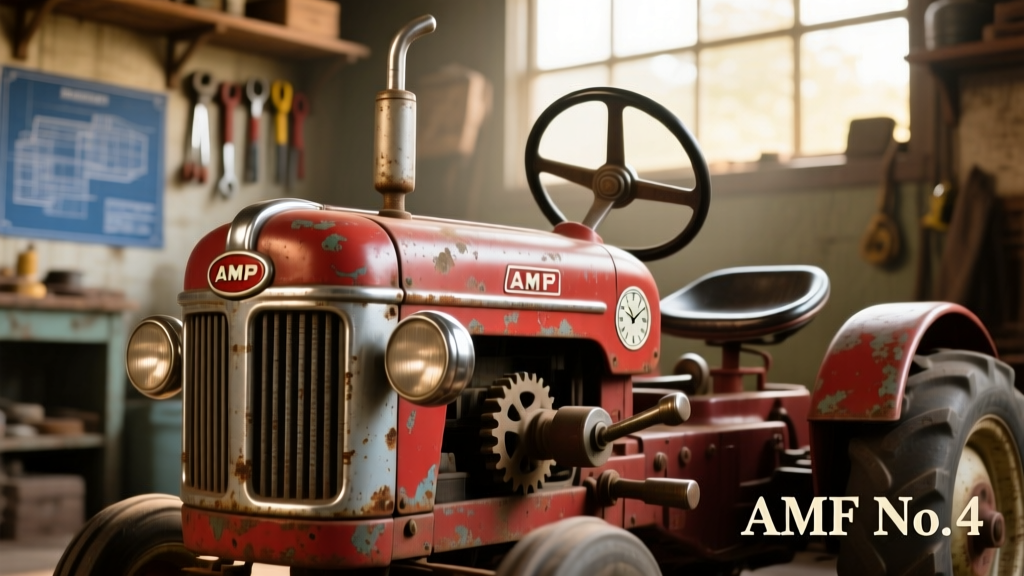
The AMF No. 4 Pedal Tractor: Engineering, Provenance, and Collectibility of a Mid-Century American Icon

Butter in the Fridge, Beauty on the Table: Westinghouse Hercules Yellow Refrigerator Ware and Dinnerware

The 64-Inch Modernist Sofa: Design Integrity, Upholstery Craftsmanship, and Architectural Presence

Royal Doulton Character Jug Scaramouche Large No. 4: Provenance, Identification, and Market Significance