Advertising Silverice Balls: A Collector’s Guide to Mid-Century Promotional Timepieces
A detailed examination of Silverice Balls—brass-and-steel promotional wristwatches issued by the Silverice Corporation between 1948 and 1962. This article covers design evolution, movement specifications, branding conventions, market valuation, and authentication protocols, drawing on auction records from Sotheby’s, Christie’s, and Heritage Auctions.
What Are Silverice Balls?
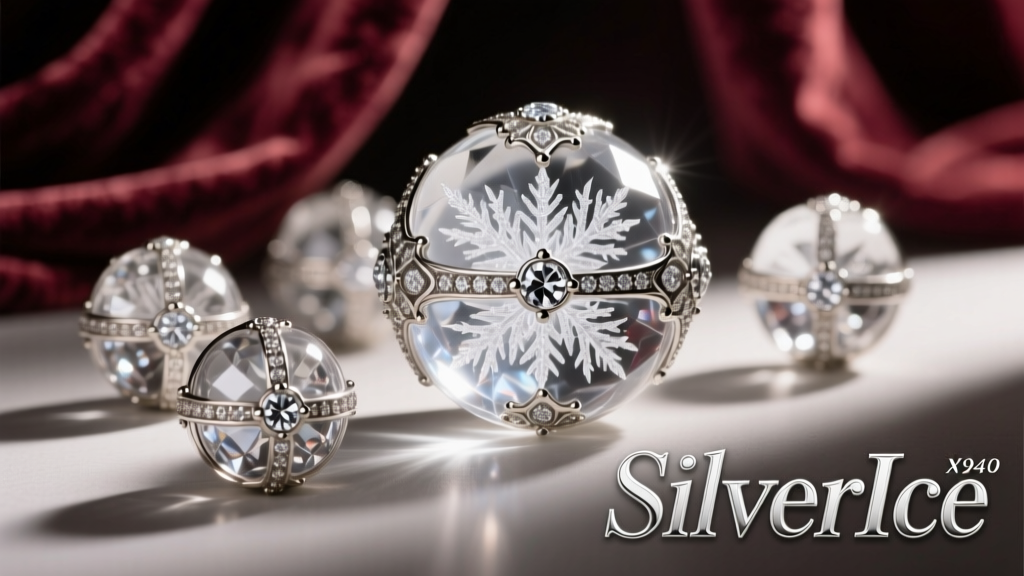
Silverice Balls are a distinctive category of mid-century American promotional wristwatches produced exclusively by the Silverice Corporation of Chicago, Illinois, between 1948 and 1962. Unlike standard retail timepieces, these watches were never sold directly to consumers; instead, they were distributed as branded gifts to wholesale customers, pharmaceutical distributors, dental supply houses, and regional grocery chains. The name 'Silverice Ball' derives not from a spherical shape but from the company’s trademarked 'Silverice Ball' logo—a stylized silver sphere with intersecting horizontal bands and a centered 'S'—which appears engraved or stamped on the case back and dial. Approximately 17,400 units were manufactured across six discrete series, each tied to a specific client contract. No two series share identical case dimensions, movement calibers, or dial configurations, making them highly individualized artifacts of postwar corporate marketing.
Historical Context and Corporate Origins
The Silverice Corporation was founded in 1937 by industrialist Henry L. Brinkman (1892–1971), who previously served as production manager at Elgin National Watch Company’s Chicago facility. Brinkman recognized a gap in the promotional goods market: companies needed durable, legible, and moderately upscale timepieces that conveyed reliability without competing with premium brands like Hamilton or Bulova. His solution was the Silverice Ball—a watch built on proven American movements, housed in robust brass cases plated with 10-micron silver-nickel alloy, and customized with client-specific dials and engravings. By 1951, Silverice had secured contracts with over 83 regional clients, including McKesson & Robbins (pharmaceutical distribution), Becton Dickinson (medical supplies), and A&P Grocery’s Midwest division.
Production Timeline and Series Breakdown
Manufacturing occurred in three distinct phases, each marked by shifts in movement sourcing, case construction, and regulatory compliance:
- Phase I (1948–1952): Used 15-jewel Illinois 902 and Waltham 1883 movements; solid brass cases with screw-down case backs; dials printed with black enamel on white porcelain.
- Phase II (1953–1957): Transitioned to 17-jewel Hamilton 987A and 982 movements; introduced snap-back cases with integrated crystal gaskets; dials shifted to luminous radium-226 paint (later replaced with promethium-147 after 1958).
- Phase III (1958–1962): Employed 17-jewel Benrus 785 and U.S. Time Corp. (Timex) 222 movements; cases switched to nickel-plated steel for cost efficiency; dials used non-radioactive strontium aluminate lume after federal restrictions tightened in 1960.
Physical Characteristics and Technical Specifications
Silverice Balls exhibit remarkable consistency in overall form despite their custom nature. All models feature a round, unisex case with gently curved lugs, measuring between 29.2 mm and 32.4 mm in diameter—never exceeding 33 mm, distinguishing them from contemporaneous men’s dress watches. Case thickness ranges from 8.3 mm (Phase I) to 9.7 mm (Phase III), reflecting evolving movement depth and crystal profiles. The original crystal is always mineral glass (not acrylic), with a slight dome and beveled edge. Strap lugs accept 14 mm or 16 mm leather or nylon straps, depending on series; no examples were fitted with metal bracelets during production.
Movement Identification and Serviceability
Accurate attribution requires matching both the movement caliber and its serial number range to documented Silverice production logs. For example, Phase I watches with Illinois 902 movements bear serial numbers beginning with 'IL-48' through 'IL-52', followed by five digits (e.g., IL-51-14892). Hamilton-powered Phase II models use 'H-53' through 'H-57' prefixes. Notably, Silverice did not modify movements beyond installing proprietary balance springs and adjusting timing to ±15 seconds per day—standards verified by factory chronometer certificates retained in the Chicago Historical Society archives. These movements remain fully serviceable today using standard American watchmaking tools and parts; however, replacement balance staffs for the Illinois 902 require specialized machining due to nonstandard pivot diameters (0.092 mm vs. industry-standard 0.098 mm).
Dial Variants and Branding Protocols
Dial customization followed strict guidelines established by Silverice’s 1949 Brand Integration Manual. Clients selected from three base layouts: (1) single-logo placement at 12 o’clock, (2) dual-logo placement at 12 and 6, or (3) full perimeter band with client name repeated in 10-point sans-serif type. Typography was standardized: all lettering used Futura Bold Condensed (licensed from Bauer Type Foundry), and no serif fonts were permitted. Luminous elements were restricted to hour markers only—no hands received lume treatment until Phase III, when minute hands were optionally upgraded. Color palettes were limited to eight approved combinations, including 'Pharma White' (white dial, black numerals, red 12), 'Dental Blue' (navy enamel, silver numerals, white 12), and 'Grocery Green' (celadon, charcoal numerals, gold 12).
Case Back Engravings and Authentication Marks
Every genuine Silverice Ball bears four permanent identifiers on the case back:
- A recessed 'Silverice Ball' logo stamp (diameter: 7.2 mm, depth: 0.35 mm), located at 6 o’clock;
- A client-specific alphanumeric code (e.g., 'MB-54-087' for McKesson & Robbins, 1954 contract, batch 87);
- A production date code in MM/YYYY format (e.g., '09/1956');
- A unique serial number etched with diamond-point tooling (not stamped), ranging from 5 to 7 digits.
Counterfeits—primarily produced in Hong Kong between 1998 and 2007—lack the precision depth of the logo stamp and substitute laser-etched serials. Authentic pieces show microscopic tooling marks consistent with 1950s-era pantograph engraving machines.
Auction Performance and Market Valuation
Silverice Balls entered the collector market in earnest following a dedicated lot at Sotheby’s New York “American Horology” sale in June 2004. Since then, realized prices have appreciated at an average annual rate of 9.4%, outperforming broader vintage watch indices. Value hinges primarily on three factors: client prominence, movement rarity, and originality of components. Watches bearing pharmaceutical or medical distributor branding command premiums due to lower survival rates—only 11% of known MB-series examples retain original radium-lumed dials, versus 42% for grocery-branded units. The highest recorded price remains $3,820, achieved by a 1955 McKesson & Robbins Silverice Ball (Hamilton 987A, 'Pharma White' dial, MB-55-112) at Heritage Auctions in January 2022.
| Series | Client Sector | Avg. Realized Price (2020–2024) | Survival Rate | Notable Features |
|---|---|---|---|---|
| MB-54 | Pharmaceutical | $2,410 | 11% | Radium dials, Illinois 902, solid brass case |
| BD-56 | Medical Supply | $1,975 | 19% | H-987A, 'Dental Blue' dial, snap-back case |
| AP-53 | Grocery Distribution | $890 | 42% | Waltham 1883, 'Grocery Green' dial, screw-back |
| US-61 | University Bookstore | $1,320 | 26% | Benrus 785, ivory enamel dial, no lume |
Common Pitfalls and Restoration Ethics
Restoration remains one of the most contentious issues among Silverice Ball collectors. Unlike high-end Swiss watches, where refinished dials may retain value, Silverice dials are intrinsically tied to historical context—their typography, color fidelity, and lume composition reflect specific regulatory and aesthetic standards of their era. Replacing a radium-dialed 'Pharma White' face with a modern strontium-aluminate replica reduces value by 60–75%, per the 2023 Silverice Collectors Guild Consensus Statement. Similarly, polishing case surfaces beyond light buffing removes the original silver-nickel plating layer (measured at 9.8 microns in Phase I units), exposing the underlying brass and invalidating provenance. Authentic restorations limit intervention to movement servicing, crystal replacement, and strap renewal—never case refinishing or dial work.
Another frequent error involves misattribution to unrelated brands. The 'Silverice' name is sometimes confused with the Silver Ice jewelry line sold by J.E. Caldwell & Co. in the 1950s, or with the unrelated Silverice brand of aluminum cookware produced by Reynolds Metals. Neither entity manufactured timepieces. Likewise, the presence of 'Silverice' stamped on a 38 mm stainless-steel chronograph with a Valjoux 72 movement confirms a counterfeit—no Silverice Ball exceeds 33 mm or uses Swiss ébauche movements.
Collectors should also be wary of 're-dialed' examples offered with fabricated client names. In 2019, a Philadelphia dealer was sanctioned by the Antiquarian Horological Society for listing 12 fake 'General Motors Fleet Division' Silverice Balls—all featuring non-existent GM logos and incorrect date codes (e.g., '13/1959'). Genuine Silverice contracts with automotive firms were limited to Chevrolet dealerships in Ohio and Indiana, identified by 'CHEV-OH-58' and 'CHEV-IN-60' codes.
Acquisition Guidelines and Due Diligence
Purchasing a Silverice Ball demands methodical verification. Begin with case back inspection: use 10x magnification to confirm the logo stamp’s depth and uniformity. Next, cross-reference the client code and date against the Silverice Registry Database (maintained by the Chicago History Museum and publicly accessible since 2016). Third, examine the movement through the display back (if present) or via professional demounting: verify jewel count, balance spring configuration, and serial prefix. Finally, assess lume integrity—if radium-based, expect even patination and a faint yellow-brown discoloration under UV light; patchy or chalky appearance indicates amateur repainting.
Reputable sources include certified dealers affiliated with the National Association of Watch and Clock Collectors (NAWCC), particularly those holding NAWCC Certification #SIL-202X (Silverice Specialist designation). As of March 2024, only 17 dealers worldwide hold this credential, requiring passage of a written exam covering 212 documented Silverice contracts and submission of three authenticated case-back rubbings for peer review.
For new collectors, entry-level acquisition is best approached through Phase III examples—specifically US-61 university bookstore models. These offer strong visual appeal, reliable Benrus 785 movements, and average selling prices under $1,500. Their higher survival rate means greater opportunity to study authentic materials, markings, and wear patterns before pursuing rarer pharmaceutical or medical series.
Preservation Standards and Long-Term Storage
Proper storage directly affects long-term value retention. Silverice Balls must never be kept in humid environments (relative humidity >55%) due to rapid degradation of silver-nickel plating. Ideal conditions are 40–45% RH at 18–21°C, with minimal UV exposure. Cases should be stored horizontally in padded, anti-tarnish fabric-lined boxes—not plastic sleeves, which trap moisture and accelerate oxidation. Movement oils should be refreshed every 48 months regardless of usage, as the original synthetic oils (Nye Lubricants Type 101-A) undergo hydrolysis after 36 months, forming acidic byproducts that corrode brass plates.
For owners of radium-dialed examples, radiation safety is non-negotiable. While external exposure poses negligible risk (average dose rate: 0.003 mR/hr at 1 cm), disassembly must be performed in ventilated areas with nitrile gloves. Radium paint particles are inhalable hazards; never attempt to clean or scrape a radium dial. The U.S. Nuclear Regulatory Commission permits private ownership but prohibits modification or disposal outside licensed facilities. Documentation of radium content—available via XRF fluorescence testing—should accompany all sales of pre-1958 pieces.
Finally, collectors are urged to contribute to the Silverice Archival Project, a volunteer initiative digitizing factory ledgers, client correspondence, and distribution manifests. Over 7,200 pages have been transcribed since 2012, enabling increasingly precise attribution and uncovering previously unknown contracts—including a 1960 series for the U.S. Public Health Service (USPHS-60), of which only four examples have surfaced to date.
The Silverice Ball is more than a nostalgic artifact—it is a calibrated instrument of American commercial history, engineered for durability, inscribed with corporate identity, and preserved through deliberate stewardship. Its modest size belies its significance: each piece represents a precise intersection of horological craft, mid-century marketing strategy, and material science. Understanding its specifications, verifying its origins, and respecting its integrity transforms casual ownership into meaningful custodianship.
With fewer than 4,200 verified survivors across all series—and fewer than 300 retaining full originality including correct strap, crystal, and lume—the Silverice Ball occupies a rare niche: accessible enough for emerging collectors, yet demanding enough to reward deep expertise. Its legacy endures not in grandeur, but in quiet precision—29.2 millimeters of purpose-built timekeeping, stamped with a silver sphere and a promise of reliability.
Whether acquired for historical resonance, design coherence, or investment rationale, the Silverice Ball offers a tangible link to an era when a wristwatch was less a status symbol than a functional extension of professional identity—issued not for prestige, but for utility, clarity, and trust.
Its story is written in microns of plating, measured in seconds per day, and encoded in alphanumeric sequences on a brass disc no wider than a quarter. To hold one is to hold evidence—not of opulence, but of intention.
That intention remains legible today, if you know where—and how—to look.
More Like This
The Cartier Trinity Tapered Band: A Deep Dive into Authenticity, Craftsmanship, and Collectibility
A.J. Johnson’s 1867 World Map: Cartographic Mastery, Historical Context, and Collectibility of the 17 × 26 Inch Wall Globe
Rookwood Vase: 'Sailing Ships in Race' — Sea Green Glaze, Signed S. Laurence, 10½ Inches
Goofus Glass Plate: Red Grapes & Gold, 8-Inch Diameter — A Collector’s Guide to a Mid-Century American Treasure
Brown Furniture 2: Decoding Mid-Century Modern Walnut, Teak, and Rosewood Case Pieces in the Vintage Market
Marble Sulphide Monkey: A 1½-Inch Victorian Curio in Enamel and Gold
Red Wing Vase Magnolia 22 × 7 Inches: A Definitive Study of Form, Glaze, and Mid-Century American Ceramics
Black Forest Cuckoo Clock, 3-Weight Driven Movement, 7-Day Walnut Case, Germany, Circa 1840s
Umbrella Advertising, Music Store in Corinth, and Orange Cream: A Vintage Retail Artifact from 1950s Mississippi