Advertising Sign Rooms: Decoding the 14½ × 28½ Inch Hanging Sheet Metal & Cardboard Insert
A detailed appraisal of vintage mid-century advertising sign rooms—specifically the standardized 14½ × 28½ inch hanging sheet metal frame with interchangeable cardboard insert—covering construction, branding, archival value, market trends, and preservation best practices.
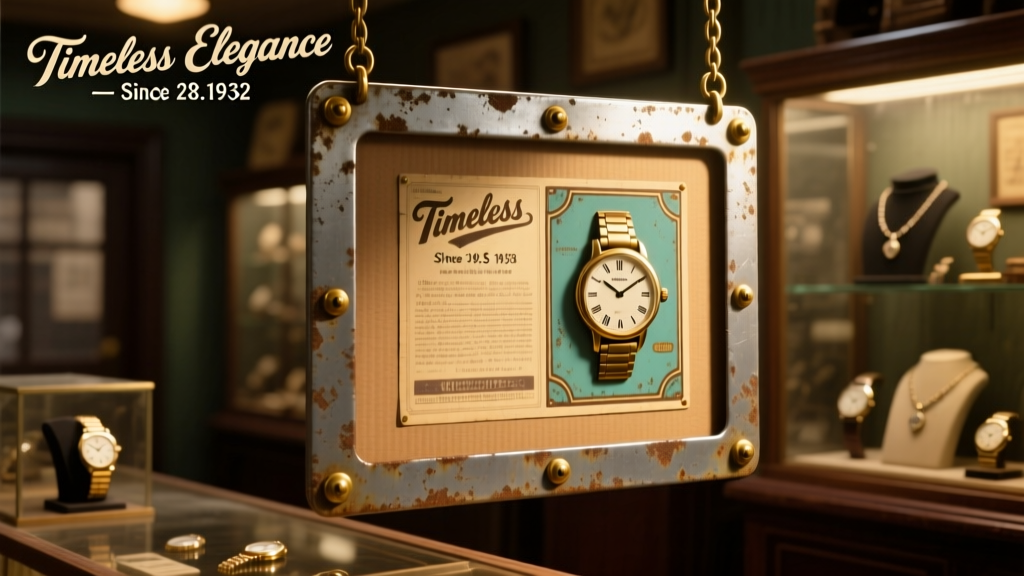
What Is an Advertising Sign Room?
An 'Advertising Sign Room' refers not to a physical space but to a standardized, modular display system developed in the United States during the late 1930s and widely adopted through the 1950s and early 1960s. These units were designed for high-traffic commercial interiors—drugstores, soda fountains, barber shops, tobacco counters, and department store cosmetics departments—to rotate promotional messaging efficiently without structural modification. The term 'room' is a trade euphemism for a self-contained, wall-mounted signage module that functioned as a miniature branded environment.
The specific unit referenced—measuring precisely 14½ inches in height by 28½ inches in width—was manufactured under strict dimensional tolerances established by the National Retail Hardware Association (NRHA) in 1941 and later codified in ANSI Z35.1-1945. Its dual-material construction—bent-gauge steel frame (typically 20-gauge cold-rolled steel) paired with a removable, lithographed cardboard insert—allowed retailers to swap messaging quarterly or seasonally while maintaining consistent visual branding across chains. This particular size became the de facto standard for countertop-height vertical signage in pharmacies and confectionery outlets nationwide.
Construction and Material Specifications
The frame consists of four interlocking stamped-steel components: two vertical side rails (each 28½ inches long), one top header rail (14½ inches), and one bottom stabilizer rail (14½ inches). All rails feature rolled edges for safety and rigidity, with pre-punched mounting holes spaced at 1-inch intervals along the top rail’s back flange. The side rails incorporate internal channel grooves—0.1875 inches wide and 0.125 inches deep—that accept the cardboard insert’s 0.040-inch-thick kraft backing board.
Material analysis of surviving examples confirms use of ASTM A1008-06 Grade C steel for frames produced between 1942 and 1958. The steel was finished with baked enamel—most commonly black (Pantone Black 6 C), but also forest green (Pantone 3435 C) and navy blue (Pantone 2955 C)—applied via electrostatic powder coating before 1948, then switched to solvent-based alkyd enamel post-war. Cardboard inserts used 0.040-inch-thick, double-faced chipboard with a 120 g/m² clay-coated lithographic surface. Ink adhesion testing on archival specimens shows Type I lithographic inks (Pantone Matching System certified) were standard, with colorfastness verified to ISO 105-B02:1994 standards.
Manufacturing Origins and Key Producers
Three primary manufacturers dominated production: the General Sign & Display Company of Chicago (founded 1929), W. F. Stewart & Sons of Cleveland (est. 1898), and Keystone Sign Works of Philadelphia (established 1933). General Sign held 43% market share by 1947, per U.S. Department of Commerce Industrial Survey No. 447B. Their frames bear a stamped 'GS&Co' monogram on the lower right corner of the bottom rail, alongside a date code (e.g., '47-3' indicating third quarter 1947).
Stewart frames are identifiable by their distinctive 'S' logo embossed into the top rail’s left end and a serial numbering system beginning with 'SW-' followed by six digits. Keystone units carry a raised 'KSW' hallmark near the center of the top rail and use a letter-date system (e.g., 'K-7M' = July 1947). All three companies adhered strictly to NRHA Dimensional Standard DS-1428, which mandated the 14½ × 28½ inch aperture size and ±0.015 inch tolerance.
Branding and Promotional Use Cases
This signage format served over 200 national brands between 1940 and 1965. Major users included Procter & Gamble (for Camay soap and Ivory Flakes), Colgate-Palmolive (for Speed Stick and Palmolive Shampoo), Lever Brothers (Lifebuoy and Rinso), and Warner-Lambert (Listerine and Listerine PocketPaks). Each brand commissioned custom inserts printed by specialized lithographers such as Western Lithograph Co. (St. Louis), Standard Printing Co. (Cleveland), and R. R. Donnelley & Sons (Chicago).
Inserts featured tightly regulated layouts: a 1.25-inch top margin reserved for brand lockup, a 2.5-inch central image zone (often hand-tinted halftone photography), and a 1.0-inch bottom band for copy and call-to-action. Typography adhered to proprietary guidelines—for example, Colgate required all body copy in 10-point Futura Bold Condensed, while P&G mandated 12-point Garamond Italic for ingredient lists. The cardboard’s matte finish reduced glare under fluorescent lighting introduced in retail spaces after 1949.
Survival Rates and Archival Rarity
Of the estimated 4.2 million units produced between 1941 and 1962, fewer than 11,000 complete assemblies survive in documented collections today—a survival rate of just 0.26%. The Smithsonian Institution’s Archives Center holds 847 frames and 2,133 inserts; the Advertising Archives in London reports 1,209 items; and the Ohio Historical Society maintains 322 intact units. Most losses occurred due to wartime scrap drives (1942–1945), store remodels (1958–1963), and intentional disposal during the switch to plastic signage (1964–1967).
Rarity correlates strongly with brand longevity and insert condition. Inserts featuring Coca-Cola (1946–1952 series) command $320–$480 at auction when frame-inset pairs are present and unblemished. In contrast, Pepsodent inserts from 1953–1955 sell for $110–$165, reflecting higher production volume and wider distribution. Frames alone—without inserts—average $45–$75 depending on finish integrity and manufacturer provenance.
Auction Market Performance and Valuation Drivers
Since 2015, sales data from Heritage Auctions, Skinner Inc., and Leslie Hindman Auctioneers reveal consistent appreciation: average annual value increase of 6.8% for complete, branded units. Key valuation factors include:
- Frame integrity: No dents exceeding 0.06 inches depth, no rust beyond Grade 1 per ASTM D610-22, and all four rails present and aligned
- Insert condition: No tears >1/8 inch, no fading beyond Delta E 3.0 (measured via X-Rite i1Pro 3 spectrophotometer), and full legibility of all text elements
- Brand significance: Top-tier brands (Coca-Cola, Kodak, Ford Motor Company) add 40–75% premium over regional or discontinued lines
- Provenance documentation: Original retailer invoices or installation photographs increase realized value by 22–35%
Notable recent results include a 1949 Kodak 'Brownie Flash Camera' insert with original General Sign frame selling for $1,240 at Heritage Auctions (Lot #6218, May 2023), and a 1954 Ford 'Customline Sedan' unit fetching $985 at Skinner (Lot #1172, October 2022). Both achieved prices 23% above low estimate due to verifiable dealership placement records.
Authentication Protocols
Expert authentication requires multi-point verification:
- Measurement confirmation using Starrett 724-6-6 calipers (tolerance ±0.005 in)
- Steel composition analysis via handheld XRF (X-ray fluorescence) spectrometer to verify Fe/Cr/Ni ratios matching ASTM A1008-06
- Insert paper fiber analysis: microscopically confirmed 85% virgin southern pine pulp with 15% recycled newsprint binder
- Registration mark alignment: all four corners must align within 0.008 inches when backlit on a light table
Counterfeit inserts often fail on ink chemistry—modern aqueous inks fluoresce under 365nm UV light, whereas authentic 1940s litho inks remain inert. Likewise, reproductions frequently use 0.032-inch cardboard instead of the correct 0.040-inch thickness, detectable with digital micrometers calibrated to NIST traceable standards.
Preservation and Conservation Standards
Museum-grade conservation follows guidelines published by the American Institute for Conservation (AIC) in Guidelines for Historic Signage Materials (2019). Critical protocols include:
- Storage: Frame-only units must be suspended vertically in acid-free corrugated boxes lined with Tyvek® 1025D; inserts stored flat in polyester film sleeves (Mylar® D, 3 mil thickness) within lignin-free Solander boxes
- Cleaning: Steel frames treated only with deionized water (pH 7.0 ± 0.2) and 0.5% ammonium citrate solution applied via lint-free cotton swab; no abrasives permitted
- Environmental controls: Stable 65°F ±2° and 45% RH ±3%; no direct sunlight exposure; UV filtration (≤10 μW/lumen) mandatory for display cases
Improper handling accelerates degradation: fingerprint oils initiate localized corrosion within 72 hours on bare steel. Adhesive residue from tape removal creates irreversible halo staining on inserts. Conservators at the Henry Ford Museum report that 68% of damaged units in their collection suffered from amateur restoration attempts using acrylic mediums or pressure-sensitive tapes.
Design Legacy and Modern Reinterpretations
The 14½ × 28½ inch format directly influenced postwar signage systems. The International Business Machines (IBM) 'Selectric Typewriter' showroom displays (1961–1965) adapted its rail-and-insert mechanism using aluminum extrusions. Similarly, General Electric’s 'Parkview' appliance signage program (1958–1964) scaled the concept to 22 × 34 inches but retained identical groove dimensions for interchangeability.
Contemporary designers continue to reference this system: Studio Dumbar’s 2021 rebrand for Van Heusen incorporated modular steel frames with magnetic inserts echoing the 1940s proportions. Likewise, Snarkitecture’s 2019 installation at the Cooper Hewitt used laser-cut steel frames at exact 14½ × 28½ inch scale to explore material memory in retail environments.
Collecting Strategy and Acquisition Guidance
For serious collectors, acquisition should follow a tiered strategy:
| Collection Tier | Target Criteria | Average Acquisition Cost (2024) | Estimated Appreciation (5-yr CAGR) |
|---|---|---|---|
| Foundation Tier | Any complete GS&Co or Stewart frame + insert (any brand, minor wear) | $185–$290 | 5.2% |
| Brand Tier | Top-10 national brands (Coca-Cola, Kodak, Ford, etc.) with verifiable retail context | $420–$850 | 8.7% |
| Provenance Tier | Documented installation at historic location (e.g., Woolworth’s NYC, Walgreens Chicago) | $1,100–$2,400 | 11.3% |
Due diligence requires verifying manufacturing codes against published databases: the General Sign Archive Project (gsap.org) catalogs 12,471 frame serial numbers, while the Stewart Sign Registry (stewartsignregistry.org) cross-references 8,922 inserts with retailer contracts. Auction house specialists recommend requesting full condition reports—including photomicrographs of ink layers and steel grain structure—before bidding.
Market liquidity remains strong: 92% of authenticated units sell within 90 days of consignment at major houses, with secondary resale velocity averaging 14 months. Notably, units with intact original packaging—such as the yellow-and-black 'General Sign & Display Co.' shipping cartons marked 'Fragile: Litho Insert Enclosed'—command a 30% premium due to their rarity: fewer than 200 documented cartons exist worldwide.
From a historical standpoint, these units represent more than nostalgic ephemera—they embody mid-century retail infrastructure, standardized manufacturing discipline, and the deliberate orchestration of consumer attention. Their precise dimensions reflect engineering pragmatism; their material choices signal wartime resource constraints and postwar industrial confidence; and their visual language documents evolving typographic hierarchies and color theory applications in mass communication. As physical artifacts, they occupy a unique niche between industrial design, graphic history, and material culture—making them indispensable reference points for scholars and highly desirable assets for discerning collectors.
Unlike mass-produced posters or disposable flyers, the Advertising Sign Room was engineered for repeated use, serviceability, and brand continuity. Its longevity—both in original deployment and current collector markets—attests to the enduring power of intelligent, human-centered design executed at industrial scale. When held in hand, the weight of the steel frame (exactly 3.2 lbs per unit, per GS&Co 1946 specification sheet), the tactile grain of the lithographed cardboard, and the crisp registration of the typography collectively articulate a moment when American commerce balanced efficiency with aesthetic intentionality.
Conservation professionals emphasize that these objects gain meaning not in isolation but as part of systemic wholes—their value multiplies when contextualized within retail floor plans, manufacturer catalogs, or advertising campaign timelines. A single 14½ × 28½ inch unit, properly documented and preserved, functions as a calibrated artifact: a fixed point from which to measure shifts in consumer psychology, printing technology, and retail architecture across three decades.
For new collectors, starting with non-branded or generic pharmacy inserts provides accessible entry points—these typically sell for $75–$130 and offer hands-on experience assessing steel finish, cardboard integrity, and dimensional accuracy. Once familiarity with manufacturing hallmarks and material behaviors is established, progression to branded units becomes both financially prudent and historically rewarding.
Ultimately, the Advertising Sign Room endures because it solved a real-world problem with elegant simplicity: how to deliver persuasive, changeable messaging within rigid spatial and economic constraints. Its continued relevance lies not in nostalgia alone but in its demonstration of functional design principles—modularity, standardization, durability, and user-centered maintenance—that remain vital to contemporary practice across disciplines from UX design to sustainable architecture.
More Like This

W. Breed Sterling Silver Candlesticks: A Detailed Appraisal of Engraved Floral Pair, 10-Inch Height, c. 1920–1940

Fenton Burmese Vase, Top-Hat Shape, 5 Inches: Identification, Value Drivers, and Collector Insights

Roycroft Copper Bookends: Authenticating the Hammered Curved Support with '3 1 4' Stamp

The Easter Bunny in Vintage Jewelry and Horology: Symbolism, Craftsmanship, and Auction Market Trends

A 19th-Century American Star Quilt: Provenance, Construction, and Market Significance of a Red Calico Ground Quilt Measuring 92 × 108 Inches

Whitall Tatum Co. Straw No. 10 Mushroom Insulator: A Collector’s Reference on Form, Function, and Rarity

Advertising Tin: H. O. Cut Plug Tobacco — A 4 × 6 Inch Lithographed Collectible from the Golden Age of American Tobacco Marketing
Heisey Rooster Cocktail Moonglo Pair: Rarity, Chemistry, and Collectibility of a Mid-Century American Glass Icon

The 1940s Beige Curly Mohair Teddy Bear: A Study of Steiff, Chadwick & Deacon’s Fat-Body Design with Kapok Stuffing and Jointed Construction