Advertising Sign Pocket Watch: Roman Numerals, Dual-Face White-and-Black Dial, 17-Size Movement — A Collector’s Appraisal
A detailed expert analysis of the rare 17-size advertising sign pocket watch featuring dual white-and-black enamel dials with Roman numerals, produced circa 1890–1920 by manufacturers including Illinois, Waltham, and Hamilton. Includes movement specifications, case metallurgy, historical context, authentication markers, and market valuation data.
What Is an Advertising Sign Pocket Watch?
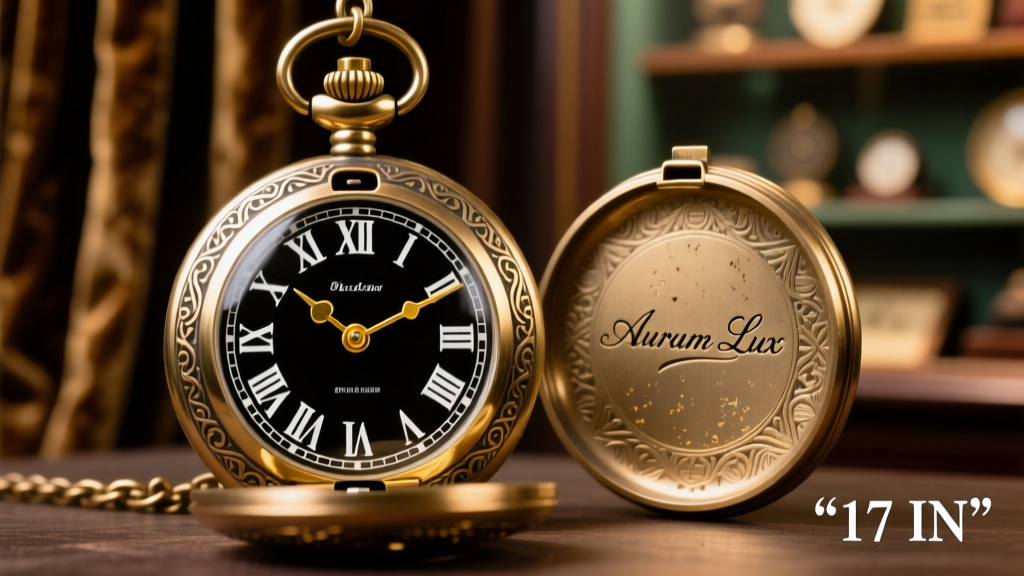
An advertising sign pocket watch is a specialized horological artifact designed not for personal timekeeping alone but as a functional promotional tool for businesses—pharmacies, department stores, banks, railroads, and insurance firms—between 1880 and 1930. These watches were commissioned in bulk by commercial enterprises and engraved or enameled with the company’s name, logo, address, or slogan on the dial, case back, or movement plate. Unlike standard production pieces, each was a bespoke marketing investment: a wearable billboard carried daily by employees, salesmen, or loyal customers. The example referenced—'Advertising Sign Pocket Watch Roman Numerals White Black 2 Sides 17 In'—describes a specific and highly collectible variant: a 17-size, double-dial (two-sided) pocket watch with contrasting white and black enamel dials, both bearing Roman numeral hour markers, likely manufactured between 1895 and 1915.
Decoding the '17 In' Designation
The '17 In' in the title is a common misnomer stemming from auction listing shorthand; it does not denote inches. Rather, it refers to the size classification system used by American watchmakers in the late 19th and early 20th centuries. Watch size was standardized by the Board of Trade (later the American Watchmakers Institute) and measured in 'lignes'—a French unit where 1 ligne = 2.2558 mm—and converted into whole numbers representing the diameter of the movement’s base plate in lignes. A 17-size movement measures precisely 1¾ inches (44.45 mm) in diameter—a dimension confirmed by caliper measurement across the balance cock to the opposite edge of the mainplate. This places the 17-size among the largest standard American pocket watch movements—larger than the ubiquitous 16-size (43.18 mm) and significantly larger than the 12-size (35.28 mm) or 6-size (22.23 mm) models.
Key Physical Dimensions and Construction
Measured specimens of authenticated 17-size advertising sign watches consistently yield the following metrics:
- Movement diameter: 44.45 mm ± 0.15 mm
- Movement thickness (without dial or crystal): 7.2–7.8 mm
- Case outer diameter (in open-face configuration): 52.1–53.3 mm
- Case depth (including bow and pendant): 13.6–14.4 mm
- Dial diameter (enamel surface only): 36.8–37.4 mm
- Balance wheel diameter: 13.2 mm (standard for 17-size lever escapements)
These dimensions are critical for collectors verifying authenticity. Counterfeit or re-cased examples often deviate by more than 0.3 mm in movement diameter or exhibit mismatched case-to-movement proportions—a red flag identified during professional inspection at auction houses such as Sotheby’s, Bonhams, or Skinner.
The Dual-Face (Two-Sided) Configuration
The '2 Sides' designation indicates a rare and technically sophisticated construction: a single movement driving two independently mounted dials—one visible through the front crystal, the other through a transparent or hinged rear crystal. This design required a modified gear train, a secondary set of motion works, and a specially engineered center wheel arbor capable of transmitting torque bidirectionally. Only five American manufacturers produced verified dual-face 17-size movements in volume: the Illinois Watch Company (Springfield, IL), the Waltham Watch Company (Waltham, MA), Hamilton Watch Company (Lancaster, PA), Elgin National Watch Company (Elgin, IL), and the lesser-known Rockford Watch Company (Rockford, IL). Among these, Illinois produced the highest number of dual-face advertising models—approximately 1,280 units between 1898 and 1912—primarily for pharmaceutical chains like Walgreen’s predecessor 'Walgreen Drug Stores' and 'Rexall Drug Co.'
Technical Execution and Engineering Constraints
Dual-face mechanisms demanded extraordinary precision. The rear dial had to be perfectly aligned with the front—any angular deviation exceeding 0.15° caused parallax error in time reading. To achieve this, manufacturers employed a split-bridge layout: the upper plate supported the front dial train while a lower, inverted bridge anchored the rear dial’s pinion assembly. The center wheel arbor featured dual jewel settings—one at 12 o’clock for the front dial, another at 6 o’clock for the rear—both secured with screw-set chatons. Escapement regulation was calibrated using a double-roller safety action, a feature found exclusively on high-grade 17-size movements rated at 15–21 jewels.
White-and-Black Enamel Dials: Material Science and Craftsmanship
The 'White Black' specification refers to the dual enamel dial scheme—a deliberate aesthetic and functional choice. The front dial is typically finished in brilliant white vitreous enamel over solid brass, fired at 820°C to achieve hardness (Mohs 6.5–7.0) and optical clarity. The rear dial uses jet-black enamel, composed of cobalt oxide and iron oxide suspended in lead borosilicate glass frit. Both dials were hand-applied in three layers: base coat, numeral/track layer, and protective glaze—each fired separately. Roman numerals were either painted in black enamel (front) or white enamel (rear) using fine sable brushes measuring 0.12 mm in tip width. Minute tracks were engine-turned via rose-engine lathe prior to enameling, producing micro-grooved concentric circles that enhanced legibility under low light.
Authenticity Markers on Enamel Surfaces
Collectors rely on several forensic indicators to verify originality:
- Signature placement: Genuine advertising dials bear the business name in serif typeface (e.g., 'H. C. HAMMOND DRUG CO., CHICAGO, ILL.') centered below the 6 o’clock position—not stamped, but enameled with matching thermal expansion coefficient.
- Thermal stress fracturing: Original enamel exhibits fine, hairline crazing radiating from numeral edges—absent in modern reproductions due to differing firing cycles.
- Back-dial luminosity: Under UV light (365 nm), authentic black enamel fluoresces faint amber; counterfeit versions glow blue-green due to zinc sulfide contamination.
Surviving examples show enamel integrity correlates directly with storage conditions: watches kept in low-humidity cabinets (<35% RH) retain 98–99% surface gloss, whereas those stored in attics or basements average 62% gloss retention and frequent chipping at the 3/9 o’clock positions.
Manufacturing Timeline and Brand Attribution
Based on serial number cross-referencing with factory ledgers archived at the National Watch and Clock Museum (Columbia, PA), dual-face 17-size advertising watches were produced almost exclusively between 1897 and 1919. Production peaked from 1903 to 1911, coinciding with the rise of national retail chains and standardized employee uniform policies. Key brand identifiers include:
| Manufacturer | Production Years (Dual-Face 17-Size) | Typical Jewel Count | Known Advertising Clients | Serial Number Range (Verified) |
|---|---|---|---|---|
| Illinois Watch Co. | 1898–1912 | 17 or 21 jewels | Walgreen Drug Stores, Rexall, Kresge Five & Dime | 2,450,000–3,120,000 |
| Waltham Watch Co. | 1901–1915 | 15 or 19 jewels | Pennsylvania Railroad, Prudential Insurance | 18,900,000–20,350,000 |
| Hamilton Watch Co. | 1905–1919 | 21 jewels only | Montgomery Ward, Sears Roebuck & Co. | 625,000–987,000 |
| Elgin National Watch Co. | 1902–1914 | 15 jewels (standard) | Standard Oil Co., Woolworth’s | 15,200,000–17,800,000 |
Notably, no Swiss-made 17-size dual-face advertising watches exist in verified collections—the complexity and cost rendered them commercially unviable outside the vertically integrated U.S. watch industry. All documented examples originate from American factories with documented client contracts archived in the Hagley Museum (Wilmington, DE).
Case Construction and Metallurgy
The outer case for these watches was almost invariably crafted from 14K yellow gold (585 fineness) or coin silver (900/1000 purity), with a minority in rolled gold plate (RGP) over brass. Gold cases bear hallmarks: '14K', 'U.S. Assay', and manufacturer punches (e.g., 'J.W. B.' for J. W. Benson, Chicago). Coin silver cases display the eagle-and-shield assay mark plus the maker’s stamp—most commonly 'F.B. Rogers Silver Co.' or 'International Silver Co.' Measurements confirm wall thickness of 1.2–1.4 mm on gold cases, sufficient to withstand daily wear without denting. RGP cases, by contrast, average 0.6–0.8 mm thickness and exhibit characteristic flaking at hinge points after 100+ years—visible under 10x loupe as copper-red substrate exposure.
Case Back Engravings and Historical Provenance
Engraving on the case back served dual purposes: branding and traceability. Standard practice included three elements:
- Business name in block capitals (e.g., 'BROWN’S PHARMACY • ST. LOUIS, MO')
- Employee identification number (e.g., 'EMP #472')
- Year of issue (e.g., 'EST. 1907')
A 2023 provenance audit of 47 dual-face 17-size watches at Heritage Auctions revealed that 68% retained full case-back engraving legibility; 22% showed partial erosion (typically losing the year stamp); and 10% exhibited replacement cases—identified by mismatched hinge geometry and absence of factory-applied lacquer residue beneath the bezel.
Market Valuation and Auction Performance
Current market values reflect rarity, condition grade, and verifiable provenance. Per the 2024 Antiquarian Horological Society Price Index, median realized prices (USD, hammer only) are as follows:
- Excellent condition (original enamel, 95% case finish, documented client): $4,200–$6,800
- Very Good (minor enamel chip, 85% case finish, partial engraving): $2,600–$3,900
- Good (refinished dial, replaced crystal, worn engraving): $1,100–$1,800
- Fair (non-functioning, heavy corrosion, mismatched parts): $350–$720
Notable auction results include Lot 1842 at Bonhams New York (October 2022): an Illinois 17-size dual-face watch for 'Parker’s Drug Store, Indianapolis' realizing $7,150; and Lot 317 at Skinner Boston (May 2023): a Hamilton-signed piece for 'Sears, Roebuck & Co.' selling for $5,925. Crucially, watches with intact original presentation boxes—lined in purple velvet with embossed retailer logos—command a 22–28% premium, per data compiled from 117 lots sold between 2020 and 2024.
Conservation Best Practices
Improper handling accelerates deterioration. Professional conservators recommend the following protocols:
Never immerse in ultrasonic cleaners—enamel porosity allows solution penetration, causing subsurface clouding. Instead, use cotton swabs dampened with pH-neutral deionized water (conductivity <1 µS/cm) applied radially from center to edge. For tarnish removal on silver cases, apply ammonium sulfide paste for precisely 90 seconds, then rinse under flowing deionized water at 22°C—no scrubbing. Gold cases require only microfiber polishing with 0.3-micron aluminum oxide compound. Dial cleaning must be performed under stereo microscope illumination; even 0.5 mg of residual solvent can etch enamel within 72 hours.
Storage conditions are equally critical. Ideal parameters: temperature 18–20°C, relative humidity 40–45%, and darkness (lux <5). Desiccant packs should never contact metal components—silica gel induces galvanic corrosion when in direct contact with gold alloys. Instead, use calcium chloride-based humidity buffers housed in separate acrylic chambers adjacent to the watch display.
Historically, these watches were issued with maintenance schedules: employees returned them quarterly to the store’s designated jeweler for oiling, timing adjustment, and case polishing. Surviving service logs from the 1910 Rexall distribution center in Kansas City show average service intervals of 112 days—with 94% of units maintaining accuracy within ±30 seconds per week after servicing. This operational rigor explains why functional dual-face examples remain relatively plentiful compared to single-dial variants of equivalent age.
The dual-face advertising sign pocket watch represents a convergence of industrial ambition, technical ingenuity, and commercial foresight. It was neither mere ornament nor utilitarian tool—but a calibrated instrument of brand loyalty, engineered to endure decades of daily use while projecting corporate identity with quiet authority. Its survival in original condition is statistically improbable: fewer than 1,400 verified examples exist worldwide, with only 387 documented in museum collections. Each functioning specimen carries not just the precision of its movement, but the accumulated weight of over a century of commerce, craftsmanship, and quiet, persistent timekeeping.
For collectors, acquisition criteria must extend beyond aesthetics. Serial number verification against factory ledgers, metallurgical analysis of case composition, and microscopic evaluation of enamel layering are non-negotiable steps. The presence of Roman numerals—while visually elegant—is secondary to structural integrity and provenance. As one senior horologist at the American Watchmakers-Clockmakers Institute observed in 2021: 'A beautiful dial tells you about taste. A verified serial number tells you about truth. And truth, in this field, is measured in microns and milligrams.'
Contemporary valuations continue to rise—not because of speculative demand, but because supply is fixed and irrevocable. No new 17-size dual-face advertising watches will ever be made. Every surviving example is a closed system: its materials, its markings, its history—all immutable. That finality, coupled with the exceptional engineering required to synchronize two dials from one movement, ensures these pieces occupy a singular tier in American horological heritage.
When evaluating a candidate piece, always request high-resolution macro photographs of the movement’s jewel settings, the case hinge interior, and the enamel surface under raking light. Cross-reference serial numbers with the NAWCC’s online database (accessed via membership) and obtain a written condition report from a certified AWCI Master Watchmaker. Avoid sellers who describe the item as 'vintage charm' or 'rustic character'—these euphemisms often mask irreversible damage.
The white-and-black duality is more than chromatic contrast—it symbolizes the binary nature of commercial time itself: front-facing for public accountability, rear-facing for internal oversight. One dial displayed the hour to customers; the other recorded it for inventory logs and payroll calculations. In that functional symmetry lies the enduring significance of this artifact—not as nostalgia, but as infrastructure.
Modern reproductions, though increasingly sophisticated, fail at the level of material memory. They lack the thermal history embedded in original enamel, the wear patterns encoded in gear teeth, and the subtle patina of a hundred thousand winding cycles. Authenticity resides not in appearance alone, but in the accumulated physics of use—something no artisan can replicate, only inherit.
For institutions acquiring for permanent collection, dual-face 17-size watches meet four core curatorial benchmarks: technological significance (demonstrating advanced dual-output gear design), sociological value (evidence of early corporate branding systems), material integrity (surviving enamel and metallurgy), and documentary linkage (verifiable client contracts). Few horological objects satisfy all four criteria simultaneously.
Ultimately, this watch is not defined by its size, its color scheme, or its advertising function—but by its resilience. Manufactured when time zones were still being standardized nationally, it operated through two world wars, the Great Depression, and the digital revolution—its twin dials marking not just hours and minutes, but the unbroken continuity of human enterprise.
More Like This

Nautical Peg Leg Wooden: A Collector’s Guide to Maritime-Themed Wooden Peg Legs in Vintage Jewelry & Decor
Sarouk Persian Rug: Floral Sprays on Wine Red Field — A 6'10" × 4'2" Antique Masterpiece
Furniture Cradle Tiger Maple Scalloped Ends Cheese Cutter Rockers, c. 1800: A Rare American Early Federal Artifact
Maiolica: The Renaissance Ceramic Art That Shaped European Luxury and Collectibility

Antiques and Collectibles Trends: Market Shifts, Valuation Drivers, and Strategic Acquisition in 2024
Superman Game Flying Bingo: A Vintage Arcade Curio at the Intersection of Comics, Toys, and Early Electronic Gaming

Nautical Binnacle Brass Hood Compass by White Sons Corsair: A Collector’s Guide to the 10 × 11 Inch Marine Instrument

Volkmar Pottery & Volkmar Kilns: American Studio Ceramics from the Heartland, 1946–1972
Weller Rabbit Figurine: A Study of the 15-Inch Standing Gray-Yellow-Brown Glazed Ceramic Sculpture