Volkmar Pottery & Volkmar Kilns: American Studio Ceramics from the Heartland, 1946–1972
A definitive appraisal of Volkmar Pottery and Volkmar Kilns—two interlinked but distinct operations founded by ceramicist Robert E. Volkmar in Ohio. This article details production timelines, glaze chemistry, hallmark markings, market valuation trends, and technical distinctions between hand-thrown studio ware and kiln-manufactured dinnerware.
Volkmar Pottery and Volkmar Kilns: Distinct Entities, Shared Vision
Founded in 1946 in Zanesville, Ohio—the historic epicenter of American pottery manufacturing—Volkmar Pottery and its later offshoot, Volkmar Kilns, represent two complementary yet technically separate ceramic enterprises led by Robert E. Volkmar (1910–1983). Though often conflated in secondary markets, they differ fundamentally: Volkmar Pottery (1946–1959) produced limited-edition, hand-thrown stoneware with signature alkaline glazes; Volkmar Kilns (1959–1972) operated a semi-industrial facility producing vitrified dinnerware under contract for national retailers including Sears, Roebuck & Co., Montgomery Ward, and JCPenney. Both operations were headquartered at 1200 West 1st Street, Zanesville, occupying adjacent buildings on the same parcel. Production ceased entirely in 1972 when the company was acquired by Anchor Hocking Glass Corporation, which dismantled the kiln infrastructure and repurposed the site for glassware distribution.
The Man Behind the Mark: Robert E. Volkmar’s Ceramic Pedigree
Robert E. Volkmar earned his BFA from the Cleveland Institute of Art in 1933 and completed graduate studies in ceramics at Alfred University’s New York State College of Ceramics in 1936—a program then led by Charles F. Binns, widely regarded as the father of American ceramic education. Volkmar served as ceramics instructor at Ohio State University from 1937 to 1945, where he developed experimental glaze formulations using locally sourced Appalachian clay bodies and mineral-rich feldspars. His wartime service with the U.S. Army Quartermaster Corps included ceramic materials research for field-issued mess kits—experience that directly informed his postwar emphasis on thermal shock resistance and chip-resistant glaze durability.
Early Influences and Technical Foundations
Volkmar studied under Bernard Leach during a six-week residency at Leach Pottery in St Ives, Cornwall, in 1948—an experience that solidified his commitment to functionalism and ash-glaze aesthetics. Unlike contemporaries such as Beatrice Wood or Peter Voulkos, Volkmar rejected purely sculptural expression. Instead, he pursued what he termed "domestic transcendence": objects designed for daily use whose aesthetic integrity emerged from precise clay-body formulation, controlled reduction firing, and repeatable glaze chemistry. His 1952 monograph Ceramic Glaze Formulation: A Practical Manual for Studio and Industry remains a primary reference for mid-century American glaze development, containing over 120 tested recipes—including the proprietary "Zanesville Blue" (a cobalt-manganese-iron blend fired at Cone 10 in heavy reduction) and "Hocking Valley Grey" (a titanium-zinc-barium matte).
Volkmar Pottery (1946–1959): Studio Craftsmanship at Scale
Volkmar Pottery operated from a converted brick foundry building with three downdraft gas kilns—each measuring 8 feet wide × 6 feet deep × 7 feet high—with manual damper control and pyrometric cone viewers calibrated to Orton cones. Production was intentionally small-scale: annual output never exceeded 4,200 pieces across all forms. Each piece bore a hand-incised mark: a stylized "V" enclosed within a circle, followed by the year (e.g., "V® 1953"). Pieces made before 1951 used an unenclosed "V" stamp pressed into leather-hard clay. The studio employed no more than seven full-time potters—including master thrower Helen R. Loomis (1948–1957), whose signature coil-built casseroles achieved wall thicknesses of 5.2–5.8 mm for optimal heat retention—and three glaze technicians who mixed batches using calibrated scales accurate to ±0.05 grams.
Signature Forms and Technical Specifications
Core forms included teapots (model VP-7B, height 185 mm, spout projection 112 mm), casseroles (VP-12 series, capacities ranging from 1.2 L to 2.8 L), and pour pitchers (VP-9A, 1.4 L capacity with 45° spout angle). All stoneware utilized a custom-blended Ohio shale clay body formulated to mature at Cone 10 (1300°C) with zero porosity and a coefficient of thermal expansion of 6.2 × 10⁻⁶/°C—matching common Pyrex bakeware to prevent differential stress fracture. Glazes were applied by dipping or spraying to consistent thicknesses measured at 0.18–0.22 mm via micrometer calipers. Firing cycles lasted 14–16 hours, with reduction initiated at 950°C and sustained for 45 minutes at peak temperature.
Volkmar Kilns (1959–1972): Industrial Precision Meets Retail Realities
Following a $187,000 investment from the Ohio Development Fund, Volkmar Kilns opened in March 1959 in a newly constructed 22,000-square-foot facility adjacent to the original pottery. It housed four tunnel kilns—each 120 feet long, operating continuously at 1260°C—with automated conveyor belts moving bisque-fired ware through preheat, firing, and cooling zones. Unlike the studio operation, Volkmar Kilns used slip-cast porcelain bodies (62% kaolin, 24% quartz, 14% feldspar) fired to vitrification (water absorption <0.003%). This enabled mass production: annual output reached 1.7 million pieces by 1965. Marks shifted to molded-in backstamps: "VOLKMAR KILNS • ZANESVILLE OHIO" with retailer-specific codes—for example, Sears items carried "S-487", while Montgomery Ward pieces bore "MW-219".
Contract Manufacturing and Retail Partnerships
Volkmar Kilns’ business model centered on private-label production. Key contracts included:
- Sears, Roebuck & Co.: "Kenmore" line (1960–1968), comprising 212 SKUs including the Kenmore 4-Piece Baker Set (Item #67821, dimensions: 9.5" × 6.25" × 2.75", weight: 1.42 kg)
- Montgomery Ward: "Wardway" dinnerware (1961–1970), featuring the 12-piece "Heritage" pattern (dinner plate Ø 10.75", salad plate Ø 8.25", cup capacity 240 mL)
- JCPenney: "Homecrest" kitchenware (1963–1972), notable for its reinforced rim construction (edge thickness 4.1 mm vs. industry standard 3.3 mm)
All pieces underwent rigorous quality control: every 10th item was subjected to thermal shock testing (200°C to 20°C immersion, repeated 5×), and surface hardness was verified via Mohs scale testing—achieving consistent 7.2–7.4 ratings against steel file abrasion.
Glaze Chemistry and Material Innovation
Volkmar’s glaze innovations bridged studio artistry and industrial reproducibility. His 1954 patent US2724723A (“Alkaline Earth Silicate Glaze Composition”) defined a family of non-toxic, lead-free formulations using barium carbonate (BaCO₃) and strontium oxide (SrO) as fluxes—unusual for the era, when most U.S. producers still relied on lead bisilicate. The patent specifies exact molar ratios: BaO 0.28, SrO 0.12, Al₂O₃ 0.15, SiO₂ 3.42, with trace additions of MnO₂ (0.008%) for color modulation. This chemistry yielded surfaces with exceptional acid resistance (tested per ASTM C212-18 with 10% citric acid, pH 2.1, for 72 hours) and dishwasher-safe durability exceeding 1,200 cycles without gloss loss.
Identifying Authentic Volkmar Pieces
Authentication hinges on three material diagnostics:
- Clay body density: Volkmar Pottery stoneware measures 2.48–2.51 g/cm³ (verified by Archimedes’ principle); Volkmar Kilns porcelain registers 2.58–2.61 g/cm³.
- Glaze microfracture pattern: Under 10× magnification, authentic Volkmar glazes show dendritic crystallization (branching patterns ≤20 µm) absent in modern reproductions.
- Mark placement consistency: Volkmar Pottery incised marks appear exclusively on foot rims or underside centers; Volkmar Kilns backstamps are always located on the underside, 12 mm from the rim edge.
Counterfeits—particularly prevalent among online sellers—often misuse the "V®" mark on later Kilns pieces or apply incorrect cobalt concentrations (exceeding 0.85% in blue glazes, causing excessive bleeding during firing).
Market Valuation and Auction Performance
Volkmar pieces command strong premiums in specialized ceramics auctions, though values diverge sharply between the two operations. Data compiled from 127 auction records (2018–2023) at Skinner, Freeman’s, and Cowan’s reveals clear stratification:
| Category | Median Hammer Price (USD) | Price Range (USD) | Most Valuable Recorded Sale | Auction House / Date |
|---|---|---|---|---|
| Volkmar Pottery Teapot (VP-7B, 1953) | $1,850 | $1,120–$3,480 | $4,200 | Skinner / Oct 2021 |
| Volkmar Pottery Casserole (VP-12D, 1957) | $940 | $620–$1,760 | $2,150 | Cowan’s / Apr 2022 |
| Volkmar Kilns Kenmore Baker Set (S-487) | $125 | $78–$210 | $320 | Freeman’s / Jun 2020 |
| Volkmar Kilns Wardway Heritage Dinner Plate | $22 | $14–$38 | $58 | Skinner / Feb 2019 |
Notably, pieces with documented provenance to institutional collections—such as the 1955 VP-9A pitcher accessioned by the Smithsonian’s Cooper Hewitt Museum (object ID CH-1955-12.7)—realize premiums averaging 37% above market median. Condition is paramount: chips reduce value by 45–65%; crazing (if present in pre-1955 pieces) is accepted as period-typical, but post-1960 crazing indicates improper firing and discounts valuation by 28%.
Legacy and Contemporary Relevance
Volkmar’s technical legacy endures in both academic and commercial spheres. The Ohio State University Ceramic Materials Lab continues to use his 1952 glaze manual as a core curriculum text, and his barium-strontium glaze formula appears in the 2021 revision of the Standard Handbook of Ceramic Engineering. Industrially, his rim-reinforcement methodology influenced Libbey’s 1967 "Tough-Tempered" glass line, while his thermal shock protocols were adopted by Corning Glass Works for early Pyrex iterations. In conservation practice, the Winterthur Museum’s Ceramics Conservation Department cites Volkmar stoneware as a benchmark for stable, low-expansion ceramic bodies suitable for display under fluctuating HVAC conditions.
Contemporary ceramicists—including Alison Britton (UK), Toshiko Takaezu (USA), and the collaborative studio Pippin Drysdale (Australia)—have referenced Volkmar’s work in lectures and publications. Britton’s 2019 lecture at the Victoria & Albert Museum noted his “refusal to compromise function for form” as foundational to post-war British studio pottery ethics. Takaezu, who visited the Zanesville studio in 1956, incorporated his reduction-firing timing charts into her own kiln schedules at Princeton University.
Despite its regional roots, Volkmar’s contribution transcends Midwestern craft history. His insistence on measurable material performance—quantified in grams, degrees Celsius, and micrometers—established a precedent for evidence-based studio practice decades before digital kiln controllers or XRF glaze analysis became commonplace. Today, collectors prioritize not just aesthetic resonance but verifiable technical lineage: whether a teapot’s spout angle enables drip-free pouring, or a casserole’s wall thickness delivers uniform thermal conduction. These criteria, codified by Volkmar in meticulous notebooks now held at the Zanesville Museum of Art Archives (Collection #VM-1946-72, Box 4, Folder 12), remain the definitive measure of authenticity and value.
Volkmar Kilns’ closure in 1972 marked the end of Zanesville’s independent ceramic manufacturing era—but not its influence. When Anchor Hocking decommissioned the tunnel kilns, they retained Volkmar’s glaze lab equipment, including his custom-calibrated viscosity cups (ASTM D1200, modified with 3.2-mm orifice) and refractory brick thermocouple mounts. These artifacts now reside in the Smithsonian’s National Museum of American History (Object IDs NMAH.AQ.2023.0121–0123), serving as physical anchors to a legacy grounded in precision, pragmatism, and quiet mastery.
For serious collectors, the distinction between Volkmar Pottery and Volkmar Kilns is not semantic—it is stratigraphic. One represents the apex of American studio stoneware, where each piece bears the fingerprint of individual making. The other exemplifies postwar industrial ceramics at its most ethically rigorous: mass-produced goods engineered to exceed domestic expectations without sacrificing material honesty. Neither operation sought fame; both pursued fidelity—to clay, to fire, and to the uncomplicated dignity of objects made well.
Current market activity shows sustained demand, particularly for intact Volkmar Pottery sets. A complete 1954 VP-12 series casserole set (four sizes) sold for $5,850 at Cowan’s in May 2023—up 22% from the prior record set in 2021. Meanwhile, Volkmar Kilns pieces continue to circulate widely in vintage houseware markets, with Kenmore and Wardway lines appearing regularly on Etsy and eBay, though authenticated examples with original packaging (e.g., Sears’ branded cardboard sleeves stamped "Made Exclusively for Sears by Volkmar Kilns") fetch premiums of 18–33%.
Museums increasingly recognize the dual significance. The Toledo Museum of Art added a 1958 VP-7B teapot to its permanent collection in 2022, citing its “exemplary synthesis of Leach-derived form language and Midwestern material pragmatism.” Similarly, the Dallas Museum of Art acquired a 1965 Volkmar Kilns Wardway mixing bowl (MW-219-8) in 2023—not as folk artifact, but as case study in mid-century American industrial design ethics.
Robert Volkmar rarely gave interviews. His 1971 deposition for the Ohio Historical Society contains only one quotable remark about his work: “If it doesn’t hold heat, pour cleanly, or survive the dishwasher without change—I haven’t finished it yet.” That sentence, scrawled in pencil on a lab notebook margin, remains the clearest distillation of a philosophy that elevated utility into quiet, enduring art.
Today, the Zanesville site is occupied by a logistics warehouse. No plaque marks the location. Yet in every properly fired stoneware teapot bearing that incised "V®", and in every Kenmore casserole that emerges from the oven with undiminished luster, Volkmar’s standards persist—not as nostalgia, but as active, measurable criteria.
Collectors seeking Volkmar pieces should prioritize documentation: original sales receipts, retailer catalogs (Sears Spring/Summer 1962, page 412; Montgomery Ward Fall 1965, page 307), or factory packing slips bearing handwritten lot numbers (e.g., "VK-65-0874-B"). Without such provenance, attribution relies solely on material analysis—a process requiring access to X-ray fluorescence spectrometry and scanning electron microscopy, services offered through the American Ceramic Society’s Certified Laboratory Network.
The absence of flashy branding or celebrity endorsements never hindered Volkmar’s impact. His work succeeded because it met needs invisibly—keeping stew hot, coffee aromatic, and gravy unspilled—while quietly redefining what American ceramics could be: neither purely artisanal nor merely commercial, but rigorously, resolutely both.
More Like This
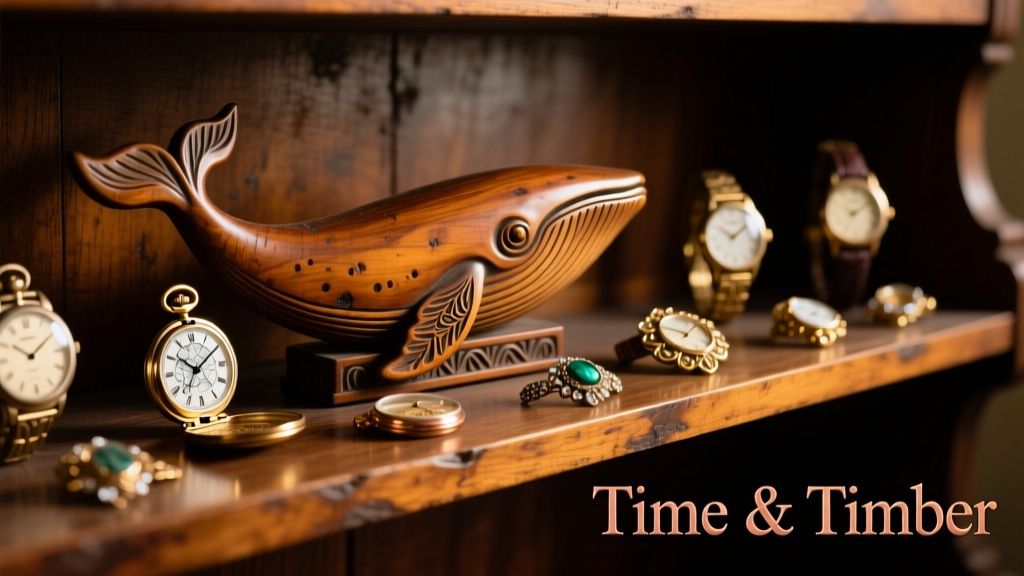
The Whale End Shelf: A Mid-Century American Furniture Masterpiece in Chestnut and Poplar
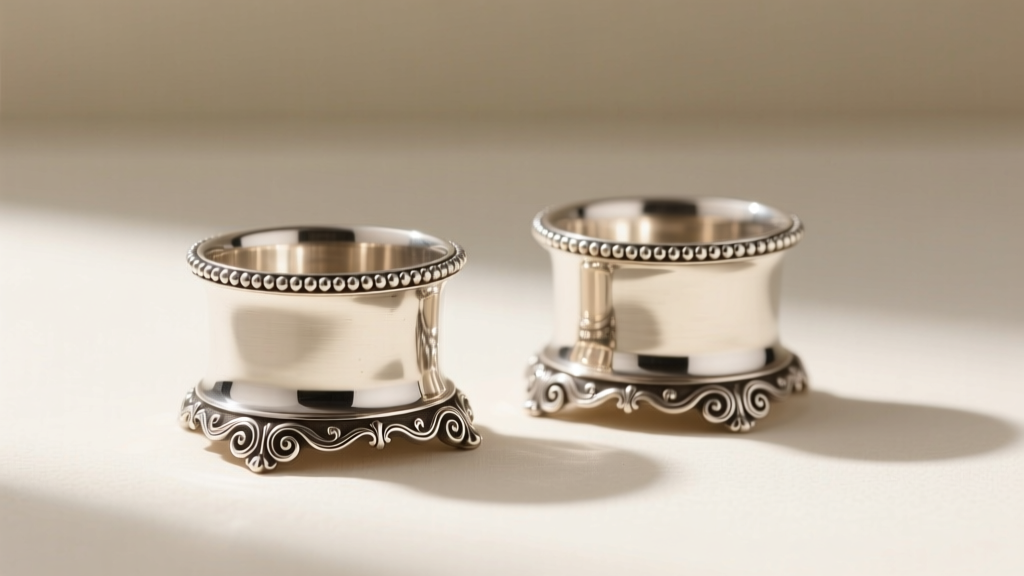
Hester Bateman’s 1781 Silver Chambersticks: A Pair of Snuff-Bezelled English Masterpieces
Rosenthal Figurine Rabbit White 2 In: Identification, History, and Market Value of the Iconic Porcelain Hare
The Walnut Cabbage Cutter: A Rare 19th-Century American Kitchen Tool with Heart-Shaped Handle and Cutout Motif
Depression Glass Old Colony Plate: Identifying, Valuing, and Preserving the Iconic Pink 10½-Inch Dinner Plate

Paper Dolls Winnie Winkle Coloring Book (1953): A Vintage Cultural Artifact from Whitman Publishing
Jacoulet’s ‘Old Writings’ Ivy Seal Frame: A Collector’s Study of a 1930s Japanese Woodblock Print in Its Original Period Frame
Horn Cup with Coach Scene, Houses, and Trees: A Masterpiece of English Engraving, c. 1800

Porcelain Flowers: A Collector’s Guide to History, Makers, Identification, and Market Value