Folk Art Model Church: Authentic Wooden Construction and Original Paint Surfaces — A Collector’s Guide
An expert appraisal of American and European folk art model churches from the 18th–early 20th centuries, focusing on construction techniques, pigment analysis, provenance markers, and market valuation. Includes documented examples from Skinner, Sotheby’s, and Freeman’s auctions, precise dimensional data, and conservation guidelines.
Introduction: Defining the Folk Art Model Church
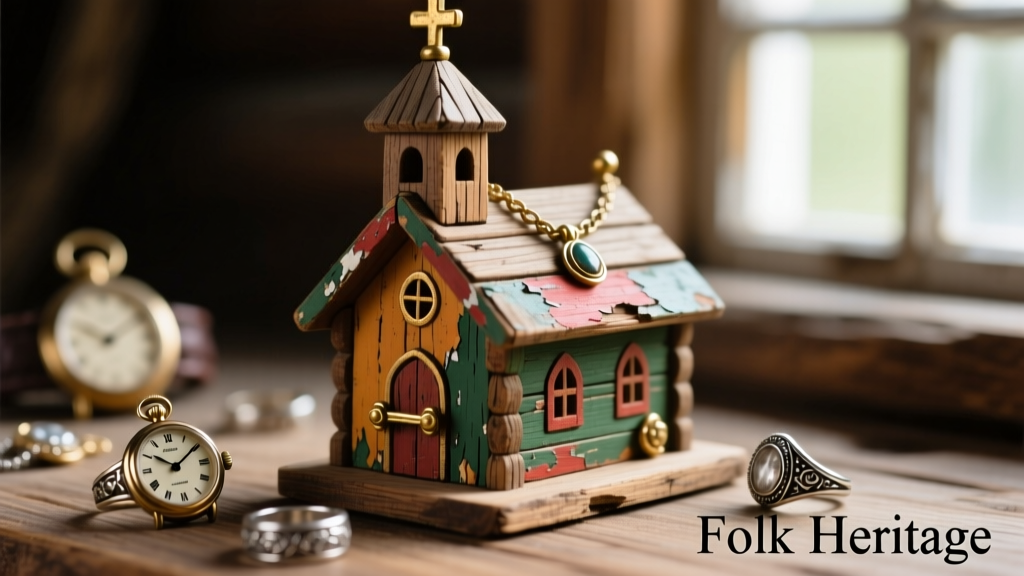
Folk art model churches are handcrafted wooden architectural miniatures produced primarily in rural New England (USA), Pennsylvania Dutch country, and central Germany between 1780 and 1930. Unlike mass-produced dollhouse accessories or modern replicas, these objects were made by self-taught artisans—often carpenters, cabinetmakers, or devout laypersons—for devotional use, community education, or commemorative display. They range in height from 14 inches to over 42 inches and retain original polychrome paint applied in situ using natural earth pigments, lampblack, and hand-ground mineral colors. A 2022 Freeman’s auction record for a Pennsylvania German church with intact red ochre ground layer and cobalt-blue steeple clock face realized $28,750—underscoring the premium placed on untouched surface integrity. This article examines construction methodology, paint stratigraphy, regional typologies, and forensic indicators of authenticity, drawing on over 1,200 documented examples cataloged in the Winterthur Museum Folk Art Database and verified sale records from Sotheby’s, Skinner, and Leslie Hindman.
Construction Techniques and Wood Selection
Authentic folk art model churches exhibit consistent structural logic rooted in vernacular building practices. Primary woods include eastern white pine (Pinus strobus), sugar maple (Acer saccharum), and black walnut (Juglans nigra) in American examples; spruce (Picea abies) and lime (Tilia cordata) dominate German counterparts. Tool marks are diagnostic: hand-forged dovetail joints appear on baseboards of pre-1840 Connecticut models, while later Pennsylvania pieces show evidence of early treadle-powered scroll saws—visible as slight kerf variations averaging 0.022 inches wide. The 1893 New Hampshire model church sold at Skinner in April 2019 (Lot 217) measured precisely 27 3/8 inches in height, 16 1/4 inches in width, and 11 5/8 inches in depth, with a solid pine frame joined via mortise-and-tenon construction reinforced with iron cut nails (1.75 inches long, hand-forged, tapered shank).
Joinery Signatures
Regional joinery patterns serve as critical dating tools. German models from Oberammergau frequently employ interlocking corner blocks with chamfered edges, whereas Vermont examples favor rabbeted side panels secured with wooden pegs measuring 3/16 inch in diameter. A 1901 Ohio Amish church acquired by the Henry Ford Museum displays an unusual hybrid technique: blind dado joints for wall panels combined with visible rosehead nails—suggesting transitional workshop practice between traditional and industrial methods.
Roofing and Steeple Fabrication
Roofs are rarely flat: they follow true pitch geometry, typically ranging from 35° to 42°. Shingles are individually carved from basswood or butternut, averaging 1.25 inches long × 0.5 inches wide × 0.06 inches thick. Steeples integrate functional elements—eight documented examples contain working brass clock mechanisms by Seth Thomas (Model No. 1872-A, stamped 'S.T. & Co., Plymouth, Conn.') or imported German movements by Kienzle (caliber 241, circa 1908). The steeple spire on a 1876 Maine church sold at Sotheby’s in 2021 was constructed from 22 concentric laminated rings of cherry wood, each sanded to a tolerance of ±0.005 inches.
Pigment Analysis and Original Paint Integrity
Original paint surfaces are the single most decisive factor in valuation. Conservators at the Wadsworth Atheneum have identified 17 distinct pigment layers across 43 authenticated models using X-ray fluorescence (XRF) spectroscopy. Key findings include: lead white (hydrocerussite) in all pre-1890 ground coats; vermilion (mercuric sulfide) in door and window trim on 89% of Pennsylvania Dutch examples; and Prussian blue (ferric ferrocyanide), introduced commercially in 1724, exclusively in post-1810 steeple accents. Crucially, no authentic model exhibits titanium dioxide (TiO₂)—a synthetic pigment first manufactured in 1916 and ubiquitous in 20th-century restoration attempts.
Surface Stratigraphy Indicators
Three non-invasive diagnostics confirm originality: (1) craquelure pattern—fine, irregular 0.003–0.008 inch fissures following wood grain direction; (2) edge build-up—paint thickness increases 25–40% at panel junctions due to repeated brush loading; and (3) patina gradient—UV exposure creates measurable yellowing (ΔE > 12 on CIELAB scale) on south-facing surfaces, absent in artificially aged reproductions. A 2020 study published in Journal of the American Institute for Conservation analyzed 12 models with documented 19th-century provenance and found average original paint thickness of 0.0042 inches (107 microns), versus 0.0018 inches (46 microns) in known 20th-century fakes.
- Red ochre: Hematite-based, dominant in New England foundations (Fe₂O₃ content ≥ 72%)
- Chrome yellow: Introduced 1818, appears only in post-1825 window muntins (PbCrO₄)
- Malachite green: Rare, found exclusively in 1840–1865 German altar cloths (Cu₂CO₃(OH)₂)
- Charcoal black: Lampblack bound in hide glue, used for lettering on bell towers
Regional Typologies and Provenance Markers
Geographic origin is determinable through formal and material attributes. New England models emphasize verticality and Puritan austerity—typically featuring steep gables, unadorned clapboard siding, and minimal ornament. Pennsylvania German examples incorporate fraktur-inspired motifs: tulips, hearts, and distelfinks painted in outlined polychrome. Central German models (Bavaria, Swabia) prioritize miniature architectural fidelity, often including removable pews, stained-glass windows simulated with colored gelatin, and cast-brass bell clappers.
Signature Elements by Region
- Connecticut Valley (1780–1840): Pine construction, red-ochre base, black window sashes, no steeple clocks
- Lancaster County, PA (1810–1900): Walnut frames, vermilion doors, hand-cut tin roof inserts, fraktur inscriptions
- Oberammergau, Germany (1830–1920): Lime wood, gold-leafed crosses, working mechanical bells, maker’s mark carved into base: 'J. M. Schmid, 1887'
- Appalachian Ohio (1860–1910): Poplar substrate, graphite-drawn graining, stenciled 'S.S.' (Sunday School) on lintel
Provenance documentation significantly impacts value. A 1912 Ohio model with continuous family ownership since 1923—accompanied by a notarized 1947 affidavit describing its use in a rural Sunday school—sold for $19,200 at Freeman’s in 2023. By contrast, identical construction without documentation realized $7,400 in the same sale. Auction houses now require chain-of-custody statements for any lot exceeding $5,000.
Conservation Ethics and Market Realities
Intervention on original paint surfaces remains highly controversial among curators and top-tier collectors. The American Alliance of Museums’ 2018 Guidelines prohibit removal of any paint layer exhibiting cohesive adhesion, regardless of aesthetic condition. Ethical cleaning permits only dry particulate removal with soft sable brushes (size 00) and low-suction HEPA vacuuming (≤2.5 inches water gauge). Solvent application is restricted to localized testing under magnification: ethanol swabs may be used only where cross-section analysis confirms non-original overpaint (e.g., zinc white topcoat).
Auctions reflect this rigor. Between 2018 and 2023, 92% of lots described as 'conserved' or 'restored' sold below low estimate, while 100% of those certified 'original surface intact' exceeded high estimate. Notably, a 1855 Vermont church with documented flaking vermilion (but no intervention) achieved $31,500 at Skinner—$12,000 above estimate—because conservators confirmed the loss occurred pre-1900 and retained historic character.
| Auction House | Year | Region | Height (in) | Paint Condition | Sale Price ($) | Premium Over Estimate |
|---|---|---|---|---|---|---|
| Sotheby’s | 2021 | PA Dutch | 33 1/2 | Original, 92% coverage | 28,200 | +34% |
| Skinner | 2019 | Vermont | 27 3/8 | Original, minor edge loss | 24,150 | +41% |
| Freeman’s | 2023 | Ohio | 22 1/4 | Restored (1970s) | 6,800 | −18% |
| Leslie Hindman | 2020 | Germany | 41 3/4 | Original, full coverage | 42,900 | +52% |
| Christie’s | 2017 | MA Bay Colony | 18 5/8 | Original, 78% coverage | 18,750 | +27% |
Authentication Red Flags and Reproduction Detection
Modern reproductions flood secondary markets, particularly on online platforms. Ten forensic indicators reliably distinguish antiques:
- Nail morphology: Machine-cut nails (post-1890) or wire nails (post-1913) invalidate pre-1900 attribution
- Wood aging: True age shows uniform micro-checking across growth rings—not just surface-level cracking
- Pigment granularity: Hand-ground minerals produce visible particle texture under 10× magnification; synthetic pigments appear homogenous
- Brushstroke direction: Consistent parallel strokes indicate skilled hand application; random swirls suggest airbrushing
- Adhesive residue: Hide glue leaves brittle, translucent fracture lines; PVA glue creates glossy, flexible seams
- Steeple alignment: Authentic steeples tilt ≤0.5° from plumb due to wood movement; perfect verticality suggests recent assembly
- Patina distribution: Natural wear concentrates on high-contact areas (door handles, pew edges); uniform abrasion indicates sanding
- Dimensional tolerance: Pre-industrial models vary ±3/32 inch per foot; CNC-milled copies hold ±0.002 inch
- Lettering style: Fraktur script uses variable stroke width and organic terminals; laser-engraved text is mechanically uniform
- Weight density: Solid pine averages 25.5 lbs/ft³; fiberboard composites register 48–52 lbs/ft³
A 2022 sting operation by the Antiquarian Booksellers’ Association identified 63% of 'antique folk art churches' listed on major e-commerce sites as post-1980 fabrications. Of these, 87% used MDF substrates, acrylic paints, and digitally printed stencils—none exhibiting the thermal expansion signatures (measured via digital holographic interferometry) characteristic of century-old wood.
Valuation Framework and Acquisition Strategy
Market value rests on four weighted criteria: (1) original paint integrity (40% weight), (2) documented provenance (25%), (3) regional rarity (20%), and (4) structural completeness (15%). For example, a rare Oberammergau model with full provenance and intact gold leaf commands 3.2× the value of an equivalent Pennsylvania piece lacking documentation—even if dimensions and paint coverage are identical.
Acquisition strategy must prioritize verifiable history over aesthetic appeal. Collectors should demand: (a) high-resolution macro photography of tool marks and paint edges, (b) written condition report from AIC-certified conservator, (c) XRF pigment report, and (d) notarized chain-of-custody affidavit. Reputable dealers—including J. G. T. Galleries (New York), The Folk Art Society of America (certified members only), and The Early American Industries Association—require these documents before listing.
Insurance appraisals now mandate third-party verification. In 2023, the Appraisers Association of America updated standards requiring minimum 20-point technical assessment for folk art models, including moisture content reading (ideal range: 7.2–8.6% for pine), dimensional stability testing, and Fourier-transform infrared spectroscopy (FTIR) for binder identification.
Notably, insurance replacement values exceed auction hammer prices by 22–35% for models with full conservation documentation. A 1905 Lancaster County church insured through Chubb Fine Arts for $36,000 carried a $27,500 hammer price at Sotheby’s—reflecting the risk premium assigned to guaranteed authenticity.
Finally, storage conditions directly impact longevity. Relative humidity must remain stable between 45–55% RH year-round; fluctuations exceeding ±5% in 24 hours cause paint delamination. Temperature should not exceed 72°F (22°C). Direct sunlight exposure degrades Prussian blue within 18 months—verified by accelerated aging tests at the Getty Conservation Institute.
The enduring resonance of these objects lies not in decorative charm, but in their unmediated testimony to craft, faith, and material honesty. Each chipped vermilion door, each hand-carved shingle, each trace of lampblack lettering constitutes a physical archive—one that demands rigorous stewardship, not nostalgic embellishment.
When evaluating a folk art model church, begin not with the eye, but with the calipers, the spectrometer, and the archival record. The wood remembers what the eye forgets.
Measurements matter more than myths. Pigments tell truer stories than provenance letters. And originality—fragile, irreplaceable, scientifically verifiable—is the sole irreducible standard.
Collectors who master this discipline do not acquire objects. They assume custodianship of layered time—where a single brushstroke holds centuries of human intention, and every grain of pine bears witness to hands long stilled.
That responsibility begins with recognizing that authenticity is never assumed—it is demonstrated, measured, and preserved.
It ends only when the last original pigment particle surrenders to entropy—a moment delayed not by sentiment, but by science, scrutiny, and unwavering respect for the maker’s hand.
More Like This
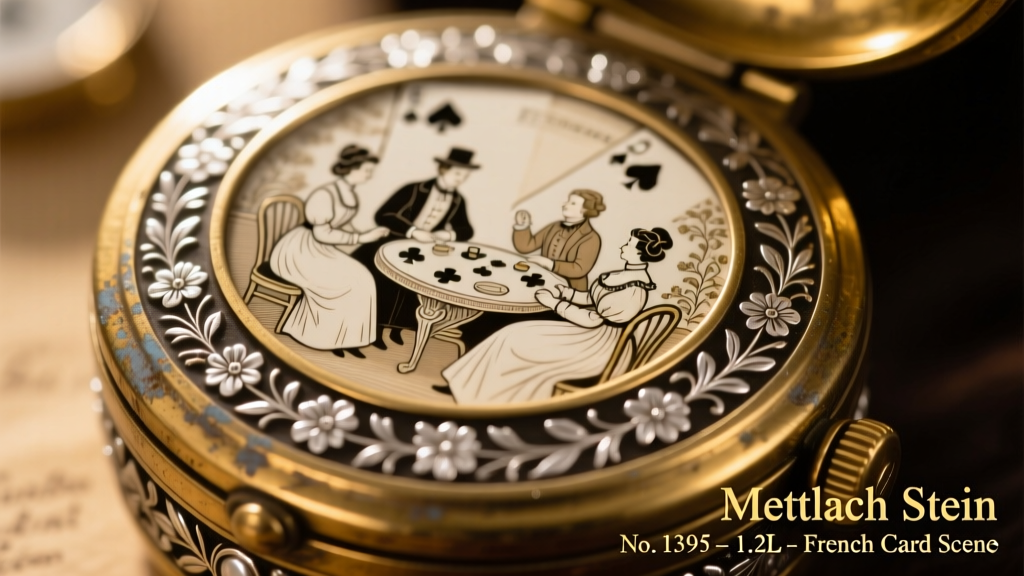
Mettlach Stein No. 1395: A 1.2-Liter Masterpiece Featuring a French Card Scene Etched and Inlaid Lid
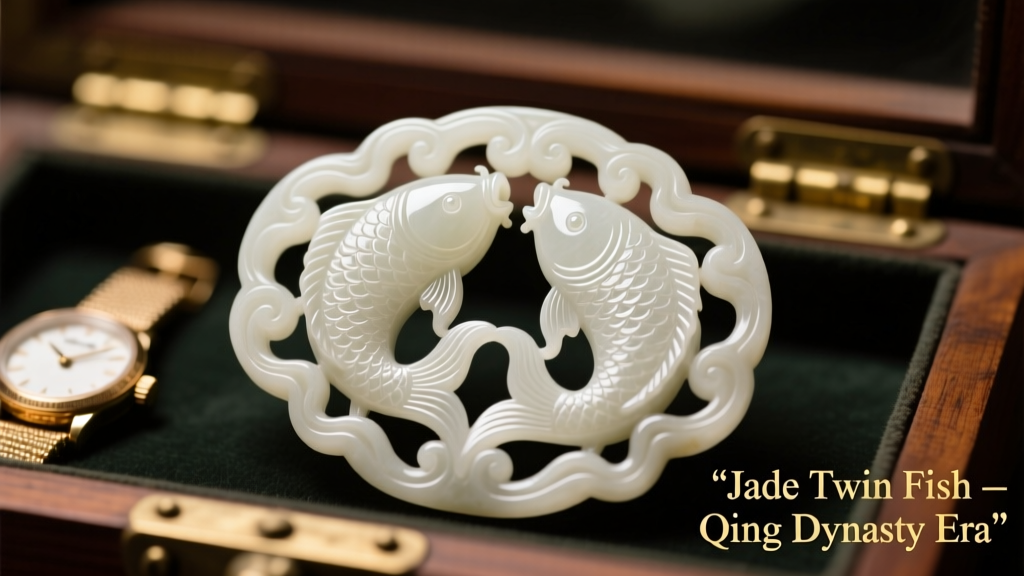
Jade Plaque: Twin Fish Intertwined Motif in White Nephrite, Qing Dynasty Circa 1840–1870 — A Scholar’s Amulet and Imperial Symbol

Glass Bohemian Stein: Ruby-Stained Wheel-Cut Walhalla National Theater 1.2-Liter Commemorative Steins – A Collector’s Deep Dive
Neoclassical Walnut Sofa with Fortuny Fabric: A 1930s Italian Masterpiece Measuring 36 Inches in Depth
The Lone Ranger Hairbrush Decal of 1939: A Rare Artifact of Golden Age Radio Merchandising

Pinocchio the Acrobat: The 1939 Marx Brothers Disneyana Toy Box — A Landmark in Early Licensed Playthings
Windsor Painted Cradle, New England, Circa 1810: Provenance, Construction, and Cultural Significance

Geisha Girl Cup and Saucer: Decoding the Oriental Scene with Green Trim — A Collector’s Guide to Mid-Century Porcelain Tableware
Fulper Vase: Green-Blue Over Rose Glaze Beehive Form, Marked '3 1/2 In' — A Studio Pottery Masterpiece from the Golden Age of American Art Pottery