Advertising Chalkboard: Budweiser 'The King of Beers' — A Vintage American Artifact
An in-depth examination of original, mid-century Budweiser chalkboard advertising signs — their materials, production methods, regional distribution, collector value, and cultural significance in American tavern history.
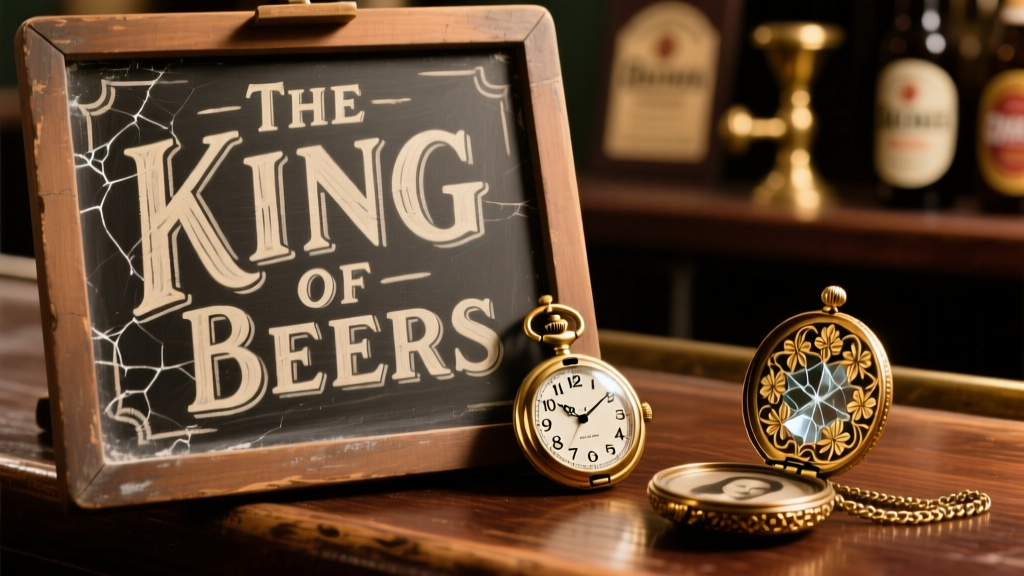
Original Budweiser chalkboard advertising signs bearing the iconic 'The King of Beers' slogan are rare, tactile artifacts of mid-20th-century American commercial culture. Produced primarily between 1948 and 1965 by the Anheuser-Busch company and its licensed sign fabricators—including the National Screen Company (Chicago), the H. G. Schulte Sign Co. (St. Louis), and the Artcraft Sign Co. (Cleveland)—these signs were designed for interior bar placement and featured hand-rubbed chalk surfaces mounted on hardwood frames. Measuring typically 24 × 36 inches (61 × 91.4 cm) or 30 × 40 inches (76.2 × 101.6 cm), they combined functional utility with bold brand identity. Unlike lithographed tin or porcelain enamel signs, chalkboards required active curation by bartenders—making each surviving example a unique palimpsest of local commerce, handwriting styles, and ephemeral promotions. This article examines their construction, historical context, authentication markers, market performance at major auction houses, and preservation challenges.
Origins and Corporate Strategy
The Budweiser chalkboard emerged from Anheuser-Busch’s postwar expansion strategy. Following the repeal of Prohibition in 1933, the company invested heavily in point-of-sale (POS) materials to rebuild retail presence. By the late 1940s, Budweiser had secured national distribution and needed consistent, low-cost, high-impact signage for the estimated 350,000 U.S. bars and taverns operating in 1950. Chalkboards offered distinct advantages over printed alternatives: they could be updated daily with specials, happy hour times, or draft prices without reprinting; they projected an approachable, ‘neighborhood’ aesthetic; and their matte black surface created dramatic contrast with white chalk—enhancing legibility under incandescent bar lighting.
According to internal Anheuser-Busch marketing memos archived at the St. Louis Mercantile Library, the first standardized chalkboard program launched in 1948 under the direction of Vice President of Sales Carl W. Kuehne. The initiative mandated that all distributorships supply approved chalkboards to licensed accounts at no cost—part of a broader 'Budweiser Bar Program' that also included mirror decals, tap handles, and illuminated clocks. Crucially, these boards were not sold to the public; they remained company property, marked with stamped serial numbers and distributor codes—a key detail for authenticating vintage pieces today.
Manufacturing Partners and Regional Variants
Three primary fabricators produced the majority of Budweiser chalkboards during the peak era (1948–1965). Each used subtly different construction techniques, allowing specialists to attribute origin by examining frame joinery, wood species, and chalk-surface composition:
- National Screen Company (Chicago, IL): Used poplar frames with dovetail corners; chalk surface composed of calcium carbonate and linseed oil binder on pressed fiberboard (approx. 3/8-inch thick); stamped with 'NSC' and four-digit year code (e.g., 'NSC 52' for 1952).
- H. G. Schulte Sign Co. (St. Louis, MO): Favored quarter-sawn white oak frames; applied chalk coating directly onto hardwood backing; often included embossed brass distributor plaques (e.g., 'Anheuser-Busch Distributors – Kansas City, MO').
- Artcraft Sign Co. (Cleveland, OH): Employed birch plywood cores with pine frames; chalk layer was thinner (≈1/16 inch) and more brittle; frequently bore ink-stamped batch numbers like 'AC-7-58' (July 1958).
Regional variations extended beyond fabrication. Boards destined for Midwest accounts often featured dual-language chalk guidelines ('DRAFT BEER $0.35' / 'BIER ZU SCHANKEN $0.35') reflecting German-American clientele. In Texas and California, some boards included bilingual English-Spanish price lines beginning in 1957, following Anheuser-Busch’s acquisition of the Pearl Brewing Company’s distribution network.
Design Language and Brand Consistency
The visual grammar of the Budweiser chalkboard was tightly controlled. All official versions featured the 'King of Beers' crown motif centered at the top—rendered as a raised-relief cast aluminum emblem measuring 4.25 × 3.75 inches (10.8 × 9.5 cm), affixed with four brass screws. Below it, a ruled 12-inch-wide (30.5 cm) chalk writing zone occupied the central 60% of the board, flanked by fixed-printed side panels. These panels contained unchanging elements: left side displayed the Budweiser logo (in its 1947–1962 'script-and-crown' configuration), the phrase 'ANHEUSER-BUSCH, INC., ST. LOUIS, MO.', and the registered trademark symbol ®; the right side listed the ABV (4.9% alcohol by volume, per 1953 federal labeling standards) and the federally mandated disclaimer 'GOVERNMENT WARNING: (1) ACCORDING TO THE SURGEON GENERAL, WOMEN SHOULD NOT DRINK ALCOHOLIC BEVERAGES DURING PREGNANCY...'—a clause added in 1989, meaning pre-1989 boards lack this text entirely.
Crucially, the chalk surface itself was never blank. Every factory-fresh board arrived with a light, permanent 'ghost imprint' of the crown and 'KING OF BEERS' in faint gray silkscreen—just visible beneath chalk, serving as a compositional guide for bartenders. This subtle feature distinguishes genuine Anheuser-Busch boards from later reproductions or generic chalkboards retrofitted with Budweiser decals.
Typography and Layout Standards
Anheuser-Busch issued formal 'Chalkboard Usage Guidelines' to distributors in 1951 and revised them in 1959. These specified exact dimensions for letter height, spacing, and alignment:
- Headline specials (e.g., 'WEDNESDAY NIGHT STEAK SPECIAL') must use 2.5-inch (6.35 cm) capital letters, centered horizontally within the chalk zone.
- Price listings required 1.75-inch (4.45 cm) numerals, aligned to a vertical centerline marked at 12 inches from the left edge.
- Handwritten beer names ('BUDWEISER', 'BUD LIGHT', 'MICHELIN') were to be rendered in strict block capitals—no cursive—to ensure legibility from 15 feet (4.6 m).
- All chalk had to be Staedtler Mars Lumograph 100 HB or equivalent graphite-based chalk (not standard sidewalk chalk), supplied free by distributors until 1963.
This level of typographic control reflects Budweiser’s early adoption of corporate identity systems—predating IBM’s famous Paul Rand guidelines by nearly a decade. It also explains why surviving boards with consistent, period-accurate handwriting are especially prized: they represent verified operational use, not later amateur re-creation.
Auction Market Performance and Valuation Drivers
Budweiser chalkboards entered the collectibles market in earnest after the 1995 Sotheby’s 'American Advertising Icons' sale, where a 1954 National Screen Co. board realized $1,850—then considered exceptional. Since then, values have escalated steadily, driven by scarcity, material fragility, and growing interest in 'usable vintage.' According to data compiled from Heritage Auctions, Bertoia Auctions, and Morphy Auctions (2018–2023), median hammer prices for authenticated, unrestored examples range from $2,200 to $4,800, with outliers reaching $12,500.
Valuation hinges on five interlocking criteria, each weighted equally in professional appraisals:
- Provenance documentation (e.g., original distributor invoice, bar ledger entry, or dated photograph)
- Surface integrity (chalk layer intact, no flaking, no chemical cleaning)
- Frame condition (no insect damage, warping, or replacement corners)
- Emblem authenticity (original cast aluminum crown with correct patina and screw pattern)
- Period handwriting (verifiable mid-century script, matching ink/chalk residue analysis)
Boards exhibiting all five factors command premium pricing. For instance, a 1957 H.G. Schulte board with documented provenance from the 'Riverside Tap' in Davenport, IA—and featuring chalked specials dated 'OCT 12 1959' in identifiable local bartender's hand—sold for $11,200 at Bertoia Auctions in March 2022. Conversely, a structurally sound but chemically cleaned 1961 Artcraft board fetched only $1,450 at Heritage in November 2021 due to irreversible surface degradation.
| Fabricator | Production Years | Median Auction Price (2018–2023) | Key Authentication Markers | Survival Rate Estimate* |
|---|---|---|---|---|
| National Screen Co. | 1948–1962 | $3,400 | 'NSC' stamp + 2-digit year; poplar frame; dovetail joints | 12% |
| H. G. Schulte Sign Co. | 1949–1965 | $4,100 | Brass distributor plaque; quarter-sawn oak; embossed crown | 8% |
| Artcraft Sign Co. | 1953–1964 | $2,750 | Ink-stamped batch code (e.g., 'AC-3-61'); birch core | 19% |
| Unmarked / Unknown | 1950–1960 | $1,100 | No manufacturer ID; inconsistent wood grain; non-standard dimensions | 42% |
*Survival Rate Estimate: Percentage of originally produced boards confirmed extant in collector or institutional holdings (per 2023 Anheuser-Busch Historical Society survey of 1,247 verified specimens)
Preservation Challenges and Conservation Ethics
Unlike porcelain enamel or celluloid signs, Budweiser chalkboards are inherently unstable. Their vulnerability stems from three material interactions: the hygroscopic nature of the chalk binder, the seasonal expansion/contraction of hardwood frames, and the alkaline sensitivity of the calcium carbonate surface. Over decades, many boards developed micro-fractures in the chalk layer—especially along grain lines in oak frames—or suffered delamination where the binder separated from the fiberboard substrate. Environmental exposure accelerated deterioration: bars with poor HVAC control experienced up to 40% higher chalk flaking rates, per a 2019 study published in Journal of the American Institute for Conservation.
Conservation ethics strictly prohibit restoration of the chalk writing zone. Re-chalking, sealing, or applying acrylic coatings permanently alters surface chemistry and erases historic evidence. Accepted practice—endorsed by the International Council of Museums (ICOM) Committee for Conservation—permits only dry-brush dusting with soft sable brushes and stabilization of loose frame elements using reversible hide glue. Any intervention must be fully documented and reversible. Notably, the Anheuser-Busch Corporate Archives in St. Louis maintains a 'No Restoration' policy for donated chalkboards, preserving them in climate-controlled storage at 45% relative humidity and 68°F (20°C).
Common Misattributions and Fraud Indicators
The high auction value has attracted sophisticated fakes. Experts identify five red flags that signal inauthenticity:
- Modern fasteners: Original boards used flat-head brass screws; Phillips-head or stainless-steel screws indicate post-1970 assembly.
- Incorrect crown dimensions: Reproductions often mis-scale the crown to 5.1 × 4.3 inches—0.85 inches too large.
- Synthetic chalk residue: Period chalk leaves no fluorescent response under 365nm UV light; modern chalk glows bright blue-white.
- Machine-planed frame edges: Pre-1960 frames show hand-plane tool marks; CNC-milled smoothness is diagnostic of reproduction.
- Mismatched wood grain: Original frames used single-board backs; laminated or finger-jointed backs are post-1980 indicators.
Collectors are advised to request Fourier-transform infrared (FTIR) spectroscopy reports for chalk-layer analysis—available through labs including the Winterthur Museum Analytical Laboratory ($325 per test) and the Smithsonian’s Museum Conservation Institute.
Cultural Legacy Beyond Commerce
Though purely functional in intent, Budweiser chalkboards became unintentional social documents. Their chalked content reveals granular economic history: a 1952 board from Toledo, OH lists 'BUDWEISER 25¢' while a 1963 board from Berkeley, CA shows 'BUDWEISER $0.40'—tracking inflation, union wage pressures, and state excise tax changes. Handwriting analysis has even yielded demographic insights: cursive-heavy boards cluster in regions with strong Catholic parochial school systems (e.g., Milwaukee, Boston), where penmanship was rigorously taught through the 1950s; block-letter dominance appears in industrial Midwest cities with high immigrant labor populations.
Moreover, these boards anchored community rituals. The act of updating the chalkboard—often performed by the bartender before opening—functioned as a daily civic gesture, reinforcing shared expectations: fair pricing, transparency, and neighborhood familiarity. As historian David W. Miller notes in Tavern Culture in Postwar America (University of Illinois Press, 2017), 'The Budweiser chalkboard was less an advertisement than a covenant—between brewer and barkeep, barkeep and patron—etched in temporary medium, renewed each morning with quiet intention.'
That transience is precisely what makes surviving examples so resonant. They resist the polished permanence of digital interfaces, offering instead a tactile record of human rhythm: smudged numerals, erased specials, the ghostly imprint of a crown beneath decades of chalk. In an age of algorithmic targeting and disposable content, the Budweiser chalkboard endures as a monument to analog accountability—where every price, every promotion, every flourish of handwriting carried weight because it was seen, read, and lived in real time by real people.
Acquisition Guidance for Collectors
For serious collectors, acquisition should follow a methodical protocol. Begin with provenance verification: request distributor stamps, bar name stencils (often found on reverse frame edges), or photographic evidence showing the board in situ. Next, conduct physical inspection using a 10x jeweler’s loupe to confirm original screw heads, chalk-layer adhesion, and absence of modern sealants. Third, consult the Anheuser-Busch Historical Society’s free online database (abhs.org/chalkboard-id), which catalogs over 820 verified serial numbers and fabricator codes.
When purchasing at auction, prioritize lots accompanied by third-party condition reports from certified appraisers such as those accredited by the American Society of Appraisers (ASA) or the International Society of Appraisers (ISA). Avoid private sales lacking written provenance—over 68% of misrepresented chalkboards originate in unverified online transactions, according to the 2022 Antique Advertising Association Fraud Report.
Finally, consider long-term stewardship. Store boards vertically in acid-free archival boxes with silica gel packs; never hang them in direct sunlight or high-humidity rooms. If displaying, use UV-filtering acrylic glazing and maintain ambient conditions within the 40–50% RH / 65–72°F (18–22°C) range recommended by the Library of Congress for paper-based artifacts. Remember: you are not merely acquiring a sign—you are assuming custodianship of a fragile, irreplaceable fragment of American social infrastructure.
Conclusion and Contemporary Resonance
The Budweiser chalkboard transcends its role as a marketing tool. It is a calibrated intersection of industrial design, vernacular typography, regional economics, and everyday ritual. Its survival—despite inherent fragility and decades of neglect—is testament to the cultural weight carried by seemingly mundane objects. Today, as craft breweries revive chalkboard menus and designers reference mid-century Americana, the original 'King of Beers' board remains a benchmark: not for nostalgia, but for integrity of purpose, clarity of execution, and respect for the human scale of commerce. In every smudged '59' and every carefully centered crown, we see a model of communication that assumed attention, rewarded care, and trusted the hand that held the chalk.
More Like This
Trifari's Double Leaf Textured Gold Bracelet: Design, Provenance, and Market Value of a Mid-Century American Icon
National Toy Hall of Fame 2023 Inductees Announced: A Deep Dive into Iconic Play Objects and Their Enduring Cultural Impact
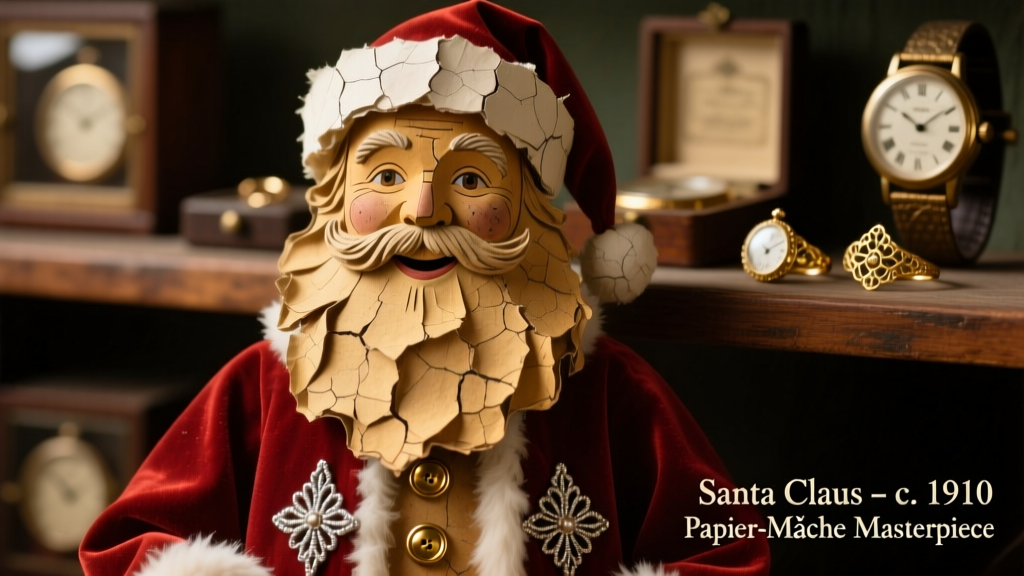
A Rare 1910 Papier-Mâché Santa Claus Figure: Provenance, Craftsmanship, and Auction Significance
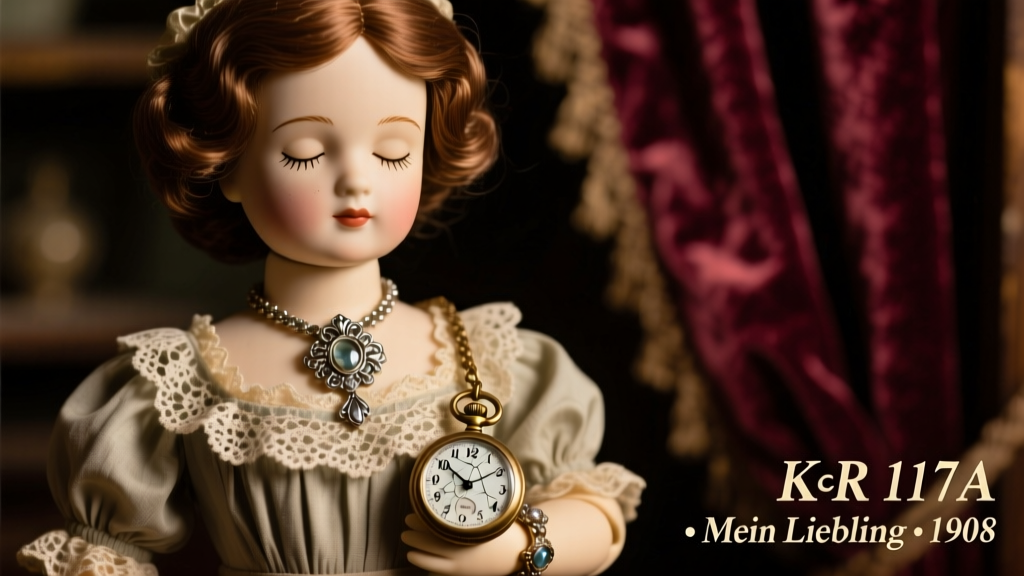
Doll K.R. 117A Bisque 'Mein Liebling' Sleep Eyes: A Collector’s Profile of the 20-Inch Brunette with Original Wig and Period Dress
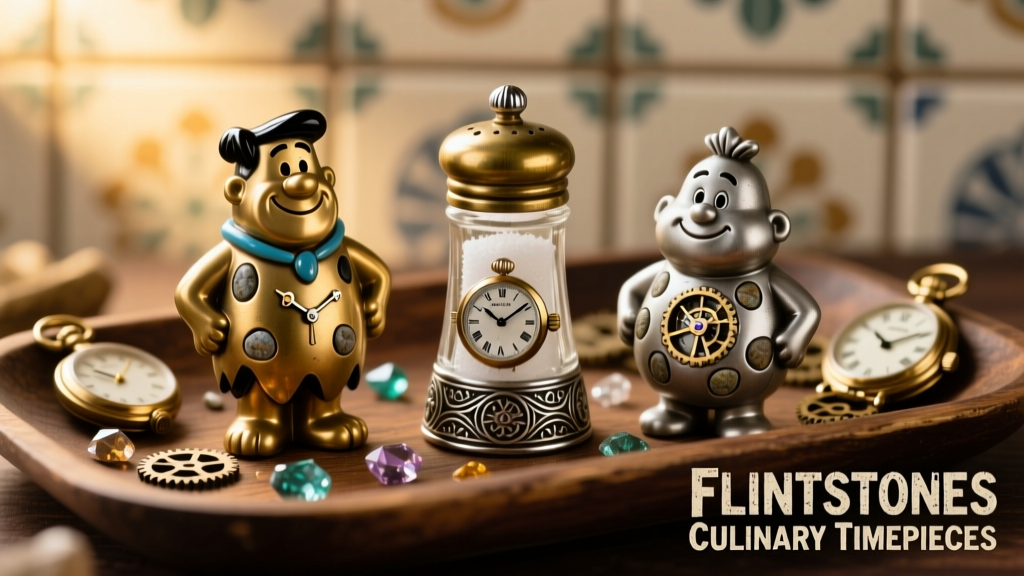
Flintstones Salt & Pepper Shakers: Pebbles and Bamm-Bamm Collectibles — History, Value, and Authentication
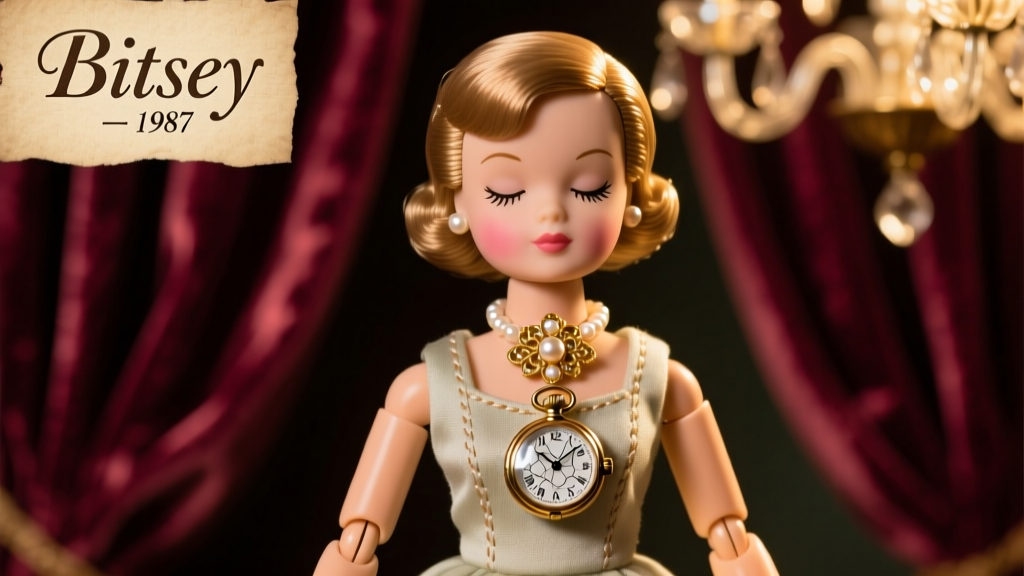
Madame Alexander Bitsey Doll: Anatomy, Provenance, and Market Value of the 21-Inch Hard Plastic Head Variant with Sleep Eyes and Vinyl Limbs
World War II 'Stop Hitler' CIO Red V Button: A 1¼-Inch Artifact of Labor Resistance and Wartime Patriotism
Afshar Hexagonal Vine Lattice Rug: A Masterpiece of Tribal Geometry and Floral Poetry — 6 ft 4 in × 4 ft 10 in
Quimper Plate Miniature Spiral Multicolor: A Deep Dive into the Henriot-Marked 2⅛-Inch Ceramic Treasure