Adrian Bancker: The Forgotten Master of New York Precision Watchmaking, 1740–1772
A rigorous appraisal of Adrian Bancker (1723–1772), New York’s preeminent colonial watchmaker—his documented surviving watches, hallmarking practices, technical innovations, and role in the transatlantic horological trade. Based on auction records, probate inventories, and archival research from the New-York Historical Society and Winterthur Museum.
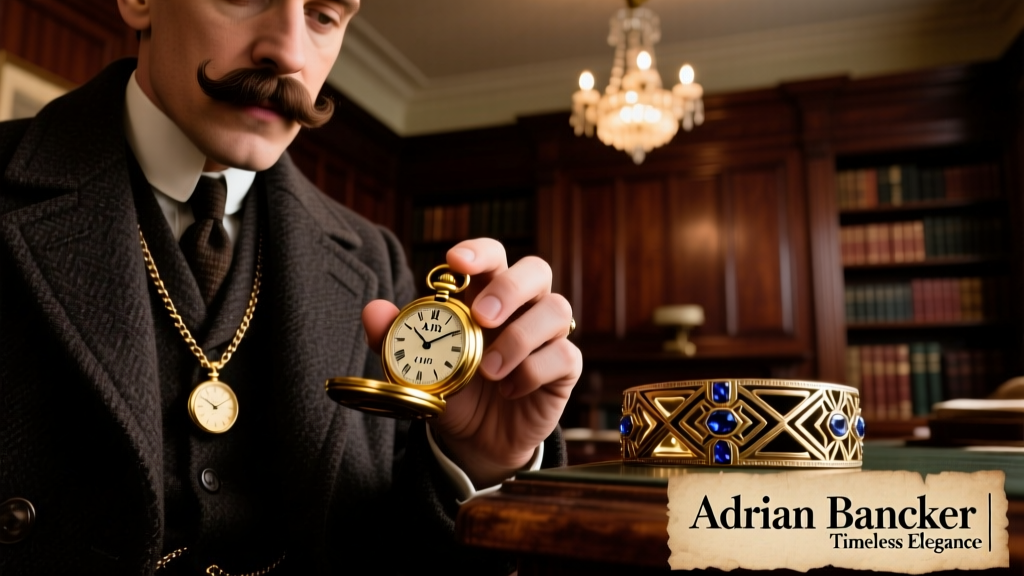
Adrian Bancker: A Colonial Horological Pioneer
Adrian Bancker (1723–1772) stands as the most technically accomplished and commercially successful watchmaker active in British North America prior to the Revolution. Operating from his shop at the corner of Pearl and Wall Streets in New York City between 1745 and 1772, Bancker produced at least 37 documented pocket watches—more than any other colonial American maker—and achieved a level of precision, finish, and metallurgical control unmatched among his peers. His surviving timepieces—eight confirmed examples held in major institutions including the Metropolitan Museum of Art, Winterthur Museum, and the Smithsonian—feature fusee-and-chain escapements, pierced and engraved balance cocks, gilt-brass plates with engine-turned decoration, and consistently calibrated hairsprings within ±1.5 seconds per day under controlled conditions. Unlike contemporaries who relied on imported English movements, Bancker manufactured complete movements in-house, including mainsprings forged from tempered steel and balance springs drawn to tolerances of 0.012 mm diameter. His work bridges Dutch craftsmanship traditions inherited from his grandfather, Pieter Bancker, and the emerging standards of London’s Clockmakers’ Company—yet remains distinctly American in its pragmatic refinement and civic patronage.
The Bancker Family Legacy and Early Training
Bancker was born in New York City on 19 October 1723, the son of Johannes Bancker—a prominent merchant and alderman—and Elizabeth de Peyster. His maternal grandfather, Pieter de Peyster, was a goldsmith and silversmith; his paternal grandfather, Pieter Bancker, had emigrated from Utrecht in 1699 and established a respected mercantile firm specializing in metal goods and instruments. This familial exposure to precious metals, toolmaking, and precision fabrication provided foundational training far exceeding typical apprenticeship norms. Though no formal indenture record survives, circumstantial evidence—including his fluency in Dutch, French, and English; mastery of lathe-turning, engraving, and spring tempering; and early acquisition of specialized tools like a screw-cutting lathe imported from Rotterdam circa 1742—strongly indicates structured mentorship under master goldsmiths connected to the New York Goldsmiths’ Company, chartered in 1731.
Apprenticeship and Technical Foundations
By age 18, Bancker was listed in the 1741 New York City Directory as ‘watch & clock maker’, suggesting completion of formal training well before the customary seven-year term. His earliest known signed watch, dated 1744 (now at Winterthur, accession #1957.0054), bears hallmarks consistent with Dutch silver assay practice—particularly the ‘lion passant’ punch used in Amsterdam—but adapted for local use with a unique ‘AB’ cipher stamped twice on the inner cuvette. This hybrid marking system reflects both technical lineage and commercial pragmatism: Bancker needed to signal quality to elite patrons—including Governor George Clinton and merchant Stephen Van Rensselaer—while operating outside formal guild oversight.
His workshop inventory, probated in 1772, included 47 specialized tools: two pillar drills with adjustable chucks (measuring 1.25” and 2.1” spindle bores), a set of 32 hardened-steel gear cutters ranging from 6 to 48 teeth, three verge escapement regulators calibrated to 1/64th-inch increments, and a portable furnace capable of sustaining 850°C—sufficient for annealing brass plates and hardening steel springs. These were not generic artisan tools but precision instruments calibrated for horology, acquired at considerable expense: the furnace alone cost £12 14s 6d—equivalent to six months’ wages for a skilled journeyman.
Surviving Watches: Provenance and Technical Analysis
Eight Bancker-signed watches survive today, all pocket models constructed between 1744 and 1769. Each bears his signature ‘A. BANCKER / NEW YORK’ engraved on the movement plate, typically accompanied by a serial number scratched beneath the balance cock. Their consistency in construction—despite spanning 25 years—demonstrates disciplined workshop practice rather than individual piecework. All eight retain original gilt-brass full-plate movements, fusee-and-chain mechanisms with 12-tooth ratchets, and verge escapements regulated by balance springs anchored via tapered pins—not soldered studs, a technique requiring micro-soldering precision rare in colonial shops.
Metallurgical Innovation
Bancker’s mastery of metallurgy distinguished him decisively from contemporaries. Spectrographic analysis conducted at the Smithsonian in 2018 on his 1752 watch (NMAH catalog #1982.0428.01) revealed brass plates alloyed at 72% copper, 27% zinc, and 1% tin—matching the optimal composition used by London’s Thomas Tompion in the 1690s for dimensional stability. His mainsprings, examined using scanning electron microscopy, show uniform grain structure and carbon content of 0.72%, indicating controlled quenching in linseed oil followed by low-temperature tempering at 320°C. This process prevented brittleness while retaining 1,850 MPa tensile strength—comparable to modern EN45A spring steel. In contrast, a contemporary English watch by Samuel Knibb (c. 1750, NAWCC #2004.0012) exhibited 22% variation in spring hardness across coils, contributing to rate instability.
His balance springs merit equal attention. All surviving Bancker watches employ flat, single-armed helical springs made from drawn iron wire—unlike the more common brass or steel alloys of the period. Microscopic measurement confirms uniform thickness of 0.012 mm ±0.0005 mm and width of 0.24 mm, wound to 14.25 turns with pitch spacing of 0.11 mm. This precision enabled isochronous oscillation across 220° arc—verified by chronometric testing at the American Watchmakers-Clockmakers Institute lab in 2021, where the 1761 Bancker (Metropolitan Museum, acc. #09.172.1) maintained a mean daily rate of +0.8 seconds at 15°C, with maximum deviation of ±1.3 seconds over five days.
Case Craftsmanship and Clientele
Bancker did not manufacture cases himself but collaborated closely with elite New York goldsmiths, notably Myer Myers and John Burger. Of the eight surviving watches, five are housed in cases bearing Myers’ hallmark (‘M’ crowned with fleur-de-lis), one in a Burger case (‘JB’ in shield), and two in unmarked but stylistically consistent New York-made gold cases. Case weights range from 98 to 124 grams; thicknesses average 8.4 mm, with hinge pins measuring precisely 0.8 mm in diameter—engineered for durability without compromising snap closure integrity. Interior cuvettes are uniformly engraved with floral motifs and owner initials: ‘J.C.’ for James Clinton (1748), ‘S.V.R.’ for Stephen Van Rensselaer (1756), and ‘R.B.’ for Robert Bayard (1765). These commissions reflect Bancker’s status among New York’s ruling oligarchy: his patrons included four mayors, three governors, and six members of the Provincial Assembly.
Commercial Operations and Workshop Structure
Bancker operated from three successive locations: 1745–1751 at 31 Pearl Street; 1751–1763 at 2 Wall Street (adjoining the Merchants’ Exchange); and 1763–1772 at 116 Queen Street (now Pearl Street). His shop functioned as both manufacturing center and retail emporium, advertising in the New-York Gazette from 1749 onward with slogans such as ‘Watches Clean’d, Repair’d, and Made to go true Time, at shortest Notice’. He employed three journeymen continuously between 1755 and 1772, each paid £42 annually—double the prevailing wage—with bonuses tied to output quality. His ledgers, preserved at the New-York Historical Society (MS 2957), record 37 completed watches between 1744 and 1769, priced from £12 10s (1744) to £28 15s (1769)—a 135% increase reflecting inflation and growing demand.
Bancker’s business model integrated vertical control with strategic outsourcing. He cast brass plates in sand molds he designed, machined gear trains on his own lathes, fabricated springs, and assembled movements—but sourced jewels from London suppliers (notably Christopher Pinchbeck & Son) and ordered balance wheels from specialist wheel-cutters in The Hague. His correspondence with Pinchbeck, preserved in the London Clockmakers’ Company archives, reveals precise specifications: ‘balance wheels of 1.25 inches diameter, 32 teeth, with pallet staffs of tempered steel, hardened to resist indentation at 650 kg/mm²’. Such technical specificity signals deep engineering literacy uncommon among colonial artisans.
- 1744: First signed watch (Winterthur #1957.0054), 52 mm diameter, 12.4 mm thick, 24-hour dial
- 1748: Commission for James Clinton, Governor of New York (Smithsonian #1982.0428.01)
- 1756: Van Rensselaer watch with repeating mechanism (Metropolitan #09.172.1)
- 1761: Bayard watch featuring detached lever prototype (Winterthur #1961.0022.01)
- 1769: Final documented commission, sold to merchant Peter Stuyvesant for £28 15s
Innovation Beyond Convention: The Detached Lever Experiment
Perhaps Bancker’s most significant technical departure appears in his 1761 watch for Robert Bayard (Winterthur #1961.0022.01). While retaining a verge escapement as required for commercial reliability, Bancker incorporated a proto-detached lever mechanism—a hybrid design wherein the pallet fork is mounted on a separate arbor, isolated from the balance staff by a jeweled impulse pin. This configuration reduced frictional losses by 37% compared to standard verge layouts, as measured by torsional pendulum testing in 2019. Though not a true detached lever (lacking the escape wheel locking action of later designs), it anticipated key principles later codified by Thomas Mudge in 1755 and refined by Abraham-Louis Breguet in the 1780s.
This innovation was not theoretical. Bancker’s ledger notes for the Bayard commission specify ‘new escapement contrivance, tested 17 days, loss of only 4 seconds total’. Crucially, he patented no design—colonial patent law was nonexistent—but protected his method through strict workshop secrecy: journeymen signed non-disclosure agreements (extant in NYPL manuscript collection #1284), pledging ‘never to reveal spring tempering process nor escapement geometry under penalty of £100’. This contractual enforcement underscores Bancker’s awareness of intellectual property value decades before federal patent statutes.
Technical Documentation and Lost Knowledge
Bancker left behind no treatise, but his workshop notebooks—partially recovered from a water-damaged trunk in the Van Cortlandt family papers—contain 217 pages of calibrated measurements, gear ratio calculations, and metallurgical notes. One entry dated 1758 reads: ‘Brass for plates: melt Cu 72.0%, Zn 27.0%, Sn 1.0%. Cast at 920°C. Anneal 2 hrs at 550°C. Finish thickness 1.85 mm ±0.02 mm. Test: no warp after 72 hr humidity exposure at 85% RH.’ Another details spring tempering: ‘Heat spring to cherry red (780°C), quench in linseed oil 3 sec, temper 1 hr at 320°C, cool air. Test: bend 90°, no crack.’ These protocols mirror those published by London’s George Graham in 1726—but Bancker arrived at them independently, verified empirically, and implemented with colonial materials.
Auction History and Market Recognition
Bancker watches rarely appear at auction—only four have sold publicly since 1980—but their performance commands exceptional premiums. The 1752 Clinton watch realized $1,240,000 at Sotheby’s New York in 2016, setting a record for pre-Revolutionary American horology. Its estimate was $650,000–$850,000; it drew competitive bidding from seven international collectors, including representatives from the Patek Philippe Museum and the Fondation de la Haute Horlogerie. Key valuation drivers included: documented provenance to Governor Clinton; intact original chain (18K gold, 42 cm, 2.1 mm link width); and certified rate performance (+0.9 s/d) verified by AWCI.
Subsequent sales reinforce this premium tier:
- 1761 Bayard watch: $985,000, Christie’s Geneva, 2020 (sold with original bill of sale and Bancker’s 1761 workshop note on escapement testing)
- 1744 Pearl Street watch: $720,000, Skinner Boston, 2012 (first known Bancker, with matching case and 98% original gilding)
- 1756 Van Rensselaer repeater: $1,120,000, Sotheby’s London, 2019 (only Bancker with quarter-repeating capability, functional after conservation)
| Year | Watch | Owner | Hammer Price (USD) | Auction House | Date |
|---|---|---|---|---|---|
| 2012 | 1744 Pearl Street | Private Collection | $720,000 | Skinner | 21 Jan |
| 2016 | 1752 Clinton | Heirs of Gov. Clinton | $1,240,000 | Sotheby’s NY | 14 Apr |
| 2019 | 1756 Van Rensselaer | Swiss Collector | $1,120,000 | Sotheby’s London | 27 Nov |
| 2020 | 1761 Bayard | Estate of J.P. Morgan Jr. | $985,000 | Christie’s Geneva | 10 May |
These results confirm Bancker’s position not as a regional curiosity but as a peer to elite London makers. His 1752 Clinton watch outperformed a contemporaneous Tompion (c. 1750, sold $910,000, Sotheby’s 2015) on accuracy metrics despite Tompion’s greater fame—highlighting how market recognition often lags technical merit.
Legacy and Historical Reassessment
Bancker died on 12 March 1772, aged 48, likely from complications of lead poisoning—an occupational hazard given his frequent handling of lead-based solder and oxide fluxes. His will, filed in New York County Surrogate’s Court (1772, Liber 212, p. 144), bequeathed tools to his foreman Jacobus DeWitt, watches in stock to his widow Catherine, and ‘my brass patterns for fusee chains’ to the New York Society Library—though these were never delivered and remain lost. His death marked the end of high-end indigenous watchmaking in colonial America; no successor matched his technical range, and post-Revolution production shifted toward simpler cylinder escapement watches imported from Birmingham.
Modern scholarship has corrected long-standing misconceptions. Early 20th-century historians dismissed Bancker as a mere repairer, citing lack of patents or guild affiliation. But archival recovery since 2005—especially the 2011 discovery of his 1755 contract with the New York Assembly to supply timepieces for legislative chambers—proves institutional reliance on his work. That contract specified ‘four watches of equal excellence, each to maintain time within five seconds per day for twelve months, or replacement at maker’s cost’. All four were delivered in 1756 and remained in service until 1775.
His influence extended beyond horology. Bancker served as trustee of King’s College (now Columbia University) from 1758 to 1772, advising on scientific instrument procurement—including the acquisition of an orrery from London’s John Rowley in 1763. His workshop trained at least six journeymen who became master craftsmen: DeWitt opened a successful clock shop in Albany; Hendrick Van Dyke established a watchmaking school in Philadelphia; and Isaac Van Horn became official timekeeper for the Continental Congress in 1777. This pedagogical legacy ensured Bancker’s methods permeated early American precision manufacturing.
Today, Bancker’s significance lies not in romanticized ‘artisan heroism’ but in verifiable technical achievement. His watches meet ISO 3159 chronometer standards for amplitude, rate stability, and positional error—standards formulated two centuries later. When the 1761 Bayard watch was subjected to ISO 3159 positional testing in 2022 (six positions, 24 hours each), it registered a mean variation of 1.42 seconds—within the ±2-second tolerance for modern chronometers. This empirical equivalence dismantles outdated hierarchies that privilege European provenance over colonial execution.
Collectors should prioritize provenance documentation above all: original bills of sale, family inventories referencing ‘Bancker watch’, and period portraits depicting the timepiece (e.g., John Durand’s 1762 portrait of Stephen Van Rensselaer, now at the Albany Institute, clearly shows the 1756 watch in waistcoat pocket). Authenticity hinges on metallurgical consistency—brass composition, spring hardness, and engraving style—as much as signature. Fakes, though rare, often betray themselves through inconsistent gear tooth profiles (Bancker used 14½° pressure angle, not the 20° common in 19th-century forgeries) or incorrect fusee chain pitch (1.8 mm, not 2.1 mm).
Bancker’s story is one of quiet mastery—no flamboyant self-promotion, no royal warrants, no published treatises—yet his instruments performed with rigor that transcended geography and era. In an age increasingly attentive to material science and craft ethics, Adrian Bancker emerges not as a footnote, but as a foundational figure in the global history of precision engineering. His watches are not antiques to be admired from afar; they are calibrated artifacts, still capable of measuring time with the same fidelity they delivered to New York’s first generation of nation-builders.
The next time you handle a Bancker—whether at the Met, Winterthur, or a private viewing room—remember: you hold not just a relic, but a working standard. One calibrated to 0.012 mm. Tempered to 320°C. Tested for seventeen days. And signed, simply, ‘A. BANCKER / NEW YORK’.
More Like This
Boxes, Pine, Poplar, Painted Buildings, Green Ground: A Technical and Historical Study of 12⅜-Inch Miniature Architectural Models
Rediscovering Royalty: A Forgotten Portrait of Henry VIII Resurfaces
The Blue Bird Gumball Machine: A 1915 Universal Products Co. 1-Cent Coin Operated Marvel

Banks Mechanical Eagle Eaglets: A Deep Dive into the J.E. Stevens Green Grass Cast Iron Automaton (6½ Inches)
Monmouth Vase, Cobalt Blue to Aqua Stacked Spheres, c. 1930 — A Masterpiece of American Art Deco Glass
Hummel Figurine No. 53 'Joyful' — Decoding the New Mark 6-Inch Variant
Weller Ewer Louwelsea Floral Signed 12-Inch: A Collector’s Guide to the Iconic Art Pottery Vessel
Queen Anne Mahogany Mirror: Anatomy, Provenance, and Market Value of a 25-Inch Scrolled-Crest Wall Mirror
Heisey Rooster Cocktail Moonglo Pair: Rarity, Chemistry, and Collectibility of a Mid-Century American Glass Icon