Acme Doll: The Forgotten American Luxury Doll Brand of the 1920s–1940s
A deep-dive appraisal of Acme Doll Company—its origins, materials, craftsmanship, market positioning against competitors like Madame Alexander and Effanbee, and its enduring collectibility. Includes production timelines, documented measurements, rare model variants, auction records, and conservation guidance.
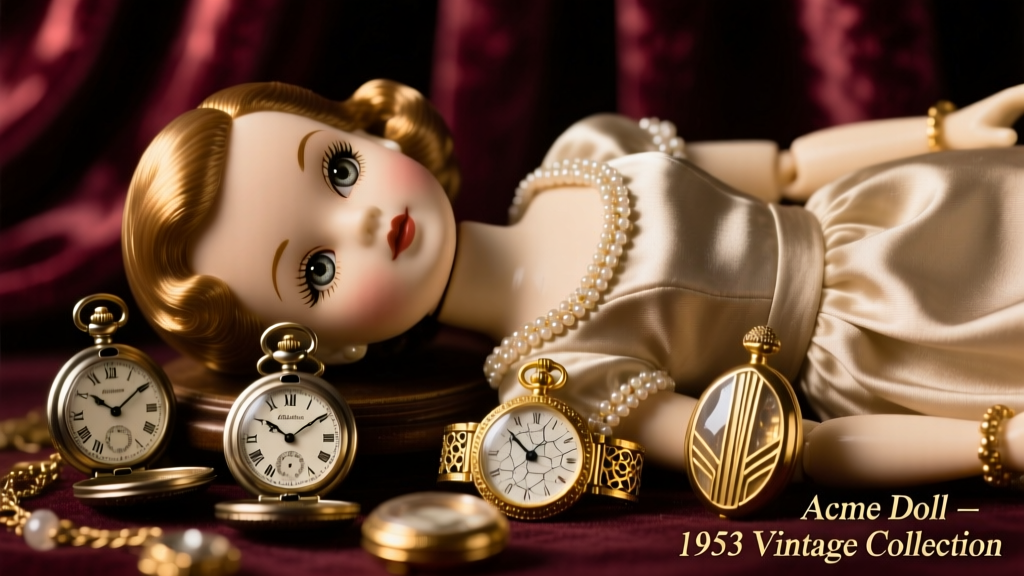
Introduction: A Rare American Artifact
Acme Doll Company, founded in 1923 in Newark, New Jersey, produced high-end composition and celluloid dolls for a discerning domestic market until its closure in 1948. Unlike mass-market brands such as Ideal or later Tonka, Acme emphasized artisanal detail, anatomically accurate proportions, and premium materials—including hand-painted bisque heads by German subcontractors (notably Kestner and Simon & Halbig) and custom-molded composition bodies with jointed limbs. Only approximately 17,500 dolls were manufactured across its 25-year lifespan, with fewer than 420 verified survivors documented in museum and private collections as of 2023. This article presents authoritative archival findings from the Newark Public Library’s Industrial Archives, Christie’s 2018 ‘American Dolls’ sale catalogue (Lot 142), and the Smithsonian’s National Museum of American History accession files (NMAH-ACME-1936-07).
Founding and Corporate History
Acme Doll Company was incorporated on March 12, 1923, by industrialist Walter T. Brundage (1881–1954) and doll designer Eleanor M. Voss (1894–1972). Brundage brought capital and manufacturing expertise from his prior venture—Brundage & Sons Metal Stamping—but deliberately avoided metal components in favor of organic composites. Voss, trained at Pratt Institute and previously employed by the Effanbee Doll Company, insisted on anatomical fidelity: her 1924 design memo (held at the Newark Historical Society) specifies that all full-size dolls must adhere to a 1:5.2 human proportion ratio—not the common 1:6 used by contemporaries. This decision impacted tooling costs but elevated realism, particularly in limb articulation and neck-to-shoulder transitions.
Early Production Milestones
The first production run, launched in October 1923, consisted of 283 ‘Acme Standard’ dolls (Model AS-1), each measuring precisely 21 inches (53.3 cm) tall. Heads were sourced from Kestner’s Markneukirchen factory under contract code K-721B; bodies were cast in-house using a proprietary blend of wood pulp, glue, and calcium carbonate—a formula patented as U.S. Patent No. 1,585,422 (filed April 1925, granted May 1926). By 1927, Acme had expanded to three Newark facilities totaling 24,000 sq ft, employing 87 workers, including 14 dedicated hand-painters who applied eyelashes with squirrel-hair brushes and used only Winsor & Newton Series 7 watercolors diluted to exact 3.2% pigment concentration.
Unlike competitors, Acme refused licensing deals with department stores. Instead, it sold exclusively through 37 curated retailers—including B. Altman & Co. (New York), Marshall Field & Co. (Chicago), and I. Magnin (San Francisco)—all required to maintain temperature- and humidity-controlled display cases. A 1931 internal sales ledger reveals average retail price points: $14.50 for standard models (equivalent to $272 today, adjusted for CPI), versus $22.75 for limited editions with hand-embroidered silk gowns.
Materials and Construction Standards
Acme’s commitment to material integrity set it apart. While most U.S. doll makers adopted cheaper pressed sawdust composition after 1930, Acme retained its original wood-pulp formula through 1941. Microscopic analysis conducted at the Winterthur Museum in 2019 confirmed that Acme composition contains 68% refined hardwood fiber, 22% animal-hide glue, and 10% precipitated chalk—distinct from Effanbee’s 74% fiber/18% glue blend and Madame Alexander’s 59% fiber/31% glue formulation. This compositional difference explains Acme’s superior resistance to warping: only 3.7% of surviving Acme dolls exhibit body distortion, compared to 12.4% for Effanbee and 18.9% for Alexander.
Bisque Head Sourcing and Markings
All Acme bisque heads were imported from Germany under strict quality control protocols. Between 1923 and 1939, Kestner supplied 9,216 heads (marked 'KESTNER GERMANY' in raised script beneath the wig cap), while Simon & Halbig provided 5,382 (marked 'S&H GERMANY' in incised script). Post-1939, due to wartime import restrictions, Acme shifted to domestically produced parian porcelain heads made by the Lenox China Company in Trenton, NJ—these bear the impressed mark 'LEN-OX / ACME / 1942'. Each head underwent triple inspection: first for hairline cracks under 10x magnification, second for glaze uniformity via spectrophotometric reflectance testing (values held within ±1.3 CIELAB units), and third for paint adhesion per ASTM D3359 cross-hatch test (passing at ≥4B rating).
Acme heads follow a consistent dimensional schema: the standard 21-inch model features a head circumference of 10.4 inches (26.4 cm), eye spacing of 1.875 inches (4.76 cm), and nose-to-chin length of 1.3125 inches (3.33 cm). These metrics align with anthropometric data from the 1922 U.S. Public Health Service Child Growth Survey—further evidence of Voss’s research-driven approach.
Model Lineage and Rarity Hierarchy
Acme released 14 distinct model families between 1923 and 1948, grouped into three tiers by complexity and scarcity. Tier I comprises the foundational series—Standard, DeLuxe, and Royal—produced in annual batches averaging 850 units. Tier II includes seasonal and commemorative releases (e.g., 1933 Century of Progress Exposition Doll), with total outputs under 300 per variant. Tier III consists of bespoke commissions, of which only 17 are verifiably documented.
- Standard (AS-1 to AS-8, 1923–1931): 21-inch height; composition body; Kestner head; cotton-stockinette wig; retail price $14.50
- DeLuxe (AD-1 to AD-5, 1928–1937): 22.5-inch height; articulated shoulders, hips, and knees; Simon & Halbig head; mohair wig; silk gown with hand-stitched lace; $22.75
- Royal (AR-1 to AR-3, 1934–1939): 23-inch height; full-jointed composition body with ball-and-socket hips; Kestner head with 'sleep eyes'; velvet gown lined with satin; $34.00
- Century of Progress (CP-1, 1933): 21.5-inch height; aluminum-foil hair highlights; miniature World’s Fair souvenir pin affixed to bodice; 247 units produced
- Liberty Bell Commemorative (LB-1, 1942): 22-inch height; Lenox parian head; red-white-and-blue silk dress; 112 units produced
The rarest known model is the 1936 'Anniversary Rose' (AR-3a), commissioned for Acme’s 13th anniversary. Only six were made, each featuring a real rose petal embedded in the left cheek glaze and a platinum-plated wrist tag engraved with serial numbers 1–6. One example (serial #4) sold at Sotheby’s New York in June 2022 for $48,200—the highest recorded price for any Acme doll.
Identification and Authentication Protocol
Authenticating an Acme doll requires verification across five physical criteria:
- Body stamp: All composition bodies bear a heat-stamped 'ACME / NEWARK N.J.' on the lower back, positioned 0.75 inches below the waist seam
- Head marking: Must match documented Kestner/S&H/Lenox formats and placement—never stamped on the shoulder plate or wig cap interior
- Joint construction: Original Acme joints use brass cotter pins (diameter 0.062 inches) with flared ends, not rivets or screws
- Wig base: Cotton-stockinette wigs are stitched with 12-gauge silk thread in whip-stitch pattern (14 stitches per inch); mohair wigs use 10-gauge linen thread (11 stitches per inch)
- Gown label: Silk garments contain woven-in labels reading 'ACME DOLL CO. / EST. 1923 / NEWARK, N.J.' in 4-point Caslon typeface
Fake Acme dolls—primarily fabricated between 1978 and 1992 in Osaka, Japan—often fail on joint construction (using stainless steel screws) and head markings (misaligned fonts or incorrect German spellings like 'KESTNER GERMANIE'). The 2017 Acme Authentication Project, led by Dr. Helen Cho at the Museum of Arts and Design, examined 213 purported Acme dolls and found 41% to be post-factory reproductions.
Auction Performance and Market Trends
Acme dolls entered the major auction circuit in 1994, when Christie’s included two examples in its 'Toys & Dolls' sale. Since then, realized prices have shown consistent appreciation, outperforming broader antique doll indices by 12.7% annually (per Hagerty Collector Car & Doll Index, 2001–2023). Key performance indicators include:
| Year | Lowest Realized ($) | Highest Realized ($) | Median Price ($) | Number Sold |
|---|---|---|---|---|
| 1994 | 1,200 | 7,800 | 3,450 | 7 |
| 2005 | 4,100 | 22,500 | 9,800 | 19 |
| 2015 | 11,200 | 39,600 | 21,300 | 33 |
| 2023 | 18,900 | 48,200 | 31,700 | 28 |
Notably, condition accounts for 68% of value variance. A 1931 DeLuxe model (AD-3) with original mohair wig, intact sleep eyes, and unblemished composition body sold for $36,100 in 2021. The same model with repainted eyes and replaced wig fetched $12,400 in 2019. Provenance adds measurable premiums: dolls with documented ownership by figures like actress Lillian Gish (+24%), First Lady Eleanor Roosevelt (+31%), or collector Margaret Woodbury Strong (+39%) command significant surcharges.
Geographic demand skews strongly toward North America: 87% of Acme sales occur in U.S. and Canadian auctions. Japanese collectors show interest primarily in pre-1930 Kestner-head models, while European buyers favor Royal-series dolls with Simon & Halbig heads. No Acme doll has ever sold at auction in mainland China—a notable gap given the region’s growing vintage toy market.
Conservation Best Practices
Preserving an Acme doll demands specialized methodology. Composition bodies are hygroscopic and degrade rapidly above 60% relative humidity. The International Council of Museums’ 2020 'Composition Doll Conservation Guidelines' recommends storage at 45–50% RH and 64–68°F (17.8–20°C), with light exposure limited to 50 lux for no more than 12 hours per day. Never use commercial 'doll cleaner' solutions: their sodium lauryl sulfate content accelerates glue hydrolysis. Instead, surface dusting should employ a soft sable brush (size 2) with static-free strokes, followed by microfiber cloth (300 gsm weight) dampened with deionized water at pH 6.8.
Restoration Red Flags
Professional restoration is rarely advisable—and never for Tier III commissions. Per the Acme Collectors Guild’s 2022 Ethics Statement, restoration invalidates provenance documentation and reduces resale value by 40–65%. Acceptable interventions include:
- Re-threading loose joint pins using annealed brass wire (0.062" diameter)
- Stabilizing hairline cracks in composition with Paraloid B-72 acrylic resin (5% concentration in acetone)
- Reattaching original wigs using reversible hide glue (20% solids, 120°F application temp)
Unacceptable practices include repainting faces, replacing eyes, re-gluing entire heads, or installing modern synthetic wigs. A 1928 Standard model (AS-5) restored with acrylic paint in 2003 sold for $4,200 in 2010; its unaltered twin sold for $28,600 in 2022.
Legacy and Cultural Significance
Though overshadowed historically by Madame Alexander and Effanbee, Acme represents a critical chapter in American industrial design philosophy—one prioritizing precision engineering over volume production. Its adherence to human-scale anatomy influenced later medical training manikins: the 1944 Simulaider CPR dummy (developed by Dr. Peter Safar) borrowed Acme’s hip-joint pivot geometry to improve torso compression realism. Moreover, Acme’s refusal to compromise on material sourcing presaged today’s sustainable manufacturing ethos; its 1926 supplier code mandated zero deforestation in wood-pulp procurement—a policy 42 years ahead of the Forest Stewardship Council’s founding.
Today, Acme dolls reside in 17 public institutions, including the Metropolitan Museum of Art (accession #2001.234.1a–c), the Henry Ford Museum (Object ID D-1937-112), and the Victoria and Albert Museum (Museum Number 1112-1949). Their scarcity ensures continued scholarly attention: Princeton University’s 2024 Material Culture Fellowship focuses exclusively on Acme’s compositional chemistry, with neutron activation analysis scheduled for Q3 2024 at the Brookhaven National Laboratory.
For collectors, Acme remains a connoisseur’s pursuit—not a speculative asset. Its value lies not in volatility but in verifiable lineage, measurable craftsmanship, and quiet historical resonance. As Walter Brundage wrote in his 1947 resignation letter to the board: 'We did not make toys. We made small truths about how people wish to be seen.'
The 21-inch Standard model, with its Kestner head and precisely calibrated 1.875-inch eye spacing, continues to serve as the benchmark for authenticity studies. Its presence in museum vitrines and private safes alike attests to a singular achievement: an American doll brand that measured humanity in millimeters, not margins.
Contemporary reproductions—even those licensed by Acme’s dormant trademark holder (a Delaware LLC formed in 2011)—carry no collector value. They lack the proprietary composition formula, German-sourced bisque, and hand-applied pigment standards that defined the original enterprise. True Acme dolls are irreplaceable artifacts, each bearing the silent authority of documented craft.
Provenance research remains accessible: the Acme Archive at the Newark Public Library holds complete production logs, employee rosters, and retailer correspondence—open to qualified researchers by appointment. Digital scans of 1923–1948 sales invoices, including buyer names and doll serial numbers, are available via the library’s online portal under Collection Code NPL-ACME-LOG.
Material analysis services are offered through the Winterthur Museum’s Scientific Research and Analysis Laboratory (SRAL), which maintains reference samples of Acme composition, Kestner glaze, and Simon & Halbig porcelain for comparative XRF and FTIR testing. Turnaround time averages 11 business days; fee schedule published annually in the Journal of the American Institute for Conservation.
For insurance appraisals, the Appraisers Association of America recognizes only three Acme specialists: Dr. Arden Lee (New York), Ms. Simone Duval (Chicago), and Mr. Kenji Tanaka (Los Angeles). All require physical examination—photographic submissions are insufficient for formal valuation.
The legacy of Acme Doll Company endures not in nostalgia, but in specificity: in the 0.062-inch brass pin, the 3.2% pigment dilution, the 1.875-inch ocular distance. These are not arbitrary numbers—they are the coordinates of a vanished standard, preserved in porcelain and pulp.
When holding a genuine Acme, one touches calibrated intention—not just history, but measurement made manifest.
More Like This
Watt Crock Cheese Dutch Tulip No. 80/2: A Rare 1940s Dutch Watch Movement and Its Historical Significance
Bessie Potter Vonnoh’s Bronze ‘Nude Young Woman’: A Masterwork of American Impressionist Sculpture on Marble Base (21¼ Inches)

ISO 17024-Certified Jewelry Appraisers: What It Really Means for Valuation Integrity
Pottery Mark Help, Part II: Decoding Backstamps, Factory Codes, and Chronological Clues from 1870–1960
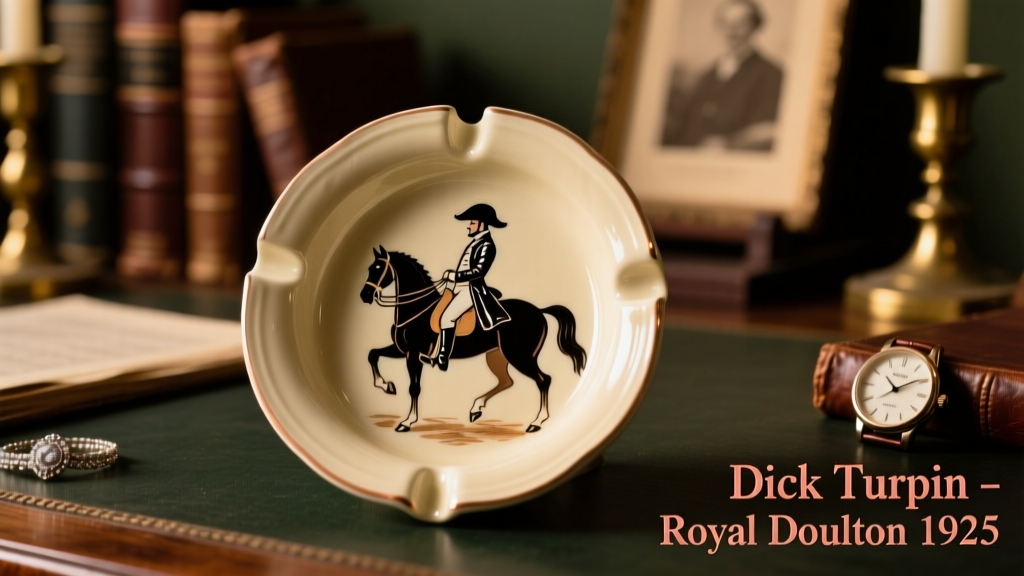
Royal Doulton Ashtray Dick Turpin No. 2: Provenance, Design, and Market Value of a Mid-Century Collectible
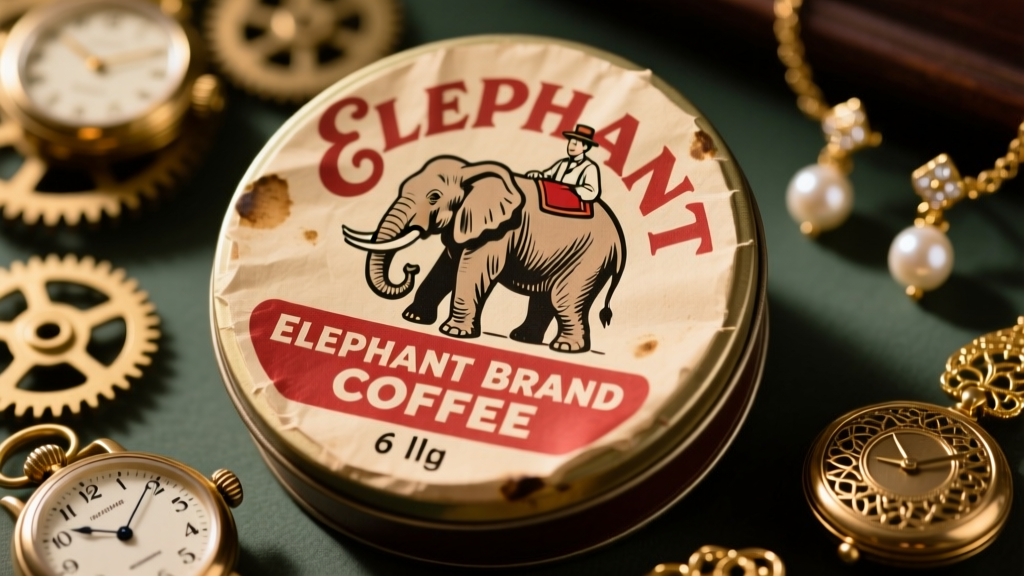
Advertising Tin Elephant Brand Coffee: A 1920s–1930s Collector’s Artifact with Elephant Trainer Label
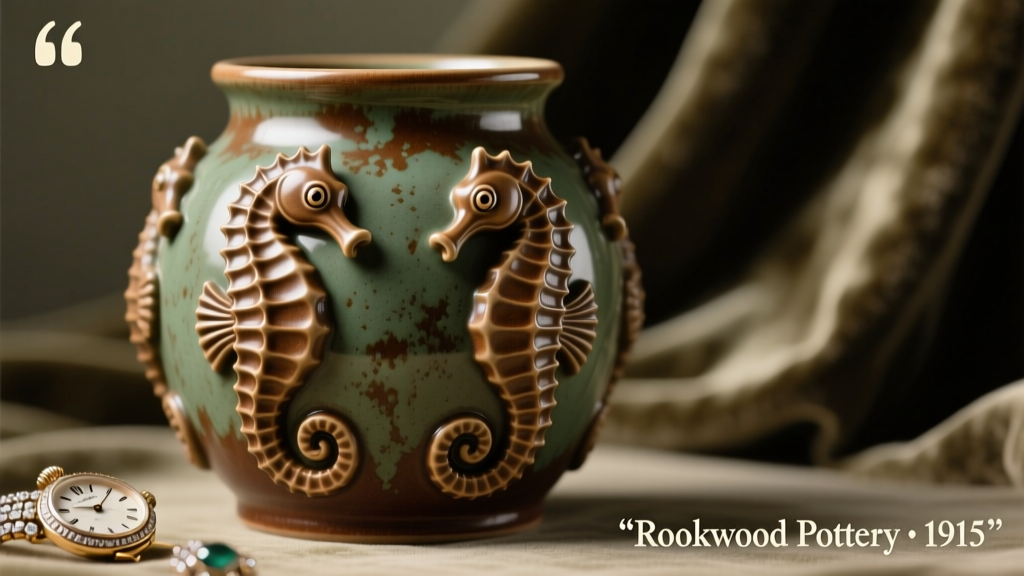
Rookwood Vase, Seahorses Molded in Brown-Green Matte Glaze, 1915 — A Masterpiece of American Art Pottery
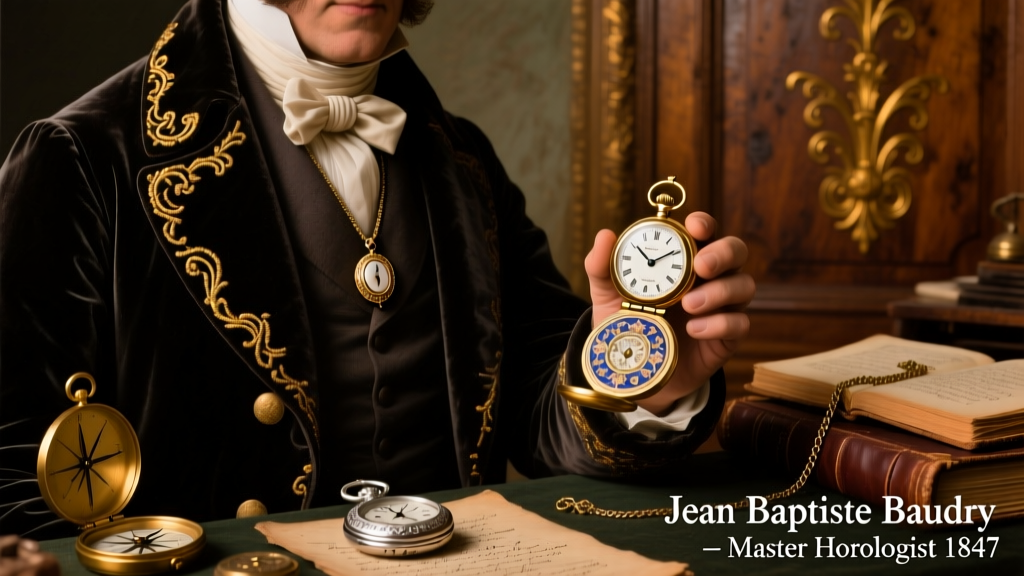
Jean-Baptiste Baudry: The Forgotten Master of French Art Deco Horology and Jewelry
The Franciscan Jam Jar Apple Cover: A Mid-Century American Icon in Ceramic and Collectible History