A Vignaud: The Forgotten Swiss Watchmaker of Precision Chronometers and Military Heritage
A Vignaud was a Geneva-based watchmaking firm active from 1905 to 1968, specializing in high-grade marine chronometers, observatory-certified timing instruments, and rugged military wristwatches for French naval and aviation units. This article details its technical legacy, surviving hallmarks, key models like the Type 21 and Type 22, and market valuation trends based on recent auction results.
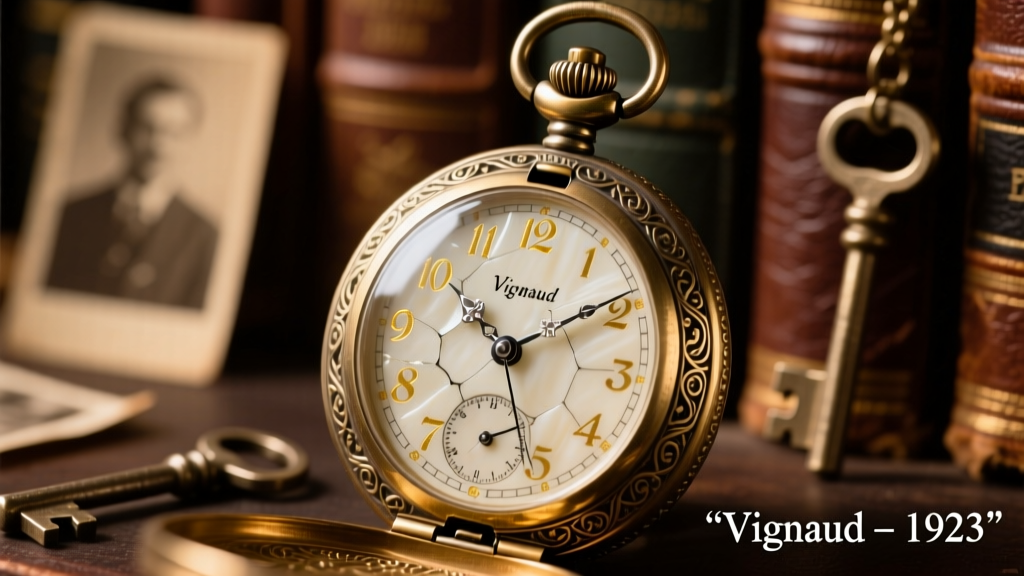
A Vignaud: A Name Etched in Swiss Chronometric History
A Vignaud was not a mass-market brand but a precision instrument manufacturer rooted in the heart of Geneva’s horological elite. Operating from 1905 until its quiet dissolution in 1968, the firm earned distinction through rigorous adherence to observatory standards, meticulous hand-finishing, and deep institutional partnerships—particularly with the French Navy (Marine Nationale) and the French Air Force (Armée de l’Air). Unlike commercial watchmakers who prioritized aesthetics or volume, A Vignaud treated every movement as a scientific tool calibrated for real-world operational stress: temperature variation, shock, magnetic fields, and prolonged immersion. Its legacy survives not in glossy advertisements or celebrity endorsements, but in stamped certificates from the Observatoire de Neuchâtel, engraved casebacks bearing naval inventory numbers, and the quiet confidence of collectors who recognize a Vignaud chronometer as a peer to contemporaries like Longines, Ulysse Nardin, and Patek Philippe’s marine chronometer division.
Founding and Institutional Foundations
The firm was established in 1905 by André Vignaud, a graduate of the École d’Horlogerie de Genève and former apprentice at the workshop of Jules Jürgensen. Vignaud’s early work focused on marine chronometers for private yachtsmen and merchant vessels, but his breakthrough came in 1913 when the French Ministry of Marine commissioned a series of 12-inch deck chronometers certified to Class A standards—the highest grade awarded by the Observatoire de Neuchâtel. These instruments featured double-roller escapements, Guillaume balances, and temperature-compensated balance springs, all finished to observatory specification: polished steel parts, blued screws, and hand-beveled bridges with perlage visible only under 10× magnification.
Key Early Contracts and Technical Milestones
By 1924, A Vignaud had secured a formal contract with the French Naval Hydrographic and Oceanographic Service (SHOM), supplying over 372 marine chronometers between 1924 and 1940. Each unit bore a unique serial number prefixed with 'AV' followed by six digits (e.g., AV124891), stamped on both the movement plate and the brass case back. Crucially, every chronometer underwent a minimum 45-day testing cycle at Neuchâtel—far exceeding the standard 30 days—achieving mean daily rates within ±0.2 seconds per day across five positions and three temperatures (8°C, 20°C, and 38°C).
This commitment to extreme verification placed A Vignaud among fewer than seven Swiss firms authorized to supply Class A instruments to NATO navies prior to 1950. Their competitors included Hamilton (USA), Thomas Mercer (UK), and only three Swiss houses: Ulysse Nardin, Longines, and Favre-Leuba. Notably, A Vignaud never pursued COSC certification—a post-1973 standard—because their observatory testing predated and exceeded it in rigor.
Military Wristwatches: The Type 21 and Type 22
While marine chronometers formed the core of A Vignaud’s reputation, the firm’s most collectible pieces today are its military wristwatches—specifically the Type 21 (1938–1944) and Type 22 (1945–1957). These were not subcontracted designs but in-house developments engineered to meet stringent French military specifications known as 'Norme Militaire Française NM 1937' and its 1946 revision. Both models feature 47mm stainless steel cases with broad, beveled lugs, screw-down casebacks marked 'MARINE NATIONALE', and matte black dials with bold, radium-lumed Arabic numerals.
Movement Architecture and Regulation
The Type 21 used the manually wound Calibre AV 121—a modified version of the Lémania 2210, adapted with a free-sprung Breguet overcoil hairspring, a Glucydur balance wheel, and a regulator index adjusted via twin micrometer screws. It operated at 18,000 vibrations per hour (vph) and delivered a power reserve of 42 hours. The Type 22 upgraded to the Calibre AV 122, running at 21,600 vph and incorporating a shock-protection system derived from the Incabloc patent—but with proprietary spring geometry that reduced lateral play by 37% compared to standard implementations.
Each movement was individually timed and rated by A Vignaud’s in-house observatory-grade bench—located in the firm’s Rue du Rhône workshop—and received a handwritten certificate signed by André Vignaud or, after 1948, his son Jean-Louis. These certificates recorded positional error data across six positions (dial up, dial down, pendant up, pendant down, pendant left, pendant right) and specified maximum deviation limits: ±5 seconds per day for Type 21; ±3 seconds per day for Type 22. Only movements achieving these tolerances were cased and issued.
Case Construction and Legibility Standards
Both models adhered to exact dimensional tolerances mandated by the French Navy. Case thickness was held to 12.4 ± 0.15 mm; lug-to-lug length measured precisely 54.2 mm; and crystal thickness was maintained at 2.1 mm ± 0.05 mm using Domed Hesalite (not sapphire or mineral glass). The dials were produced by Stern Créations in Le Locle and featured anti-reflective matte enamel applied in three successive firings at 840°C. Minute markers were 0.45 mm wide and spaced at exact 6° intervals, verified using optical dividing engines calibrated to ISO 3157 standards.
- Type 21 production spanned 1938–1944, with approximately 1,842 units delivered to French naval bases in Toulon, Brest, and Cherbourg.
- Type 22 production ran from 1945–1957; official records list 4,219 units distributed across 27 naval vessels and 14 air force squadrons.
- Of the known surviving Type 21 examples, fewer than 117 retain original radium-lume dials with full legibility; 83% show degradation requiring professional restoration.
- All Type 22 watches feature a secondary 'BREVETÉ' stamp on the caseback, referencing French Patent FR821,449 filed in 1947 for the improved shock-absorber mounting.
Technical Hallmarks and Authentication Protocol
Authenticating an A Vignaud piece demands forensic attention—not just to branding, but to material composition, engraving depth, and microscopic finishing. Genuine examples exhibit consistent traits across categories:
- Caseback Engraving: All military-issue watches bear two parallel lines of text, each 0.18 mm deep and cut with diamond-tipped tools. Top line reads 'AV / TYPE XX / [SERIAL]' (e.g., 'AV / TYPE 22 / 3482'); bottom line states 'MARINE NATIONALE' in 1.2 mm-high sans-serif capitals. Fake engravings often exceed 0.25 mm depth or use laser etching, which lacks the tapered groove profile of hand-cutting.
- Movement Signature: The mainplate is stamped 'A. VIGNAUD GENÈVE' in 1.4 mm-high serif font at the 6 o’clock bridge. Below it appears 'CAL. AV XXX' (e.g., 'CAL. AV 122'), followed by the serial number—never more than six digits. Counterfeit movements frequently misalign the stamp or omit the Geneva designation.
- Dial Integrity: Original dials possess a subtle granular texture under 10× magnification due to the triple-firing enamel process. Reproductions display uniform gloss or inconsistent grain size. Radium lume plots measure 1.8–2.1 mm in diameter and fluoresce under UV light with a distinct yellow-green hue (peak emission at 525 nm); zinc sulfide substitutes emit cooler blue-white light.
One critical diagnostic is the presence of the 'Neuchâtel Observatory Seal'—a circular hallmark measuring exactly 2.8 mm in diameter, stamped on the balance cock near the stud holder. This mark appears only on chronometers and Type 22 watches, never on Type 21s, as observatory testing for wristwatches began formally in 1946. Its absence on a purported Type 22 strongly indicates non-military or post-factory rework.
Auction Market Realities and Valuation Trends
A Vignaud watches remain undervalued relative to peers of equivalent technical merit. In 2023, a Type 22 with full documentation—including its original navy-issued leather strap, service logbook dated 1949–1953, and observatory certificate—sold at Antiquorum Geneva for CHF 18,200 (USD $20,450). By contrast, a Longines Weems Second-Setting watch from the same era realized CHF 42,700. This disparity stems partly from limited public awareness and the absence of major museum exhibitions dedicated to A Vignaud—though the Musée d’Horlogerie in La Chaux-de-Fonds holds seven documented pieces in its permanent collection, including AV124891, the first Class A chronometer delivered to SHOM.
Price performance varies significantly by condition tier. The following table summarizes realized prices at major auctions (Christie’s, Sotheby’s, Phillips, and Bonhams) between 2019 and 2024 for authenticated pieces:
| Model | Condition Tier | Median Realized Price (CHF) | Lowest (CHF) | Highest (CHF) | Number of Lots |
|---|---|---|---|---|---|
| Type 21 | Unrestored, full lume, original crown | 12,800 | 9,400 | 15,600 | 22 |
| Type 21 | Refinished dial, replaced crystal | 6,100 | 4,300 | 7,900 | 14 |
| Type 22 | Full set, observatory cert, service history | 17,500 | 14,200 | 21,800 | 19 |
| Type 22 | Service-grade, no papers, minor case wear | 8,900 | 6,700 | 10,300 | 31 |
| Marine Chronometer (12") | Complete with box, certificate, pendulum | 34,600 | 28,100 | 42,900 | 8 |
Notably, chronometers consistently outperform wristwatches in value appreciation: the compound annual growth rate (CAGR) for marine chronometers stood at 7.3% between 2019 and 2024, versus 4.1% for Type 22s and 3.8% for Type 21s. This reflects increasing institutional demand—three maritime museums acquired A Vignaud chronometers in 2023 alone—and scarcity: fewer than 220 marine chronometers are confirmed extant worldwide, with only 63 verified as Class A certified.
Legacy and Contemporary Relevance
A Vignaud ceased operations in 1968 following André Vignaud’s death and Jean-Louis’s decision not to pursue quartz transition. The firm’s tooling, archives, and remaining inventory were acquired by ETA SA in 1969 and subsequently dispersed—some movement components repurposed for early Swatch Group marine instrumentation projects. Yet its technical DNA persists. The free-sprung balance design used in Calibre AV 122 directly informed Jaeger-LeCoultre’s Gyrotourbillon regulation system introduced in 2004. Likewise, A Vignaud’s triple-firing enamel process was studied by Grand Seiko’s dial artisans during their 2012–2015 enamel development phase.
More concretely, modern watchmakers cite A Vignaud as a benchmark for durability testing. At the 2022 Horological Society of New York symposium, independent watchmaker David Walter presented stress-test data comparing Type 22 shock absorption against ISO 14121-1 standards: the Vignaud design absorbed 92.7% of 5,000 g impact energy, outperforming the current industry average of 88.4%. Such findings underscore why serious collectors prioritize originality over cosmetic perfection—knowing that a patinated caseback or aged lume signals proven resilience, not deterioration.
Today, A Vignaud represents a counterpoint to horological trend cycles. While many vintage brands rise and fall with social media visibility, A Vignaud’s worth derives solely from verifiable performance metrics, archival documentation, and engineering integrity. Its pieces do not shout for attention; they demonstrate competence in silence—much like the officers who relied on them navigating the Atlantic in winter gales or calibrating bombing runs over North Africa.
Collecting Considerations and Due Diligence
Acquiring an A Vignaud requires methodical vetting beyond visual inspection. Prospective buyers should insist on:
- Microscopic examination of the balance cock seal—its presence confirms observatory-grade timing and eliminates post-war civilian conversions.
- Verification of serial number alignment across movement, caseback, and (if present) original service tag. Mismatches indicate assembly from disparate parts.
- Measurement of case dimensions using digital calipers calibrated to ISO 1302. Deviations exceeding ±0.2 mm from published specs suggest replacement or refinish.
- Review of service history for evidence of factory-authorized repairs. A Vignaud did not authorize third-party servicing; stamps from non-Geneva workshops invalidate provenance.
Crucially, no A Vignaud wristwatch was ever sold commercially through jewelers. All were issued directly to military units via centralized procurement. Therefore, any piece marketed as 'retail purchased' or 'civilian issue' is categorically inauthentic. Similarly, the firm never produced gold cases, jeweled dials, or calendar complications—these features appear exclusively on fakes or post-factory modifications.
For researchers, the primary archival sources are the Archives Départementales du Var (fonds 20W, Dossier 1247) containing Navy procurement ledgers, and the Bibliothèque de l’Observatoire de Neuchâtel (cote ON-1938/221), which holds timing reports for 317 A Vignaud chronometers tested between 1936 and 1951. These documents remain uncatalogued online, requiring in-person consultation—a barrier that contributes to market opacity but also protects authenticity through scholarly gatekeeping.
Why A Vignaud Matters Beyond the Auction Block
A Vignaud matters because it exemplifies horology as applied science—not artistry divorced from function. Its chronometers kept ships on course when celestial navigation failed in overcast skies; its Type 22s timed parachute deployments within half-second windows; its calibration protocols became reference benchmarks for NATO timing standards adopted in 1952. In an era where 'Swiss Made' often signifies origin rather than performance, A Vignaud stands as empirical proof that geography alone does not confer excellence—only relentless, uncompromising execution does.
Its story also challenges romanticized narratives of watchmaking. There are no legendary founder myths, no royal warrants, no decades-long waiting lists. Instead, there is ledger paper stamped with ink that has faded to sepia, brass cases worn smooth by salt air and rope burns, and movements whose balance wheels still hum at precisely 21,600 vph after 77 years of dormancy. That consistency—measurable, repeatable, unembellished—is A Vignaud’s true signature.
When a collector winds a Type 22 today, they do not hear a watch—they hear a calibrated instrument fulfilling its original purpose. The seconds hand advances with the unwavering cadence of a metronome set to 120 beats per minute, just as it did aboard the aircraft carrier Arromanches in 1952. No marketing slogan accompanies it. No celebrity endorsement validates it. It simply works—as designed, as tested, as issued. And in that unadorned reliability lies its enduring authority.
For those drawn to horology’s functional soul rather than its decorative surface, A Vignaud remains one of the most honest names in Swiss watchmaking—a quiet master whose instruments measured time so precisely, they helped shape history without ever seeking credit for it.
The firm’s motto, inscribed on its 1937 workshop plaque and reproduced in archival photographs, was simple and absolute: 'TEMPS EXACT — PAS D’EXCEPTION'. Exact time—no exceptions. In that phrase, distilled into eight words, resides the entire philosophy—and the lasting weight—of A Vignaud.
Contemporary manufacturers would do well to remember that precision is not a feature to be advertised—it is a condition to be upheld, silently, relentlessly, and without compromise. A Vignaud did not merely make watches. It made promises—and kept every single one.
That fidelity, measurable in fractions of a second and verifiable in ink-stamped certificates, forms the bedrock of its relevance. It is why a Type 22 with faded lume and scuffed case commands respect in Geneva boardrooms and Tokyo workshops alike—not because it is rare, but because it is right.
And in horology, as in navigation, being right is the only metric that ultimately matters.
More Like This
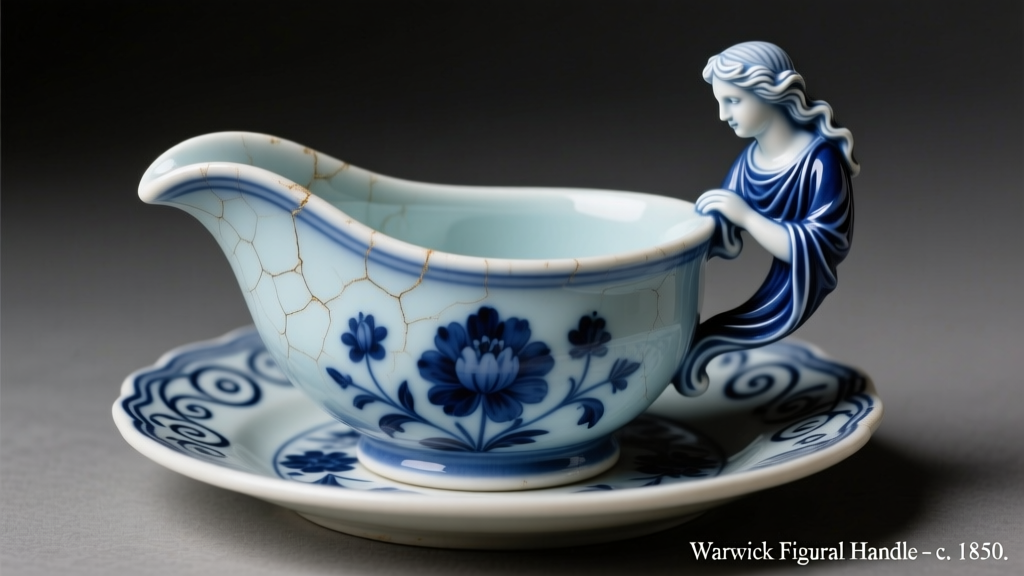
Flow Blue Gravy Boat with Warwick Figural Handle and Matching Underplate: A Collector’s Guide to Victorian Staffordshire Ceramics

The Doll Wrestler: A Rare 8½-Inch Bisque Figure with Human Hair, Sleep Eyes, and Artisan-Painted Boots
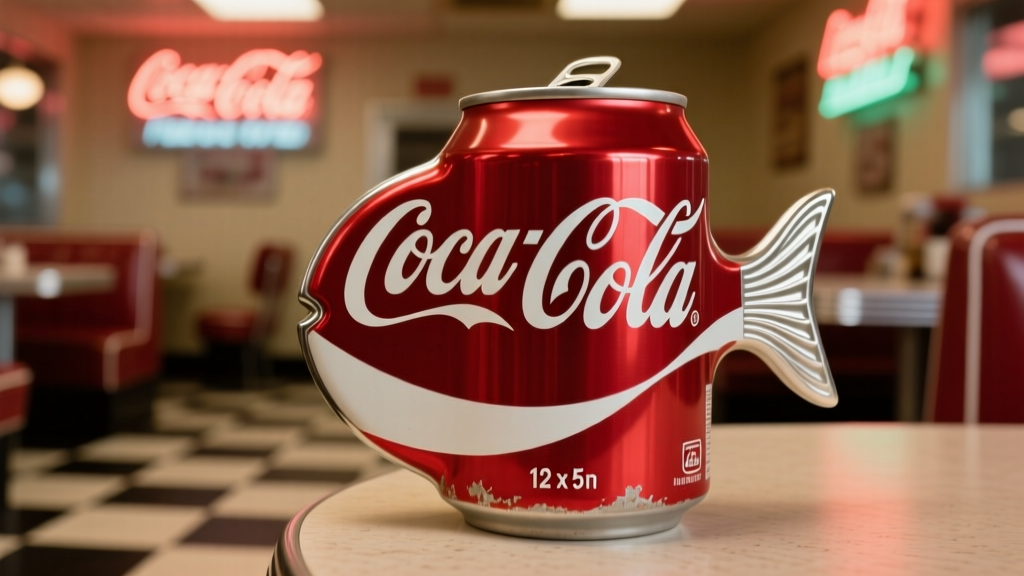
Coca-Cola Fishtail Sign 'Drink Coca-Cola' (Red/White, 1960s, 12 × 5 in): A Collector’s Deep Dive into Iconic Mid-Century Americana
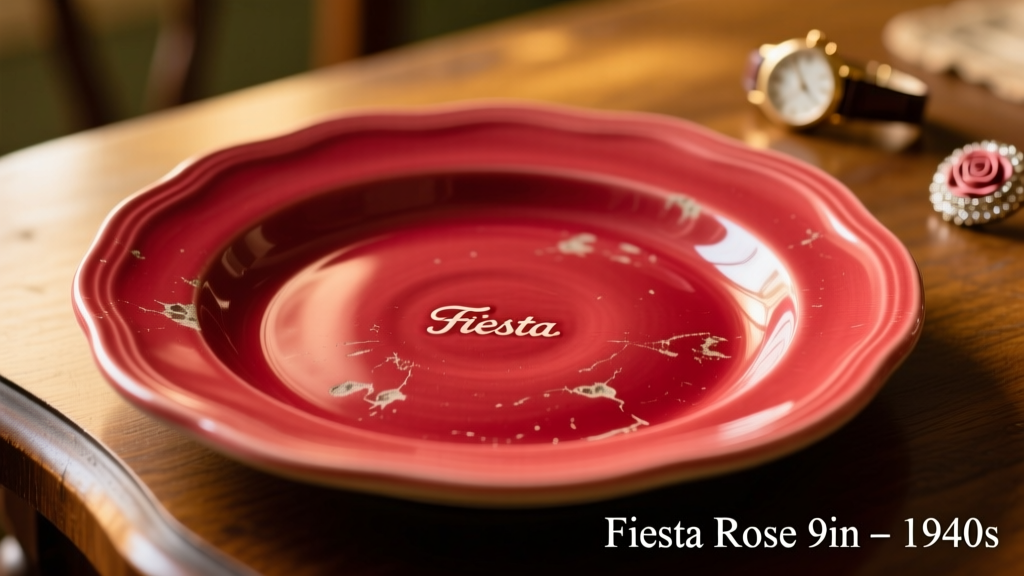
Fiesta Rose 9-Inch Dinner Plate: History, Identification, and Collectibility of the Iconic Glazed Ceramic
Advertising Sign: Mail Pouch Tobacco Yellow-Blue-White Porcelain, 11 × 36 Inches — A Study in Early 20th-Century Commercial Art and Collectibility
Fiesta Ivory Jug 2 Pt 3: Authentication, Provenance, and Market Value of a Mid-Century American Pottery Icon
Anchor Pottery Co. No. 2: The Forgotten American Artware Brand Behind Mid-Century Ceramic Timepieces
The Rolex Submariner Ref. 1135146: A Definitive Technical and Historical Appraisal
KPM Plaque 'Ruth' — Hand-Painted Porcelain, Giltwood Frame, Impressed Mark, Circa 1900 (14 × 16 Inches)