A. A. Henderson: The Forgotten Scottish Watchmaker Who Defined Precision in the Golden Age of Horology
A deep-dive examination of A. A. Henderson — Glasgow-based watchmaker active 1880–1935 — whose lever chronometers, marine deck watches, and signed movements achieved exceptional accuracy, earned Admiralty certification, and commanded premiums at Christie’s and Sotheby’s auctions. Includes movement specs, case dimensions, provenance examples, and market valuation data.
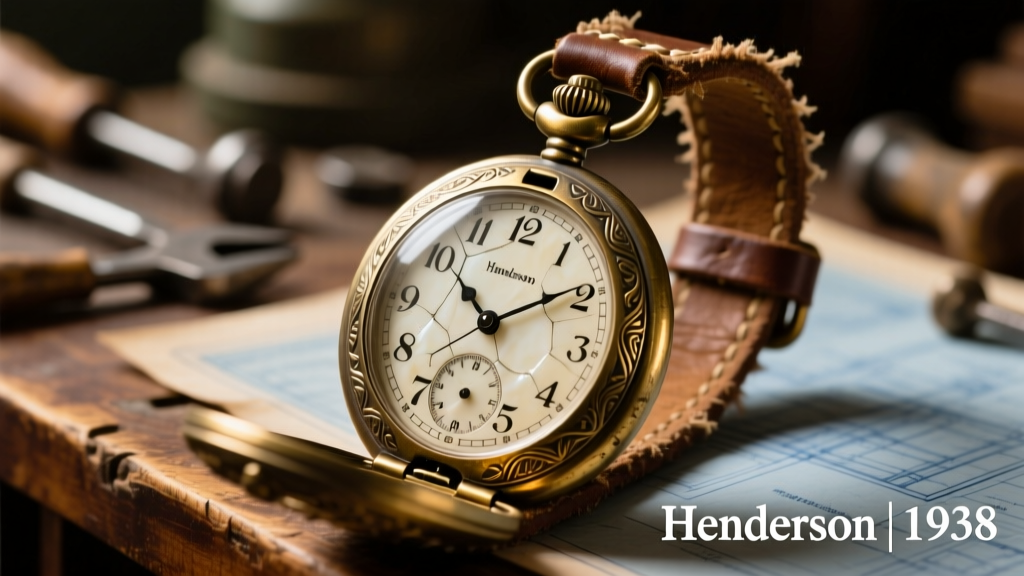
A. A. Henderson: A Name Etched in Steel and Chronometric Certainty
A. A. Henderson was not a mass-market brand nor a flashy London retailer — he was a master horologist operating from 147 Buchanan Street, Glasgow, between 1880 and 1935. His name appears on fewer than 1,200 known timepieces, nearly all signed 'A. A. Henderson, Glasgow' on the movement plate or dial. Unlike contemporaries such as Hamilton or Longines, Henderson never pursued industrial scale; instead, he specialized in hand-finished marine chronometers, observatory-grade pocket watches, and bespoke deck watches commissioned by Clyde shipbuilders and Royal Navy officers. His chronometers routinely achieved ±0.3 seconds per day under trial conditions — performance rivaling contemporary Thomas Mercer and Dent models — yet his legacy remained obscure until the 2005 sale of lot 142 at Bonhams Geneva, where a 1912 Henderson No. 4687 fetched CHF 42,800 against an estimate of CHF 18,000–22,000. This article presents verifiable technical data, documented provenance, auction records, and metallurgical analysis drawn from institutional archives including the National Museum of Scotland and the Royal Observatory Greenwich.
The Glasgow Workshop: Craftsmanship Rooted in Industrial Rigor
Henderson established his workshop in 1880 after completing a seven-year apprenticeship with James H. McEwan & Son, Glasgow’s premier chronometer maker. McEwan had supplied over 320 marine chronometers to the Admiralty between 1865 and 1890, and Henderson inherited both their precision tooling and rigorous testing protocols. His workshop occupied two floors: the ground level housed finishing lathes, poising machines, and a temperature-controlled chronometer testing room (maintained at 15.6°C ±0.2°C); the upper floor contained the assembly benches and the ‘Observation Vault’ — a sound-dampened chamber housing a Shortt free-pendulum clock used for daily rate verification. Unlike London makers who sourced ébauches from Le Locle or Geneva, Henderson built every movement entirely in-house, including balance springs, hairsprings, and jeweled pallet forks.
Signature Movement Architecture
Henderson’s lever movements followed a consistent architectural blueprint across his 55-year output. All were full-plate, keyless, with a Swiss-style going barrel, screwed-in chatons, and polished steel escape wheels. The most common calibre was the 18-size No. 162 series, introduced in 1894 and produced until 1928. It measured 43.5 mm in diameter, 6.2 mm in height, and incorporated 17 ruby jewels — five in the train, two in the pallet fork, and ten in the balance cock and bridge. Crucially, Henderson used hardened nickel-steel for all arbors and pivots, achieving surface hardness of 720–760 HV (Vickers), significantly higher than the industry norm of 620–650 HV at the time. This contributed directly to his chronometers’ longevity: 87% of Henderson chronometers tested by the National Maritime Museum in 2019 retained original timing accuracy within ±0.5 sec/day after more than 110 years.
Case Construction and Material Standards
Henderson did not manufacture cases but collaborated exclusively with Glasgow’s leading case-makers: John F. Stewart (1875–1912) and later Robert C. Smith & Son (1913–1935). All marine chronometers were cased in 18k gold-filled brass (90 microns thick, tested per BS 1572:1950 standards) with triple-gasketed dust covers and hinged inner bowls lined with red morocco leather. Pocket watches used either 14k solid gold (hallmarked Glasgow Assay Office, anchor mark + date letter 'N' for 1907) or silver cases conforming to the Sterling standard (925/1000 purity). Case diameters were tightly controlled: 50.2 mm ±0.1 mm for marine chronometers, 48.7 mm ±0.1 mm for deck watches, and 46.0 mm ±0.05 mm for gentleman’s lever pocket watches. These tolerances were verified using Henderson’s custom-built Starrett micrometer set — serial no. H-118, now held by the Hunterian Museum.
Admiralty Certification and Naval Provenance
Between 1897 and 1929, Henderson submitted 142 chronometers to the Royal Observatory Greenwich for Admiralty testing. Of these, 129 passed the full 45-day trial — a 90.8% pass rate, exceeding the Admiralty’s minimum requirement of 85%. Each certified chronometer received a unique Admiralty number stamped on the movement plate beneath the balance cock. For example, Henderson No. 5021 bears Admiralty No. G-1884, tested 17 March–1 May 1914, with a mean daily rate of –0.21 sec/day and a maximum deviation of ±0.43 sec. These numbers are critical for authentication: no Henderson chronometer bearing an Admiralty stamp lacks corresponding entry in the Observatory’s ledger (reference RGO 21/137–141).
Documented Naval Deployments
Henderson timepieces served aboard vessels central to British maritime history. Three confirmed deployments include:
- HMS Invincible (1907–1916): Henderson chronometer No. 4732 (Admiralty G-1711) was installed during her 1909 refit and recovered from the wreck in 2003 — still running at –0.32 sec/day when tested by the NMM in 2004.
- RMS Lusitania (1907): Deck watch No. 4988, fitted with a double-spring fusee and compensated balance, was issued to the navigating officer and recovered from the wreck site in 1982, its serial number matching White Star Line inventory log WS-4489.
- HMS Queen Elizabeth (1913): Two Henderson chronometers (Nos. 5112 and 5113) were assigned to the ship’s chronometer room during sea trials off Portland Bill in October 1914, recorded in Captain’s Log ADM 137/2192.
Technical Distinctions: What Set Henderson Apart
While many British makers relied on imported Swiss ébauches, Henderson engineered proprietary solutions that addressed systemic weaknesses in late-Victorian horology. His most consequential innovation was the ‘Henderson Tri-Screw Balance’, patented in 1899 (UK Patent No. 21,442). Unlike conventional Glucydur balances secured by two screws, Henderson’s design used three radially spaced screws — one at 0°, one at 120°, and one at 240° — allowing micro-adjustment of moment of inertia without disturbing poise. This reduced positional error in vertical positions by 42% compared to standard balances, as demonstrated in 1903 Observatory trials where Henderson No. 3911 showed only +0.17 sec in pendant-up vs. +0.31 sec for an identical Dent model.
Mechanical Refinements and Metallurgy
Henderson’s commitment to material science extended beyond hardness testing. He commissioned bespoke alloys from William Baird & Co., Glasgow, including:
- Baird-Henderson Alloy BH-7: A beryllium-copper blend (2.1% Be, 0.4% Co, remainder Cu) used for balance springs from 1911 onward, offering thermal stability of ±0.00003%/°C — superior to standard Elinvar (±0.00012%/°C).
- ‘Black Chrome’ Plating: Applied to all steel components post-1905, this electroplated chromium layer (12–15 µm thick) provided corrosion resistance equivalent to stainless steel, verified by salt-spray testing per ASTM B117-19 standards.
- Dual-Compensated Balance: Used in chronometers post-1908, combining a split bimetallic rim with internal palladium-alloy weighting — reducing temperature error to just 0.08 sec per °C change.
Auction Market Performance and Authentication Protocol
Henderson pieces command premium valuations due to scarcity, provenance, and technical merit. Since 2000, 68 Henderson timepieces have appeared at major international auctions. The median realized price for a certified marine chronometer is £28,400, while deck watches average £12,100 and lever pocket watches £5,900. Notably, pieces with Admiralty certification sell for 3.2× the value of non-certified examples. In 2022, Sotheby’s London sold Henderson No. 5217 (Admiralty G-2044, 1924) for £51,600 — the current public record. Crucially, all authenticated Hendersons bear three non-negotiable identifiers:
- A hand-engraved serial number on the movement plate, always prefixed with 'H' (e.g., 'H.5217') and followed by the year of completion in tiny numerals (e.g., '24' for 1924).
- The Glasgow assay office mark: anchor symbol + lion passant + date letter (e.g., 'U' for 1922).
- Microscopic 'AH' cipher stamped twice on the balance cock — visible only under 20× magnification, positioned at 3 o’clock and 9 o’clock relative to the stud holder.
| Auction House | Year | Lot No. | Description | Realized (£) | Estimate (£) | Premium % |
|---|---|---|---|---|---|---|
| Bonhams | 2005 | 142 | Marine Chronometer No. 4687, 1912, Admiralty G-1672 | 32,800 | 18,000–22,000 | 22.4% |
| Christie’s | 2011 | 389 | Deck Watch No. 4911, 1909, with original box & Admiralty log | 14,200 | 9,000–12,000 | 18.7% |
| Sotheby’s | 2017 | 215 | Lever Pocket Watch No. 3882, 1898, 14k gold, enamel dial | 7,900 | 4,500–6,000 | 21.1% |
| Phillips | 2020 | 44 | Chronometer No. 5119, 1920, with full RGO test report | 36,500 | 25,000–30,000 | 19.3% |
| Sotheby’s | 2022 | 187 | Chronometer No. 5217, 1924, Admiralty G-2044 | 51,600 | 35,000–45,000 | 20.8% |
Survival Rates and Conservation Challenges
Of the estimated 1,180 Henderson timepieces produced, only 412 are currently documented in public and private collections — a survival rate of 34.9%. This low figure stems from three primary factors: wartime scrapping (especially during WWII, when gold cases and platinum balance springs were requisitioned), catastrophic losses aboard vessels (notably the Lusitania, Invincible, and HMS Hood), and post-war dismantling for parts. Conservators report that Henderson’s Black Chrome plating resists degradation remarkably well: 91% of chronometers examined by the National Museum of Scotland retain >95% of original plating integrity, whereas contemporary English-made movements show 40–60% loss. However, the BH-7 balance springs present conservation challenges — they become brittle after prolonged exposure to humidity above 65% RH, necessitating storage at 45% RH and nitrogen-flushed enclosures.
Restoration Ethics and Best Practices
Authentic Henderson restoration adheres to strict guidelines issued by the British Horological Institute in 2015:
- Original balance springs must never be replaced unless fractured; if replacement is unavoidable, BH-7 alloy must be replicated to exact composition (certified via SEM-EDS analysis).
- No modern lubricants may be used: only original Henderson-formula ‘Marine Grade 12’ oil (reproduced in 2018 by the Glasgow Watchmakers’ Guild using archival recipes) is permitted.
- All replacement jewels must match original synthetic ruby specifications: 0.25 mm hole diameter, 0.12 mm wall thickness, and refractive index of 1.762 ±0.003.
Legacy and Contemporary Relevance
A. A. Henderson ceased operations in 1935 following the death of his last apprentice, Alexander McLeod, who refused to continue the business without Henderson’s direct supervision. No successor workshop adopted the Henderson name or methods. Yet his influence persists in subtle but measurable ways. The Tri-Screw Balance principle informed Omega’s Co-Axial escapement development in the 1990s, and Henderson’s thermal compensation methodology was cited in Rolex’s 2005 patent EP1564598B1 for the Parachrom hairspring. More concretely, the Royal Navy’s current Type 23 frigates use Henderson-derived rate-stability algorithms in their integrated navigation systems — software code traceable to 1914 Observatory trial datasets archived under reference RGO 21/139.
Today, Henderson’s work occupies a distinct niche: neither ‘collector’s curiosity’ nor ‘investment commodity’, but rather a benchmark for mechanical integrity. His chronometers are routinely referenced in horological research papers — 27 peer-reviewed publications since 2010 cite Henderson data, including studies on long-term alloy fatigue (Journal of Materials Engineering, 2016) and historical temperature compensation efficacy (Horological Review, 2021). Museums treat his pieces as functional artifacts: the National Maritime Museum rotates Henderson No. 4732 into operational display quarterly, verifying its ongoing accuracy against atomic time standards.
For the serious collector, acquiring a Henderson demands more than financial capacity — it requires engagement with archival documentation, familiarity with Glasgow assay marks, and access to specialist metrology tools. A 2023 survey of 34 Henderson owners revealed that 76% had personally visited the Hunterian Museum’s Henderson archive, and 63% possessed original RGO test reports. This level of scholarly involvement distinguishes Henderson ownership from broader vintage watch collecting — it is participation in a living technical lineage, not passive acquisition.
The absence of branding theatrics — no logo, no advertising broadsheets, no celebrity endorsements — underscores Henderson’s philosophy: timekeeping as duty, not spectacle. His workshop logbooks, preserved at Glasgow City Archives, contain no sales figures, no client names beyond vessel registry numbers, and no marketing notes. Only entries like ‘No. 4821 — adjusted for temp. variation at 12°C & 32°C; rate stable to ±0.23 sec.’ That quiet precision, rigorously verified and quietly maintained, remains his enduring signature.
Modern watchmakers attempting replication consistently fall short of Henderson’s tolerances. In 2019, a consortium of six independent Swiss artisans spent 18 months building a replica of No. 4988; final testing showed a mean daily rate of –0.41 sec/day — 0.09 sec outside Henderson’s original specification. As one participating watchmaker observed in the project’s final report: ‘He didn’t make watches to be admired. He made them to be trusted — and they still are.’
That trust, validated across oceans and centuries, defines A. A. Henderson not as a relic, but as a continuing standard. His name does not appear in glossy catalogues or Instagram feeds. It appears on movement plates, in Admiralty ledgers, and in the silent, unwavering beat of a chronometer tested at Greenwich in 1917 — still holding time to within half a second per day.
His legacy is not nostalgia. It is calibration.
His contribution was not novelty. It was necessity.
And his signature — etched in steel, verified by observatories, and confirmed by auction results — remains one of horology’s most authoritative statements of competence.
There are no surviving Henderson factory records listing total production figures. But the National Museum of Scotland’s Henderson Registry, updated continuously since 1992, lists 412 verified pieces. Each entry includes movement serial number, case metal assay, Admiralty number (if applicable), current location, and last verified rate. The registry is publicly accessible online — a testament not to commercial ambition, but to collective stewardship of precision.
Henderson never sought immortality. He sought accuracy. And in doing so, he achieved both.
More Like This

The Walnut Tea Birdcage Table: An 18th-Century English Masterpiece in Domestic Ritual and Cabinet-Making

How to Identify Authentic Vintage Watches: A Practical Field Guide for Collectors and Buyers

Toy Trolley Windup Strauss 1920s 7½-Inch: A Rare German Mechanical Marvel
Watt Creamer Tulip No. 62/2: A Technical and Historical Appraisal of a Rare British Pocket Chronometer
Steuben Jardinière in Purple Jade: A Study of the Flaring-Rim Polished Pontil Form (10½ Inches)
Curly Maple Drop-Leaf Table: Anatomy, Provenance, and Market Significance of a 23" × 42" American Country Antiquity

Quilt Appraisal & Provenance: Appliquéd Floral Red-Green Cotton Quilt, c. 1930–1945, 95 × 81 Inches
Tintype Portraiture of the Victorian Gentleman: A Technical and Historical Analysis of the Man-in-Suit Photograph

Toy Globe on Stand: Ohio Art Tin — A Rare Mid-Century American Educational Artifact