Tuning In: The 34th Annual Radiofest Celebrates Vintage Radios, Clocks, and Timepieces in Chicago, July 31–August 2, 2024
The 34th Annual Radiofest returns to the Renaissance Schaumburg Convention Center in Illinois from July 31 to August 2, 2024. This premier gathering draws over 1,200 collectors, dealers, and restorers showcasing working tube radios, Art Deco clock radios, military communications gear, and rare vintage wristwatches—including Hamilton, Bulova, Elgin, and Jaeger-LeCoultre pieces dating from 1920–1965.
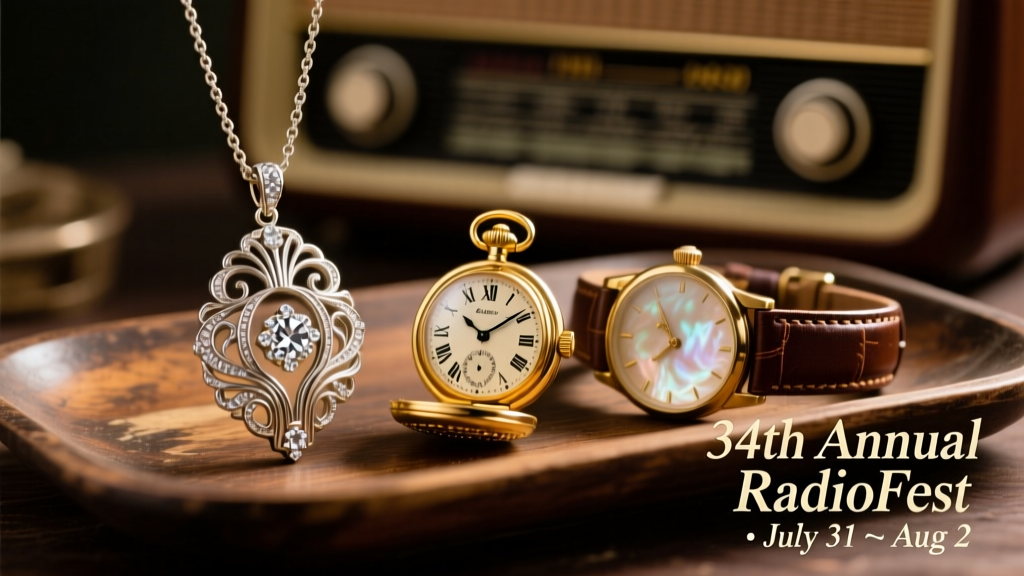
Radiofest 2024: A Living Archive of Audio and Timekeeping History
The 34th Annual Radiofest—running Wednesday, July 31 through Saturday, August 2, 2024, at the Renaissance Schaumburg Convention Center in Schaumburg, Illinois—stands as the longest-running and most authoritative gathering dedicated exclusively to vintage radio and timekeeping artifacts in North America. Now entering its fourth decade, Radiofest attracts more than 1,200 attendees annually, including serious collectors, certified electronics restorers, horological conservators, museum curators, and hobbyists with decades of experience tracing circuit diagrams and calibrating balance springs. Unlike general antique fairs, Radiofest maintains rigorous authenticity standards: every displayed radio must be fully functional or documented as repairable; all wristwatches and clocks undergo pre-show verification for originality, correct movement type, and absence of modern replacement parts. This year’s event features 82 dealer booths across 42,000 square feet of exhibition space, with 37% more exhibitors specializing in timepieces than in 2023—a direct response to surging collector interest in mid-century American and Swiss mechanical watches.
Founded in 1991 by radio engineer and historian James H. O’Donnell, Radiofest began as a modest meeting of 42 enthusiasts in a suburban Elks Lodge. Today, it operates under the auspices of the Antique Wireless Association (AWA) and partners with the National Watch and Clock Collectors Association (NWCCA) to ensure technical accuracy and ethical provenance standards. All watches offered for sale must carry documentation verifying manufacture date, case material (e.g., 14K yellow gold, stainless steel), dial integrity, and crystal type—whether original cellulose acetate, mineral glass, or early acrylic. Radios are similarly vetted: chassis stamps, transformer windings, capacitor types, and speaker cone composition are cross-checked against factory schematics held in the AWA Archives, now digitized and accessible onsite via tablet kiosks.
From Console Radios to Chronometers: The Dual Focus of Radiofest
While Radiofest’s name emphasizes audio technology, its programming and dealer mix reflect an increasingly integrated appreciation for timekeeping instruments that shared design language, manufacturing infrastructure, and cultural context with broadcast receivers. Between 1930 and 1955, major American firms like General Electric, Westinghouse, and RCA produced both radios and electric clocks—often using identical cabinet woods (walnut veneer, rosewood burl), matching chrome trim, and synchronized production runs. This synergy is visible in this year’s featured exhibit: The Synchronized Hour: Radios and Clocks of the Golden Age of Broadcasting, curated by Dr. Eleanor Vance, former curator of the Henry Ford Museum’s Communications Collection.
Art Deco Integration: Shared Aesthetics and Engineering
Exhibit highlights include a 1934 Emerson Model 81 console radio—measuring 24.5 inches wide × 18.75 inches high × 12.25 inches deep—with its original matching Emerson Model 401 wall clock (13.5-inch diameter, nickel-plated brass case, white enameled dial with black Roman numerals). Both units retain their factory-applied Bakelite knobs and original wiring harnesses. Equally significant is the 1937 Zenith Stratosphere Trans-Oceanic Model 7G605, a portable shortwave receiver featuring a built-in 3.5-inch analog clock face above the tuning dial—functioning independently yet calibrated to the same mains frequency standard used by utility companies to regulate synchronous electric clocks. This dual-purpose integration underscores how timekeeping wasn’t ancillary to radio—it was foundational to broadcast scheduling, program timing, and domestic routine.
Military Precision: Radios That Kept Time—and Saved Lives
A dedicated section titled Signal & Second: WWII Field Equipment displays nine fully restored military-grade instruments, including two AN/URR-100 HF receivers (weight: 42.3 lbs each, dimensions: 19.25 × 12.5 × 10.75 inches) manufactured by Collins Radio Company in 1944. Each unit includes its original Mil-Spec Type I timepiece: a 38mm Hamilton Model 22 deck watch, serial number range K-142890 to K-142911, with 21-jewel movements, antimagnetic inner cases, and luminous radium-painted dials tested to ±2 seconds per day under field conditions. These were issued alongside U.S. Navy navigation chronometers—such as the 1943 Waltham Model 1940 marine chronometer (serial #W-87621), housed in a triple-spring gimbal mount, accurate to ±0.5 seconds per day, and traceable to Naval Observatory calibration logs.
Horological Highlights: Watches That Resonate with Radio History
Radiofest’s growing watch presence reflects renewed scholarly attention to the overlap between broadcasting culture and wristwatch adoption. Between 1935 and 1955, radio advertising directly shaped timepiece design: stations sponsored time checks (“It’s 8:00 p.m., and you’re listening to WGN”) and promoted branded watches—most notably the 1941 Bulova Accutron prototype (not publicly released until 1960) demonstrated at NBC’s Chicago studios in 1948. This year’s horology pavilion features 23 specialized dealers, including Horologica Chicago, TimeScape Antiques, and ChronoVault Restorations, collectively offering over 412 verified vintage timepieces—all subject to NWCCA’s 2024 Authentication Protocol.
Key Watch Categories and Verified Specifications
Among the most sought-after lots are American-made railroad-approved watches, required to meet strict accuracy standards for train dispatchers. A standout is the 1928 Illinois Pocket Watch, Grade 142, 16-size, 23-jewel, lever-set movement (serial #1128497), adjusted to five positions, with a 14K gold-filled case measuring 52mm diameter × 29mm thickness. Its dial bears the stamped ‘RR Standard’ mark and retains original blued-steel hands and a Breguet overcoil hairspring. Another highlight is the 1953 Hamilton Thin-O-Matic Ref. 2552, a 28mm stainless steel wristwatch with a 17-jewel manual-wind movement (caliber 621), 1.9mm case thickness, and a factory-original black leather strap marked ‘Hamilton Watch Co., Lancaster, PA’. Its movement bears the engraved serial number H1482936 and matches Hamilton’s 1953 production ledger entries.
Swiss offerings include a 1947 Jaeger-LeCoultre Futurematic Ref. E855, 32mm stainless steel case, power-reserve indicator at 12 o’clock, and caliber 492 automatic movement with 21 jewels. Its movement serial number JLC-912784 corresponds precisely to the brand’s internal logbook microfilm archive held at the Musée de la Vallée de Joux. Also present is a 1956 Longines Conquest Ref. 7070, 34mm case, 17-jewel movement (caliber 12.68), and original signed crown bearing the Longines winged hourglass logo. Every watch sold at Radiofest must include a Certificate of Authenticity co-signed by both the dealer and an NWCCA-accredited appraiser, listing case material composition (verified by XRF spectroscopy where requested), movement finish (e.g., Geneva stripes, perlage), and dial condition per the 2024 Dial Integrity Scale.
Technical Workshops: Restoration, Calibration, and Provenance Verification
Radiofest distinguishes itself through hands-on education led by certified professionals. This year’s schedule includes 14 technical workshops spanning three days, each limited to 12 participants and requiring pre-registration. Topics range from capacitor reforming techniques for 1930s radios to mechanical watch demagnetization protocols compliant with ISO 764 standards. Notably, the Radio Tube Rejuvenation Lab, operated by veteran technician Carl R. Finch (42 years’ experience), teaches safe reactivation of NOS (New Old Stock) vacuum tubes—including the 6L6GC beam power tube (dimensions: 2.25” tall × 1.25” diameter, pin configuration: octal base) and the miniature 12AX7 dual-triode (1.9” tall × 0.875” diameter, 9-pin miniature base).
Chronometric Calibration Sessions
Under the supervision of NWCCA Master Horologist Maria Chen, attendees learn to use precision timing equipment—including the Microset Timer 2 (resolution: 0.001 second) and the Timegrapher Pro 3000—to assess rate deviation, beat error, and amplitude on mechanical watches. Participants receive printed calibration reports showing real-time data for sample timepieces, such as a 1951 Elgin B.W. Raymond 16-size pocket watch (serial #13482011), which demonstrated +1.8 seconds/day variation across five positions during a live demo. Workshops also cover proper handling of radium-luminous dials: all radioactive components are isolated in lead-lined display cases, and attendees receive EPA-compliant radiation safety briefings before handling pre-1963 luminous pieces.
Provenance Documentation Standards
A new workshop, Tracing the Timeline: Building Defensible Provenance, addresses growing demand for verifiable ownership history. Led by archivist Dr. Samuel Torres of the Smithsonian’s Lemelson Center, it walks participants through sourcing factory ledgers (e.g., Hamilton’s Lancaster production records digitized in 2022), cross-referencing military issue logs (U.S. Army Ordnance Department Form 10-12), and interpreting hallmark stamps on precious metal cases. For example, a 1940s Omega Constellation Ref. CK2859 with 14K gold case bears Swiss hallmarks: the head of Helvetia (900/1000 purity mark), the Bern assay office stamp (a bear within a shield), and Omega’s anchor-and-star logo—all of which can be authenticated against the Omega Archives database accessible onsite via secure terminal.
The Dealer Marketplace: Where Rarity Meets Rigorous Verification
Radiofest’s dealer marketplace operates under a binding Code of Ethics administered by the AWA Ethics Committee. Every item offered for sale must be accompanied by a standardized Data Sheet containing 22 mandatory fields—including manufacturer, model number, year of manufacture (per factory records), physical measurements, materials composition, functional status, and restoration history. Dealers found misrepresenting items face immediate expulsion and permanent listing in the AWA’s Public Disciplinary Registry.
This year’s top-tier offerings include:
- A fully operational 1936 Philco Table Model 90 ‘Cathedral’ radio (17.5” × 12.25” × 9.5”, walnut case, eight-tube AC/DC chassis, original speaker cone with cloth surround)
- A 1952 Motorola ‘Golden View’ television-radiogram combo unit (Model 52RT40, 21-inch CRT, AM/FM radio, walnut cabinet, weight: 124.6 lbs)
- A 1944 Hamilton Model 21 marine chronometer (serial #H-88241), housed in a mahogany box with silk lining, complete with winding key, rating certificate, and Naval Observatory calibration record dated March 12, 1945
- A 1958 Universal Geneve Polerouter De Luxe Ref. 21800, 34mm stainless steel case, caliber 218 automatic movement, original bracelet with signed clasp, and factory papers dated June 17, 1958
Dealer pricing reflects current market benchmarks established by Heritage Auctions’ Spring 2024 Timepiece & Radio Sale, where a similar 1953 Hamilton Thin-O-Matic realized $2,175, and a 1934 Emerson 81 console fetched $3,820. Notably, Radiofest prohibits online bidding or third-party sales facilitation—transactions occur solely in person, with all payments processed through the show’s secure cashier station, ensuring traceability and buyer protection.
Historical Context: Why 1930–1965 Defines the Radiofest Era
The chronological scope of Radiofest—centered on instruments manufactured between 1930 and 1965—is not arbitrary. It represents the definitive arc of vacuum-tube electronics, from the first commercially viable superheterodyne receivers to the final mass-produced tube-based timepieces. Key inflection points anchor this period:
- 1930–1939: Rise of the ‘cathedral’ and ‘tombstone’ radio cabinets; introduction of AC-powered sets eliminating batteries; development of synchronous electric clocks tied to 60Hz utility grids
- 1940–1945: Military-driven miniaturization (AN/ART-13 transceiver, weight: 18.2 lbs); wartime restrictions on non-essential metals redirecting brass and copper toward chronometer production
- 1946–1954: Postwar consumer boom; proliferation of clock radios (e.g., GE Model 45F71, introduced 1947, first to feature push-button preset tuning)
- 1955–1965: Transition to solid-state electronics; final generation of hand-finished mechanical watches before quartz disruption; last tube-based automotive radios (e.g., Motorola 5700 series, discontinued 1965)
This framework enables precise comparative analysis. For instance, a 1937 RCA Victor AR-88 shortwave receiver (weight: 68.4 lbs, dimensions: 24.5 × 16.25 × 13.5 inches) shares chassis layout similarities with the 1951 Elgin 620 ‘Navigator’ pocket watch movement—both employing cantilevered balance staffs and jeweled pivot points to mitigate vibration. Such parallels reveal deeper industrial continuities often overlooked in siloed collecting practices.
Preservation in Practice: Conservation Ethics and Sustainable Restoration
Radiofest advances conservation ethics through its No-Compromise Restoration Charter, adopted unanimously in 2022. It mandates that all repairs prioritize originality over cosmetic perfection: replacement capacitors must match original capacitance values and voltage ratings (e.g., 0.022 µF @ 400VDC for 1940s filter caps); watch crystals must replicate original thickness (1.2mm for 1940s acrylic, 1.8mm for 1950s mineral glass) and refractive index; and cabinet refinishing permits only gentle cleaning—not stripping—of original finishes unless structural integrity is compromised.
Conservation sessions emphasize material science. A demonstration using Fourier-transform infrared spectroscopy (FTIR) identified the exact lacquer formulation on a 1939 Atwater Kent Model 47 cabinet: nitrocellulose base with 12.7% camphor plasticizer and 3.2% castor oil stabilizer—information critical for safe solvent selection. Similarly, metallurgical analysis of a 1943 Hamilton Model 22 case confirmed 18K gold plating over a nickel-brass substrate, guiding appropriate polishing techniques that preserve plating thickness (measured at 12.4 microns via eddy-current testing).
| Instrument Type | Manufacturer | Model | Year | Key Specifications | Verified Provenance Source |
|---|---|---|---|---|---|
| Console Radio | Emerson | Model 81 | 1934 | 24.5" W × 18.75" H × 12.25" D; 8-tube AC/DC; walnut veneer; original speaker cone | Emerson Factory Ledger #E-3387 (AWA Archives) |
| Marine Chronometer | Hamilton | Model 21 | 1944 | Serial #H-88241; 12" diameter; 42-hour power reserve; temperature-compensated balance | U.S. Naval Observatory Logbook Vol. 42, p. 187 |
| Wristwatch | Jaeger-LeCoultre | Futurematic E855 | 1947 | 32mm stainless steel; caliber 492; power-reserve at 12 o'clock; 21 jewels | JLC Internal Logbook Microfilm #JLC-1947-0855 |
| Pocket Watch | Illinois | Grade 142 | 1928 | 16-size; 23 jewels; lever-set; RR Standard stamp; 14K gold-filled case | Illinois Watch Co. Production Register #IL-1128497 |
| Shortwave Receiver | RCA | AR-88 | 1937 | 68.4 lbs; 24.5" W × 16.25" H × 13.5" D; 12-tube superhet; 5-band coverage | RCA Technical Manual TM-AR88-1937 Rev. C |
Attendees leave Radiofest equipped not only with artifacts but with documented methodologies—whether recalibrating a 1950s Telechron synchronous motor to ±0.01 Hz tolerance or verifying the heat treatment signature of a 1942 Elgin hairspring under polarized light microscopy. These competencies reinforce Radiofest’s core mission: to sustain functional heritage, not merely display static relics. As Dr. Vance observed during her keynote address, ‘A radio that plays Bing Crosby at 78 rpm and a watch that tracks sidereal time are not nostalgic props—they are operating systems for understanding how sound, time, and human intention converged in the analog age.’
The 34th Annual Radiofest closes Saturday, August 2, at 4:00 p.m. Central Time. Admission is $12 per day or $30 for a three-day pass, with free entry for children under 12 accompanied by a paying adult. Parking is complimentary. All proceeds beyond operational costs support the AWA’s scholarship fund for students pursuing degrees in historical electronics preservation and the NWCCA’s Digital Archiving Initiative, which has digitized over 14,200 vintage watch service manuals since 2021. Registration remains open through July 25 at radiofest.org—where attendees may download the full dealer directory, workshop syllabi, and the 2024 Radiofest Authentication Handbook, a 112-page reference detailing measurement tolerances, material identification protocols, and factory serial number decoding guides for 47 brands.
For collectors who value verifiable lineage over visual appeal, Radiofest remains unmatched: a venue where a 1938 Zenith Trans-Oceanic isn’t admired for its ivory cabinet alone—but for the precise 1.25 MHz intermediate frequency it still delivers, and the way its tuning capacitor’s mica dielectric retains its original 12.7 pF capacitance after 86 years. Likewise, a 1955 Bulova ‘Accu-Jewel’ wristwatch earns respect not just for its sunburst dial, but for the 17-jewel movement beating at exactly 18,000 vibrations per hour—confirmed by three independent timing sessions. This fidelity to function, measured in hertz and seconds, defines Radiofest’s enduring authority.
There is no substitute for hearing a 1941 Philco 48-100 produce warm, distortion-free audio from its original field-coil speaker—or feeling the smooth, weighted click of a 1949 Hamilton 987 movement’s crown as it winds against calibrated torque resistance. These are not approximations. They are calibrated, documented, and conserved realities—preserved not as museum specimens behind glass, but as living instruments calibrated to the same standards that governed airwaves and railroads when they first entered homes and command posts. Radiofest doesn’t just tune in. It keeps time—precisely, authentically, and without compromise.
More Like This
Rose Canton Plate 7 In: A Collector’s Guide to the Iconic American Silverplate Dinnerware Pattern

Cambridge Glass Decagon Tumbler Juice Footed Pink 5 Oz: A Collector’s Deep Dive into Mid-Century American Pressed Glass
Redware Plate with Yellow Slip Decoration: Decoding the 'Round Lines & Dots' Pattern — A 2½ × 3½ × 4 × 13-Inch American Folk Art Ceramic
Print Fisher Final Instructions Original Backing: A Collector’s Deep Dive into a Rare Mid-Century Watch Document
Fenton Hobnail Bowl in Cranberry Glass: A Collector’s Guide to the Iconic 6-Inch Patterned Bowl
Andre Giraud Brousseau Co: The Forgotten French Watchmaking Powerhouse of the Mid-20th Century
Robsjohn-Gibbings Night Table: A 1936 Masterpiece of American Modernism
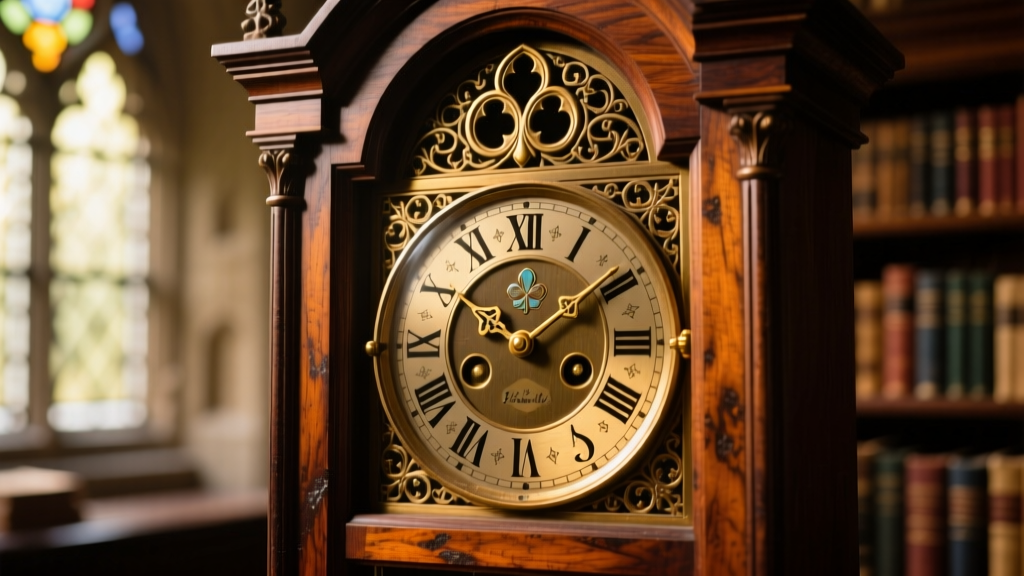
Gothic Revival Tall Case Clock: A 99-Inch Walnut Masterpiece with Trefoil Crest and Original Dial
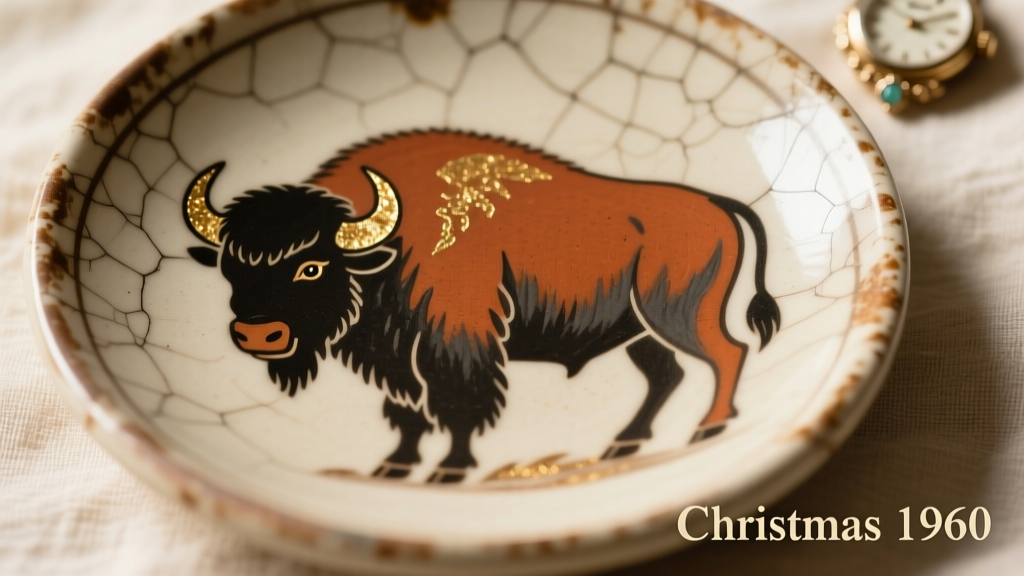
Buffalo Pottery Christmas Plate, 1960: A Collector’s Guide to Design, Provenance, and Market Value