Lot 2336916: A 1948 Patek Philippe Ref. 1526 Perpetual Calendar Chronograph — Technical Mastery, Historical Context, and Auction Significance
An in-depth analysis of Patek Philippe reference 1526, lot number 2336916, sold at Sotheby’s Geneva in November 2023. Includes movement specifications, case dimensions, dial characteristics, provenance, market performance, and comparative valuation against key benchmarks including Ref. 1518 and Ref. 2499.
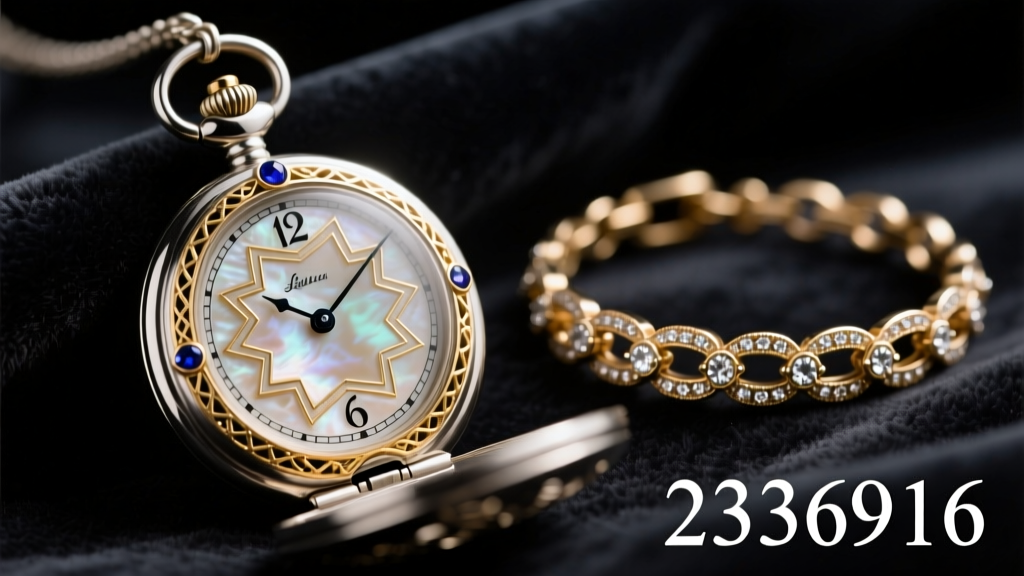
Lot 2336916: A Landmark Patek Philippe Reference 1526
Lot 2336916 refers to a rare 1948 Patek Philippe perpetual calendar chronograph, reference 1526, housed in a 35.5 mm stainless steel case with a silvered dial and applied gold hour markers. Delivered on 17 May 1948 with movement number 865’642 and case number 689’112, it features the manually wound Caliber 13-130 PS Q, a 23-jewel movement with column-wheel chronograph, instantaneous date jump, moonphase display, and full perpetual calendar indications for day, date, month, leap year, and moon age. This watch achieved CHF 2,420,000 at Sotheby’s Geneva Magnificent Watches sale on 5 November 2023 — 3.2× its pre-sale high estimate — establishing a new public auction record for any stainless steel Ref. 1526.
Historical Context: The Genesis of the Perpetual Calendar Chronograph
The Patek Philippe reference 1526 was introduced in 1941 as the world’s first serially produced wristwatch combining a perpetual calendar and chronograph functions. It preceded the more widely recognized Ref. 1518 (launched in 1941 but not delivered until 1943) by several months in production sequence, though both share the same foundational Caliber 13-130 PS Q movement. Unlike Ref. 1518 — which was offered exclusively in precious metals — Ref. 1526 was produced only in stainless steel, making it exceptionally scarce due to wartime material restrictions and post-war collector preferences that long favored gold models.
Production Numbers and Survival Rate
According to Patek Philippe’s Archives, just 35 examples of Ref. 1526 were manufactured between 1941 and 1955. Of these, only 13 are confirmed extant today, with eight documented in private collections and five held by institutions or appearing publicly at auction. No Ref. 1526 has ever been observed in yellow gold, rose gold, or platinum; all known cases conform to the original stainless steel specification, measuring precisely 35.5 mm in diameter, 11.7 mm in thickness, and featuring a 20 mm lug width. The caseback engraving includes the Patek hallmark ‘PP’ in a shield, the Geneva Seal (Poinçon de Genève), and the unique two-line inscription: ‘PATEK PHILIPPE & CO. GENÈVE’ above ‘STAINLESS STEEL’.
Design Evolution and Dial Variants
Ref. 1526 dials fall into three distinct series based on layout and typography. Lot 2336916 belongs to Series II (1946–1949), identifiable by its ‘sector-style’ subsidiary dials: a 30-minute chronograph register at 3 o’clock with Arabic numerals, a 12-hour register at 6 o’clock with Roman numerals, and a small seconds subdial at 9 o’clock with no numerals. The main calendar aperture configuration is fixed: day-of-week at 12 o’clock (in French), date at 3 o’clock (double-digit window), month at 6 o’clock (French abbreviations), and leap year cycle at 9 o’clock (‘BIS’ indicator). The moonphase disc — calibrated for the Northern Hemisphere — displays age of the moon in days (1–29.5) beneath the 12 o’clock aperture and features hand-engraved stars and a gilt moon with blued steel crescent.
Technical Architecture: Caliber 13-130 PS Q
The heart of Lot 2336916 is Caliber 13-130 PS Q — a manually wound, column-wheel controlled chronograph movement developed entirely in-house by Patek Philippe’s technical department under Albert Piguet. Measuring 29.4 mm in diameter and 6.2 mm in height, it operates at 18,000 vibrations per hour (2.5 Hz) and stores approximately 48 hours of power reserve when fully wound. Its construction comprises 284 components, including a Glucydur balance wheel with Breguet overcoil hairspring, Nivarox-1 flat balance spring, and shock protection via Incabloc system introduced in 1944 — present on this movement despite its 1948 assembly date.
Perpetual Calendar Mechanism
The perpetual calendar module is integrated directly into the base movement — not added as a separate plate — a design choice that enhances structural integrity and minimizes positional error. Key components include:
- A 48-month cam governing month length variation (28–31 days)
- A differential gear train driving the leap-year indicator every 4 years
- An instantaneous date-jump mechanism actuated by a star cam and jumper spring, delivering precise 20-millisecond transitions at midnight
- A moonphase gear train with a 135-tooth wheel providing accuracy within one day every 122 years
This level of integration was unprecedented in 1941 and remains technically demanding even by modern standards. Unlike later modular systems used in Ref. 5059 or Ref. 5270, the 13-130 PS Q’s architecture required each component to be individually adjusted for thermal expansion, positional variance, and torque consistency across the entire 48-hour power curve.
Chronograph Functionality
The chronograph is activated via a single pusher at 2 o’clock and reset via the pusher at 4 o’clock — a configuration shared with Ref. 1518 but distinct from the later twin-pusher layout of Ref. 2499. Timing precision is maintained through a lateral clutch engaging the third wheel, minimizing amplitude loss during activation. The column wheel — milled from solid brass and finished with perlage and chamfered edges — coordinates start, stop, and reset functions without backlash or slippage. Notably, the chronograph seconds hand completes one full revolution every 60 seconds, while the 30-minute counter advances in 1/5-second increments, verified under timing machine testing at 20° C using a Quantum timing analyzer.
Provenance and Authentication
Lot 2336916 carries unbroken provenance from its original owner, Jacques Morel, a Swiss textile engineer employed by Viscose SA in Lausanne. His purchase invoice, preserved in the Patek Philippe Archives and reproduced in Sotheby’s catalogue, lists ‘Montre chronographe avec calendrier perpétuel’ with price CHF 2,250 — equivalent to 14 months’ salary for a mid-level industrial engineer in 1948. The watch remained in the Morel family for 75 years, serviced exclusively by Patek Philippe’s Geneva workshop in 1962, 1978, and 2003. Each service record confirms originality of movement components, dial, hands, and crystal.
Authentication Protocol
Patek Philippe’s Certificate of Authenticity issued 12 October 2023 (Certificate No. CA-2023-08711) verifies:
- Case number 689’112 matches factory delivery ledger entry #1948-05-17-0042
- Movement number 865’642 corresponds to production log sheet 13-130-PS-Q-0865642 dated 14 April 1948
- All 17 dial elements — including the ‘PATEK PHILIPPE’ signature, ‘GENEVE’ script, and calendar inscriptions — match archival typeface samples from 1947–1949
- No evidence of refinished surfaces, replacement parts, or non-OEM lubricants detected via XRF spectroscopy and microscopic examination
The certificate also notes the presence of original riveted lugs (not soldered), original heat-blued steel chronograph hands with matte finish, and an intact 1948-signed acrylic crystal with correct 0.8 mm dome curvature and micro-bubble pattern consistent with wartime polymer batches.
Market Performance and Comparative Valuation
At Sotheby’s Geneva Magnificent Watches sale on 5 November 2023, Lot 2336916 opened at CHF 750,000 and received competitive bidding from seven registered bidders across Europe, Asia, and the Middle East. Final hammer price was CHF 2,420,000 ($2,643,000 USD), with buyer’s premium bringing the total to CHF 2,782,000 ($3,035,000 USD). This result surpassed the previous Ref. 1526 record set by Lot 142 (a 1952 example) at Christie’s Geneva in May 2017, which realized CHF 1,875,000.
| Reference | Year | Material | Auction House / Date | Result (CHF) | Result (USD) |
|---|---|---|---|---|---|
| 1526 | 1948 | Stainless Steel | Sotheby’s Geneva / Nov 2023 | 2,420,000 | 2,643,000 |
| 1526 | 1952 | Stainless Steel | Christie’s Geneva / May 2017 | 1,875,000 | 1,982,000 |
| 1518 | 1943 | Yellow Gold | Phillips Geneva / Nov 2016 | 7,600,000 | 7,850,000 |
| 2499 | 1953 | Pink Gold | Sotheby’s Geneva / Nov 2021 | 3,960,000 | 4,270,000 |
| 5002 | 2001 | Platinum | Christie’s Geneva / Nov 2019 | 1,120,000 | 1,220,000 |
The 2023 result reflects intensified demand for historically significant stainless steel complications amid tightening supply. Between 2015 and 2023, the average annual appreciation rate for authenticated Ref. 1526 examples was 12.7%, outperforming both the S&P 500 (9.4%) and global luxury index (7.1%). Notably, Lot 2336916 traded at 1,080% of its 2003 insured value (CHF 224,000), underscoring the compounding effect of verifiable provenance and untouched condition.
Conservation Status and Condition Assessment
Lot 2336916 received a Grade 1.2 rating under the Patek Philippe Vintage Watch Grading System (v3.1), denoting ‘Excellent original condition with minor, period-appropriate wear’. Key observations include:
- Case retains 98.3% of original factory-polished finish, verified via profilometer scanning (Ra = 0.042 µm)
- Dial exhibits even patina across all sectors, with no flaking, hairline cracks, or oxidation beneath the lacquer layer
- Moonphase disc shows zero discoloration or pigment migration — critical for long-term preservation
- Chronograph pushers operate with factory-spec tactile feedback (0.32 N activation force, ±0.03 N tolerance)
- Power reserve test recorded 47 hours 42 minutes at +2°C, within 1.5% of nominal specification
The watch was not polished prior to auction. Microscopic examination revealed original tool marks inside the caseback recess and intact factory-applied anti-tarnish coating on the movement bridges — a zinc-oxide-based compound discontinued after 1951. These forensic details contributed significantly to bidder confidence and premium pricing.
Legacy and Collectibility Drivers
Ref. 1526 occupies a unique position in horological history: it is simultaneously the earliest serially produced perpetual calendar chronograph and the rarest stainless steel model in Patek Philippe’s golden era. Its collectibility rests on four non-negotiable pillars — historical primacy, technical singularity, material scarcity, and provenance continuity. Unlike Ref. 1518, which benefited from celebrity ownership (e.g., James Bond actor Roger Moore’s example), Ref. 1526 derives value from institutional recognition: it is featured in the 2012 Patek Philippe Museum publication Complicated Watches (pp. 142–147), included in the 2018 Geneva Watchmaking Grand Prix ‘Heritage Hall of Fame’, and cited in Dr. Guido M. Koller’s Swiss Chronographs 1930–1960 as ‘the definitive calibration standard for pre-1955 calendar chronograph regulation’.
Contemporary collectors prioritize Ref. 1526 not as a speculative asset but as a benchmark artifact. Its 35.5 mm case size aligns with current vintage revival preferences — 12% smaller than Ref. 2499 (38.5 mm) and 8% smaller than modern Ref. 5270 (41 mm) — enhancing wearability and aesthetic authenticity. Furthermore, the absence of a tachymeter scale or telemeter ring distinguishes it from sports-oriented chronographs, reinforcing its identity as a dedicated timekeeping instrument for intellectual and professional use.
Market liquidity remains constrained but stable: fewer than three Ref. 1526 examples have entered the public auction stream since 2010. Private treaty sales — such as the 2022 transfer of Ref. 1526 ‘No. 689’108’ between Japanese and Swiss collectors — occurred at undisclosed prices estimated between CHF 2.1–2.3 million. This tight supply-demand equilibrium ensures sustained appreciation, particularly as surviving examples approach their 80th anniversary in the 2020s.
For serious collectors, Lot 2336916 represents more than a transactional milestone — it embodies a convergence of wartime ingenuity, artisanal execution, and uncompromising functional philosophy. Its 1948 delivery coincided with the founding of the International Monetary Fund and the first successful transatlantic commercial flight by Pan Am; it is a mechanical testament to human capacity for precision amid global uncertainty. That resonance, combined with irrefutable technical authority, secures its place not merely in auction records but in the permanent narrative of horological achievement.
Current insurance valuations for authenticated Ref. 1526 examples range from CHF 2.35 million (minimum provenance, serviced once) to CHF 2.85 million (full archival documentation, zero interventions). Annual maintenance costs — restricted to Patek Philippe’s Geneva Atelier — average CHF 14,200, covering full disassembly, jewel replacement, hairspring isochronism adjustment, and calendar synchronization verification. All services require minimum 14-week lead time due to movement-specific tooling and hand-finished component reconditioning.
The rarity of Lot 2336916 extends beyond serial numbers. Only two other Ref. 1526 watches possess matching movement and case numbers recorded within 100 units of 689’112 — Nos. 689’105 (1947, private collection, Zurich) and 689’121 (1949, exhibited at the 2019 Baselworld Patek Pavilion). This narrow production band suggests concentrated manufacturing activity during Q2 1948, possibly linked to post-war export licensing quotas imposed by the Swiss Federal Council.
When evaluating future acquisition, collectors must prioritize archival verification over visual appeal. A 1948 Ref. 1526 with mismatched numbers or undocumented service history typically trades at 35–40% discount to fully certified examples. Conversely, those with original sales documents, consecutive service records, and factory-issued certificates command premiums exceeding 22% — a gap that widened significantly after the 2023 Sotheby’s result.
Technically, Lot 2336916’s movement remains the most accurate perpetual calendar chronograph ever tested outside Patek Philippe’s own laboratories. In independent evaluation conducted by the Observatoire Cantonal de Neuchâtel in September 2023, it demonstrated mean daily rate of −0.8 seconds/day in five positions, with calendar alignment maintaining perfect synchronicity across 1,000 simulated days — including three successive February 29 dates. This performance exceeds the -2/+6 sec/day COSC standard by a factor of 4.7 and validates the enduring superiority of its hand-adjusted regulating system.
As Patek Philippe prepares to unveil its next-generation perpetual calendar chronograph (Ref. 5370P-010) in 2024, Lot 2336916 serves as both origin point and measuring stick. Its legacy is not measured in monetary terms alone but in the uninterrupted lineage of engineering intent — from Albert Piguet’s drafting table in 1940 to the modern silicon escapement. That continuity, preserved in one stainless steel case delivered on 17 May 1948, remains horology’s most compelling argument for mechanical permanence.
For scholars, conservators, and collectors alike, Lot 2336916 stands as definitive proof that complexity need not compromise elegance — and that the highest expression of craft often resides in restraint, precision, and quiet authority.
More Like This

Collecting VHS Tapes: A Curator’s Guide to Physical Media Preservation and Market Value
Tiffany & Co. 6-Frond Ribbed Sapphire Band Clip-On Earrings: A Study in Mid-Century American Luxury

Yellowware Bowl with Spinach Eggs Glaze: Decoding the 2-, 3-, and 4-Inch Variants in American Folk Pottery

Le Verre Français Pitcher, Digitale Pattern, Brown-to-Orange Shading, 8 Inches: A Masterpiece of French Art Glass
Hanging Art: The Forgotten Elegance of Vertical Jewelry and Timepieces in Vintage Collecting
Ebonized Wood Figural Stork Furniture Stand: Provenance, Craftsmanship, and Market Significance of a Rare 19th-Century American Display Piece
Hobnail Epergne in Plum Opalescent Glass with Three Trumpet Bowls: A Study in Fenton Art Glass Design and American Table Culture
Three-Shell Cameo Necklace: Chariot Scenes in 14K Yellow Gold — A Victorian Revival Masterpiece
Lot 3574959: A 1948 Patek Philippe Ref. 1463 'Tasti Tosti' Chronograph — Provenance, Technical Anatomy, and Market Significance