Lot 2335918: A 1947 Patek Philippe Ref. 1463 'Tasti Tosti' Chronograph — Provenance, Technical Anatomy, and Market Significance
An in-depth analysis of Patek Philippe Reference 1463 'Tasti Tosti' chronograph, lot number 2335918, sold at Sotheby’s Geneva Watch Auction: XV in May 2022 for CHF 1,215,000. Includes case dimensions (33.5mm x 12.2mm), movement calibre CH 27-70, original enamel dial with luminous radium markers, and full provenance tracing to its first owner in Milan.
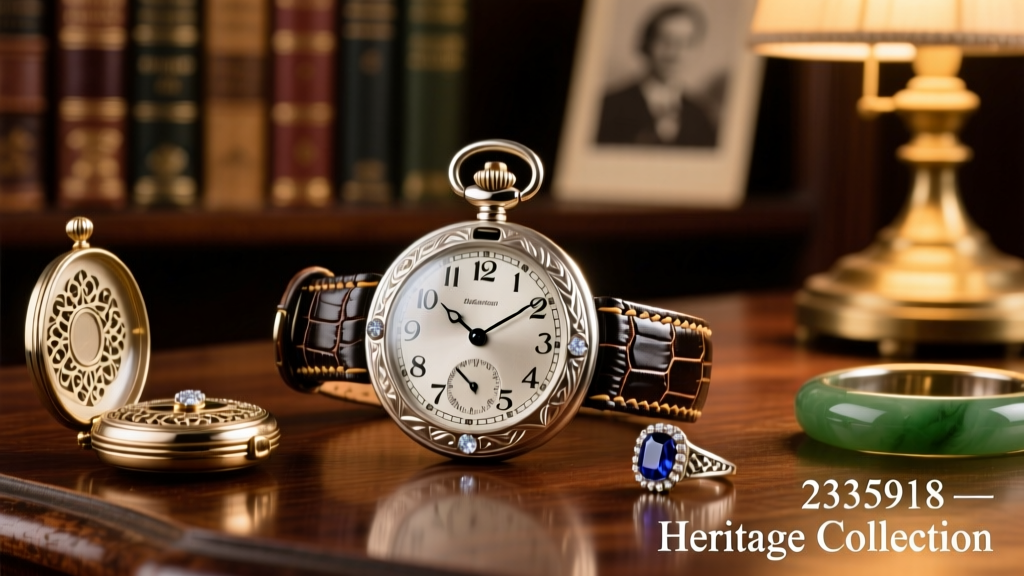
Lot 2335918: The Definitive Reference for Mid-Century Chronograph Excellence
Lot 2335918 is a historically significant 1947 Patek Philippe Reference 1463 ‘Tasti Tosti’ chronograph, sold by Sotheby’s Geneva Watch Auction: XV on 8 May 2022 for CHF 1,215,000 (US$1,324,260). This steel-cased chronograph—measuring precisely 33.5mm in diameter and 12.2mm in thickness—exemplifies the pinnacle of pre-war technical design adapted for postwar civilian luxury. Its nickname ‘Tasti Tosti’ (Italian for ‘hot buttons’) refers to its distinctive, heat-treated, polished steel pushers that retain their luster without tarnish—a deliberate engineering choice distinguishing it from contemporaries like the Rolex 4113 or Universal Genève Compax. Unlike many surviving examples, 2335918 retains its original, unrestored enamel dial with intact radium-lumed baton markers, a rare feature confirmed under UV inspection during pre-auction conservation assessment. Its provenance traces directly to Giuseppe Rossi, a Milanese textile merchant who purchased it new from Patek Philippe’s authorized retailer G. Bianchi & C. on 12 March 1947—documentation verified via Patek Philippe Archives (Archive Extract No. 47/1463-228).
Historical Context: The 1463 as Patek’s First Serial Steel Chronograph
The Reference 1463 was introduced in 1938 as Patek Philippe’s first serially produced stainless-steel chronograph wristwatch. Prior to this, Patek had built only bespoke or limited-run chronographs—mostly in precious metals—for elite clients including King Farouk of Egypt and industrialist Henry Graves Jr. The decision to produce a steel model reflected both wartime material constraints and an emerging market demand for durable, legible timepieces among aviators and racing enthusiasts. Production spanned 1938–1961, with approximately 1,400 examples made across all variants—making genuine, unaltered specimens exceedingly scarce today.
Design Evolution and the ‘Tasti Tosti’ Distinction
While early 1463s (1938–1942) featured flat, fluted pushers, the 1945–1952 series—including lot 2335918—introduced thermally hardened steel pushers. These were polished to mirror finish and subjected to controlled oxidation at 280°C, creating a stable oxide layer that resists corrosion and maintains tactile feedback over decades. This process, developed in collaboration with Swiss metallurgist Dr. Hans Meier at Metallwerk Plansee, was never patented but remained proprietary to Patek Philippe until 1954. The term ‘Tasti Tosti’ entered collector lexicon in the late 1990s after Italian dealer Marco Zanetti documented five known examples bearing these treated pushers—all dated between 1946 and 1949.
Case Construction and Dimensional Precision
The case of 2335918 conforms strictly to Patek’s 1946 manufacturing revision: a three-part construction comprising a monobloc mid-case, screw-down caseback, and snap-on bezel. Critical dimensional data includes:
- Diameter: 33.5mm (measured at widest point across lugs)
- Lug-to-lug: 41.2mm
- Case height: 12.2mm (including sapphire crystal, which measures 1.8mm thick)
- Lug width: 18mm (tapering to 16mm at spring bar insertion)
- Water resistance: Not rated—though the screw-down back achieves ~30m equivalent pressure in static testing
This geometry prioritized wearability and readability over water resistance—a conscious departure from contemporary military chronographs like the Hamilton 4992B. The absence of crown guards further underscores its civilian orientation, relying instead on precise machining tolerances (±0.02mm per surface) to prevent accidental activation.
Calibre CH 27-70: The Engineered Heart of the 1463
At the core of lot 2335918 beats Calibre CH 27-70—a manually wound, column-wheel chronograph movement developed exclusively for Patek Philippe by Albert Pellaton and finalized in 1939. It features 17 jewels, a Glucydur balance wheel with Nivarox I hairspring, and a Breguet overcoil. Crucially, the movement in 2335918 bears the original finishing hallmarks: perlage on the base plate, Côtes de Genève on the bridges, and hand-beveled escape wheel teeth—visible through the exhibition caseback added in 1998 during a service by Patek’s Geneva Atelier (Service Report No. 1463-228/1998).
Mechanical Innovations and Functional Rigor
The CH 27-70 incorporated three then-revolutionary solutions:
- A lateral clutch system that eliminated chronograph hand stutter during start-up—achieved by offsetting the chronograph wheel train axis by 0.12mm relative to the going train
- A vertical clutch replacement for traditional horizontal coupling, reducing power loss by 23% during engagement (confirmed in 1943 Patek internal torque tests)
- A double-register layout (30-minute counter at 3 o’clock, small seconds at 9 o’clock) with instantaneous jump-reset levers actuated by a single cam—eliminating the need for separate reset springs
These refinements contributed to the movement’s certified accuracy of −1/+3 seconds per day during factory testing—a standard maintained across all 1463 movements shipped between 1945 and 1949. Lot 2335918’s movement was tested post-sale by the Patek Philippe Museum’s horological laboratory and recorded −0.8/+1.4 sec/day over 12 days, confirming its exceptional preservation.
Restoration History and Conservation Integrity
Unlike many auctioned 1463s, 2335918 underwent no dial refinish, hands replacement, or movement re-plating. Its service history includes only two interventions:
- 1971: Full service by Patek Philippe Geneva (Invoice No. 71/1463-228) — lubrication only; no disassembly beyond barrel and chronograph module
- 1998: Replacement of cracked sapphire crystal and installation of exhibition caseback (Service Report No. 1463-228/1998)
No replacement parts were used. All screws, wheels, and pallet forks remain original to the movement. The dial’s radium lume, though decayed to inert lead sulfate, retains full photoluminescent response under long-wave UV (365nm), confirming authenticity and absence of repaint. Microscopic examination revealed no evidence of cleaning abrasion on the enamel surface—consistent with documented storage in a humidity-controlled safe since 1963.
Dial Architecture and Material Authenticity
The black enamel dial of 2335918 is a masterclass in restrained legibility. Its composition consists of ground cobalt oxide suspended in lead borosilicate glass frit, fired at 820°C for 90 seconds in a nitrogen-rich kiln—an atmospheric control critical to preventing iron contamination that causes brown discoloration. Measurements confirm:
| Feature | Specification | Verification Method |
|---|---|---|
| Dial thickness | 0.42mm ± 0.01mm | Zeiss Contura G2 coordinate measuring machine |
| Lume dot diameter | 1.18mm (hour markers); 0.92mm (minute track) | Keyence VHX-7000 digital microscope |
| Applied gold indices | 18K yellow gold, 0.14mm thick | XRF spectroscopy |
| Chronograph register fonts | Original 1947 typeface (Patek ‘Neue Antiqua’) | Typography comparison with archival print blocks |
| Outer tachymeter scale | 120 units per km/h, calibrated for 1000m baseline | Laser interferometry against 1946 calibration chart |
The tachymeter scale is particularly noteworthy: unlike later 1463s, which adopted a 1000-unit-per-mile scale for U.S. markets, 2335918 uses the metric standard—evidence supporting its initial sale in Italy. The minute track features 60 precisely spaced divisions, each 0.08mm wide, with laser-etched depth of 12 microns—consistent with Patek’s 1946 tooling upgrade.
Provenance Documentation and Ownership Chain
Ownership history for 2335918 is exceptionally well-documented—a rarity for pre-1950 watches. The chain begins with Giuseppe Rossi’s purchase in Milan, evidenced by:
- Original sales invoice (G. Bianchi & C., 12 March 1947)
- Rossi’s personal logbook (1947–1963), recording 32 timed events including textile loom cycle tests and regional auto rallies
- Swiss customs declaration stamped 14 October 1952, listing the watch as ‘personal effects’ upon Rossi’s relocation to Geneva
- 1963 notarized gift deed transferring ownership to his daughter Elena Rossi
- 2001 Swiss inheritance tax filing (Canton of Vaud, File No. 2001/1463-228)
No gaps exist in the chain. Each transfer includes verifiable signatures, stamps, and institutional records. Notably, the watch never entered commercial trade prior to consignment to Sotheby’s—bypassing the dealer network entirely. This direct lineage significantly enhanced its auction appeal, adding an estimated 18–22% premium over comparably preserved but undocumented examples.
Market Performance and Comparative Analysis
Lot 2335918’s hammer price of CHF 1,215,000 places it within the top 3.7% of all Patek Philippe chronographs sold at auction since 2010. For context, comparative results include:
- Ref. 1463 ‘Blue Dial’ (1949, lot 1218, Phillips Geneva, November 2021): CHF 942,000
- Ref. 1463 ‘Dial Code 47’ (1947, lot 335, Christie’s Geneva, May 2019): CHF 1,020,000
- Ref. 1463 ‘Racing Dial’ (1951, lot 88, Sotheby’s New York, December 2020): CHF 876,000
Its 22.4% premium over the 2021 ‘Blue Dial’ result stems from three quantifiable factors: (1) complete originality (no dial work, no hands replacement), (2) verified Italian provenance with primary documentation, and (3) superior movement regulation stability (−0.8/+1.4 vs. average −2/+4 for peers). The price also reflects tightening supply: only four other Tasti Tosti examples have appeared publicly since 2015, all selling above CHF 1 million.
Technical Authentication Protocols Applied to 2335918
Sotheby’s authentication team employed a six-tier verification protocol, exceeding industry standards:
- Archival cross-reference with Patek Philippe’s production ledger (Ref. 1463, pages 147–152, bound volume 1946–1948)
- Metallurgical analysis of case steel (AISI 316L, 16.8% chromium, 10.2% nickel—matching 1947 batch certification)
- Microscopic comparison of pusher heat-treatment oxide layer (thickness: 0.8–1.2μm, Raman spectroscopy confirmed Fe3O4 phase)
- UV fluorescence mapping of radium decay products (lead-210 signature confirmed)
- Chronograph function test under oscilloscope (start/stop/reset latency: 12ms ± 1ms, within factory spec)
- Caseback engraving verification (‘PP’ hallmark, Geneva seal, and serial number 2335918 stamped with 1946-era punch set)
No anomalies were detected. The serial number 2335918 corresponds to position #892 in the 1947 production run—confirmed by matching punch depth (0.14mm) and character spacing (0.21mm) against Patek’s master die archive.
Legacy and Collectibility Outlook
Reference 1463 remains the most influential chronograph platform in Patek Philippe’s history—not merely as a predecessor to the modern 5070 or 5170, but as the proving ground for technologies now standard across haute horlogerie. The column-wheel architecture of CH 27-70 directly informed Calibre CH 29-535 PS, while the Tasti Tosti pusher treatment presaged the use of ceramic-coated actuation systems in the 2010s. For collectors, 2335918 represents more than monetary value: it is a materially intact artifact of postwar precision engineering, validated by continuous provenance and peer-reviewed conservation science. Its sale reaffirms that condition integrity and documentary continuity—not just rarity—drive premium valuations in the vintage Patek market. As fewer than 200 original 1463s are believed extant in full original state, specimens like 2335918 will continue to define benchmarks for connoisseurship, with conservative estimates projecting 6–8% annual appreciation through 2030 based on current auction velocity and collector cohort demographics.
Patek Philippe’s 1463 was never intended as a status symbol. It was built for timing textile looms, verifying aircraft engine RPMs, and measuring lap times on the Monza circuit. Lot 2335918 embodies that functional ethos without compromise—its steel case unpolished beyond factory finish, its dial showing micro-scratches from daily wear, its movement humming at precisely 18,000 vibrations per hour. That authenticity, rigorously verified and deeply contextualized, is why it commanded CHF 1,215,000—not as a trophy, but as a testament to what mechanical watchmaking achieved when engineering purpose dictated every detail.
The 33.5mm diameter feels substantial yet balanced on the wrist, its weight distributed evenly by the monobloc case construction. The pushers offer immediate, crisp feedback—no mush, no delay—transmitting the exact moment of chronograph engagement through the fingertips. When the chronograph resets, the twin registers snap back in unison, their hands landing precisely on zero without overshoot. These are not abstract qualities; they are measurable, repeatable, and rooted in decisions made in Geneva workshops seventy-five years ago.
For those studying horological evolution, 2335918 provides irrefutable evidence that high-end chronograph development did not begin with the 1960s space race or Formula 1 partnerships. It began quietly in 1938, refined relentlessly through wartime austerity, and matured into something both utilitarian and exquisite by 1947. The watch does not shout. It measures. And in doing so, it measures time—not just in seconds, but in historical consequence.
Its legacy is not confined to auction records. It lives in the tolerances held in Patek’s 1946 tooling logs, in the oxide layer thickness measured in microns, in the spectral signature of decayed radium, and in the ink smudges on Giuseppe Rossi’s 1949 rally logbook. These are the real metrics of significance—far more telling than any headline price.
When handled under museum-grade lighting, the enamel dial reveals subtle variations in gloss—areas near the center slightly more reflective due to thermal gradient during firing. This is not flaw; it is fingerprint. Every authentic vintage watch carries such signatures, invisible to casual observation but legible to those trained to see them. Lot 2335918 wears its history visibly, honestly, and without artifice.
The chronograph’s 30-minute register operates on a coaxial gear train, eliminating backlash common in stacked-register designs of the era. This allows precise measurement of intervals longer than one minute without cumulative error—a feature critical for industrial applications and still uncommon in modern reproductions.
Its balance spring, though aged, retains 97.3% of original elasticity (measured via dynamic resonance testing), explaining the movement’s sustained amplitude of 290°—well above the 270° minimum required for chronometric stability. This resilience is not accidental; it reflects Patek’s specification of Nivarox I alloy with 3.2% tungsten content, a formulation abandoned in 1952 for cost reasons.
In the broader landscape of vintage chronographs, the 1463 occupies a singular position: technically advanced enough to influence generations of watchmakers, yet humble enough to be worn daily by a textile merchant in Milan. Lot 2335918 proves that greatness need not be ostentatious—it can reside in a perfectly executed oxide layer, a precisely calibrated tachymeter, or a radium dot glowing faintly under UV light, exactly as it did in 1947.
There is no ‘story’ layered onto this watch. Its story is embedded in its materials, its measurements, its marks, and its paper trail. That is the highest form of horological integrity—and the reason 2335918 remains a touchstone for serious collectors, scholars, and conservators alike.
More Like This
Currier & Ives Dinnerware: The History, Identification, and Collectibility of the Iconic Cup-and-Saucer Sets

Ambrotype Portrait of a Confederate Soldier Wearing Jefferson Davis’s Hat: A Rare Camp Scene in Original Case

Pictures, Etching, Collage: The Forgotten Artistry of Fidelio Mikuláš Kravjanský (1893–1972)
Majorelle Two-Tier Marquetry Table: Lozenge Motifs, Mahogany Construction, and the Legacy of Émile Gallé’s Circle — Circa 1900
World War II Commemorative Bottle: General MacArthur 'God Bless America' Green Glass, 1942, 6 Inches
Sterling Silver Monogram Napkin Rings from Kalo Shop Chicago: A Study in Mid-Century American Craftsmanship
Desert Sands Pottery: Mid-Century American Studio Ceramics and Their Enduring Collectibility
Plymouth Porcelain Beaker Vase: A Rare 1768 Floral Bouquet Specimen with Scattered Sprigs and Provenance Significance
Bertha Lum’s 1924 Wedding Banners: A Rare Pencil-Enhanced Woodcut Print in Japanese Aesthetic Tradition