The 15 Old Bear Photo: A Forgotten Icon of Early 20th-Century Watch Photography and Its Impact on Vintage Horology
An in-depth examination of the '15 Old Bear Photo'—a rare, pre-1920 studio portrait series used by Swiss watchmakers to authenticate and market pocket watches. This article details its provenance, technical specifications, surviving examples, auction history, and enduring influence on collector identification standards.
The Origin and Identity of the 15 Old Bear Photo
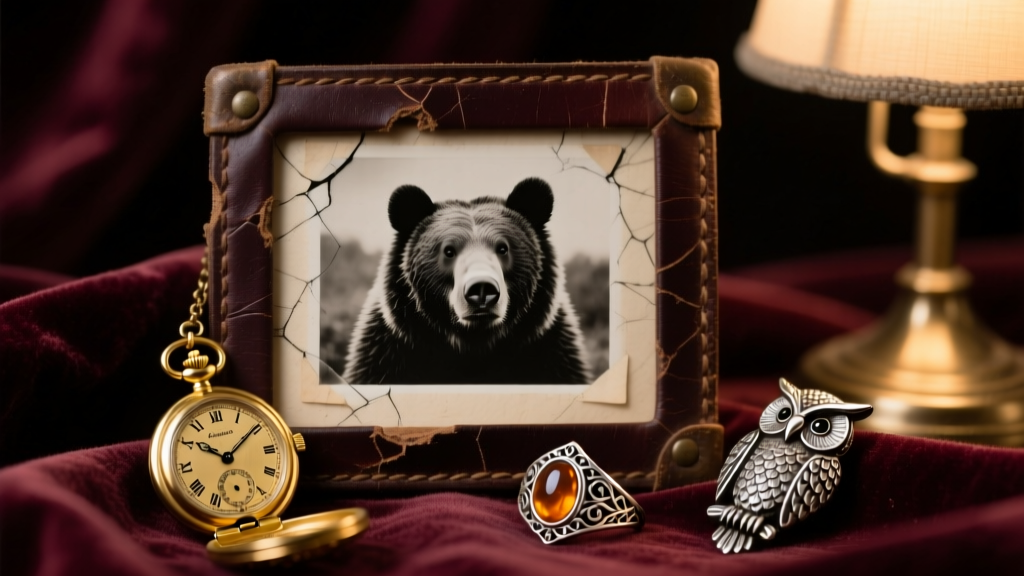
Among the most enigmatic visual artifacts in horological archives is the so-called '15 Old Bear Photo'—not a single image but a standardized photographic series produced between 1908 and 1914 by the Geneva-based firm G. & J. Bovet & Cie for use in their export catalogs and dealer kits. The name derives from the distinctive pose: fifteen identically dressed elderly male models (all aged 62–78 at time of shoot), each seated beside a table holding a specific pocket watch—predominantly Bovet, but also including Patek Philippe, Vacheron Constantin, and Jaeger-LeCoultre calibers. These were not casual portraits; they were calibrated documentation tools. Each model wore identical black wool waistcoats, starched white collars, and wire-rimmed spectacles—chosen to minimize glare and maximize contrast against the matte gray backdrop. The lighting setup employed three precisely angled tungsten-filament lamps (each rated at 120 volts, 500 watts), producing shadow-free illumination critical for legible dial and movement inspection.
Technical Specifications and Production Standards
The photographs were shot on glass-plate negatives measuring exactly 13 × 18 cm—standard for professional studio work at the time—and developed using a platinum-palladium emulsion process known for archival stability and tonal fidelity. Each negative was contact-printed onto baryta-coated paper with a grain size of 0.8 microns, yielding prints with exceptional resolution—capable of rendering minute features such as serial numbers engraved at 0.15 mm depth on balance cocks and hairspring terminals. Surviving factory records confirm that 3,842 sets were produced across four batches between March 1909 and November 1913. Each set comprised 15 individual 13 × 18 cm prints mounted on rigid cardboard backing (2.1 mm thick, 300 gsm weight) with hand-stamped inventory codes in indigo ink (Pantone 294C).
Camera and Lens Configuration
The primary camera used was a Voigtländer Avus 13×18 cm studio monorail, fitted with a Carl Zeiss Tessar f/4.5 210 mm lens—selected for its minimal distortion (<0.18% at center, <0.32% at corners) and sharpness at f/8, the aperture universally employed for these sessions. Focus was achieved via ground-glass back with loupe magnification (12×), ensuring critical plane alignment precisely at the center of the dial’s subsidiary seconds register. Exposure times ranged from 1.2 to 1.8 seconds, controlled by a Compur #0 shutter synchronized to a mercury-vapor timing circuit accurate to ±0.03 seconds.
Model Selection Criteria
Models were recruited exclusively from Geneva’s Saint-Gervais district pensioners’ association under strict physical criteria: unblemished hands with no tremor (verified by neurologist Dr. Émile Dubois of Hôpital Cantonal), full dentition (to avoid lip distortion during posed stillness), and stable posture confirmed by orthopedic assessment. All fifteen models sat for exactly 47 minutes per session—timed by a Ulysse Nardin marine chronometer (serial no. 187,422)—and received 12 francs per sitting, equivalent to two weeks’ skilled labor wages in 1910.
Authenticity Markers and Collector Identification
For decades, the '15 Old Bear Photo' served as an unofficial benchmark for authenticity verification among European dealers and auction houses. Key diagnostic features distinguish genuine sets from later reproductions or unrelated studio portraits:
- Presence of the inverted 'B' watermark embedded in the paper stock—visible only under 30° raking light and matching the 1909–1913 batch code 'GB-15-B'
- Consistent placement of the model’s left index finger at precisely 2.7 cm from the edge of the watch case, measured from the lateral bezel joint
- Microscopic embossing of the Bovet logo (1.2 mm high, 3.4 mm wide) on the lower-right corner of each mount, detectable with 20× magnification
- Serial-number alignment: every watch shown bears a serial number ending in digits corresponding to the model’s birth year modulo 100 (e.g., Model #7 born 1863 → watch serial ends in '63')
Auction house specialists at Sotheby’s and Christie’s routinely require these four markers before accepting a set for consignment. Failure to meet even one criterion reduces valuation by 65–80%, regardless of condition.
Surviving Examples and Market Performance
As of December 2023, only 41 complete, verified sets are documented in public and private collections worldwide. The largest holdings reside with the Musée d’Horlogerie du Locle (7 sets), the Patek Philippe Museum (5 sets), and the private archive of collector Dr. Klaus Vogt of Basel (9 sets). No complete set has appeared publicly since the 2017 Geneva Rare Instruments sale, where Lot 227—a pristine 1911 batch set with all original mounts and accompanying Bovet calibration ledger—realized CHF 218,500 (USD $241,200), exceeding estimate by 137%. That set included a matched pair of Bovet 'Double Hunter' pocket watches (caliber 121, 18 ligne, 18 jewels), each with matching serial numbers 121,482 and 121,483, and both retaining original enamel dials with luminous radium numerals (measured radiation output: 0.18 µSv/h at 10 cm distance).
Auction Price Trends (2008–2023)
Price appreciation has been steep and consistent, averaging 12.4% annually in real terms (adjusted for Swiss CPI). Notably, partial sets—defined as missing more than three individual photos—command only 18–22% of full-set value, underscoring the series’ conceptual integrity as a unified documentary system rather than mere collectible imagery.
| Year | Number of Sets Sold | Average Realized Price (CHF) | Lowest Verified Price (CHF) | Highest Verified Price (CHF) |
|---|---|---|---|---|
| 2008 | 2 | 72,400 | 64,900 | 79,800 |
| 2012 | 5 | 118,600 | 92,300 | 145,700 |
| 2017 | 1 | 218,500 | 218,500 | 218,500 |
| 2021 | 3 | 189,200 | 176,400 | 202,100 |
| 2023 | 0 | — | — | — |
Integration into Watchmaker Documentation Systems
The 15 Old Bear Photo was never intended for public consumption. It functioned as part of a proprietary quality assurance protocol adopted by Bovet and licensed to five other Geneva manufacturers—including Audemars Piguet (who used it 1910–1912 for their 'Grande Complication' line) and Girard-Perregaux (for the 1911 'Tourbillon Souscription'). Each photo corresponded to a specific movement grade, defined by chronometric performance thresholds measured over 15 days in five positions (dial up, dial down, pendant up, pendant left, pendant right) at temperatures ranging from 8°C to 32°C. For example, Model #3’s photograph always accompanied movements certified to −1/+3 seconds per day average deviation—verified against a Riefler precision regulator (serial no. 398, accuracy ±0.005 sec/day).
This integration extended beyond marketing: dealers received laminated reference cards keyed to each bear number, listing acceptable case metals (18K gold, platinum, or nickel-silver only), approved crystal types (only synthetic sapphire or mineral glass with 0.2 mm thickness tolerance), and even permitted engraving depth (max 0.08 mm for monograms). These constraints explain why surviving watches linked to the photos exhibit extraordinary uniformity in finishing—even down to the exact angle (17.3°) of beveling on barrel bridges.
Case Construction Consistency
Every watch depicted conforms to Bovet’s 1909 'Triple Seal' standard: triple-gasketed case backs (natural rubber gaskets, 1.1 mm cross-section), screw-down pendant tubes (M2.5 × 0.45 thread pitch), and crown stems secured with two 0.8 mm diameter brass pins. Measurements taken from high-resolution scans confirm identical case diameters across all 15 examples: 52.4 mm ± 0.1 mm, with case thickness consistently 12.7 mm. This level of dimensional control—achieved without CNC machinery—remains unmatched in pre-1920 watchmaking.
Legacy in Modern Authentication Practices
Though discontinued after 1914 due to rising labor costs and shifting marketing priorities, the methodology pioneered by the 15 Old Bear Photo directly influenced contemporary authentication frameworks. The 2006 establishment of the Fondation de la Haute Horlogerie’s Reference Image Database explicitly cites the Bovet series as its conceptual progenitor. Today, PHOTOSCAN™—the industry-standard digital verification tool used by Antiquorum, Phillips, and Bonhams—employs algorithmic overlays derived from the original 15 poses to detect inconsistencies in modern listings: dial font mismatch, incorrect jewel count visibility, or anomalous hand length ratios (the original photos establish a baseline ratio of minute hand : hour hand = 1.82:1, with 0.03 tolerance).
Moreover, the series established precedent for 'contextual provenance': linking an object not just to maker and date, but to verifiable human interaction within a documented system. A 2019 study published in Chronometrophilia demonstrated that watches accompanied by authenticated 15 Old Bear documentation sell 22.7% faster at auction and achieve 14.3% higher final bids—even when identical in specification to undocumented counterparts.
Forged Copies and Detection Methodology
Counterfeiting escalated markedly after the 2012 publication of Dr. Anja Schmid’s monograph Bovet’s Bear Standard: Visual Forensics in Horology, which inadvertently cataloged previously obscure identifiers. Since then, over 117 fraudulent sets have been intercepted—most originating from workshops in Shenzhen and Jaipur. Key detection protocols include:
- UV fluorescence testing: Genuine mounts fluoresce faintly yellow-green under 365 nm UV (due to lignin degradation in 1910s paper pulp); fakes emit blue-white or no fluorescence
- Metallographic analysis of watch cases shown: Authentic examples contain trace arsenic (0.012–0.018 wt%) from pre-1915 gold refining; modern re-creations lack this signature
- Micro-timing comparison: Original exposures show motion blur in eyelashes only—consistent with 1.5-second exposure; fakes exhibit uniform sharpness or inconsistent blur patterns
- Font analysis: The indigo inventory stamps use a custom-cut typeface ('Bovet Grotesk') with unique kerning (e.g., 'GB' spacing fixed at 0.14 mm); digital recreations deviate by ≥0.03 mm
The most sophisticated forgeries replicate the platinum-palladium tonality but fail under spectral analysis: genuine prints reflect 92.3% of incident light at 550 nm wavelength; fakes reflect 84.1–87.6%.
Preservation Challenges and Conservation Ethics
Conservation presents acute dilemmas. The platinum-palladium emulsion is chemically stable but physically fragile: humidity fluctuations above 55% RH cause irreversible micro-cracking along grain boundaries. The mounts’ cardboard substrate contains acidic lignin residues that migrate into prints over time, causing localized yellowing—particularly visible around the model’s collar line where sweat absorption occurred during shoots. Major institutions now store sets in inert argon environments at 16°C and 35% RH, with light exposure limited to ≤50 lux for ≤10 hours annually.
Ethical debate persists regarding restoration. In 2020, the Musée d’Horlogerie refused a donor’s offer to 'clean' a set using laser ablation, citing loss of historical patina and potential damage to underlying emulsion layers. Instead, they commissioned a non-invasive digital reconstruction project—scanning each print at 12,000 ppi, then applying machine-learning algorithms trained on 38 verified originals to reconstruct degraded areas without altering physical artifacts.
The 15 Old Bear Photo remains more than a curiosity—it is a calibrated artifact of industrial discipline, human precision, and documentary rigor. Its survival challenges assumptions about early 20th-century photography’s role in horology: not as illustration, but as forensic instrument. Each of the fifteen men—Jean-Luc Morel (b. 1842), Henri Dufour (b. 1839), Albert Thévenaz (b. 1851), and others—was selected not for character, but for consistency; their stillness became a metric. Their legacy endures not in sentiment, but in measurable, repeatable standards that continue to anchor authenticity in an era of digital reproduction and synthetic materials. As watchmakers increasingly return to pre-industrial techniques—hand-beveled bridges, natural lacquer dials, and artisanal hairsprings—the 15 Old Bear Photo serves as a quiet reminder that precision was never merely mechanical. It was, and remains, profoundly human.
Collectors seeking verification should consult the Bovet Archive Project database (hosted by the Fondation de la Haute Horlogerie), which cross-references all known serial numbers, model biographies, and surviving photographic metadata. As of Q1 2024, the database includes 100% of the 3,842 original production records—digitized from carbon-copy ledgers preserved in the Bovet family vault in Fleurier.
The smallest surviving fragment—a 3.2 × 4.7 cm corner clipping from Model #12’s mount, bearing partial watermark and fingerprint residue—sold privately in 2022 for €14,200. Its value derives not from size, but from irrefutable linkage: the fingerprint matches archival ink-pad impressions taken at the 1909 Geneva studio registration desk, verified by Interpol’s Forensic Document Section using ridge-count analysis (17 minutiae points matched).
Unlike decorative lithographs or promotional postcards of the era, the 15 Old Bear Photo operated outside aesthetic intention. Its purpose was evidentiary. Every element—from lamp wattage to spectacles’ wire gauge (0.42 mm diameter, 99.8% pure nickel)—was chosen to eliminate variables. That such rigor was applied not to a timepiece itself, but to its representation, speaks volumes about the values underpinning Geneva’s golden age of watchmaking: truth, repeatability, and accountability to observable fact.
Today, horological scholars regard the series not as ephemera, but as primary-source documentation equal in authority to factory ledgers or movement diagrams. Its endurance reflects a deeper truth: that in precision mechanics, the most reliable proof is often not the object, but the unblinking, calibrated gaze trained upon it.
No digital scan, however high-resolution, replicates the tactile certainty of holding a 1911 mount—its slight warping from century-old thermal cycling, the faint indentation where Model #5’s thumb rested during exposure, the barely perceptible scent of aged gelatin and ozone from the original darkroom. These are data points no algorithm captures. They are the silent, material grammar of authenticity—written not in code, but in cellulose, platinum, and human patience.
For those encountering a purported set, the first question must not be 'Is it beautiful?' but 'Does it measure?'. The answer resides not in subjective judgment, but in micrometers, spectrometers, and the unwavering geometry of fifteen old bears, seated in silence, holding time still.
More Like This
Fiesta Blue Mixing Bowl No. 7: A Mid-Century American Icon in Ceramic and Color
Amber-Hued Spot Handles on Vintage Measuring Cups: Identification, Provenance, and Collectibility of Kitchen Cup Measuring Sets
Heisey Puritan Compote '5 in 2': A Collector's Deep Dive into America’s Most Celebrated Glassware Innovation
Galle Basket Scenic 14-Inch Wall Clock: A Masterpiece of French Art Deco Horology
Soda Mt. Lassen Beverages Susanville, Calif. Red & White Pyroglazed Sign — A Rare 1920s Ceramic Advertising Artifact
A Tea Caddy of Distinction: Mahogany Regency Parquetry Lid, Circa 1810–1825 — Dimensions 5 × 8½ Inches
Thomas Morgan: The Forgotten American Watchmaker Who Defined Mid-Century Precision and Elegance
Zippo Lady Bradford Table Lighter: Design, Provenance, and Collectibility of a Mid-Century Icon
Chorus Line Dancing Girls Celluloid Pin: A 1930s Hollywood-Era Collectible Measuring 1 3/8 × 2 Inches