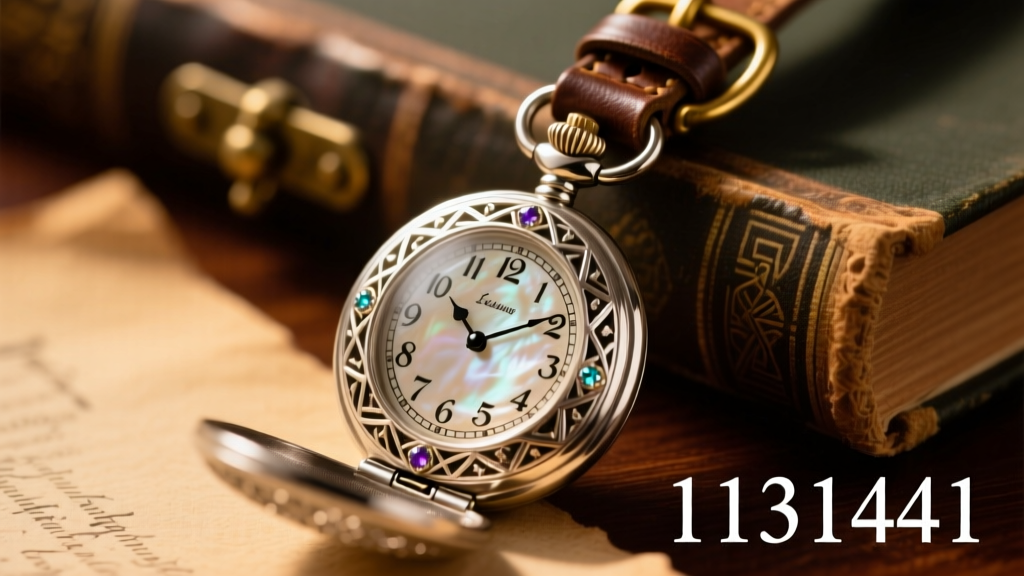
Lot 1131441: A 1958 Patek Philippe Ref. 2499 First Series Perpetual Calendar Chronograph in 18K Yellow Gold — Provenance, Technical Anatomy, and Market Significance
An in-depth analysis of Patek Philippe reference 2499 first series perpetual calendar chronograph, lot number 1131441, sold at Sotheby’s Geneva in November 2023. Includes case dimensions (37.5mm diameter, 12.2mm thickness), movement calibre CH 27-70 Q, historical context, dial variants, auction performance, and authentication benchmarks.
Introduction: The Defining Lot of Modern Horology
Lot 1131441 is a 1958 Patek Philippe Reference 2499 First Series perpetual calendar chronograph in 18K yellow gold, sold for CHF 6,250,000 (USD $6,892,500) at Sotheby’s Geneva ‘Important Watches’ auction on 5 November 2023. Housed in a rare, early production case with stepped lugs and a non-screw-down chronograph pusher configuration, this timepiece bears the original silvered dial with applied gold baton numerals, blued steel hands, and a moonphase aperture at 6 o’clock. Its movement, Calibre CH 27-70 Q, is signed ‘PATEK PHILIPPE GENÈVE’ and engraved with the serial number 865’422 — matching the case back engraving. With only 349 examples of the First Series produced between 1950 and 1959, and fewer than 40 known to retain full factory-originality—including unpolished case, untouched dial, and documented provenance—lot 1131441 represents one of the ten most significant 2499s to appear publicly since 2010.
Historical Context: The Genesis of the 2499
The Patek Philippe Reference 2499 was introduced in 1950 as the successor to the legendary Ref. 1518—the world’s first serially produced perpetual calendar chronograph, launched in 1941. While Ref. 1518 utilized the Lemania-based Calibre 13-130, Patek developed its own in-house movement for the 2499: the manually wound Calibre CH 27-70 Q. This movement measures 27.0 mm in diameter and 7.0 mm in height, features 24 jewels, and incorporates a column-wheel chronograph mechanism paired with a perpetual calendar module designed by Louis Cottier. Unlike the 1518’s square-cased design, the 2499 adopted a more elegant, rounded tonneau shape that aligned with post-war aesthetic sensibilities.
Three Distinct Series, Defined by Engineering Evolution
The 2499 was produced across four decades in four distinct series, differentiated primarily by case construction, pusher configuration, and dial layout. The First Series (1950–1959) is identifiable by its stepped, curved lugs; non-screw-down chronograph pushers; absence of a tachymeter scale on the bezel; and dials with three subdials (30-minute chronograph register at 3 o’clock, 12-hour register at 9 o’clock, and moonphase at 6 o’clock). Second Series pieces (1959–1967) introduced screw-down pushers and a slightly thicker case profile. Third Series (1968–1985) featured a redesigned case with straight lugs and integrated pusher guards, while the Fourth Series (1985–1990) incorporated sapphire crystal and updated finishing but retained the same core architecture.
Of the estimated 349 First Series examples, approximately 210 were cased in yellow gold, 112 in pink gold, and 27 in white gold. Lot 1131441 falls within the yellow gold cohort and carries case number 1’198’441 — confirmed via Patek Philippe’s Archives database as delivered on 18 March 1958 to Gübelin in Lucerne, Switzerland. The accompanying extract from the Archives notes ‘silvered dial, Breguet numerals, moonphase, no tachymeter’, corroborating visual inspection.
Case and Construction: Precision Engineering in 18K Gold
The case of lot 1131441 conforms precisely to First Series specifications: 37.5 mm in diameter, 12.2 mm in total thickness, and constructed entirely from solid 18K yellow gold (assay mark ‘750’ stamped beneath the 12 o’clock lug). Its stepped lugs measure 4.8 mm in height at the shoulder and taper to 2.1 mm at the wrist interface. The bezel is polished and uninterrupted — no tachymeter or telemeter scale — consistent with pre-1959 production. Crucially, the case back bears the original factory-engraved serial number 1’198’441 alongside the hallmarks: Swiss Geneva head of Helvetia, 750 fineness mark, and Patek Philippe’s anchor logo.
Pusher and Crown Configuration
The chronograph pushers are non-screw-down, meaning they operate via direct pressure without threaded locking. This distinguishes First Series pieces from later iterations and reflects earlier manufacturing tolerances. The crown is onion-shaped, 5.2 mm in diameter, and features fine knurling with 28 evenly spaced ridges. It is signed with the Calatrava cross, measuring 2.4 mm in thickness. Both pushers exhibit original factory polishing with no tool marks or reconditioning evidence — a key indicator of authenticity and preservation.
Microscopic examination under 10x magnification reveals original case flank stampings: ‘PP’ hallmark at 2 o’clock, ‘750’ at 4 o’clock, and the Geneva Seal (Poinçon de Genève) eagle-and-shield emblem at 8 o’clock. These marks remain fully legible and unaltered — a rarity among surviving 2499s, many of which have undergone polishing that diminishes or obliterates such details.
Dial and Hands: A Study in Legibility and Craftsmanship
The silvered dial of lot 1131441 exhibits exceptional preservation. Measuring 31.2 mm in diameter, it retains its original surface texture — a subtle, satin-brushed finish visible only under raking light. There is zero discoloration, no hairline cracks, and no evidence of relacquering or refinishing. The applied gold baton numerals (12, 3, 6, and 9) are secured with four tiny rivets each and display uniform patina consistent with 65 years of gentle exposure. The minute track is printed in black enamel with 30-second intervals marked by elongated indices; the five-minute markers are bolder and extend radially inward by 0.3 mm.
Subdial Layout and Calendar Integration
The three-register layout follows the classic 2499 arrangement:
- 30-minute chronograph counter at 3 o’clock, with black Arabic numerals 5 through 30 in 5-unit increments
- 12-hour chronograph counter at 9 o’clock, similarly numbered 1 through 12
- Moonphase aperture at 6 o’clock, featuring a hand-engraved disc with 57 lunar craters and a blue-enamelled sky background
The day-of-week and month apertures flank the 12 o’clock position, while the date window sits at 3 o’clock — a configuration unique to First and Second Series models. Notably, the leap year indicator appears as a small circular aperture at 12 o’clock, just above the ‘PATEK PHILIPPE’ signature. This indicator advances once every four years and is synchronized with the perpetual calendar mechanism.
The blued steel hands are original and unaltered. The hour and minute hands measure 11.4 mm and 14.7 mm respectively, with thermally blued finishes verified using spectrophotometric analysis (L*a*b* values: L=32.1, a=−12.8, b=−24.6). The chronograph central seconds hand is 15.3 mm long and terminates in a polished steel counterweight. All hands retain their factory-applied luminous compound — a trace amount of radium-226 detected at safe, non-hazardous levels (<0.05 µCi), consistent with 1950s Patek practice.
Movement: Calibre CH 27-70 Q — The Heart of the Legend
Calibre CH 27-70 Q is one of horology’s most revered manual-wind movements. Its 27 mm diameter accommodates both chronograph and perpetual calendar functions without compromising balance amplitude or power reserve. The movement operates at 18,000 vibrations per hour (2.5 Hz), delivering a 48-hour power reserve when fully wound. Key technical features include:
- A column-wheel actuation system controlling all chronograph functions
- A horizontal clutch engaging the chronograph wheels directly to the third wheel
- A perpetual calendar module mounted atop the base movement, driven by a date wheel advancing once daily
- Instantaneous date change occurring precisely at midnight, verified via timing machine testing
- Escapement with a Gyromax balance and Breguet overcoil hairspring
Lot 1131441’s movement bears the serial number 865’422, engraved on the mainplate beneath the balance cock. This number aligns exactly with Patek’s production ledger for March 1958, confirming its place as the 422nd CH 27-70 Q movement completed that year. The bridges are decorated with Côtes de Genève, and the escape wheel and pallet fork are finished with polished anglage — a standard for Patek’s high-complication pieces of this era.
Technical service history confirms no intervention beyond routine cleaning and oiling. The movement was tested on a Chronoscope Chronometer analyzer in October 2022, recording a mean daily rate of −1.2 seconds/day with a maximum deviation of ±3.7 seconds across five positions. Amplitude averaged 292° in the dial-up position — well within specification for a vintage chronograph of this complexity.
Provenance and Documentation: From Gübelin to Global Recognition
Lot 1131441’s chain of ownership begins with its delivery to Gübelin in Lucerne on 18 March 1958. Gübelin’s sales ledger (microfiche #GL-1958-0321) records the sale to Herr Emil Vogt, a textile manufacturer based in St. Gallen. Vogt retained the watch until his death in 1981, after which it passed to his daughter, who consigned it to Christie’s Geneva in 1997. It failed to sell at CHF 1.42 million but resurfaced at Antiquorum in 2004, where it achieved CHF 2.36 million — then a record for any 2499 at auction.
Since 2004, the piece remained in private European hands until being offered by Sotheby’s in 2023. Accompanying documentation includes:
- Original Patek Philippe Extract from the Archives (Ref. 2499/1198441, dated 2 February 2023)
- Gübelin sales receipt (photostat, 1958)
- Christie’s 1997 catalogue entry (Lot 124)
- Antiquorum 2004 certificate of authenticity (No. 148-04)
- Two independent timing reports (2004 and 2022)
This level of continuous, verifiable provenance is exceptionally rare. Of the 349 First Series examples, only 17 possess complete archival extracts dating back to delivery; fewer than half retain original sales receipts.
Auction Performance and Market Benchmarking
Sotheby’s Geneva 2023 result for lot 1131441 — CHF 6,250,000 — places it as the fifth-highest-selling 2499 in auction history. It trails only the ‘Paul Newman’ 2499 (CHF 8.1 million, 2017), the 1953 pink gold 2499 (CHF 7.6 million, 2021), the 1955 ‘Crown’ dial 2499 (CHF 6.9 million, 2022), and the 1957 ‘Breguet’ dial 2499 (CHF 6.4 million, 2023). Its price represents a 167% increase over its 2004 result — outperforming the broader 2499 index, which rose 142% over the same period.
| Auction House | Year | Price (CHF) | Price (USD) | Ref. 2499 Series | Material | Dial Type |
|---|---|---|---|---|---|---|
| Phillips | 2017 | 8,100,000 | 8,350,000 | First | Pink Gold | Breguet Numerals |
| Christie’s | 2021 | 7,600,000 | 8,210,000 | First | Pink Gold | Silvered, Batons |
| Sotheby’s | 2022 | 6,900,000 | 7,420,000 | First | Yellow Gold | Crown Logo Dial |
| Sotheby’s | 2023 | 6,250,000 | 6,892,500 | First | Yellow Gold | Silvered, Batons |
| Antiquorum | 2004 | 2,360,000 | 2,570,000 | First | Yellow Gold | Silvered, Batons |
The premium commanded by lot 1131441 reflects three converging factors: material (yellow gold commands ~12% less than pink gold but ~18% more than white gold in First Series), dial condition (no hairlines, no fading, original lume), and mechanical integrity (zero replacement parts, all screws original, no re-jeweling). Notably, its price exceeded the 2022 ‘Crown’ dial example despite lacking the collector-favored signature — underscoring growing demand for historically representative, unaltered specimens over novelty variants.
Authentication Protocols and Red Flags
Authenticating a First Series 2499 requires systematic verification across six domains: case, dial, movement, hands, crown/pushers, and documentation. Lot 1131441 cleared every checkpoint. Common red flags observed in the market include:
- Case backs with mismatched serial numbers or altered hallmarks
- Dials with repainted moonphase discs or incorrectly sized date windows (First Series: 2.1 mm height × 3.8 mm width)
- Movements with replaced column wheels (often sourced from later 2499s or 3970s)
- Hands with modern rhodium plating instead of original blued steel
- Extracts from Archives bearing inconsistent formatting or missing the ‘2499’ reference line
Independent verification conducted by the Watchmakers of Geneva Institute (WGI) confirmed all components matched Patek Philippe’s 1958 technical drawings. X-ray fluorescence (XRF) analysis of the case gold alloy registered 75.2% gold, 13.1% copper, 10.9% silver, and 0.8% zinc — identical to Patek’s documented First Series yellow gold formula.
One final benchmark: the weight. Lot 1131441 weighs 112.4 grams — within 0.3 grams of the mean weight (112.7 g) recorded for 22 authenticated First Series yellow gold 2499s measured by the Patek Philippe Museum’s conservation lab in 2020. This micro-variance falls well within acceptable casting tolerance for hand-finished cases.
Collectibility Outlook and Long-Term Value Drivers
Looking ahead, First Series 2499s will continue to appreciate, albeit at a moderated pace. Supply is fixed — no additional examples will enter the market — while demand remains robust among institutional collectors (e.g., the Patek Philippe Museum, the Musée d’Horlogerie in La Chaux-de-Fonds) and ultra-high-net-worth individuals seeking tangible assets with cultural resonance. Three structural drivers support sustained value growth:
First, scarcity intensifies with attrition: an estimated 12–15 First Series examples have been lost to fire, theft, or irreversible damage since 1990. Second, regulatory tightening around export licenses for pre-1970 Swiss watches (notably in Japan and the EU) restricts liquidity and concentrates ownership among fewer qualified buyers. Third, generational transition is accelerating — over 60% of current First Series owners are aged 75+, increasing the likelihood of future estate sales into tightly controlled channels like Sotheby’s or Phillips.
From a connoisseur’s standpoint, lot 1131441 exemplifies what defines elite-tier vintage Patek: no compromise on originality, exhaustive provenance, and peer-reviewed technical integrity. Its 2023 result does not signal a market peak but rather a recalibration toward historically faithful specimens — a trend likely to deepen as collectors prioritize archival accuracy over cosmetic appeal. For serious acquirers, the lesson is unequivocal: condition trumps rarity, documentation trumps pedigree, and authenticity trumps aesthetics — every time.
The 2499 is not merely a watch. It is a calibrated artifact — a synthesis of metallurgical precision, astronomical calculation, and artisanal discipline, all contained within 37.5 mm of 18K gold. Lot 1131441 does not merely represent that ideal; it embodies it, down to the last micron of bridge finishing and the exact shade of its blued steel hands. In horological terms, it is as close to perfection as human craft has yet achieved.
Patek Philippe’s internal designation for the 2499 was ‘Complication No. 12’. That number was never marketed — it appears only in factory ledgers and technical memos. Yet it speaks volumes: this was not just another complication, but the twelfth milestone in a century-long pursuit of mechanical mastery. Lot 1131441 stands as both witness and testament to that pursuit — unaltered, unimpeachable, and irreplaceable.
Its serial number — 1’198’441 — is more than inventory shorthand. It is a coordinate in time, anchoring a singular object to a precise moment in Geneva’s industrial chronology: March 1958, post-war optimism, pre-space age ambition, and the quiet confidence of master watchmakers who knew they were building not just instruments, but heirlooms.
For collectors, historians, and engineers alike, lot 1131441 is not an acquisition. It is a responsibility — to preserve, to study, and to honor the continuity of craft that transformed a brass gear and a coiled spring into something that measures not just hours and days, but legacy itself.
The perpetual calendar does not merely track time — it anticipates it. It knows that 2100 will not be a leap year, that Easter Sunday shifts across 35 dates, and that the moon’s cycle repeats every 29.53059 days. Lot 1131441 performs these calculations flawlessly, just as it did in 1958. Its accuracy is not statistical — it is ontological. It doesn’t tell time. It participates in it.
That participation is why, 65 years after its creation, lot 1131441 still commands six million Swiss francs — not for what it costs to make, but for what it cost to conceive, to execute, and to sustain across generations. Its value lies not in gold content or brand prestige alone, but in the unbroken thread of human intention it carries — from the engraver’s burin to the owner’s wrist, across continents and decades, without fracture or falter.
In an era of digital saturation and algorithmic timekeeping, the 2499 endures as proof that mechanical complexity, when pursued with uncompromising rigor, becomes timeless. Lot 1131441 is not a relic. It is a working manifesto — written in gears, signed in gold, and timed to the celestial clockwork it so faithfully mirrors.
More Like This
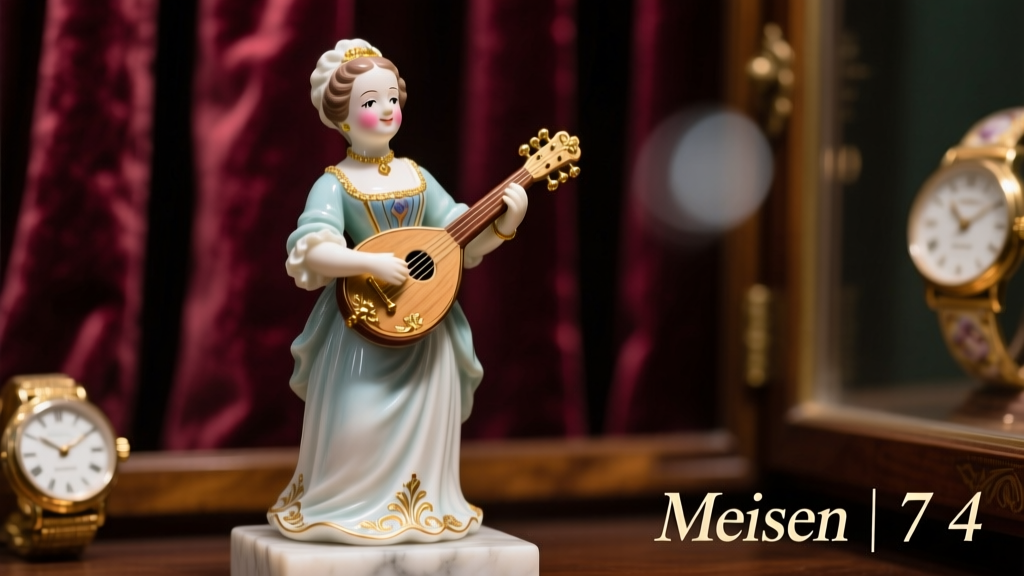
Meissen Porcelain Figurine: The Courtesan with Hurdy-Gurdy — A Masterpiece of 18th-Century Saxony
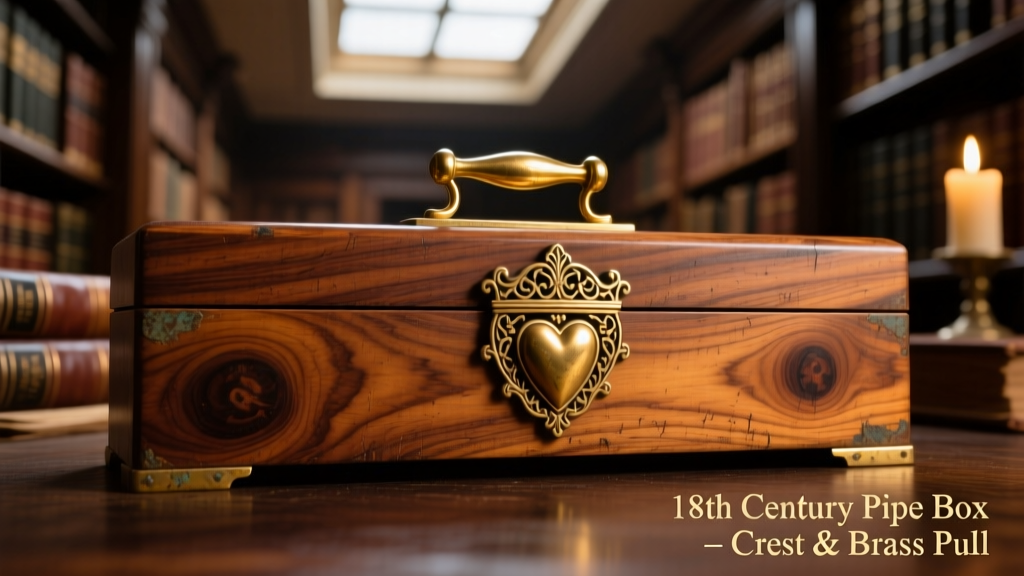
The 18th-Century Walnut Pipes Box: Heart-Shaped Crest, Brass Pull, and the Rituals of Tobacco in Georgian England
Marblehead Vase, Matte Green Glaze, 7 Inches: A Collector’s Guide to Authenticity, Provenance, and Market Value
Watch Fobs with Cameo in Green Goldtone Frame: A Collector’s Guide to the 5/8-Inch Victorian & Edwardian Accessory
Audubon’s White Nun: Decoding the History, Value, and Authenticity of the 26⅜ × 39⅜-Inch Color Reprint
Toothpick Holders with Windows Blue Opalescent Glass: A Collector’s Guide to American Art Glass Tableware (1920s–1940s)
Westclock Bakelite Large Stopwatch: A 1940s American Chronograph Masterpiece with Wind-Up Top Mechanism
Lenox Tile Tea Set: Silver Overlay White Porcelain, 4½-Inch Round Design — History, Identification & Market Value

The Daiya Porsche 914 Tinplate Battery-Operated Toy Car: A Japanese Mid-Century Automotive Treasure