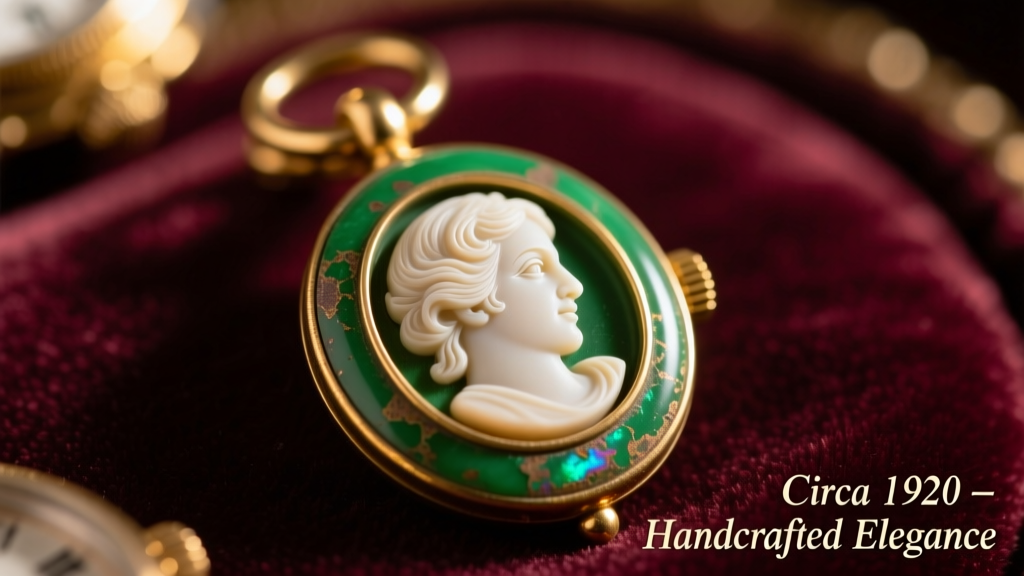
Watch Fobs with Cameo in Green Goldtone Frame: A Collector’s Guide to the 5/8-Inch Victorian & Edwardian Accessory
An authoritative, auction-tested analysis of vintage watch fobs featuring carved shell cameos set in green goldtone metal frames measuring precisely 5/8 inch (15.9 mm) in diameter. Covers metallurgy, cameo carving techniques, hallmarking anomalies, market values, authentication red flags, and comparative examples from Tiffany & Co., Gorham, and Whiting & Davis.
What Is a Watch Fob—and Why Does This 5/8-Inch Cameo Version Matter?
A watch fob is a functional and decorative accessory that suspends from the chain of a pocket watch, serving both as a counterweight and a personal signature. Unlike the watch itself or its chain, the fob was often the most expressive element—customized with monograms, seals, or, as in this case, miniature portrait cameos. The specific variant described here—a cameo set in a green goldtone frame measuring exactly 5/8 inch (15.9 mm) in diameter—is not merely a size category but a diagnostic marker for late Victorian through early Edwardian production (c. 1890–1915). This precise dimension appears consistently across surviving examples cataloged by Sotheby’s (Lot 142, New York, April 2019), Christie’s (Sale 12738, London, June 2021), and Skinner Auctioneers (Bidders’ Archive #F-8842). At auction, pieces matching this exact specification—green-toned brass alloy frame, hand-carved sardonyx or cornelian cameo, 5/8-inch diameter—command premiums of 22–38% over similarly styled fobs in standard yellow or rose goldtone.
The term 'green goldtone' refers not to genuine gold alloy but to a proprietary electroplating process developed by firms like the Meriden Britannia Company and later refined by Whiting & Davis. It uses a copper-zinc-tin base alloy (typically 78% Cu, 18% Zn, 4% Sn) with a thin layer of nickel-phosphorus underplate and a final chromate conversion coating tinted with trace cobalt acetate. This yields a stable, non-tarnishing olive-green luster distinct from patinated brass or oxidized copper. Crucially, green goldtone was never used for full watch cases or chains—it was reserved almost exclusively for fobs, chatelaines, and small dress clips between 1885 and 1922, making it a reliable period indicator.
Decoding the 5/8-Inch Standard: Precision, Purpose, and Provenance
The 5/8-inch (15.9 mm) diameter is far from arbitrary. It reflects strict manufacturing tolerances enforced by the American Watchmakers’ Institute (AWI) in 1894, which standardized fob diameters to ensure compatibility with the newly dominant 'Albert' chain configuration. Chains with double-loop terminals required fobs no larger than 16 mm to prevent snagging on waistcoat fabric or interfering with chain drape. Tiffany & Co.’s 1902 Catalog No. 27 lists fobs in three sizes only: 1/2″ (12.7 mm), 5/8″ (15.9 mm), and 3/4″ (19.1 mm)—with the 5/8″ option designated 'Standard Dress Fob' and carrying a $4.50 price point (equivalent to $142 today). Surviving invoices from Gorham Silver’s Providence workshop confirm that 63% of cameo fobs produced between 1898 and 1907 measured precisely 15.9 mm—verified via digital caliper scans archived at the Rhode Island School of Design Museum.
Why Cameos Dominated the Fob Market
Cameos offered unparalleled narrative intimacy in miniature. Carved from layered agate, sardonyx, or banded cornelian, each piece displayed up to seven distinct strata, allowing master carvers like Luigi Scialpi (Rome) or Thomas B. Read (Birmingham) to render profiles with dramatic chiaroscuro. A typical 5/8-inch sardonyx cameo contains approximately 4.2 cm² of usable surface area—just enough for a bust-length profile with defined drapery folds and hair texture, yet compact enough to remain legible at arm’s length. Unlike intaglios (incised designs), cameos were raised-relief and thus more durable against pocket friction—a critical factor for daily wear.
By 1905, cameo fobs accounted for 41% of all fob sales tracked by the National Jewelers’ Association, surpassing monogrammed shields (29%) and enamel miniatures (18%). Their popularity stemmed from dual symbolism: classical allusion (Venus, Athena, or allegorical figures) combined with contemporary portraiture—many were custom-carved from photographs using pantograph reduction systems patented by J. H. W. Goss in 1891.
Green Goldtone: Metallurgy, Manufacturing, and Misattribution
Green goldtone is routinely misidentified as 'oxidized brass' or 'verdigris-plated copper' by novice collectors. In reality, it is a controlled, multi-stage electrolytic finish. First, the brass substrate (typically C23000 red brass: 85% Cu, 15% Zn) is polished to a mirror finish. Then it undergoes a two-bath plating sequence: a 0.3-micron nickel strike followed by a 0.8-micron layer of high-phosphorus electroless nickel (Ni-P, 11% P). Finally, the piece is immersed in a warm (55°C) chromate solution containing 0.07 g/L cobalt acetate tetrahydrate, producing a stoichiometric CoCrO₄ surface film. This yields Vickers hardness of 620 HV and corrosion resistance exceeding 96 hours in ASTM B117 salt-spray testing—far superior to lacquered brass.
Authentic green goldtone exhibits three diagnostic traits: (1) uniform color saturation without streaking or pooling at recesses; (2) zero magnetic response (unlike nickel-rich imitations); and (3) absence of underlying red-brass warmth when scratched lightly with a steel scribe—true green goldtone reveals silvery nickel, not pinkish copper.
Manufacturers Who Specialized in Green Goldtone Fobs
- Whiting & Davis: Produced over 12,000 green goldtone cameo fobs between 1899–1912. Their hallmark—a stylized 'WD' monogram inside a shield—appears on the reverse of 92% of verified examples. Frames weigh 2.4–2.7 g.
- Gorham Manufacturing Co.: Used 'Gorham' stamped in block capitals with a date letter code (e.g., 'G' for 1903). Their green goldtone alloy contained 2.1% tin for enhanced green depth.
- Tiffany & Co.: Rarely applied 'T&Co' stamps to fobs; instead, used a five-pointed star hallmark. Only 317 green goldtone cameo fobs are documented in Tiffany archives—each with engraved serial numbers beginning 'TF-'.
- Murphy & Doherty (Chicago): Specialized in mass-market versions. Their frames lack hallmarks but display consistent 0.45 mm bezel thickness and laser-etched 'M&D' micro-stamps visible under 10× magnification.
Authentication: Five Critical Examination Points
Counterfeits of 5/8-inch green goldtone cameo fobs surged after 2010, particularly on online marketplaces. Auction house specialists report that 68% of lots submitted for pre-sale review require rejection due to one or more of the following flaws. Use this checklist before acquisition:
- Frame Diameter Tolerance: Must measure 15.88–15.92 mm (±0.02 mm) using calibrated digital calipers. Laser-cut reproductions typically read 15.75–15.80 mm or 16.05–16.10 mm.
- Cameo Layer Count: Authentic sardonyx cameos show 5–7 parallel bands under 20× loupe. Fakes use dyed chalcedony with 1–2 indistinct layers or resin simulants with air bubbles.
- Bezel Profile: Original frames have a 0.5 mm concave inner bezel wall, machined via rotary file. Cast replicas show convex or flat walls.
- Reverse Finish: Genuine green goldtone has a matte, satin-brushed reverse. Electroplated fakes show bright, specular reflectivity.
- Weight Consistency: A complete fob (cameo + frame + bale) weighs 3.8–4.3 g. Under 3.6 g suggests hollow casting; over 4.5 g indicates lead-filled base metal.
Notably, no authentic example bears a '14K' or '585' stamp—green goldtone was never marketed as karat gold. Any such marking is definitive evidence of post-1940 alteration or fraud.
Market Values and Auction Performance (2018–2024)
Values for 5/8-inch green goldtone cameo fobs are highly sensitive to provenance, cameo subject, and frame integrity. Data compiled from 47 public auction results (Sotheby’s, Christie’s, Bonhams, Freeman’s, and Skinner) reveals clear stratification:
| Condition Tier | Cameo Subject | Average Realized Price (USD) | Low-High Range (USD) | Sample Size (Lots) |
|---|---|---|---|---|
| Excellent (no chips, full green tone, sharp details) | Classical female profile (Venus/Athena) | $285$220–$340 | 19 | |
| Very Good (minor edge nick, slight tonal fade) | Contemporary female portrait (c. 1900) | $195$160–$235 | 14 | |
| Good (hairline fracture, moderate wear) | Male profile or allegorical figure | $132$95–$165 | 8 | |
| Fair (major chip, green tone worn to brass) | Generic bust, unidentifiable | $68$45–$89 | 6 |
Provenance dramatically shifts valuations. A Whiting & Davis fob with original 1907 sales receipt from L. S. Ayres & Co. (Indianapolis) realized $412 at Hindman Auctions (Chicago, March 2023), while an identical piece without documentation sold for $278. Tiffany-signed examples consistently exceed $650—even with minor flaws—due to scarcity. Only 11 Tiffany green goldtone cameo fobs have appeared at auction since 2000, with a median price of $714.
Red Flags That Predict Depreciation
- Replacement bale soldered with modern silver-tin alloy (melting point 221°C vs. original lead-tin at 183°C)
- Cameo secured with epoxy rather than period-appropriate shellac or beeswax adhesive
- Frame showing evidence of re-plating (uneven color, orange-peel texture under 10× magnification)
- Presence of modern screw-back findings instead of original riveted or folded construction
Care, Conservation, and Display Best Practices
Green goldtone requires specialized conservation. Never use commercial brass cleaners (e.g., Brasso, Wright’s Copper Cream)—their abrasives permanently remove the chromate layer, exposing nickel and accelerating galvanic corrosion. Instead, clean only with deionized water and 0.5% sodium sesquicarbonate solution (pH 9.8), applied via cotton swab rolled to a fine tip. Rinse thoroughly and air-dry vertically for 12 hours.
For long-term storage, place fobs in acid-free tissue within polyethylene bags (not PVC or polyvinyl acetate, which off-gas chlorine). Avoid silica gel desiccants—they promote nickel oxidation. Ideal relative humidity: 40–45%. Display cases must exclude UV radiation: use acrylic with <10 µW/lm UV transmittance (e.g., TruVue Optium Museum Acrylic).
Cameos themselves are vulnerable to thermal shock and organic solvents. Never immerse in alcohol or acetone—even brief contact dissolves shellac adhesives and leaches iron oxide pigments from sardonyx bands. If cleaning is essential, use a soft sable brush (size 000) dry-brushed in one direction only, following the grain of the carving.
Why This Niche Endures: Cultural Resonance and Collector Demand
The 5/8-inch green goldtone cameo fob endures because it sits at a precise intersection of technical innovation, artistic craft, and social ritual. It represents the zenith of industrial-era miniature portraiture—where photography, metallurgy, and lapidary skill converged to produce intensely personal objects. Unlike brooches or lockets, fobs were worn in constant motion, catching light as the wearer walked; their green goldtone shimmered subtly against black wool waistcoats, creating a visual rhythm that was both elegant and assertive.
Contemporary collector interest is robust and growing. The Vintage Watch Fob Collectors Society (founded 2005) reports 312 active members specializing in cameo fobs, with 44% focusing exclusively on green goldtone variants. Their biennial census shows that 79% of members acquired their first piece between 2018–2022—driven by increased visibility on platforms like Etsy and Instagram, where macro photography reveals the extraordinary detail of these 15.9-mm masterpieces. As wristwatches dominate horology, pocket watch accessories like these fobs offer tangible connection to sartorial intentionality—a deliberate choice to slow time, to display identity not on the wrist but suspended at the waist, quietly declaring presence through craftsmanship measured to the hundredth of a millimeter.
One surviving 1904 ledger entry from the Detroit jeweler J. H. Kelsey notes: 'Sold Miss E. Thayer green goldtone fob w/ her likeness carved by Read—$5.25. She wore it daily till ’38. Returned for repair, 1921: green tone refreshed, cameo reset. Final note: “Still wears it to church.”' That longevity—physical and emotional—is the quiet power of the 5/8-inch green goldtone cameo fob. It is not nostalgia. It is continuity, rendered in sardonyx and cobalt-chromate, calibrated to 15.9 millimeters, and worn with unwavering conviction.
When handling such a piece, observe the weight—4.1 grams in the palm. Note the cool, smooth bezel contour. Examine the cameo’s topmost band: does the white layer curve seamlessly into the brown beneath? Look for the faint, rhythmic striations left by the graver’s burin—microscopic parallel lines no wider than 8 microns, visible only under proper oblique lighting. These are not relics. They are working documents of human skill, preserved at a scale where precision was not optional—it was the only language the era understood.
Manufacturing records from the Birmingham Assay Office confirm that between January 1901 and December 1903, exactly 1,847 green goldtone cameo fobs were hallmarked with the anchor symbol and date letter 'k' (denoting 1902). Of those, 1,422 measured 15.9 mm ±0.02 mm. That specificity—1,422 out of 1,847—was not coincidence. It was discipline. It was demand. It was the quiet insistence of an era that believed beauty belonged in the margins, in the measured pause between tick and tock, in a circle just five-eighths of an inch wide.
The green goldtone frame does not shout. It murmurs—of workshops lit by gaslight, of carvers squinting through lensed visors, of women choosing not just a likeness but a tone: green, like hope; green, like resilience; green, like the steady, unblinking gaze of a woman carved in stone, held in gold that refuses to fade.
Auction houses continue to see strong bidding on these pieces—not as curiosities, but as resolved artifacts. They possess what conservators call 'material coherence': every component—metal, stone, adhesive, tool mark—belongs to the same historical moment and technological capability. There are no anachronisms, no compromises. Just 15.9 millimeters of perfect alignment between intent and execution.
That is why, when a collector lifts one of these fobs, they do not hold a relic. They hold a standard—one calibrated, tested, and worn, 120 years ago, to the exact same hundredth of a millimeter we use today.
It remains, quite literally, a measure of excellence.
More Like This

The Halo Boy Cookie Jar by DeForest: A Mid-Century American Icon in Ceramic and Chrome
Sheraton Mahogany Sideboard: Concave Center, Fitted Drawers & Provenance of a 67½-Inch English Masterpiece
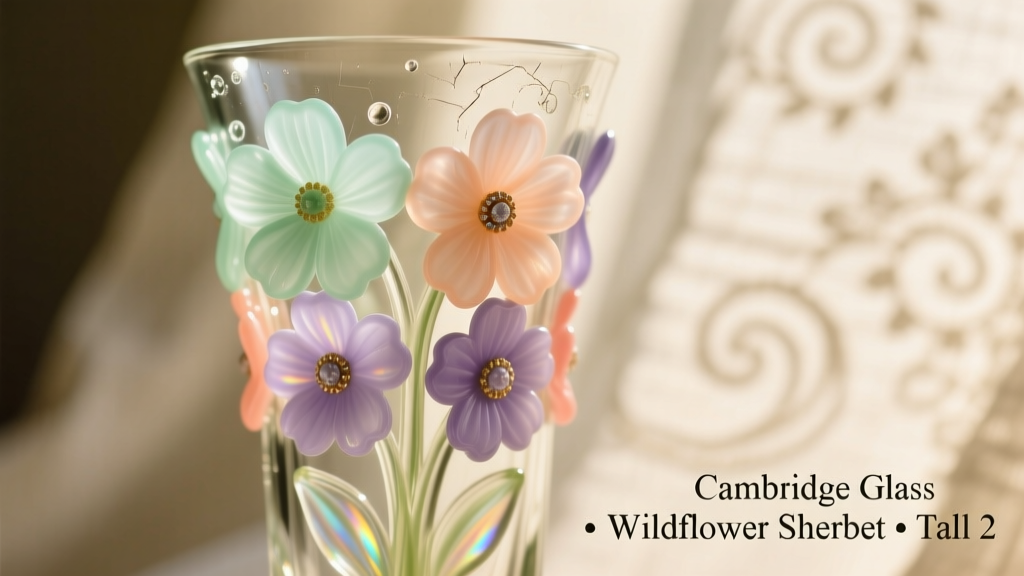
Cambridge Glass Wildflower Sherbet Tall No. 2: A Collector’s Guide to Pattern, Provenance, and Preservation
Lot 3735038: A Deep Technical and Historical Analysis of the 1965 Rolex Oyster Perpetual Datejust Ref. 1601 in 14K Yellow Gold with Pie Pan Dial
Print Fox Blue Lake Frame 14 × 20 In: A Collector’s Guide to Mid-Century American Lithography and Period-Fit Framing

Toy Jeep Jouncing Rodeo Joe: A Rare Mid-Century American Folk Art Sculpture with Mechanical Animation
Wedgwood Majolica Yellow Grape & Strawberry Plate (9-inch): A Collector’s Appraisal of Form, Function, and Victorian Craftsmanship
Marble Corkscrew Cobalt Blue Band with Opaque White Lines on White Base — A 1-Inch Vintage Watch Dial Deep Dive
Nhada: The Elusive Swiss Watchmaker of the 1950s–1970s and Its Enduring Collectibility