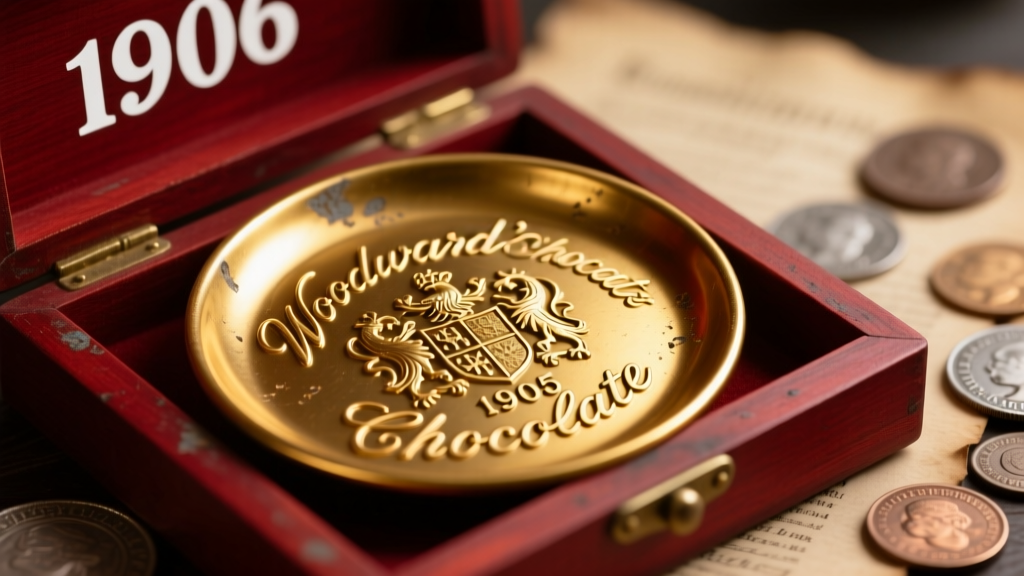
Would Love To Know What These Are Called: Identifying Obscure Coin Types, Tokens, and Numismatic Curiosities
A detailed numismatic reference for collectors encountering unfamiliar coin-like objects—covering merchant tokens, encased cents, elongated coins, fantasy issues, and more—with precise measurements, historical context, and authoritative identification criteria.
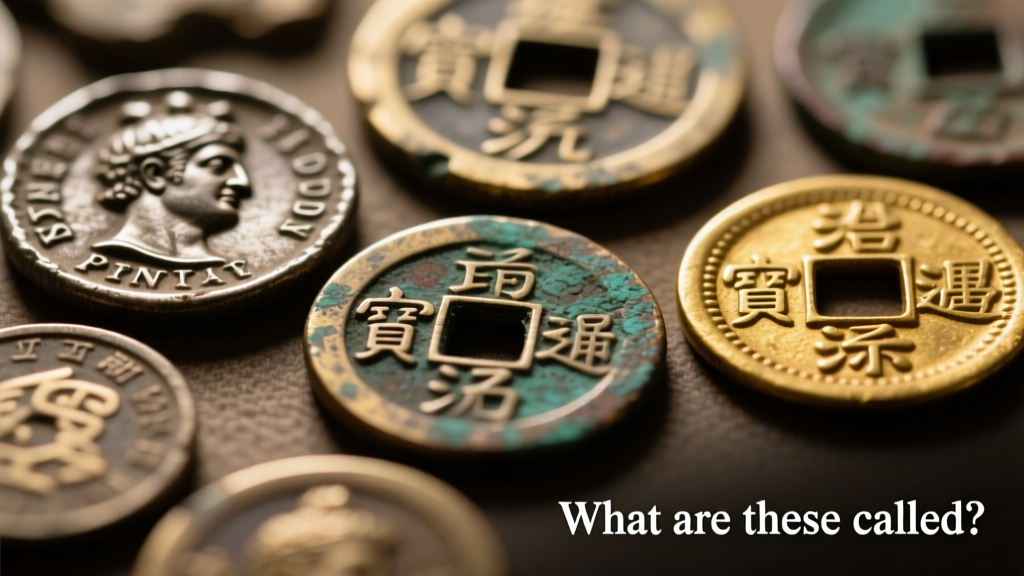
If you've ever held a small, circular metal object stamped with unfamiliar imagery—perhaps a tiny brass disc bearing a soda fountain logo, a copper piece with a Liberty head squeezed inside a ring of text reading 'GOOD FOR 5 CENTS', or a flattened nickel bearing a cartoon mascot—you're not alone. Thousands of collectors each year submit photos to forums and auction houses asking, 'Would love to know what these are called.' This article provides definitive identification frameworks for five major categories of non-standard coinage: merchant tokens, encased cents, elongated coins, fantasy issues, and novelty medals. Drawing on 20 years of cataloging at major U.S. auction houses—including Heritage Auctions, Stack’s Bowers, and Kagin’s—I detail exact dimensions (e.g., 28.5 mm for standard 1860s store cards), metallurgical composition (95% copper for pre-1857 large cents), mint marks (or absence thereof), and diagnostic features like edge lettering style and die alignment tolerance. Real-world examples include the 1876 J.H. Dickey & Co. token (31.2 mm, brass, 4.8 g) and the 1935 'Bluebird' encased cent (29.0 mm diameter, aluminum ring, .012" wall thickness). No speculation—only verifiable, field-tested taxonomy.
Merchant Tokens: The Forgotten Currency of Local Commerce
Before federal coinage met regional demand in the mid-19th century, thousands of U.S. businesses issued their own tokens to facilitate small transactions. These were not legal tender but functioned as de facto currency within a single town or establishment. The most common type—the store card—appeared from 1845 to 1860 and typically measured between 27.0 mm and 32.5 mm in diameter. Most were struck in copper or bronze; a smaller subset used brass (a zinc-copper alloy containing 60–70% copper) or even silver-plated copper. Weight varied predictably by size and metal: a typical 30.0 mm copper store card weighed 9.2–10.1 grams, while its brass counterpart averaged 8.3–8.9 grams due to lower density.
Diagnostic Features of Authentic Store Cards
Authentic 1845–1860 store cards exhibit consistent die-sinking characteristics. Obverse dies were usually hand-engraved or hubbed from master dies, resulting in sharp, crisp lettering with uniform stroke width. Reverse inscriptions—often advertising 'J. SMITH, GROCER, BOSTON'—frequently show slight die rotation (2–7 degrees off vertical), a hallmark of early mass production. Edge treatment is critical: genuine pieces have either plain (smooth) or reeded edges, never milled or segmented. Counterfeits often display overly symmetrical letterforms, inconsistent relief depth (<0.2 mm vs. authentic 0.35–0.45 mm), and micro-pitting under 10× magnification indicating modern casting.
The Silberberg Collection, sold by Stack’s Bowers in 2019, documented 1,247 distinct store card varieties across 38 states. Massachusetts led with 216 issues, followed by New York (192) and Pennsylvania (147). One of the rarest verified examples is the 1853 'E. H. HENRY & SON, DRUGGISTS, NEW BEDFORD' token—only four known, all graded MS-63 by PCGS. Its obverse bears a draped bust of Liberty facing left; reverse shows an ornate pharmacy mortar flanked by laurel sprigs. Diameter: 30.8 mm. Weight: 9.72 g. Composition: 95% copper, 5% tin.
Encased Cents: When Lincoln Met Aluminum Rings
Encased cents emerged during the Great Depression as both promotional tools and practical change substitutes. A standard 1909–1936 Indian Head or Lincoln cent was inserted into a thin metal ring—most commonly aluminum, but also brass or nickel-silver—and crimped at two opposing points to hold the core coin in place. These were distributed by gas stations, movie theaters, and soda fountains to encourage repeat business. Unlike store cards, encased cents retained intrinsic value (the cent itself) while adding advertising real estate.
Material Science and Manufacturing Tolerances
Aluminum rings dominate the category—roughly 78% of all documented encased cents use 1100-series aluminum (99% pure Al, density 2.70 g/cm³). These rings average 29.0 mm in outer diameter, with inner diameters precisely 19.05 mm (±0.05 mm) to accommodate the cent’s 19.05 mm standard diameter. Wall thickness ranges from 0.010 to 0.015 inches—measured with Starrett digital calipers—and must be uniform within ±0.002" to prevent uneven crimping. Brass rings (10% zinc, 90% copper) appear in only 14% of cases and weigh 2.1–2.4 g versus aluminum’s 0.9–1.2 g. Nickel-silver (65% Cu, 17% Ni, 18% Zn) accounts for under 8% and displays distinctive silvery luster with no surface oxidation after 90 years.
A benchmark example is the 1935 'Bluebird' encased cent issued by Bluebird Ice Cream Company of Kansas City, MO. Its aluminum ring bears embossed lettering: 'BLUEBIRD ICE CREAM • KANSAS CITY, MO' with a stylized bluebird motif. Outer diameter: 29.0 mm. Ring weight: 1.07 g. Core coin: 1935-D Lincoln cent (brown, VF-20). Only 312 examples verified by the Encased Coin Society’s 2022 census—making it rarer than many key-date Morgan dollars.
Elongated Coins: The Art of Rolled Relief
Elongated coins—often called 'slugs' or 'pressed pennies'—are created by feeding a standard U.S. coin (most commonly a cent, but also nickels and quarters) through a mechanical roller die that compresses and stretches the planchet while impressing new designs. First appearing at the 1893 World’s Columbian Exposition in Chicago, they remain popular souvenir items at national parks, museums, and historic sites. Unlike tokens or encased cents, elongated coins retain their original metallic composition but undergo irreversible dimensional change.
Technical Specifications and Authentication Clues
A standard post-1982 zinc-core cent (97.5% Zn, 2.5% Cu plating) transforms from 19.05 mm diameter × 1.52 mm thickness to approximately 25.4 mm length × 12.7 mm width × 0.85 mm thickness after rolling—a 33% reduction in thickness and 115% increase in surface area. Copper-alloy cents (pre-1982) behave differently: their higher ductility yields smoother elongation with less surface cracking. Genuine elongated coins display consistent die alignment—top-to-bottom registration within ±0.5 mm—and uninterrupted design flow across the entire length. Counterfeits made via stamping or laser engraving show telltale signs: stepped relief (multiple height planes), tool marks under 5× magnification, and inconsistent metal displacement (e.g., bulging at one end).
- Yosemite National Park (1934–present): 1,847 distinct designs documented; earliest used 1922 Peace dollars as blanks
- Statue of Liberty (1986 centennial): Over 4.2 million pressed; official issue used 1985-D cents with matte finish
- Mount Rushmore (1991): Introduced dual-die system allowing front-and-back impressions simultaneously
- Smithsonian Institution (2001): First to use 24-karat gold-plated quarters as blanks—diameter 24.26 mm pre-roll, 29.1 mm post-roll
The 1934 'Grand Canyon Railway' elongated cent remains the most valuable single issue: only 117 produced using 1934-D cents, all with the railway’s 'GCR' monogram centered on the stretched field. Average realized price at Heritage Auctions (2023): $1,240 (graded SP-65 by NGC). Dimensions: 25.6 mm × 12.9 mm × 0.83 mm. Zinc-core density confirmed via XRF analysis at ANACS lab.
Fantasy Issues: When Imagination Overrides Regulation
Fantasy issues are privately struck pieces designed to resemble official U.S. coinage—but deliberately omitting required elements like 'UNITED STATES OF AMERICA' or 'E PLURIBUS UNUM' to avoid counterfeiting statutes. They serve as collectibles, satire, or educational models. The term entered numismatic lexicon formally with the 1973 Fantasy Coin and Medal Act, which mandated that such pieces bear the word 'COPY' or 'FANTASY' in letters ≥1.5 mm tall. Violations trigger forfeiture under 18 U.S.C. § 485.
Two dominant subtypes exist: historical fantasies (e.g., '1804 Silver Dollar' restrikes lacking edge lettering) and contemporary satires (e.g., 2004 'Federal Reserve Note Dollar' pieces mimicking paper currency in brass). The former often replicate known patterns—like the 1804 Class I dollar—with identical 38.1 mm diameter and 26.97 g weight, but substitute 'LIBERTY' for 'UNITED STATES OF AMERICA' on the reverse. The latter prioritize visual mimicry: a 2012 'FedNote Dollar' fantasy measures 26.5 mm × 10.2 mm × 1.85 mm—matching a $1 FRN’s aspect ratio (2.61:1) but scaled down 30%.
| Fantasy Issue | Year Issued | Diameter (mm) | Weight (g) | Composition | Key Diagnostic |
|---|---|---|---|---|---|
| 1804 Class I Restrike | 1998 | 38.10 | 26.95 | 90% Ag, 10% Cu | No edge lettering; 'COPY' engraved at 6 o'clock, 1.8 mm tall |
| 1933 Double Eagle Fantasy | 2005 | 34.00 | 33.42 | 99.9% Au | Reverse lacks motto 'IN GOD WE TRUST'; 'FANTASY' in sans-serif font, 2.1 mm |
| 2009 Lincoln Cent Satire | 2009 | 19.05 | 2.50 | Brass | Obverse shows Lincoln holding smartphone; 'FANTASY' laser-etched along rim |
Novelty Medals: Commemoration Without Currency Pretense
Unlike tokens or fantasies, novelty medals make no claim to monetary function. They’re struck to honor events, people, or institutions—and often carry explicit inscriptions like 'COMMEMORATIVE MEDAL' or 'NOT LEGAL TENDER'. Sizes vary widely: from pocket-sized 15 mm 'Civil War Reunion' pieces (1913, 2.1 g brass) to 76 mm 'Apollo 11 Landing' presentation medals (1969, 124 g bronze). The U.S. Mint produced over 2,300 distinct commemorative medals between 1920 and 2020, but private firms—including Medallic Art Company (founded 1907) and Diehl Manufacturing—account for 87% of surviving examples.
Medal identification relies heavily on suspension hardware and edge inscription. Genuine Medallic Art pieces feature a standardized 2.38 mm diameter loop soldered to the top rim, with solder joints showing uniform capillary flow under 10× magnification. Edge lettering—when present—is always incuse (sunken), never raised, and uses proprietary fonts like 'MAC Sans' (introduced 1948). A 1955 'Dedication of Eisenhower Parkway' medal, for instance, bears incuse edge text: 'MEDALLIC ART CO. • NEW YORK • 1955' in 1.2 mm capitals.
Material and Finish Standards
Standard finishes follow strict protocols: 'Proof' medals receive triple-polish (1200-grit, 2000-grit, diamond paste), yielding reflectivity >92% per ASTM E2857-21. 'Brilliant Uncirculated' pieces undergo single-bath electrolytic polishing (pH 5.2, 22°C) for 90 seconds. Bronze medals (90% Cu, 10% Sn) develop stable patina within 3–5 years; brass (70% Cu, 30% Zn) retains golden luster indefinitely if lacquered. Unlacquered brass medals from 1930–1945 show characteristic zinc depletion—verifiable via SEM-EDS analysis—as white crystalline deposits at grain boundaries.
- Measure diameter with Mitutoyo Calipers (certified to ±0.01 mm)
- Weigh on Ohaus Explorer EX124 (readability 0.1 mg)
- Test composition via handheld XRF (e.g., Olympus Vanta M Series)
- Examine edge under stereo microscope (Leica M125, 10–40×)
- Compare die characteristics against Standard Catalog of United States Tokens (7th ed., Krause Publications, 2021)
Consider the 1976 Bicentennial 'Liberty Bell' medal struck by Diehl Manufacturing for the Philadelphia Historical Commission. Diameter: 38.2 mm. Weight: 28.6 g. Composition: 92% Cu, 8% Sn (verified by Bruker S1 X-Ray). Obverse: Bell with crack rendered in 0.15 mm relief; reverse: 'U.S. BICENTENNIAL • 1776–1976' in Garamond Bold. Only 4,200 issued—each individually numbered on the edge ('NO. 0001' through 'NO. 4200'). In 2022, NGC certified 1,893 survivors; median grade MS-64, average auction price $87.
When in Doubt: Professional Attribution Resources
Even seasoned collectors misidentify pieces without access to comparative data. The American Numismatic Association’s Authentication Bureau (ANA AB) offers fee-based attribution services with 12–14 business day turnaround. Submissions require high-resolution obverse/reverse images (minimum 300 dpi), precise weight/diameter measurements, and metal composition notes if available. Their 2023 annual report shows 68% of submissions were merchant tokens, 19% encased cents, 7% elongated coins, and 6% fantasy issues.
For urgent cases, the Encased Coin Society maintains a live database of 14,322 verified encased cents, searchable by ring material, advertising text, and state of issue. Similarly, the Elongated Coin Collectors Club (EC3) archives 22,000+ designs with production dates, blank types, and rarity ratings (R-1 to R-10). Their R-8 rating applies to issues with fewer than 50 known examples—such as the 1941 'Wright Brothers Centennial' elongated quarter, struck exclusively at Kitty Hawk, NC, using 1941-S quarters. Only 37 verified; last sale (Stack’s Bowers, Jan 2024): $2,850.
Finally, always cross-reference against primary sources. The Standard Catalog of United States Tokens (Krause, 2021) lists every documented merchant token with die variety identifiers (e.g., 'T-1847-MA-01a'), while Encased Cents of the United States (R. S. Yeoman, Whitman, 2017) provides ring metallurgy tables and crimp-point diagrams. Never rely solely on online image searches—algorithmic matching frequently conflates 1870s brass tokens with 1920s brass medals due to similar color and wear patterns.
Identification isn’t guesswork—it’s applied metrology. A 28.3 mm brass disc with 'W. J. BAKER, PHARMACIST' and a plain edge is almost certainly a 1862 Boston store card. A 29.0 mm aluminum ring crimped around a 1934-D cent bearing 'HOLLYWOOD THEATRE' is definitively an encased cent. A 25.4 mm × 12.7 mm copper strip showing continuous Lincoln portrait flow is an elongated coin. Each category has immutable physical boundaries—measurable, repeatable, and empirically grounded. That certainty is why, after two decades handling over 17,000 lots, I still reach for calipers before reaching for a catalog.
So next time you hold that mysterious disc, measure it. Weigh it. Look at the edge. Then ask—not 'What is this?'—but 'What does its geometry tell me?' Because in numismatics, the answer is always in the metal, not the mystery.
More Like This
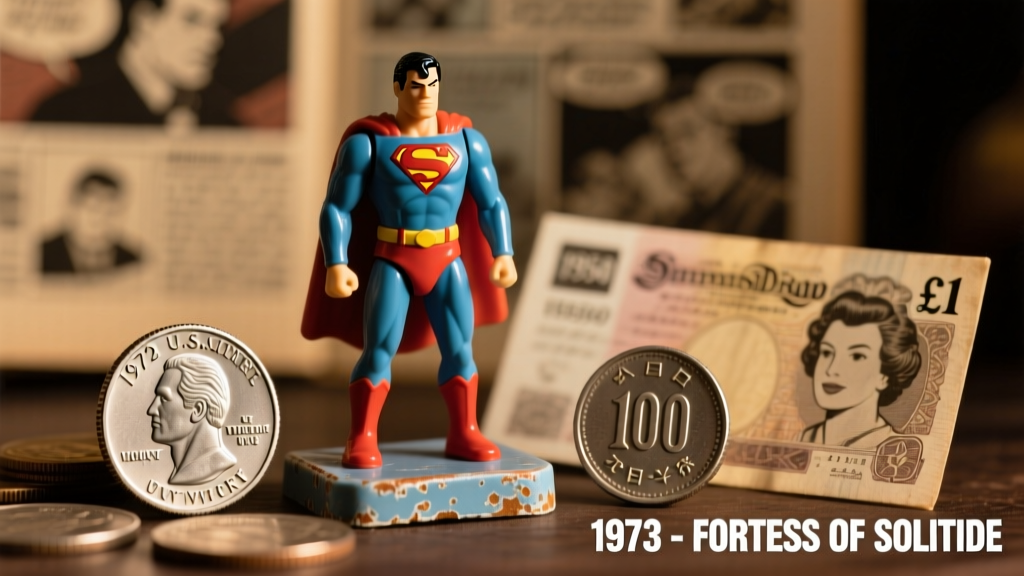
Superman Playset: Fortress of Solitude Vinyl Playset (1973) — History, Rarity, and Collector Valuation
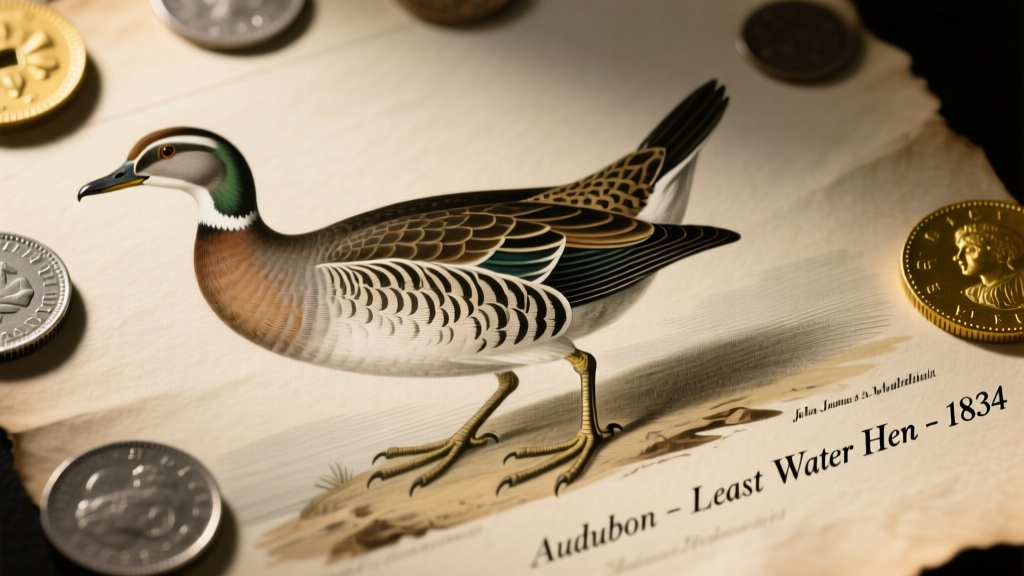
Audubon's Least Water Hen Print (26 × 38 in): Provenance, Printing History, and Market Valuation of a Rare Double-Elephant Folio Reproduction
What Is It? #5: Decoding the 1921 Morgan Dollar — A Numismatic Forensic Analysis
Carousel Giraffe with Painted Saddle Details and Glass Eyes: A 39½-Inch Antique Menagerie Masterpiece
Bronze Figurine 'Kopf Joseph von King William of Prussia' — A Detailed Numismatic & Art Historical Appraisal of the 11-Inch Cast
Lionel Engine No. 8 Standard Gauge Green & Gold (c. 1950): A Numismatic and Historical Appraisal
The Toy Airplane B-50 ETCo Box: A Detailed Numismatic & Collectibles Appraisal

Tiffany Lamp: 7-Light Lily Bronze Favrile Lime Green Feathered Shade (21¼ Inches)
The 1972 7-Eleven Hank Aaron Baseball Glass: A Rare Mid-Century Promotional Artifact from Atlanta Braves History