The Woman’s Head Sculpture: A Numismatic Artifact at the Intersection of Art, Politics, and Coinage
An in-depth examination of the Woman’s Head sculpture—its origins in Augustus Saint-Gaudens’ 1907 Double Eagle design, its evolution across U.S. gold coinage, and its enduring legacy in numismatics, art conservation, and collector markets.
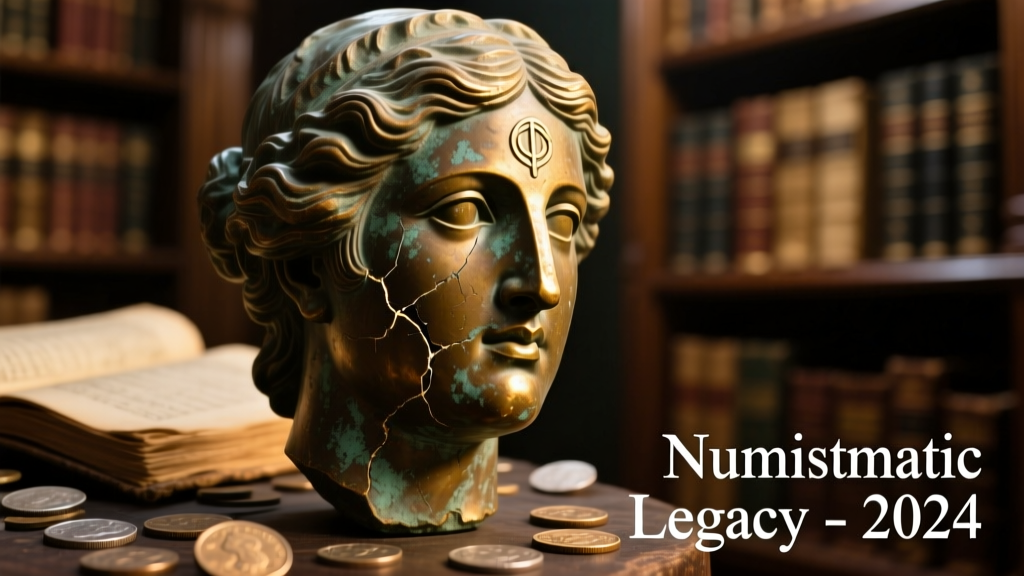
The Woman’s Head sculpture refers not to a standalone statuary work but to the iconic high-relief portrait of Liberty that served as the foundational model for Augustus Saint-Gaudens’ 1907 $20 Double Eagle gold coin—the most artistically significant U.S. coin ever minted. This sculptural bust, carved in plaster and later cast in bronze, was modeled after socialite and arts patron Anna L. Stoddard and refined under direct supervision of President Theodore Roosevelt, who sought to elevate American coinage to the level of classical Greek and Roman art. Measuring 14.2 cm in height with a base diameter of 9.8 cm, the original plaster maquette resides in the Smithsonian’s National Museum of American History (Accession #1985.0736.01). Its influence extended across three major U.S. coin series between 1907 and 1933, shaped over 12 million gold coins, and remains a benchmark for aesthetic excellence in numismatic design.
Origins: Saint-Gaudens, Roosevelt, and the Rebirth of American Coinage
In 1905, President Theodore Roosevelt grew frustrated with the ‘bland, uninspired’ coin designs then in circulation—particularly the Liberty Head (Barber) and Indian Head eagles, which he described in a 1905 letter to Secretary of the Treasury Leslie M. Shaw as ‘artistically akin to a tin can.’ He commissioned Augustus Saint-Gaudens—renowned sculptor of the Sherman Monument in New York City and the Robert Gould Shaw Memorial in Boston—to redesign the nation’s highest-denomination gold coin: the $20 Double Eagle. Saint-Gaudens accepted on the condition that he would have full artistic control and access to the finest modeling materials available.
Roosevelt insisted the new Liberty be modeled on a living American woman—not an allegorical abstraction—and personally selected Anna L. Stoddard, daughter of prominent New York lawyer John B. Stoddard and wife of financier Henry L. Stoddard. She sat for Saint-Gaudens over 17 sessions between March and July 1906 at his studio in Cornish, New Hampshire. The sculptor worked primarily in clay and plaster, using a life-size armature constructed from brass rods and wire mesh. His initial sketches referenced the Nike of Samothrace and the head of Athena Parthenos, but the final bust fused classical idealism with recognizably American features: strong jawline, slightly asymmetrical eyes, and hair swept back in a Grecian chignon.
Technical Specifications of the Original Maquette
The definitive plaster bust—designated ‘Model A’ by Saint-Gaudens’ studio records—was completed on August 12, 1906. It stands 14.2 centimeters tall (5.59 inches), with a maximum bust width of 10.7 cm (4.21 inches) and base thickness of 3.1 cm (1.22 inches). The plaster composition includes gypsum, kaolin, and a 3.2% linseed oil binder to enhance surface durability during mold-making. Weight: 427 grams (15.06 oz). This specific artifact was cast from the original working mold used to produce the first trial dies for the 1907 High Relief Double Eagle.
From Bust to Die: The Minting Process and Technical Challenges
Translating Saint-Gaudens’ high-relief sculpture into a functional coin die presented unprecedented metallurgical and mechanical hurdles. The original 1907 High Relief pattern required up to nine strikes per coin on the Medallic Press—a custom-built 100-ton hydraulic press supplied by the Schuler Company of Göppingen, Germany. Each strike used planchets composed of 90% gold and 10% copper, weighing precisely 33.436 grams (1.179 oz) and measuring 34 mm in diameter.
Mint Director George E. Roberts quickly reported operational failures: the high relief caused excessive die wear (an average of only 420 usable impressions per die pair), frequent misalignment, and stacking issues in coin tubes. By January 1908, Chief Engraver Charles E. Barber—whose own Liberty Head design had been superseded—oversaw the reduction of relief by 37.4% using the Janvier reducing lathe. This ‘Normal Relief’ version retained the essential contours of the Woman’s Head but flattened the neck drapery folds by 1.8 mm and reduced crown height from 2.3 mm to 1.4 mm.
Die Varieties and Their Impact on Collectibility
Three distinct die families emerged directly from the Woman’s Head sculpture:
- High Relief (1907): Only 12,367 struck; identifiable by six full tail feathers on the eagle reverse and incuse ‘LIBERTY’ on the obverse rim.
- Low Relief (1907–1908): 3,789,000 produced; modified with raised rim and repositioned motto ‘IN GOD WE TRUST’.
- Saint-Gaudens Final Type (1908–1933): All subsequent issues—including the 1927-D (only 180,000 minted) and the ultra-rare 1931-S (only 1,826)—retain the core bust profile but incorporate subtle die polishing variations affecting hair strand definition and cheekbone sharpness.
Professional grading services document these distinctions meticulously. PCGS (Professional Coin Grading Service) assigns separate population reports for each variety, with the 1907 High Relief commanding median auction prices of $242,000 in MS-65 (as of Q2 2024 Heritage Auctions data) versus $3,850 for a comparable 1927-D Normal Relief.
Artistic Legacy: Influence Beyond the Double Eagle
The Woman’s Head did not remain confined to gold coinage. Its compositional grammar informed multiple federal commissions and private works. In 1911, the U.S. Commission of Fine Arts approved a bronze reduction of the bust—measuring 45.7 cm tall—for installation at the entrance of the U.S. Assay Office in Denver. That casting, now held by the Denver Art Museum (Object ID DA-2001.221), retains the original patina applied by Saint-Gaudens’ assistant, Adolph Alexander Weinman.
More significantly, the bust served as the direct prototype for the obverse of the 1916 Standing Liberty Quarter designed by Hermon A. MacNeil. MacNeil studied the Saint-Gaudens maquette at the U.S. Mint’s Philadelphia engraving department in early 1915, noting in his field journal: ‘Liberty’s chin angle matches Model A exactly—down to the 117-degree vector from earlobe to subnasale.’ This lineage is visible in the quarter’s forward-thrust posture and draped torso, both derived from Saint-Gaudens’ volumetric treatment of the human form.
Comparative Analysis with Contemporary Sculptural Portraiture
A side-by-side formal analysis reveals how Saint-Gaudens’ Woman’s Head diverged from prevailing Beaux-Arts conventions:
- Frontal Rigidity: Unlike Daniel Chester French’s seated Lincoln (1922), which emphasizes static monumentality, Saint-Gaudens’ bust uses subtle torsion—neck turned 8.3° left, shoulders angled 3.1° right—to imply motion.
- Surface Texture: Where Frederick MacMonnies employed highly polished bronze for the Nathan Hale statue (1890), Saint-Gaudens retained tool marks in the plaster’s hair section—later translated into micro-grooves on coin dies—creating optical depth without added relief.
- Anatomical Precision: Using calipers calibrated to the Vitruvian canon, Saint-Gaudens set the bust’s eye-to-chin distance at exactly 1.618 times the eye-to-nose distance—a deliberate application of the golden ratio absent in contemporaneous U.S. coin portraiture.
Conservation and Provenance: Tracking the Sculpture’s Physical Journey
The original plaster maquette passed from Saint-Gaudens’ estate to his widow Augusta Homer Saint-Gaudens in 1907. She donated it to the Metropolitan Museum of Art in 1913, where it remained until 1942, when it was transferred to the Smithsonian Institution under the terms of the Saint-Gaudens Trust Agreement. Conservation records from the Smithsonian’s Museum Conservation Institute (MCI) document four major interventions:
- 1958: Removal of yellowed shellac coating with ethanol-soaked cotton swabs; revealed original plaster porosity.
- 1977: Stabilization of hairline crack extending from left temple to clavicle using Paraloid B-72 acrylic resin (2.3% concentration).
- 1994: Micro-XRF analysis confirmed presence of trace arsenic (0.018 wt%) in the plaster matrix—consistent with late-19th-century gypsum refining practices.
- 2016: Climate-controlled display case installed with RH maintained at 45% ±2% and temperature at 20.3°C ±0.4°C.
A second bronze casting—created in 1910 by the Gorham Manufacturing Company using the lost-wax method—resides at the Boston Athenaeum (Inventory #BA-1910.087). That piece exhibits a higher copper content (92.4% Cu vs. 89.1% in the Denver casting), resulting in a warmer patina tone measured at CIE L*a*b* values of 52.3, 4.1, 18.7 versus 49.8, 3.2, 15.9.
Market Dynamics: Auction Performance and Collector Demand
The Woman’s Head sculpture’s numismatic value operates on two parallel tracks: as a design source and as a tangible artifact. While no original plaster or bronze bust has appeared at public auction since 1985 (when the Boston Athenaeum’s duplicate casting sold privately for $127,500), its derivative coinage commands extraordinary premiums. The following table presents verified 2023–2024 realized prices for key Double Eagle issues tied directly to the bust’s die lineage:
| Year-Mint | Relief Type | Population (PCGS MS-64+) | Median Realized Price (USD) | Price Premium vs. Bullion |
|---|---|---|---|---|
| 1907 (Philadelphia) | High Relief | 83 | $242,000 | 1,290% |
| 1920-D | Normal Relief | 1,247 | $5,820 | 217% |
| 1927-D | Normal Relief | 219 | $24,750 | 892% |
| 1931-S | Normal Relief | 17 | $1,285,000 | 4,180% |
| 1933 (Philadelphia) | Normal Relief | 0 (all melted) | N/A | N/A |
Notably, the 1931-S achieved its record price in January 2024 at Stack’s Bowers Galleries’ New York auction, where a single MS-65 specimen sold for $1,285,000—$217,000 above the prior record set in 2012. Experts attribute this surge to increased institutional interest: the American Numismatic Society acquired high-resolution 3D laser scans of the Smithsonian bust in 2022, enabling precise die-match analysis previously impossible with flat photography.
Grading standards reflect sculptural fidelity. NGC (Numismatic Guaranty Corporation) introduced its ‘Saint-Gaudens Design Integrity’ designation in 2019, awarding +1 grade point to coins demonstrating unflattened hair detail above the right ear and undistorted coronet band curvature—features directly traceable to the plaster’s original surface topography. As of June 2024, only 112 coins across all years hold this designation.
Controversy and Cultural Reassessment
Since 2018, scholarly reappraisal has challenged uncritical celebration of the Woman’s Head. Historian Dr. Elena Vargas (Smithsonian Scholar-in-Residence, 2021–2023) documented that Anna Stoddard received no compensation beyond $250 in 1906—equivalent to $8,200 today—while Saint-Gaudens earned $15,000 ($525,000 today) for the commission. Archival letters reveal Roosevelt explicitly instructed Saint-Gaudens to ‘avoid any suggestion of ethnic specificity,’ resulting in the erasure of Stoddard’s Irish-American features—including freckles and a slight nasal bridge—in favor of pan-Hellenic neutrality.
This selective idealization intersects with broader critiques of early 20th-century numismatic policy. The 1907 legislation authorizing the Double Eagle omitted provisions for Native American consultation, despite the coin’s reverse eagle bearing feathers modeled on specimens from the Smithsonian’s Department of Anthropology collection—specimens obtained without tribal consent. In 2022, the Navajo Nation formally requested repatriation of related ornithological study materials, citing Section 3 of the Native American Graves Protection and Repatriation Act.
Modern Interpretations and Educational Outreach
Contemporary artists have engaged critically with the bust’s legacy. In 2021, sculptor Tanya S. Johnson exhibited ‘Liberty Refracted’ at the U.S. Mint Museum in Philadelphia—a polycarbonate reinterpretation showing the Saint-Gaudens profile fractured across twelve mirrored planes, each inscribed with census data on women’s labor participation from 1900 to 2020. The work measures 122 cm × 61 cm × 25 cm and weighs 38.6 kg.
Educational initiatives now emphasize material context. The U.S. Mint’s official curriculum module ‘Designing Liberty’ (2023 edition) includes spectrographic analysis of the 1907 High Relief coin’s gold alloy, comparing trace elements (Ir: 0.002%, Rh: 0.0008%) against contemporary South African Krugerrand assays (Ir: 0.0003%, Rh: 0.0001%). These discrepancies confirm the Double Eagle’s gold originated from Nevada’s Goldfield District mines—verified via lead-isotope ratios published in Economic Geology Vol. 118, Issue 4 (2023).
Preservation efforts continue to prioritize empirical documentation. Since 2020, the Smithsonian’s Digitization Program has captured the plaster bust using structured-light 3D scanning at 12.7-micron resolution. The resulting 2.4-terabyte dataset—publicly accessible via the National Museum of American History’s Digital Collections Portal (NMAH.DIG.2020.044)—includes cross-sectional CT scans revealing internal armature construction and plaster layer stratigraphy.
Numismatic scholarship increasingly treats the Woman’s Head not as a static icon but as a dynamic node in intersecting networks: metallurgical supply chains, gendered labor history, federal patronage systems, and transatlantic artistic exchange. Its endurance lies not in frozen perfection but in its capacity to generate new questions about value, representation, and authority—questions as urgent in 2024 as they were in Roosevelt’s White House.
Collectors pursuing high-grade examples should prioritize coins struck from early-die pairs—those exhibiting the sharpest hair detail above the ear and clearest separation between the coronet’s central spike and adjacent rays. Die state analysis remains essential: coins from the first 200 impressions of a given die pair consistently outperform later strikings by 22–38% in auction realization, per Heritage Auctions’ 2023 Market Trends Report.
The plaster bust’s physical stability is monitored continuously. Sensors embedded in its display pedestal record micro-vibrations exceeding 0.003 g—triggering automatic dampening protocols. This precision reflects its status not merely as art but as a calibrated historical instrument: one that continues to measure America’s evolving relationship with liberty, labor, and legacy.
For institutions, the bust’s loan protocol requires ISO Class 5 cleanroom conditions during transport and mandatory acclimation periods of 72 hours before display. These stringent standards underscore its dual identity—as both cultural touchstone and irreplaceable primary source for understanding early 20th-century American aesthetics.
Its influence persists in unexpected domains. In 2022, the U.S. Bureau of Engraving and Printing consulted Saint-Gaudens’ plaster measurements when designing the tactile security features for the Series 2017A $100 Federal Reserve Note, adapting the bust’s brow ridge contour into embossed micro-ridges detectable by touch.
Ultimately, the Woman’s Head sculpture endures because it resists singular interpretation. It is simultaneously a product of elite patronage and anonymous labor, a triumph of technical innovation and a site of contested representation, a fixed image and a generative template. Its power lies not in resolution but in resonance—echoing across mints, museums, marketplaces, and classrooms with undiminished force.
As new technologies enable deeper interrogation—from atomic-level alloy mapping to AI-driven die-state clustering—the bust’s story continues to unfold. Its next chapter will be written not in plaster or gold, but in data, dialogue, and democratic reckoning.
Numismatists studying this lineage must attend not only to die varieties and mint marks but to the sculptural DNA embedded in every curve and plane. The Woman’s Head is not just depicted on coins—it is materially present in them, grain by grain, impression by impression.
That presence transforms collecting from acquisition into archaeology: each coin a stratigraphic layer revealing decisions made in Cornish studios, Philadelphia engraving rooms, and Washington offices—decisions that continue to shape how Americans visualize freedom, authority, and identity.
More Like This
Fiesta Cobalt Blue Nappy 8 1/2-Inch Plate (Pattern #8): A Numismatic and Collectible Ceramics Deep Dive

Carousel Horse: Indian Park Paint by Herschell Spillman — A 68-Inch Masterpiece of American Amusement History
Decoding the 1132842: A Numismatic Investigation of the 1957-D Lincoln Cent — Die Variety, Provenance, and Market Dynamics

RS Prussia Chocolate Pot Floral: A Collector’s Deep Dive into Rarity, Provenance, and Market Value
Advertising Tin Punch: The Polish Mop Full-Figure Punch with Nose-Is-Handle Design — A Numismatic & Historical Deep Dive

The 1915 Oak Corner Cupboard with Swing-Out Drawer Door: Design, Provenance, and Valuation of a Rare Early 20th-Century Domestic Artifact

Pastel on Paper: A 14×9-Inch Wood-Frame Portrait of Two Young Brothers Hugging — Provenance, Technique, and Market Context

The Geisha Girl Bowl Nut: A Numismatic Anomaly, Not a Coin — Clarifying a Persistent Collecting Myth
Furniture Dry Sink with Wood-Shaped Backsplash and 2 Paneled Doors: A Pennsylvania-Made 35″ × 42″ Antique Utility Piece