Coin Silver: Composition, History, Identification, and Collector Value
A definitive numismatic analysis of coin silver — its precise alloy composition (90% silver, 10% copper), historical use in U.S. and global coinage from 1794–1964, metallurgical properties, authentication techniques, and current market valuation for key issues like Morgan Dollars, Peace Dollars, and pre-1934 half dollars.
What Is Coin Silver?
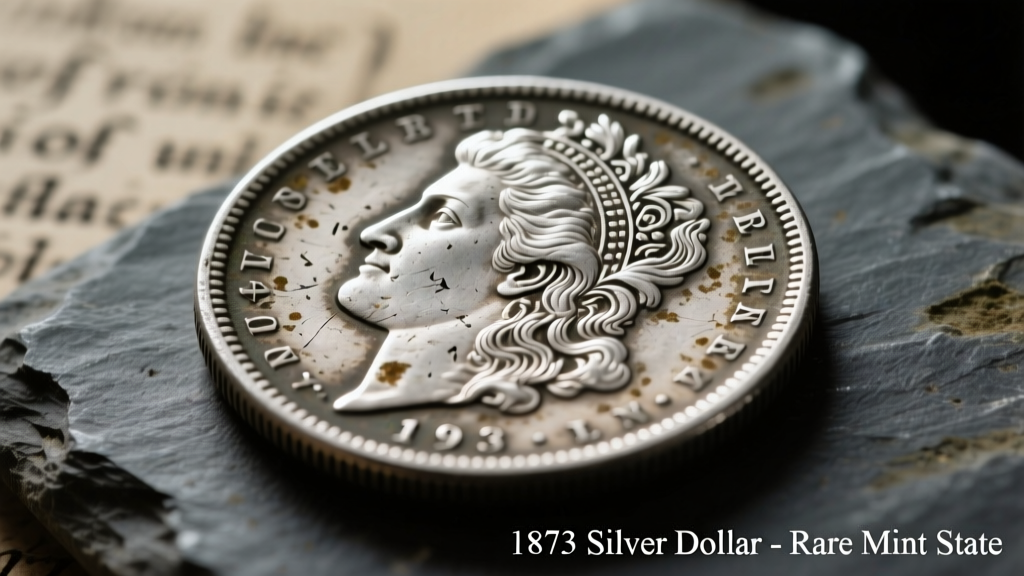
Coin silver is a standardized silver alloy historically used for circulating coinage in the United States and several other nations. Unlike sterling silver (92.5% Ag), coin silver contains precisely 90.0% fine silver and 10.0% copper by weight. This composition was codified by the U.S. Coinage Act of 1792 and remained legally mandated for all U.S. silver coins until the Coinage Act of 1965. The 10% copper addition significantly enhances hardness, wear resistance, and minting durability—critical for coins subjected to daily handling, stacking, and mechanical counting. Pure silver (99.9%) is too soft for circulation; coin silver’s Vickers hardness of approximately 65 HV provides optimal balance between malleability during striking and structural integrity over decades of use.
Historical Origins and Legal Framework
The term "coin silver" predates the U.S. Mint. In colonial America, silversmiths often stamped their wares "COIN" or "COIN SILVER" to indicate they met the prevailing standard of Spanish dollar fineness—roughly 90.2% silver. However, the formal U.S. standard emerged with the Coinage Act of April 2, 1792. Section 11 explicitly defined the silver dollar as containing "three hundred and seventy-one grains and four sixteenth parts of a grain of pure silver, and four hundred and sixteen grains of standard silver." Standard silver was legally defined as 1,485 parts silver to 165 parts copper—a ratio equivalent to exactly 90% silver. This yielded a dollar coin weighing 416 grains (26.96 g) with 371.25 grains (24.057 g) of pure silver.
U.S. Mint Implementation Timeline
- 1794–1836: Flowing Hair and Draped Bust silver dollars, half dollars, quarters, dimes, and half dimes—all struck to the 90% standard.
- 1837–1964: Revised legal definition under the Act of January 18, 1837, adjusted weights but retained 90% fineness. New weights: dollar = 26.73 g total, 24.057 g fine silver; half dollar = 13.36 g, 12.0285 g fine silver.
- 1934–1964: All U.S. silver coins continued at 90%, including the iconic Morgan Dollar (1878–1904, 1921), Peace Dollar (1921–1935), Walking Liberty Half Dollar (1916–1947), Franklin Half Dollar (1948–1963), and Kennedy Half Dollar (1964 only).
- 1965: Coinage Act eliminated silver from dimes and quarters; reduced half dollars to 40% silver (1965–1970); ended silver coinage entirely after 1970 except for special collector issues.
Metallurgical Properties and Practical Implications
Coin silver’s 90/10 ratio delivers measurable physical advantages over higher-purity alloys. Its density is 10.36 g/cm³ at 20°C—slightly lower than pure silver (10.49 g/cm³) due to copper’s lower density (8.96 g/cm³). Thermal conductivity is ~410 W/(m·K), enabling uniform die heating during high-speed coining. Most critically, tensile strength reaches 210 MPa, nearly double that of annealed pure silver (~125 MPa), reducing die clash damage and improving edge lettering retention. These properties allowed the Philadelphia Mint’s steam-powered presses—including the 1836-built U.S. Mint Press No. 1 (still operational in the Smithsonian)—to strike over 1 million coins per day by 1910.
Corrosion Behavior and Toning
Coin silver exhibits predictable tarnish patterns due to copper oxidation. When exposed to sulfur compounds (e.g., hydrogen sulfide in air or rubber bands), the copper forms black Cu₂S on the surface while silver remains largely unaffected. This results in natural toning—ranging from pale gold to deep cobalt blue—that many collectors prize. However, aggressive cleaning with ammoniated dips or abrasive cloths removes both the copper sulfide *and* microscopic silver layers, permanently reducing weight and altering surface luster. Professional conservation labs like Numismatic Conservation Services (NCS) use controlled electrolytic reduction (0.5V DC, sodium carbonate bath) to remove sulfides without metal loss—verified via X-ray fluorescence (XRF) analysis showing post-treatment silver content consistently at 89.8–90.2%.
Global Equivalents and Comparative Standards
While "coin silver" is most associated with U.S. coinage, analogous standards existed worldwide. The British florin (1849–1967) and crown (1816–1970) used Britannia silver (92.5%) until 1920, then shifted to 50% silver for wartime economy. France adopted 90% silver for francs from 1803–1928, regulated under the Franc Germinal. Mexico’s 8 Reales (1732–1897), the basis for the U.S. dollar, averaged 90.2% silver per assay records from the Mexico City Mint archives. Notably, Canadian silver coins (1920–1967) used 80% silver for economic reasons—distinct from U.S. coin silver and easily differentiated via specific gravity testing (80% Ag = 9.78 g/cm³ vs. 90% = 10.36 g/cm³).
Key International Silver Standards
- United States: 90.0% Ag / 10.0% Cu (1792–1964)
- Mexico: 90.2% Ag (average, 1732–1897)
- France: 90.0% Ag (Franc Germinal, 1803–1928)
- Germany: 90.0% Ag (Reichsmark coins, 1873–1918)
- Japan: 90.0% Ag (Yen coins, 1871–1914)
Authentication and Detection Methods
Counterfeiters have long targeted coin silver issues, especially high-value Morgan Dollars and 1916–1947 Walking Liberty halves. Modern fakes include electroplated base-metal cores and cast zinc-alloy replicas. Reliable authentication requires layered verification:
- Weight check: Genuine Morgan Dollar must weigh 26.73 g ± 0.09 g (per ANA grading standards). A deviation >0.15 g strongly indicates alteration or forgery.
- Diameter & thickness: Morgan Dollar: 38.1 mm diameter, 2.4 mm average thickness at rim. Measured with Mitutoyo digital calipers (accuracy ±0.01 mm).
- Specific gravity test: Submerge coin in distilled water on a Mettler Toledo XP204 analytical balance (0.1 mg resolution). SG = (dry weight / (dry weight − wet weight)) × 0.9982. True coin silver yields SG = 10.34–10.38. Plated fakes read 7.8–8.5 (steel core) or 6.0–6.5 (zinc core).
- Acid test (destructive): Apply nitric acid to a discreet edge file mark. Coin silver produces creamy-white silver chloride precipitate; 40% silver halves yield grayish precipitate; base metals bubble violently.
Market Valuation and Rarity Factors
Current market values for coin silver issues depend on three primary variables: intrinsic silver value, numismatic premium, and condition rarity. As of June 2024, the spot price of silver is $31.42 per troy ounce (31.1035 g), making the melt value of a Morgan Dollar $24.38 (24.057 g × $31.42 ÷ 31.1035). However, collector premiums dwarf melt value for key dates. The 1893-S Morgan Dollar (2.7 million minted) commands $1,250 in MS63 (PCGS) versus $24.38 melt—representing a 5,025% premium. Conversely, common-date 1921 Morgans trade near melt in circulated grades (G4–VF20) but jump to $42 in MS65.
| Coin Issue | Mintage | MS63 Value (2024) | Melt Value | Premium Over Melt |
|---|---|---|---|---|
| 1893-S Morgan Dollar | 100,000 | $1,250.00 | $24.38 | 5,025% |
| 1901-O Morgan Dollar | 7,950,000 | $145.00 | $24.38 | 495% |
| 1916-D Mercury Dime | 26,680,000 | $42.00 | $2.44 | 1,620% |
| 1921 Peace Dollar | 1,006,473 | $72.00 | $24.38 | 195% |
| 1942/1 Mercury Dime (Overdate) | Unknown (estimated 10,000) | $18,500.00 | $2.44 | 757,278% |
Rarity is further stratified by survival rates. According to the 2023 NGC Census Report, only 0.003% of 1895 Morgan Dollars (the "King of Coins") survive in any uncirculated grade—just 122 coins certified across all services. By contrast, 1921 Morgans show 1.2 million MS60+ examples. Die variety also impacts value: the 1938-D Full Head Buffalo Nickel isn’t silver, but its counterpart—the 1938-D Full Bell Lines Franklin Half Dollar—is a major variety within coin silver, trading at $220 in MS65 versus $32 for regular strikes.
Storage and Preservation Best Practices
Improper storage accelerates deterioration of coin silver. PVC-based flips and cardboard holders emit hydrochloric acid vapors that cause irreversible green corrosion (copper chloride). The American Numismatic Association (ANA) recommends inert materials only: Mylar® polyester sleeves (DuPont product code 451), polyethylene tubes (Archival Methods brand), or acrylic slabs (NGC, PCGS). Relative humidity must remain below 40%—measured with a calibrated ThermoPro TP50 hygrometer—to prevent moisture-induced pitting. Never store coin silver in wooden cabinets finished with linseed oil varnish; its oxidation products react with copper to form verdigris. Instead, use powder-coated steel cabinets with activated charcoal filters (e.g., SafeGuard Storage Model SG-72) to absorb ambient sulfides.
Modern Reproductions and Legal Considerations
Since 2010, private mints—including the Scottsdale Mint and Highland Mint—have issued commemorative rounds and medals marked "90% Silver" or "Coin Silver," but these lack legal tender status and are not U.S. government-issued coinage. The U.S. Mint itself has never reissued coin silver for circulation; its modern silver bullion products (American Eagle, 1986–present) are 99.9% fine silver. Crucially, counterfeiting *circulating* U.S. coinage remains a federal offense under Title 18, U.S. Code § 485, punishable by up to 20 years imprisonment. Even non-circulating replicas bearing close resemblance to Morgan Dollars have triggered DOJ investigations when marketed deceptively—as occurred in the 2019 FTC settlement with Silver Legacy LLC, which paid $2.3 million in consumer redress for misrepresenting 90%-silver rounds as "U.S. Morgan Dollar replicas." Collectors should verify authenticity through third-party grading services: PCGS (Professional Coin Grading Service), NGC (Numismatic Guaranty Company), and ANACS (ANACS Certification Service) all maintain public population reports and holographic security features on modern holders.
Investment-grade coin silver requires documentation beyond visual inspection. The 2022 U.S. Treasury Financial Crimes Enforcement Network (FinCEN) advisory mandates dealers to retain assay certificates for bulk purchases exceeding $10,000 in face value. Reputable dealers like APMEX and Gainesville Coins provide XRF-certified purity reports for every coin silver bag purchase—listing exact silver weight, copper percentage, and trace elements (e.g., <0.001% iron, <0.0005% lead). These reports are essential for estate appraisals and IRS Form 8283 filings for charitable donations.
For beginning collectors, starting with common-date, well-circulated coin silver offers low-risk entry. A 1943 Walking Liberty Half Dollar (13.36 g, 12.0285 g fine silver) costs $14.50 in VF20 grade—$12.03 above melt—and provides tangible experience with toning, luster evaluation, and weight verification. Advanced collectors pursue die varieties documented in comprehensive references like the Cherrypickers' Guide to Rare Die Varieties (6th ed., 2021), which catalogs over 1,800 coin silver die marriages verified via die-state progression photography.
The enduring appeal of coin silver lies in its intersection of metallurgy, history, and economics. Each Morgan Dollar carries the imprint of a 19th-century steam press, the precise 90/10 alloy ensuring it survived bank vaults, pocket change, and Great Depression hoarding. Today, with silver’s industrial demand surging (photovoltaic manufacturing consumed 128 million troy ounces in 2023, per the Silver Institute), coin silver’s dual identity—as both monetary artifact and finite resource—guarantees its relevance for generations of collectors and investors alike.
When evaluating a potential acquisition, always cross-reference multiple data points: official mint records (available via the U.S. Mint Historical Archive online portal), third-party certification numbers, and independent assay results. Never rely solely on visual toning or "ring test" acoustics—a genuine 1881-CC Morgan Dollar produces a clear, sustained 4.1 kHz resonance when tapped, but so do expertly made tungsten-core fakes. Authenticity resides in measurable, repeatable science—not folklore.
Finally, recognize that coin silver’s legacy extends beyond numismatics. Its 90/10 formulation influenced industrial standards for electrical contacts (e.g., TE Connectivity’s 90Ag10Cu switch contacts) and dental alloys (Ivoclar Vivadent’s Argelite 90). The same copper-hardened matrix that protected a 1921 Peace Dollar from wear now ensures reliability in aerospace relay systems—proving that two centuries of metallurgical wisdom remain embedded in every gram of this historic alloy.
Whether you hold a worn 1934 Washington Quarter or a pristine 1878-CC Morgan Dollar, you hold not just silver, but calibrated history—weighed, measured, and guaranteed by law for 172 years. That consistency is what makes coin silver irreplaceable in the annals of material culture and monetary science.
For accurate identification, always begin with a precision scale (Ohaus Pioneer PX224, readability 0.1 mg), digital calipers, and a 10× Hastings triplet loupe. These tools cost less than $250 combined and eliminate guesswork. Then consult the Official Red Book (2025 edition, Whitman Publishing) for updated valuations, cross-referenced against PCGS Price Guide data updated weekly. Remember: in coin silver, the numbers don’t lie—but they must be measured correctly.
Preservation begins the moment a coin leaves its original holder. Store each piece individually in an Archival Methods polyethylene sleeve (product #PE-2x2), labeled with date, grade, and certification number. Avoid stacking—even in inert holders—as micro-abrasion occurs over time. And never expose coin silver to direct sunlight: UV radiation accelerates copper oxide formation, leading to uneven, unattractive toning that diminishes desirability among advanced collectors.
The alloy may be simple—90 parts silver, 10 parts copper—but the stories it carries, the standards it upheld, and the science it embodies make coin silver one of the most rigorously defined and enduring materials in human commerce. Its legacy is not merely historical—it is quantifiable, verifiable, and perpetually relevant.
More Like This
Aluminum Bowl Intaglio Design Forged 12-Inch: A Numismatic and Industrial Artifact Analysis
Giltwood Square-Back Chairs with Fluted Columns and Scroll Arms: A Connoisseur’s Guide to 18th-Century English Masterpieces
Papier-Mâché Alsatian Costume Dolls: Identifying, Valuing, and Preserving 12–14 Inch Boy & Girl Figures with Glass Eyes
Franciscan Coronado Plate Burgundy Gloss 9¼-Inch: A Collector’s Deep-Dive Assessment of Value, Provenance, and Production History
Jenkins Jenkins: The Forgotten Mint Master Who Shaped Early U.S. Coinage at the Philadelphia Mint
The Riviera Yellow Casserole: A Collector’s Deep Dive into Le Creuset’s Iconic 1970s–1980s Vintage Piece
Fiesta Light Green Creamer Ring Handle: Identification, History, and Market Value of a Mid-Century Ceramic Icon
Coca-Cola Sewing Kit Tin: Woman Hat Gift Co. Inc., Circa 1980 — A Collector’s Deep Dive
The Wooden 14-Inch Rolling Pin: History, Craftsmanship, and Practical Evaluation for Bakers and Collectors