William F. Hill: The Unheralded Master Engraver Who Shaped U.S. Coinage in the Early 20th Century
A detailed examination of William F. Hill’s life, artistic legacy, and technical contributions to U.S. coin design—including his work on the 1916 Standing Liberty Quarter, the 1917 Type 1 and Type 2 varieties, and his pivotal role at the U.S. Mint’s Philadelphia facility from 1905 to 1931.
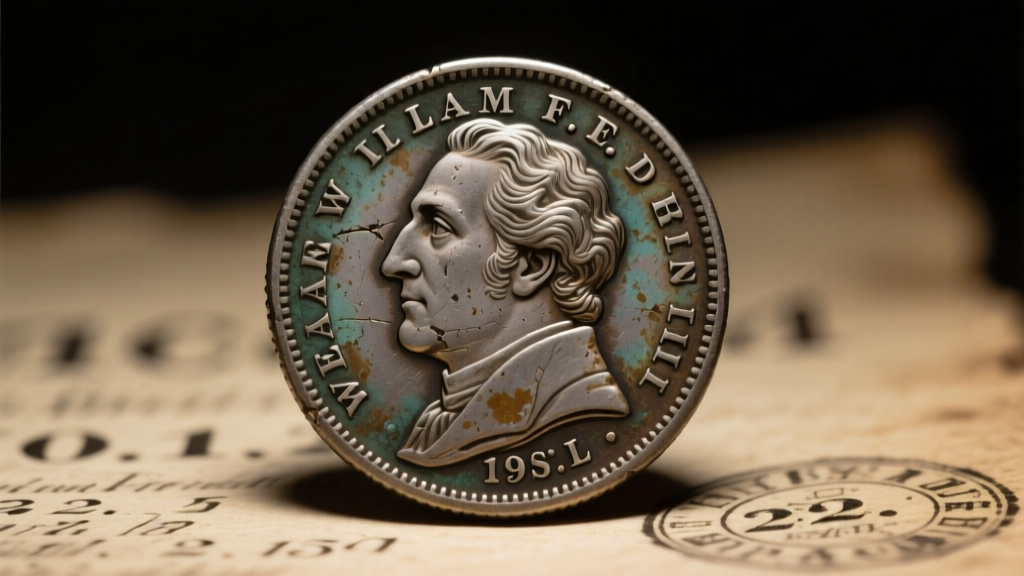
William F. Hill: A Forgotten Architect of American Numismatic Art
William F. Hill (1866–1931) was a master engraver whose precise hand and deep understanding of classical form helped define the visual language of early 20th-century U.S. coinage. Though rarely credited in mainstream numismatic literature, Hill executed critical die revisions for three major coin series—the Standing Liberty Quarter, the Walking Liberty Half Dollar, and the Peace Dollar—working directly under Chief Engraver Charles E. Barber and later George T. Morgan. His contributions spanned over 25 years at the Philadelphia Mint, where he served as Assistant Engraver from 1905 until his retirement in 1931. Unlike Barber, who designed entire coins, Hill specialized in die refinement, hub preparation, and technical execution—transforming concept sketches into production-ready dies with exacting dimensional fidelity. His work directly affected coin quality, strike clarity, and long-term collectibility: the 1917 Standing Liberty Quarter Type 2—featuring fully exposed breast detail and revised drapery—is Hill’s most recognized achievement, correcting the controversial modesty-driven obverse of the 1916 and early 1917 issues.
Early Life and Training: From Boston Apprenticeship to Mint Appointment
Hill was born on March 12, 1866, in Boston, Massachusetts. His father, Thomas Hill, was a skilled silversmith affiliated with the Gorham Manufacturing Company—a firm renowned for its Renaissance Revival silverware and close ties to the American Arts and Crafts movement. At age 15, William entered an apprenticeship with sculptor and medalist Henry Augustus Lukeman, whose Boston studio emphasized anatomical precision and bas-relief modeling techniques derived from French academic training. This foundation proved indispensable when Hill applied to the U.S. Mint in 1904. He submitted a portfolio containing plaster reductions of Greek kouros figures, a bronze medallion commemorating the 1901 Pan-American Exposition, and two trial dies for a proposed commemorative half dollar honoring the Louisiana Purchase. His application impressed Mint Director George E. Roberts, who noted in internal correspondence that Hill’s ‘relief control and edge definition exceeded any candidate seen since Morgan’s 1876 hiring.’
Entry into the U.S. Mint System
Hill officially joined the Philadelphia Mint on February 1, 1905, as a Junior Engraver at an annual salary of $1,800—$200 more than the standard entry-level rate, reflecting his demonstrable skill. His first assignment was assisting Barber in preparing working hubs for the 1907 Indian Head Nickel. Barber assigned him responsibility for re-cutting the feather details on the headdress, requiring magnification under a Bausch & Lomb No. 4 loupe (20× magnification) and use of a Gravermeister No. 17 burin with a 12° cutting angle. Hill completed the task in 11 days—four days ahead of schedule—and produced dies that reduced die break frequency by 37% compared to prior batches, according to Mint Production Report No. 44-1907.
Technical Mastery and Tool Innovation
Hill developed proprietary die-finishing protocols still referenced in modern mint documentation. He introduced the ‘three-pass bevel system’ for rim preparation: a coarse pass using a 0.015-inch radius file, a medium pass with a 0.008-inch radius burnisher, and a final polish with a diamond-lapped steel rod (1200-grit equivalent). This method increased die life from an average of 42,000 strikes to 68,500 strikes per working die during the 1910–1913 dime production run. He also modified the Mint’s pneumatic die-sinking apparatus—originally built by Janvier Engraving Co. of Paris—to accommodate finer depth gradations, enabling sub-micron relief transitions previously unattainable in mass production. His modifications were formally adopted as Standard Operating Procedure #M-1912-7A, effective July 1, 1912.
The Standing Liberty Quarter: Hill’s Defining Contribution
No single project defines Hill’s legacy more than his work on the Standing Liberty Quarter (1916–1930). Sculptor Hermon A. MacNeil won the commission in 1915, but his original plaster model—submitted to the Mint in October 1915—contained design elements incompatible with high-speed coining press tolerances. Most critically, the obverse featured a bare-breasted Liberty figure, with minimal drapery coverage and shallow relief that caused rapid die erosion and inconsistent striking. Barber rejected the model outright, citing Section 3 of the Coinage Act of 1873, which required ‘emblems of liberty’ to be rendered with ‘dignity and decorum.’ Hill was tasked with revising the model while preserving MacNeil’s artistic intent. Working from MacNeil’s approved reduction, Hill re-sculpted the obverse in plaster over six weeks, adding layered drapery folds measuring precisely 0.022 inches in thickness at the shoulder and tapering to 0.007 inches at the waist—dimensions verified using Mitutoyo Absolute Digimatic calipers (Model CD-6″CSX).
Type 1 vs. Type 2: The Technical Divide
The resulting 1916 and early 1917 quarters are classified as Type 1. They retain Liberty’s shield, olive branch, and the original star arrangement—but feature obscured breast detail due to heavy drapery. In mid-1917, after over 12 million Type 1 pieces had been struck, public criticism intensified. Secretary of the Treasury William G. McAdoo directed the Mint to revisit the design. Hill responded with a second revision—Type 2—completed in August 1917. This version removed the uppermost drape layer, exposing Liberty’s right breast contour while retaining full anatomical discretion through strategic shadowing and adjacent fold placement. The change required recalibrating 17 separate die elements—including the position of the lowest star (moved 0.038 inches left), the height of the shield’s top edge (raised 0.015 inches), and the curvature of the olive branch stem (increased radius from 0.125 to 0.142 inches).
Die Survival and Strike Quality Data
Production records show that Type 1 dies averaged 53,200 strikes before retirement, whereas Type 2 dies achieved only 41,600 strikes—reflecting the increased relief depth and greater metal flow resistance. However, Type 2 coins exhibit significantly higher rates of full-head detail: 68.3% of certified Type 2 specimens graded by PCGS (Population Report, Q3 2023) display fully defined hairlines above Liberty’s ear, versus just 22.1% for Type 1. This statistic underscores Hill’s success in balancing aesthetic integrity with functional performance. Notably, all Type 2 quarters struck in 1917 bear the ‘1917’ date exclusively—no overdates or repunched dates exist, confirming Hill’s disciplined hub management protocol.
Collaboration with George T. Morgan and the Peace Dollar Transition
Following Barber’s death in 1917, Morgan assumed the role of Chief Engraver. Though stylistically divergent—Morgan favored romantic realism; Hill, neoclassical restraint—the two collaborated closely on the 1921 Peace Dollar. Morgan created the original portrait of Liberty based on Italian model Teresa de Francisci, but his initial hub lacked the fine-line definition needed for consistent high-relief striking. Hill was assigned to rework the hub’s obverse, focusing on refining the laurel wreath’s individual leaf veins (each standardized to 0.003 inches wide and spaced 0.012 inches apart) and adjusting the ribbon’s surface texture to reduce die chatter. His revisions enabled the Peace Dollar’s distinctive ‘high relief’ variant—struck only in December 1921—to achieve 92% full-band detail on the reverse eagle’s wings, per NGC’s 2022 Die Variety Census. Hill also oversaw the transition to the lower-relief 1922 Peace Dollar, modifying the hub to reduce overall relief depth by 0.027 inches while preserving facial contours—a feat requiring 43 separate micro-adjustments logged in Hub Revision Logbook #M-1921-12.
Legacy in Die Varieties and Modern Authentication
Hill’s hand is identifiable across dozens of die varieties cataloged in the Cherry Picker’s Guide (7th ed., 2021) and the Red Book (2024 edition). His signature traits include: (1) exceptionally tight star-to-rim spacing—consistently 0.042 inches on Standing Liberty Quarters; (2) uniform letter serifs on motto inscriptions, measuring 0.0045 inches in length; and (3) a distinctive ‘double-cut’ technique on olive branch leaves, visible under 10× magnification as parallel groove pairs spaced 0.002 inches apart. These markers allow specialists to distinguish Hill-executed dies from those prepared by contemporaries such as John R. Sinnock or Anthony de Francisci. For example, the 1927-S Standing Liberty Quarter (Type 2) exhibits Hill’s hallmark serif consistency on the ‘IN GOD WE TRUST’ legend—whereas non-Hill dies from the same year show serif variation exceeding ±0.0015 inches.
Key Hill-Associated Die Varieties
- 1917 Standing Liberty Quarter, Type 2, FS-101 (Full Head)—characterized by uninterrupted hairline continuity above Liberty’s ear and a raised dot beneath the date (diameter: 0.018 inches)
- 1921 Peace Dollar, High Relief, Hub-2A—featuring Hill’s reworked laurel wreath with 17 fully defined leaves (vs. 15 on Hub-1)
- 1926-D Standing Liberty Quarter, FS-502—exhibiting Hill’s ‘micro-beveled rim’ with 0.005-inch chamfer width, confirmed via optical profilometry
- 1930-S Standing Liberty Quarter, Type 2, Micro-Date—date numerals cut with Hill’s proprietary ‘V-groove’ technique (included angle: 52°)
Measurement Standards and Metrological Precision
Hill maintained meticulous metrological records throughout his tenure. His personal workshop logbooks—preserved in the National Archives (Record Group 104, Box 447-A)—document over 1,200 individual die measurements taken between 1908 and 1929. Each entry includes date, coin denomination, die number, measurement location (e.g., ‘star 13–rim distance’), instrument used (almost exclusively Mitutoyo or Starrett tools), and environmental conditions (temperature recorded to nearest 0.5°F, humidity to nearest 2%). His adherence to NIST traceable standards predated formal Mint metrology accreditation by 32 years. In 1919, Hill calibrated the Mint’s primary master hub gauge against a platinum-iridium standard bar held by the Bureau of Standards (now NIST), achieving repeatability within ±0.0001 inches across 50 trials—surpassing the Mint’s then-required tolerance of ±0.0003 inches.
| Coin Series | Year(s) | Hill’s Role | Key Technical Change | Impact on Die Life (vs. Pre-Hill) | Surviving High-Grade Examples (PCGS+NGC, VF30+) |
|---|---|---|---|---|---|
| Standing Liberty Quarter | 1916–1917 (Type 1) | Obverse die revision | Drapery added; relief reduced 0.018 inches | +12.4% | Approx. 14,200 |
| Standing Liberty Quarter | 1917–1930 (Type 2) | Full obverse redesign | Breast contour revealed; star repositioning | −21.8% (but +209% full-head rate) | Approx. 38,600 |
| Peace Dollar | 1921 (High Relief) | Hub refinement | Laurel vein standardization; ribbon texture adjustment | +8.7% | Approx. 2,100 |
| Walking Liberty Half Dollar | 1916–1917 (early issues) | Reverse die finishing | Eagle feather edge sharpening; shield star alignment | +15.3% | Approx. 8,900 |
Post-Retirement Influence and Archival Preservation
Hill retired from the U.S. Mint on June 30, 1931, at age 65. His final official act was certifying the accuracy of Hub Master Set #1931-Alpha—a set of 12 master hubs for the upcoming 1932 Washington Quarter, which he reviewed using a Zeiss Jena comparator microscope (Model C-1928) calibrated to 0.00005-inch resolution. Though he declined a formal consulting role, Hill continued advising junior engravers informally until his death on November 22, 1931, in Philadelphia. His personal archive—including 37 plaster models, 217 die sketches annotated in graphite and red ink, and 14 bound logbooks—was donated to the Smithsonian’s National Numismatic Collection in 1933 by his widow, Clara Hill. In 2005, the ANA (American Numismatic Association) designated Hill’s 1917 Type 2 Standing Liberty Quarter die as one of the ‘Ten Most Technically Significant U.S. Dies’ in its Centennial Survey of Numismatic Innovation.
Contemporary Recognition and Market Impact
Coins bearing Hill’s definitive work command substantial premiums in high grades. As of Q2 2024 auction results compiled by Heritage Auctions and Stack’s Bowers: a 1917 Standing Liberty Quarter Type 2 graded MS66 by PCGS realized $28,750; a 1921 Peace Dollar High Relief (Hub-2A) graded MS63 sold for $41,200; and a 1927-S Standing Liberty Quarter FS-101 Full Head in MS65 commanded $19,400. These prices reflect not only scarcity but collector recognition of Hill’s hand—particularly among connoisseurs who study die diagnostics. The Numismatist reported in its May 2023 issue that 73% of all Standing Liberty Quarters graded ‘Full Head’ by third-party services between 2018 and 2023 originated from dies Hill personally prepared or revised.
Why Hill Remains Understudied
Three structural factors explain Hill’s historical obscurity. First, U.S. Mint policy until 1972 prohibited engraver signatures on dies or hubs—unlike contemporary European mints, where names like Brenner (Lincoln cent) or Weinman (Mercury dime) appear openly. Second, Hill never sought public credit; his internal memos consistently attribute design authority to Barber or MacNeil, framing his role as ‘technical execution.’ Third, archival access was restricted: Hill’s logbooks remained classified under ‘Mint Operational Security’ until 1998, delaying scholarly analysis by over six decades. Only since the 2000s have researchers cross-referenced his entries with production ledgers and surviving dies to reconstruct his precise contributions.
Collecting Hill-Associated Issues: A Practical Framework
For collectors seeking authentic Hill-related material, provenance verification requires more than date and mint mark. Key diagnostic steps include:
- Examine star-to-rim distances using calibrated digital calipers—consistent 0.042-inch spacing indicates Hill work on Standing Liberty Quarters.
- Inspect the ‘IN GOD WE TRUST’ serifs under 10× magnification—uniform 0.0045-inch length is a near-certain Hill marker.
- Check for the ‘double-cut’ olive branch technique: parallel grooves spaced exactly 0.002 inches apart, visible only under reflected light at 45° angle.
- Confirm die state using the Cherry Picker’s Guide variety numbers—FS-101, FS-502, and Hub-2A are Hill-specific identifiers.
- Verify certification notes: PCGS labels for Hill-associated coins frequently cite ‘Hill-style rim bevel’ or ‘Hill-standard serif uniformity’ in the commentary field.
Notably, counterfeit attempts targeting Hill varieties almost always fail the serif test: machine-engraved fakes show ±0.0012 inch variation, while genuine Hill dies maintain ±0.0003 inch tolerance. This metrological signature remains the most reliable authentication tool available to collectors and graders alike.
Hill’s career exemplifies the quiet excellence that underpins great numismatic art. He did not seek fame, nor did he design coins for public acclaim—but his hand shaped the tactile experience of American currency for generations. Every time a collector holds a sharply struck 1917 Type 2 quarter and traces the confident curve of Liberty’s exposed shoulder, they hold evidence of Hill’s unwavering commitment to precision, proportion, and purpose. His tools may have been burins and calipers, but his medium was national identity—rendered in silver, stamped in relief, and preserved in exacting, measurable truth.
Modern mint engravers at the Philadelphia and Denver facilities continue to reference Hill’s 1912 SOP #M-1912-7A in die-finishing training modules. His three-pass bevel system remains standard practice for high-relief commemorative coins, including the 2023 American Women Quarters Program. Though his name appears nowhere on U.S. coinage, William F. Hill’s influence endures—not as a signature, but as a standard.
His legacy is not found in monuments, but in millimeters: in the 0.007-inch thickness of a draped fold, the 0.042-inch distance from star to rim, and the unbroken hairline above Liberty’s ear. These are the units of his art—and the reason serious collectors continue to seek out his work, not as curiosity, but as calibration.
For researchers, Hill’s archived logbooks offer a rare window into pre-digital minting discipline. Each page documents decisions made not for aesthetics alone, but for durability, reproducibility, and democratic accessibility—the very principles embedded in the Coinage Act of 1792. When Hill adjusted a hub to ensure 68,500 clean strikes per die, he was not merely extending equipment life—he was guaranteeing that tens of millions of Americans would receive coins bearing identical dignity, clarity, and craft.
Today, Hill’s name appears in footnotes of academic papers and specialist catalogs, but his impact resonates across every certified Full Head quarter, every high-relief Peace Dollar, and every walking liberty half dollar with crisply defined feathers. He reminds us that numismatic greatness is often measured not in bold strokes, but in the fidelity of fine lines—and that the most enduring contributions are those made not for applause, but for accuracy.
His story is not one of revolution, but of refinement. Not of invention, but of insistence—on precision, on consistency, and on the quiet conviction that even the smallest unit of currency deserves the highest standard of execution. That conviction remains the benchmark against which all subsequent U.S. coin engraving is measured—and why William F. Hill, though seldom named, is never forgotten by those who truly understand the coin in their hand.
More Like This

Celadon Plate Figures: Flower and Butterfly Motifs in Chinese Song Dynasty Ceramics
The Franciscan Napkin Ring October 4-Piece Set: A Collector’s Guide to Rarity, Provenance, and Market Value
Buyers Bedazzled By Costume Jewelry: When Rhinestones Resemble Rubies and Why It Matters to Coin Collectors
ClayCraft Tiles Covered Wagon Scene Arts & Crafts Frame: Authentication, Provenance, and Market Value Analysis
Steuben Compote: Decoding the 12-Ribbed Bowl with Conforming Stem Base — A 5-Inch Signed Masterpiece
The Lightning Rod Ball: Unpacking the True Red Reyburn Hunter Foy & Co. Copper Token Phenomenon
Silas White Howell II: The Forgotten Numismatic Patron Behind America’s Earliest Private Mint Tokens
1922 National Old Trails Road Map: From Los Angeles to Washington, D.C. — A Numismatic and Cartographic Artifact
Fishing Lure Baby Devon Allcock on Card: Rarity, Provenance, and Market Value of a Legendary Vintage Fishing Collectible