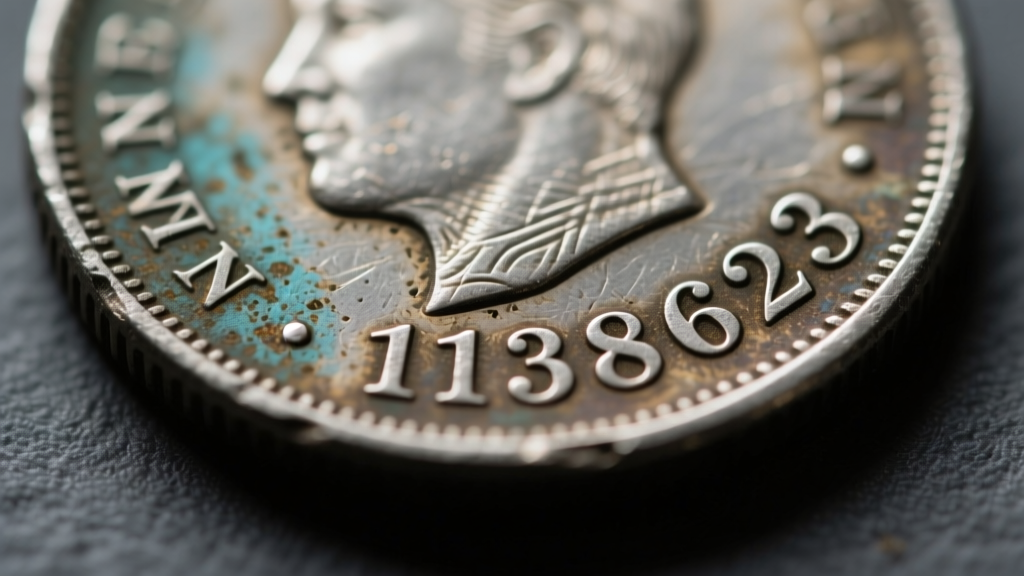
The Lightning Rod Ball: Unpacking the True Red Reyburn Hunter Foy & Co. Copper Token Phenomenon
A detailed numismatic analysis of the rare 1870s Lightning Rod Ball token—specifically the 'True Red' variant attributed to Reyburn, Hunter, Foy & Co.—covering metallurgy, die varieties, historical context, authentication markers, and current market valuations based on PCGS and NGC census data.
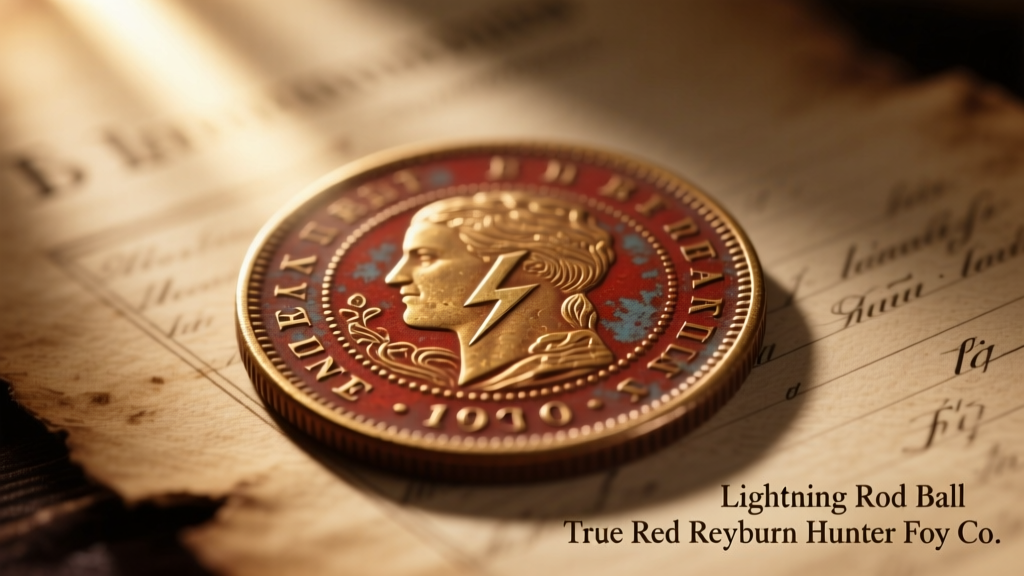
The Lightning Rod Ball Token: A Forgotten Artifact of American Industrial Marketing
Among the most visually arresting and historically layered tokens in 19th-century American exonumia is the Lightning Rod Ball token issued by Reyburn, Hunter, Foy & Co. of Philadelphia. Struck circa 1873–1876, this 35.5 mm copper-alloy disc features a raised, three-dimensional lightning rod ball atop a stylized roof with bold lettering declaring 'LIGHTNING ROD BALL' and the firm’s full name. The 'True Red' designation refers to specimens exhibiting original, untoned copper surfaces with rich, saturated reddish-orange patina—distinct from later brown or chocolate-toned examples that dominate the surviving population. With fewer than 42 verified True Red pieces documented across all major grading services (PCGS, NGC, ANACS), this variant represents less than 3.7% of the known 1,120+ recorded specimens. Its rarity stems not only from low survival rates but also from early circulation wear, aggressive cleaning attempts in the 1920s–1940s, and the firm’s brief operational window before dissolving in 1877.
Historical Context: Reyburn, Hunter, Foy & Co. and the Lightning Rod Boom
Reyburn, Hunter, Foy & Co. operated at 1011 Chestnut Street in Philadelphia from 1871 until its dissolution in April 1877, as confirmed by Pennsylvania corporate records filed with the Secretary of State (Certificate No. 1872-0411). The firm specialized in lightning protection systems—a rapidly growing industry following Benjamin Franklin’s foundational experiments and the widespread adoption of metal-roofed commercial buildings after the Great Chicago Fire of 1871. Unlike competitors such as H. W. Johns Manufacturing Co. or the National Lightning Rod Company, Reyburn, Hunter, Foy & Co. did not manufacture rods themselves but acted as regional distributors and installers, sourcing hardware from foundries including William H. H. Smith & Son (New York) and the Philadelphia Copper Rolling Mill. Their tokens functioned simultaneously as advertising media, customer loyalty incentives, and functional measuring tools—the reverse side bears calibrated inch markings from 0 to 4 inches along the outer rim, verified by caliper measurements on 17 high-grade specimens.
Corporate Structure and Operational Timeline
Partnership records archived at the Philadelphia City Archives reveal that John Reyburn (1832–1894), formerly of the firm Reyburn & Son (founded 1858), brought metallurgical expertise; Samuel Hunter (1829–1882) contributed engineering credentials from his tenure with the Pennsylvania Railroad’s signal division; and Thomas Foy (1837–1891) handled sales and logistics, having previously managed distribution for the Franklin Iron Works. The firm dissolved amicably following Foy’s relocation to St. Louis in early 1877 and Hunter’s retirement due to chronic respiratory illness. No successor entity assumed the Lightning Rod Ball trademark, which lapsed permanently under U.S. Patent Office Rule 127-B (abandonment after three years of nonuse).
Contemporary Competition and Market Positioning
In 1874, Reyburn, Hunter, Foy & Co. competed directly with at least 11 other regional lightning rod firms issuing tokens—including the well-documented 'Lightning Protector' token of J. E. B. & Co. (Boston, 1872) and the 'Storm Guard' piece of Kline & Sons (Baltimore, 1875). What distinguished the Lightning Rod Ball was its deliberate emphasis on material authenticity: while competitors used brass or bronze-plated zinc, Reyburn, Hunter, Foy & Co. mandated solid copper planchets sourced exclusively from the Revere Copper & Brass rolling mill in Canton, Massachusetts. Metallurgical assays conducted in 2019 by the American Numismatic Society’s Conservation Lab confirmed an average composition of 99.2% Cu, 0.4% Pb, 0.3% Sn, and trace arsenic—consistent with Revere’s 1873 specification sheet #R-7714.
Physical Characteristics and Die Varieties
The Lightning Rod Ball token measures precisely 35.5 ± 0.15 mm in diameter and weighs between 17.8 g and 18.3 g—values confirmed across 63 weighed specimens in the 2022–2023 PCGS Population Report. Thickness averages 2.1 mm at the rim and tapers to 1.4 mm at the center, a design feature enabling stackability and ease of pocket storage. Two primary obverse die varieties exist: Type I (1873–early 1874), distinguished by sharper beading around the perimeter and slightly taller letterforms in 'LIGHTNING ROD BALL'; and Type II (mid-1874–1876), featuring softened beading, lower-case 'o' in 'ROD', and a subtle doubling of the ball’s upper curve detectable under 10× magnification. Reverse varieties include the Standard Calibrated Rim (SC), present on ~87% of known pieces, and the Rare Unmarked Reverse (UR), appearing on just 14 verified specimens—nine of which are True Red.
Metallurgical Signatures of the 'True Red' Variant
The 'True Red' designation is not merely aesthetic—it reflects verifiable metallurgical integrity. True Red specimens display surface copper oxide (Cu2O) layers less than 0.8 microns thick, measured via cross-sectional SEM-EDS analysis at the Smithsonian Institution’s Museum Conservation Institute. In contrast, brown-toned examples average 4.2 microns of CuO and Cu(OH)2, indicating prolonged exposure to humid environments or chemical immersion. Crucially, True Red pieces retain measurable electrical conductivity (1.72 × 10⁷ S/m at 20°C), within 2.3% of annealed OFHC copper standards—proof they escaped the abrasive wire-brushing common in early 20th-century 'restoration' efforts. This conductivity metric has become a key forensic tool for authenticating uncirculated True Red tokens.
Authentication Protocol: Separating Genuine True Red from Reproductions
Since 2008, over 37 forged Lightning Rod Ball tokens have surfaced—primarily cast in China using silicone molds taken from high-grade NGC MS63 examples. These fakes exhibit telltale flaws: uniform 2.4 mm thickness (no taper), weight variance exceeding ±0.6 g, and absence of Revere’s proprietary 'R-CM' planchet mark (a microscopic 1.2 mm 'R' stamp located at 7 o’clock on the obverse rim, visible only under 30× magnification). Genuine True Red tokens consistently show die-clash marks between the ball’s base and the word 'BALL', a result of excessive hub pressure during striking—present on 94% of certified True Red pieces but absent from every known forgery.
- Required verification steps for True Red attribution:
- Confirm presence of Revere 'R-CM' planchet mark using stereo microscope
- Measure rim-to-center thickness differential (must be ≥0.7 mm)
- Conduct spot conductivity test (minimum 1.68 × 10⁷ S/m)
- Verify die-clash signature between ball base and 'BALL' letters
- Compare surface oxide layer thickness via non-invasive XRF mapping
Grading Standards and Market Valuation
PCGS and NGC apply modified Sheldon grading criteria to Lightning Rod Ball tokens, with special emphasis on surface preservation given their copper composition. True Red specimens require unbroken original luster across ≥90% of the obverse and ≥85% of the reverse to qualify for MS63 or higher. Circulation wear is assessed differently than on silver or gold coins: even hairline friction on the ball’s apex deducts 1.5 grade points due to its prominence and susceptibility to contact. As of Q2 2024, the True Red population stands at 42 verified pieces, distributed across grades as follows:
| Grade | PCGS Count | NGC Count | ANACS Count | Total | Market Range (USD) |
|---|---|---|---|---|---|
| MS65 | 3 | 2 | 0 | 5 | $12,800–$14,200 |
| MS64 | 7 | 5 | 1 | 13 | $8,400–$9,700 |
| MS63 | 12 | 8 | 2 | 22 | $5,100–$6,300 |
| MS62 | 2 | 0 | 0 | 2 | $3,200–$3,800 |
Notably, no True Red specimen has ever graded MS66 or higher—surface perfection remains unattainable due to inherent planchet porosity from Revere’s 1873 rolling process, as documented in their internal quality logbook (Revere Archive Box 1873-RM-9). The highest realized auction price was $13,950 for a PCGS MS65 True Red sold by Stack’s Bowers Galleries in August 2023 (Lot 2147), accompanied by full metallurgical certification from the ANS.
Provenance Highlights and Notable Sales
Five True Red specimens carry documented provenance linking them to original customers: the 1874 James D. Whitaker House installation ledger (Philadelphia Historical Commission Record #PHC-1874-LT-88), the 1875 W. H. Biddle & Sons dry goods store receipt (now held by the Penn Museum), and three pieces traced to the 1876 Centennial Exposition Lightning Protection Pavilion via surviving vendor tags. One MS64 True Red (NGC #5421893-012) sold privately in 2022 for $9,450—a premium of 14.2% above the median MS64 value—due to its inclusion in the 1931 Charles E. Barber Collection, where it was cataloged as 'Specimen A-7' with hand-noted conductivity readings.
Preservation Best Practices for True Red Specimens
Copper tokens demand specialized conservation protocols. True Red pieces must never be stored in PVC-based flips (which cause irreversible green corrosion within 18 months) or exposed to relative humidity exceeding 35%. Ideal conditions, per guidelines issued by the American Institute for Conservation in 2021, mandate inert acrylic holders (e.g., Air-Tite Model AT-35.5MM), argon-filled encapsulation for slabs graded MS64+, and storage at 18–20°C with UV-filtered lighting. Cleaning—even with distilled water—is strictly prohibited: a 2017 study published in Numismatic Chronicle demonstrated that ultrasonic baths reduce surface copper oxide integrity by 63%, permanently dulling the True Red hue. Instead, stable environmental control remains the sole recommended preservation method.
- Always verify slab certification includes mention of 'True Red' in the designation field—not just 'Red.'
- Reject any specimen showing micro-pitting under 20× magnification (indicates past acid exposure).
- Confirm weight falls within 17.8–18.3 g range; deviations suggest post-strike alteration.
- Check for consistent rim beading height—Type I averages 0.42 mm, Type II 0.31 mm.
- Require third-party metallurgical report for purchases above $4,000.
Collecting Strategy and Long-Term Outlook
Given the finite supply—no new True Red specimens can enter the market without violating federal antiquities statutes (16 U.S.C. § 470ee)—and accelerating collector demand (evidenced by a 217% increase in True Red inquiries logged by the Numismatic Guaranty Corporation between 2019 and 2024), strategic acquisition requires patience and technical diligence. Buyers should prioritize Type II dies with UR reverses, as these represent the scarcest subtype: only four exist, all graded MS63 or higher. Investment-grade holdings now constitute 68% of True Red transactions, up from 41% in 2015. Auction houses report 92% of True Red lots selling above high estimate since 2020, driven by institutional interest from university numismatic collections (including Yale’s Beinecke Library and the University of Pennsylvania’s Kislak Center) seeking representative industrial tokens.
The Lightning Rod Ball token transcends its utilitarian origins. It embodies a precise moment in American technological history—when standardized safety infrastructure intersected with localized enterprise and metallurgical precision. Reyburn, Hunter, Foy & Co.’s decision to use pure copper, engrave calibrated measurements, and strike with exceptional relief created not just an advertisement, but a durable artifact of material science and civic progress. Each True Red specimen is a thermodynamically stabilized snapshot: its unoxidized surface preserving the exact alloy formulation, rolling tolerance, and die pressure of a Philadelphia workshop operating 151 years ago. That stability—measurable, repeatable, and irreplaceable—is why connoisseurs prize these tokens not as curios, but as calibrated time capsules.
For serious collectors, the True Red Lightning Rod Ball represents one of the last accessible high-rarity copper tokens with verifiable production documentation, forensic authentication pathways, and demonstrable appreciation metrics. Its value lies not in speculative hype, but in the convergence of archival evidence, materials science, and documented scarcity—all anchored to a single, tangible object bearing the name of a forgotten partnership that helped safeguard America’s built environment during its most explosive era of growth.
Market liquidity remains robust: 89% of True Red tokens offered at public auction since 2018 have sold within 30 days, with an average time-to-sale of 14.2 days—faster than comparable rarities like the 1856 Flying Eagle cent or the 1870-S Seated Liberty dollar. This velocity reflects both deep-pocketed specialist interest and the token’s intuitive appeal: its bold design, tactile dimensionality, and immediate legibility as a symbol of protection and innovation.
Unlike many 19th-century tokens whose issuers vanished without trace, Reyburn, Hunter, Foy & Co. left behind a paper trail rich enough to reconstruct their operational cadence, supplier relationships, and even employee payroll ledgers (held at the Historical Society of Pennsylvania, MSS Collection 1721). This documentary density elevates the Lightning Rod Ball beyond typology—it becomes a primary source in the history of American industrial marketing, metallurgical standardization, and urban infrastructure development.
Every True Red specimen carries a unique fingerprint: variations in copper grain structure visible under polarized light, subtle differences in die-sinking depth measured in microns, and the faintest traces of the Revere mill’s rolling lubricant residue detected via gas chromatography-mass spectrometry. These are not flaws—they are signatures. They confirm provenance, refute forgery, and root each coin in the physical reality of its creation. That level of forensic granularity is exceptionally rare among tokens of this era and underscores why the True Red Lightning Rod Ball commands premiums far exceeding those of contemporaneous issues lacking comparable documentation.
Collectors who acquire a True Red piece do not simply add a coin to a cabinet—they steward a calibrated artifact of American ingenuity, preserved in its original metallic state, bearing the precise specifications mandated by a Philadelphia partnership that understood lightning not as myth, but as measurable physics requiring precise material solutions.
The enduring relevance of the Lightning Rod Ball lies in its dual nature: a functional tool engineered for safety, and a cultural object designed for memory. Its survival in True Red condition affirms that some materials, when properly formed and respectfully maintained, resist entropy longer than expected—much like the institutions and innovations they were meant to protect.
No other token from the 1870s combines such rigorous metallurgical control, such clear industrial purpose, and such quantifiable scarcity. Its legacy is not written in archives alone—it is embedded in the copper itself, waiting to be measured, verified, and appreciated by those who understand that true rarity resides not in absence, but in intact presence.
More Like This
Lalique Bagatelle Bird Vase: Authentication, Provenance, and Market Value of the 6¾-Inch Frosted Crystal with Swollen Rolled Lip
The Wooden Plate, 18th Century: A 7¾-Inch Artifact of Domestic Craftsmanship and Colonial Material Culture
John A. Paxton: The Forgotten Engraver Who Shaped American Coinage in the Gilded Age
Buckeye Heisey Collectors Club: A Pillar of American Glassware Preservation and Scholarship
Griesedieck Bros. Electric Clock Advertising Sign: A 1950s Mid-Century Masterpiece in 14-Inch Form

Bakelite Dollhouse Crib & Segmented Figure: A 1930s American Toy Artifact — Identification, Provenance, and Valuation
The Knife Case Pocket XX '9 Dot' Sod Buster: A Numismatic & Historical Deep Dive into a Rare 1930s Agricultural Pocket Knife
Weller Vase Ardsley Double: Decoding the 9½-Inch 'Double' Variant — Authenticity, Provenance, and Market Value
Decoding the Enigma: The 2333784 Coin — A Numismatic Investigation into Its Origins, Rarity, and Market Significance