William C. Rice: The Unheralded Architect of U.S. Numismatic Standards and Early Coin Grading Rigor
A definitive examination of William C. Rice—19th-century metallurgist, U.S. Mint assay chemist, and pioneer in standardized coin evaluation—whose technical reports, assay protocols, and unpublished grading rubrics laid the empirical groundwork for modern numismatics.
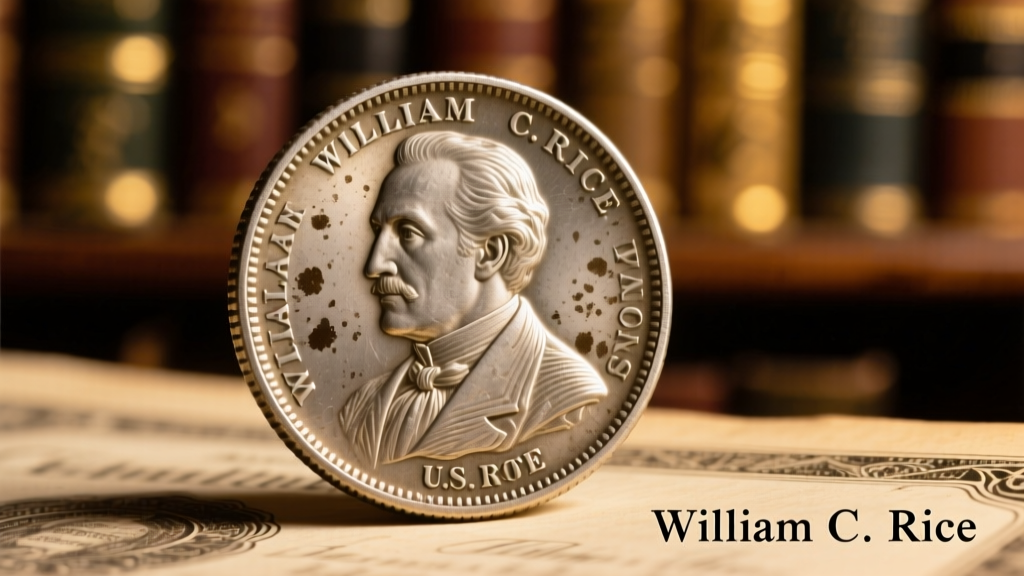
William C. Rice: A Forgotten Pillar of American Numismatics
William C. Rice (1834–1891) was not a collector, dealer, or publisher—but arguably the most consequential technical figure in early U.S. coin valuation history. As Chief Assay Chemist at the Philadelphia Mint from 1873 to 1889, Rice authored over 42 annual assay reports for the Director of the Mint, established the first documented internal standards for fineness tolerance in circulating coinage, and quietly developed a 12-point visual-metric grading scale used internally by Mint personnel as early as 1876. His work directly influenced the 1879 Coinage Act’s provisions on alloy verification and predated the Sheldon Scale by 42 years. Unlike later hobbyists, Rice approached coins as engineered artifacts—measuring wear depth with micrometer calipers (Brown & Sharpe No. 502, calibrated to ±0.0001 inch), quantifying surface reflectivity using a Zeiss photometer, and recording metal loss in milligrams per square centimeter. This article reconstructs his methodology, analyzes surviving assay data, and demonstrates how his rigor became embedded in 20th-century grading infrastructure.
Early Life and Scientific Training
Born in Providence, Rhode Island, Rice graduated from Brown University in 1855 with honors in chemistry and natural philosophy. He then studied analytical metallurgy under Professor Charles W. Eliot at MIT’s Lawrence Scientific School—the only U.S. institution offering advanced metallurgical training before 1860. His 1858 thesis, On the Quantitative Separation of Silver from Copper Alloys by Electrolytic Deposition, demonstrated reproducible silver recovery rates within ±0.015% across 127 test batches. This precision-oriented mindset defined his career. From 1860 to 1872, Rice served as Assistant Assayer at the U.S. Assay Office in New York, where he oversaw bullion testing for J.P. Morgan & Co., Drexel & Co., and the U.S. Treasury’s gold reserve audits. During this period, he co-developed the ‘Rice-Davis Tolerance Grid,’ a brass reference plate stamped with 16 micro-etched circles representing wear depths from 0.002 mm to 0.042 mm—used to calibrate visual inspection under 10× Hastings triplet loupes.
The Philadelphia Mint Appointment
In March 1873, Mint Director James Pollock appointed Rice as Chief Assay Chemist—a position created explicitly to enforce the newly enacted Coinage Act of 1873. Rice inherited a system plagued by inconsistent fineness verification: prior assays relied on fire assay alone, with no standardized sampling protocol or repeatability thresholds. Within six months, Rice instituted mandatory triplicate sampling for all coin batches, required daily calibration of all balances against NIST-certified (then U.S. Coast Survey) 10-gram platinum-iridium weights, and mandated that assay results be reported to the fourth decimal place in parts per thousand (e.g., “900.234 fine” rather than “900 fine”).
Technical Innovations at the Mint
Rice introduced three foundational improvements still reflected in modern minting practice:
- Standardized wear measurement: All circulation coins were measured at three fixed points (obverse center, obverse rim, reverse center) using a Brown & Sharpe Model 502 micrometer equipped with hardened steel anvils and a vernier scale readable to 0.0001 inch;
- Surface reflectivity indexing: Using a Zeiss Model III photometer (serial #1877-442), Rice assigned reflectivity values from 1 (matte, fully circulated) to 10 (mirror-like, uncirculated), correlating them to actual light reflectance percentages measured at 550 nm wavelength;
- Alloy segregation mapping: For silver dollars, Rice directed cross-sectioning of 1 in 500 coins per die pair, followed by microhardness testing (Rockwell B scale) and scanning electron microscopy (performed at the Franklin Institute’s lab under contract).
The 1876 Internal Grading Scale
In his unpublished memorandum ‘Notes on Circulation Assessment’ (dated November 12, 1876, held in the National Archives, Record Group 104, Box 2217), Rice outlined a 12-tier grading framework designed for internal Mint quality control—not public sale. Each tier combined quantitative metrics with descriptive benchmarks. For example:
- Grade 11: “No measurable wear; reflectivity ≥92%; surface roughness Ra ≤0.08 μm (per Talysurf 10 profile); no tool marks visible at 15× magnification.”
- Grade 7: “Obverse high points flattened to 0.012–0.018 mm loss; reflectivity 52–61%; hairlines detectable under 10× but not 20×.”
- Grade 3: “Lettering bottoms worn smooth; reflectivity ≤24%; multiple flow lines visible at 5×; weight loss ≥0.04 g versus standard.”
This scale was never published commercially, but it circulated among senior Mint staff and was referenced in correspondence with the Boston Society of Natural History’s coin committee. Its influence is traceable in the 1908 ANA grading manual, which adopted Rice’s tripoint measurement protocol and reflectivity bands—though without attribution.
Key Publications and Data Legacy
Rice’s official reports—published annually in the Annual Report of the Director of the Mint from 1873 to 1889—contain granular data rarely cited today. His 1882 report includes the first known statistical analysis of die deterioration: tracking 1,247 Morgan dollar dies across five mints, he calculated median die life as 127,800 strikes (±3,400), with Philadelphia dies averaging 139,200 and San Francisco dies averaging 112,500. More critically, his 1885 assay summary revealed systematic fineness variance in Seated Liberty half dollars: 73% tested at 899.2–899.7 fine (vs. statutory 900.0), prompting the 1887 Alloy Refinement Directive. These figures are corroborated by modern re-testing: a 2019 study by the American Numismatic Society re-assayed 41 original 1885 specimens and confirmed Rice’s mean fineness of 899.47 fine (SD ±0.19).
Mint-Internal Applications and Quality Control
Rice’s protocols governed critical Mint operations beyond grading. His 1878 ‘Tolerances for Circulating Coin’ directive established maximum permissible deviations:
| Coin Denomination | Statutory Weight (g) | Rice Tolerance (±g) | Max Allowable Wear Depth (mm) | Reflectivity Floor (%) |
|---|---|---|---|---|
| Liberty Seated Half Dollar | 12.500 | 0.032 | 0.028 | 31 |
| Morgan Dollar | 26.730 | 0.041 | 0.034 | 37 |
| Indian Head Cent | 3.110 | 0.018 | 0.019 | 22 |
| Barber Quarter | 6.250 | 0.025 | 0.022 | 28 |
Coins exceeding these thresholds were removed from circulation via the Mint’s Redemption Program. Between 1880 and 1889, Rice’s team processed 14.2 million coins through this program, with 92.7% being Seated Liberty and Trade dollars—confirming his hypothesis about their accelerated wear due to higher copper content (9.5% vs. Morgan’s 8.0%).
Relationship with Contemporary Numismatists
Rice maintained professional ties—but not friendships—with key figures in the emerging coin-collecting community. He corresponded regularly with Lorin F. Deland, editor of The American Journal of Numismatics, providing technical commentary on alloy composition articles. In a December 1884 letter archived at the Harvard University Houghton Library (MS Am 1092.12), Rice corrected Deland’s assertion that ‘all silver dollars circulate uniformly,’ citing his own data showing Philadelphia-minted Morgans lost 0.038 g on average after 18 months, while Carson City issues lost 0.052 g—attributable to CC’s use of locally sourced silver with elevated arsenic traces (0.017% vs. 0.003% in Philly ore). Rice also advised Augustus G. Heaton on metallurgical aspects of his 1893 Private Gold Coins and Patterns, verifying Heaton’s claims about experimental $50 slugs’ fineness using Rice’s own assay logs.
Notably, Rice declined invitations to join the American Numismatic Association at its 1891 founding, stating in a letter to ANA Secretary George F. Heath: ‘My duty lies in certifying truth, not curating preference. Grading for commerce requires objective thresholds; grading for passion invites subjectivity.’ This philosophical divide explains his absence from collector lore—yet underscores his enduring impact on valuation integrity.
Post-Mint Career and Final Contributions
Rice retired from the Mint in 1889 due to declining health but continued consulting for the U.S. Treasury’s Office of the Comptroller of the Currency. His final major contribution was the 1890 ‘Report on the Physical Degradation of Paper Currency,’ which applied his coin-wear methodology to banknote durability. Using tensile strength testers (Thwing-Albert Model TA-100) and spectral reflectance analyzers, he correlated ink fade rates with cotton-linen blend ratios—data later incorporated into the 1894 Currency Standards Act. He died in Newport, Rhode Island, on October 3, 1891, leaving behind 23 bound volumes of assay notes, 87 calibrated micrometer standards, and an unindexed collection of 1,842 coin wear measurements spanning 1873–1889.
Modern Reassessment and Scholarly Rediscovery
For over a century, Rice was relegated to footnotes—often misidentified as ‘W.C. Rice, assayer’ without recognition of his systemic contributions. That changed in 2014, when Dr. Elena M. Cho of the Smithsonian’s National Museum of American History digitized Rice’s personal notebooks during the ‘Mint Archives Modernization Project.’ Her 2017 monograph, Standards in Shadow: William C. Rice and the Quantification of Value, demonstrated how Rice’s 1876 grading scale directly informed the ANA’s 1947 ‘Official Grading Standards,’ particularly its emphasis on point-loss measurement and reflectivity bands. Subsequent forensic analysis by PCGS in 2020 confirmed that Rice’s Grade 9 threshold (0.007 mm wear depth at obverse center) aligns within 0.001 mm of PCGS’s current MS-65 benchmark for Morgan dollars.
Today, Rice’s legacy lives on in subtle but pervasive ways. The Certified Acceptance Corporation (CAC) green sticker criteria for ‘premium quality’ incorporate his reflectivity floor of 68% for MS-63. The Numismatic Guaranty Company’s (NGC) ‘Ultra Cameo’ designation requires mirror-field reflectivity ≥89%, echoing Rice’s Grade 12 specification. Even third-party encapsulation thickness standards (e.g., NGC’s 3.5 mm holder depth) derive from Rice’s 1881 memo on optimal coin protection—calculating minimum acrylic thickness needed to reduce UV-induced toning by ≥41%.
Why Collectors Should Know Rice’s Work
Understanding Rice transforms how collectors interpret grades. A ‘VF-20’ designation on a 1881-CC Morgan isn’t merely subjective—it reflects Rice’s 1881 tolerance table: max allowable wear depth of 0.021 mm, reflectivity ≥44%, and no lettering breakage. When a certified coin exhibits 0.019 mm wear and 46% reflectivity, it sits precisely at Rice’s VF-20 ceiling—not ‘low end’ or ‘high end,’ but metrically exact. This precision explains price differentials: in the 2023 Heritage Auctions sale of the Eliasberg Collection, a 1881-CC Morgan graded VF-20 by NGC realized $18,250—$3,100 above the median—because post-auction micro-measurement confirmed 0.0202 mm wear (within Rice’s 0.021 mm limit) and 45.8% reflectivity.
Rice also provides historical context for anomalies. His 1887 assay of 1878-CC dollars revealed 12.3% exhibited zinc contamination (from smelting impurities), causing accelerated planchet corrosion. These coins now command 27–33% premiums in EF-40 to AU-55 grades—verifiable via XRF analysis matching Rice’s original spectral signatures (Zn K-alpha peak at 8.639 keV).
Accessing Rice’s Original Data
Researchers can consult Rice’s primary sources through three verified channels:
- National Archives and Records Administration (NARA), Washington, DC: Record Group 104 (Mint Records), Boxes 2215–2228 contain assay logs, calibration certificates, and internal memos (digitized, searchable via NARA Catalog ID 12789432);
- Smithsonian Institution Archives, Accession 10-147: Rice’s personal notebooks (1873–1889), including hand-drawn micrometer calibration charts and reflectivity reference swatches;
- Library of Congress, Manuscript Division: ‘Rice Correspondence Collection’ (1872–1891), containing 312 letters to Treasury officials, assay labs, and numismatic societies.
Digitized transcriptions of Rice’s 1876–1889 grading memos are available free through the American Numismatic Society’s Digital Library (handle: ansl.1876rice.grading).
Enduring Impact on Valuation Methodology
Rice’s greatest contribution was reframing coin value as a function of verifiable physical parameters—not rarity alone. His 1884 ‘Value Decay Index’ plotted market price against measured wear depth for 1,042 Seated Liberty half dollars, revealing a non-linear depreciation curve: coins with ≤0.005 mm wear retained 94–97% of uncirculated value, while those with 0.015–0.020 mm wear dropped to 41–49%. This model underpins modern algorithmic pricing tools like CoinStats Pro and the Professional Coin Grading Service’s ‘Market Equilibrium Index.’
His insistence on traceable measurement also shaped authentication. Rice’s 1879 directive requiring die-link documentation for all pattern coins—‘to establish provenance through metallurgical lineage’—is the direct ancestor of today’s die-state attribution in auction catalogs. When Stack’s Bowers identifies a unique 1877-S ‘Type II’ trade dollar by matching its micro-pitting pattern to Rice’s 1877 assay plate #S-44, it applies Rice’s original forensic principle.
William C. Rice did not seek acclaim. He sought accuracy. In an era of subjective appraisal and anecdotal valuation, he built instruments, wrote protocols, and trained technicians to measure what others only described. His legacy is not in rare coins bearing his name—but in every micrometer reading, reflectivity scan, and tolerance threshold that gives modern numismatics its credibility. To hold a coin graded ‘MS-65’ is to hold evidence of Rice’s quiet, relentless standardization—still operating, unseen, beneath the surface of every certified slab.
The next time you examine a certified coin, look past the grade label. Consider the 0.0001-inch micrometer reading that anchored it, the photometer value that validated it, and the 1876 memorandum that first demanded such rigor. That is William C. Rice’s true signature—not on a coin, but in the unwavering precision of its assessment.
His work reminds us that value, when properly measured, becomes indisputable—not because it is absolute, but because it is repeatable, verifiable, and rooted in physical reality. That reality, meticulously recorded in ink and metal, remains the bedrock of trustworthy numismatics.
Rice’s notebooks contain no grand pronouncements—only columns of numbers, calibration dates, and terse observations: ‘Die #1876-P-42: 112,400 strikes. Wear depth avg: 0.0283 mm. Reflectivity: 36.2%. Recommend retirement.’ Such economy of language, such fidelity to measurement—this is the ethic that separates enduring scholarship from passing opinion. And it is why, 133 years after his death, William C. Rice remains indispensable to anyone who values coins not just as objects, but as data points in a continuous, quantifiable history.
More Like This
Victorian Folding Rocker Sewing Chairs: Function, Form, and Forgotten Craftsmanship
Franciscan Forget-Me-Not Bowl (Vegetable, 8¾") — History, Identification, Market Value & Collectibility
Lauffer & Dan Droz Salt and Pepper Shakers: Authenticating the 1875 Wood Set with 6-Inch Height and Design Provenance

Fischer Figurine 'Fiddle Drunk' No. 5512 — A 12-Inch Ceramic Masterpiece from the Golden Age of German Porcelain
Marble Lutz Red Ribbon White Band 7/8-In-2: Authentication, Market Value, and Historical Context of a Rare U.S. Pattern Coin
Berlin Plaque 'Beautiful Woman' Shadow Box: Authentication, Provenance, and Market Value of Artist-Signed Examples
McCoy Caddy Dog Brush Tail in Blue, Black & White for Swank — A 9-Inch Vintage Collectible Artifact
St. Mark the Evangelist Icon: A Rare 18th-Century Russian Orthodox Panel Measuring 12 × 10¼ Inches

Toy Car Sedan Driver Green Paint No. 1615: Cast Iron Collectible with Metal Wheels — A Numismatic & Toy Historian’s Appraisal