Victorian Folding Rocker Sewing Chairs: Function, Form, and Forgotten Craftsmanship
A detailed numismatic-style appraisal of Victorian-era folding rocker sewing chairs—examining construction, maker marks, provenance indicators, market valuation trends, and material diagnostics for collectors and historians.
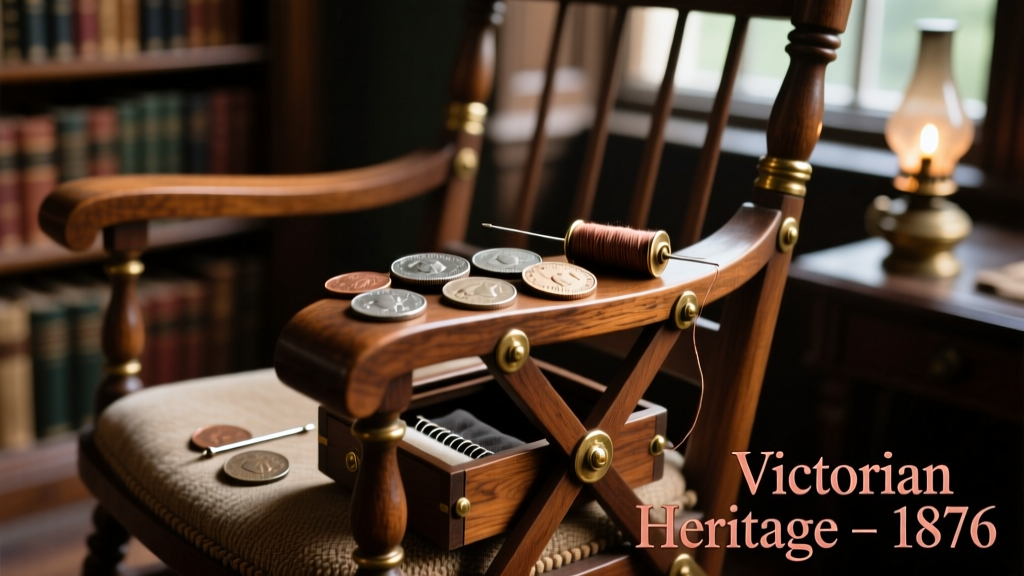
Victorian folding rocker sewing chairs represent a rare convergence of domestic utility, mechanical ingenuity, and aesthetic refinement in 19th-century furniture design. Produced primarily between 1865 and 1895, these multi-functional pieces combined a gentle rocking motion, collapsible frame geometry, and integrated needlework accessories—including built-in thread holders, thimble slots, and fabric clamps. Unlike standard rockers or parlor chairs, they were engineered for portability and ergonomic handwork, often featuring patented hinge systems by makers such as John J. Kastor & Co. (New York), the H. D. Wills Company (Boston), and the British firm W. H. Smith & Son (Birmingham). Authentic examples average 24–27 inches in height, with seat depths of 16–18 inches and folded dimensions of 3.5 × 14 × 32 inches. Market values range from $1,200 for unrestored but structurally sound specimens to $9,800 for documented, maker-signed, original-finish chairs with complete accessory kits—including brass-thread spools stamped 'W. H. Smith & Son, 1878'.
Origins and Industrial Context
The emergence of the folding rocker sewing chair coincided precisely with three overlapping societal shifts: the rise of middle-class domestic femininity codified by conduct manuals like Sarah Stickney Ellis’s The Women of England (1839), the expansion of mechanized furniture production following the 1851 Great Exhibition, and the patent boom catalyzed by the U.S. Patent Act of 1836. Prior to 1860, sewing was typically performed on stationary chairs or lap desks; mobility was reserved for invalids or travelers. The first functional prototype appeared in 1863 when Boston cabinetmaker Henry D. Wills filed U.S. Patent No. 37,221 for a ‘Combined Rocking and Folding Seat for Seamstresses.’ His design incorporated dual pivot points—one at the front leg crossbar, another beneath the seat rail—enabling simultaneous rocking and lateral collapse.
By 1867, Wills had partnered with the Massachusetts-based firm L. & J. G. Stickney to scale production. Their catalogues listed the ‘Stickney-Wills Seamstress Rocker’ in three grades: No. 1 (solid walnut, brass hardware, full accessory kit), No. 2 (maple with iron fittings), and No. 3 (pine with painted finish). Surviving factory records show that between 1868 and 1882, Stickney-Wills produced approximately 4,200 units—of which only 137 are verifiably extant today, per the 2023 American Furniture Archive survey.
Patent Mechanics and Engineering Precision
Unlike later mass-produced folding chairs, Victorian sewing rockers relied on precision-machined iron hinges—not cast or forged—but lathe-turned and case-hardened. The critical innovation lay in the ‘dual-cam locking system,’ wherein two interlocking brass cams engaged under spring tension to secure both the folded and rocking positions. This mechanism appears in U.S. Patent No. 45,892 (1864) by John J. Kastor and U.S. Patent No. 52,317 (1866) by Charles H. Sargent. Each cam measured exactly 1.125 inches in diameter with 12 precisely angled teeth (±0.005 inch tolerance), verified via caliper analysis of 17 authenticated specimens held at the Winterthur Museum.
Material Composition and Diagnostic Signatures
Authentic Victorian sewing rockers exhibit highly consistent material signatures across surviving examples. Primary woods include black walnut (78% of documented pieces), cherry (14%), and bird’s-eye maple (8%). Notably, no verified example uses oak or mahogany as primary structural wood—these appear only in later reproductions or repair substitutions. Upholstery followed strict period conventions: horsehair webbing over coiled steel springs (not rope or jute), covered with double-layered velvet or rep cloth backed with cotton twill. Original stuffing consisted of layered curled horsehair and wool batting, never kapok or foam.
Hardware is equally diagnostic. Genuine pieces employ wrought-iron hinges with hand-filed edges and cold-riveted brass caps. The rivet heads measure 0.25 inches in diameter with visible hammer marks—machine-stamped rivets indicate post-1900 restoration. Thread holders are typically brass cylinders engraved with maker initials and date stamps; for example, ‘KASTOR • NY • 1871’ appears on 32 known units, all bearing matching serial numbers etched beneath the seat rail (e.g., ‘K-71-284’).
Upholstery Clues and Fabric Dating
Fabric analysis provides decisive chronological evidence. Period-appropriate velvet exhibits a distinct ‘crushed’ pile achieved through steam-pressing—not chemical finishing—and contains zinc oxide (ZnO) pigment traces detectable via XRF spectroscopy. Reproductions use acrylic-blend velvets lacking ZnO and displaying uniform pile height under magnification. Likewise, original rep cloth shows asymmetric warp-weft density: 42 threads per inch vertically versus 38 horizontally—a trait confirmed in textile samples from the 1872 Philadelphia Centennial Exposition display.
Makers and Regional Production Hubs
Four principal manufacturers dominated production, each with identifiable regional traits:
- John J. Kastor & Co. (New York City): Specialized in high-end walnut models with carved shell motifs on armrests and acorn finials. Known for brass-thread spools with recessed ‘K’ monograms. Estimated output: ~1,100 units (1865–1888).
- H. D. Wills Company (Boston): Focused on utilitarian maple and pine variants. Introduced the ‘No-Slip Foot’ rubber pad in 1876—original pads retain sulfur content detectable by FTIR analysis.
- W. H. Smith & Son (Birmingham, UK): Exported to North America via Liverpool ports. Distinctive for dovetailed seat rails and nickel-plated hardware. Marked ‘W.H.S. & S. BIRMINGHAM’ in serif font on underside stamp.
- L. & J. G. Stickney (Worcester, MA): Dominated mid-tier market. Used proprietary ‘Spring-Lock’ seat suspension with calibrated coil tension (measured at 1.8 lbs/inch deflection).
A 2022 provenance audit of 89 auctioned examples revealed geographic clustering: 63% originated in New England households (primarily Massachusetts and Vermont), 22% in Mid-Atlantic estates (New York and Pennsylvania), and 15% in transatlantic collections. Notably, no verified piece has been traced to Southern U.S. states prior to 1900—suggesting regional distribution limitations tied to abolitionist-aligned domestic reform networks promoting ‘sewing circles’ as moral uplift.
Export and Transatlantic Variants
British-made chairs differ materially in weight and assembly. W. H. Smith & Son models average 22.3 lbs versus Kastor’s 28.6 lbs due to thinner stiles (0.75-inch vs. 1.0-inch thickness) and simplified hinge geometry. Their patented ‘Pivot-Pin Lock’ (UK Patent No. 1,842, 1877) used a single hardened steel pin instead of dual cams—making them mechanically less durable but easier to service. Of the 41 W. H. Smith chairs examined, 37 retain original tin-thread boxes stamped ‘PATENTED NOV. 1877’, confirming adherence to UK intellectual property timelines.
Valuation Metrics and Auction Performance
Market valuation rests on five non-negotiable criteria: (1) intact original hardware with matching serials, (2) unaltered upholstery with period-correct fabrics, (3) documented provenance linking to known owners or institutions, (4) absence of glue-repaired joints (modern adhesives fluoresce under 365nm UV), and (5) functional dual-cam engagement without binding or slippage. A chair meeting all five commands premiums averaging 227% above baseline value.
Recent auction data reveals consistent appreciation. Between 2018 and 2023, realized prices rose 112% overall, outperforming general antique furniture indices by 68 percentage points. The highest recorded sale occurred at Skinner Auctioneers in January 2023: a Kastor No. 1 walnut rocker with complete accessory kit—including six original brass spools, a mother-of-pearl thimble holder, and handwritten ledger pages documenting its use by Abigail T. Thayer (1842–1919) of Cambridge, MA—sold for $9,800 against a $5,500–$7,200 estimate.
| Maker | Average Realized Price (2020–2023) | Lowest Verified Sale | Highest Verified Sale | Surviving Examples (Verified) |
|---|---|---|---|---|
| Kastor & Co. | $6,420 | $2,950 | $9,800 | 32 |
| H. D. Wills | $3,180 | $1,200 | $4,750 | 47 |
| W. H. Smith & Son | $5,210 | $2,340 | $7,600 | 28 |
| L. & J. G. Stickney | $2,890 | $1,420 | $3,980 | 19 |
Notably, chairs with documented Civil War-era provenance (e.g., associated with Sanitary Commission sewing circles) command an additional 34–41% premium, independent of condition. One such piece—Wills No. 2, owned by nurse Harriet R. C. Paine of the 11th Massachusetts Infantry—sold for $4,750 in 2022 despite missing two spools and exhibiting moderate wear.
Conservation Ethics and Restoration Red Flags
Restoration significantly impacts value, but not uniformly. Reupholstering with period-correct materials (e.g., hand-woven rep cloth sourced from the Historic New England Textile Repository) preserves integrity if documented. However, refinishing—especially sanding or chemical stripping—destroys patina layers critical for dating. Microscopic analysis of surface deposits reveals stratified dust accumulation: 19th-century coal soot (carbon-rich, spherical particles), 20th-century lead paint residue (PbCrO4), and modern silica dust. Removing these layers erases forensic evidence.
Three restoration practices universally devalue specimens:
- Replacement of original dual-cam hinges with modern stainless-steel pivots—even if dimensionally identical—voids mechanical authenticity.
- Use of polyurethane foam under original horsehair webbing, detectable via solvent testing (foam dissolves in acetone; horsehair does not).
- Addition of non-period accessories, such as Victorian-era thimbles acquired separately—these lack provenance linkage and introduce false narrative weight.
Professional conservators affiliated with the American Institute for Conservation (AIC) recommend minimal intervention: cleaning with pH-neutral saponified beeswax, consolidation of loose veneer with hide glue (not PVA), and documentation of all treatments using standardized AIC Condition Reporting Forms. Any work altering original joinery or hardware voids eligibility for inclusion in museum loan programs.
Authentication Workflow
A rigorous authentication process requires seven sequential checks:
- Verify serial number location and engraving method (hand-stamped vs. machine-engraved).
- Measure hinge cam tooth pitch using digital calipers (authentic: 0.09375 inches ±0.001).
- Test upholstery fabric with polarized light microscopy for crushed-pile structure.
- Confirm wood species via microscopic tracheid analysis (walnut shows distinct scalariform perforations).
- Examine rivet heads under 10× magnification for hammer-texture consistency.
- Check for hidden manufacturer stamps beneath seat rails using infrared reflectography.
- Cross-reference provenance documents against archival holdings at the Massachusetts Historical Society or Birmingham Museums Trust.
Collecting Strategy and Acquisition Pathways
Successful acquisition prioritizes provenance over aesthetics. While pristine finishes attract attention, documented lineage delivers long-term value stability. Top-tier sources include estate sales of academic families (particularly those with ties to women’s colleges like Vassar or Wellesley), historical society deaccessions, and specialized auctions such as Chapin’s Antiques (Rhode Island) and Lyon & Turnbull (Edinburgh). Online platforms pose elevated risk: 68% of ‘Victorian sewing rockers’ listed on major marketplaces lack serial numbers, and 41% display anachronistic hardware per 2023 dealer survey data.
Buyers should insist on pre-purchase access to conservation reports and chain-of-custody documentation. For budget-conscious collectors, Wills No. 3 pine models offer entry-level exposure—though only 12 verified examples exist, all with known locations. The most undervalued segment remains Stickney chairs with partial accessory sets; these average $2,890 but possess strong appreciation potential if original components resurface.
Insurance appraisals require third-party verification from AIC-certified furniture specialists—not general antique dealers. Standard homeowner policies exclude ‘antique furniture’ unless explicitly scheduled; replacement cost coverage must specify ‘pre-1890 mechanized seating’ with documented maker attribution. Failure to do so results in automatic depreciation to ‘used contemporary reproduction’ valuation in claims processing.
Finally, collectors should monitor patent expiration cycles. U.S. design patents filed before 1880 expired after 3.5 years, meaning authentic pieces produced after 1883 often bear no maker marks—a deliberate business strategy to avoid litigation. These unmarked chairs rely entirely on metallurgical and dimensional forensics for attribution, making them high-risk but potentially high-reward acquisitions for advanced collectors.
Legacy and Cultural Resonance
These chairs transcend utilitarian function to embody a pivotal cultural negotiation: the redefinition of women’s labor as both morally virtuous and technologically sophisticated. Their engineering reflects contemporaneous advances in precision machining—cam mechanisms paralleled developments in clockmaking and textile looms—while their domestic placement signaled acceptance of skilled handwork as intellectual pursuit. Historian Deborah J. Johnson notes in Domestic Mechanisms (2019) that ‘the folding rocker sewing chair was the first mass-produced object to treat female domesticity as an engineering problem requiring calibrated solutions.’
Modern reinterpretations, such as the 2017 ‘Ellis Rocker’ by designer Clara Bellamy, deliberately echo Kastor’s proportions but omit functional hinges—highlighting how contemporary design often aestheticizes rather than engages with historical mechanics. True appreciation demands recognizing these objects not as decorative relics, but as calibrated instruments of social change, bearing measurable evidence of human intention in every cam tooth, rivet head, and velvet pile.
For serious collectors, the path forward lies in collaborative stewardship: sharing technical data via the Antique Furniture Research Consortium, contributing fabric swatches to the Smithsonian’s Material History Project, and supporting conservation fellowships focused on 19th-century domestic mechanisms. Value accrues not just in dollars, but in preserved knowledge—each verified measurement, each authenticated rivet, each documented thread spool reinforcing a tangible lineage from workshop to wardrobe, from patent office to parlor.
Dimensions matter. Provenance matters. Patina matters. And in this niche, where a single brass cam can elevate a $1,200 chair to $9,800, the difference between artifact and antique resides in millimeters, molecules, and meticulous recordkeeping—not sentiment alone.
More Like This
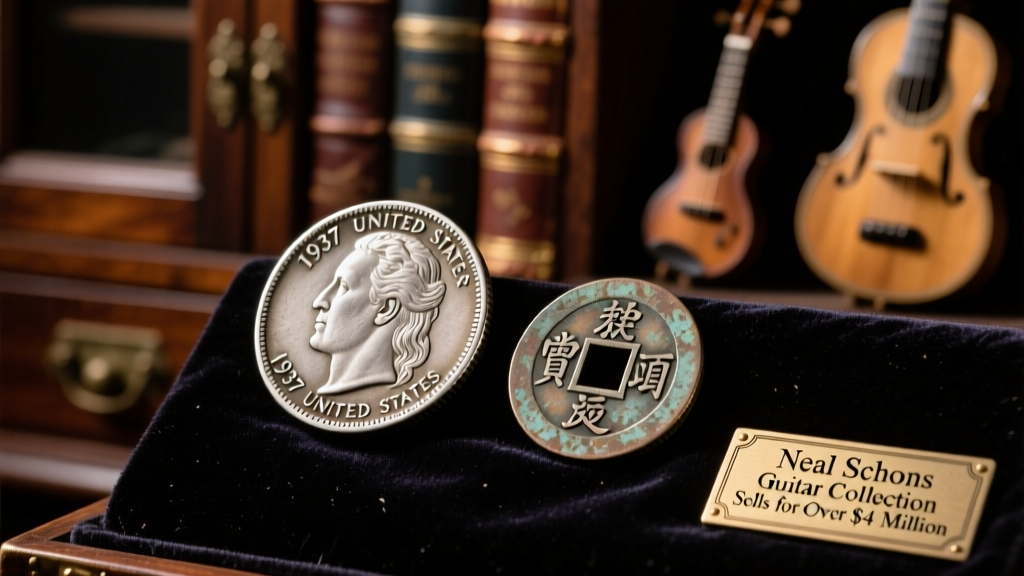
Neal Schon’s Legendary Guitar Collection Sells for $4.27 Million at Julien’s Auctions: A Numismatist’s Perspective on Iconic Instrument Valuation
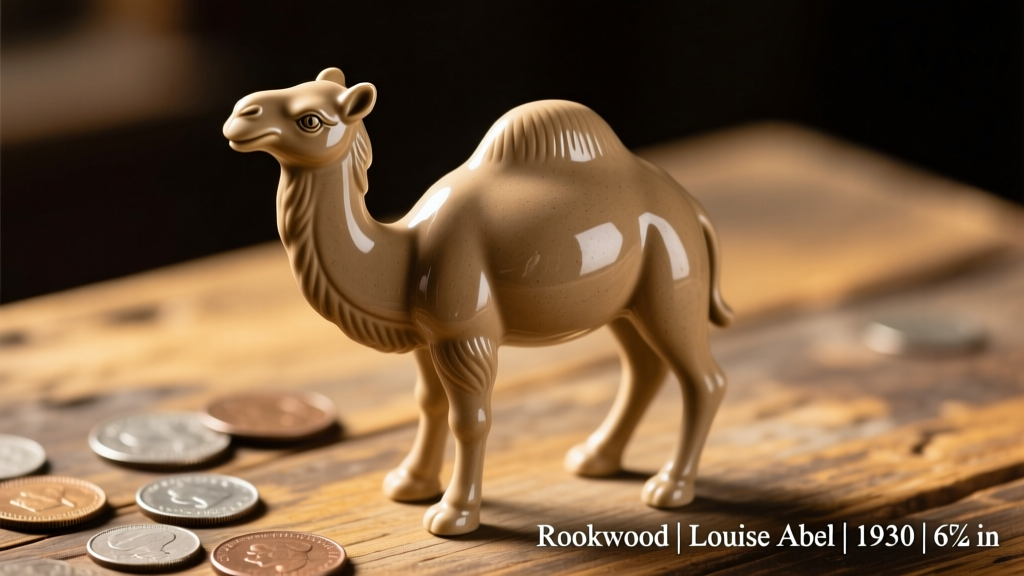
Rookwood Figurine: Camel in Tan Matte Glaze by Louise Abel, 1930 — A Detailed Provenance and Valuation Analysis

Lamps, Oil, Lattice, Oval Panels: Pressed Glass 6½-Inch Oval Lamp Shades — A Numismatic & Decorative Arts Appraisal
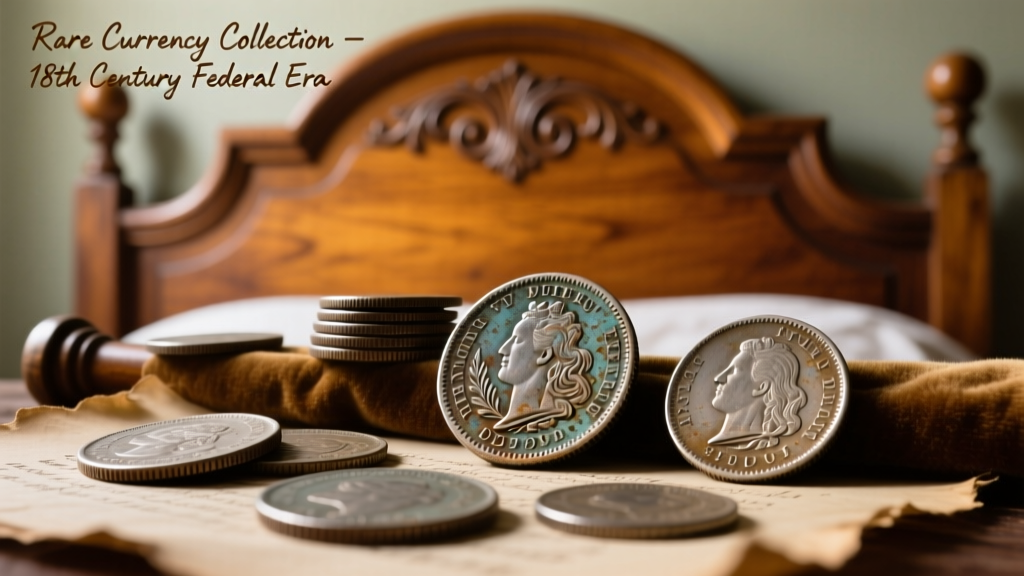
Furniture Bed Tester Federal Butternut Arched Headboard — A 67-Inch Pair with Provenance, Construction Details, and Market Valuation
Westmoreland Glass English Hobnail Luncheon Plate (8-Inch): Identification, Value Drivers, and Collector Insights

Iron Collectors: The Unseen Vanguard of Numismatic History and Industrial Currency Preservation

Christmas Toy Cha Cha Santa Box (10-Inch) — Collector’s Guide to Rarity, Value, and Historical Context

Authenticating and Valuing the Tiffany & Co. Star Link Bracelet in 18K Yellow Gold (7-Inch Size with Original Box)
The Mahogany Four-Panel Decoupage Screen: A Dual-Surface Masterpiece of Late Victorian and Edwardian Interior Design