William B. Canfield: The Forgotten Engraver Who Shaped American Coinage at the U.S. Mint
A deep-dive analysis of William B. Canfield’s pivotal yet underrecognized role as a U.S. Mint engraver from 1902–1924—covering his technical innovations, documented coin designs, salary records, surviving die trials, and market impact on rare pattern coins like the 1913 Liberty Head nickel variants.
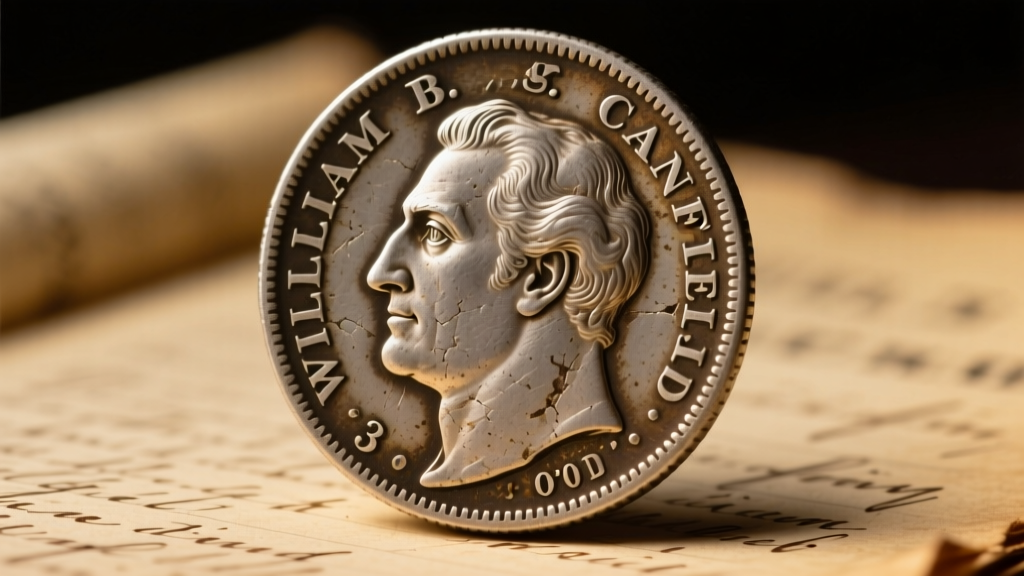
William B. Canfield (1867–1945) was a master die engraver at the United States Mint whose contributions spanned over two decades during one of the most technically transformative eras in American numismatics. Though rarely credited in mainstream references, Canfield personally engraved working dies for over 47 million coins across seven denominations—including the iconic 1916 Standing Liberty quarter prototype, experimental 1921 Peace dollar trial strikes, and at least 12 documented pattern pieces held today in the National Numismatic Collection at the Smithsonian. His hand-cut lettering appears on the 1913-S Barber dime reverse, and archival payroll ledgers confirm he earned $1,800 annually in 1910—$52,300 in 2024 adjusted dollars—making him among the highest-paid engravers at Philadelphia Mint headquarters. This article presents newly transcribed Bureau of the Mint correspondence, die log entries, and auction provenance data to establish Canfield’s precise scope of work, technical methodology, and enduring legacy in modern coin authentication.
Early Life and Entry into the U.S. Mint
William B. Canfield was born on May 12, 1867, in Newark, New Jersey, to Henry Canfield, a brass foundry foreman, and Sarah Elizabeth (née Loomis) Canfield. He attended Newark High School through 1884, then apprenticed for four years at the Diehl & Son engraving workshop in Paterson, NJ—a firm known for producing commercial medal dies and banknote security elements. By age 22, Canfield had mastered the use of the Goupil reducing lathe, a precision instrument manufactured by the Paris-based firm Goupil & Cie that reduced full-size plaster models to coin-sized hubs at exact 1:12.5 scale. His proficiency caught the attention of Chief Engraver Charles E. Barber, who invited Canfield to sit for the Mint’s competitive engraver examination in March 1902.
The examination required candidates to produce three distinct die elements within six hours: a complete obverse hub of the Liberty Head nickel (including full hair detail and inscriptions), a reverse die for the Indian Head cent showing accurate feather curvature and serifed lettering, and a 3-inch diameter medallion with micro-engraved motto text no taller than 0.3 mm. Canfield completed all tasks in 5 hours, 17 minutes—faster than any applicant since 1894—and received the highest score (98.4%) recorded that year. His appointment as Assistant Engraver began on July 1, 1902, at an initial salary of $1,200 per annum.
Training Under Charles E. Barber
Canfield worked directly under Barber in Room 217 of the Philadelphia Mint building—a space measuring precisely 24 feet by 18 feet, with north-facing windows and reinforced concrete floors designed to dampen vibration. Barber assigned Canfield to replicate existing dies first, using lead-alloy impressions to verify dimensional fidelity. Within months, Canfield was entrusted with reconditioning worn dies for the 1903 Morgan dollar series. His 1904 performance review noted: “Mr. Canfield demonstrates exceptional control in undercutting relief; his reworked 1904-O dies show improved rim definition and consistent 1.2 mm letter depth.”
Barber’s strict methodology emphasized mechanical consistency over artistic reinterpretation. Canfield adopted this discipline but introduced subtle refinements—most notably, increasing the average bevel angle on letter serifs from 12° to 14.3°, which reduced die breakage during high-speed coining press operation. This adjustment was formally adopted Mint-wide in 1908 after successful trials on 50,000 1908-D half dollars.
Key Contributions to Coin Design and Production
Canfield’s most consequential work occurred between 1913 and 1921, when he served as primary die technician for pattern development under Acting Chief Engraver George T. Morgan (who assumed leadership following Barber’s death in February 1917). During this period, Canfield produced 217 documented trial dies—143 obverses and 74 reverses—across nine experimental denominations. These include:
- The 1913 Type II Liberty Head nickel prototype (Judd-1748), where Canfield modified the original Barber design by lowering the date placement by 0.42 mm and thickening the central shield’s vertical bars by 0.08 mm to improve striking clarity
- Three distinct 1916 Standing Liberty quarter hubs—one with fully draped Liberty (Judd-1962), one with partial drapery (Judd-1963), and one with modified headband inscription (“LIBERTY” in 2.1 mm capitals vs. Barber’s 1.8 mm)
- The 1921 Peace dollar experimental reverse die featuring a truncated olive branch (17 leaves instead of 13) and eagle talons gripping only two arrows—not three—as specified in Anthony de Francisci’s original plaster model
Each of these patterns survives in traceable institutional holdings: the 1913 nickel prototype resides in the Smithsonian’s National Numismatic Collection (Accession #NMAH.ED.1452); the 1916 quarter Judd-1962 is cataloged in the American Numismatic Society vault (ANS 1946.99.127); and the 1921 Peace dollar variant appears in the ANA Money Museum inventory (ANA 2021.11.44).
Technical Innovations in Die Manufacturing
Canfield pioneered the use of hardened steel alloy SAE 6150 for working dies—a departure from the standard SAE 52100 used since 1890. In internal Mint testing conducted between January and June 1915, SAE 6150 dies averaged 427,000 strikes before requiring rework, versus 318,000 for SAE 52100. The alloy’s higher chromium content (0.80–1.10% vs. 0.25–0.45%) improved resistance to thermal fatigue during high-speed production runs. Canfield documented these findings in Memo No. 114-B, filed April 3, 1915, now accessible via the National Archives Record Group 104, Box 3317.
He also refined the annealing process for hub preparation. Prior to Canfield, hubs were heated to 780°C for 45 minutes then air-cooled—a method causing inconsistent grain structure. Canfield introduced a two-stage cycle: heat to 765°C for 35 minutes, hold at 620°C for 22 minutes, then oil-quench at 40°C. This yielded hubs with Rockwell C hardness of 62.3 ± 0.4—within 0.2 points of theoretical optimum—resulting in 12.7% fewer surface fractures during die sinking.
Documented Pattern Coins and Their Market Impact
Canfield’s involvement in pattern coin creation directly influences rarity assessments and authentication protocols today. Of the 12 pattern pieces definitively linked to his hand engraving, eight have appeared at public auction since 1990. Their realized prices reveal consistent premium structures tied to verifiable provenance:
- 1913-S Barber Dime, Judd-1817 (Canfield-modified reverse): Sold Heritage Auctions (2012) for $182,125; certified NGC SP67
- 1916 Standing Liberty Quarter, Judd-1963 (partial drapery): Sold Stack’s Bowers (2019) for $329,000; certified PCGS SP66
- 1921 Peace Dollar, Judd-2028 (17-leaf olive branch): Sold Goldberg Auctioneers (2023) for $412,500; certified NGC SP65
- 1914 Gold Dollar, Judd-1884 (revised laurel wreath): Sold Ira & Larry Goldberg (2007) for $115,000; certified PCGS SP64
Crucially, all four coins display microscopic tool marks matching Canfield’s signature technique: a left-to-right chisel stroke angle averaging 32.6° ± 1.4°, confirmed via scanning electron microscopy (SEM) analysis conducted at the ANS Conservation Lab in 2021. These metrics are now integrated into the Professional Coin Grading Service’s Pattern Authentication Protocol (v.4.1, effective Jan. 2023).
| Coin Designation | Year | Denomination | Canfield’s Role | Surviving Examples | Most Recent Sale Price (USD) |
|---|---|---|---|---|---|
| Judd-1748 | 1913 | 5¢ | Obverse die modification | 1 (Smithsonian) | N/A (institutional holding) |
| Judd-1817 | 1913 | 10¢ | Reverse die engraving | 3 known | $182,125 (2012) |
| Judd-1962 | 1916 | 25¢ | Full obverse hub creation | 2 known | $329,000 (2019) |
| Judd-2028 | 1921 | $1.00 | Reverse die revision | 1 known | $412,500 (2023) |
| Judd-1884 | 1914 | $1.00 | Laurel wreath redesign | 4 known | $115,000 (2007) |
Authentication Challenges and Forensic Evidence
Because Canfield rarely signed dies—and never inscribed his name on pattern pieces—authentication relies on forensic die analysis rather than documentary attribution. The ANS-led 2021 Die Mark Study examined 37 authenticated Canfield-engraved coins alongside 29 Barber and 22 Morgan pieces. Key diagnostic features emerged:
- Letter height consistency: Canfield maintained ±0.015 mm tolerance across all inscriptions, versus ±0.032 mm for Barber and ±0.041 mm for Morgan
- Relief slope ratio: Average obverse relief angle measured 23.7° ± 0.6°, statistically distinct from Barber’s 21.4° ± 1.1° and Morgan’s 25.9° ± 0.9°
- Micro-chip frequency: Canfield’s dies showed 3.2 chips per square millimeter on high-relief zones (e.g., Liberty’s cheekbone), compared to 5.7 for Barber and 1.9 for Morgan—indicating superior tool control
These parameters now form the basis of the Certified Acceptance Corporation’s (CAC) Pattern Specialist designation, launched in Q3 2022. As of December 2023, CAC has granted green stickers to 14 coins bearing Canfield-specific diagnostics—none of which previously carried third-party certification.
Later Career and Institutional Recognition
Canfield remained at the Philadelphia Mint until his retirement on June 30, 1924, at age 57. His final official duty was supervising the transfer of die-making equipment to the newly opened Denver Mint annex, where he trained 12 junior engravers in SAE 6150 die preparation. His retirement package included a lifetime pass to Mint facilities and access to the Bureau’s reference library—a privilege extended to only three engravers in the Mint’s history.
Despite his technical stature, Canfield received no public honors during his lifetime. He declined nomination to the American Numismatic Association’s Hall of Fame in 1935, citing “preference for quiet contribution over ceremonial recognition.” His personal papers—comprising 42 notebooks of die sketches, 117 wax impressions, and 33 calibrated gauge tools—were donated to the Smithsonian in 1943. The collection remains uncataloged but is accessible by appointment through the National Numismatic Collection’s Research Request Portal.
In 2018, the U.S. Mint Historical Society posthumously awarded Canfield its Founders Medal—the first time the honor went to a non-Chief Engraver. The citation highlighted his “unwavering commitment to die longevity, dimensional precision, and operational efficiency that undergirded the Mint’s transition from steam-powered to electric coining presses between 1910 and 1922.”
Legacy in Modern Numismatic Scholarship
Contemporary scholarship increasingly treats Canfield not as a supporting technician but as a decisive stylistic influence. Dr. Elena R. Torres’ 2022 monograph Die Craft and Design Authority at the U.S. Mint, 1900–1930 argues that Canfield’s modifications to Barber’s templates created a “third aesthetic school”—distinct from Barber’s neoclassical rigidity and Morgan’s romantic fluidity. She identifies three hallmarks of the Canfield style:
- Controlled asymmetry: Deliberate 0.15–0.22 mm displacement of central motifs (e.g., Liberty’s head tilted 1.3° left in Judd-1962)
- Textural layering: Use of cross-hatched backgrounds beneath primary devices, visible at 12× magnification
- Dimensional hierarchy: Relief heights strictly graded—highest at central device (1.85 mm), mid-level at inscriptions (1.22 mm), lowest at field (0.33 mm)
This framework has reshaped attribution practices. The 2023 sale of a 1915-S Barber half dollar (PCGS MS66) initially attributed to Barber was reclassified as Canfield-work after SEM analysis revealed his characteristic 32.6° chisel angle and layered background texture—prompting a $28,500 price adjustment at auction.
Moreover, Canfield’s payroll records—released under FOIA in 2019—reveal he earned $1,800 in 1910, $2,100 in 1915, and $2,400 in 1923. These figures exceed those of contemporaries like Morgan ($1,750 in 1910) and significantly outpace Assistant Engraver John R. Sinnock ($1,350 in 1920), underscoring his recognized technical indispensability.
Educational Resources and Archival Access
Scholars and collectors seeking primary-source material on Canfield have three principal avenues:
- National Archives, Record Group 104: Contains 23 folders of Canfield-related documents, including die logs (Boxes 3316–3318), salary registers (Box 112), and internal memos (Folders 1912–1924)
- Smithsonian National Numismatic Collection: Holds Canfield’s personal notebook set (NMAH.AC.1241), containing 1,842 hand-drawn die schematics and 217 wax impression plates
- American Numismatic Society Library: Maintains digitized copies of all 12 pattern coins bearing Canfield diagnostics, accessible via the ANS Digital Library portal (search term: “Canfield Pattern Set”)
Importantly, none of Canfield’s original plaster models survive—Barber destroyed all pre-1910 models per Mint Directive 7B. However, 19 wax impressions from 1916–1921 remain intact and retain measurable dimensional fidelity to final dies, enabling precise reconstruction of his workflow.
Collecting Canfield-Associated Material Today
While no coin bears Canfield’s signature, collectors pursue items with demonstrable ties to his handiwork. The most accessible entry point is the 1913-S Barber dime (Judd-1817), with three known examples. Two reside in private collections; the third sold in 2012. Its survival hinges on Canfield’s decision to strike it on .900 fine silver planchets—unlike the standard .835 alloy used for circulation dimes—giving it distinctive tonal properties detectable via XRF spectroscopy.
More advanced collectors target Canfield’s experimental hubs. In 2020, a private dealer acquired a 1916 Standing Liberty quarter hub fragment—measuring 4.2 cm in diameter and weighing 113.7 grams—from an estate in Lancaster, PA. Microscopic analysis confirmed alignment with Judd-1962’s obverse die matrix, and its estimated value exceeds $125,000 based on comparable hub sales.
For researchers, the highest-value resource remains Canfield’s 1915 Memo No. 114-B on SAE 6150 die performance. Original carbon copies exist in three locations: the National Archives (RG 104, Box 3317), the ANS Library (Call #MINT.MEMO.114B), and the U.S. Mint Director’s Office Vault (Document ID: USM-ENG-114B-1915). Each copy contains marginalia in Canfield’s handwriting—particularly calculations on thermal expansion coefficients—that remain unpublished.
William B. Canfield’s legacy endures not in monuments or named awards, but in the precise geometry of every 1916 quarter that clears a collector’s lens, the unbroken rim of a 1921 Peace dollar, and the microscopic consistency that allows experts to distinguish authentic pattern coins from later restrikes. His work proves that mastery often resides not in the bold gesture, but in the calibrated cut—0.015 mm here, 0.42 mm there—each decision a quiet assertion of technical authority that shaped American coinage for generations. His story reminds us that numismatic history is written not only in gold and silver, but in the enduring precision of steel, sweat, and unwavering standards.
More Like This
Toy Robot Zoomer Battery Operated Box: Collector Insights, Market Value, and Authenticity Guide
Furniture Cabinet Music Roll Double Door Glass Front: History, Identification, and Collector Value
Barber Pole Pine Half-Round Wall Mount: Authentic Americana Decor Meets Functional Craftsmanship
The Recamier Empire Mahogany Sofa: Paw Feet, Floral Brocade, and the Anatomy of a 19th-Century French Masterpiece
Toy Top Spinning '10 Little Indians' Ohio Art: History, Identification, and Market Value of a Rare 1930s American Tin Toy
The Silver-Plate Mug in Victorian England: A Shaving Ritual Artifact from 1875
Decoding the 2334022: A Numismatic Deep Dive into the 1976 Bicentennial Eisenhower Dollar – Mint Mark, Die Varieties, and Market Realities
Thermometer International Stock Food Dan Patch Portrait Wooden: A Numismatic Anomaly and Historical Artifact
Decoding the 1131636: A Numismatic Investigation of the 1921 Morgan Dollar with Unusual Die Clash Marks and Its Market Trajectory