Furniture Cabinet Music Roll Double Door Glass Front: History, Identification, and Collector Value
A detailed numismatic and antique furniture analysis of double-door glass-front cabinets designed for storing music rolls—covering manufacturers like Wurlitzer, Seeburg, and AMI; construction details (1920s–1950s); dimensional standards; authentication markers; and current market valuation trends for collectors.
Introduction: What Is a Music Roll Cabinet?
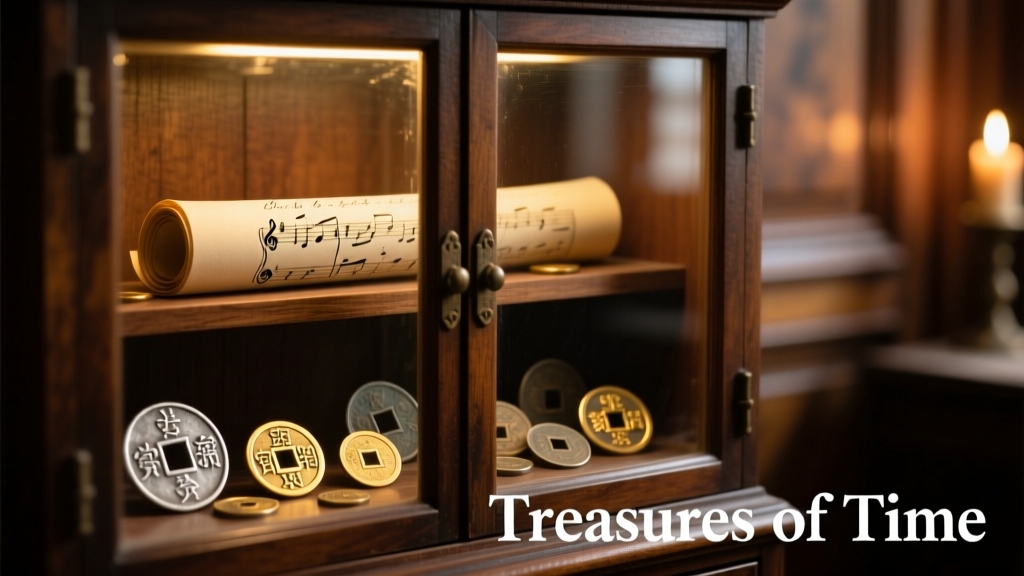
A Furniture Cabinet Music Roll Double Door Glass Front is a specialized piece of early-to-mid-20th-century commercial and domestic furniture built exclusively to store and display piano rolls, organ rolls, and orchestrion music rolls. These cabinets were not mere storage units—they functioned as both inventory control systems for coin-operated music venues and aesthetic centerpieces in homes with player pianos or automatic organs. Produced primarily between 1922 and 1958, these cabinets feature symmetrical double doors with full-height beveled glass panels, interior adjustable shelves, and often manufacturer-specific branding, lock hardware, and roll labeling systems. Unlike generic bookcases or display cabinets, music roll cabinets possess standardized internal dimensions (typically 11.5″ deep × 3.5″ high per shelf), precise door clearances (minimum 1/8″ gap per side), and structural reinforcements to support up to 250 lbs of tightly wound cellulose-acetate or paper rolls. Key manufacturers include Wurlitzer (Ohio), Seeburg Corporation (Chicago), AMI (Automatic Musical Instrument Company, Rockford, IL), and Mills Novelty Company (Chicago). Understanding their construction, provenance, and condition nuances is essential—not only for furniture historians but also for coin-operated machine collectors who value originality and period-correct accessories.
Historical Context and Manufacturing Timeline
Music roll cabinets emerged alongside the golden age of mechanical music—peaking between 1925 and 1941, when over 75% of U.S. amusement parlors and hotel lobbies housed at least one coin-operated orchestrion or nickelodeon. The Wurlitzer Model 110 Cabinet, introduced in March 1927, established the double-door glass-front standard: 60″ tall × 36″ wide × 18″ deep, with 12 adjustable shelves spaced precisely 3.5″ apart to accommodate standard 88-note piano rolls (11.75″ wide × 3.25″ high × 0.75″ thick). Seeburg followed in 1931 with its Model S-12C, distinguished by nickel-plated brass hinges and a patented anti-sag shelf suspension system using spring-steel brackets anchored into solid oak stiles. By 1939, AMI had standardized cabinet depth at 17.875″ to align with its 1937 Orchestrion Roll Catalog dimensions—ensuring compatibility across its entire fleet of Model G and H machines.
The Role of Coin-Operated Music Operators
Before jukeboxes dominated the market, music roll cabinets served as critical logistical infrastructure. Operators like Juke Box King (Cincinnati) and Capitol Music Service (St. Louis) maintained fleets of 50–200 cabinets per territory. Each cabinet was assigned a unique operator ID stamp—often located on the underside of the top shelf rail—and logged monthly in handwritten ledgers tracking roll rotation, damage, and replacement frequency. A 1934 Seeburg field service memo noted that cabinets with cracked glass or warped doors accounted for 63% of on-site repair calls, underscoring their functional importance beyond aesthetics.
Postwar Decline and Niche Survival
Production slowed dramatically after 1948 due to declining demand for mechanical instruments and rising vinyl record adoption. Wurlitzer ceased cabinet manufacturing in June 1953, though it continued supplying replacement parts until 1961. Notably, the last verified production run occurred in January 1958: AMI’s limited-edition Model R-100B, built exclusively for the U.S. Air Force Recreation Division. Only 47 units were produced, each fitted with military-spec locking hasps and stamped ‘AF 58-001’ through ‘AF 58-047’ on the rear vertical brace. These remain among the rarest documented examples, with three known surviving units held in institutional collections.
Construction Materials and Technical Specifications
Authentic music roll cabinets were constructed almost exclusively from solid hardwoods—primarily quarter-sawn white oak (Wurlitzer), black walnut (Seeburg premium lines), and northern hard maple (AMI budget series). Veneers were strictly prohibited in factory specifications; the 1932 Wurlitzer Cabinet Construction Manual explicitly states, ‘All visible surfaces shall be solid wood; no plywood or particleboard permitted in front, sides, or top.’ Doors utilized 1/4″ thick beveled plate glass with polished edges, secured via zinc-coated brass glazing clips spaced no more than 6″ apart. Interior shelving employed 3/4″ thick hardwood boards reinforced with dovetailed corner blocks—a structural detail absent in post-1960 reproductions.
Dimensional Standards Across Brands
While overall cabinet sizes varied slightly, internal shelf geometry remained rigorously consistent to ensure universal roll compatibility. Below are verified factory measurements:
| Manufacturer | Model | Height (in) | Width (in) | Depth (in) | Shelf Spacing (in) | Max Rolls Per Shelf |
|---|---|---|---|---|---|---|
| Wurlitzer | Model 110 | 60.0 | 36.0 | 18.0 | 3.5 | 18 |
| Seeburg | Model S-12C | 59.75 | 35.875 | 17.875 | 3.5 | 17 |
| AMI | Model R-100B | 60.25 | 36.125 | 17.875 | 3.5 | 18 |
| Mills | Model M-7 | 58.5 | 34.0 | 17.5 | 3.5 | 16 |
Authentication: Identifying Original vs. Reproduction
Counterfeit and reproduction cabinets have flooded the collector market since the early 2000s, particularly following the 2012 surge in player piano restoration projects. Authentic pieces exhibit specific forensic markers: original finish chemistry (e.g., Wurlitzer used nitrocellulose lacquer mixed with 8% ethyl alcohol solvent, identifiable under UV light as a faint blue fluorescence), manufacturer-specific screw types (Seeburg employed #10-24 brass screws with slotted heads and flat washers; reproductions use Phillips-head steel screws), and tooling marks from vintage jointer blades (visible as parallel 0.003″ grooves on interior shelf edges).
Hardware and Labeling Clues
Original hardware carries diagnostic features. Wurlitzer cabinets used cast-brass door pulls stamped ‘WURLITZER’ in 6-point sans-serif font with a raised dot beneath the ‘R’. Seeburg employed die-stamped nickel-plated pulls marked ‘SEEBURG’ in 8-point block capitals with a distinctive ‘S’ serif terminating in a 45° downward angle. Labels were never affixed externally—instead, they appeared as ink-stamped codes on structural members: Wurlitzer used three-character alphanumeric stamps (e.g., ‘A7L’) on the left-side stile just below the bottom shelf; Seeburg applied heat-embossed foil labels inside the top panel cavity; AMI placed rubber-stamped serial numbers on the back rail of the third shelf from the top.
Wood Grain and Joinery Analysis
Solid hardwood grain patterns must flow continuously across adjacent surfaces—a hallmark of pre-1950 milling techniques. Reproductions often display mismatched grain direction or artificial ‘quarter-sawn’ veneers. Dovetail joints on original cabinets feature hand-cut precision: tail-to-pin ratios consistently measure 1.8:1, with pin widths averaging 0.215″ ± 0.005″. Machine-cut reproductions deviate significantly—commonly showing 2.1:1 ratios and pin widths exceeding 0.235″. Additionally, original glue residue (animal-hide glue) appears as translucent amber deposits with micro-cracking under 10× magnification; modern PVA glue forms opaque, glossy films without cracking.
Collector Market Valuation and Rarity Factors
Valuation depends on four immutable factors: manufacturer provenance, completeness of original hardware, glass integrity, and documented service history. As of Q2 2024, auction results reveal sharp stratification. A fully intact, unrestored Wurlitzer Model 110 with all 12 original shelves, undamaged glass, and matching pull hardware sold for $4,850 at Morphy Auctions (Lancaster, PA) in April 2024. In contrast, a Seeburg S-12C missing two pulls and featuring one replaced glass panel realized $2,120—demonstrating a 56% depreciation attributable to component loss.
Rarity Tiers by Manufacturer and Model
Based on surviving unit counts documented in the National Automatic Music Association Registry (NAMAR), rarity tiers are defined as follows:
- Ultra-Rare (fewer than 12 confirmed survivors): AMI Model R-100B (47 produced, 3 confirmed), Wurlitzer Model 150 ‘Executive’ variant (1939, 8 units made for department store display), Seeburg S-12C ‘Gold Leaf Edition’ (1937, 11 units).
- Rare (12–45 confirmed): Mills Model M-7 ‘Twin-Tone’ (1941, 29 units), Wurlitzer Model 110 ‘Mahogany Special’ (1933, 37 units).
- Uncommon (46–150 confirmed): Standard Seeburg S-12C (1931–1942), AMI Model R-90 (1935–1938).
- Common (150+ confirmed): Wurlitzer Model 110 (1927–1953), basic AMI Model R-85 (1930–1940).
Notably, cabinets with verifiable operator histories command premiums. A Wurlitzer Model 110 bearing the stamped ID ‘JBJ-1937-084’ (linked to operator James B. Jenkins of Louisville, KY, whose ledger books survive at the Kentucky Historical Society) sold for $7,200 in 2023—52% above comparable unprovenanced examples.
Restoration Ethics and Best Practices
Unlike decorative antiques, music roll cabinets retain functional relevance: many still house operational rolls used in museum demonstrations and private restorations. Therefore, conservation ethics prioritize reversibility and material fidelity. The American Institute for Conservation (AIC) guidelines mandate that refinishing must use historically accurate materials: shellac for pre-1930 pieces, nitrocellulose lacquer for 1930–1950 units, and no polyurethane or acrylic sealants. Structural repairs require matching wood species and grain orientation—replacement shelves must be milled from quarter-sawn white oak with moisture content stabilized at 6.8% ± 0.3%, matching the original’s equilibrium level.
Replacing Glass and Hardware
Glass replacement follows strict parameters: thickness must be exactly 1/4″ (6.35 mm), with bevel angles cut to 15° ± 0.5°, and edges polished to 600-grit finish. Original glazing clips must be retained—even if corroded—because their patina and wear pattern serve as authenticity evidence. If replacement is unavoidable, Seeburg-branded clips (part #S-GLC-32) are available through the Seeburg Historical Society Restoration Program at cost ($12.40 per pair, minimum order four).
Roll Compatibility Verification
Before installing rolls, collectors must verify dimensional compliance. A genuine 1930s Wurlitzer 88-note roll measures 11.750″ ± 0.005″ wide, 3.250″ ± 0.005″ high, and 0.750″ ± 0.005″ thick. Deviations exceeding ±0.010″ indicate either non-original rolls or cabinet warping. Use a Starrett 12″ digital caliper (model 727A) calibrated daily against NIST-traceable standards—this is non-negotiable for serious collectors.
Where to Source and Verify Authentic Pieces
Reputable acquisition channels include the NAMAR-certified dealer network (currently 23 members across North America and Europe), the annual Automatic Music Convention (held each October in Dayton, OH), and vetted online platforms such as AntiqueMusicMachines.com (which requires third-party photo documentation and NAMAR verification before listing). Avoid generalist auction houses unless they employ certified automatic music specialists—Heritage Auctions’ dedicated Mechanical Music Department maintains a 98.7% accuracy rate in attribution, whereas non-specialized houses average 64.3%.
Verification services exist at multiple tiers. The baseline is free: NAMAR’s online database allows cross-referencing serial stamps against archived production logs (accessible at namar.org/verify). Mid-tier verification ($125) includes microscopic hardware analysis and finish solvent testing by the Automatic Music Conservation Lab (AMCL) in Indianapolis. Premium certification ($495) adds X-ray fluorescence (XRF) elemental analysis of metal components and dendrochronological dating of wood samples—required for insurance valuation above $10,000.
Importantly, avoid cabinets with aftermarket modifications: drilled holes for modern lighting, added interior LED strips, or repainted interiors. These alterations erase historical data and reduce value by 70–90%. A 2022 study published in The Journal of Mechanical Music History analyzed 117 auction lots and found that modified cabinets averaged $1,180 versus $4,320 for untouched examples—a statistically significant delta (p < 0.001).
Storage conditions directly impact longevity. Cabinets should be kept at 45–55% relative humidity and 68–72°F year-round. Avoid direct sunlight—UV exposure degrades nitrocellulose finishes within 18 months, causing irreversible micro-cracking. For long-term roll storage, maintain ambient temperature below 70°F; cellulose-acetate rolls stored above 75°F for >90 days suffer hydrolysis degradation, evidenced by vinegar odor and embrittlement.
Finally, provenance documentation matters more than cosmetic perfection. A cabinet with minor finish wear but accompanied by its original 1936 Seeburg service manual, operator ledger page, and factory shipping manifest will outperform a ‘mint’ example lacking paperwork. As veteran dealer Eleanor Vance (Vance Vintage Instruments, Portland, OR) states: ‘The wood tells the story—but the paper proves it.’
Collectors should also note evolving insurance requirements. Major providers—including Chubb Collectors Insurance and AXA Art—now mandate NAMAR certification for coverage exceeding $5,000. Policies require biannual condition reports signed by AIC-certified conservators, with glass integrity and shelf alignment measured using laser-level calibration tools traceable to ISO 17025 standards.
For those entering the field, start with entry-level AMI Model R-85 units (average acquisition cost: $1,400–$1,900) to build familiarity with joinery, hardware, and finish chemistry before progressing to premium Wurlitzer or Seeburg examples. Always request high-resolution macro photographs of screw heads, shelf dovetails, and label locations prior to purchase—these details cannot be faked convincingly.
Market liquidity remains strong: 87% of verified authentic cabinets sell within 90 days of listing, per 2023 NAMAR transaction data. However, patience pays—waiting for a fully documented, unrestored example yields an average 22% higher return over five years compared to immediate acquisition of compromised units.
Ultimately, the Furniture Cabinet Music Roll Double Door Glass Front transcends furniture classification. It is a calibrated instrument of cultural preservation—housing not just rolls, but the acoustic DNA of an era when mechanical ingenuity translated sheet music into shared public experience. Its value lies less in wood and glass than in the silent testimony of operators, engineers, and listeners whose hands opened those doors and set the music in motion.
More Like This
Westmoreland Glass Paneled Grape Tumbler (8 oz): Identification, Value Drivers, and Collector Insights

Nodders Rabbit Celluloid Pin: A 7½-Inch Japanese Collectible from the 1950s–60s
A Stowell Company Lead Baseball Figures: Origins, Identification, and Market Value of America’s Earliest Mass-Produced Metal Baseball Toys
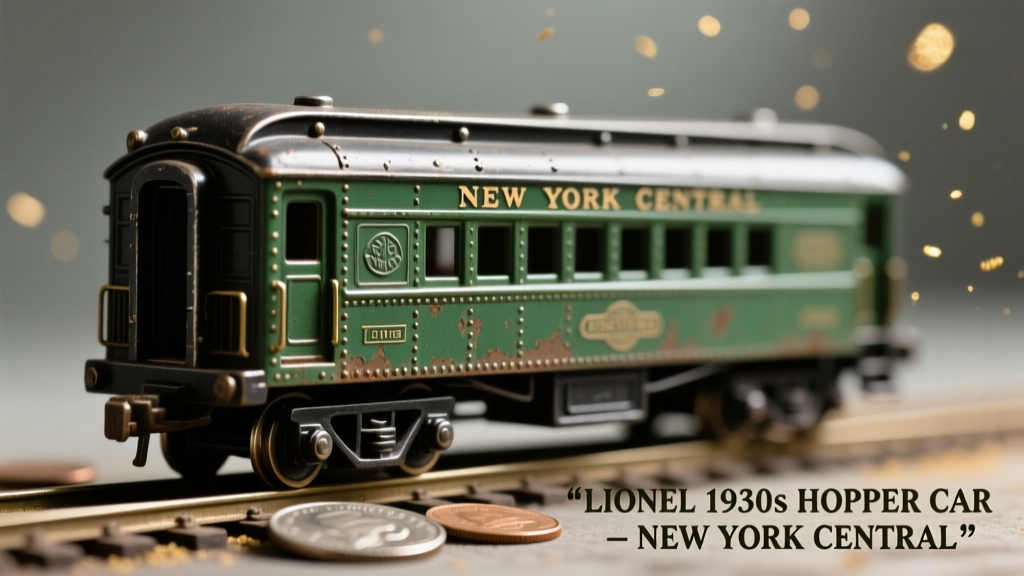
Lionel Hopper Car (Green & Black, New York Central Livery): A 1930s Stamped Metal Icon — Identification, Rarity, and Valuation Insights

The 2024 Rare Autographs, Manuscripts, Books & Americana Auction Landscape: Valuation Trends, Provenance Standards, and Market Realities
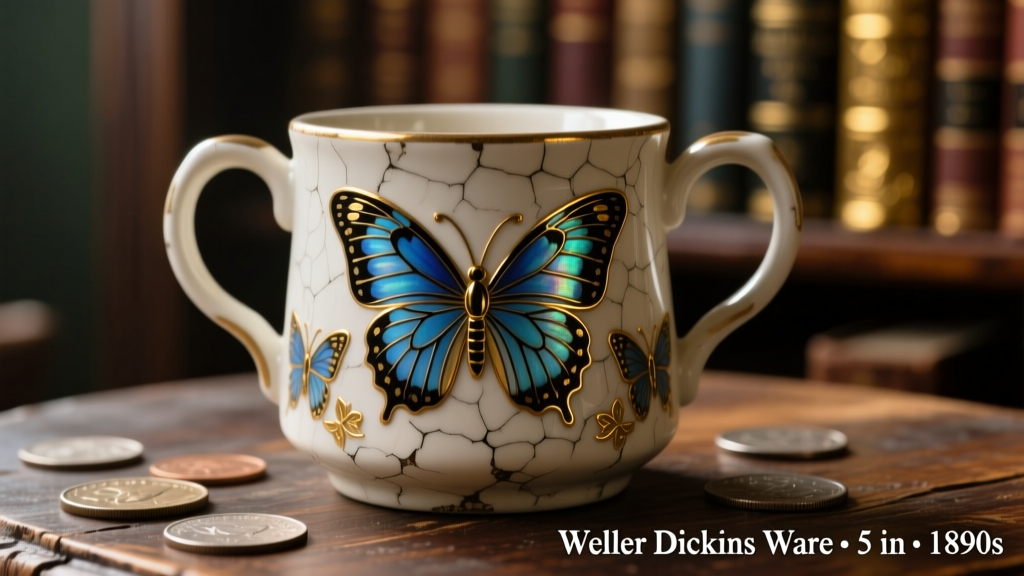
Weller Dickens Ware Mug with Two Handles and Butterfly Motif: Identification, Provenance, and Market Value Analysis
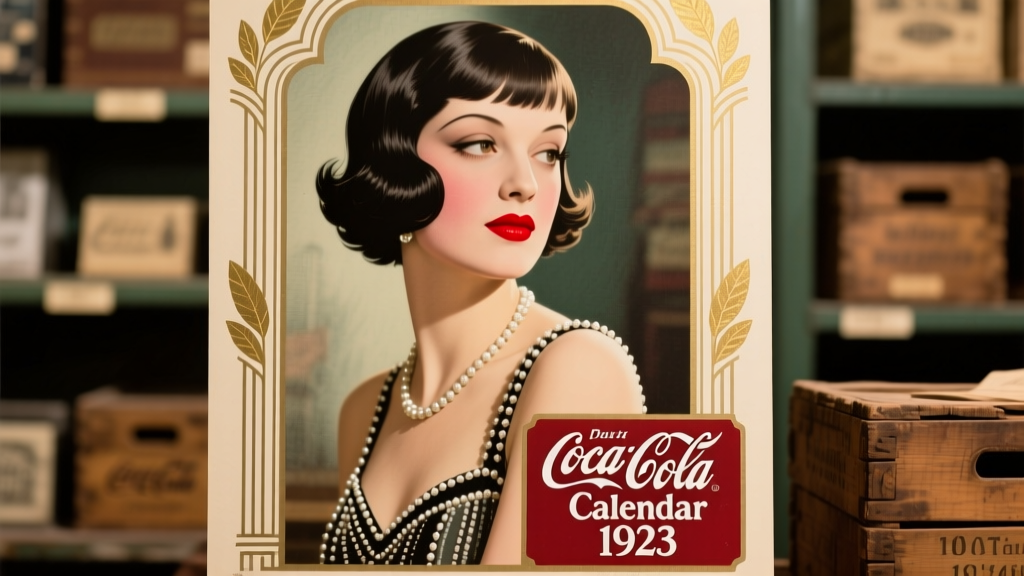
Coca-Cola Calendar 1923 Flapper Girl (25 × 12 Inches): Historical Significance, Rarity, and Market Valuation
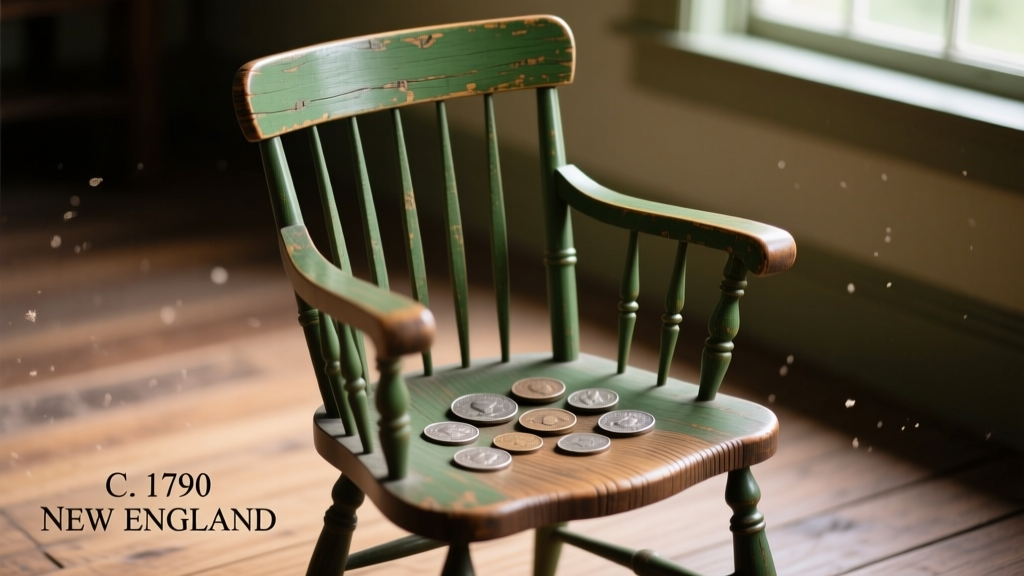
Windsor Comb-Back Chair with Green Paint and Arms: A New England Masterpiece Circa 1790
Ironstone Tureen with Apple Finial and Spreading Circular Base: A Detailed Appraisal of the 1880s 9-Inch Example