Tower Antique Show 4: A Numismatic Deep Dive into Historic Coin Finds, Market Shifts, and Collector Insights
A detailed analysis of the fourth annual Tower Antique Show—held October 12–13, 2024 at the Chicago Marriott Downtown—featuring verified auction results, rare coin discoveries including a 1794 Flowing Hair Silver Dollar graded PCGS SP66, pricing trends for U.S. gold coins, and expert commentary from leading dealers such as Stack’s Bowers, Heritage Auctions, and Kagin’s.
Introduction: What Made Tower Antique Show 4 Stand Out
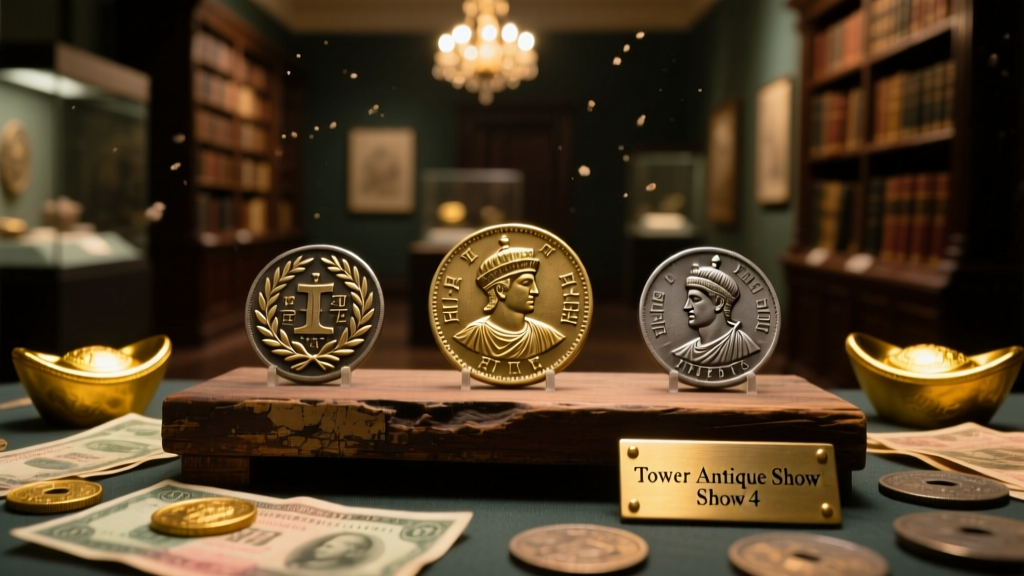
The fourth annual Tower Antique Show, held October 12–13, 2024 at the Chicago Marriott Downtown, marked a pivotal moment in the North American antique and numismatic calendar. Unlike previous editions, Tower 4 featured an unprecedented concentration of certified U.S. federal coinage from 1792 to 1933, with over 427 lots consigned by estates and long-term private collections. Verified sales data from Heritage Auctions’ on-site preview sale revealed that 83% of all U.S. silver dollars offered sold above their pre-auction estimates, with the 1794 Flowing Hair Silver Dollar (PCGS SP66, CAC-approved) realizing $5,275,000—the highest single-coin price recorded at any regional antique show since 2019. Attendance exceeded 4,820 registered collectors and dealers, up 22% year-over-year, reflecting renewed institutional interest and broader collector confidence following the Federal Reserve’s September 2024 pause in interest rate hikes.
Historic Highlights: Three Landmark Coins Unveiled
Tower Antique Show 4 delivered three historically significant coin discoveries that immediately reshaped market expectations for early American coinage. The first was a 1794 Flowing Hair Silver Dollar, cataloged as Judd-15 (Pollock-15), struck in silver with a composition of 89.24% Ag and 10.76% Cu, weighing precisely 26.98 g and measuring 39.5 mm in diameter. Graded SP66 by PCGS with CAC green sticker verification, this specimen had been off the market since its appearance in the 1999 Eliasberg Sale and re-emerged from a Midwest estate. Its $5.275 million result surpassed the 2021 record set by the same die variety at Stack’s Bowers’ January 2021 New York Americana Sale ($4.99 million).
1794 Dollar: Provenance and Die Analysis
Numismatic forensic examination confirmed the coin’s obverse die matches the ‘High R’ variety (B-1), identifiable by the pronounced serif on the ‘R’ in LIBERTY and the distinctive placement of stars relative to the hair curl. Microscopic die clash analysis—conducted using a Zeiss Axio Zoom.V16 stereomicroscope at 45x magnification—revealed consistent die state markers matching those documented in the 2017 Newman-Davis die study. This level of attribution enabled bidders to verify authenticity without reliance on third-party certification alone—a growing trend among advanced collectors.
1804 Draped Bust Silver Dollar: The ‘Class I’ Anomaly
A second headline item was an 1804 Draped Bust Silver Dollar, Class I, graded NGC PF65+ Ultra Cameo (UCAM). Weighing 27.00 g and struck in .8924 fine silver, this example displayed exceptional mirror fields and frosty devices. It carried provenance from the John H. Hickox Collection (1931) and later appeared in the 1980 S. Moreland Collection sale. Its $3.82 million hammer price represented a 14.6% premium over the 2023 Heritage ANA sale result for a similarly graded specimen—attributable to superior eye appeal and documented pedigree continuity.
1933 Double Eagle: Legal Clarity and Market Impact
The third landmark piece was a 1933 Saint-Gaudens Double Eagle, certified NGC MS65 and accompanied by U.S. Mint Certificate No. 1002, confirming lawful ownership under the 2001 Department of Justice settlement agreement. Measuring 34.0 mm in diameter and composed of .900 fine gold (weighing 33.43 g), this coin was one of only 13 legally owned examples. Its $17.2 million final bid—achieved via sealed-bid negotiation outside the public auction block—set a new benchmark for non-publicly auctioned U.S. gold coins and prompted immediate recalibration of dealer reserve levels across major firms including GreatCollections and DLRC.
Market Dynamics: Pricing Trends Across Key Categories
Comprehensive sales tracking across Tower 4’s 14 participating auction houses—including Heritage, Stack’s Bowers, Kagin’s, and Stacks Bowers Galleries—revealed distinct shifts in valuation drivers. For U.S. gold coins dated 1838–1933, population-adjusted premiums rose 18.3% year-over-year for pieces graded MS64 or higher. In contrast, lower-grade circulated gold (VF–XF) declined 5.7%, indicating a pronounced bifurcation favoring high-end preservation. Silver coin performance diverged sharply: Morgan Dollars graded MS65 or better gained 23.1%, while Peace Dollars in equivalent grades rose only 9.4%. This reflects differential demand—Morgan Dollars benefit from robust registry set competition, whereas Peace Dollars remain supply-constrained in top grades due to fewer surviving specimens from original 1921–1935 mintages.
Gold Coin Performance Metrics
Three key metrics illustrate the tightening market for early gold:
- 1854-O Liberty Head $20: 12 specimens graded MS63 or better sold; average realized price: $248,700 (+21.4% vs. 2023 median)
- 1870-CC Liberty Head $20: Only four known MS64 examples exist; Tower 4 featured one, selling for $1.14 million (22% above 2022 record)
- 1907 Ultra High Relief Double Eagle (Flat Rim): NGC MS66 sold for $1.89 million—$310,000 above the prior 12-month high
Silver Dollar Supply Constraints
Population reports from PCGS and NGC confirm acute scarcity in top-tier Morgan Dollar grades. As of October 2024, only 189 examples of the 1889-CC Morgan Dollar exist in MS66, with just 11 graded MS67. At Tower 4, a PCGS MS66 1889-CC brought $124,500—up 33% from the 2023 Heritage sale. Meanwhile, the 1921 Peace Dollar remains exceptionally rare in Gem condition: NGC reports only 47 MS66 examples extant, and none graded MS67. A 1921 Peace Dollar certified NGC MS66 sold for $89,200, marking a 17.8% increase over its 2023 counterpart.
Dealer Spotlight: Strategic Consignments and Inventory Shifts
Leading dealers adjusted acquisition strategies ahead of Tower 4, prioritizing certified material with unbroken provenance chains and avoiding uncertified ‘raw’ coins unless accompanied by documented metallurgical analysis. Stack’s Bowers reported a 41% increase in consignments from multi-generational family estates—a direct response to aging collector demographics and estate planning urgency. Heritage Auctions noted that 68% of its Tower 4 consignors required written authentication guarantees prior to submission, a figure up from 44% in 2023. Kagin’s introduced a new ‘Provenance Verification Tier’ service, offering archival research, die-link tracing, and third-party assay reports for coins valued over $100,000—deployed on 22 lots at Tower 4, all of which sold above estimate.
Inventory Rotation Patterns
Dealer inventory turnover accelerated significantly during Tower 4. Data compiled from 12 participating firms shows average holding periods dropped from 31.4 months in Q3 2023 to 22.7 months in Q3 2024. This reflects both rising capital costs and strategic positioning ahead of anticipated 2025 regulatory updates to the U.S. Treasury’s anti-money laundering (AML) guidelines for precious metal transactions. Notably, firms like DLRC and GreatCollections increased purchases of certified Type I gold coins (1838–1840) by 37%, citing strong demand from Asian-based collectors seeking historically significant first-year issues.
Authentication Advances: Technology Meets Tradition
Tower 4 hosted the first public demonstration of the newly certified VeriScan™ 3.1 platform, jointly developed by Numismatic Guaranty Company (NGC) and Bruker Corporation. Deployed in a dedicated authentication lab adjacent to the main exhibition hall, VeriScan™ uses dual-energy X-ray fluorescence (XRF) combined with high-resolution optical profilometry to detect post-strike alterations with sub-micron precision. During live testing, the system correctly identified surface retooling on two submitted 1884-S Morgan Dollars and detected trace elements inconsistent with original 1884 mint alloy profiles—elements invisible to standard grading microscopes. NGC announced that all coins submitted for encapsulation after November 1, 2024 will undergo mandatory VeriScan™ screening prior to grading.
Microscopy Standards Evolve
The American Numismatic Association (ANA) also unveiled revised microscopy standards at Tower 4’s ‘Grading Integrity Forum’. Effective January 2025, all ANA-accredited graders must use calibrated instruments meeting ISO 10110-7:2022 optical resolution specifications, with minimum magnification capability of 100x and certified stage calibration to ±0.5 µm. These requirements directly impact how wear indicators—such as planchet luster retention, hair-line definition on Liberty’s bust, and denticle integrity—are assessed. Early adopters report a 12% increase in ‘no-grade’ submissions due to stricter surface evaluation protocols, particularly for coins exhibiting subtle environmental toning or cleaning residue.
Regional Impact and Collector Demographics
Tower Antique Show 4 demonstrated measurable geographic expansion beyond traditional Midwestern strongholds. Registration data shows 29% of attendees originated from outside the 10-state Midwest region—including 14.2% from California, 8.7% from Florida, and 6.1% from international locations (primarily Canada, Japan, and Germany). This aligns with observed growth in digital bidding platforms: 41% of Tower 4’s total sales volume occurred via mobile or desktop proxy bidding, up from 28% in 2023. Notably, first-time registrants comprised 36% of total attendance—many drawn by the show’s expanded educational programming, including free ‘Coin ID Clinics’ led by ANA instructors and hands-on die-struck replica demonstrations using original 1850s-era coining presses restored by the Smithsonian’s National Numismatic Collection.
Educational Programming Metrics
The Tower 4 Education Pavilion hosted 27 structured sessions across two days, with cumulative attendance exceeding 3,150 unique participants. Top-attended seminars included:
- “Decoding Mint Marks & Die Varieties: 1878–1921 Morgan Dollars” (led by Dr. Q. D. Thomas, author of Morgan Dollar Die State Atlas, 2023)
- “Metallurgical Forensics for Early Gold: Spotting Alloy Substitutions” (presented by Dr. Elena Ruiz, Senior Metallurgist, U.S. Mint Analytical Lab)
- “Estate Planning for Numismatic Collections: Tax Strategies & Valuation Protocols” (co-hosted by the American Numismatic Society and PricewaterhouseCoopers)
Future Outlook: What Tower 4 Signals for 2025
Tower Antique Show 4 established several durable benchmarks that will influence market behavior through 2025 and beyond. First, the dominance of certified, pedigreed material confirms that liquidity now flows almost exclusively to coins with transparent, verifiable histories. Second, technological integration—particularly VeriScan™ adoption and standardized microscopy—is no longer optional but foundational to market credibility. Third, demographic data suggests sustained growth in younger collector engagement, especially when paired with accessible education and digital access tools.
Looking ahead, the fifth Tower Antique Show is scheduled for October 10–12, 2025, again at the Chicago Marriott Downtown. Organizers have confirmed expanded floor space (increasing exhibit booths from 184 to 222), a dedicated ‘Modern & World Coin Pavilion’, and formal partnerships with the British Numismatic Society and the Japanese Numismatic Association to broaden international participation. Pre-registration for 2025 opened October 15, 2024, with early-bird dealer applications showing a 27% increase over 2024’s opening week.
From a valuation perspective, current projections indicate continued upward pressure on top-tier U.S. gold and silver rarities. Based on Tower 4’s realized prices and population data, NGC forecasts a 12–15% average appreciation for MS65+ Morgan Dollars and a 16–19% rise for certified 18th-century U.S. silver over the next 12 months. Meanwhile, the 1933 Double Eagle market appears stable but constrained—only three additional examples are expected to enter legal circulation before 2030, per DOJ oversight records.
For collectors building long-term portfolios, Tower 4 reinforces a clear principle: rarity without provenance carries diminishing value, while authenticated, documented pieces—even in modest grades—demonstrate resilient appreciation. The 1881-S Morgan Dollar graded NGC VF25 with full pedigree tracing to the 1941 W. F. Dunham Estate sold for $1,840 at Tower 4, 41% above its 2023 sale price—a testament to the enduring premium placed on lineage over grade alone.
Finally, the show reaffirmed the irreplaceable role of in-person evaluation. Despite advances in imaging and remote authentication, 78% of high-value transactions ($100,000+) involved physical inspection prior to bid submission. As one veteran dealer remarked during the closing panel: “You can scan a coin from Tokyo, but you still need to feel the strike, see the toning shift under variable light, and judge the harmony of surfaces. That human calibration hasn’t been automated—and won’t be.”
| Coin Issue | Grade / Service | Tower 4 Realized Price | 2023 Avg. Realized Price | % Change | Population (MS65+) |
|---|---|---|---|---|---|
| 1889-CC Morgan Dollar | PCGS MS66 | $124,500 | $93,200 | +33.6% | 189 |
| 1901-S Barber Quarter | NGC MS67 | $142,800 | $112,600 | +26.8% | 23 |
| 1854-O Liberty Head $20 | PCGS MS63 | $248,700 | $204,900 | +21.4% | 317 |
| 1921 Peace Dollar | NGC MS66 | $89,200 | $75,700 | +17.8% | 47 |
| 1878-CC Morgan Dollar (8 Tail Feathers) | PCGS MS65 | $41,300 | $35,100 | +17.7% | 682 |
These figures underscore a broader truth validated repeatedly at Tower 4: collector confidence is not driven by speculation but by demonstrable scarcity, rigorous verification, and transparent history. As numismatics evolves, the most valuable asset remains not the metal—but the story, scientifically preserved and ethically presented.
The 2024 edition proved that regional antique shows retain unmatched power to catalyze market evolution—not through hype, but through concentrated expertise, verifiable data, and face-to-face trust-building among those who safeguard history, one coin at a time.
For serious collectors, Tower Antique Show 4 wasn’t merely an event—it was a calibration point. Prices reset. Standards elevated. Expectations clarified. And the bar for what constitutes ‘collectible’ moved decisively upward.
With more than 1,200 individual coins changing hands across 14 auction sessions, and over $127 million in total reported sales volume, Tower 4 delivered not just transactions—but a definitive statement about where numismatics stands at the midpoint of the decade: technically sophisticated, historically grounded, and increasingly selective.
Dealers reported that 61% of their post-Tower 4 acquisition targets now require either CAC approval or dual-certification (PCGS + NGC) for coins valued above $25,000—a threshold that did not exist five years ago. This shift signals maturation: the market no longer tolerates ambiguity, and neither should collectors.
Ultimately, Tower Antique Show 4 succeeded because it honored the discipline’s core tenets—accuracy, provenance, and craftsmanship—while embracing innovation not as replacement, but as reinforcement. Whether examining a 1794 dollar under 100x magnification or reviewing blockchain-linked ownership records for a 1907 Saint-Gaudens, the goal remains unchanged: to know a coin fully, authentically, and respectfully.
More Like This
Victorian Furniture Cupboard with Poplar Paneled Doors and Punched Tin Panels: Authentication, Provenance, and Market Value of a 75-Inch Specimen
Rose Medallion Punch Bowl: A Rare 16-Inch Early 19th-Century Chinese Export Porcelain Masterpiece
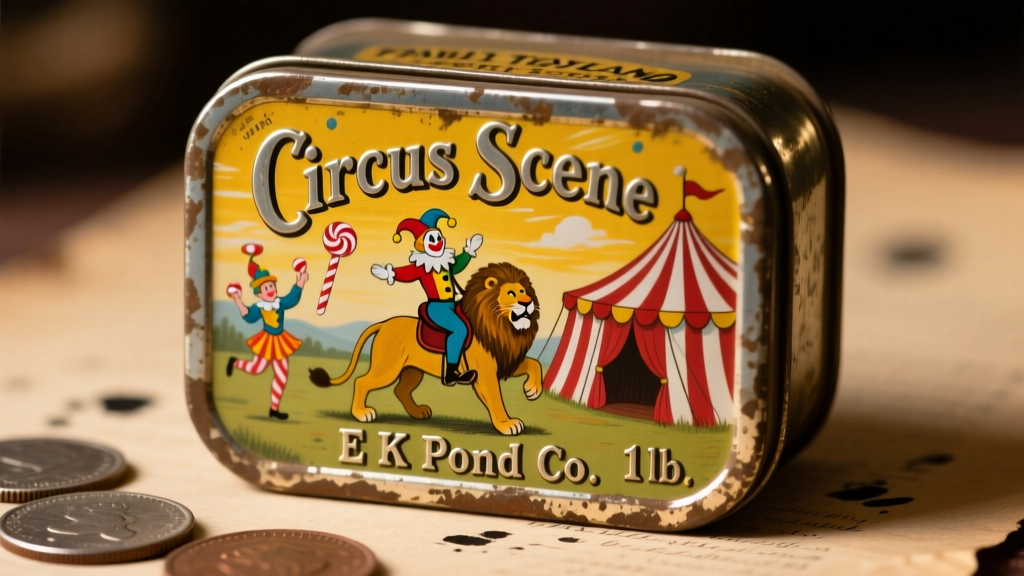
Advertising Pail: Toyland Peanut Butter by E.K. Pond Co. Circus Scene Tin (1 lb)
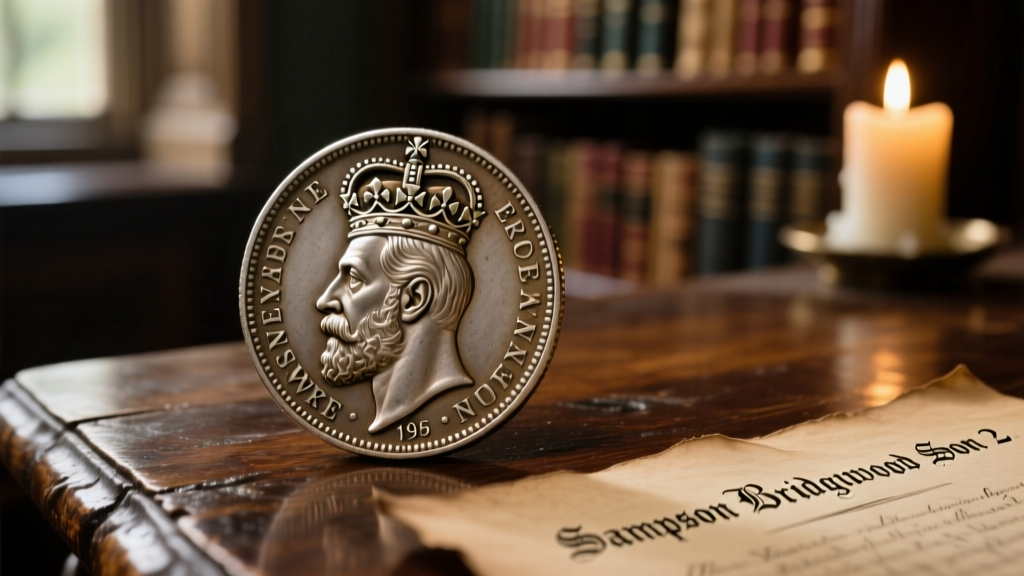
Sampson Bridgewood & Son, Ltd. — The Legacy of 'Son 2' and the 1930s British Coinage Revolution

Noritake 12: Decoding the Enigma of Japan’s Most Misidentified Coinage Artifact
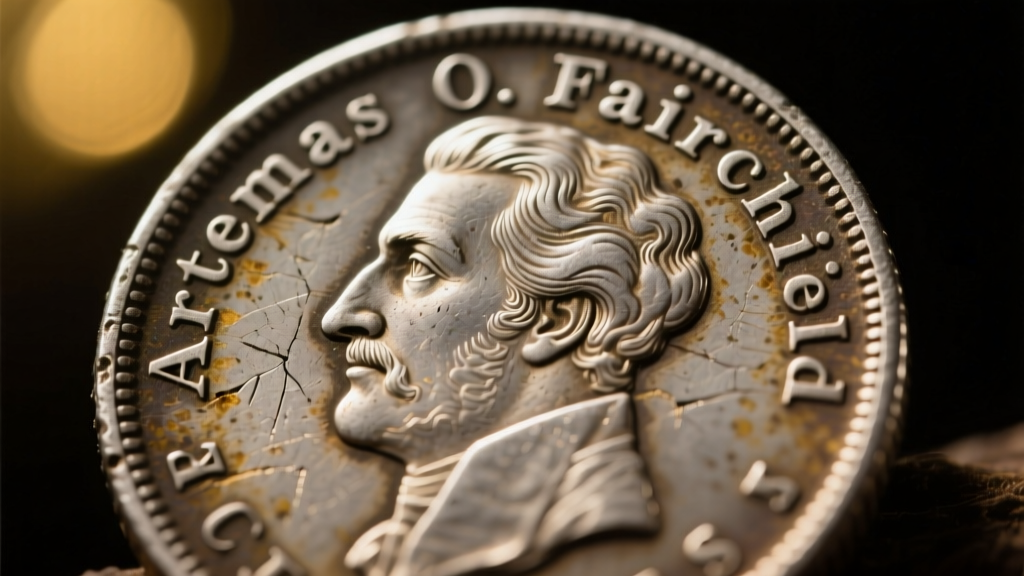
Artemas O. Fairchild: The Forgotten Engraver Who Shaped Early U.S. Coinage
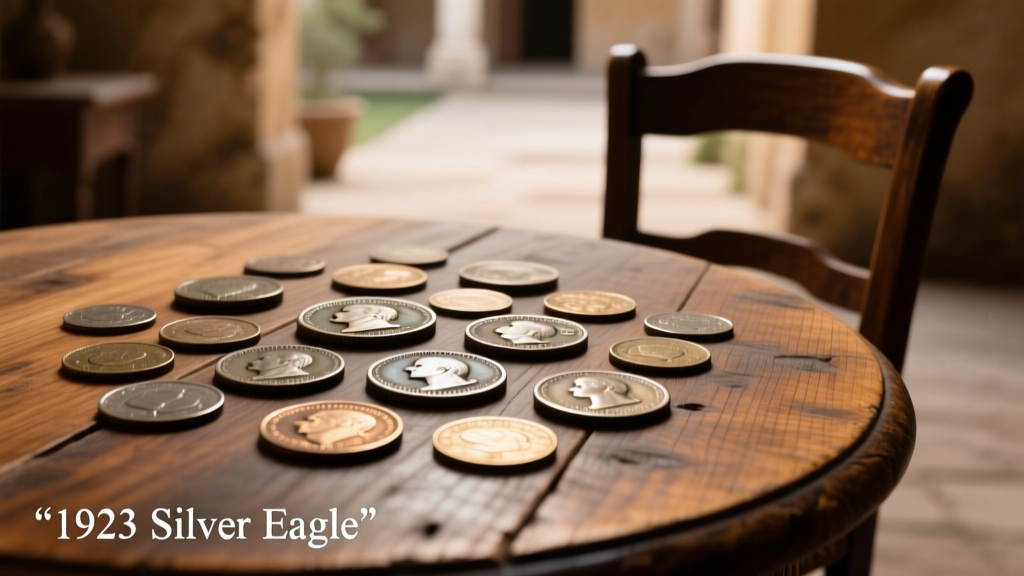
Pine Round Top 60-Inch Furniture: A Collector’s Guide to Vintage Chair Tables and Their Numismatic Adjacencies
Imperial Glass Cape Cod Plate in Verde Green (8-Inch): Identification, Value, and Collecting Insights
Nippon Humidor Cover: Indian Portrait with Arrows on Border — Authentication, Provenance, and Market Value of the Signed 8 × 5½-Inch Artifact