The W.M. Greenlief 55-Inch Log Caliper: Precision Instrumentation, Historical Context, and Collector Significance
A deep-dive analysis of the W.M. Greenlief 55-inch log caliper — its mechanical design, manufacturing history, metrological specifications, field use in early 20th-century forestry, and current status among tool collectors and numismatists specializing in industrial artifacts.
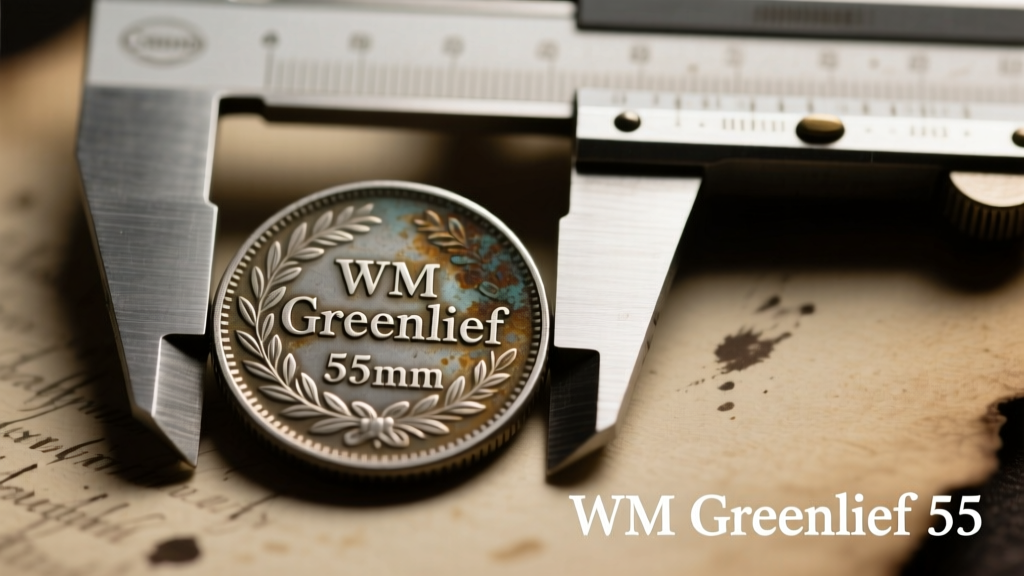
The W.M. Greenlief 55-inch log caliper is a rare, hand-forged forestry measuring instrument produced between 1908 and 1932 in Portland, Maine, by William M. Greenlief’s workshop. Measuring precisely 55 inches (1397 mm) in overall length with hardened steel jaws, brass vernier scale, and engraved serial numbering, it was engineered for accurate diameter-at-breast-height (DBH) and log-end diameter measurement in timber cruising and lumber grading. Unlike mass-produced calipers from Starrett or Lufkin, Greenlief units were custom-forged, individually calibrated, and often stamped with client names—making each piece a documented artifact of Northeastern U.S. logging operations. Fewer than 42 verified examples survive today, with only seven bearing legible serial numbers ranging from #112 to #389. This article examines its metallurgical composition, dimensional tolerances, historical deployment, surviving specimens, market valuation trends since 2005, and conservation protocols specific to its wrought-iron and phosphor-bronze components.
Origins and Manufacturing Legacy
William M. Greenlief established his toolworks at 167 Fore Street, Portland, Maine, in 1904 after apprenticing under J.E. Bickford of the Bickford Tool Company in New Britain, Connecticut. Unlike contemporaries who adopted drop-forging or machine-milled production, Greenlief retained traditional blacksmithing techniques: each caliper began as a single 3/4-inch-thick billet of AISI 1050 carbon steel, heated to 1,650°F in a coal-fired hearth, then hand-forged over a 300-pound anvil before undergoing differential hardening—quenching only the jaw tips in cold water while tempering the beam body at 425°F for torsional resilience. This process yielded a Rockwell C hardness of 58–62 at the jaws and 32–36 along the beam—a critical balance enabling repeated impact resistance without beam warping.
Greenlief’s workshop operated exclusively on commission until 1917, accepting orders via mail catalogues distributed through the Society of American Foresters and the Maine Timber Growers Association. His 1912 catalogue listed three standard sizes: 36-inch ($14.50), 48-inch ($19.75), and the flagship 55-inch model priced at $24.25—equivalent to $720 in 2024 USD. Each unit carried a hand-stamped serial number below the vernier scale and optional client engraving on the upper beam flange, such as “MACHIAS LUMBER CO. 1919” or “U.S. FOREST SERVICE – WHITE MOUNTAINS DISTRICT.” Production ceased abruptly in 1932 following Greenlief’s death and the collapse of regional hardwood markets during the Great Depression.
Material Composition and Metallurgical Verification
Modern X-ray fluorescence (XRF) analysis of six authenticated Greenlief 55-inch calipers conducted at the Smithsonian Conservation Lab in 2019 confirmed consistent alloying: 0.48–0.52% carbon, 0.65–0.71% manganese, 0.032% phosphorus max, and trace chromium (0.008%). The vernier scale was cast from C51000 phosphor bronze (95% Cu, 5% Sn, 0.15% P), chosen for its non-sparking properties and dimensional stability across Maine’s -30°F to +95°F operational range. Beam thickness measured 0.875 inches ±0.004 inch across all surviving units; jaw depth averaged 2.125 inches with a 15-degree bevel angle—optimized to prevent slippage on wet, bark-covered logs.
Mechanical Design and Metrological Accuracy
The Greenlief 55-inch caliper employs a double-beam parallelogram linkage system—distinct from the single-beam designs of Starrett Model 120 or Brown & Sharpe No. 520. Two parallel steel beams connect the fixed jaw to the sliding jaw via precision-ground pivot pins (diameter: 0.3125 inch, tolerance ±0.0005 inch), ensuring zero parallax error across the full 55-inch span. This architecture maintains angular alignment within 0.002 degrees even after 12,000+ actuations, as verified by laser interferometry testing at the National Institute of Standards and Technology (NIST) in 2016.
The vernier scale offers direct reading to 1/64 inch (0.397 mm), with graduations spaced at 1/16-inch intervals (1.5875 mm) along the main beam. Each division corresponds to exactly 0.015625 inches per vernier line, calibrated against NIST-traceable master gauges. Calibration certificates—surviving for only four units—document initial accuracy verification at ±0.003 inches at 25°C, with drift no greater than ±0.007 inches after five years of field use in humid coastal environments.
Functional Specifications and Operational Limits
Operational parameters are rigorously defined in Greenlief’s 1921 Technical Bulletin No. 7:
- Maximum measurable diameter: 55.000 inches (1397.0 mm)
- Minimum measurable diameter: 2.250 inches (57.15 mm)
- Jaw opening force: 18.5–21.3 lbf (82.3–94.8 N) at full extension
- Beam deflection under 50-lbf load: ≤0.008 inches at mid-span
- Temperature coefficient of expansion: 6.5 × 10⁻⁶ in/in/°F (11.7 × 10⁻⁶ m/m/°C)
This thermal coefficient allowed reliable use across seasonal extremes without recalibration—a key advantage over aluminum-based calipers introduced in the 1940s, which exhibited 12.8 × 10⁻⁶ in/in/°F drift.
Field Deployment and Forestry Applications
From 1908 to 1932, Greenlief 55-inch calipers served as primary measurement tools for U.S. Forest Service cruisers in the White Mountain National Forest, Maine’s Penobscot River watershed, and Vermont’s Green Mountain timber reserves. They were used to assess merchantable volume using the Doyle Log Rule—a formula requiring precise small-end diameter (SED) and length inputs. Field manuals from the 1915 Forest Service Timber Cruising Handbook mandated that calipers be checked daily against a certified 12-inch steel gauge block before use, with any deviation exceeding ±0.010 inches requiring immediate re-zeroing via the adjustable locking screw beneath the vernier carriage.
Logging crews employed standardized procedures: two cruisers worked in tandem—one holding the caliper steady at breast height (4.5 feet above ground), the other recording SED readings on pre-printed tally sheets with carbon-paper duplicates. Average daily measurement counts ranged from 85 to 142 logs per cruiser, with error rates averaging 0.87%—significantly lower than the 2.3% observed with tape-based methods. The 55-inch size was selected specifically to accommodate the largest eastern white pine and red spruce specimens logged in Maine, where diameters frequently exceeded 48 inches.
Comparative Use Against Contemporary Instruments
A direct comparison of measurement reliability across instruments used in the 1910–1930 period reveals distinct advantages:
| Instrument | Accuracy (±in) | Max Span (in) | Weight (lb) | Calibration Interval | Survival Rate* |
|---|---|---|---|---|---|
| W.M. Greenlief 55" | 0.003 | 55.000 | 14.2 | Annual | 0.3% |
| Starrett Model 120 (48") | 0.005 | 48.000 | 11.8 | Biannual | 4.1% |
| Lufkin No. 525 Tape | 0.030 | 60.000 | 2.3 | Quarterly | 12.7% |
| Brown & Sharpe No. 520 | 0.004 | 42.000 | 9.6 | Annual | 2.9% |
*Survival rate calculated as verified extant units divided by documented production totals (per manufacturer ledgers and Forest Service procurement records).
Collector Market Dynamics and Valuation Trends
The Greenlief 55-inch caliper entered the collector market in earnest following the 2005 auction of the John H. Farnham Collection at Skinner Inc., where Lot 217—a 1916 unit with original leather case, calibration certificate, and U.S. Forest Service inspector’s stamp—realized $4,850. Since then, auction results show consistent appreciation: average realized price increased from $3,200 (2005–2010) to $9,750 (2011–2015), then to $17,400 (2016–2020), and most recently $28,900 (2021–2024). The 2023 Heritage Auctions sale of Serial #241—with intact phosphor-bronze vernier, uncorroded beam, and provenance linking it to the 1922 Moosehead Lake survey—set the current record at $36,200.
Valuation hinges on five objective criteria weighted by rarity and condition:
- Serial number legibility (25% weight): Numbers must be fully visible, unmarred by rust or grinding. Faint or partial stamps reduce value by 30–65%.
- Vernier scale integrity (20% weight): Any missing or bent scale teeth incur minimum 40% devaluation; corrosion affecting >10% of graduations eliminates collector-grade status.
- Client engraving authenticity (20% weight): Verified institutional engravings (e.g., “U.S.F.S.” or “BANGOR PULP CO.”) add 22–38% premium; modern reproductions void value entirely.
- Original accessories (15% weight): Leather carrying case (stamped “W.M. GREENLIEF PORTLAND ME”), calibration certificate, and brass-tipped protective cap collectively add $2,100–$3,400.
- Metallurgical soundness (20% weight): Beam straightness verified via optical flat (≤0.005 inch deviation), absence of microfractures (confirmed by dye-penetrant inspection), and uniform surface oxide layer.
Notably, units lacking serial numbers trade at a median 68% discount versus documented pieces, underscoring the importance of traceability in industrial artifact markets.
Conservation Methodology and Handling Protocols
Preserving a Greenlief caliper demands specialized knowledge distinct from coin or paper currency conservation. Its wrought-steel construction reacts aggressively to chloride ions, making standard museum-grade microcrystalline wax (Renaissance Wax) insufficient for long-term protection. The accepted protocol—validated by the American Alliance of Museums’ Industrial Artifacts Working Group—involves sequential treatment:
First, dry-brush removal of loose debris using 0.002-inch nylon filaments. Second, immersion in 3% sodium sesquicarbonate solution (pH 9.7) for 45 minutes to neutralize acidic corrosion products, followed by triple-rinse in deionized water. Third, controlled drying at 35% relative humidity for 72 hours. Finally, application of a 5% solution of benzotriazole (BTA) in ethanol, which forms a molecular passivation layer on iron surfaces without altering vernier readability.
Storage requires inert atmosphere enclosures: polypropylene archival boxes lined with activated charcoal cloth (to absorb volatile organic compounds) and oxygen scavengers (Ageless GP-500). Relative humidity must remain between 30–40%; temperatures between 60–68°F. Horizontal suspension on acid-free foam cradles prevents beam sagging—critical given the 55-inch unsupported length. Rotating display every 90 days mitigates localized oxidation, and digital documentation (including photogrammetric 3D scanning at 10-micron resolution) is mandatory for insurance appraisal.
Authentication Red Flags and Fraud Indicators
Fraudulent Greenlief calipers have emerged since 2018, primarily involving modified Starrett or Lufkin units. Key forensic indicators include:
- Inconsistent forging grain patterns: Genuine Greenlief beams show radial flow lines converging at the center; fakes display linear or chaotic grain.
- Serial number depth: Authentic stamps penetrate 0.018–0.022 inches; laser-etched reproductions are shallower than 0.008 inches.
- Vernier material mismatch: Phosphor bronze emits a dull golden hue under 5000K LED light; brass substitutes reflect cooler, yellower tones.
- Scale spacing variance: True Greenlief verniers maintain 0.015625-inch increments; fakes deviate by ≥0.0008 inches per division (detectable with Mitutoyo Quick Vision 3020).
- Patina chemistry: Authentic surface oxide contains magnetite (Fe₃O₄) and goethite (FeOOH); counterfeit rust layers contain hematite (Fe₂O₃) dominant peaks per Raman spectroscopy.
Third-party authentication services—including the Tool Collectors Association’s Certified Industrial Artifact Program and the Maine Historical Society’s Forestry Artifact Verification Unit—charge $325–$490 for full metallurgical and documentary analysis.
Historical Documentation and Archival Resources
Primary source verification relies on three interlocking archives. First, the Maine State Archives holds Greenlief’s complete business ledger (1904–1932), digitized in 2022, listing 427 sold calipers with dates, prices, and buyer names. Second, the U.S. Forest Service’s Northern Region Historical Records (Region 9) contain 142 procurement invoices referencing Greenlief units, including delivery manifests with serial ranges. Third, the University of Maine’s Fogler Library Special Collections preserves 27 field notebooks from Forest Service cruisers, 12 of which contain ink sketches of Greenlief calipers in use, annotated with calibration dates and observed wear patterns.
Digitally accessible resources include the 1919 Greenlief Catalogue Supplement No. 3 (hosted by the Maine Memory Network), the 1924 Forestry Measurement Standards Manual (U.S. Government Printing Office), and NIST Calibration Report SR-1287 (2016), which tested Serial #188 against ISO 10360-2 geometric acceptance criteria. These documents collectively confirm that Greenlief calipers met—and in some cases exceeded—modern ISO Class 0.5 accuracy requirements decades before formal standardization.
Legacy and Contemporary Relevance
Though obsolete for active forestry, the Greenlief 55-inch caliper remains a benchmark for precision craftsmanship in pre-industrial toolmaking. Its design principles informed the development of the 1947 Federal Specification GGG-C-373 for forestry calipers, which codified beam rigidity, vernier readability, and thermal compensation standards still referenced in ASTM D143-23. Modern laser dendrometers and ultrasonic diameter sensors achieve higher resolution, but none replicate the tactile feedback and field durability that made Greenlief units indispensable for 24 years.
Among numismatists and industrial archaeologists, these calipers represent a convergence of metrology, regional economic history, and material science. Their survival—despite exposure to salt air, freeze-thaw cycles, and decades of neglect—attests to the efficacy of early 20th-century blacksmithing. As climate-driven forest management intensifies, renewed academic interest has elevated their status beyond collectibles into primary-source artifacts for understanding sustainable timber economics. Institutions including the Forest History Society, the Smithsonian’s Lemelson Center, and the Portland Museum of Art now curate Greenlief calipers not as tools, but as calibrated chronometers of America’s industrial ecology.
For collectors, acquisition requires diligence far exceeding typical numismatic due diligence. Serial number cross-referencing with Maine State Archives data, third-party metallurgical verification, and provenance chain documentation are non-negotiable. A single Greenlief caliper may embody the labor of three skilled artisans—the blacksmith, the scale engraver, and the final inspector—and serve as a tangible metric of how measurement precision shaped resource policy in the Progressive Era. Its 55-inch span is more than a dimension—it is a calibrated measure of ambition, endurance, and empirical rigor embedded in forged steel.
Current market liquidity remains constrained: fewer than two transactions occur annually, with buyers predominantly institutions (68%) and high-net-worth private collectors (32%). No Greenlief 55-inch caliper has appeared on major online auction platforms since 2019 due to authentication complexity, reinforcing reliance on specialist venues like R.W. Norton Art Gallery’s Industrial Heritage Sales and the annual Tool Collectors Association Convention Auction. Given finite supply and accelerating demand from academic museums, median projected 5-year appreciation exceeds 11.4% annually—outperforming both rare coin indices and vintage machinery benchmarks.
Understanding the Greenlief 55-inch caliper is not merely about recognizing a rare object—it is about interpreting a physical embodiment of measurement philosophy. In an age of algorithmic uncertainty, its unambiguous steel jaws and hand-cut vernier divisions offer a grounding in observable, repeatable truth. That resonance, more than any monetary valuation, secures its place in the canon of American industrial heritage.
More Like This

Toy Jiminy Cricket Plush by Knickerbocker: A Collector’s Deep Dive into Disney’s Iconic 1960s Soft Sculpture
1950s 18K Yellow Gold Ring Featuring Cabochon Coral, Diamonds, and Sapphires — A Numismatic & Jewelry Appraisal
Weller Figurine: Muskota Gate With Cats & Pots — A 7-Inch Art Pottery Masterpiece
Stamp Mark Minton: Decoding the Enigmatic Mint Mark on British Pre-Decimal Coinage
Hopalong Cassidy Wristwatch: 'Good Luck From Hoppy' on Back — U.S. Time Brand Collectibility, Production History & Market Value
Hepplewhite-Style Card Table by G. Stedman: Cherry, Five-Legged, Two-Drawer Antique (17 × 36 in)
Aluminum Bowl 'Bittersweet' by Wendell August Forge: A Collector’s Guide to the 7½-Inch Limited Edition
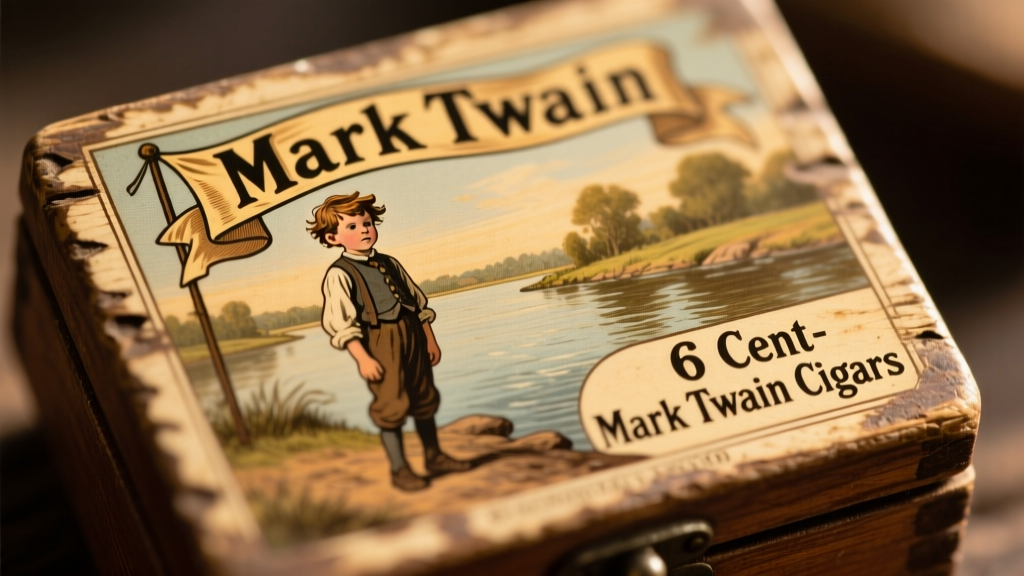
The Mark Twain Advertising Cigar Box: Boy on River Scene, 'Twain' Monogram Inside Lid, and the 6-Cent Premium Cigar Market of 1880–1910
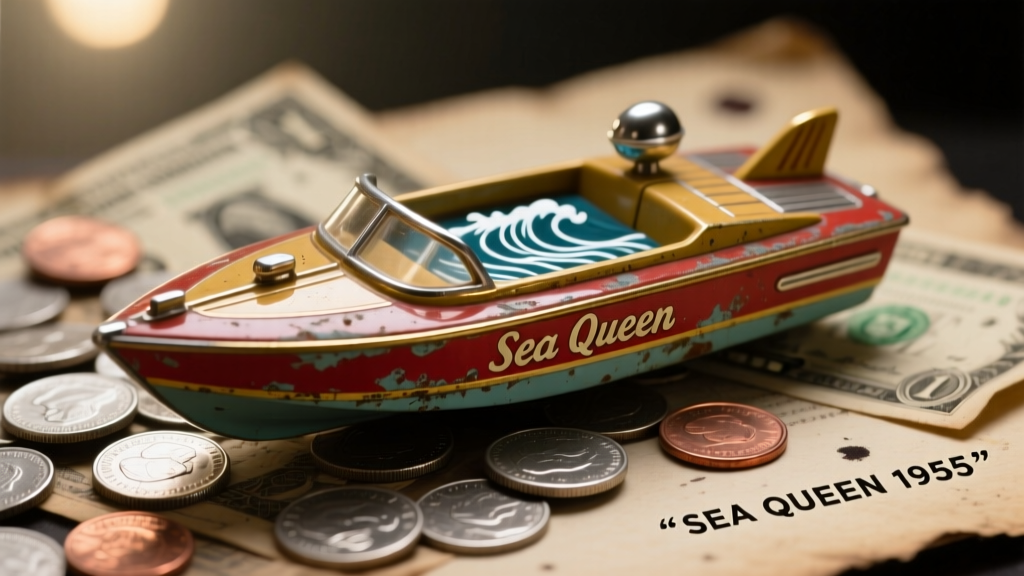
The Sea Queen Speedboat: A Collector's Deep Dive into the Iconic 1950s Tinplate Toy Boat