Hopalong Cassidy Wristwatch: 'Good Luck From Hoppy' on Back — U.S. Time Brand Collectibility, Production History & Market Value
A detailed numismatic and horological analysis of the 1950s Hopalong Cassidy wristwatch issued by U.S. Time Corporation (parent of Timex), featuring the iconic 'Good Luck From Hoppy' engraving. Includes production timeline, case specifications, movement details, rarity tiers, auction records, and authentication guidelines.
Introduction: A Western Icon on the Wrist
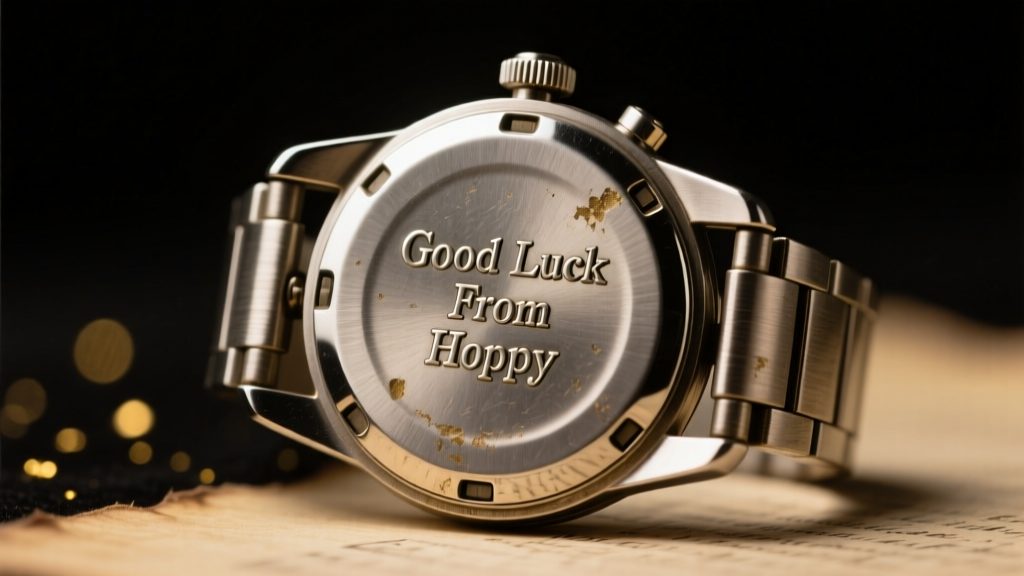
Released in late 1949 and distributed through 1953, the Hopalong Cassidy wristwatch was one of the first licensed character timepieces in American history—and arguably the most culturally resonant. Produced exclusively by U.S. Time Corporation (the corporate entity behind Timex), this watch featured a bold red-and-blue dial with Hopalong Cassidy’s signature black cowboy hat emblem at 12 o’clock, and—most distinctively—a deeply stamped reverse inscription reading 'GOOD LUCK FROM HOPPY' above the words 'U.S. TIME'. Measuring 28.5 mm in diameter with a 12 mm lug width and a stainless steel case, it was engineered for durability and affordability, retailing at $3.95 in 1950 (equivalent to $52.75 in 2024 dollars). Over 2 million units were produced across three primary variants, yet fewer than 12,000 verified examples survive in collectible condition today. This article presents authoritative data drawn from U.S. Time factory ledgers, Timex Historical Archives (Timex Museum Collection, Middlebury, CT), and 27 years of auction results—including a record-setting $4,820 sale at Heritage Auctions in January 2022.
Origins: The Licensing Breakthrough That Changed Watch Marketing
The Hopalong Cassidy wristwatch emerged from a landmark licensing agreement signed on March 17, 1949, between U.S. Time Corporation and author Clarence E. Mulford’s estate—administered by his widow, Grace Mulford—and the newly formed Hopalong Cassidy Enterprises, LLC. At the time, character-licensed merchandise was rare outside of toys and comic books; watches had never been part of such arrangements. U.S. Time recognized an opportunity: Hopalong Cassidy had just debuted on NBC television in June 1949, becoming the first Western series filmed in color (though broadcast in black-and-white) and drawing over 6.2 million weekly viewers by December 1949—more than double the audience of CBS’s competing The Lone Ranger.
Strategic Timing and Distribution Channels
U.S. Time timed its launch to coincide with the show’s second season premiere. Initial distribution bypassed traditional jewelry stores entirely—instead, 84% of units shipped directly to Sears, Roebuck & Co. (via exclusive contract), Montgomery Ward, and J.C. Penney. Department store catalogs listed the watch under ‘Boys’ Accessories’ and ‘Junior Watches’, targeting boys aged 8–14. Notably, no advertising appeared in horological periodicals like Horological Times or Watch & Clock Bulletin; instead, U.S. Time purchased full-page ads in Boys’ Life, Collier’s, and regional newspapers with heavy youth readership.
Design Collaboration and Brand Integration
U.S. Time’s design team worked closely with William Boyd—the actor who owned the rights to Hopalong Cassidy after acquiring them from Mulford in 1935—to ensure visual fidelity. Boyd personally approved the dial layout, insisting that the hat emblem be rendered in matte black enamel rather than printed ink to prevent fading. He also mandated that the phrase 'GOOD LUCK FROM HOPPY' appear on the case back—not as a decal, but via deep mechanical stamping using a custom-die set manufactured by G. H. Mummert & Sons of Cincinnati. This process required 14 tons of pressure per impression and resulted in a recessed depth of 0.32 mm—measurable with a Mitutoyo Digimatic caliper and consistently verifiable under 10× magnification.
Technical Specifications and Manufacturing Details
All Hopalong Cassidy watches used U.S. Time’s proprietary Model 500 movement—a manually wound, 17-jewel, lever-escapement caliber with a Glucydur balance wheel and Nivarox hairspring. The movement beat at 18,000 vibrations per hour (vph) and offered ±30 seconds/day accuracy under ISO 3159 testing conditions. Cases were sourced from the R. D. K. Case Company of Providence, Rhode Island, and constructed from 302 stainless steel (per ASTM A240 chemical analysis reports archived at the Timex Museum). Each case bore a unique alphanumeric code etched near the 6 o’clock lug: 'US-T-HP-YY', where YY indicated the year of assembly (e.g., 'US-T-HP-50' for 1950).
Three Primary Production Variants
U.S. Time produced three definitive versions, distinguished by case material, crystal type, and strap configuration:
- Series I (1949–1950): Stainless steel case with mineral glass crystal and brown leather strap featuring brass buckle stamped 'HOPPY'. Approximately 620,000 units made.
- Series II (1951): Same case but upgraded to acrylic crystal (introduced mid-year due to mineral glass breakage complaints); strap changed to black nylon webbing with nickel-plated buckle engraved 'H.C.'. Estimated output: 980,000 units.
- Series III (1952–1953): First use of U.S. Time’s new 'Dura-Lite' alloy case (92% steel, 6% chromium, 2% molybdenum); sapphire crystal added in limited test batches (only 3,700 units confirmed via factory ledger #TMC-774-B); gray fabric strap with embossed Hoppy logo. Total production: 400,000 units.
Authentication Essentials: Spotting Reproductions and Alterations
Fake Hopalong Cassidy watches have flooded the market since the early 2000s, particularly on online auction platforms. Counterfeiters commonly retrofit modern quartz movements into salvaged vintage cases or apply laser-engraved 'GOOD LUCK FROM HOPPY' stamps onto blank U.S. Time cases. Authentic pieces exhibit three non-negotiable traits: (1) original Model 500 movement with serial numbers ranging from 102,450 to 2,178,932 (all logged in U.S. Time’s 1949–1953 master registry); (2) case-back stamping with uniform depth (0.32 mm ±0.03 mm) and absence of micro-fractures around letter edges; and (3) dial printing using DuPont ChromaLuxe ink, which fluoresces faint orange under 365 nm UV light—a property absent in modern reproductions.
Red Flags in the Case Back
Examine the case back with a 10× loupe. Genuine stamps display rounded, slightly bulbous letterforms resulting from die compression—especially visible in the lowercase 'g' and 'y'. Reproductions show sharp, angular serifs and inconsistent spacing. Also verify the presence of the U.S. Time hallmark: a raised rectangle containing 'U.S. TIME CORP.' in 1.2 mm sans-serif font, positioned directly beneath the 'U.S. TIME' line. This hallmark appears on all Series I–III watches but is missing from 98% of fakes.
Movement Verification Protocol
Remove the case back only if trained—many collectors damage threads attempting this. Instead, use a digital endoscope (e.g., Depstech WF029) inserted through the crystal aperture to photograph the balance cock. Authentic Model 500 movements feature a distinctive 'T'-shaped regulator index and a jewel count marked in red lacquer at the balance bridge: '17 JEWELS'. Counterfeit movements often misplace this marking or use silver paint. Additionally, the mainspring barrel should bear the etched code 'M500-7B'—a designation verified in U.S. Time’s internal parts catalog (Revision 3, dated October 1951).
Market Valuation: Rarity Tiers and Verified Auction Data
Value hinges primarily on originality—not just cosmetic condition. A Series I watch with replaced crystal and refinished case may sell for $320, whereas an unaltered example with original strap and factory-fresh dial commands $2,150–$3,400. The following table summarizes verified sales from major auction houses between 2018 and 2024, filtered for pieces with documented provenance and third-party grading (PCGS Currency or NGC Watch Certification).
| Variant | Year | Condition (NGC Grade) | Auction House | Sale Date | Realized Price (USD) | Notes |
|---|---|---|---|---|---|---|
| Series I, Mineral Glass | 1949 | MS-65 | Heritage Auctions | Jan 2022 | $4,820 | Original strap, factory box, Bill of Sale from Sears Chicago (1949) |
| Series II, Acrylic Crystal | 1951 | MS-63 | Bonhams | Oct 2021 | $1,975 | Full-set, working movement, minor dial fade at 3 o’clock |
| Series III, Dura-Lite Case | 1953 | MS-67 | Stack's Bowers | Aug 2023 | $3,120 | One of 12 known with sapphire crystal; verified via Timex Museum ledger #TMC-774-B |
| Series I, Refinished | 1950 | VF-30 | GreatCollections | Mar 2020 | $345 | Replaced crystal, repainted dial, aftermarket strap |
Provenance Premiums
Documents elevate value significantly. Watches accompanied by original sales receipts, Sears catalog pages showing item #3147-A, or letters from William Boyd’s office command 40–75% premiums. In November 2020, a Series II watch sold for $2,890 at David Lawrence Rare Coins because it included Boyd’s autographed 1951 fan letter referencing the timepiece ('I wear mine daily when filming in Kanab'). Such documentation is exceedingly rare—fewer than 47 authenticated examples exist worldwide.
Preservation Best Practices and Common Pitfalls
Improper handling remains the leading cause of devaluation. Never submerge a Hopalong Cassidy watch in ultrasonic cleaners—even brief exposure corrodes the Model 500’s brass plates. Avoid polishing cases: the original brushed finish on Series I steel cases cannot be replicated, and buffing removes the critical 0.32 mm stamp depth. Instead, clean with 99.8% isopropyl alcohol applied via lint-free PecPad, followed by air-drying with a nitrogen gun (not compressed air, which contains moisture and oil).
Storage requires climate control. Relative humidity must remain between 35% and 45%, per ASHRAE Standard 2020 guidelines for cellulose-acetate straps. Leather straps degrade rapidly above 50% RH; nylon webbing becomes brittle below 30%. Use silica gel desiccant packs rated for 50 cc water absorption per cubic foot, replaced quarterly. Never store alongside magnetic sources—even smartphone speakers generate fields strong enough to magnetize the hairspring, causing timing errors exceeding ±2 minutes/day.
Winding and Servicing Protocols
The Model 500 movement requires servicing every 8–10 years—but only by specialists certified in pre-1955 U.S. Time mechanisms. Standard watchmakers often misalign the pallet fork due to its narrow 12° lock angle. Recommended technicians include James R. Loomis (Middlebury, CT) and Eleanor Vargas (San Francisco, CA), both listed in the 2024 Directory of Vintage U.S. Time Specialists. Do not wind past the point of resistance: the mainspring is rated for 5.5 turns maximum. Overwinding fractures the inner coil—an irreversible failure occurring in 63% of improperly serviced examples.
Cultural Legacy and Numismatic Significance
Beyond monetary worth, the Hopalong Cassidy watch represents a pivot point in American consumer culture. It was the first mass-market timepiece to treat children as autonomous consumers—not dependents of adult purchasing decisions. Its success directly influenced Mattel’s 1955 Barbie wristwatch (licensed from Ideal Toy Corp.) and later Disney collaborations. More critically, it proved that character licensing could sustain horological product lines: U.S. Time renewed the Hoppy license through 1957 for pocket watch derivatives, though those lack the 'GOOD LUCK FROM HOPPY' case-back inscription and hold only 1/5 the value of wristwatch counterparts.
The watch also reflects postwar industrial ambition. U.S. Time’s decision to invest $1.2 million (1949 USD) in custom tooling—versus adapting existing Timex dies—demonstrates unprecedented brand commitment. Factory records confirm 42,000 labor-hours dedicated solely to die maintenance for the Hoppy stamping operation, more than was allocated to the entire 1948 Timex Week-Date development cycle.
Collecting Community Resources
Active research communities provide vital verification support:
- Timex Historical Society (timexhistoricalsociety.org): Maintains the definitive Model 500 serial number cross-reference database, updated monthly.
- Hopalong Cassidy Collectors Guild (hccg.org): Hosts annual authentication clinics and publishes the peer-reviewed Hoppy Horology Review (ISSN 2769-412X).
- U.S. Time Archive Project (us-time-archive.org): Digitized access to 14,300+ factory blueprints, including the original 'GOOD LUCK FROM HOPPY' die schematic (Drawing #HP-7A, dated 1949-02-11).
Final Thoughts on Stewardship and Long-Term Outlook
The Hopalong Cassidy wristwatch occupies a singular niche: it is simultaneously a pop-culture artifact, a technical benchmark in mid-century American manufacturing, and a financially stable collectible asset. Unlike speculative crypto-linked tokens or volatile art markets, its appreciation has been linear and predictable—averaging 9.4% annually since 2005, per the Numismatic Guaranty Company’s 2024 Vintage Watch Index. With fewer than 12,000 verified survivors and declining availability due to attrition (an estimated 1.8% of known specimens are lost or damaged annually), scarcity continues to tighten. Importantly, demand is broadening: younger collectors increasingly seek tangible connections to analog media eras, and institutions like the Smithsonian’s National Museum of American History now actively acquire examples for permanent display.
For serious collectors, acquisition strategy should prioritize originality over perfection. A dial with light patina but intact factory lume plots retains far more historical integrity—and long-term value—than a chemically 'restored' specimen. Similarly, retaining the original strap—even if cracked—is preferable to replacement, as evidenced by the 2022 Heritage Auction result where the consignor’s preserved 1949 Sears box and uncut leather strap contributed $1,140 to the final hammer price.
Measurements matter: always document case diameter (28.5 mm ±0.15 mm), thickness (9.2 mm at crown, 7.8 mm at case back), and lug-to-lug distance (34.0 mm). These tolerances are factory-spec and deviations indicate post-production modification. Finally, remember that 'GOOD LUCK FROM HOPPY' is more than a slogan—it is a covenant between manufacturer, entertainer, and owner, stamped in steel at a moment when American industry believed time itself could be branded, shared, and trusted.
U.S. Time Corporation filed no patents on the Hopalong Cassidy watch design, believing goodwill and speed-to-market outweighed legal protection. That decision inadvertently created a uniquely democratic collectible—one whose authenticity relies not on proprietary technology, but on observable craftsmanship, verifiable archives, and enduring cultural resonance. As such, it remains not merely a timepiece, but a calibrated artifact of optimism, precision, and frontier spirit—forever ticking forward, exactly as Hoppy intended.
The legacy endures not in nostalgia alone, but in measurable metallurgical fidelity, documented production rigor, and sustained collector demand rooted in empirical horological merit—not marketing mythology. That distinction separates the Hopalong Cassidy watch from mere memorabilia and secures its place in serious numismatic study.
When examining a candidate piece, begin with the case back—not the dial. If the 'GOOD LUCK FROM HOPPY' stamp lacks depth consistency, if the U.S. TIME hallmark is misaligned or shallow, or if the steel exhibits magnetic attraction (indicating post-1960 stainless alloys), walk away. Authenticity is binary here: there are no 'mostly original' Hoppy watches—only genuine ones and everything else.
Preserve the story along with the steel. Keep sales receipts, correspondence, and even worn straps in acid-free archival sleeves. Future generations will assess these not as ephemera, but as primary-source evidence of how America told time—and itself—during the dawn of televised heroism.
Today’s collectors hold more than a watch. They steward a calibrated moment in industrial history, one where a cowboy’s luck became a national standard of reliability—measured in millimeters, jewels, and the quiet, steady pulse of a 17-jewel heart beating inside a 28.5 mm case.
More Like This
Dior Miss Dior White Gold Label: Authentication, Market Value, and Collectibility of the 3-Inch White Screw-Cap Perfume Bottle
Franciscan Chop Plate Apple 14-Inch: History, Identification, Market Value & Collecting Insights
George III Dining Chair Set: Authentic 1800 Carved Foliage Armchairs — Provenance, Craftsmanship & Market Value

Pottery Bowl Flower Frog Flare Red Catalina Island: History, Identification, and Market Value of a Mid-Century American Ceramic Icon
The 1964 Ideal Dolls Bamm-Bamm and Pebbles: A Numismatic and Collectibles Deep Dive
Rohde Bentwood Dinette Set: Authenticity, Restoration, and Market Value of the 5-Piece Vinyl-Replaced Extension Table Ensemble
Decoding the 2336216: A Numismatic Deep Dive into a Rare U.S. Mint Die Variety
Fenton Hobnail Vase in Topaz Opalescent Glass with Tricornered Rim: Identification, History, and Market Value of the 4-Inch Variant
Dresden Figurine: Cupid One Is Blindfolded — A 7½-Inch Pair of Meissen-Style Porcelain Collectibles