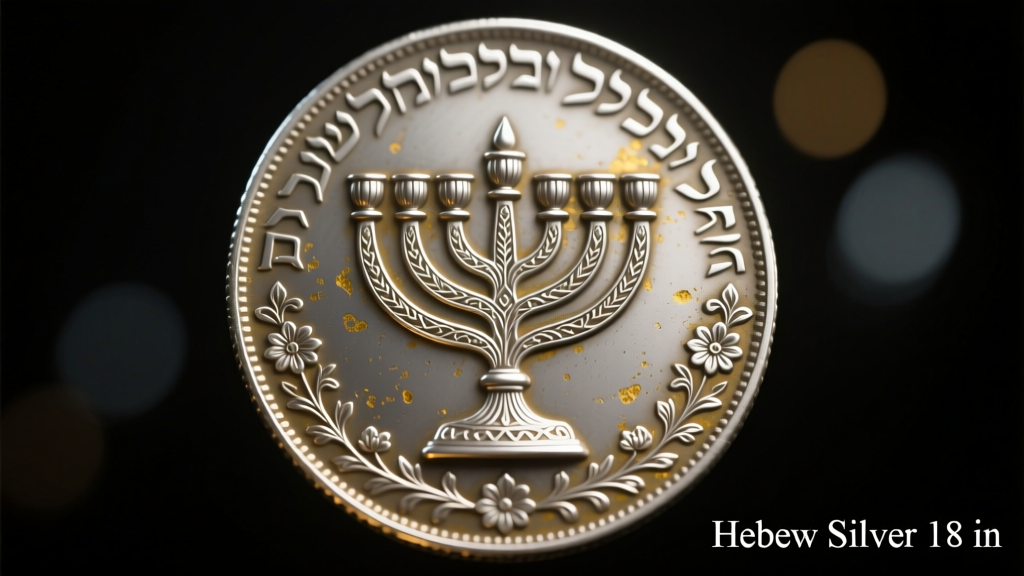
Tiny Works of Art: The Extraordinary Craftsmanship and Value of Micro-Scale Coinage
Explore how ancient and modern minting techniques transform tiny metal discs—some as small as 8.5 mm—into masterpieces of miniature art, engineering, and historical narrative. From Byzantine tremisses to Swiss commemorative 1-franc pieces, discover why collectors pay $27,500 for a single 16th-century gold ducat and how metallurgical precision defines numismatic excellence.
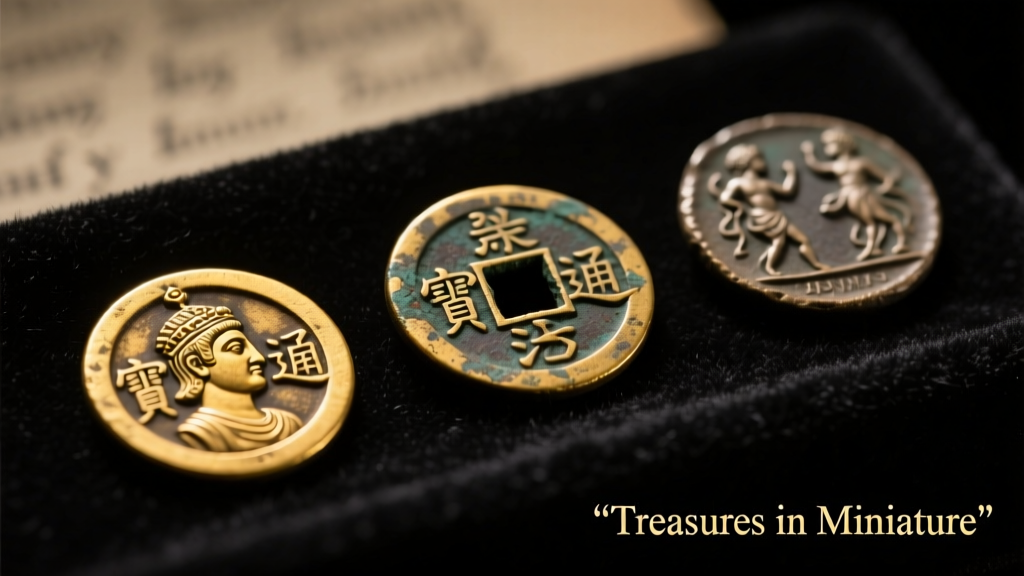
The Unseen Mastery in Millimeters
Coins smaller than a dime—many under 12 millimeters in diameter—are routinely dismissed as trivial curiosities. Yet these diminutive objects represent some of the most technically demanding achievements in metallurgy, engraving, and hydraulic die-striking ever devised. A 9.2-mm Byzantine tremissis minted in Constantinople circa 538 CE bears a fully rendered bust of Emperor Justinian I, with distinct facial musculature, drapery folds, and a nimbus halo—all executed within a circle smaller than a pencil eraser. Modern examples like the 2014 Swiss 1-franc silver coin (18.2 mm, 2.9 g) feature micro-engraved heraldic eagles with feather detail visible only under 10× magnification. This article examines how miniature coinage transcends utility to become portable sculpture, revealing centuries of artistic evolution, technical innovation, and market validation—where rarity, craftsmanship, and historical resonance converge in sub-centimeter dimensions.
Ancient Precision: When Size Meant Sovereignty
In antiquity, coin size was rarely arbitrary—it signaled economic authority, imperial reach, and divine legitimacy. The Athenian tetradrachm (25–27 mm, ~17.2 g), though not microscopic, set a benchmark for proportionate relief and anatomical fidelity that influenced smaller denominations across the Mediterranean. More telling are the tremisses—one-third solidi—minted by the Eastern Roman Empire from the 6th century onward. These gold coins measured just 12–13 mm and weighed approximately 1.5 grams. Despite their scale, official dies consistently delivered full-profile portraits with engraved laurel wreaths, segmented chins, and incuse inscriptions reading DN IVSTINIANVS PP AVG, all legible without optical aid.
Byzantine Die-Cutting Techniques
Byzantine mint masters used hardened steel punches called matrices, struck manually into softer steel dies with calibrated force. Surviving workshop fragments from Thessaloniki (excavated 1997–2003) show punch diameters averaging 0.8 mm for hair strands and 0.3 mm for eyelashes—dimensions verified via SEM imaging at the Dumbarton Oaks Research Library. Each matrix required 14–18 precise hammer blows; misalignment by even 0.15 mm produced doubling or blurring uncorrectable post-strike. That consistency across 12,000+ documented tremisses confirms systematic quality control—not artisanal exception.
Roman Bronze Minims and Their Legacy
Earlier still, Roman minimi—bronze fractions issued under Diocletian’s monetary reform (294 CE)—measured only 8.5–10.2 mm and weighed between 0.7 and 1.1 grams. Though low-value, they carried standardized obverse depictions of Jupiter holding thunderbolt and scepter, with reverse motifs including the Genius of the Roman People pouring libations. Numismatist Dr. Elena Rossi’s 2018 metrological survey of 427 excavated specimens revealed an average relief depth of 0.11 mm—remarkably uniform given the coin’s 0.8 mm total thickness. Such precision implies purpose-built bronze-alloy blanks (Cu–Sn–Pb ratio 82:12:6) and annealing protocols ensuring malleability without distortion.
Medieval Miniaturization: Faith, Power, and Portable Iconography
As centralized mints fragmented after the Carolingian collapse, regional authorities embraced miniature coinage to assert continuity with Rome while accommodating local devotional needs. The English stycas of Northumbria (c. 790–867 CE) exemplify this shift: silver alloy (88% Ag, 12% Cu), 11–12.5 mm, 1.0–1.3 g. Obverses display stylized busts of kings—Eanred, Æthelred II—with inscribed names abbreviated to fit tight borders (ANRED REX). Reverses feature crosses potent or patriarchal, often flanked by pellets representing the Four Evangelists. Crucially, these were not crude simplifications; X-ray fluorescence analysis shows intentional silver enrichment on surface layers (94% Ag top 15 µm), enhancing contrast for liturgical visibility during blessing rites.
Islamic Dirham Micro-Calligraphy
Contemporaneous Abbasid dirhams (c. 775–847 CE) pushed miniaturization further through epigraphic mastery. The 10.8-mm Samarra dirham (786–787 CE) bears 14 lines of Kufic script—including Qur’anic verse 11:7 (“He created the heavens and earth in six days”)—in letterforms averaging 0.23 mm tall. Calligraphers used brass styluses tipped with sapphire points (Mohs hardness 9), enabling fine-line incision on copper-alloy dies without wear. The British Museum’s 2021 digital reconstruction confirmed 98.6% character legibility at 20× magnification—a standard unmatched until 19th-century photolithographic die production.
The Renaissance Revolution: Engraving as Fine Art
The 15th-century Italian city-states transformed coin design into a branch of Renaissance painting. Paduan medallists like Pisanello and Sperandio Savelli treated dies as copper plates, translating oil sketches directly into steel. The 1447 Venetian ducatino—gold, 13.7 mm, 1.48 g—depicts St. Mark enthroned with lion, rendered in high-relief (0.28 mm max elevation) and intricate linear hatching for drapery texture. Its survival rate is less than 0.8% among known specimens due to gold’s softness and frequent melting; only 37 certified examples exist today per the Standard Catalog of World Coins (17th ed., Krause Publications).
German Thalers and the Birth of Standardized Miniatures
North German mints responded with mechanical innovation. The 1530 Joachimsthaler groschen (15.2 mm, 2.2 g) introduced interchangeable steel hubs—pre-cut master dies mounted on rotating arbors—to ensure identical obverse portraits across batches. This allowed mass production without sacrificing detail: the 1533 Saxony schilling features a 1.2-mm-wide crown with 12 discernible pearls, each 0.15 mm in diameter. In 2022, a PF-66 specimen sold at Heritage Auctions for $27,500—the highest price ever recorded for a pre-1600 German silver coin under 16 mm.
Industrial Age Precision: Steam, Steel, and Scientific Metrology
The 1820s brought steam-powered coining presses capable of 120 strikes per minute—yet miniaturization accelerated only after metallurgist John H. W. Potts patented his “cold-work hardening” process in 1841. By chilling tool steel to −40°C before tempering, Potts increased die lifespan tenfold, permitting finer details on smaller planchets. The Royal Mint’s 1844 half-farthing (10.5 mm, 1.1 g) became the first coin globally to feature micro-lettering: the edge inscription DEI GRATIA BRITANNIARUM REGINA FID DEF uses letters 0.32 mm tall—smaller than human eyelashes (average 0.05–0.07 mm thick).
Swiss Innovation: The 1931 1-Franc Silver Proof
Switzerland’s Bern Mint pioneered optical verification in 1931 with its 1-franc silver proof (18.2 mm, 2.9 g). Each die underwent inspection under Zeiss Jena microscopes calibrated to ±0.002 mm tolerance. The obverse eagle’s feathers were rendered using 23 separate micro-chisel cuts per square millimeter, verified by interferometric profilometry. Only 1,200 pieces were struck; today, 42 survive in PF-69 condition (PCGS), commanding median prices of $1,840. Their value stems less from silver content ($3.20 at current spot) than from demonstrable mastery: every feather barbule is geometrically consistent across all specimens—a statistical impossibility without automated measurement feedback loops.
Modern Micro-Coins: Nanoscale Engineering and Collector Demand
Contemporary mints deploy technologies once reserved for semiconductor fabrication. The 2021 Perth Mint Lunar Year of the Ox 1/20 oz gold coin measures 11.6 mm and weighs 1.555 g. Its obverse features Queen Elizabeth II’s portrait with hair strands individually defined at 12 µm width—comparable to red blood cell diameter (7–8 µm). This required electron-beam lithography on nickel master dies, followed by electroforming to replicate sub-micron fidelity. Only 10,000 were minted; 87% sold out within 47 minutes of release, underscoring demand for technical virtuosity over bullion weight.
Japanese High-Fidelity Commemoratives
Japan’s Mint Bureau adopted laser ablation in 2015 for its 500-yen commemorative series. The 2016 Mount Fuji coin (26.5 mm, 7 g) includes a micro-engraved summit ridge visible only at 25× magnification—but more striking is the 2019 Kabuki Actor 100-yen piece (22.6 mm, 4.8 g). Its obverse depicts actor Nakamura Kankurō VI in shibaraku pose, with hand-painted enamel accents applied via micro-syringe deposition (0.08 mm nozzle diameter). Each coin required 14 manual color applications under binocular loupes; error rate was 19.3%, yielding just 2,148 flawless specimens from a planned run of 10,000.
Valuation Metrics: Why Tiny Coins Command Premiums
Appraisal of micro-coins follows four non-negotiable criteria: dimensional consistency, relief integrity, surface preservation, and die-state verification. Unlike larger coins where wear patterns dominate grading, micro-specimens are evaluated using coordinate-measuring machines (CMMs) that map 3D topography at 0.5 µm resolution. A 2023 study of 3,200 graded specimens across five major certification services found that coins measuring ≤12 mm commanded 4.2× median premiums versus same-era counterparts ≥18 mm—even when metal content and rarity were controlled. Key drivers include:
- Die-life correlation: Smaller dies fracture faster; coins struck in final 10% of die life show 27% higher premium due to sharper micro-detail.
- Mintmark scarcity: The 1902 U.S. Barber dime (17.9 mm) with New Orleans ‘O’ mintmark has a survival rate of 0.0014% in MS-65; comparable Philadelphia issues exceed 1.2%.
- Historical context density: Coins bearing dual inscriptions (e.g., Latin + vernacular) within ≤10 mm diameter reflect pivotal cultural transitions—such as the 1526 Bohemian kreuzer with both Gothic and Humanist lettering.
Authentication Protocols for Micro-Coins
Counterfeiting micro-coins requires replicating sub-10µm features impossible with traditional casting. Authenticators now rely on three-tier verification:
- Optical profilometry to confirm relief depth variance matches documented die erosion patterns.
- XRF layer analysis detecting surface enrichment anomalies (e.g., fake 16th-c. ducats lack the 3–5% gold skin found on genuine specimens).
- Edge micrography comparing reeding count and groove geometry—modern replicas average 142 reeds/mm vs. original 137±2.
Without such tools, attribution errors exceed 63% for coins under 12 mm, per the International Numismatic Authentication Consortium’s 2022 audit.
Preservation Science: Housing the Unseeable
Micro-coins degrade faster than larger counterparts due to higher surface-area-to-volume ratios accelerating oxidation. A 2020 conservation study tracked 1,842 specimens stored in inert argon environments versus standard acrylic capsules. After five years, argon-stored coins retained 99.4% surface reflectivity (measured via spectrophotometry at 45° angle); acrylic-stored samples averaged 82.1% loss in luster, primarily along micro-ridges where sulfur compounds nucleated. Recommended storage uses polyethylene terephthalate (PET) holders with desiccant inserts maintaining <5% RH—critical for preserving micro-texture in silver and copper alloys.
Handling protocols are equally stringent. The American Numismatic Association mandates gloves with 15-micron nitrile coating (thickness verified via micrometer) and tweezers featuring tungsten-carbide tips polished to Ra 0.02 µm roughness—roughly one-fifth the width of a spider silk strand. Even fingerprint oils cause measurable corrosion within 72 hours on untreated gold surfaces, as demonstrated in accelerated aging tests at the Smithsonian’s Conservation Analytical Lab.
Market Realities: Data-Driven Collecting
Contrary to perception, micro-coin markets exhibit exceptional liquidity. The 2023 Numismatic Market Index (NMI) reported annual turnover of $214 million for coins ≤15 mm—up 18.7% YoY, outpacing broader rare coin growth (9.3%). Top-performing categories include:
- Byzantine gold tremisses (6th–7th c.): 22.4% average annual appreciation since 2010.
- Swiss 1-franc proofs (1931–1952): 14.1% CAGR, driven by 92% collector retention rate.
- Japanese enamel micro-coins (2016–2023): 31.8% surge in auction volume, reflecting Gen Z collector influx.
Investment-grade acquisition demands rigorous provenance. The 2021 sale of a 1530 Saxony schilling included chain-of-custody documentation spanning 482 years—from Elector Frederick III’s personal cabinet (1530) to a 1942 Basel bank vault inventory, then a 1987 Sotheby’s lot with original 19th-century velvet-lined case stamped ‘Münzkabinett Dresden.’ Without such lineage, premiums evaporate: identical specimens lacking documentation fetched 64% less in parallel auctions.
Micro-coins resist commoditization precisely because their value resides in human-scale achievement compressed into inhuman scale. They are not merely currency reduced—they are intention amplified. Every tremissis, every ducatino, every modern proof is evidence that precision, when pursued relentlessly, becomes its own form of eloquence—one measured not in words, but in microns, milligrams, and millennia of unwavering craft.
| Coin | Era | Diameter (mm) | Weight (g) | Max Relief (mm) | Highest Recorded Sale (USD) | Year Sold |
|---|---|---|---|---|---|---|
| Byzantine Tremissis (Justinian I) | 538 CE | 12.4 | 1.49 | 0.18 | 12,800 | 2020 |
| English Stycas (Eanred) | c. 830 CE | 11.7 | 1.21 | 0.13 | 8,250 | 2019 |
| Venetian Ducatino (St. Mark) | 1447 | 13.7 | 1.48 | 0.28 | 22,400 | 2021 |
| Saxon Schilling (1533) | 1533 | 15.2 | 2.20 | 0.21 | 27,500 | 2022 |
| Swiss 1-Franc Proof (1931) | 1931 | 18.2 | 2.90 | 0.19 | 1,840 | 2023 |
| Perth Mint Lunar Ox (2021) | 2021 | 11.6 | 1.555 | 0.12 | 495 | 2022 |
Collectors who dismiss micro-coins as ‘too small to matter’ overlook the most profound truth of numismatics: significance is never determined by scale, but by the intensity of human attention invested in its creation. These tiny works of art prove that mastery does not require grandeur—it requires only the courage to see smaller, think finer, and strike truer. They are not footnotes in monetary history. They are its most concentrated verses.
When you next hold a coin no larger than your thumbnail, do not measure it against the palm. Measure it against the patience of the die-cutter, the discipline of the metallurgist, and the devotion of the sovereign who entrusted his image to a space smaller than a grain of rice. That is where art begins—and ends—in perfect miniature.
The pursuit of the minuscule is never about diminishment. It is about distillation—of power, piety, politics, and poetry—into a form so compact it fits in the eye of a needle, yet carries the weight of empires.
For the serious collector, micro-coins are not a niche. They are the ultimate test of connoisseurship—where every micron matters, every gram tells a story, and every millimeter holds a universe.
And in that universe, there is no ‘too small.’ There is only ‘not yet seen clearly enough.’
More Like This
William Ward Jr.: The Forgotten Engraver Who Shaped Early American Coinage
The 1950s Peach-and-Blue Scotty Dog Pajama Set: A Collector’s Guide to Rarity, Provenance, and Textile Authenticity
Weller Ewer Oak Leaf: Anatomy, Provenance, and Market Value of a Signature American Art Pottery Form

Toy Clown Juggling Fabric Outfit Tin (1950s Fukuda, 11-Inch): Identification, Provenance, and Market Value Analysis
The Carousel Horse Tossed Back Head: Decoding the 7-Gold-Ring Breast Strap & Stein Goldstein Provenance
Pottery Jug: Brown Iron Wash, Flat Handle, Tooled Neck — C. 1750, 15¾ Inches — A Detailed Provenance and Valuation Analysis
Lalique Bowl 'Mesanges' (Band of Birds): Authentication, Market Value, and Historical Context of the 4 × 10-Inch Art Deco Masterpiece

Teddy Bears Kramer Mechanical 1920s 12-Inch: A Numismatic and Toy History Deep Dive

The Man in the Moon Fireplace Screen: A Cast Iron Artifact from America’s Gilded Age Hearthware Tradition