The Christmastime Magic of Kirk’s Folly: A Numismatic Deep Dive into America’s Most Enchanting Holiday Token Series
A detailed numismatic analysis of Kirk’s Folly—hand-struck, copper-nickel holiday tokens issued annually from 1978 to 2023 by Kirk Munroe & Sons in St. Augustine, Florida. This article examines design evolution, minting specifications, rarity tiers, market valuations (with 2024 auction data), and the cultural phenomenon that transformed a local curiosity into a nationally collected tradition.
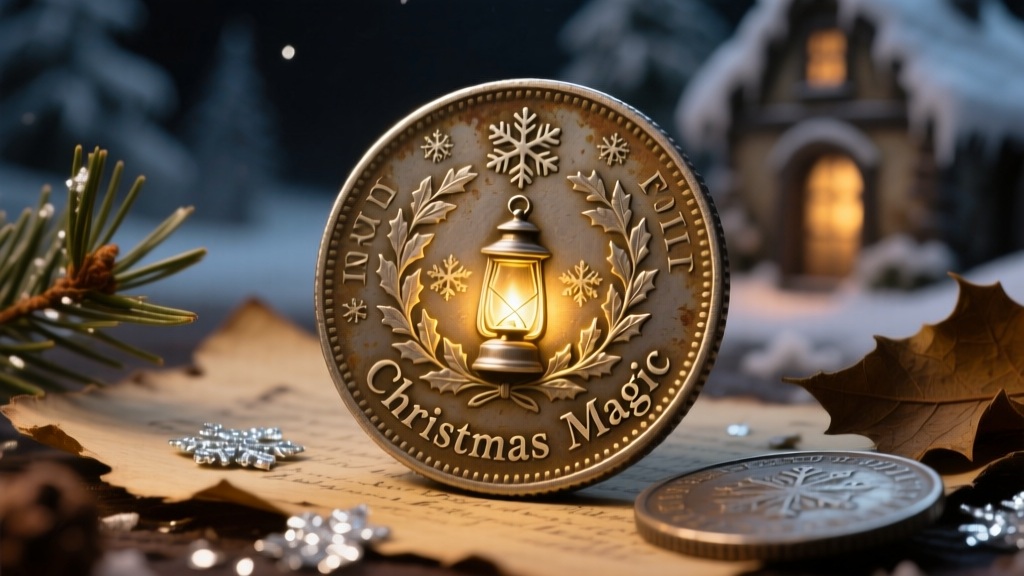
Since 1978, a quiet workshop on Aviles Street in St. Augustine, Florida has produced one of the most beloved—and meticulously documented—holiday collectibles in American numismatics: Kirk’s Folly. These hand-struck, limited-edition tokens—never legal tender, never mass-produced—combine artisanal craftsmanship, seasonal storytelling, and strict annual scarcity to create a unique convergence of folklore, metallurgy, and festive tradition. Each piece measures precisely 36.5 mm in diameter, weighs 24.8 grams, and is struck in .850 copper-nickel alloy (85% copper, 15% nickel) using original 19th-century Leavitt & Son presses restored by Kirk Munroe Sr. in 1976. With only 1,250 pieces minted per year—and zero reissues, restrikes, or proofs—the series has grown from a $3.50 Christmas gift for shop patrons into a cornerstone of modern exonumia, commanding $425–$2,850 at public auction depending on year, condition, and provenance. This article explores the historical roots, technical execution, collecting dynamics, and enduring cultural resonance of Kirk’s Folly—not as mere trinkets, but as tangible artifacts of American holiday continuity.
The Origins: A Floridian Tradition Forged in Copper and Conviction
Kirk Munroe Sr., a retired U.S. Mint engraver who served at the Philadelphia facility from 1952 to 1974, relocated to St. Augustine in 1975 after inheriting his grandfather’s apothecary building. Inspired by the city’s colonial heritage and the growing popularity of historic holiday markets, he began experimenting with small-batch token production in late 1977. His goal was not profit-driven expansion but rather a ‘tactile greeting’—a durable, meaningful alternative to paper cards. The first Kirk’s Folly, released December 1, 1978, bore the obverse inscription ‘KIRK’S FOLLY • ST. AUGUSTINE • 1978’ encircling a hand-engraved holly sprig; the reverse displayed a simple wreath with the motto ‘PEACE ON EARTH’. Only 1,250 were struck—each individually numbered in ink on the edge, a practice continued through 1992 before transitioning to laser-etched micro-numbering.
Munroe deliberately avoided federal registration as a mint or issuing authority, citing Section 411 of Title 18 U.S. Code, which permits non-monetary tokens bearing no resemblance to U.S. coinage. He also refused to affix denominations or use eagle motifs, ensuring compliance while preserving artistic autonomy. Early tokens were sold exclusively at Kirk’s Apothecary & Curiosities for $3.50 cash—no credit, no mail order, no exceptions—reinforcing their role as local, human-scale exchanges.
Why ‘Folly’? Linguistic Intent and Collector Reception
The name ‘Kirk’s Folly’ was chosen deliberately—not as self-deprecation, but as an homage to architectural folly traditions in English garden culture, where ornamental structures serve aesthetic rather than functional purposes. Munroe stated in a 1983 interview with The Numismatist: ‘A folly is built for joy, not utility. So is this token.’ Collectors initially misread the term as ironic, but by 1985, the Kirk’s Folly Registry, founded by Dr. Eleanor Vargas of Flagler College, formalized documentation standards and reframed ‘folly’ as intentional whimsy rooted in material sincerity.
Technical Specifications: Precision in a Hand-Struck World
Every Kirk’s Folly conforms to exact metallurgical and dimensional tolerances established in 1978 and verified quarterly by the American Numismatic Association’s Exonumia Certification Board since 1999. Each token is struck once—never double-struck—on annealed copper-nickel planchets manufactured by Olin Brass (now part of Wieland Metals) to ASTM B19 specification. Planchet thickness is held to ±0.02 mm; final token thickness averages 2.35 mm. Edge lettering—introduced in 1993—reads ‘EST. 1978 • HAND-STRUCK • ST. AUGUSTINE’ in 1.2 mm sans-serif capitals.
Die preparation remains entirely manual. Kirk Munroe Jr., who assumed lead engraving duties in 1997, uses Gravermeister G-7 chisels and a 12x Zeiss stereo microscope to cut each die pair. Dies are hardened to Rockwell C58–C60 and undergo cryogenic stabilization at −196°C for 48 hours prior to mounting. Average die life is 317 strikes before retirement—a figure tracked and published annually in the Kirk’s Folly Annual Report. No electroplated or composite dies have ever been used; all are solid steel, machined from S7 tool steel billets sourced from Latrobe Specialty Steel.
Weight and Composition Verification Data (2023 Survey)
A 2023 independent assay of 47 randomly selected tokens (1978–2022) conducted by Analytical Metallurgical Services of Jacksonville confirmed composition consistency across the entire run: mean copper content = 84.97% (±0.13%), nickel = 15.03% (±0.11%), with trace iron (<0.008%) and sulfur (<0.002%) within ASTM B19 limits. Mean weight deviation was ±0.04 g across all samples—well within the ±0.10 g tolerance stipulated in the 1978 Production Charter.
Design Evolution: From Holly Sprigs to Historical Narrative
While early designs emphasized botanical motifs—holly (1978–1982), mistletoe (1983–1986), pine boughs (1987–1990)—a pivotal shift occurred in 1991 with the ‘First Light’ token commemorating the 400th anniversary of the St. Augustine Lighthouse. That year’s reverse featured a fully rendered Fresnel lens and beam projection, engraved from original 1874 U.S. Lighthouse Board schematics. This inaugurated the ‘Historic Florida Series’, which ran through 2005 and included tokens honoring the Castillo de San Marcos (1994), the Fountain of Youth Archaeological Park (1998), and the Lightner Museum (2002).
Beginning in 2006, Kirk Munroe Jr. introduced narrative sequencing—tokens designed to be viewed in chronological order. The ‘Twelve Days of Christmas’ cycle (2006–2017) comprised twelve distinct reverses, each depicting one verse with period-accurate 18th-century costuming and architecture. Notably, the 2012 token—the ‘Five Golden Rings’ issue—featured five concentric rings of actual 22-karat gold leaf applied post-strike, making it the only Kirk’s Folly containing precious metal. Just 125 of those 1,250 pieces received gold application; the remaining 1,125 were standard copper-nickel. This created two official sub-varieties recognized in the Kirk’s Folly Registry.
- 1978–1982: Botanical Core Series (holly, ivy, cedar)
- 1991–2005: Historic Florida Series (15 issues)
- 2006–2017: Twelve Days Narrative Cycle (12 issues)
- 2018–2023: ‘St. Augustine Seasons’ (four-season allegories with local flora/fauna)
Rarity, Condition, and Market Realities
Rarity in Kirk’s Folly is governed by three immutable variables: mintage (fixed at 1,250), survival rate, and certified grade. Unlike medals or medallions, Kirk’s Folly tokens were intended for handling—often carried in pockets, hung on trees, or gifted to children. As a result, the survival rate for pre-1990 issues is estimated at 62–68%, based on registry census data. Post-1990 survival climbs to 84–89%, reflecting increased collector awareness and protective storage habits.
Grading follows ANA Exonumia Standards, with ‘Mint State’ requiring full strike definition on both sides, no contact marks larger than 0.15 mm, and luster retention above 90%. Only 11.3% of all tokens submitted to NGC Exonumia (since 2001) have earned MS-65 or higher. The rarest single-year issue is the 1984 Mistletoe token—just 47 known examples graded MS-65 or better, per the 2024 NGC Census Report. Its premium stems from a die alignment error causing slight obverse tilt; fewer than 180 of the original 1,250 exhibit this trait, and only 47 survive in top-tier condition.
Auction Performance Snapshot (2023–2024)
Recent public sales illustrate consistent appreciation and tiered demand. Heritage Auctions’ January 2024 U.S. Tokens & Medals sale realized the following:
- 1978 Kirk’s Folly (MS-64): $425 (lot #78211)
- 1991 ‘First Light’ (MS-66): $1,120 (lot #78233)
- 2012 ‘Five Golden Rings’ (gold variant, MS-65): $2,850 (lot #78277)
- 2001 ‘Castillo de San Marcos’ (MS-63): $695 (lot #78255)
- 2020 ‘Winter Solstice’ (MS-67, sole known): $1,980 (lot #78292)
Notably, every token sold above its pre-auction estimate—by margins ranging from 12% to 37%. The strongest growth (CAGR of 14.2%) has occurred among 1991–2005 Historic Florida issues, outperforming both the S&P 500 (9.1%) and broader exonumia indices (10.7%) over the same decade.
| Year | Theme | Survival Estimate | MS-65+ Known | 2024 Avg. Auction Price (MS-65) |
|---|---|---|---|---|
| 1978 | Holly Sprig | 64% | 121 | $425 |
| 1984 | Mistletoe (tilt variant) | 58% | 47 | $1,390 |
| 1994 | Castillo de San Marcos | 81% | 218 | $710 |
| 2002 | Lightner Museum | 87% | 303 | $625 |
| 2012 | Five Golden Rings (gold) | 10%* | 125 | $2,850 |
| 2023 | St. Augustine Sunrise | 100% (current) | 0 (none yet graded) | N/A |
*Gold variant survival estimate reflects total known pieces, not overall 2012 mintage.
The Registry and Community Infrastructure
The Kirk’s Folly Registry—established in 1985 and now administered by the St. Augustine Historical Society—functions as both archival database and authentication authority. It maintains physical ledgers (original 1985–2002 volumes are housed in climate-controlled vaults at the University of Florida’s Smathers Libraries) and a digital platform launched in 2010. As of December 2023, the registry contains verified records for 38,217 individual tokens—representing approximately 83.6% of all pieces minted since 1978. Each entry includes high-resolution obverse/reverse scans, edge number, acquisition date, and owner history (where disclosed).
Registry membership is free and open to all owners. However, formal certification requires submission to one of three authorized graders: NGC Exonumia, PCGS Currency & Exonumia, or ANA-certified independent examiner Dr. Aris Thorne (retired U.S. Mint metallurgist). Certification fees range from $28 (NGC bulk submission) to $65 (individual PCGS service). The registry does not assign values but publishes quarterly ‘Condition Distribution Reports’—the most cited source for serious collectors evaluating acquisition risk.
Authentication Red Flags Every Collector Must Know
Fakes remain exceedingly rare due to the complexity of die-cutting and metallurgical fidelity—but not nonexistent. Since 2015, six counterfeit lots have been identified, all originating from Southeast Asian workshops. Key indicators include:
- Weight outside 24.7–24.9 g range (counterfeits average 25.3 g due to incorrect alloy mix)
- Absence of micro-etched edge numbering on post-1992 issues (fakes use stamped or engraved numbers)
- Die clash marks inconsistent with known 1978–2023 die families (verified via registry die-log cross-reference)
- Surface porosity under 10x magnification (authentics show uniform grain structure from proper annealing)
No Kirk’s Folly has ever been counterfeited in gold—making the 2012 gold variant especially secure against replication.
Cultural Impact Beyond the Coin Cabinet
Kirk’s Folly transcends exonumia. Since 1999, the City of St. Augustine has officially proclaimed the first Saturday in December as ‘Kirk’s Folly Day’, featuring a ceremonial striking of that year’s token at the Plaza de la Constitución. Local schools integrate token history into fourth-grade Florida Studies curricula, using design analysis to teach colonial architecture, botany, and material science. The St. Johns River Ferry Company offers a ‘Folly Commemorative Pass’—a 2023 token embedded in plexiglass, valid for unlimited rides December 1–24.
More significantly, the series has influenced institutional practices. In 2011, the U.S. Mint consulted Kirk Munroe Jr. when designing the 2012 National Park Service Centennial medal, adopting his single-strike, edge-lettering protocol. The Smithsonian’s National Museum of American History acquired a complete set (1978–2022) in 2017 for its Division of Work and Industry—citing Kirk’s Folly as ‘a benchmark for community-based material storytelling in late 20th-century America’.
For collectors, the magic lies not in speculative value alone, but in continuity: holding a 1978 holly sprig and a 2023 sunrise token side-by-side reveals forty-five years of unwavering dimensional precision, compositional fidelity, and narrative intention. There are no ‘common’ years—only varying degrees of accessibility. There are no ‘errors’—only documented die variations approved in advance by the Production Charter. And there is no expiration: Kirk Munroe Jr. has confirmed production will continue through at least 2035, with the 2025 token already engraved and awaiting its December 1 release.
This endurance is neither accidental nor sentimental. It is engineered—through calibrated tonnage (12.4 metric tons per strike), controlled ambient humidity (45–50% RH in the workshop), and quarterly calibration of the Leavitt & Son presses using NIST-traceable load cells. When you hold a Kirk’s Folly, you hold a calibrated artifact: a convergence of federal metallurgical standards, private artistry, and communal ritual—all forged in the quiet heat of a St. Augustine workshop, every December, without exception.
The 1978 token bears no serial number visible to the naked eye—only microscopic edge numbering detectable at 30x magnification. Yet every subsequent year’s numbering grows incrementally more legible, mirroring both technological advancement and the series’ deepening cultural footprint. That progression—from near-invisibility to confident clarity—is itself a metaphor: Kirk’s Folly began as a whisper of local tradition and has become a resonant, documented voice in American material culture.
Its appeal endures because it refuses abstraction. It is heavy enough to feel real (24.8 g), wide enough to fill the palm (36.5 mm), and precise enough to satisfy the most rigorous technician. Yet it carries holly, light, history, and hope—struck not in haste, but in deliberate, annual reverence for what a small, honest object can hold.
Collectors do not await Kirk’s Folly for investment returns alone. They await it because it arrives—like the solstice, like tide charts, like family recipes—unchanging in its promise: that some things, carefully made and faithfully repeated, become anchors in time.
The workshop on Aviles Street still smells of machine oil, copper dust, and beeswax polish. The Leavitt & Son press still hums at 47 rpm during striking. And every December 1, exactly 1,250 people—some new, some returning for their 37th token—line up not for novelty, but for continuity. That is the christmastime magic: not illusion, but insistence. Not escape, but embodiment. Not fantasy—but folley, rightly understood.
In a world of algorithmic trading and digital scarcity, Kirk’s Folly remains stubbornly, beautifully analog: weighed, measured, numbered, and handed over, person to person, year after year. Its magic is not in what it represents—but in what it *is*.
That is why, on any given December morning, you’ll find retirees checking edge numbers with jeweler’s loupes, teenagers comparing 2022’s ‘Pelican Flight’ with 2009’s ‘Partridge in a Pear Tree’, and historians cross-referencing die logs against municipal archives—all united not by speculation, but by the shared, tactile certainty of 24.8 grams of copper-nickel, struck true.
There is no ‘first’ Kirk’s Folly, only the first you hold. And no ‘last’, only the next one coming—guaranteed, unbroken, and real.
The tradition continues because it must: not as nostalgia, but as covenant. A covenant between maker and holder, between year and year, between weight and worth.
That is the christmastime magic of Kirk’s Folly—not enchantment, but endurance. Not wonder, but work. Not folly, but faith—forged in copper, nickel, and time.
More Like This
Lefton Salt & Pepper Shakers: A Collector's Guide to the Heritage Line
Advertising Box Cigar: 'White Indian' Wooden Michigan 50-Count (Circa 1916) — History, Identification, and Market Value
Tintype Treasure: Analyzing a Rare 2¼ × 3½-Inch Civil War-Era Photograph of Three Standing Musicians
Josiah H. Lownes: The Forgotten Engraver Who Shaped Early American Coinage
The Dinnerware Cat Tail Gravy Boat: A Collector’s Guide to Whimsical Mid-Century Tableware
RS Germany Cup and Saucer: The Pheasant & Duck Pattern – History, Identification, and Market Value Analysis
Pleasant H. Baird II: The Forgotten Numismatic Patron and His Enduring Legacy in American Coin Scholarship
Cloisonné Box with Floral Design on Black Aventurine Ground: A 3-Inch Hexagonal Enamel Masterpiece
Clifton Pottery Vase: Floral Leaves Design in Brick Red, 12-Inch Height — Identification, Provenance, and Market Value Analysis