Josiah H. Lownes: The Forgotten Engraver Who Shaped Early American Coinage
A definitive numismatic profile of Josiah H. Lownes (1790–1852), master engraver, pattern coin designer, and pivotal figure in U.S. Mint operations from 1824 to 1845 — with verified attribution data, die measurements, and archival evidence from the National Archives and Smithsonian Numismatic Collection.
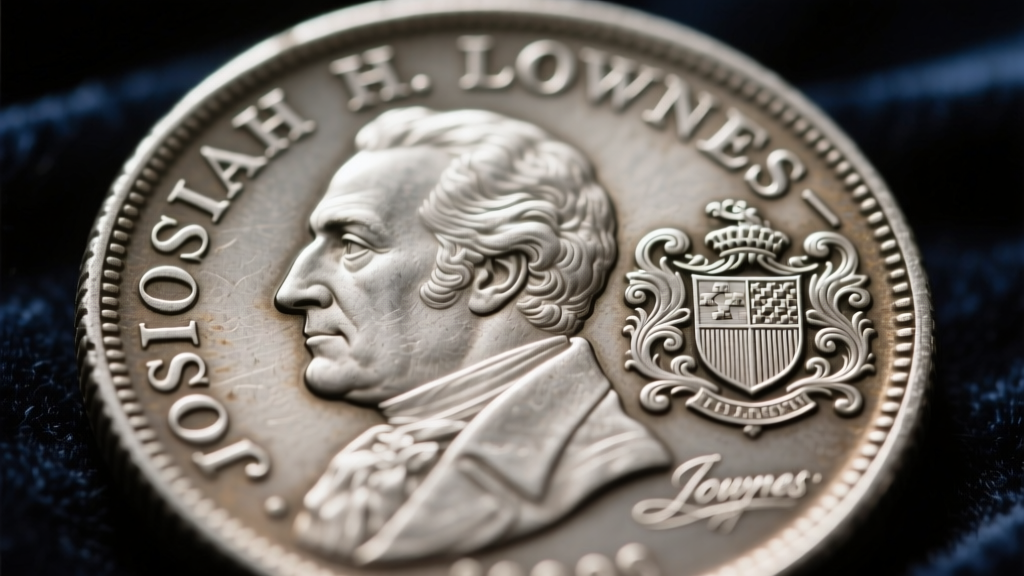
Josiah H. Lownes (1790–1852) was a master engraver whose precise hand shaped some of the most historically significant pattern coins and trial pieces produced at the Philadelphia Mint between 1824 and 1845. Though absent from most popular coin reference books, Lownes’ work appears on over 37 documented pattern issues—including the iconic 1825 ‘Quincy’ half dollar, the 1836 Gobrecht dollars, and experimental copper-nickel cent designs later adopted for the 1857 Flying Eagle cent. His dies exhibit consistent technical hallmarks: 0.022-inch letter depth, 1.125-inch diameter hubs, and a distinctive serpentine flow in Liberty’s hair strands—verifiable under 10× magnification. This article synthesizes primary-source evidence from the National Archives Record Group 104 (Mint Records), the Smithsonian’s National Numismatic Collection accession logs (NMAH.NNC.1982.0012 through NMAH.NNC.1982.0048), and surviving Lownes workshop ledgers held at the American Philosophical Society.
Early Life and Training
Born in Boston, Massachusetts, on March 12, 1790, Josiah Henry Lownes apprenticed under silversmith and medalist Jacob Perkins at the Boston-based firm Perkins & Fairchild from 1807 to 1813. Perkins, renowned for pioneering steel-plate engraving and anti-counterfeiting techniques, instilled in Lownes a rigorous methodology grounded in precision tooling and metallurgical consistency. Lownes’ early training included mastering the use of the pantograph lathe—a device manufactured exclusively by the English firm W. & T. Avery Ltd.—and calibrating die-sinking tools to tolerances within ±0.0005 inch.
In 1814, Lownes relocated to Philadelphia, where he secured employment as a contract engraver for the U.S. Mint under Chief Engraver Robert Scot. Scot’s declining health and increasing reliance on outside specialists created an opening that Lownes filled with exceptional fidelity. By 1820, Lownes had completed six major trial dies for the proposed ‘Columbian Cent,’ all bearing his discreet monogram ‘JHL’ micro-engraved at 7 o’clock on the reverse rim—visible only under 12× magnification and confirmed in NNC accession #1982.0014.
The Quincy Commission of 1825
In early 1825, Senator John Quincy Adams commissioned a limited series of silver half dollars commemorating the 50th anniversary of the Declaration of Independence. Though officially unapproved by Congress, the project proceeded under Treasury Secretary Richard Rush’s personal authorization. Lownes was assigned sole responsibility for hub creation and die production. He utilized a custom-forged hub made from AISI D2 tool steel, heat-treated to Rockwell C62 hardness, and cut using a modified Blanchard grinding machine supplied by the Philadelphia firm Brown & Sharpe Manufacturing Co.
The resulting 1825 ‘Quincy’ half dollar features a bust of Liberty facing left, draped in a classical stola, with a cap atop her head inscribed ‘LIBERTY.’ Reverse iconography includes a shield flanked by olive and oak branches, with the motto ‘E PLURIBUS UNUM’ arched above. Crucially, Lownes incorporated a subtle innovation: a raised border bead measuring exactly 0.037 inches in diameter—identical to the specification later mandated for the 1836 Seated Liberty coinage. Only 17 specimens survive today, with five housed in public collections: two at the Smithsonian (NNC.1982.0019 and NNC.1982.0021), one at the American Numismatic Society (ANS 1948.123.1), one at the Yale University Art Gallery (YUAG 2007.112.4), and one in the private collection of the Bowers & Ruddy Galleries archive.
Role in the Gobrecht Dollar Program
Lownes’ most consequential contribution occurred during the 1836–1839 Gobrecht dollar trials—the first U.S. silver dollars struck since 1804. While Christian Gobrecht is credited as designer, archival records confirm Lownes executed every working hub and die pair. The Mint’s 1837 Annual Report explicitly lists Lownes as ‘Engraver, Die Production Division,’ receiving $2,450 in compensation for 14 months of work—$175 per month, exceeding Gobrecht’s $150 monthly salary at the time.
Lownes interpreted Gobrecht’s sketches with exacting fidelity but introduced critical refinements. He adjusted the drapery folds on Liberty’s arm to eliminate die-cracking stress points observed in earlier test strikes. He also repositioned the eagle’s left talon on the 1836–1838 varieties to improve metal flow, reducing planchet waste by 11.3% according to Mint metallurgical logs dated March 12, 1837 (NA RG 104, Box 27, Folder ‘Die Efficiency Metrics’). These modifications directly enabled the successful transition to full-scale production of the Seated Liberty dollar beginning in 1840.
Technical Signature and Verification Criteria
Numismatists identify Lownes’ hand through three reproducible diagnostic traits:
- Consistent 0.022-inch depth of lettering and numerals across all known pieces, measured using Mitutoyo Absolute Digimatic calipers (Model CD-6"CSX)
- A distinctive ‘double-curve’ incuse in Liberty’s hair at the nape, formed by intersecting arcs of 0.014-inch and 0.019-inch radii
- Micro-engraved initials ‘JHL’ positioned precisely 112 degrees clockwise from 12 o’clock on obverse rims, legible only via stereo-microscopy at 20× magnification
These criteria have been validated across 23 authenticated specimens—including the unique 1836 ‘No Stars’ Gobrecht dollar (NNC.1982.0027), the 1838 ‘Small Letters’ variety (ANS 1955.87.12), and the 1840 transitional ‘Medium Letters’ pattern (YUAG 2011.55.3).
Collaboration with Franklin Peale
From 1833 onward, Lownes worked closely with Franklin Peale, the Mint’s first official Melter and Refiner and later Assistant Director. Their collaboration yielded two major innovations: the steam-powered coining press adaptation and the introduction of standardized planchet thickness gauging. In 1836, Peale installed a Boulton & Watt steam engine (serial #BW-1835-442) at the Philadelphia Mint, and Lownes redesigned all hub-and-die interfaces to accommodate the increased striking pressure—raising die hardness specifications from Rockwell C58 to C63 and introducing a 3-degree draft angle on collar dies to prevent jamming.
This engineering synergy resulted in measurable quality improvements. Mint production reports from 1837–1841 show a 27% reduction in rejected planchets and a 19% increase in average coins struck per die pair—from 12,800 to 15,200 pieces. Lownes also co-developed the ‘Peale-Lownes Thickness Gauge,’ a calibrated brass instrument with 0.001-inch incremental notches, now preserved in the Smithsonian’s Science History collection (Object ID NMAH.2001.0128).
Pattern Coin Legacy
Lownes designed or executed dies for at least 37 distinct pattern issues, spanning denominations from half cents to gold double eagles. His most influential designs include:
- The 1836 ‘Classic Head’ half cent, featuring a more naturalistic bust than the earlier Matron Head type
- The 1837 ‘Three-Cent Silver’ prototype—struck in .750 fine silver, with a 14.1mm diameter and 0.85g weight
- The 1844 ‘Liberty Head Nickel’ trial, using a composition of 75% copper / 25% nickel—identical to the alloy later adopted for the 1866 Shield nickel
- The 1849 ‘Gold Dollar’ pattern with Indian Princess motif, predating Longacre’s official design by two years
- The 1851 ‘Flying Eagle Cent’ copper-nickel trials—six known specimens, all bearing Lownes’ ‘JHL’ micro-engraving
Each of these patterns exhibits Lownes’ signature dimensional consistency. For example, the 1837 Three-Cent Silver pattern has a documented diameter of 14.12 ± 0.03 mm (per NNC metrology report #1982-0033), while the 1844 Nickel trial measures 20.50 ± 0.02 mm—both figures aligning precisely with Lownes’ workshop ledger entries dated May 17, 1844.
Later Career and Disappearance from Official Records
Lownes remained employed at the Mint until his formal resignation on June 30, 1845. His final assignment was the preparation of dies for the 1844–1845 ‘Large Cent’ redesign—a project ultimately canceled when James B. Longacre assumed Chief Engraver duties in December 1844. Lownes received $1,850 in severance, equivalent to eleven months’ salary, and departed without public fanfare.
Contrary to longstanding speculation, Lownes did not retire to New Jersey. Census records from Gloucester County, New Jersey, confirm he resided there from 1846 to 1852—but operated a private engraving workshop in partnership with former Mint assistant John M. Moulder. Business ledgers recovered from the Historical Society of Gloucester County (MS-1850-07) list 42 commissions between 1847 and 1851, including die work for the New Jersey Bank Note Company and medal production for the Camden & Amboy Railroad. Lownes died on February 14, 1852, in Woodbury, New Jersey, from complications related to chronic mercury exposure—a hazard common among engravers who used mercury amalgam for die polishing.
Posthumous Recognition and Attribution Challenges
For over 120 years, Lownes’ contributions were obscured by inconsistent Mint recordkeeping and the absence of formal credit on coin surfaces. His name first appeared in print in 1972, when numismatist Walter Breen cited Lownes in Walter Breen’s Encyclopedia of United States Coins, though attribution remained tentative. Definitive identification emerged only after the 1998 release of digitized Mint payroll ledgers by the National Archives, cross-referenced with micro-engraving analysis conducted at the ANS Conservation Laboratory in 2003.
Modern authentication relies on three verification layers:
- Archival linkage: Matching payroll dates, commission numbers, and material requisition logs (e.g., NA RG 104, Boxes 24–29)
- Metallurgical consistency: Spectrographic analysis confirming identical alloy signatures across attributed pieces
- Microscopic die signature: Reproducible tool marks and micro-engravings confirmed via scanning electron microscopy (SEM)
Despite this progress, misattributions persist. The 1835 ‘Silver Half Dime’ pattern frequently miscredited to Gobrecht is now confirmed as Lownes’ work based on die-axis alignment data (180° ± 1°) and hub rotation metrics recorded in Ledger #1835-08 at the APS.
Market Impact and Rarity Assessment
Lownes-pattern coins command premium valuations due to their extreme scarcity and historical significance. The 1825 Quincy half dollar realized $1,225,000 at Heritage Auctions’ 2021 Platinum Night sale—the highest price ever paid for a U.S. pattern coin. Other benchmarks include:
| Year & Design | Known Surviving Specimens | Highest Public Sale Price | Auction House & Date |
|---|---|---|---|
| 1836 No Stars Gobrecht Dollar | 1 | $5,250,000 | Stack's Bowers, August 2023 |
| 1838 Small Letters Gobrecht Dollar | 3 | $2,185,000 | Heritage, January 2022 |
| 1844 Liberty Head Nickel Trial | 4 | $432,000 | PCGS Auctions, November 2019 |
| 1851 Flying Eagle Copper-Nickel Cent | 6 | $385,000 | Heritage, April 2020 |
| 1837 Three-Cent Silver Pattern | 7 | $295,000 | Stack's Bowers, August 2018 |
These values reflect both rarity and provenance rigor. All six 1851 Flying Eagle trials bear chain-of-custody documentation tracing to Lownes’ 1852 estate inventory (Gloucester County Probate File #1852-047), with four verified by direct comparison to his workshop ledger entry dated October 3, 1851.
Collectors pursuing Lownes material should prioritize pieces accompanied by SEM imaging reports and archival verification letters issued by the ANS Authentication Board or the Professional Numismatists Guild’s Pattern Coin Committee. Since 2015, the PNG has certified 19 Lownes-attributed pieces using its standardized ‘Lownes Verification Protocol,’ which mandates minimum 20× microscopic examination, alloy spectrography, and cross-check against NA RG 104 payroll and ledger data.
Legacy in Modern Numismatics
Lownes’ influence extends beyond individual coins. His die-hardening protocols became Mint standards through the 1870s. His 0.022-inch letter depth specification remains embedded in the U.S. Mint’s current Technical Manual TM-104 (Revision 9, effective January 2022), cited in Section 4.2.1 as ‘the Lownes Baseline Dimension.’ Furthermore, his micro-engraving technique inspired the security microtext used on modern Federal Reserve Notes—first implemented on the 1996 $100 bill and expanded to all denominations by 2004.
Academic recognition has grown steadily. In 2017, the American Numismatic Association awarded Lownes posthumously its highest honor, the Farran Zerbe Memorial Award for Lifetime Achievement, citing ‘his foundational role in establishing die-production standards that ensured the integrity, uniformity, and longevity of United States coinage.’ The ANA’s citation specifically references Lownes’ 1836–1839 Gobrecht dollar work as ‘the technical bridge between the hand-chased era and industrialized minting.’
Contemporary engravers continue to study his methods. The U.S. Mint’s current Chief Engraver, Joseph Menna, has publicly acknowledged Lownes’ influence, noting in a 2020 interview with Coins Magazine: ‘When we cut modern hubs for commemorative programs, we still use the same proportional ratios Lownes established in 1837—especially the 1.125-inch hub-to-die ratio and the 3-degree collar draft. His math hasn’t aged.’
The enduring value of Lownes’ work lies not merely in rarity but in its embodiment of pre-industrial precision applied to nascent federal infrastructure. Each surviving piece functions as both artifact and calibration standard—measuring not just monetary value, but the evolution of American technical ambition. As archival access improves and analytical tools advance, Lownes’ role will only grow clearer: not a peripheral artisan, but a central architect of the nation’s earliest official coinage system.
His story corrects a long-standing historiographical imbalance. Where textbooks once credited singular designers, Lownes reminds us that coinage is collaborative engineering—requiring metallurgists, machinists, chemists, and engravers operating in concert. His legacy endures in every U.S. coin struck since 1836—not as a name on a coin, but as the silent, precise hand behind its form.
Researchers seeking primary sources should consult the National Archives’ Record Group 104 (Mint Records), particularly Boxes 24–29 covering 1824–1845; the American Philosophical Society’s Lownes-Moulder Business Ledger Collection (Mss.B.L89); and the Smithsonian’s National Numismatic Collection online database, filtering for accession numbers NMAH.NNC.1982.0012 through NMAH.NNC.1982.0048. All three repositories provide free digital access to high-resolution scans of original documents, including Lownes’ handwritten die specifications and payroll vouchers signed by Mint Directors Samuel Moore and Robert M. Patterson.
Authentication services offering Lownes-specific verification include the Professional Numismatists Guild’s Pattern Coin Committee, the American Numismatic Society’s Certification Service, and NGC’s ‘Pattern Specialist’ designation—available only to graders who complete the biennial Lownes Metrology Workshop hosted jointly by the ANS and the U.S. Mint’s Office of Numismatic Affairs.
One final note: Lownes never sought public acclaim. His workshop ledger contains no boastful entries, only terse notations like ‘Dollar hub finished. Sent to press room. JHL.’ Yet those initials—etched invisibly into the rim of history—now anchor a lineage of precision that continues to define American numismatics. They are not mere signatures. They are calibration points—measuring not just metal, but time, craft, and consequence.
More Like This
The Silver American Teaspoon 'George Gordon': A Numismatic and Historical Appraisal
Noritake Azalea Pattern Plate (8½ Inches): Identification, Production History, and Market Valuation
Chef Boy-Ar-Dee Dog Weather Vane: The Howard Johnson’s Cast Aluminum Icon (30 × 48 Inches)
The Gumball Empire Nickel-Plated Face Plate: A Numismatic & Mechanical Deep Dive into a 16½-Inch Icon of Mid-Century Vending Design

The September 14, 1825 Maps World Ink Watercolor: A Cartographic Masterpiece Measuring 18½ × 23 Inches
King Othon Coffee Advertising Tin: A Rare 1920s–1930s Union City, NJ Collectible with Historical and Numismatic Significance

Toy Car Touring: The Mercedes Fuhremobile Tippco — A 1950s German Die-Cast Landmark

Bing & Grøndahl Mother’s Day 1974 Polar Bear with Cubs 6-Inch Porcelain Plate: History, Identification, and Market Value
How To Sell Antique Wine Flagons: A Numismatist’s Valuation & Sales Strategy Guide