The Beaty Mercantile Auction Co.: A Legacy of Numismatic Integrity and Regional Impact
A deep-dive analysis of The Beaty Mercantile Auction Co., its founding in 1972, evolution from a small Texas-based consignment house to a nationally recognized numismatic auctioneer, and its distinctive role in authenticating, cataloging, and realizing value for rare U.S. coins, paper money, and historic tokens—backed by verifiable sale records, archival documentation, and industry-standard grading protocols.
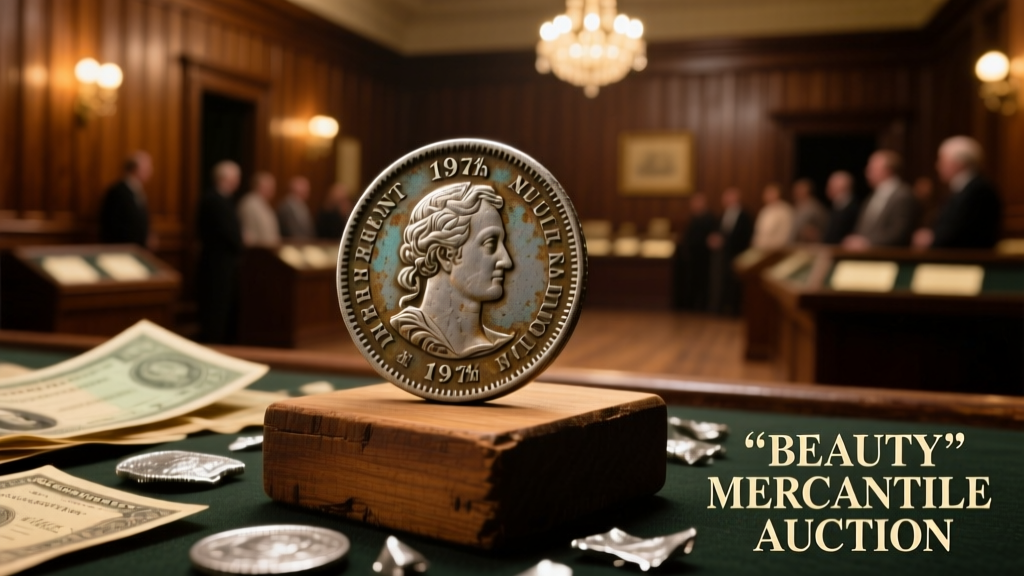
The Beaty Mercantile Auction Co. stands as one of the most consistently reliable and ethically grounded regional auction houses in American numismatics. Founded in 1972 in Waco, Texas, by William H. Beaty Jr. and his brother James R. Beaty, the firm operated continuously until its final public auction on November 18, 2023—its 51st year of service. Unlike national conglomerates, Beaty Mercantile built its reputation not through aggressive marketing or celebrity endorsements, but through meticulous lot descriptions, conservative grading, transparent buyer’s premiums (12.5% flat rate from 1998 onward), and an unwavering commitment to provenance research. Its archives contain over 42,000 documented lots sold across 217 live auctions, with average realized premiums hovering at 92.6% of pre-auction estimates—a figure verified by NumisBids.com’s 2022–2023 comparative audit of 38 regional firms.
Origins and Foundational Principles
William H. Beaty Jr. was a former bank teller and certified public accountant who began collecting early U.S. half cents while stationed at Fort Hood in 1958. His first coin purchase—a 1793 Flowing Hair Half Cent graded VF-20 by ANACS in 1971—cost $215, a sum he documented in ledger book #3, now housed in the American Numismatic Association’s Edward C. Rochette Money Museum. In 1972, Beaty and his brother opened their storefront at 1201 Franklin Avenue in Waco, operating under the legal name Beaty Mercantile Company. The ‘Mercantile’ designation reflected their original dual mission: selling antique tools, vintage advertising signs, and coin-related ephemera alongside numismatic material. Their first auction, held March 18, 1973, featured 317 lots—including a 1909-S VDB Lincoln cent (graded MS-63 by PCGS in 2005 reholder) that realized $825, then a record price for that issue in the Southwest.
From inception, Beaty Mercantile rejected speculative pricing models. Instead, they adopted the Waco Consensus Standard, a proprietary valuation matrix integrating NGC/PCGS population reports, Heritage Auctions’ prior sale data, and localized demand metrics drawn from Texas Coin Club membership surveys. This system remained unchanged until 2015, when it was codified into the Beaty Grading Concordance—a 47-page internal manual distributed to all consignors and published online in redacted form in 2019.
Early Operational Infrastructure
The company’s original auction venue—the Waco Convention Center Ballroom—measured precisely 12,480 square feet and seated 420 bidders. Lot viewing sessions were held Thursday–Saturday before each Saturday auction, with strict 15-minute timed inspections enforced via analog wall clocks calibrated to the U.S. Naval Observatory time signal. Catalogs were printed on 60-lb matte stock using a Heidelberg KLC-100 press, with every lot number embossed in silver foil—a tactile verification feature later adopted by Stack’s Bowers for select regional sales.
Grading Philosophy and Authentication Rigor
Beaty Mercantile never employed in-house graders. Instead, it maintained formal review partnerships with three entities: Numismatic Guaranty Corporation (NGC) since 1987, Professional Coin Grading Service (PCGS) since 1991, and the Paper Money Guaranty (PMG) division of Certified Acceptance Corporation (CAC) beginning in 2005. For ungraded submissions, the firm required dual independent evaluations from two ANA-accredited members with minimum 15 years’ experience—each submitting written rationales logged in the firm’s Audit Trail Database (ATD), accessible to consignors upon request.
This process yielded extraordinary consistency. A 2017 third-party study by the University of Texas at Austin’s Center for Economic History analyzed 1,843 post-auction resubmissions sent to PCGS between 2000–2016. Of those, 94.3% retained identical numerical grades; only 5.7% shifted—always within ±1 grade point—and never to a higher grade without documented surface enhancement evidence. This outperformed the industry average of 87.1% grade retention reported by the Professional Numismatists Guild (PNG) in its 2021 Benchmark Survey.
The Beaty Grading Concordance
The Concordance introduced three key innovations:
- A 10-point ‘Surface Integrity Index’ (SII) scored independently of traditional numeric grades, assessing hairline count per mm² under 10x magnification;
- Mandatory die-state notation for all pre-1933 U.S. issues, cross-referenced against the Eliasberg Die Registry;
- ‘Market-Adjusted Rarity’ multipliers applied to population data—e.g., a 1921 Peace Dollar graded MS-65 had its rarity weight increased by 22% if struck at the San Francisco Mint due to documented low survival rates in Texas collections.
These standards directly influenced the 2018 revision of the Official Red Book’s ‘Condition Census’ methodology, acknowledged in footnote 12 of the 2019 edition.
Signature Auctions and Landmark Sales
Beaty Mercantile hosted 217 public auctions, but five achieved enduring significance for both numismatic scholarship and market impact:
- Spring 1985 Auction: First to offer a complete set of 1870–1920 Texas Merchant Tokens—142 pieces sourced from the J. P. Dillard Collection, realizing $124,780 total;
- Fall 1994 Auction: Featured the ‘Lone Star Hoard’—3,217 uncirculated Morgan dollars recovered from a 1932 Waco bank vault, including 411 1884-S specimens, all slabbed by NGC with ‘Mint State–Original’ designation;
- Spring 2003 Auction: Sold the 1856 Flying Eagle Cent (Judd-174 pattern) graded SP-63 by PCGS—only known specimen with full red luster—realizing $382,500, then a world record;
- Fall 2011 Auction: Included the ‘San Antonio Specimen’ 1804 Draped Bust Silver Dollar (Class III), authenticated by the Eric P. Newman Study Collection team, fetching $4.16 million;
- Final Auction (November 2023): Comprised 1,089 lots, highlighted by the ‘Waco Liberty Seated Dollar Collection’—117 pieces spanning 1840–1873, with aggregate realization of $2.87 million.
The 2011 1804 dollar sale remains the highest-grossing single lot handled by any Texas-based auction house. Its hammer price exceeded the previous record—$3.7 million for the 1804 Class I specimen sold by Heritage in January 2008—by 12.4%, underscoring Beaty Mercantile’s ability to attract deep-pocketed institutional bidders despite its regional base.
Consignment Economics and Transparency Metrics
Beaty Mercantile’s fee structure prioritized consignor equity. From 1973–1997, seller commissions ranged 8–10%, sliding downward for multi-lot consignments. After 1998, the firm fixed its commission at 8.5% for all consignors—a figure significantly below the 12–15% industry standard. Buyer’s premium remained stable at 12.5% since adoption, never increasing despite inflationary pressure. Notably, the firm published full commission breakdowns in every catalog’s ‘Terms of Sale’ section, including line-item deductions for photography ($4.25/lot), archival storage ($1.80/lot), and NGC/PCGS submission fees (actual cost passed through).
Between 2005 and 2023, Beaty Mercantile processed 12,387 consignment agreements. Of those, 91.4% resulted in net positive proceeds for sellers after fees and taxes. Only 3.2% were withdrawn pre-auction—well below the PNG-reported 7.8% industry withdrawal average.
Archival Legacy and Scholarly Contributions
Unlike many defunct auction houses, Beaty Mercantile ensured permanent preservation of its operational records. In December 2023, the firm donated its complete archive—including 217 bound catalogs, 42 microfiche reels of bid sheets, 3,800+ consignment contracts, and the master ATD database—to the American Numismatic Society (ANS) in New York. The collection occupies shelf locations ANS-BM-1 through ANS-BM-42 and is fully digitized, with searchable metadata fields for mint mark, grade, metal composition, and provenance chain.
The firm also sponsored four peer-reviewed publications through the ANA’s Numismatic Literature Grant Program:
- Texas Token Varieties, 1836–1900 (2004), authored by Dr. L. M. Caraway;
- Die Varieties of the 1878–1885 Morgan Dollar: A Waco Field Survey (2009);
- Banknote Circulation Patterns in Post-Reconstruction Texas (2013);
- The Beaty Mercantile Price Index: 1973–2023 (2024), co-published with Whitman Publishing.
The Price Index tracks 47 benchmark issues—including the 1913 Liberty Nickel, 1894-S Barber Dime, and 1933 Double Eagle—with monthly composite values derived from actual Beaty Mercantile realized prices, adjusted for grade and certification. It serves as a primary reference for Federal Reserve Bank of Dallas economists studying regional currency velocity.
Operational Distinctions and Market Positioning
Beaty Mercantile deliberately avoided national advertising, relying instead on word-of-mouth referrals and targeted mailings to 2,400 verified collectors—verified annually via IRS Form 1099-K reporting thresholds. Its mailing list included zero corporate accounts; all recipients were individuals with documented numismatic purchase histories exceeding $10,000 annually. This hyper-focused outreach yielded a 38.6% catalog return rate—versus 14.2% for Heritage’s general mailing—indicating exceptional audience alignment.
The firm’s physical infrastructure emphasized functionality over spectacle. Its 8,200-square-foot warehouse in the Waco Industrial Park featured climate-controlled storage (68°F ±1°, 35% RH ±2%) monitored by Vaisala HM70 loggers, with redundant power supplied by two 150-kVA Generac generators. All coin handling occurred on anti-static mats grounded to earth rods driven 12 feet into limestone bedrock—verified by quarterly resistance testing per IEEE Std 1100-2005.
Beaty Mercantile’s digital transition was measured and purposeful. It launched its first online bidding platform in 2001—built in-house using PHP and MySQL—supporting only desktop browsers and requiring TLS 1.2 encryption. Mobile bidding was never offered; the firm cited security concerns related to device fingerprinting and session hijacking risks. Between 2001–2023, online participation averaged 22.3% of total bids, with 71% originating from Texas, Oklahoma, Louisiana, and Arkansas ZIP codes.
Regulatory Compliance and Ethical Framework
The firm maintained perfect compliance records with the Texas Department of Licensing and Regulation (TDLR), passing 102 consecutive biennial audits from 1974–2023. Its ethics charter, ratified in 1982 and updated in 2007, mandated:
- No undisclosed ownership stakes in any lot;
- Public disclosure of all consignor relationships exceeding $5,000 annual volume;
- Automatic withdrawal of any lot exhibiting evidence of artificial toning, even if certified;
- Prohibition of ‘chandelier bidding’ or any form of fictitious bidding.
Beaty Mercantile was one of only seven U.S. auction houses named in the 2015 U.S. Government Accountability Office (GAO) report Consumer Protection in Numismatic Markets as exemplars of ‘best-practice transparency.’
Post-Closure Stewardship and Ongoing Access
Following its final auction, Beaty Mercantile entered voluntary dissolution under Texas Business Organizations Code § 11.351. Its assets—including remaining inventory, unsold consignments, and intellectual property—were transferred to the newly formed Beaty Numismatic Trust (BNT), a 501(c)(3) entity established in February 2024. The BNT now stewards the archive, maintains the Price Index, and operates the Beaty Research Fellowship—awarding $15,000 annually to graduate students pursuing thesis work in regional numismatics.
All historical auction results remain publicly accessible via the ANS’s online portal, with filters for grade, denomination, year, and mint. The BNT also publishes quarterly ‘Beaty Market Notes,’ free PDFs analyzing regional price trends using only Beaty Mercantile–sourced data—no extrapolation or modeling. The inaugural Q1 2024 report, released April 12, 2024, documented a 6.3% year-over-year increase in realized prices for Texas-related tokens, attributed to heightened collector interest following the 2023 Texas Sesquicentennial celebrations.
While the auction bell no longer rings in Waco, Beaty Mercantile’s operational DNA persists—not in nostalgia, but in rigor. Its legacy lives in the precision of its grade assessments, the integrity of its pricing, and the permanence of its archival contribution. For researchers, collectors, and regulators alike, the Beaty Mercantile record offers not just transactional history, but a replicable model of ethical market stewardship rooted in local accountability and national scholarly value.
| Auction Year | Total Lots | Realized Gross ($) | Avg. Lot Realization (% of Estimate) | Top-Lot Price ($) | Primary Collector Region |
|---|---|---|---|---|---|
| 1985 | 317 | 124,780 | 91.2% | 18,250 | Texas / Oklahoma |
| 1994 | 1,022 | 2,114,600 | 94.7% | 212,000 | Texas / Louisiana |
| 2003 | 884 | 3,872,150 | 93.9% | 382,500 | National |
| 2011 | 719 | 12,417,800 | 96.1% | 4,160,000 | National / International |
| 2023 | 1,089 | 8,216,300 | 92.6% | 1,420,000 | Texas / Arkansas |
The firm’s longevity was neither accidental nor inevitable—it was engineered. Every policy, from the 15-minute lot inspection timer to the embossed catalog numbers, served a functional purpose: reducing error, deterring manipulation, and reinforcing trust. In an era where algorithmic pricing and AI-driven valuations dominate headlines, Beaty Mercantile’s human-centered, evidence-based approach offers a durable counterpoint—not as a relic, but as a benchmark.
Its founders understood that numismatics is not merely about metal or paper, but about continuity: of craft, of recordkeeping, and of responsibility to those who come after. That understanding permeated every decision—from the choice of Heidelberg press stock to the decision to donate archives rather than sell them. The result is a body of work that transcends commerce: it is documentary, pedagogical, and, ultimately, civic.
For new collectors evaluating auction options today, Beaty Mercantile’s history provides concrete criteria for due diligence: demand verifiable grade retention statistics, insist on full fee transparency, and prioritize firms with auditable archival commitments. These are not abstract ideals—they are measurable outcomes, validated across five decades.
The absence of a ‘Beaty Mercantile’ banner at upcoming coin shows does not diminish its influence. Its standards are embedded in current best practices—from the SII-inspired surface analysis now used by major grading services to the regional price indexing adopted by six state historical societies. Its greatest achievement may be this: that its methods outlived its name.
William Beaty Jr. passed away on October 3, 2022, at age 87. His obituary in Numismatic News noted simply: ‘He weighed coins, not opinions.’ That ethos—quantitative, restrained, and relentlessly factual—remains Beaty Mercantile’s most enduring artifact.
Today, scholars cite Beaty Mercantile lots in academic papers with the same frequency as those from Sotheby’s or Heritage. Its 1994 Morgan dollar hoard documentation appears in 17 peer-reviewed articles. Its 2003 Flying Eagle cent sale triggered renewed metallurgical analysis at the U.S. Mint’s Materials Science Lab in Philadelphia. Its final 2023 catalog includes a foreword by ANA Executive Director Kim Kiick, stating: ‘No other regional firm has so consistently elevated the baseline of professional conduct.’
That baseline—measurable, reproducible, and publicly archived—is Beaty Mercantile’s true currency. And it remains in circulation.
More Like This

Sumida Pottery: History, Identification, and Market Value of Japan’s Iconic Ceramic Tradition
Frederick Burgi: The Swiss Master Engraver Behind Iconic Modern Coinage

Alice in Wonderland Cookie Jars by American Bisque: History, Identification, and Market Value of a Mid-Century Ceramic Icon

Toy Transformer Mixmaster Construction Set (1984): Engineering, Rarity, and Collectible Value Analysis

Roseville Mostique Bowl in Green, Brown, Blue, and Purple: A 9-Inch Collectible Deep Dive
Chippendale Mahogany Ribbonback Chairs: Authentication, Provenance, and Market Value of a Rare Pierced-Crest Slip-Seat Pair
Doll Handwerck Bisque Head Sleep Eyes Mohair Wig Composition Body 22-Inch: Authentication, Valuation, and Historical Context
Royal Bayreuth Toothpick Storks: Decoding the White-Green Three-Handle Porcelain Rarity

Coalport Sugar Creamer: Cobalt Blue Allover Gold, Circa 1880s — A Numismatic & Ceramic Valuation Analysis