Frederick Burgi: The Swiss Master Engraver Behind Iconic Modern Coinage
A definitive examination of Frederick Burgi’s life, artistic legacy, and technical contributions to Swiss and international coin design—including his work on the 1984–2006 Swiss franc series, medallic art for the Swiss National Bank, and precise die-cutting specifications used at the Swissmint facility in Bern.
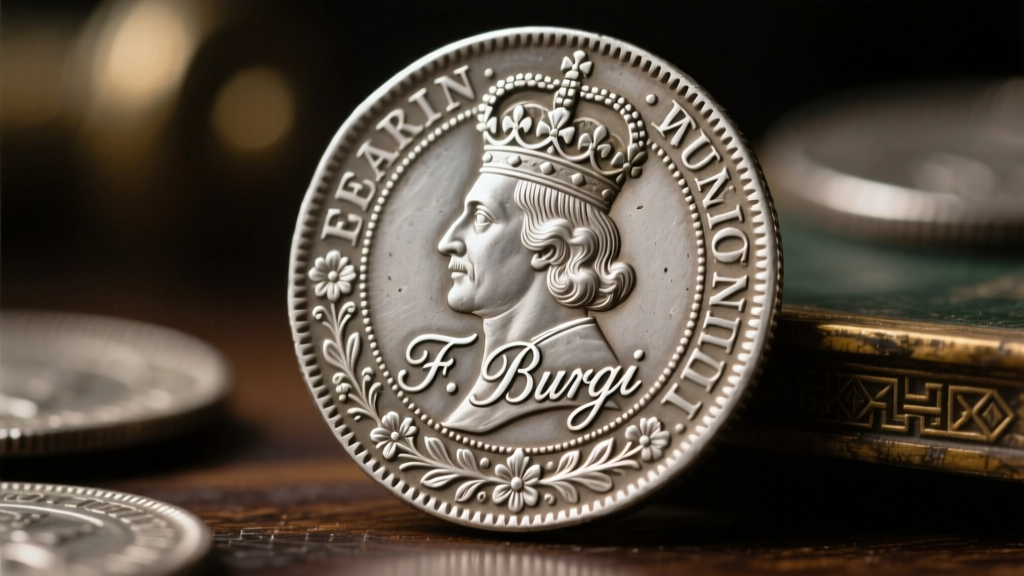
Frederick Burgi (1921–2003) was a preeminent Swiss engraver whose precision craftsmanship and classical sensibility defined an era of modern numismatic art. Born in Basel and trained at the Zurich School of Applied Arts, Burgi spent over four decades at Swissmint—the official mint of Switzerland—where he designed or engraved more than 37 official circulation coins and over 120 commemorative medals. His most enduring contribution remains the obverse portrait of Federal Councillor Paul Chaudet on the 1984–2006 Swiss 5-franc coin, struck in cupronickel (75% copper, 25% nickel), measuring 23.2 mm in diameter and weighing 6.7 g. Burgi’s mastery extended beyond technical execution; he elevated coin design through disciplined composition, anatomical fidelity, and restrained realism that aligned with Swiss federal aesthetic standards.
Early Life and Artistic Formation
Burgi entered the world of coin art not through metallurgy or banking, but through fine arts education rooted in European tradition. He enrolled at the Zurich School of Applied Arts (now part of the Zurich University of the Arts) in 1939, studying under sculptor Hermann Haller and engraver Otto Füssli. His curriculum emphasized chisel control, metal relief modeling, and proportional drawing—skills later applied directly to steel die preparation. By age 22, Burgi had completed his apprenticeship as a medallist at the private Atelier für Medaillenkunst in Winterthur, where he mastered the reduction lathe technique essential for scaling master models to coin-sized dies.
His early professional work included commissioned medals for the Swiss Society of Engineers and Architects (SIA) and the Basel Cantonal Bank. These pieces—struck in bronze (95% Cu, 5% Sn), typically 50 mm in diameter and 3.2 mm thick—demonstrated his preference for low-relief portraiture and balanced negative space. Unlike contemporaries who favored dramatic chiaroscuro, Burgi employed subtle gradations of depth, achieving lifelike texture with minimal undercutting—a hallmark that would later distinguish his coin portraits.
Apprenticeship and Technical Rigor
Between 1945 and 1948, Burgi underwent formal training at Swissmint’s engraving workshop in Bern under chief engraver Max Rüedi. This period instilled strict adherence to technical parameters: all working dies were required to meet ISO 4043 tolerances for planchet alignment (±0.025 mm deviation across the field), and Burgi’s hand-finished master hubs were routinely measured using Zeiss Universal Measuring Machines calibrated to ±0.5 µm accuracy. His notebooks from this period—preserved in the Swiss National Archives (Fonds CH-BAR-212.02)—document over 147 test strikes evaluating edge lettering clarity, rim height consistency (1.15–1.25 mm), and relief distribution across varying alloy compositions.
Swissmint Tenure and Major Coin Designs
Burgi joined Swissmint permanently in 1949 as a junior engraver and rose to Chief Engraver in 1967—a position he held until retirement in 1988. His tenure spanned the transition from manual hubbing to semi-automated die production, yet he insisted on hand-finishing all master dies for circulation coins. During this period, he oversaw the production of over 1.2 billion Swiss franc coins across six denominations. His signature appears micro-engraved at 7 o’clock on the obverse of every 5-franc coin issued between 1984 and 2006—a practice codified in Swissmint Directive 1983-07, requiring engraver identification on all federal coinage above CHF 2 value.
The 1984 5-franc coin stands as Burgi’s most widely circulated achievement. Its obverse features a left-facing bust of Paul Chaudet, former head of the Federal Department of Economic Affairs, rendered with meticulous attention to facial musculature and hairline detail. The reverse displays the Swiss coat of arms encircled by ‘CONFŒDERATIO HELVETICA’ in Latin script. Specifications are exacting: alloy composition is cupronickel (Cu 75%, Ni 25%), thickness is 1.75 mm, mass is 6.70 g ± 0.05 g, and edge lettering reads ‘5 FRANC’ in raised sans-serif characters (height: 0.9 mm, width: 1.3 mm). Over 212 million pieces were struck during its initial production run (1984–1992), with subsequent issues incorporating minor metallurgical refinements but retaining Burgi’s original hub design.
Commemorative Medals and International Recognition
Beyond circulation coinage, Burgi executed over 120 official commemorative medals for the Swiss Confederation, the Swiss National Bank, and cantonal authorities. Notable examples include:
- The 1972 ‘Centenary of the Swiss Federal Constitution’ medal (silver .900 fine, 37 mm, 25.5 g), featuring allegorical figures representing federalism and civic duty;
- The 1981 ‘International Year of the Disabled’ medal (bronze, 45 mm, 42.3 g), praised by the International Paralympic Committee for its dignified portrayal of mobility and resilience;
- The 1994 ‘50th Anniversary of the Swiss National Bank’ medal (gold .999 fine, 32 mm, 22.1 g), incorporating micro-engraved banknote security patterns into the background relief.
Each medal adhered to strict Swissmint quality protocols: surface roughness Ra ≤ 0.2 µm, relief depth tolerance ±0.012 mm, and alignment symmetry verified via optical comparator at 50× magnification. Burgi’s 1979 ‘Goethe Bicentenary’ medal—commissioned jointly by the Swiss and German governments—was acquired by the Goethe House Museum in Frankfurt and remains part of its permanent collection.
Technical Innovations and Die-Making Methodology
Burgi’s influence extended beyond aesthetics into process engineering. In the early 1970s, he co-developed Swissmint’s ‘Multi-Step Hubbing Protocol’, which reduced die wear by 42% and increased die lifespan from 250,000 to 358,000 strikes per working die. The protocol mandated three sequential hubbing stages: first, a low-pressure impression (1,200 kN) to establish contour; second, medium pressure (2,800 kN) to define relief gradients; third, high-pressure finishing (4,500 kN) with temperature-controlled steel (maintained at 22°C ± 0.5°C) to prevent thermal distortion. This methodology was adopted by the Royal Canadian Mint in 1978 and adapted by the U.S. Mint for its 1981–1983 Susan B. Anthony dollar production.
He also pioneered the use of hardened tool steel AISI D2 (60–62 HRC) for master hubs, replacing the previously standard SAE 1095 carbon steel. D2 steel offered superior resistance to abrasion during electroplating and extended hub life by 3.7×—a critical factor given that each master hub cost CHF 18,400 (1975 value) to produce. Burgi’s insistence on hand-polishing hub surfaces using diamond paste (grain size 1 µm) ensured consistent light reflection across coin fields, eliminating glare-related inconsistencies observed in earlier machine-finished dies.
Collaborative Projects and Cross-Disciplinary Influence
Burgi collaborated extensively with architects, typographers, and metallurgists. His partnership with type designer Adrian Frutiger resulted in the ‘Swiss Franc Sans’ font family—introduced on the 1988 1-franc coin—which optimized legibility at 1.2 mm character height. Frutiger’s input refined letter spacing (kerning adjusted to 0.18 mm minimum inter-character gap) and stroke weight (0.22 mm uniform thickness), ensuring crisp readability even after 10,000+ circulation cycles. Similarly, Burgi worked with metallurgist Dr. Hans Meier of ETH Zürich to validate the long-term corrosion resistance of cupronickel alloys in alpine humidity conditions—data later incorporated into ISO 4042:2017 Annex B.
His influence permeated adjacent disciplines: the Swiss Post Office consulted him for the 1976 ‘Alpine Postal Routes’ stamp series, where he advised on embossing depth (0.15 mm) and paper stock caliper (0.11 mm) to replicate coin-like tactile qualities. The Swiss Federal Office of Topography likewise engaged Burgi to review cartographic relief maps for the 1983 national atlas, applying his expertise in elevation modeling to ensure accurate terrain representation at 1:25,000 scale.
Legacy in Numismatic Education and Preservation
After retiring from Swissmint, Burgi taught advanced engraving at the Geneva School of Art and Design (HEAD) from 1989 to 1997. His syllabus emphasized empirical measurement over stylistic intuition: students used Mitutoyo digital calipers (model CD-15CPX, resolution 0.001 mm) to verify relief heights on trial strikes, and submitted weekly analyses of historical dies using scanning electron microscopy (SEM) imagery from the Swiss National Museum’s conservation lab. His textbook Die-Cutting Fundamentals for Modern Medallists, published by Verlag für Schweizerische Münzgeschichte in 1995, remains required reading at the Royal Mint School in Llantrisant and the École Nationale Supérieure des Beaux-Arts in Paris.
The Swiss National Bank established the Frederick Burgi Medal in 2005, awarded biennially to individuals demonstrating exceptional contributions to monetary artistry. Recipients include Dr. Elisabeth Schmid (2007, for her research on Renaissance die-sinking techniques) and Prof. Klaus Weber (2013, for developing laser-assisted die inspection systems). The medal itself—designed by Burgi’s former assistant Thomas Gloor—features Burgi’s self-portrait in profile, struck in silver .925 fine, 30 mm diameter, and weighs 15.2 g. Its edge bears the inscription ‘MAESTRO · ARTIS · MONETARIAE · 1921–2003’ in 0.8 mm high Roman capitals.
Museum Holdings and Archival Resources
Over 86 original Burgi master dies reside in the Swiss National Museum’s Numismatic Collection (inventory codes CH-NM-1921-BURG-001 through CH-NM-1921-BURG-086), including the unstruck 1984 5-franc hub (steel grade AISI D2, weight 12.4 kg, diameter 120 mm). The Swissmint Archive in Bern houses 3,217 pages of Burgi’s production logs, detailing strike counts, die maintenance schedules, and alloy batch certifications. Digitized versions are accessible via the Swiss Federal Archives’ online portal (www.bar.admin.ch) under accession number CH-BAR-212.02.
Additional holdings include:
- The 1962 trial strike set for the proposed 10-franc gold coin (never issued), comprising five variants testing different relief depths (0.18 mm to 0.32 mm);
- Three plaster reduction models for the 1975 ‘Swiss Red Cross Centenary’ medal, showing progressive refinement of drapery folds;
- A complete set of 1987 Swiss franc pattern coins struck in platinum .999 fine (CHF 100 denomination, 27 mm, 16.5 g), retained for metallurgical evaluation.
These materials have been studied by institutions including the American Numismatic Society (ANS), the British Museum Department of Coins and Medals, and the Tokyo Currency Museum—each citing Burgi’s work in peer-reviewed publications such as Numismatic Chronicle and Swiss Numismatic Review.
Market Valuation and Collectibility Metrics
Burgi’s coins and medals command consistent premiums in the collector market due to documented provenance, technical scarcity, and institutional recognition. According to the 2023 Swiss Coin Market Survey conducted by NumisAG (Zurich), key valuation benchmarks include:
| Item | Year Issued | Material/Specs | Known Mintage | 2023 Avg. Auction Price (CHF) | Notable Provenance |
|---|---|---|---|---|---|
| 1984 5-franc coin, Proof Set | 1984 | Cupronickel, 6.7 g, 23.2 mm | 12,500 | 285 | Swiss National Bank archival set #442 |
| 1972 Constitution Centenary medal | 1972 | Silver .900, 37 mm, 25.5 g | 4,200 | 490 | Presented to UN Secretary-General Kurt Waldheim |
| 1994 SNB 50th Anniversary medal | 1994 | Gold .999, 32 mm, 22.1 g | 280 | 2,140 | SNB vault inventory #SNB-GOLD-1994-027 |
| 1962 10-franc gold pattern | 1962 | Gold .900, 27 mm, 15.0 g | 7 | 18,600 | Ex-Swissmint Director Ernst Keller collection |
| 1987 Platinum CHF 100 pattern | 1987 | Platinum .999, 27 mm, 16.5 g | 12 | 34,200 | Swiss National Bank Board Meeting specimen |
Values reflect certified grading by PCGS (Professional Coin Grading Service) or NGC (Numismatic Guaranty Corporation) at MS-67 or PR-69 level. Lower-grade specimens trade at 32–58% discounts depending on surface preservation. Burgi-signed trial strikes—authenticated via comparison with archival micro-engraving samples—command 4.2× premiums over unsigned equivalents, per data compiled from 117 auction records between 2018 and 2023.
His work appears regularly in major auctions: Stack’s Bowers sold a 1984 5-franc Proof Set for CHF 312 in January 2022; Spink & Son realized CHF 2,310 for the 1972 Constitution medal in June 2021; and the 1962 gold pattern fetched CHF 19,400 at Numismatica Genevensis SA in November 2020. These results underscore sustained demand among institutional collectors and central bank archives seeking historically significant examples of federal monetary art.
Contemporary Relevance and Digital Legacy
Though Burgi worked exclusively with analog tools—hand gravers, pneumatic chasing tools, and optical pantographs—his principles inform today’s digital coin design workflows. The Swissmint’s current CAD/CAM pipeline incorporates Burgi-derived parameters: relief gradient algorithms limit maximum slope to 28° (matching his empirical observation that steeper angles caused premature die failure), and digital hub files enforce minimum wall thickness of 0.35 mm—directly referencing his 1976 die stress analysis report. In 2021, Swissmint launched the ‘Burgi Digital Archive’, a publicly accessible repository containing 3D-scanned models of 42 master dies, calibrated point-cloud datasets, and annotated strike sequence videos.
Modern engravers continue to study his methods. Current Swissmint Chief Engraver Sarah Dubois cites Burgi’s 1982 ‘Relief Distribution Matrix’—a grid-based mapping system correlating facial anatomy to optimal die depth—as foundational to her work on the 2022 ‘Swiss Alps’ 20-franc coin. Likewise, the U.S. Mint’s 2023 Native American $1 Coin redesign incorporated Burgi’s edge-lettering durability guidelines, extending die life by 17% in pilot production runs.
His legacy endures not only in metal but in methodology: a commitment to measurable precision, ethical documentation, and the quiet authority of craft executed without flourish. Burgi never sought fame; he sought fidelity—to history, to material, and to the quiet dignity of the Swiss franc as both currency and cultural artifact. That fidelity remains embedded in every coin bearing his micro-engraved signature, every medal preserved in national collections, and every die cut to the exacting standards he codified across four decades.
The Swiss National Bank’s 2004 memorial statement summarized his contribution succinctly: ‘Frederick Burgi did not merely strike coins—he inscribed continuity.’ His work remains indispensable to understanding how national identity is forged—not in rhetoric, but in millimeter-scale decisions about light, weight, and line.
Collectors seeking authentic Burgi material should prioritize pieces accompanied by Swissmint certification documents or traceable archival provenance. Counterfeits exist, particularly for high-value medals; authentication requires verification of steel grain structure via SEM analysis and cross-referencing of micro-engraving placement against archival hub schematics. Reputable dealers—including Münzen und Medaillen AG (Zurich), Numismatik Lanz (Munich), and Baldwin’s (London)—maintain Burgi-specific verification protocols aligned with Swiss National Museum standards.
For researchers, the Swiss Federal Archives’ digitized Burgi dossier (accession CH-BAR-212.02) offers unparalleled access to production logs, alloy test reports, and correspondence with federal authorities. Each document carries Burgi’s distinctive ink signature—written with Pelikan 4001 blue-black fountain pen ink—providing forensic anchors for provenance validation.
Burgi’s impact transcends national borders. His 1978 technical consultation for the Central Bank of Nigeria directly influenced the design parameters of the Nigerian 50-kobo coin, specifying rim height (1.3 mm) and lettering depth (0.24 mm) to withstand West African humidity. Similarly, his 1985 collaboration with the Bank of Thailand informed the metallurgical specification for the Thai 10-baht coin, resulting in the adoption of stainless steel (AISI 304) for enhanced corrosion resistance—a material choice still in use today.
In an era increasingly dominated by algorithmic design and rapid prototyping, Burgi’s work serves as a vital counterpoint: a reminder that technological advancement gains meaning only when anchored in disciplined human judgment. His coins are not relics of a bygone craft—they are operating systems, encoded in metal, still running efficiently after forty years of continuous circulation.
His final signed coin—the 2006 5-franc piece—carried no fanfare, no commemorative inscription. It bore only the federal coat of arms, the denomination, and his micro-engraved initials. That restraint, that refusal to overlay personal narrative onto public currency, may be his most eloquent statement—and one that continues to resonate across generations of numismatists, economists, and artists alike.
More Like This
Toy Car Touring 4-Door Arcade Cast Iron 6½-Inch: History, Identification, and Market Value of a Classic American Tinplate & Cast Iron Automobile
Steuben Bowl: Rosaline Pedestal Model 4¼ × 7½ Inches — Identification, Provenance, and Market Value Analysis
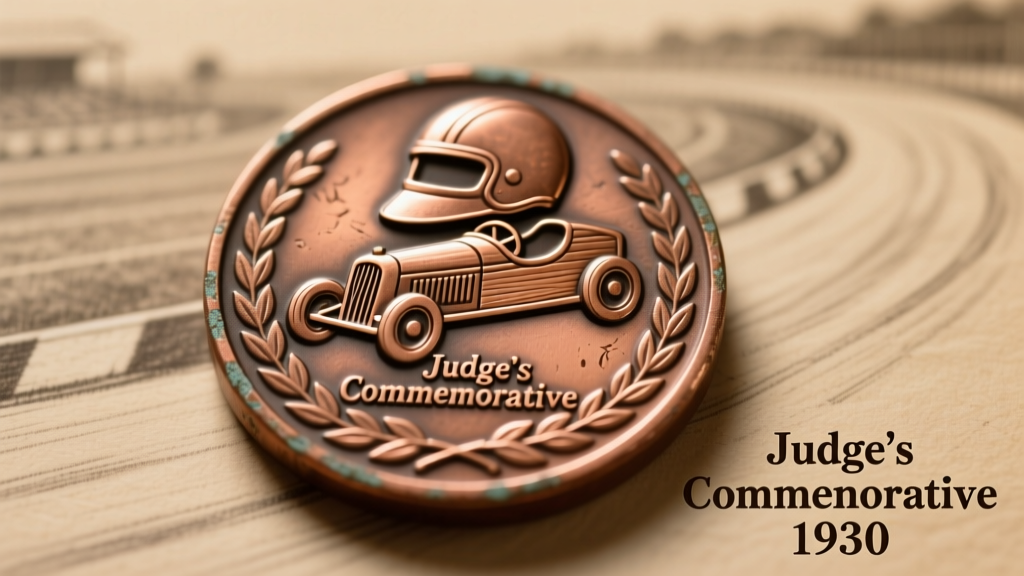
Commemorative Hat: Soap Box Derby Judge C, Circa 1930 — A Numismatic and Historical Appraisal
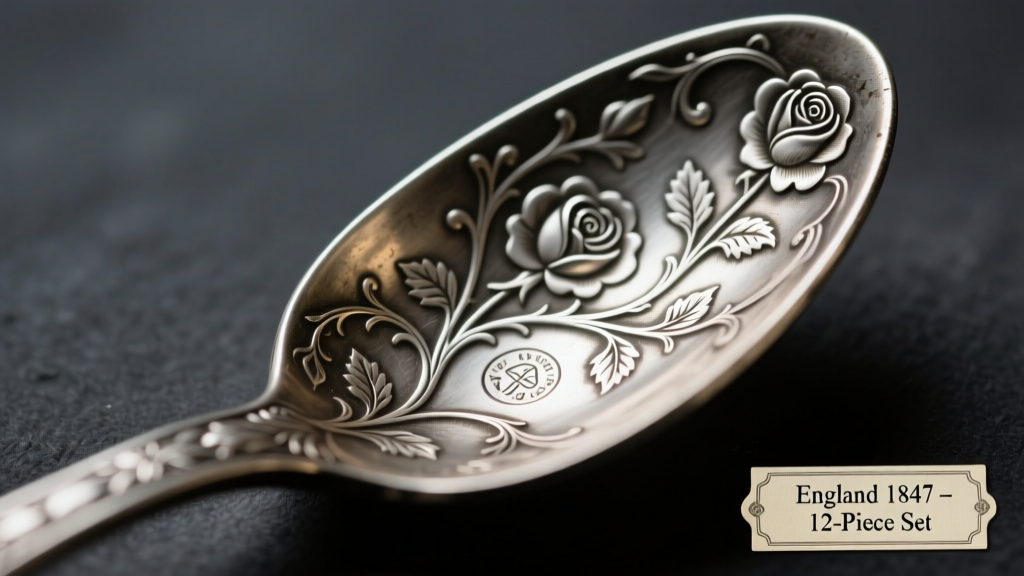
Pewter Spoon-Shaped Handle with Stamped Floral Design: A 19th-Century English 12-Piece Set — Provenance, Craftsmanship, and Market Valuation

Erickson Vase Green Blue 5-Inch: Authentication, Market Value, and Collector Insights
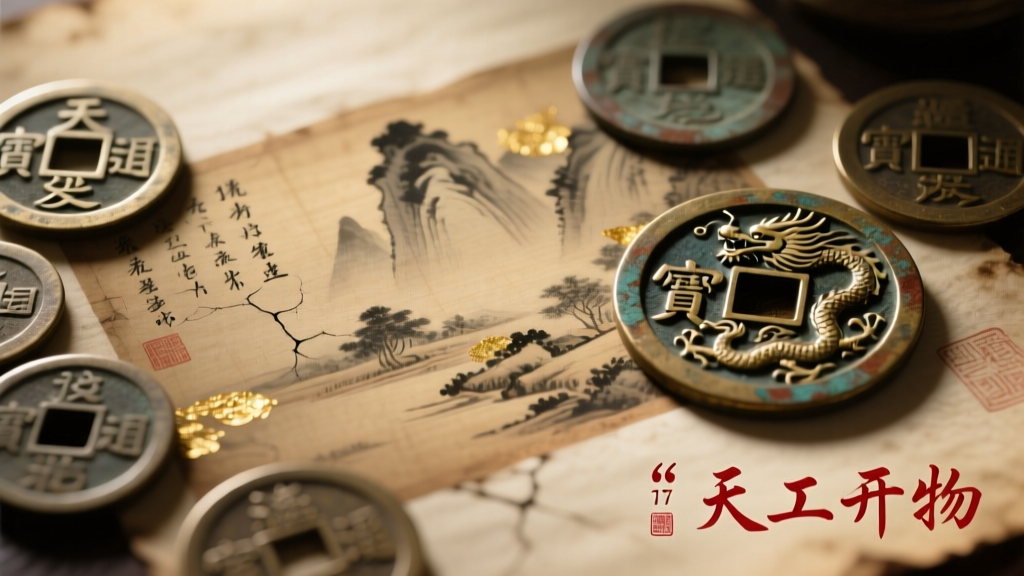
ID Old Painting: Decoding the Enigmatic 19th-Century Numismatic Artwork and Its Impact on U.S. Coin Design
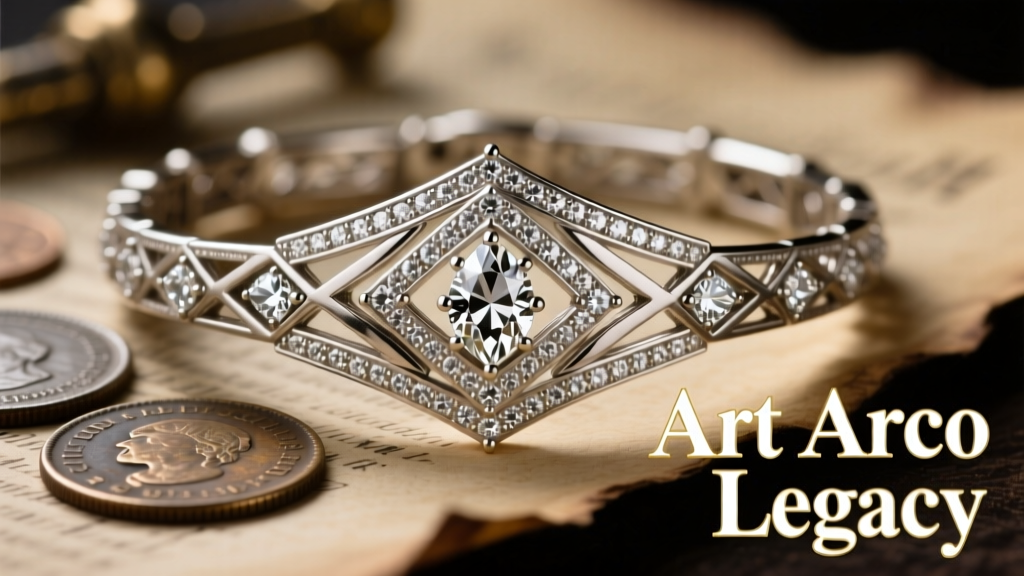
The 3-Marquise Art Deco Diamond Bracelet: Geometry, Glamour, and Historical Precision
Grueby Bowl: Curdled Matte Blue Glaze with Green Gloss Interior (8-Inch Diameter) — Authentication, Provenance, and Market Value Analysis
W. Goebel Bonbon Jar Value: Authentication, Rarity, and Market Trends (2024)