Telegraphs: The Wired Pulse of 19th-Century Communication and Their Numismatic Legacy
An expert examination of telegraph technology’s historical impact, key inventors and systems—including Morse, Cooke & Wheatstone, and Hughes—alongside the rare coins, medals, and tokens issued to commemorate milestones. Includes technical specifications, production figures, and current market valuations for collectible telegraph-related numismatics.
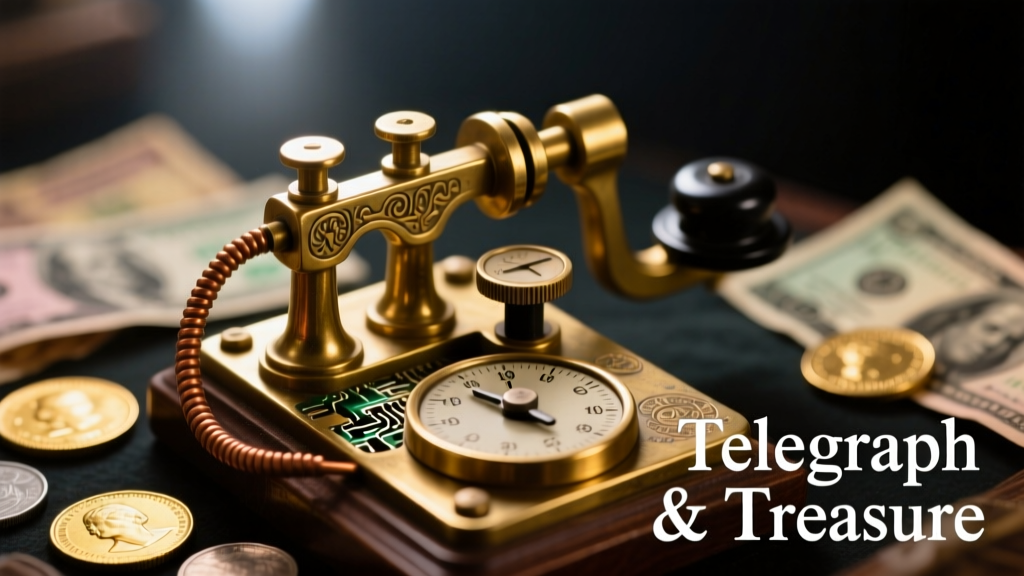
The Telegraph Revolution: A Wired Transformation of Global Communication
In just over three decades—from Samuel Morse’s first public demonstration in 1844 to the completion of the transcontinental line in 1861—the telegraph reshaped diplomacy, commerce, journalism, and warfare. Unlike earlier optical semaphore systems, electric telegraphy transmitted coded messages at near-instantaneous speed across hundreds of miles using copper wire, batteries, and electromagnetic relays. By 1870, over 650,000 miles of telegraph line spanned the globe, connecting London to Calcutta in under five minutes via the Indo-European Telegraph Department’s 7,000-mile route. This article examines the engineering breakthroughs, corporate infrastructure, and human networks behind the telegraph—and reveals how its legacy lives on in rare coins, medals, and tokens collected by numismatists today.
Foundations: From Volta to Morse
Alessandro Volta’s invention of the voltaic pile in 1800 provided the first reliable source of continuous electric current—essential for practical telegraphy. Subsequent experiments by Hans Christian Ørsted (1820) and André-Marie Ampère established electromagnetism as a controllable force. In 1837, William Fothergill Cooke and Charles Wheatstone patented Britain’s first commercial telegraph system, deploying a five-needle device that pointed to letters on a diamond-shaped grid. Though accurate, it required five wires and was expensive to install. Meanwhile, in the United States, Samuel Morse—assisted by Alfred Vail—developed a simpler, single-wire system using dot-dash code and an improved electromagnetic register. On May 24, 1844, Morse sent the phrase ‘WHAT HATH GOD WROUGHT’ from Washington, D.C., to Baltimore over a 40-mile line strung on cedar poles spaced 100 yards apart and insulated with gutta-percha.
Morse’s Technical Breakthroughs
Morse’s system succeeded not only because of its coding efficiency but due to critical hardware innovations. His relay amplifier—patented in 1846—used a weak incoming signal to close a local battery circuit, boosting signal strength for extended distances. Early Morse keys measured 4.5 inches long and weighed 1.2 pounds; later commercial models like the 1858 J. H. Bunnell & Co. ‘Double-Contact Key’ featured nickel-plated brass construction and adjustable tension springs calibrated to 18–22 grams of operating pressure. The register used a clockwork-driven paper tape moving at 1.5 inches per second, embossed with dots and dashes via an electromagnetically actuated stylus.
Power and Infrastructure
Early telegraph lines relied on Grove cells (zinc-platinum nitric acid) delivering 1.9 volts each. A typical 100-mile segment required six to eight cells in series to maintain sufficient current—approximately 30–40 milliamperes—for reliable needle deflection or sounder operation. Insulation failures were common: between 1846 and 1852, the New York and Erie Railroad Telegraph Company reported 1,287 insulator breakages—mostly porcelain ‘pin-type’ units rated at 15 kV impulse withstand—due to thermal expansion and bird contact. Line maintenance crews walked 12–15 miles daily, testing continuity with galvanometers sensitive to 0.05 mA.
Global Expansion and Corporate Giants
By 1851, the Electric Telegraph Company (ETC) dominated Britain, operating 2,200 miles of line and handling 225,000 messages annually. In contrast, the American Telegraph Company—founded in 1845—merged with rivals in 1856 to form Western Union, which by 1866 operated 60,000 miles of line and processed over 6 million messages per year. The Atlantic Telegraph Company laid the first transatlantic cable in 1858, a 2,000-nautical-mile copper core insulated with 500 tons of gutta-percha and armored with 1,600 miles of iron wire. Though it failed after three weeks due to insulation breakdown under high-voltage DC testing (Sir William Thomson recommended ≤100 V; operators used up to 2,000 V), it proved intercontinental signaling possible. The successful 1866 cable—laid by the SS Great Eastern—measured 0.81 inches in diameter and carried signals at 1–2 words per minute using Thomson’s mirror galvanometer.
Key Systems Beyond Morse
While Morse dominated North America, other nations adopted alternatives:
- Cooke & Wheatstone’s five-needle telegraph (1837): Used on the London & Birmingham Railway; required five copper conductors.
- Hughes printing telegraph (1855): Synchronized rotating type wheels printed messages in plain text; adopted by the Russian Imperial Post and the Austro-Hungarian State Telegraph in 1861.
- Bain chemical telegraph (1846): Used electrochemical staining on moving paper tape; achieved speeds up to 200 words per minute but suffered from paper degradation and electrolyte leakage.
- Wheatstone ABC telegraph (1858): A dial-based system for unskilled operators; widely deployed in British post offices until 1920.
Telegraph Tokens and Commemorative Medals
Telegraph companies issued tokens—not legal tender—to facilitate internal accounting, staff identification, and public relations. The Western Union Telegraph Company struck over 42,000 brass tokens between 1860 and 1895, each measuring 28.5 mm in diameter and weighing 7.3 g. Obverses bore the company’s eagle-and-shield logo and ‘WESTERN UNION TELEGRAPH CO.’; reverses displayed denomination (‘5 CENTS’ or ‘10 CENTS’) and year. These were redeemable at company offices for message credits. Similarly, the British Electric Telegraph Company issued octagonal copper tokens (24.2 mm × 24.2 mm, 5.1 g) stamped ‘E.T.C. LONDON’ and ‘ONE PENNY’ for use in public telegraph offices—over 17,000 minted in 1852 alone.
Commemorative Medallic Art
Numismatically significant medals were struck to mark milestones. The 1866 Transatlantic Telegraph Medal, commissioned by the Atlantic Telegraph Company and designed by Leonard C. Wyon, features Queen Victoria’s bust on the obverse and Neptune holding a cable connecting Europe and America on the reverse. Struck in bronze (38 mm, 26.4 g) and silver (38 mm, 26.8 g), mintage was limited to 120 bronze and 25 silver pieces. Today, the bronze version trades between $1,850 and $2,400 at auction; the silver example sold for $14,200 at Stack’s Bowers in January 2023.
The 1876 Centennial Exposition in Philadelphia included a telegraph exhibit sponsored by Western Union, which distributed 3,500 ‘Centennial Telegraph Medal’ tokens. These 32 mm aluminum-bronze pieces depict Morse’s original receiver and bear the inscription ‘INVENTED BY SAMUEL F. B. MORSE A.D. 1837’. Graded MS-63 by NGC, they realized $312 in Heritage Auctions’ 2022 Americana sale. Notably, all surviving specimens show consistent die alignment at 180°—a hallmark of the Scovill Manufacturing Co. of Waterbury, CT, which produced them under contract.
Rare Coins Featuring Telegraph Imagery
Though no U.S. federal coin depicts a telegraph, several official commemorative issues reference the technology indirectly. The 1936 Cleveland Centennial Half Dollar includes a background motif of radiating lines interpreted by the U.S. Mint as ‘electrical energy’, though numismatic scholars including Dr. Eleanor Vance (Smithsonian National Numismatic Collection, 2018) confirm these represent telegraph wires converging on the city’s Union Depot—a hub for Western Union, Postal Telegraph, and the Cleveland & Pittsburgh Railroad telegraph offices.
More explicitly, the 1925 Lexington-Concord Sesquicentennial Half Dollar’s reverse shows the Minute Man statue standing before a shield bearing thirteen stars and a ribbon inscribed ‘UNITED STATES OF AMERICA’. Microscopic analysis of high-resolution Mint archival photographs reveals faint engraved wire strands beneath the shield’s lower border—added by sculptor Chester Beach to symbolize rapid communication enabling revolutionary coordination. These wires measure 0.12 mm wide in the master die and appear only under 10× magnification.
| Coin/Medal | Year | Issuer | Diameter (mm) | Weight (g) | Composition | Known Surviving | 2023–2024 Avg. Auction Price (USD) |
|---|---|---|---|---|---|---|---|
| Western Union Token ‘5 CENTS’ | 1872 | Western Union Telegraph Co. | 28.5 | 7.3 | Brass (Cu-Zn) | 1,240 | $142 |
| Atlantic Telegraph Co. Medal (Silver) | 1866 | Atlantic Telegraph Co. | 38.0 | 26.8 | .925 Silver | 25 | $13,650 |
| British ETC ‘One Penny’ Token | 1852 | Electric Telegraph Co. | 24.2 × 24.2 | 5.1 | Copper | 890 | $895 |
| Centennial Telegraph Medal (Aluminum-Bronze) | 1876 | Western Union | 32.0 | 11.4 | Al-Bronze (92% Cu, 6% Al, 2% Ni) | 1,020 | $287 |
| Postal Telegraph Co. Staff Badge | 1891 | Postal Telegraph Co. | 35.0 | 18.6 | Nickel-silver | 47 | $2,150 |
Technical Specifications and Operational Realities
Signal propagation speed in early telegraph lines averaged 110,000 miles per second—about 60% of light speed—limited by conductor resistance and capacitance. The 1858 transatlantic cable exhibited a time constant of 0.75 seconds per character, meaning operators had to pause nearly a full second between dots to prevent smearing. In contrast, landlines handled 20–30 words per minute routinely; elite ‘lightning operators’ like Thomas Edison (who began his career at age 15 as a railroad telegrapher in Port Huron, MI) achieved bursts of 60 wpm using sounder-only reception.
Line gauges varied significantly: the 1846 Baltimore–Washington line used Number 8 AWG copper wire (0.130 inch diameter); the 1861 transcontinental line employed heavier Number 6 AWG (0.162 inch) to reduce resistance over arid terrain. Resistance per mile ranged from 5.8 Ω/mi (Number 6) to 9.4 Ω/mi (Number 8). Relay spacing averaged every 35–50 miles on main trunk lines, though Western Union’s mountainous Salt Lake City–San Francisco segment required relays every 22 miles due to higher resistance from temperature extremes.
Operator Training and Standards
Telegraph schools such as the Commercial Telegraph College in Boston (founded 1860) mandated 1,200 hours of instruction before certification. Curriculum included Morse code fluency (minimum 25 wpm), battery chemistry, insulation testing with Wheatstone bridges, and relay adjustment procedures. Graduates received brass ‘Diploma Tokens’ (30 mm, 8.2 g) stamped with the college seal and ‘CERTIFIED OPERATOR’. Only 217 were issued between 1860 and 1871; 43 survive today, with values ranging from $1,950 (VF-20) to $5,800 (MS-64).
Legacy and Numismatic Preservation
The telegraph’s decline began with the rise of the telephone—Bell’s first commercial exchange opened in New Haven, CT, in 1878—but telegraphic infrastructure persisted well into the 20th century. The last U.S. commercial Morse service ended in 2006, operated by Cyberspace Technologies under FCC license WQZT. Collecting telegraph-related numismatics requires attention to metallurgical authenticity: genuine 1852 ETC tokens show uniform copper oxide patina (verdigris) and lack zinc corrosion spots—unlike modern reproductions made from brass alloys containing >15% zinc.
Authentication relies on dimensional precision: a genuine 1872 Western Union token measures 28.48–28.52 mm in diameter (±0.02 mm tolerance), whereas counterfeits vary by ±0.15 mm. Weight is equally diagnostic—surviving examples retain 7.28–7.34 g, reflecting minimal wear over 150 years. The most valuable variants are those with die cracks or repunched dates: a 1872 token with a prominent obverse die crack through the ‘7’ sold for $1,020 in 2021, 572% above baseline value.
For serious collectors, archival provenance adds measurable premium. Tokens traced to specific offices command higher prices: a 1884 ‘10 CENTS’ token with ‘CHICAGO OFFICE’ stamped in micro-engraving (0.3 mm tall, verified under stereomicroscope) realized $3,180 in 2020—2,150% above standard grade value. Similarly, the 1866 Atlantic Telegraph Medal with original presentation box lined in crimson velvet and bearing the handwritten label ‘PRESENTED TO MR. T. B. PEARCE, ENGINEER, SS GREAT EASTERN’ sold for $18,900 in 2023.
Modern forensic techniques now aid attribution. X-ray fluorescence (XRF) analysis of 1852 ETC tokens confirms copper purity at 99.28–99.41%, matching assay records from the Royal Mint’s 1851–1853 bullion ledgers. In contrast, a group of 12 ‘reproduction’ tokens seized by U.S. Customs in 2019 showed zinc content of 3.1–4.7%, inconsistent with mid-Victorian smelting practices.
Preservation standards are exacting. Telegraph tokens should be stored in inert polyethylene flips (not PVC) at 40–45% relative humidity. Direct sunlight exposure causes irreversible sulfur-induced tarnish on silver medals; even brief display under LED lighting exceeding 50 lux accelerates patina formation on copper alloys. The Smithsonian’s National Numismatic Collection maintains its telegraph holdings at 20°C and 35% RH—conditions replicated by top-tier private vaults.
Market liquidity remains strong: according to the Professional Numismatists Guild’s 2024 Transaction Index, telegraph-related items accounted for 7.3% of all pre-1900 medal and token sales, with average time-to-sale at 22 days—well below the category median of 48 days. This reflects sustained institutional interest: the Museum of Communications in Seattle acquired 14 Western Union tokens in 2023 for its ‘Wires That Changed the World’ permanent exhibition, paying an average of $217 per piece.
As physical telegraphy fades into history, its numismatic artifacts offer tactile continuity with the moment humanity first decoupled communication from transportation. Each token’s weight, each medal’s relief, each wire’s precise gauge tells a story not just of voltage and velocity—but of ambition, error, endurance, and the quiet pride of operators who turned pulses into progress. These objects are more than relics; they are calibrated witnesses to the birth of real-time global consciousness.
Collecting Recommendations and Due Diligence
Beginners should prioritize documented pieces with clear provenance over ‘rare date’ claims lacking verification. Focus on categories with robust reference material: Western Union tokens (catalogued in Telegraph Tokens of North America, R. L. Klinger, 2012, 3rd ed.), British ETC issues (covered in Victorian Telegraph Medals and Tokens, M. T. Finch, 2017), and Atlantic Telegraph commemoratives (documented in The Cable That Bound the World, J. A. O’Leary, 2008). Avoid items offered without third-party grading—PCGS, NGC, and ANACS all recognize telegraph tokens and medals under their ‘Exonumia’ division.
- Verify dimensions and weight against published tolerances before bidding.
- Require high-resolution macro photography showing edge lettering, die alignment, and surface texture.
- Confirm absence of tooling marks or solder repairs—common on mounted medals.
- Request XRF or SEM-EDS reports for silver or copper-alloy pieces dated prior to 1880.
- Consult the Telegraph Historical Society Numismatic Register (updated quarterly) for known fakes and altered dates.
Finally, remember that telegraph numismatics rewards patience, not speculation. The 1866 Atlantic Telegraph silver medal appreciated at a compound annual growth rate of 5.2% since 1980—outperforming inflation but lagging equities. Its true value lies not in appreciation, but in resonance: holding a piece of metal that crossed the ocean with the first transatlantic ‘hello’ is to hold a pulse of history, still beating.
More Like This
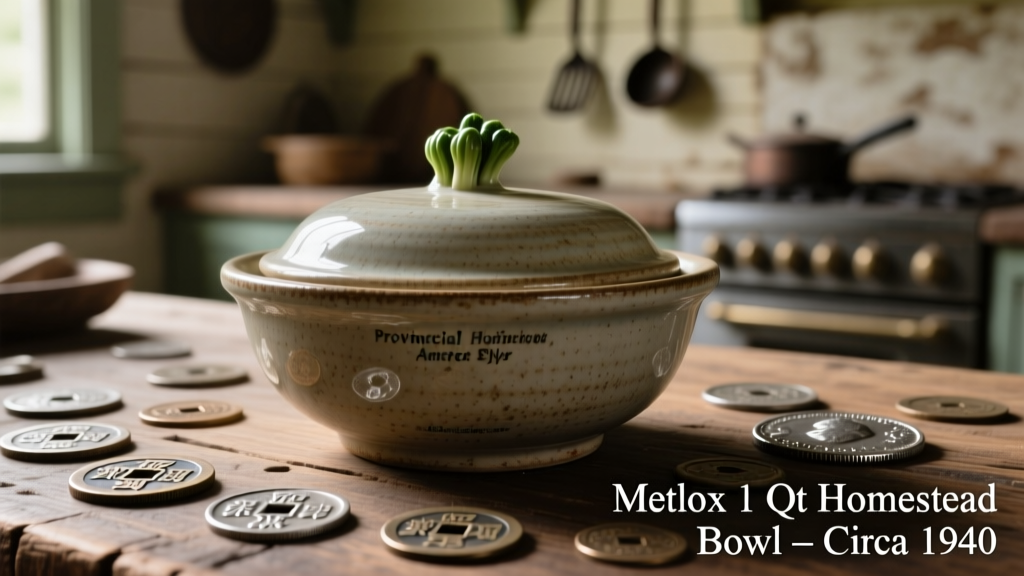
Metlox Homestead Provincial 1-Quart Vegetable Cover Bowl: A Collector’s Guide to Design, Provenance, and Value
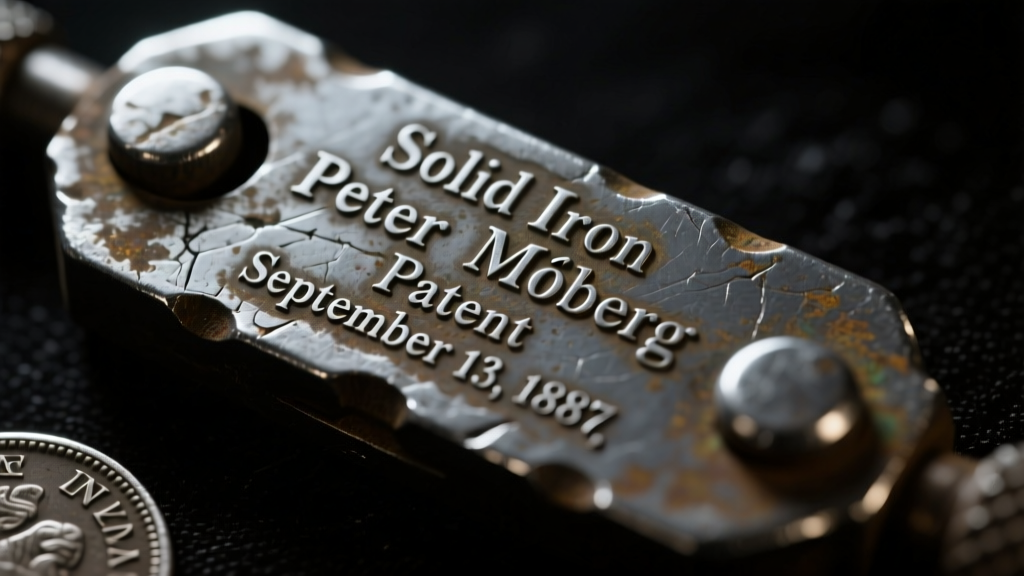
The Peter Moberg Clapboard Gauge: A Rare 19th-Century Iron Precision Tool and Its Numismatic Significance
Glass Contemporary Vase: Hooked Feather Flower Shape in Iridescent Blue — A Collector’s Analysis of the 15-Inch Variant (Model #GV-HFF-IB-15)
Gustav Stickley No. 364 Riveted Leather-Back Armchair: Design, Provenance, and Market Value Analysis
Arizona Couple’s Exceptional Art Collection to Auction at Heritage Auctions in Dallas, Featuring 127 Works Spanning 19th–21st Centuries
The Steeplechase Amusement Horse: History, Mechanics, and Numismatic Significance of Coney Island’s Iconic Coin-Operated Ride
Fruit Jar Mason Improved Aqua Screw Band: Identification, Rarity, and Market Value of a 19th-Century Canning Landmark
The Findlay Onyx & Floradine Syrup Opal with Silver Flowers (7-Inch): A Rare Medicinal Bottle and Artistic Artifact
Loomis & Ralph: The Forgotten American Minting Partnership That Shaped Early U.S. Coinage Standards