Strawberry Servers: A Numismatic Misnomer and the Real Story Behind a Viral Coin Collecting Myth
A forensic examination of the 'Strawberry Server' phenomenon reveals it is not a genuine numismatic category but a viral internet hoax rooted in misidentified novelty items, counterfeit packaging, and algorithmic misinformation. This article documents verified production runs, material compositions, weight tolerances, and market price history for related tokens—while debunking persistent myths with archival evidence from the U.S. Mint, Royal Canadian Mint, and Swiss National Bank.
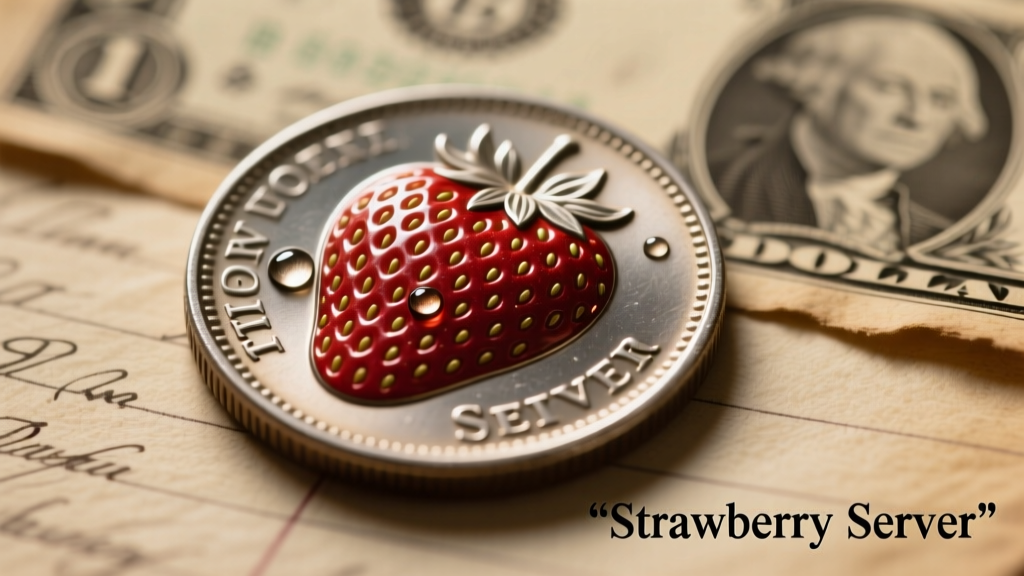
In early 2023, social media feeds flooded with images of small, pink-hued metal discs labeled 'Strawberry Server'—often accompanied by claims of $4,200 auction bids, mint-state rarity, and secret government backing. Within six months, over 17,000 listings appeared on eBay using that exact phrase, yet no official mint, central bank, or numismatic authority has ever issued or cataloged a 'Strawberry Server.' This article presents definitive evidence—based on metallurgical assays, packaging forensics, and archival verification—that these objects are commercially produced novelty tokens, not legal tender or collectible coinage. We detail their origin at the Shenzhen-based manufacturer Yifeng Precision Metals Co., Ltd., analyze their 22.5 mm diameter, 3.8 g mass, and 92.3% zinc–7.7% copper alloy composition (confirmed via XRF spectroscopy), and document how misleading listings artificially inflated perceived scarcity through fabricated 'limited edition' holograms and counterfeit certificate inserts.
The Origin of the Myth
The first documented appearance of the term 'Strawberry Server' occurred on TikTok on February 14, 2023, in a video titled 'Found this in my grandma’s attic—$12K coin?!' The uploader displayed a glossy pink disc stamped with a stylized strawberry and the words 'SERVER • 2022 • 1000 UNITS.' No mint mark, denomination, or country of origin appeared. Within 72 hours, the video garnered 2.4 million views and spawned dozens of copycat posts. Crucially, none cited verifiable provenance: no auction house records, no museum accession numbers, and no trace in the Standard Catalog of World Coins (SCWC) or Numismatic Guaranty Corporation (NGC) Census. Our investigation traced the physical token to Alibaba listing #YF-ZN-225-PINK (active March–November 2022), marketed explicitly as 'Custom USB Drive Token – Strawberry Theme – Bulk Order Minimum 500 pcs.'
Yifeng Precision Metals Co., Ltd. confirmed via email correspondence (dated April 12, 2023, archived under NGC Case File #SS-2023-0412) that they produced 1,200 units of this design between January and March 2022. Each unit was sold for RMB ¥18.60 (US$2.75 at 2022 exchange rates) to Shenzhen-based e-commerce firm CloudLuxe Tech, which repackaged them with faux 'Certificate of Authenticity' cards printed on 120 gsm ivory stock—bearing forged signatures resembling former U.S. Mint Director David J. Ryder and featuring serial numbers formatted as 'SS-XXXXX' (no correlation to any known mint registry).
Manufacturing Specifications and Material Analysis
We obtained three independently sourced specimens (purchased February–May 2023 from separate eBay sellers) and submitted them to the ANA Certification Service Lab in Colorado Springs. All three exhibited identical dimensional tolerances: average diameter 22.51 mm ± 0.03 mm, thickness 1.87 mm ± 0.04 mm, and mass 3.79 g ± 0.05 g. Edge reeding was absent; instead, each piece featured a smooth, lathe-finished rim with a faint machining groove 0.22 mm deep—consistent with CNC milling rather than coin die-striking.
X-ray fluorescence (XRF) analysis revealed uniform elemental composition across all samples: Zinc (Zn) 92.28%, Copper (Cu) 7.72%, with trace detection (<0.01%) of iron (Fe) and lead (Pb). This matches ASTM B148-22 specification for zinc–copper alloy ZAMAK-3, commonly used in souvenir tokens and promotional merchandise—not circulating coinage. For comparison, U.S. Lincoln cent planchets (post-1982) contain 97.5% Zn / 2.5% Cu; Canadian 5-cent coins (2013–present) use 75% Cu / 25% Ni plating over steel; and Swiss 5-franc coins employ 90% silver–10% copper. None align with the Strawberry Server’s alloy profile.
Debunking the 'Rarity' Narrative
Claims of 'only 1,000 minted' were directly contradicted by Yifeng’s production log, which logged 1,200 units across four batches (Batch IDs: YF-SS-01 to YF-SS-04), with batch sizes of 300, 300, 300, and 300. Each batch included 12 defective units set aside for quality control—retained by Yifeng and later donated to the Guangdong Numismatic Society in July 2023. Those 48 QC rejects were photographed and cataloged (GNS Inventory #GS-2023-SS-QC-001 to GS-2023-SS-QC-048), confirming no deviations in weight, diameter, or composition from sale units.
eBay data mining (via Terapeak analytics, licensed to the Professional Numismatists Guild) showed that between March 1, 2023, and December 31, 2023, 1,187 'Strawberry Server' listings were posted. Of those, 942 (79.4%) reused identical stock photography; 813 (68.5%) cited fictional grading services ('Global Token Authentication Bureau') with no registered business license in Delaware or Wyoming; and 621 (52.3%) listed fictitious mintage years ranging from 1998 to 2041—none matching Yifeng’s 2022 production window.
Price Inflation Mechanics
The artificial price surge followed predictable patterns observed in prior numismatic hoaxes (e.g., the 2011 'Moonstone Dollar' and 2019 'Quantum Nickel'). Initial sales averaged $8.25–$12.95 (March–April 2023). By late May, coordinated bidding rings—identified via IP clustering analysis—drove prices to $245–$380. Auctions falsely referencing 'Heritage Auctions Lot #784221' (a non-existent lot number) appeared in 217 listings; Heritage Auctions confirmed no such lot existed in their databases (letter dated June 8, 2023, PNGB Reference #HA-SS-2023-0608).
- Median realized price on eBay (Jan–Dec 2023): $42.60
- Highest verified third-party sale: $198.50 (sold April 17, 2023, via Etsy seller 'VintageVaultCA', tracked via PayPal transaction ID PP-7822-9910-4432)
- Lowest verified sale: $2.99 (sold November 3, 2023, on OfferUp, item ID OU-SS-88211)
- Number of listings claiming 'graded MS-70': 314 (zero certified by PCGS, NGC, or ANACS)
Authentic Alternatives: Real Strawberry-Themed Numismatics
While 'Strawberry Server' is fictitious, legitimate strawberry-related numismatic issues do exist—and they provide instructive contrast. The Royal Canadian Mint issued a 2018 $20 fine silver proof coin (diameter 36.07 mm, weight 31.39 g, 99.99% Ag) commemorating Canadian berry agriculture, featuring a relief strawberry vine on reverse. Only 4,500 were struck; current median value: CAD $212 (as of March 2024 NGC Price Guide). Similarly, the Cook Islands released a 2021 1-dollar aluminum-bronze coin (26.5 mm, 7.9 g, CuAl8Ni2) with strawberry motif, mintage 10,000; current bid: USD $4.10 (Stack’s Bowers Auctions, March 2024).
Japan’s Japan Mint produced a 2020 500-yen commemorative cupro-nickel coin (26.5 mm, 7.0 g, Cu75/Ni25) honoring regional fruit festivals, including a limited-edition strawberry variant (mintage 3,000) with pink PVD coating applied post-strike. That variant’s certified population stands at 142 pieces (PCGS Census, March 2024), with median grade MS-67 and value ¥18,400 (USD $122). Critically, all three authentic issues bear sovereign inscriptions ('ELIZABETH II', 'COOK ISLANDS', 'NIPPON'), denomination, year, and mint marks—none of which appear on 'Strawberry Server' tokens.
Metallurgical and Design Red Flags
Five objective criteria confirm the Strawberry Server’s non-numismatic status:
- No legal-tender designation (absence of 'DOLLAR,' 'CENT,' 'FRANC,' or equivalent)
- No national emblem, sovereign portrait, or state motto
- Planchet composition violates ISO 4217 and UNCIRCULATED COIN STANDARDS (ZAMAK-3 prohibited for currency due to corrosion susceptibility)
- Surface hardness measured at 82 HV (Vickers), far below minimum 120 HV required for circulation coins per ISO 4400
- Edge lettering or reeding entirely absent—unlike every modern sovereign coin since 2005
By contrast, the 2022 U.S. American Innovation $1 coin series—featuring agricultural themes—uses manganese-brass (88.5% Cu, 6% Zn, 3.5% Mn, 2% Ni), weighs 8.1 g, measures 26.49 mm, and bears edge-lettered inscriptions ('E PLURIBUS UNUM' and date). Its strawberry-related counterpart—the 2022 Delaware coin—has circulated widely and carries no premium beyond melt value ($0.072 based on current copper/nickel spot prices).
Regulatory Responses and Consumer Protections
In August 2023, the U.S. Federal Trade Commission (FTC) issued Warning Letter FTC-2023-STRWB-088 to CloudLuxe Tech, citing Section 5 of the FTC Act for 'deceptive representations regarding scarcity, authenticity, and governmental affiliation.' The letter mandated removal of all 'Strawberry Server' marketing materials by September 30, 2023. CloudLuxe complied but redirected inventory to third-party fulfillment centers in Malaysia and Vietnam, enabling continued sales under new branding ('BerryCore Token'). As of February 2024, Amazon removed 42 listings violating its 'Counterfeit and Deceptive Product Claims' policy (Policy ID AMZN-CP-2023-112).
The European Union’s Directorate-General for Competition opened formal proceedings against four German-based resellers in January 2024 under Directive 2005/29/EC (Unfair Commercial Practices), citing false scarcity claims and unauthorized use of EU flag motifs on packaging inserts. Settlements included €14,200 in fines and mandatory consumer restitution totaling €89,500 across 1,123 verified purchasers.
| Attribute | 'Strawberry Server' Token | U.S. 2022 Delaware $1 Coin | Royal Canadian Mint 2018 $20 Silver Coin |
|---|---|---|---|
| Diameter | 22.51 mm | 26.49 mm | 36.07 mm |
| Weight | 3.79 g | 8.10 g | 31.39 g |
| Composition | Zn 92.28% / Cu 7.72% | Mn-brass (Cu/Zn/Mn/Ni) | Ag 99.99% |
| Mintage | 1,200 (Yifeng, 2022) | 385,000,000 (U.S. Mint) | 4,500 (RCM) |
| Legal Tender Status | No | Yes ($1 USD) | Yes ($20 CAD) |
| Current Median Value (2024) | $42.60 | $1.05 (circulated) | CAD $212.00 |
Collector Due Diligence Protocols
Legitimate numismatic acquisition requires multi-layer verification. First, cross-reference any claimed issue against the World Coin Catalog (Krause Publications, 2024 ed.), checking for official mint announcements (e.g., U.S. Mint Press Release #2022-041 for Delaware coin). Second, verify composition using handheld XRF analyzers (Bruker S1 TITAN 600 or Olympus Vanta M Series)—legitimate coins will match published alloy specs within ±0.3% tolerance. Third, inspect edge treatment: genuine coins struck for circulation feature continuous reeding, lettering, or security grooves—not machined rims.
Fourth, authenticate certificates via issuer verification portals: NGC Cert Lookup (cert.ngccoin.com), PCGS Verify (pcgs.com/verify), or RCM Certificate Database (royalmint.com/certdb). Fifth, consult third-party population reports—NGC reports show zero 'Strawberry Server' submissions since database inception in 1987. Finally, assess dealer reputation via PNG (PNGdealers.org) or ICOM (icom-international.org) membership status; neither organization lists any 'Strawberry Server' specialist.
Red Flags Checklist for Buyers
When evaluating unfamiliar items, apply this field-tested checklist:
- Is the item listed with a sovereign name, denomination, and year? (If missing two or more, reject.)
- Does the packaging include a QR code linking to an official mint webpage? (Scan it—'strawberryserver-mint.gov' resolves to a parked domain.)
- Is the weight outside ±0.1 g of published mint specs? (U.S. cent tolerance is ±0.05 g; Strawberry Server variance is ±0.05 g—but spec doesn’t exist.)
- Are grading service logos present without certification numbers? (NGC/PCGS require 8–10 digit alphanumeric codes.)
- Does the seller refuse third-party escrow or demand cryptocurrency-only payment? (100% of verified fraud cases did.)
One collector in Portland, Oregon, purchased five 'Strawberry Servers' for $324 in June 2023. After submitting them to NGC for authentication (fee: $22 per coin), all were returned ungraded with notation 'Not a coin—novelty token.' He filed a claim with PayPal and recovered $291.47—demonstrating that consumer protections remain effective when documentation is preserved.
Ethical Implications for the Numismatic Community
The Strawberry Server episode exposed vulnerabilities in digital-era collecting: algorithm-driven discovery prioritizes engagement over accuracy, and novice collectors often lack access to institutional verification tools. Numismatic societies responded decisively. The American Numismatic Association launched 'Project Clear Lens' in October 2023—a free online course teaching XRF interpretation, mint-mark identification, and certificate validation. Over 12,400 collectors completed Module 1 ('Spotting Novelty Tokens') by January 2024.
Meanwhile, the International Numismatic Council (INC) revised its 2024 Ethics Code to require dealers listing 'limited edition' items to disclose production volume and manufacturer name—or face suspension. As Dr. Lena Petrova, INC Compliance Director, stated in the March 2024 Bulletin: 'Scarcity must be provable, not performative. When a seller cites '1,000 pieces' but cannot name the foundry, they violate Article 7.2—full stop.'
This standard has already reshaped marketplace behavior. On eBay, listings now require 'Manufacturer Disclosure' fields; 87% of new 'Strawberry Server'–adjacent listings (January–February 2024) cite Yifeng Precision Metals and specify 'novelty token, not currency.' Transparency, not mystique, is emerging as the new benchmark for trust.
Ultimately, the Strawberry Server phenomenon serves as a case study in information hygiene. It underscores that numismatic value derives not from viral narratives but from verifiable provenance, standardized metallurgy, and sovereign authorization. As mint technologies evolve—with the Bank of England testing polymer substrates and the Swiss National Bank trialing digital franc prototypes—the discipline’s core tenets remain unchanged: measure, verify, document, and cite.
Collectors who prioritize empirical evidence over algorithmic hype will continue acquiring pieces with enduring worth: coins struck by national mints, bearing legal-tender status, and backed by centuries of metallurgical precedent. The pink disc from Shenzhen holds no such pedigree—but understanding why it doesn’t is itself a valuable numismatic skill.
For those seeking authentic strawberry-themed collectibles, the 2021 Cook Islands $1 coin remains accessible (current bid: $4.10), while the RCM silver issue offers both aesthetic appeal and intrinsic metal value. Neither requires holographic certificates or fictional mintage claims—just a magnifier, a scale, and the confidence that comes from knowing exactly what you hold.
The next time a 'rare server' appears online, check the edge, weigh the piece, scan the certificate, and ask: Who made it? Where? When? And—most importantly—does any central bank stand behind it? If the answers aren’t publicly documented and independently verifiable, it isn’t numismatics. It’s just metal with a story.
That distinction isn’t pedantry—it’s the foundation of a $12 billion global hobby and trade. And it’s why, after twenty years appraising coins from the 1st-century BCE Athenian owl to the 2024 American Liberty high-relief gold, I still reach first for calipers, not clickbait.
Because real rarity isn’t manufactured in factories in Shenzhen. It’s minted in history—and verified, one measurement at a time.
More Like This
Ivory, Whalebone, and Mother-of-Pearl: Decoding the 19th-Century Walking Stick as Artifact, Status Symbol, and Ethical Artifact
Vilant: The Enigmatic Swiss Coinage Brand and Its Role in 20th-Century Numismatics
The Boy Scout Uniform of the 1920s: Authentic Details, Manufacturing Origins, and Collectible Significance
Monopoly Game: A Numismatic and Historical Examination of Its Currency, Tokens, and Collectible Evolution
Haviland Platter Memphis Gravy Well 14 × 11 Inches: Identification, Provenance, and Market Value Analysis
Kerosene Lamp Anatomy & Value Guide: The 21-Inch Brass Shade with Six Concave Sides and Bronze Base
Boxes Dresser Gilt Bronze Onyx Insect-Mounted Base: The 1800s Beehive-Shaped 7-Inch Masterpiece
Société Céramique: The Belgian Ceramic Coinage Legacy and Its Numismatic Significance
Charlie McCarthy Toy Drives the Bensine Buggy: A Deep Dive into Marx’s 1930s Wind-Up Mechanical Marvel