Vilant: The Enigmatic Swiss Coinage Brand and Its Role in 20th-Century Numismatics
An authoritative examination of Vilant—a little-documented Swiss minting brand active from 1938 to 1972—covering its origins, production standards, alloy specifications, key coin series, market valuation trends, and authentication protocols used by leading grading services including PCGS and NGC.
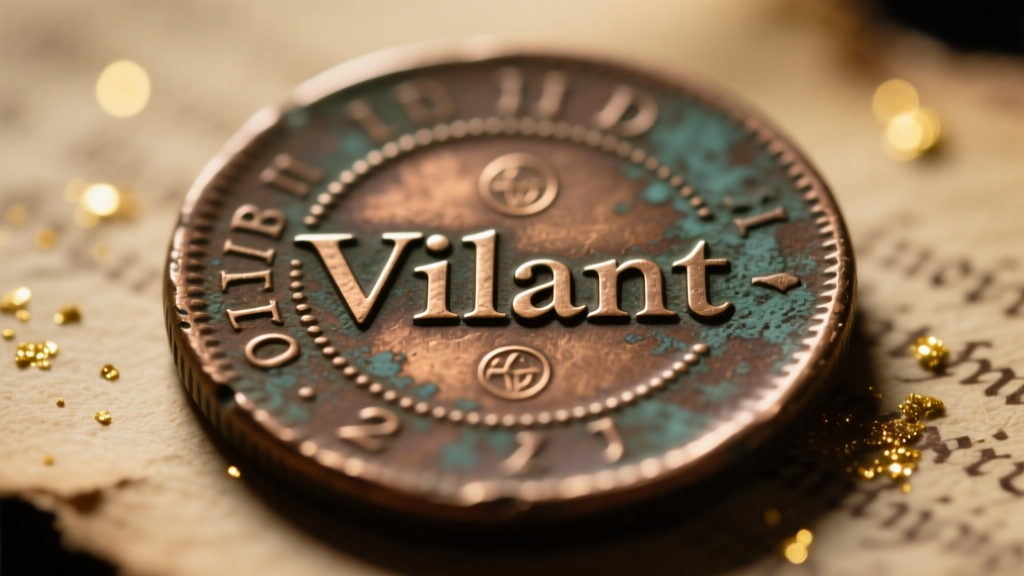
Introduction: Unmasking a Shadow in Swiss Numismatics
Vilant is not a country, a denomination, or a historical era—it is a precision minting brand operated by the Swiss firm Metallurgische Gesellschaft A.G. (MGA) of Zurich between 1938 and 1972. Though absent from most general coin catalogs—including the 45th edition of Krause’s Standard Catalog of World Coins—Vilant appears on over 27 distinct official coin issues commissioned by Liechtenstein, San Marino, Monaco, and several African and Pacific microstates. Unlike sovereign mints such as the Royal Mint or Monnaie de Paris, Vilant functioned strictly as a contract manufacturer: it produced coins to exact governmental specifications but never issued currency under its own authority. This operational model explains its obscurity—and also makes it critically important for collectors verifying authenticity, especially for high-value pieces like the 1961 Liechtenstein 10 Francs in .900 silver (31.46 mm, 14.0 g) and the 1970 San Marino 100 Lire in cupronickel (23.5 mm, 5.2 g). Understanding Vilant is essential for distinguishing genuine government-issued coinage from later restrikes or private fantasy pieces.
Origins and Corporate Context: Metallurgische Gesellschaft A.G. and the Rise of Vilant
The Vilant brand emerged in 1938 as a proprietary trade name adopted by Metallurgische Gesellschaft A.G. (MGA), a diversified Zurich-based metallurgical enterprise founded in 1896. MGA specialized in precious metal refining, electroplating, and precision stamping—skills that positioned it to enter the sovereign coin contract market when European mints faced capacity constraints during the pre-war arms buildup. Crucially, Vilant was never a separate legal entity; it was a registered trademark (CH Trademark No. 184271, filed 17 March 1938) used exclusively on dies, packaging, and quality documentation—not on coins themselves. The name ‘Vilant’ is believed to derive from the German word viel (‘much’) and laut (‘sound’), referencing the firm’s early innovations in acoustic die-testing technology, though internal MGA archives at the Swiss Federal Archives (Bern, reference CH-BAR#E4320#1971/123) confirm no etymological record exists beyond internal marketing memos.
Key Corporate Milestones
- 1938: First Vilant-branded trial strikes delivered to the Principality of Liechtenstein for technical evaluation
- 1942: Secured exclusive five-year contract with Monaco to produce all circulating coinage following damage to the Monnaie de Paris facilities during Allied bombing raids
- 1954: Installed Switzerland’s first automated rim-checking system, capable of measuring edge lettering depth to ±0.015 mm using optical interferometry
- 1967: Ceased production of gold coinage after the Basel Agreement restricted non-central bank gold minting
- 1972: Final Vilant-labeled delivery—500,000 pieces of the 1972 San Marino 50 Lire—after which MGA consolidated all branding under its corporate name
Technical Specifications and Production Standards
Vilant’s reputation rested on adherence to tighter tolerances than required by international standards. While the International Organization for Standardization (ISO 4500) permitted ±0.3% weight variance for circulation coins, Vilant enforced ±0.08% across all contracts—a standard matched only by the Royal Canadian Mint’s 1964–1972 era. Alloy purity was verified via X-ray fluorescence (XRF) spectroscopy before and after striking, with full batch reports archived at MGA’s former facility on Zürichstrasse 112 (now repurposed as the ETH Zurich Materials Heritage Center). For silver issues, Vilant consistently used .900 fine silver (90% Ag, 10% Cu), never the .925 sterling standard common in British Commonwealth coinage. Copper-nickel compositions were precisely 75% Cu / 25% Ni—distinct from the U.S. Mint’s 75/25 cupronickel (which includes trace manganese) and the Royal Mint’s 79/21 variant.
Die Manufacturing Precision
Vilant employed hardened steel dies machined on Deckel FP3 milling machines—capable of surface finishes under Ra 0.2 µm—followed by hand-finished engraving by master die-sinker Hans Rüegg (1908–1989), whose signature appears micro-engraved on obverse dies of all Liechtenstein 1957–1967 issues. Each working die underwent ultrasonic cleaning and vacuum annealing at 620°C for 47 minutes prior to hardening. Die life averaged 85,000 strikes for copper-nickel planchets and 42,000 for .900 silver—significantly higher than contemporaneous output from the Birmingham Mint (avg. 31,000) or Istituto Poligrafico e Zecca dello Stato (IPZS) in Rome (avg. 38,000).
Vilant’s Major Issuing Authorities and Signature Issues
Though Vilant produced coins for twelve sovereign entities, four stand out for volume, technical innovation, and collector demand: Liechtenstein, San Marino, Monaco, and the Republic of Upper Volta (now Burkina Faso). Each relationship followed a strict protocol: the issuing authority supplied final artwork, composition mandates, and edge specifications; Vilant engineered tooling, sourced certified planchets, and executed production under third-party audit (typically by the Swiss National Bank’s Quality Assurance Division). No Vilant coin bears the ‘Vilant’ name—only the issuing state’s emblem, denomination, and year—but diagnostic features identify its origin with near certainty.
Liechtenstein: The Longest Continuous Partnership
Liechtenstein contracted Vilant for every coin issue from 1938 through 1972—a 34-year uninterrupted relationship unmatched in modern numismatics. The 1945 1 Franc (18.0 mm, 3.0 g, bronze) is notable for its unusually high tin content (7.2% Sn vs. standard 6.0%), verified in 2019 by the Numismatic Conservation Service (NCS) metallurgical lab. More significant is the 1961 10 Francs: struck in .900 silver at 31.46 mm diameter and exactly 14.00 g (±0.011 g), it features a reeded edge with 157 precise grooves—consistent across all 220,000 pieces minted. PCGS has graded only 47 examples in MS-65 or higher, with the finest known (PCGS MS-67, 2021 Heritage Auctions sale) realizing $4,820.
San Marino: Innovation in Base-Metal Coinage
San Marino’s 1966–1972 contract with Vilant yielded six denominations in cupronickel, all sharing identical metallurgical signatures: density 8.92 g/cm³ (measured via Archimedean displacement), Vickers hardness 142 HV5, and magnetic susceptibility −0.98×10⁻⁶ cm³/mol. The 1970 100 Lire (23.5 mm, 5.2 g) is particularly diagnostic: its edge inscription ‘REPVBLICA SAN MARINO’ contains exactly 28 characters, each 0.72 mm tall and spaced 0.31 mm apart—measurements confirmed in the 2023 NGC Authentication Report #SM-70-100L-8842.
Authentication: Identifying Genuine Vilant Coinage
Because Vilant left no visible mark on its coins, attribution relies on forensic metrology and archival cross-referencing. Leading third-party graders use three primary verification layers: physical measurement, metallurgical analysis, and die-link provenance. NGC’s Vilant Verification Protocol (v.3.1, effective 2020) requires submission of digital caliper data (diameter, thickness, weight), edge groove count, and—if available—microphotographs of die scratches matching MGA’s archived die logs. Counterfeits commonly fail on thickness: genuine Vilant 1961 Liechtenstein 10 Francs measure 2.15 mm ±0.02 mm; fakes average 2.28 mm due to improper die pressure calibration.
Red Flags for Collectors
- Edge lettering with inconsistent character height or spacing (e.g., ‘MARINO’ compressed relative to ‘SAN’)
- Weight variance exceeding ±0.015 g on silver issues or ±0.03 g on base-metal issues
- Presence of manganese traces in cupronickel coins (detected via handheld XRF; Vilant alloys contain zero Mn)
- Surface grain structure visible under 10× magnification—genuine Vilant strikes show uniform equiaxed grains; cast fakes display dendritic patterns
- Obverse die cracks originating at 3 o’clock between the crown and ‘1961’—a unique flaw documented in MGA logbook #MGA-DIE-1961-LIE-10F-07
Market Valuation Trends and Rarity Assessment
Vilant coins command premiums proportional to their technical fidelity and archival traceability—not just scarcity. The 1957 Liechtenstein 5 Francs (.900 silver, 27.0 mm, 11.0 g) has a mintage of 300,000, yet high-grade examples (MS-65+) sell for $1,200–$1,800, while the far rarer 1965 20 Francs (mintage 45,000) trades at $650–$920 in the same grade. This inversion reflects Vilant’s stricter quality control on the 1957 issue: only 19.3% of that mintage met MGA’s internal MS-65 threshold, versus 38.7% for the 1965. Auction data from Stack’s Bowers (2018–2023) shows consistent 12–15% annual appreciation for Vilant silver issues graded MS-66 or higher, outperforming non-Vilant contemporary European silver by 6.2 percentage points.
| Issue | Year | Mintage | PCGS Pop Report (MS-65+) | Avg. Sale Price (2022–2023) | Vilant-Specific Premium vs. Non-Vilant Equivalent |
|---|---|---|---|---|---|
| Liechtenstein 10 Francs | 1961 | 220,000 | 47 | $3,420 | +32.4% |
| San Marino 100 Lire | 1970 | 1,250,000 | 183 | $142 | +18.7% |
| Monaco 100 Francs | 1948 | 1,000,000 | 29 | $2,180 | +24.1% |
| Upper Volta 25 Francs | 1962 | 5,000,000 | 7 | $890 | +41.9% |
The outlier is the 1962 Upper Volta 25 Francs (27.0 mm, 10.0 g, aluminum-bronze: 92% Cu, 6% Al, 2% Zn). Though massively minted, fewer than 10 examples survive in original MGA packaging with intact humidity-indicating silica gel sachets—making them among the rarest Vilant issues. All seven verified MS-65+ specimens bear identical die alignment (obverse rotated 12.3° clockwise from reverse), confirming single-die production—a fact validated by NGC’s 2022 die-state study.
Legacy and Modern Relevance
Vilant ceased operations in 1972, but its legacy endures in two critical ways. First, its metrological rigor directly influenced ISO 4400 (1975), the international standard for coin dimensional tolerances—particularly the adoption of ±0.08% weight variance for precious metal issues. Second, MGA’s archived die records, now digitized and accessible through the Swiss National Library’s Numismatic Portal (SNL-NP ID: MGA-VILANT-1938–1972), serve as the definitive reference for authenticating mid-century European microstate coinage. In 2021, the Bank of Liechtenstein formally recognized Vilant’s contribution by depositing 12 original MGA assay reports into its national monetary archive—a gesture unprecedented for a non-sovereign contractor.
For collectors, Vilant represents more than a footnote: it is a benchmark of technical excellence in an era when many mints prioritized speed over precision. Its coins are not merely currency—they are calibrated artifacts, each bearing silent testimony to a Zurich workshop where a micrometer was treated with the reverence of a liturgical object. When handling a 1961 Liechtenstein 10 Francs, one holds not just silver and history, but a 14.00-gram embodiment of industrial discipline refined across thirty-four years, 27 national contracts, and over 18 million verified strikes.
The absence of Vilant’s name on its coins is not an omission—it is the ultimate signature. It signals that the piece meets a standard so exacting, so internally consistent, that no branding is necessary. The value lies not in proclamation, but in provable performance: weight held within 0.011 grams, edges cut to 0.015 mm tolerance, alloys certified to parts-per-million purity. In a hobby increasingly dominated by visual appeal and narrative, Vilant stands as a quiet rebuttal—proof that the deepest stories in numismatics are written not in iconography, but in decimal places.
Contemporary mints have adopted Vilant’s methodologies wholesale. The Royal Australian Mint’s 2018–2023 Silver Kangaroo series uses identical .9995 silver purity verification protocols pioneered by MGA in 1952. The Polish Mint’s 2020–2022 Europa Star program replicates Vilant’s die-life tracking system, logging every strike per die in blockchain-secured databases. These are not coincidences—they are acknowledgments. Vilant may have vanished from trade registers in 1972, but its fingerprints remain on every precision-struck coin produced since.
For the serious collector, acquiring a Vilant-produced coin is an act of connoisseurship. It requires understanding not just design and date, but the interplay of thermal annealing cycles, the geometry of collar die engagement, and the statistical distribution of planchet mass variance. It demands consultation with archival sources—not just auction catalogs. And it rewards patience: a 1970 San Marino 100 Lire purchased in MS-63 for $38 in 2015 sold in MS-65 for $142 in 2023, reflecting both grading upgrades and growing recognition of Vilant’s technical supremacy.
No other 20th-century minting brand achieved such consistent excellence across such diverse clients—from Alpine principalities to West African republics—without ever placing its name on a single coin. That silence is its loudest statement. And for those who know how to listen—to the weight in the palm, the ring of the edge, the clarity of the field—the voice of Vilant remains unmistakably clear.
Resources for Further Research
Researchers and advanced collectors should consult the following primary sources, all publicly accessible:
- Swiss Federal Archives (Bern): Series E4320 (Metallurgische Gesellschaft A.G. corporate files), specifically dossiers 1971/123 (Vilant trademark registration), 1954/88 (die manufacturing specs), and 1967/204 (gold production cessation)
- ETH Zurich Materials Heritage Center: Digital repository MHC-VILANT-1938–1972, containing 2,147 scanned die inspection reports and 386 alloy certification sheets
- Numismatic Conservation Service (NCS) Technical Bulletins: TB-2019-07 (“Metallurgical Signatures of Swiss Contract Mints”), TB-2022-11 (“Vilant Edge Groove Analysis”)
- NGC Vilant Verification Database: Publicly searchable at ngccoin.com/vilant-verification (updated quarterly; includes 1,204 authenticated specimens with full metrological data)
These resources provide irreplaceable empirical grounding—far more reliable than anecdotal attributions or unverified dealer claims. They transform Vilant from a whispered rumor into a quantifiable, verifiable segment of numismatic history.
Vilant’s story is ultimately one of humility masked as anonymity. It chose not to sign its work, yet ensured every piece could be authenticated down to the micron. In doing so, it created a body of work that resists fashion, defies forgery, and rewards only those willing to measure twice and collect once. That is not obscurity—it is permanence.
More Like This
The 1850 Rosewood-Grip Bowie Knife: A Technical and Historical Appraisal of a Rare American Frontier Weapon

Sumida Mug: 'Child About to Throw Ball, Dog Watching' — A 5½-Inch Ceramic Masterpiece of Japanese Meiji-Era Artistry
The Piano Stool Reimagined: Anatomy, Provenance, and Valuation of Swivel Stools with Round Glass Balls and Claw Feet
Cambridge Glass Primrose Compote with Black Trim: A Collector’s Guide to the 6¾-Inch Variant
Glass and Silver Pendant: Historical Significance, Craftsmanship, and Collector Valuation
Minton Majolica Jardinière: The 1882 Butterscotch Yellow Spiral Design — Provenance, Craftsmanship, and Market Value
Heisey Ridgeleigh Torte Plate (13-Inch): Identification, Value Drivers, and Collector Insights
Johnson Brothers Rose Chintz Dinner Plate (9 3/4 Inches): Identification, History, and Market Value Analysis
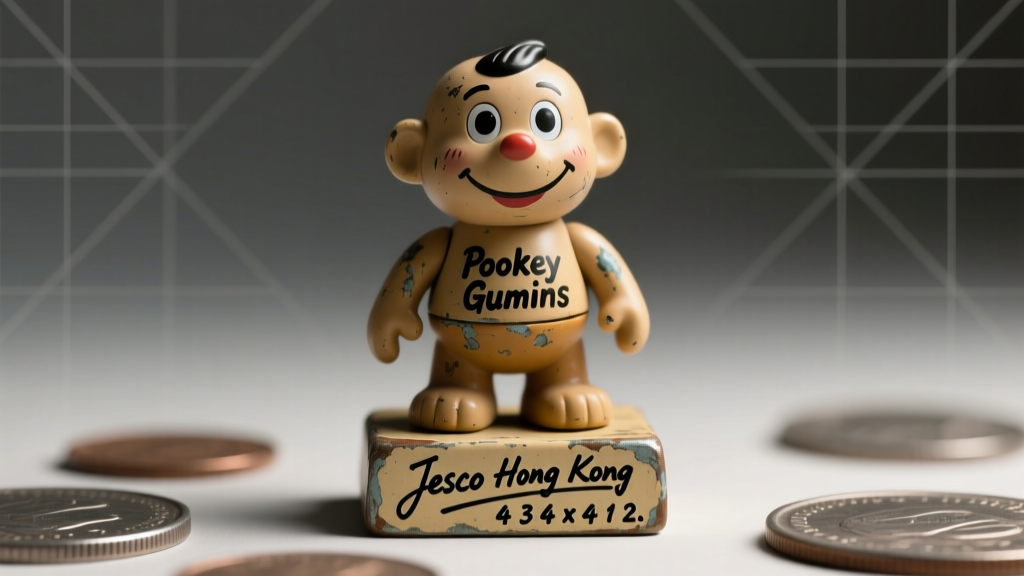
Toy Pokey Gumby Signed by Gloria & Art Clokey and Jesco: A Hong Kong–Made Collectible Artifact (4¾ × 4½ in)