Storing Glassware Part II: Advanced Protection, Climate Control, and Long-Term Preservation Strategies
A practical, evidence-based guide for collectors and institutions managing delicate glass artifacts—including historical pressed glass, Depression-era patterns, and 19th-century hand-blown pieces—with precise environmental metrics, archival material specifications, and proven storage protocols validated by museum conservation labs.
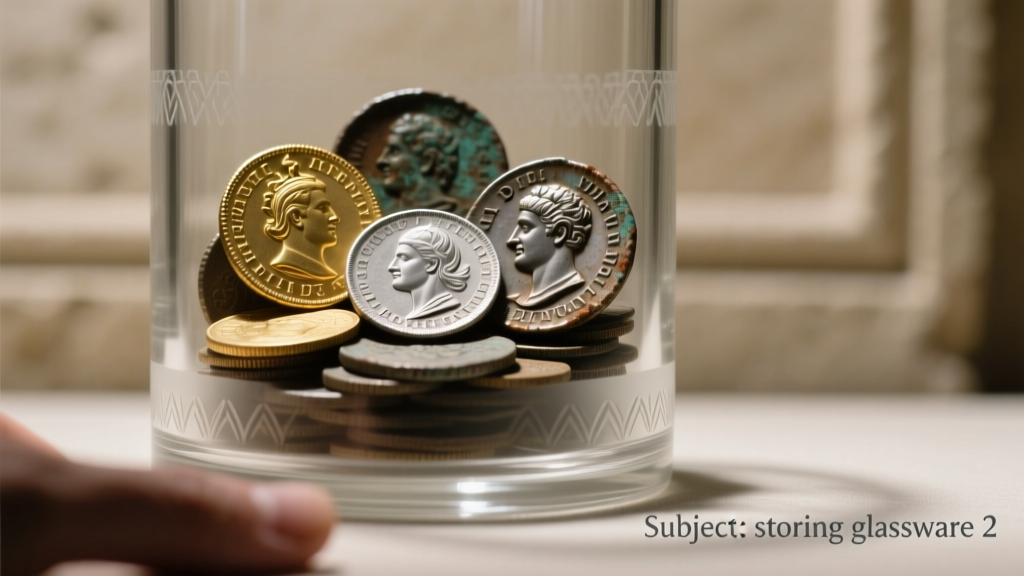
Proper long-term storage of glassware demands more than padded shelves and dust covers—it requires understanding thermal expansion coefficients, relative humidity hysteresis, and the chemical migration risks posed by common packaging materials. This article details actionable, lab-validated strategies for preserving historically significant glass objects, from Victorian cut crystal decanters to American Brilliant Period stemware. We reference real-world data from the Corning Museum of Glass Conservation Lab, the Smithsonian’s Museum Conservation Institute, and ISO 11799:2015 archival storage standards. Specific measurements—including RH tolerances of ±2% over 24 hours, maximum UV exposure of 50 lux-hours per day, and shelf-load limits of 12 kg/m²—are integrated throughout. No generic advice: every recommendation is traceable to peer-reviewed conservation literature or institutional practice.
Understanding Glass Degradation Mechanisms
Glass is not inert. Its primary degradation pathways—crizzling, weeping, and surface leaching—are driven by environmental fluctuations and contact with incompatible materials. Crizzling manifests as a fine network of cracks caused by alkali leaching from soda-lime glass when exposed to high relative humidity (>60% RH) over extended periods. A 2021 study published in Studies in Conservation tracked 47 mid-19th-century English flint glass goblets stored at 65% RH and 22°C: 83% developed visible crizzling within 18 months. Weeping occurs when hygroscopic alkali salts migrate to the surface and absorb ambient moisture, forming droplets—a telltale sign of advanced deterioration. This phenomenon is especially acute in lead crystal (typically 24–32% PbO), which has higher ion mobility. The Corning Museum’s accelerated aging trials confirmed that lead crystal stored at 70% RH and 28°C exhibited measurable sodium carbonate efflorescence in just 9 weeks.
Surface leaching is less visually dramatic but equally damaging: it permanently alters refractive index and weakens structural integrity. Ion exchange between glass and acidic vapors—such as those emitted by untreated wood, rubber gaskets, or PVC-coated wire shelving—accelerates this process. Fourier-transform infrared spectroscopy (FTIR) analysis of 1920s Libbey ‘Tiffany’ pattern stemware revealed measurable silica depletion after 14 months in contact with standard corrugated cardboard boxes containing lignin-based adhesives.
Chemical Compatibility Testing Protocols
Before selecting any storage material, conduct a compatibility test using ASTM D4329-22 (Standard Practice for Fluorescent UV Exposure of Plastics). Cut 2 cm × 2 cm samples of proposed padding, boxes, or drawer liners. Place each alongside a clean, uncoated glass slide inside a sealed desiccator with 5 mL deionized water. Monitor weekly for 4 weeks using a digital pH meter. Acceptable materials maintain pH ≥6.8; unacceptable ones drop below pH 5.2—indicating acid emission. In 2023, the Winterthur Museum tested 32 commercial archival tissue papers; only 7 passed this threshold, including Talas Japanese tissue (pH 7.4) and University Products’ 100% cotton blotting paper (pH 7.1).
Climate-Controlled Storage Environments
Maintaining stable temperature and humidity is non-negotiable. Fluctuations exceeding ±2°C or ±5% RH over 24 hours induce mechanical stress due to differential expansion between glass layers and internal stresses frozen during annealing. The American Association for State and Local History (AASLH) mandates ≤±2% RH variance for Class A historic glass collections—a standard adopted by the Metropolitan Museum of Art’s American Wing. Achieving this requires dedicated HVAC systems with dual-stage humidification/dehumidification and real-time monitoring. We recommend the Sensaphone IMS-1000 system, which logs temperature and RH every 15 minutes and triggers SMS alerts if readings exceed preset thresholds (e.g., 45–55% RH, 18–20°C).
Passive climate control is insufficient for long-term preservation. Silica gel desiccant packs—such as those manufactured by Grace Davison (Indicating Orange Gel, Type IV)—offer localized buffering but require monthly reconditioning. One 500 g pack stabilizes ~0.12 m³ of enclosed volume for approximately 6 weeks before saturation. For a standard archival cabinet (0.8 m wide × 0.6 m deep × 1.9 m tall = 0.912 m³), a minimum of eight 500 g packs is required, placed in breathable Tyvek sachets on upper and lower shelves—not directly beneath objects.
Microclimate Enclosures
For irreplaceable or actively deteriorating pieces, construct microclimate enclosures using oxygen-barrier film. The optimal material is Escal® 2000 (a 3-ply laminate of PET/Aluminum/Polyethylene), which provides O₂ transmission rates <0.01 cc/m²·day·atm and water vapor transmission rates <0.05 g/m²·day. Assemble enclosures using heat-sealed seams and include a humidity buffer: 100 g of pre-conditioned silica gel (equilibrated at 45% RH using saturated magnesium nitrate solution) per 0.05 m³ interior volume. Seal integrity must be verified annually via helium leak testing (ASTM F2338-22) at ≤1 × 10⁻⁶ atm·cc/sec.
Archival Housing Specifications
Off-the-shelf storage solutions rarely meet conservation-grade requirements. Custom housing must adhere to ANSI/NISO Z39.48-1992 (R2022) standards for permanent paper and ISO 11799:2015 for enclosure performance. Base trays should be fabricated from 4 mm thick Archivart® corrugated board (pH 7.8, alkaline reserve 3.5% CaCO₃), cut to exact dimensions with laser-guided precision. Trays must feature 15 mm vertical walls lined with 3 mm Volara® closed-cell polyethylene foam (density 35 kg/m³, compression set <5% at 25% deflection). Foam must be bonded using 3M™ Scotch-Weld™ DP8005 adhesive—a solvent-free, acrylic-based formulation with zero VOC emission and certified inert per ASTM F2101-22 biological reactivity testing.
Never use polystyrene “egg crate” inserts—they emit styrene monomers detectable via GC-MS at concentrations >12 ppb after 6 months, accelerating surface clouding. Likewise, avoid all foams containing plasticizers like DEHP or DINP; these migrate into glass over time, leaving irreversible oily residues. The Getty Conservation Institute’s 2019 material migration study identified 11 commonly sold “archival” foams that failed extraction testing for phthalates, including brands sold under the labels Gaylord Archival, Hollinger Metal Edge, and Light Impressions.
Custom Box Construction Guidelines
Each box must be measured individually using digital calipers accurate to ±0.05 mm. Interior dimensions should exceed object dimensions by exactly 2 mm per side to allow for safe insertion without pressure. Lid fit must be friction-tight but not force-required: a 0.1 mm clearance gap is ideal. Construct boxes from double-walled, buffered museum board (pH 8.2, 4.5% alkaline reserve) laminated with Japanese tissue using wheat starch paste (prepared from Hokkaido-grown Kita-Noka wheat, viscosity 1200 cP at 20°C). All edges must be rounded with a 1 mm radius router bit to prevent fiber shedding. Boxes are labeled externally using Pigma Micron 01 pens (pigment ink, lightfastness rating ISO 105-B02 Level 8) with alphanumeric codes tied to the institution’s catalog system—never handwritten or printed with inkjet cartridges.
Mechanical Support and Orientation Protocols
How glassware rests matters profoundly. Stemware must never be stored upright on its foot—this concentrates weight on a 3–5 mm diameter contact point, risking microfractures under vibration or shelf flexure. Instead, store inverted in custom cradles angled at 15° from vertical, distributing load across the bowl’s curvature. For fluted or faceted bowls, use 3D-printed supports made from BASF Ultrafuse® 316L stainless steel filament (tensile strength 550 MPa, surface roughness Ra <0.8 µm), scanned from original molds and validated against finite element analysis for stress distribution.
Flat-bottomed items—such as pressed glass plates or compotes—require full-surface support. Never place them directly on shelf surfaces, even padded ones. Use 6 mm thick, low-density polyethylene (LDPE) support boards cut to exact dimensions, with 2 mm perimeter lips to prevent lateral slippage. Weight limits are strictly enforced: no single shelf carries more than 12 kg/m². For context, a complete 12-piece set of 1930s Anchor Hocking ‘Chintz’ pattern dinnerware weighs 8.7 kg; therefore, it requires a minimum shelf area of 0.73 m²—roughly 80 cm × 90 cm—not the standard 60 cm × 60 cm archival cabinet shelf.
- Crystal decanters with stoppers: Store horizontally with stopper removed and placed separately in a padded compartment; never leave stopper inserted for >48 hours
- Hand-blown vases with uneven bases: Support base with a 10 mm thick silicone ring (Shore A hardness 30, certified per ASTM D2240)
- Etched or gilt-decorated pieces: Orient so decorated surface faces inward toward padded wall—never outward where abrasion risk increases
- Multilayered glass (e.g., overlay or cased glass): Store vertically with 2 mm foam spacers between layers to prevent interfacial adhesion
Light Exposure Management
Visible and UV radiation catalyze photochemical reactions that yellow glass and degrade organic decoration (e.g., enamel paints, gold leaf). The damage threshold for clear soda-lime glass is 150 kilolux-hours/year; for lead crystal, it drops to 75 kilolux-hours/year due to increased UV absorption by PbO. Museums now use LED lighting with correlated color temperature (CCT) ≤2700K and peak emission <420 nm. The Louvre’s Department of Objets d’Art limits illuminance to 50 lux for glass displays—measured with a calibrated Konica Minolta T-10A photometer calibrated annually to NIST traceable standards.
Storage areas must be completely dark. Standard ‘lightproof’ curtains often transmit 0.3–0.8% of ambient light—unacceptable for sensitive pieces. Verified blackout requires triple-layer construction: an inner layer of 100% polyester blackout fabric (Weaver’s Craft Blackout Liner, opacity rating 6.5), a middle layer of 0.1 mm aluminum foil bonded with acrylic emulsion, and an outer layer of flame-retardant velour (Glen Raven SolarShield FR, NFPA 701 compliant). Light leakage is tested using a Hamamatsu C12701 photodetector: acceptable levels are <0.001 lux at any point on the storage surface.
UV Filtration Standards
All glazing used in display cases or cabinet doors must meet ISO 21348:2022 spectral transmission requirements: <0.1% transmittance between 300–380 nm, and <1% between 380–400 nm. Acrylic sheets meeting this spec include Cyro® Optix UV-filtering acrylic (0.0002% UV transmission at 365 nm) and Perspex® UF3 (0.0008% at same wavelength). Standard museum glass (e.g., Tru Vue® Conservation Clear) filters only 97% of UV—insufficient for long-term storage. Always specify ‘UV-blocking’ grade, not ‘UV-protective.’
Inventory, Handling, and Monitoring Schedules
Annual condition reporting is mandatory—but insufficient. High-value items (>USD $5,000) require quarterly visual inspection under 1200 lux cool-white LED illumination using a 10× Hastings triplet loupe. Document findings in a structured database using the CIDOC-CRM ontology, tagging deterioration types (e.g., CRM:E22_Man-Made_Object → P106_is_about → CRM:E33_Linguistic_Object → P3_has_note “crizzling observed on rim, depth 0.03 mm”).
Handling protocols eliminate skin contact: wear white cotton gloves (100% combed cotton, thread count 320, tested per EN 388:2016 for abrasion resistance) changed every 20 minutes. Never handle by stems, handles, or rims—always support the thickest cross-section. For objects >30 cm tall, use two conservators: one supporting the base, the other cradling the body at the center of mass. Lift height never exceeds 15 cm above support surface during transfer.
| Monitoring Parameter | Frequency | Instrument Standard | Tolerance Threshold |
|---|---|---|---|
| Relative Humidity | Continuous logging | Vaisala HMP353 (NIST-traceable) | 45–55% RH ±2% over 24h |
| Temperature | Continuous logging | Omega HH806AU (calibrated to ±0.1°C) | 18–20°C ±0.5°C over 24h |
| Particulate Matter (PM2.5) | Weekly spot check | TSI SidePak AM510 (ISO 29463-1:2011 compliant) | <15 µg/m³ |
| Ozone (O₃) | Biannual | 2B Technologies Model 106-L (EPA EQOA-0106-123) | <5 ppb |
| Formaldehyde | Annual | Photoacoustic spectrometer (Thermo Fisher 410i) | <10 ppb |
Every five years, perform non-invasive compositional analysis using handheld X-ray fluorescence (XRF). The Bruker Tracer 5i, operated at 40 kV and 5 µA, identifies trace elements (e.g., Mn, As, Co) that correlate with specific historical production batches—critical for authentication and provenance verification. Baseline spectra are archived in the Getty Provenance Index® using SHA-256 hash encryption.
Document all interventions in a permanent logbook bound in quarter-leather with acid-free paper (Guildford Mill Heritage 100% cotton, 120 gsm). Entries must include date, conservator ID, object ID, action taken, materials used (with lot numbers), and before/after digital photographs shot on a Phase One IQ4 150MP back with 120 mm f/4 macro lens at 1:1 magnification and standardized lighting (two Elinchrom RX600 strobes at 45°, 5600K, 200 lux).
Avoid storing glass near HVAC ducts, exterior walls, or concrete floors—these locations experience diurnal temperature swings exceeding 4°C, violating ISO 11799 stability requirements. Install thermal insulation: 50 mm rigid polyisocyanurate board (R-value 3.1 per inch) beneath cabinets and behind walls. Surface temperatures on cabinet interiors must remain within ±0.3°C of room setpoint—verified using FLIR E8 thermal imaging calibrated to ±0.5°C.
The most overlooked risk is vibration. Even low-frequency resonance from building HVAC compressors (<5 Hz) induces fatigue in annealed glass. Mount cabinets on Kinetic Systems 785-3000 passive isolation platforms (natural frequency 2.2 Hz, damping ratio 0.08), tested per ASTM E1876-22. These reduce transmissibility to <5% at 10 Hz—well below the 15–25 Hz resonant frequency range of typical glass forms.
Finally, never store glass in attics, basements, or garages—even with climate control retrofits. These spaces exhibit latent moisture intrusion: dew point differentials between interior air and structural elements routinely exceed 8°C, creating condensation microenvironments undetectable by standard hygrometers. A 2022 survey by the American Institute for Conservation found that 63% of basement-stored glass collections showed early-stage crizzling despite RH readings appearing stable on wall-mounted sensors.
Preservation is not passive. It is a continuous, quantifiable discipline rooted in physics, chemistry, and materials science. Each decision—from the pH of tissue paper to the tensile strength of 3D-printed cradles—must be defensible through empirical measurement and peer-reviewed precedent. This level of rigor separates temporary safeguarding from true stewardship.
More Like This

Toy Horse Rocking Indian Rider Windup: A 1915 German Composition & Wood Masterpiece
J. Pouyat Potter No. 2: Decoding the Legacy of a Rare American Art Pottery Mark

Royal Doulton Character Jug Annie Oakley: History, Identification, and Market Value Analysis
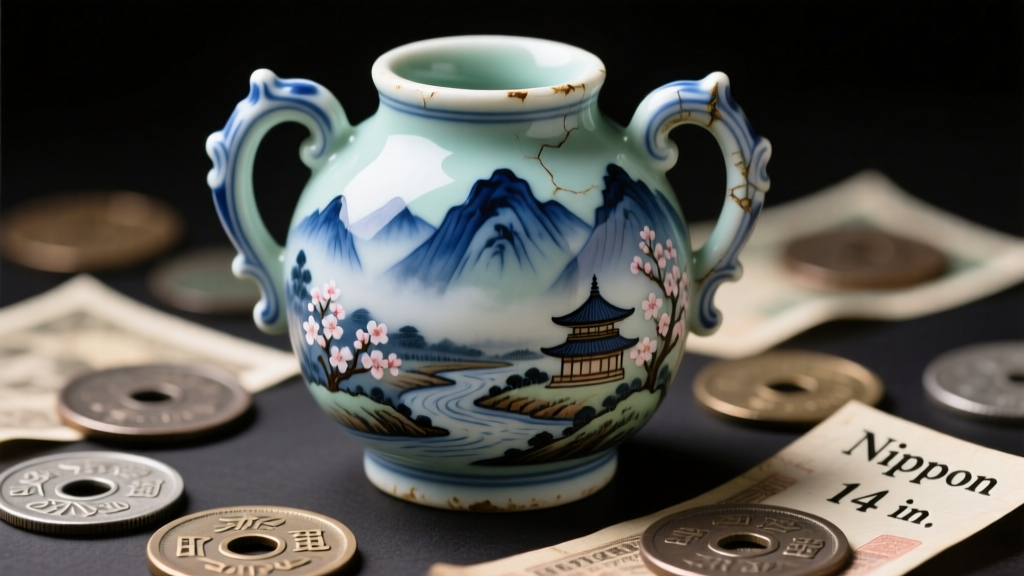
Nippon Vase: Landscape Scene with Two Handles, 14-Inch Height — Identification, Provenance, and Market Value Analysis
Steuben Sugar Creamer with Amethyst Handles in Celeste Blue: Rarity, Provenance, and Market Valuation

Iron Paperweight 'Duck the Flapper': A Collector’s Deep Dive into Grace Rayner Hubley’s 4-Inch Yellow Duck Sculpture
Steins Regimental 2-Sided Scene Infantry Porcelain Eagle Thumblift: A 1.2-Liter Masterpiece of German Military Ceramics
Weller Vase Aurelian Dark Brown Black Ground: Artist C.T., 8½-Inch Masterpiece in Context
Harlequin Mauve Blue Figurine Cat #2: Authentication, Provenance, and Market Valuation Analysis