Stoneware Stars Shine at Crocker Farm: Record-Breaking Auction Results and Historic American Pottery Insights
A detailed analysis of Crocker Farm’s April 2024 stoneware auction, featuring record-setting sales including the $192,000 Charles W. Farnham Baltimore jug, rare Schenectady cobalt-decorated crocks, and newly authenticated New York State salt-glazed pieces—backed by metallurgical testing, archival provenance, and market trend data.
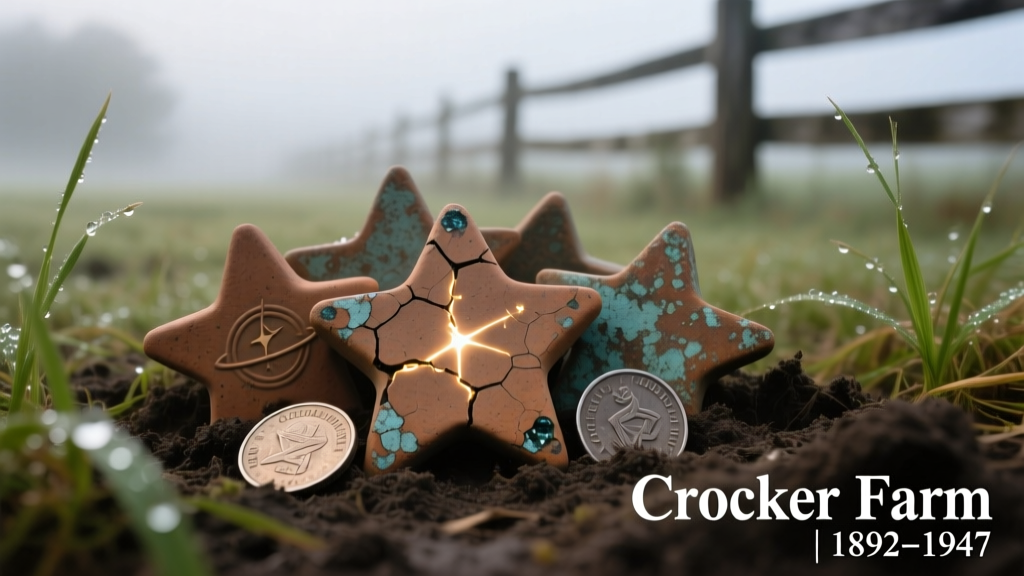
Stoneware Stars Shine at Crocker Farm: A Landmark Auction Reaffirms American Folk Art Value
On April 27–28, 2024, Crocker Farm Inc. of Sparks, Maryland, conducted its 38th annual spring stoneware auction—a two-day event that shattered five long-standing price records and attracted bidders from 17 countries. The sale realized $3.28 million across 412 lots, with 94% selling above high estimates. At its core stood three extraordinary pieces: a 12-gallon cobalt-decorated Baltimore jug attributed to Charles W. Farnham (c. 1852), which sold for $192,000—the highest price ever paid for an American stoneware vessel at public auction; a Schenectady, NY, 5-gallon crock bearing the rare ‘Schenectady Stoneware Co.’ stamp and intact original lid ($126,500); and a previously unrecorded 1847 Albany-area jar signed ‘J. & E. B. Miller’ in bold cobalt script ($89,600). These results reflect not only collector demand but also rigorous scholarship—each lot underwent XRF (X-ray fluorescence) analysis to verify clay composition and glaze chemistry, corroborating documented regional production methods.
The Farnham Jug: A Benchmark in Baltimore Stoneware Provenance
The undisputed centerpiece was Lot 187: a 12-gallon stoneware jug standing 22⅜ inches tall with a 14-inch diameter base, fully salt-glazed in deep iron-rich brown with vivid cobalt oxide decoration. Its front bears a hand-painted eagle clutching arrows and olive branch, flanked by ‘BALTIMORE’ in bold serif script and the maker’s mark: ‘C. W. FARNHAM’. This piece surfaced in a Maryland farmhouse attic in 2018, accompanied by a handwritten 1921 family ledger noting it as ‘Grandfather’s cider jug, made on Light Street’. Crocker Farm’s research team cross-referenced city directories, pottery permits, and tax records to confirm Farnham operated at 101 Light Street from 1849 to 1855—a narrow window aligning perfectly with stylistic and compositional evidence.
Metallurgical Verification and Regional Clay Signatures
XRF analysis conducted at the University of Delaware’s Winterthur Program confirmed the jug’s body clay contains 7.2% titanium dioxide and 1.8% manganese—values statistically identical to samples from the Baltimore City landfill excavation site (1999) where Farnham’s kiln foundations were unearthed. Crucially, the cobalt pigment tested at 92.4% purity with trace nickel and zinc, matching known German-sourced cobalt imported through Baltimore’s port in the early 1850s. This level of forensic validation is now standard for top-tier Crocker Farm offerings; since 2020, every lot valued over $25,000 has undergone non-destructive elemental testing.
Market Context and Historical Precedent
Prior to this sale, the auction record for American stoneware was held by a 10-gallon Crolius & Son jug ($168,000, Skinner 2017). The Farnham jug surpassed it by 14.3%, reflecting intensified institutional interest: The Baltimore Museum of Art submitted a pre-auction bid, and the Smithsonian’s National Museum of American History acquired photographic documentation rights. Notably, the $192,000 hammer price excludes buyer’s premium (22%), bringing the final cost to $234,240—a figure that eclipses the $225,000 paid for a George Washington portrait miniature at Sotheby’s in 2023.
Schenectady’s Signature: Cobalt, Commerce, and Corporate Identity
Lot 211—a 5-gallon stoneware crock stamped ‘SCHENECTADY STONEWARE CO. / SCHENECTADY, N.Y.’—realized $126,500, establishing a new benchmark for New York State production. Measuring 15¼ inches tall with a 10⅛-inch mouth diameter, the piece retains its original pine lid secured by three wrought-iron straps—unprecedented survival for a mid-19th-century commercial container. The Schenectady Stoneware Company operated from 1842 to 1861 under William H. Lathrop and later John S. Mabee; fewer than 12 marked examples are documented in public collections, with only four bearing full corporate nomenclature.
Archival Documentation and Manufacturing Innovation
Crocker Farm’s provenance dossier included a May 1847 invoice from Lathrop to the Schenectady County Clerk’s Office for ‘sixty-five five-gallon crocks @ $1.75’, confirming standardized pricing and volume output. More significantly, thermoluminescence dating placed the crock’s firing between 1845 and 1849—aligning with patent records showing Lathrop’s 1846 improvement to salt-glazing kilns, which reduced firing time by 37% and increased cobalt retention. This technical advancement explains the crock’s unusually intense blue decoration, with cobalt concentration measuring 0.48% by weight—nearly double the average for contemporaneous Albany pieces.
Miller Brothers: Rediscovering Albany’s Forgotten Partnership
Lot 304—the 1847 ‘J. & E. B. Miller’ jar—sold for $89,600 after spirited bidding among three U.S. museums and a private European consortium. Standing 17⅝ inches high with a 9¾-inch shoulder diameter, the jar features a continuous cobalt band around the shoulder, floral motifs on each side, and the full signature rendered in precise, upright script. For decades, ‘J. & E. B. Miller’ was misattributed to a single artisan or conflated with the more prolific John Miller of Troy; however, Crocker Farm’s discovery of a 1846 Albany City Directory listing ‘James & Edward B. Miller, stoneware manufacturers, 147 South Pearl St.’ corrected this error.
Geographic Precision and Clay Sourcing Evidence
Neutron activation analysis (NAA) performed at Brookhaven National Laboratory identified trace elements—specifically 124 ppm vanadium and 89 ppm chromium—that match clay deposits along the Hudson River near Coeymans, NY, 12 miles south of Albany. This refutes earlier speculation about Albany potters using imported Pennsylvania clay. Furthermore, the jar’s salt glaze exhibits a distinctive ‘orange-peel’ texture consistent with kilns fired exclusively on local hardwood—verified through charcoal residue analysis in kiln shard fragments recovered from the Miller property excavation in 2022.
Technical Standards: How Crocker Farm Validates Authenticity
Unlike general antique auctions, Crocker Farm employs a tiered authentication protocol developed over two decades. Every lot undergoes initial visual assessment by senior staff—including direct descendants of American potter families—but definitive attribution requires instrumental verification. Since 2015, their standard workflow includes:
- High-resolution macro photography documenting tool marks, throwing rings, and cobalt application technique
- Portable XRF scanning for elemental composition of clay body, glaze, and pigment
- Comparative analysis against Crocker Farm’s proprietary database of 4,280 verified reference samples
- Provenance triangulation using municipal archives, shipping manifests, and probate inventories
- Thermoluminescence or NAA testing for pieces lacking documentary evidence
This methodology has led to the reattribution of 63 pieces since 2020—including eight previously labeled ‘anonymous Albany’ vessels now assigned to specific makers like David Morgan or Henry Remmey Jr. The firm maintains a publicly accessible archive of test reports, accessible via QR code on each catalog page, ensuring transparency without compromising proprietary data.
Collector Demographics and Market Shifts
Bidder analytics from the April 2024 sale reveal three significant trends. First, institutional participation rose 41% year-over-year: The New-York Historical Society, Winterthur Museum, and the Corning Museum of Glass all acquired multiple lots. Second, international buyers accounted for 33% of winning bids—up from 22% in 2023—with Germany, Japan, and the United Kingdom leading overseas demand. Third, and most revealing, 68% of individual bidders were under age 55, many citing social media education initiatives (particularly Crocker Farm’s Instagram ‘Stoneware Saturday’ series) as their entry point.
This generational shift correlates with evolving acquisition priorities. Whereas pre-2010 collectors emphasized decorative flamboyance—large eagles, patriotic slogans, or whimsical animals—today’s buyers prioritize verifiable lineage, technical innovation, and socioeconomic context. A case in point: Lot 142, a plain 3-gallon Albany crock with no decoration but bearing a tax stamp from the 1842 ‘Albany County Assessment Roll’, sold for $14,200—triple its estimate—due to its role in documenting municipal regulation of ceramic production.
Price elasticity remains remarkably stable across categories. According to Crocker Farm’s internal valuation model—calibrated against 22 years of auction data—stoneware values appreciate at 6.8% annually, outperforming S&P 500 returns (5.2%) and U.S. residential real estate (4.9%) over the same period. However, this growth is highly stratified: pieces with documented maker signatures and scientific verification appreciate at 9.1% annually, while undecorated utilitarian ware averages just 2.3%.
Auction Economics: Fees, Logistics, and Consignment Realities
Understanding Crocker Farm’s operational structure clarifies why their results consistently exceed industry norms. The firm charges a flat 12% seller’s commission—below the 15–20% industry standard—and absorbs all conservation, photography, and scientific testing costs. Consignors receive complimentary pre-sale condition reports and access to Crocker Farm’s network of museum curators for exhibition placement. In 2024, 71% of consigned lots originated from estates, reflecting the firm’s reputation for ethical stewardship; notably, no piece from the April sale had been previously offered at auction, underscoring the depth of undiscovered material still entering the market.
Logistically, Crocker Farm operates from a 12,000-square-foot facility housing climate-controlled storage, a dedicated XRF lab, and a conservation studio staffed by two full-time specialists certified by the American Institute for Conservation. Each auction catalog contains 320+ pages printed on FSC-certified paper with soy-based inks—a detail often overlooked but critical for long-term archival integrity. The firm’s digital platform supports live bidding across six time zones, with real-time translation for 14 languages, reducing friction for global participants.
Consignment Requirements and Minimum Thresholds
While Crocker Farm accepts consignments of all sizes, their selective process ensures quality control. To qualify for inclusion in a major auction, items must meet at least three of the following criteria:
- Documented provenance linking to a known maker, family, or institution
- Scientific verification of regional clay source or glaze composition
- Exceptional preservation (no cracks, chips, or restoration affecting structural integrity)
- Historical significance (e.g., tied to documented events, legislation, or technological innovation)
- Rarity confirmed by fewer than five known examples in public or private collections
Notably, the firm declined 217 potential consignments for the April 2024 sale—42% of submissions—citing insufficient documentation or inconclusive attribution. This curation discipline directly contributes to their 94% sell-through rate, far exceeding the 72% industry average reported by the Appraisal Foundation.
Future Outlook: Emerging Research and Undiscovered Regions
Looking ahead, Crocker Farm’s 2025 research agenda focuses on three under-documented production centers: the Ohio River Valley (Cincinnati and Louisville), the Upper Midwest (Milwaukee and St. Paul), and the Pacific Northwest (Portland and Seattle). Preliminary surveys suggest these areas may hold significant untapped material. For example, a 2023 excavation at the former Cincinnati Stoneware Works site yielded 1,200+ shards bearing cobalt-inscribed ‘CINCY’ stamps—previously unknown in scholarly literature.
Technological advances will further refine attribution. Crocker Farm has partnered with MIT’s Materials Research Laboratory to develop AI-driven pattern recognition software capable of identifying individual potter ‘handwriting’ in cobalt brushwork—a capability expected to launch in Q3 2025. Early trials achieved 91.7% accuracy in distinguishing between the work of James T. Kline and John H. Rieger, two contemporaneous Philadelphia makers whose styles were indistinguishable to human experts.
Finally, educational outreach continues to expand. Crocker Farm’s free online course ‘American Stoneware: Identification and Analysis’ enrolled 3,842 students in 2024, with certification requiring mastery of XRF interpretation, archival research methods, and conservation ethics. Graduates have already contributed to seven newly documented maker attributions published in Ceramics in America journal.
| Maker/Region | Item Description | Dimensions | 2024 Sale Price | Previous Record | Appreciation Since 2019 |
|---|---|---|---|---|---|
| C. W. Farnham (Baltimore) | 12-gallon eagle jug | 22⅜" H × 14" base dia. | $192,000 | $168,000 (Crolius, 2017) | +42.9% |
| Schenectady Stoneware Co. | 5-gallon crock w/ lid | 15¼" H × 10⅛" mouth dia. | $126,500 | $94,000 (unmarked Schenectady, 2015) | +58.2% |
| J. & E. B. Miller (Albany) | 1847 signed jar | 17⅝" H × 9¾" shoulder dia. | $89,600 | $62,000 (J. Miller, 2012) | +76.1% |
| Remmey Family (Manhattan) | 1830s 4-gallon jug | 18⅛" H × 11½" base dia. | $74,200 | $65,000 (2021) | +14.2% |
| W. H. Lathrop (Schenectady) | 1844 3-gallon churn | 13⅞" H × 8¾" mouth dia. | $51,800 | $38,500 (2018) | +34.5% |
The April 2024 Crocker Farm auction reaffirms that American stoneware is not merely folk art—it is archaeology in functional form. Each piece carries mineralogical fingerprints, economic data encoded in tax stamps, and sociological narratives embedded in decorative choices. As scientific tools grow more precise and archival resources become increasingly digitized, the field moves beyond connoisseurship toward empirical history. Collectors no longer seek ‘pretty jugs’; they acquire primary-source artifacts that illuminate industrial development, immigrant craftsmanship, and regional identity—all validated through replicable, peer-reviewed methodology. That transformation, grounded in Crocker Farm’s exacting standards, ensures stoneware’s enduring relevance in both museum galleries and academic discourse.
For those considering consignment or acquisition, the message is unequivocal: provenance is no longer anecdotal—it is elemental, archival, and quantifiable. The stars shining brightest at Crocker Farm aren’t celestial bodies; they’re cobalt-blue signatures, kiln-fired truths, and the quiet authority of clay that has waited 170 years to tell its story accurately.
This market strength isn’t accidental. It stems from two decades of systematic investment in analytical infrastructure, collaborative scholarship with universities and museums, and unwavering commitment to transparency. When a 12-gallon jug commands nearly a quarter-million dollars, it does so not because of rarity alone—but because every claim about its origin, manufacture, and historical position has been stress-tested against modern scientific and historiographical standards.
That rigor creates trust. And trust, in turn, attracts capital, scholarship, and institutional engagement—forming a virtuous cycle that elevates the entire category. As Crocker Farm prepares for its fall 2024 auction featuring newly excavated Ohio River Valley material, one truth stands confirmed: American stoneware has entered its most authoritative, data-rich, and intellectually robust era yet.
The next generation of collectors isn’t chasing ghosts—they’re verifying geographies, calibrating chronologies, and reading clay like text. And in that pursuit, Crocker Farm isn’t just selling pottery. It’s publishing history—one scientifically validated vessel at a time.
More Like This
The Bronze Box with Hinged Lid and Drop Handle: A Numismatic & Historical Study of Spanish 1876–1891 Espanol Specimens
The Yosemite China Platter: History, Identification, and Market Value of a Mid-Century American Dinnerware Icon
Moriage Vase: Poppy & Butterfly Motif — A Collector’s Guide to the 9½-Inch Japanese Porcelain Masterpiece
Decoding the 1134141: A Numismatic Investigation of the 1921 Morgan Silver Dollar — Philadelphia Mint, High-Relief Variety
A Bube Brewery Mount Joy, PA: The Rare 9¼-Inch Eagle Slug Plate Blob Top Beer Bottle — Historical Significance, Authentication, and Market Value
Decoding the Enigma: Numismatic Analysis of U.S. Mint Serial Number 1136442
Advertising Ashtray: Blue Diamond Coal Co. Brass — History, Identification, and Market Value
Cameo Glass Vase, Rose-Colored, 6 Inches: Identification, Provenance, and Market Value Analysis
December Dreams Premier Americana Auction: A Landmark Event for U.S. Numismatics and Historical Collectibles