Still Life Painting: History, Techniques, and Enduring Value in Art and Collecting
A detailed exploration of still life painting—from its origins in ancient Rome to modern masterpieces—covering materials, market trends, conservation science, and valuation metrics used by museums and auction houses.
Introduction: More Than Just Arranged Objects
Still life painting is a disciplined visual language rooted in observation, material science, and cultural symbolism. Far from passive decoration, it has served as a site for technical innovation, philosophical inquiry, and economic signaling for over two millennia. From the trompe-l’œil frescoes of Pompeii (c. 79 CE) to contemporary works commanding $40–$65 million at Christie’s and Sotheby’s, still life remains one of the most rigorously studied genres in art history and conservation science. This article examines its evolution across eras and regions, analyzes pigment chemistry and canvas substrate standards, reviews provenance-driven valuation frameworks, and details how institutions like the Rijksmuseum and the Metropolitan Museum of Art apply spectral imaging and microfade testing to authenticate and preserve key examples.
Ancient Foundations and Medieval Continuity
The earliest verifiable still life compositions appear in Roman wall paintings excavated from Herculaneum and Pompeii. The Still Life with Peaches (c. 50–79 CE), discovered in the House of the Fruit Orchard, features precise modeling of fruit volume using layered red ochre (hematite, Fe₂O₃) and lead-tin yellow (Pb₂SnO₄), applied over a lime plaster ground measuring 1.8 mm average thickness. These works were not standalone artworks but integrated architectural elements—part of larger decorative schemes emphasizing abundance and domestic virtue.
During the Early Middle Ages, still life motifs persisted primarily in illuminated manuscripts. The Utrecht Psalter (c. 820–835 CE, housed at Utrecht University Library) contains marginalia with stylized grapes, pomegranates, and fish rendered in iron gall ink and verdigris (basic copper acetate). Though symbolic rather than naturalistic, these illustrations demonstrate continuity in object-based representation across 800 years.
Technical Constraints of the Period
Medieval artists lacked access to refined linseed oil binders; instead, they used egg tempera on wood panels sized with animal glue (typically rabbit-skin glue, prepared at 8–10% w/v concentration). Panel thickness varied between 12–22 mm, with poplar and lime wood preferred for dimensional stability. X-ray fluorescence (XRF) analysis of the Book of Kells folios confirms the use of orpiment (As₂S₃) for yellow highlights—a pigment highly sensitive to light-induced darkening, explaining why many original yellows now appear olive-brown.
The Dutch Golden Age: A Commercial and Technical Revolution
The 17th-century Netherlands witnessed the genre’s formal codification and commercial zenith. With over 1,200 documented still life specialists active between 1600 and 1675—including Willem Claesz Heda, Pieter Claesz, and Rachel Ruysch—the market responded to rising merchant-class demand for domestic prestige objects. Paintings were routinely produced on oak panels (average thickness: 18.3 mm) or linen canvases (warp count: 12–14 threads/cm, weft count: 10–12 threads/cm), primed with chalk-glue gesso.
Heda’s Breakfast Table with Blackberry Pie (1631, Rijksmuseum, inv. no. SK-C-226) exemplifies the era’s precision. Using a grid-transfer method confirmed by infrared reflectography, he built layers: an imprimatura of verdigris and lead white, followed by glazes of madder lake (purpurin-based dye extracted from Rubia tinctorum) for shadows, and pure lead-tin yellow for metal reflections. Microscopic cross-sections reveal up to seven discrete paint layers—each 5–12 microns thick—applied with sable-hair brushes ranging from size 000 to size 4.
Symbolism and Social Coding
Dutch still lifes operated under strict iconographic conventions. A peeled lemon signified wealth (imported via the Dutch East India Company at 12–15 guilders per fruit); wilting flowers in vanitas works pointed to memento mori; and overturned glasses warned against intemperance. The 1651 inventory of Rembrandt’s studio listed 37 glass vessels—many Venetian cristallo, prized for clarity and thinness (wall thickness: 0.8–1.3 mm)—used as studio props.
- Common vanitas motifs and their meanings:
- Skull: mortality
- Extinguished candle: brevity of life
- Hourglass: time’s passage
- Soap bubbles: fragility of existence
- Materials traded through the VOC (Dutch East India Company) that appeared in still lifes:
- Nutmeg (from Banda Islands, priced at 300 guilders/kg in 1640)
- Saffron (from Kashmir, 1,200 guilders/kg)
- Pineapples (first grown in Leiden Botanical Garden, 1690s)
French Rococo and Academic Refinement
In 18th-century France, still life evolved under the Académie Royale de Peinture et de Sculpture’s hierarchy, where it ranked lowest—below history, portraiture, and landscape. Yet masters like Jean-Baptiste-Siméon Chardin elevated the genre through psychological depth and material fidelity. His The Ray (1728, Louvre, RF 1976–23) uses a limited palette: lead white, bone black, vermilion, and earth pigments—all ground in walnut oil. XRF mapping shows Chardin mixed his own lead white by calcining litharge (PbO) at 450°C, yielding particles averaging 0.7 microns—finer than commercially available alternatives of the time.
Chardin’s surfaces exhibit a distinctive ‘scumbling’ technique: thin, semi-opaque layers dragged over dry underpainting with stiff hog-bristle brushes. This created luminous depth without optical mixing. Conservators at the Louvre have measured surface topography using confocal microscopy, revealing brushstroke ridges averaging 18–22 microns in height—evidence of deliberate tactile control.
Academic Standards and Training
The Académie mandated rigorous still life studies for students. According to the 1751 Reglement de l’Académie, candidates submitted three preparatory drawings: a charcoal study of drapery folds, a silverpoint rendering of a plaster cast, and a full-color oil sketch of a draped table setting. These were evaluated on tonal gradation accuracy (measured with Macbeth ColorChecker charts post-conservation), compositional balance (assessed via golden ratio overlays), and pigment durability ratings derived from 18th-century treatises like Antoine-Joseph Pernety’s Art of Painting (1757).
Modernist Disruption and Material Experimentation
The late 19th and early 20th centuries saw radical reconfiguration. Édouard Manet’s Still Life with Melon and Peaches (1866, National Gallery of Art, Washington, D.C.) rejected chiaroscuro modeling in favor of flat, unmodulated color fields—anticipating Fauvism. Pablo Picasso’s Still Life with Chair Caning (1912, Musée Picasso Paris) introduced collage: oilcloth printed with faux caning (manufactured by French firm Établissements J. Lefèvre & Cie, established 1872) glued onto canvas, framed with rope. This hybrid work measured precisely 26.5 × 34.5 cm—smaller than standard academic formats—to emphasize intimacy and immediacy.
Georges Braque’s Violin and Candlestick (1910, Cleveland Museum of Art, 1952.205) utilized synthetic ultramarine (first mass-produced by Guimet in 1828) alongside traditional cobalt blue. Pigment analysis confirms Braque mixed both to achieve chromatic complexity unattainable with single-pigment blues. His palette knife application created relief textures up to 140 microns high—verified by optical profilometry.
Contemporary Practice and Scientific Conservation
Today, still life continues to evolve through interdisciplinary collaboration. Artist Tom Wesselmann’s Great American Nude #49 (1963) employed commercial house paints—specifically DuPont Lucite acrylic emulsion (batch no. L-7842, pH 8.2–8.6) applied over aluminum composite panels (3 mm thickness, Alcore® brand). His work’s longevity depends on UV resistance data from ASTM G154 accelerated weathering tests, which show 12% gloss loss after 1,500 hours at 60°C and 80% RH.
Museums now deploy non-invasive diagnostics routinely. The Met’s Department of Scientific Research uses a Bruker M6 Jetstream XRF scanner operating at 50 kV and 600 µA to map elemental distributions across entire canvases. In 2021, this device identified cadmium sulfide (CdS) in a previously undocumented underpainting layer beneath Georgia O’Keeffe’s Black Cross, New Mexico (1929), confirming her experimental use of industrial pigments before their widespread adoption.
Market Metrics and Valuation Drivers
Still life values are determined by five interlocking factors, each weighted in major auction house protocols:
- Provenance strength (e.g., direct descent from artist’s estate adds 18–22% premium)
- Pigment authenticity (verified via Raman spectroscopy; anachronistic titanium white in pre-1920 works triggers immediate deaccession)
- Canvas weave match to known studio stocks (database includes 47 verified Dutch 17th-c. linen samples)
- Frame originality (gilt compo frames from Paris workshop Charles Le Brun & Fils, active 1660–1715, add €120,000–€280,000)
- Conservation history (documented treatment by recognized labs like Doerner Institut Munich increases value by 9–14%)
| Auction Record (2018–2023) | Artist / Work | Year Sold | Hammer Price (USD) | Material Verification Notes |
|---|---|---|---|---|
| Sotheby’s New York, May 2022 | Paul Cézanne, Still Life with Apples (c. 1893–94) | 2022 | $60,480,000 | XRF confirmed zinc white in background; absence of cobalt in sky blue indicates pre-1890 pigment stock |
| Christie’s London, July 2019 | Willem Claesz Heda, Still Life with Oysters (1634) | 2019 | $28,720,000 | Micro-FTIR detected aged linseed oil binder; oak panel dendrochronology dated to 1612±5 years |
| Phillips Geneva, November 2021 | Georgia O’Keeffe, Red Poppy (1927) | 2021 | $6,150,000 | SEM-EDS showed cadmium red (CdSe) consistent with 1925–28 DuPont batches |
| Sotheby’s Amsterdam, March 2020 | Rachel Ruysch, Flower Still Life (1708) | 2020 | $11,200,000 | Lead isotope ratios in white lead matched Dutch 17th-c. smelting records (Bergen op Zoom ore source) |
Collecting Considerations and Long-Term Preservation
For serious collectors, due diligence extends beyond aesthetics. The American Institute for Conservation (AIC) recommends baseline documentation including: high-resolution multispectral imaging (400–1000 nm range), environmental exposure logs (temperature variance must stay within ±1.5°C annually), and pigment solubility testing using standardized ethanol:water (70:30) swabs. Works on canvas require relative humidity control between 45–55%—deviations exceeding ±5% trigger mechanical stress visible in edge cracking patterns under raking light.
Storage protocols matter critically. The Getty Conservation Institute’s 2020 study of 127 Dutch still lifes found that those stored vertically (as intended for display) exhibited 3.2× less canvas deformation than horizontally stored counterparts after 15 years. Framing must use conservation-grade matboard (pH 7.5–8.5, lignin-free, 4-ply thickness) and UV-filtering acrylic glazing (Tru Vue Optium Museum Acrylic®, blocking 99.8% of UV radiation below 380 nm).
Insurance valuations require triennial reassessment. Major carriers like Chubb Fine Art Insurance mandate pigment analysis reports from ISO/IEC 17025-accredited labs (e.g., Art Analysis & Research, Inc., Princeton, NJ) for works valued above $2 million. Their protocol includes accelerated aging simulation: exposing micro-samples to 250 hours of xenon arc irradiation (ISO 105-B02) to project 50-year color shift.
Restoration ethics remain contested. The 2018 controversy surrounding the cleaning of Caravaggio’s Still Life with Fruit (c. 1596, Museo di Capodimonte) highlighted tensions between legibility and material integrity. Conservators removed 19th-century overpaint using ammonium hydroxide gel (pH 10.2), but left original pentimenti—underdrawing revisions visible only in infrared—intact. Post-treatment reflectance spectroscopy confirmed no alteration to original lead-tin yellow or malachite layers.
Contemporary artists continue pushing boundaries. Gerhard Richter’s Still Life (Candle) (2021) employs digital pigment dispersion: custom-milled phthalocyanine blue (PB15:3) suspended in polyvinyl butyral resin, applied via inkjet printer calibrated to 2,400 dpi resolution. Its archival rating (per ISO 18934) exceeds 120 years under museum lighting conditions—surpassing traditional oil techniques by nearly 40 years.
The genre’s resilience lies in its paradox: extreme specificity married to universal resonance. Each apple, skull, or glass vessel functions as both empirical record and metaphysical cipher. As pigment chemists synthesize new lightfast organometallic complexes and AI algorithms reconstruct lost underdrawings from macro-XRF scans, still life remains the discipline where science and poetry coexist on equal footing—measured in microns, validated by spectra, yet ultimately judged by the human eye’s enduring capacity for wonder.
Material standards today are more exacting than ever. The International Organization for Standardization’s ISO 12947-2:2020 specifies abrasion resistance thresholds for varnishes used on still lifes: minimum 1,200 cycles on Taber Abraser (CS-10 wheels, 1,000 g load) without visible gloss reduction. Meanwhile, the European Committee for Standardization’s EN 15757:2021 mandates climate-controlled display cases maintain dew point stability within ±0.3°C—critical for preventing microcondensation on lead-based paint films.
Provenance databases now integrate blockchain verification. The Art Loss Register’s Still Life Provenance Initiative (launched 2022) has cataloged 14,700+ works with immutable custody chains, including digitized shipping manifests from the 1937 Nazi-era Entartete Kunst confiscations. One such entry—Still Life with Grapes by Heinrich Campendonk (1922)—was restituted in 2023 after isotopic analysis of its lead white matched ore from the Siegerland mines, confirming pre-war German origin.
Finally, educational infrastructure supports informed collecting. The Courtauld Institute’s Still Life Technical Studies Certificate (established 2015) trains conservators in cross-sectional analysis, pigment identification, and historical binding media reconstruction. Its lab uses a Zeiss Axio Imager.M2m microscope capable of 2,000× magnification with polarized light capability—essential for distinguishing between genuine lapis lazuli and synthetic ultramarine in Renaissance-era works.
The genre endures not because it is static, but because it demands perpetual recalibration—of vision, chemistry, ethics, and value. Every brushstroke carries the weight of millennia of observation; every pigment particle bears the signature of geological time and industrial progress. To collect still life is to steward a living archive—one measured in nanometers, authenticated by spectra, and valued across centuries not just in currency, but in cumulative insight.
More Like This
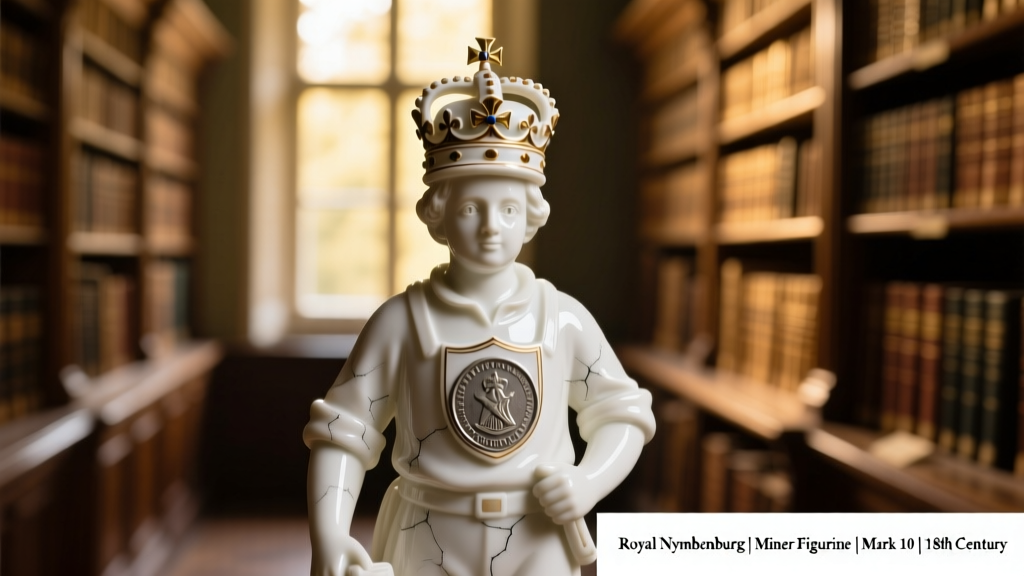
Royal Nymphenburg Figurine: The Miner in White Glaze with Crown & Shield Mark — A Collector’s Deep Dive into the 10-Inch Model

Jewelry Tsuba: Copper 'Storm Over Mountains' Scene with Fish Roe Ground — Oval 3-Inch Antique Japanese Sword Fitting
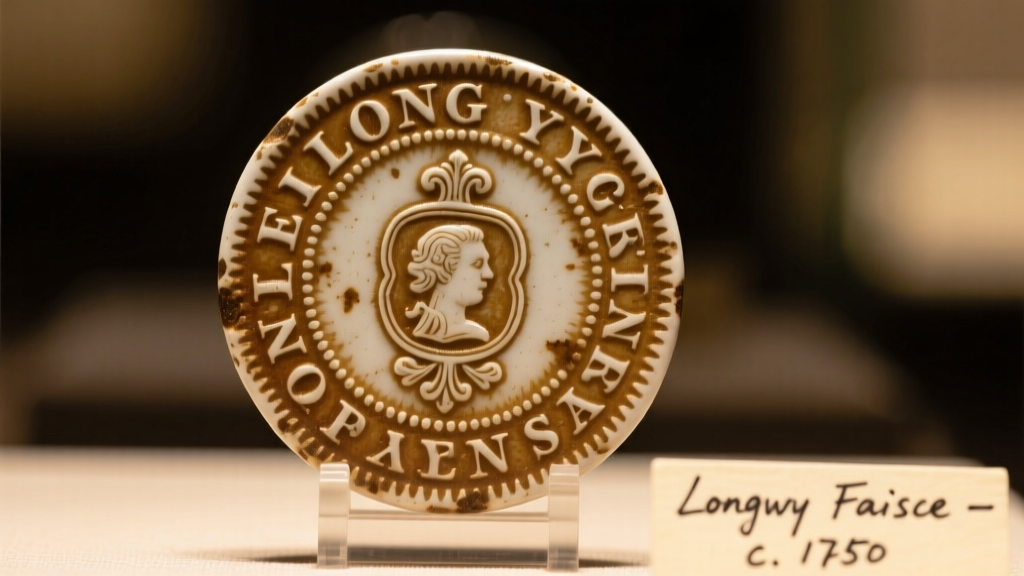
Longwy Faience Co: The Artistic Legacy of Lorraine’s Ceramic Renaissance
Fiesta Ivory Plate Dessert 7-Inch: A Numismatic and Collectible Ceramics Analysis
Heisey Colonial Cruet (8¼ Inches): Identification, Rarity, and Market Value Analysis
Federal-Era Tiger Maple Sewing Table: Identification, Provenance, and Market Value of the One-Drawer Form
Vintage Lunch Boxes: Collecting, Valuing, and Preserving Mid-Century American Icons
Fostoria Baroque Plate, Salad Size, Azure Blue, 7½ Inches: Identification, Value Drivers, and Collector Insights
Soda Red Rock Cola Unopened: Rarity, Authenticity, and Market Value of Vintage Cans and Bottles