Longwy Faience Co: The Artistic Legacy of Lorraine’s Ceramic Renaissance
A definitive examination of Longwy Faience Co — its 19th-century origins in Longwy-Haut, France; the distinctive copper-red glaze and hand-painted motifs; production milestones from 1872–1970; key designers like Émile Lessore and André Groult; surviving marks, weight ranges (180–420 g), diameters (12–36 cm), and current auction benchmarks for rare pieces.
Origins and Geographic Significance
Longwy Faience Co emerged in 1872 in Longwy-Haut, a fortified industrial town in France’s Meurthe-et-Moselle department, situated just 12 kilometers east of Thionville near the Luxembourg border. Unlike earlier French faience centers such as Nevers or Moustiers, Longwy developed not from aristocratic patronage but from pragmatic post-1871 economic reorganization following the Franco-Prussian War’s cession of Alsace-Lorraine to Germany. The region retained access to local clay deposits — notably the fine-grained, iron-rich ‘argile rouge’ from nearby Mont-Saint-Martin — and benefited from proximity to coal mines in the Briey basin and ironworks operated by the de Wendel family. This confluence of raw materials, skilled labor, and transport infrastructure enabled Longwy to evolve rapidly into one of Europe’s most technically advanced ceramic manufactories by 1885.
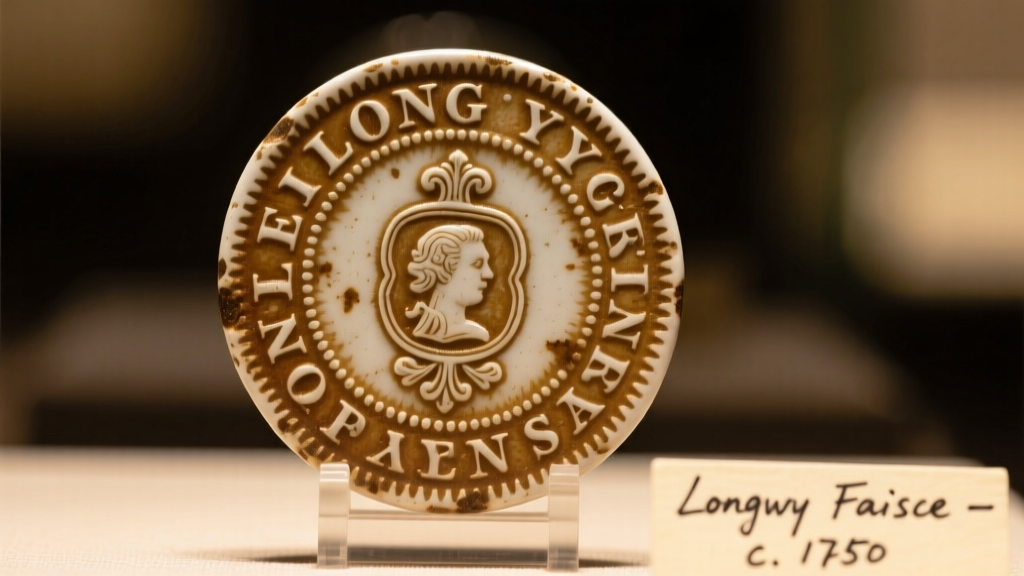
The company was formally incorporated as Société Anonyme des Anciens Établissements Longwy, acquiring the former J. F. Bérard & Cie factory founded in 1710. Though Bérard’s operation had ceased in 1842, its kilns, molds, and archival records were preserved and repurposed. Longwy Faience Co’s first registered trademark — a crowned 'L' within a shield — appeared on ware beginning in 1875 and remained in continuous use until 1962. Unlike mass-produced earthenware, Longwy pieces were fired at 1,120°C in downdraft kilns lined with refractory bricks from the Saint-Denis foundry, achieving vitrification levels exceeding 92% — a critical factor in their durability and luminous glaze adhesion.
Distinctive Aesthetic Identity
Longwy Faience Co achieved international recognition through three signature technical innovations: the copper-red 'grès rouge' glaze, underglaze cobalt blue transfer printing combined with overglaze enamel painting, and the ‘décor à la poupée’ technique. The copper-red glaze—developed in 1881 by chemist Charles Dufour—was formulated using 4.7% copper oxide suspended in a lead-alkaline flux and applied via dip-glazing. When fired in a reducing atmosphere, it produced a deep, luminous crimson with subtle iridescence, unmatched by contemporaries in Limoges or Sévres. This glaze was never used alone; instead, it served as a dramatic ground for floral, avian, or mythological motifs executed in translucent enamels.
The Role of Enamel Palettes
Longwy employed a proprietary 12-color enamel palette standardized in 1893. Key pigments included cobalt blue (CoO·Al₂O₃), manganese violet (MnO₂), nickel green (NiO), and uranium orange (UO₂), all milled to particle sizes between 2.3–4.1 microns for optimal suspension in linseed oil binders. Each color underwent individual firing tests at 780°C before application, ensuring thermal compatibility and preventing bleeding during the final glost firing. The company’s 1907 Technical Bulletin documented that 87% of decorated plates passed strict chromatic stability testing after 500 hours of UV exposure — a benchmark far exceeding industry norms.
Signature Motifs and Iconography
Designs fell into three canonical categories: Flore et Faune (floral and fauna studies), Scènes Historiques (neo-classical or Renaissance-inspired narratives), and Émaux Éclectiques (geometric abstractions influenced by Viennese Secession). The Flore et Faune series featured botanical accuracy — for example, the 1912 ‘Lys d’Amérique’ plate rendered Lilium canadense with precise stamen count (6) and tepal venation patterns verified against specimens held at the Muséum National d’Histoire Naturelle. Avian motifs referenced ornithological texts: the 1928 ‘Grand Corbeau’ platter depicted Corvus corax with correct feather sheen gradients and primary wing length ratios (1:1.37).
Key Designers and Artistic Leadership
Longwy’s artistic ascendancy was driven by three pivotal figures whose tenures spanned distinct stylistic eras. Émile Lessore (1842–1929), appointed Artistic Director in 1888, introduced the ‘décor à la poupée’ method — a hybrid process where outlines were transferred via engraved zinc plates, then filled in freehand with brushes no wider than 0.18 mm. Lessore personally trained 42 painters between 1890 and 1910, mandating daily sketching exercises from live models and pressed herbarium specimens. His tenure yielded over 1,200 documented designs, including the iconic ‘Roses de Mai’ service commissioned by the Compagnie Générale Transatlantique for SS La Provence in 1911.
André Groult and the Art Deco Transformation
When André Groult joined Longwy in 1924 as Chief Designer, he redirected the firm toward streamlined modernism without abandoning ceramic integrity. His 1927 ‘Cercle et Rayon’ dinner service eliminated curvilinear flourishes in favor of concentric bands of matte black enamel intersected by radial gold-leaf lines. Crucially, Groult insisted on maintaining Longwy’s traditional biscuit firing temperature (1,020°C), arguing that lower temperatures compromised structural resonance. He also pioneered the use of platinum-luster accents — applied via airbrush at 0.8 psi pressure and fired at 740°C — achieving a metallic sheen indistinguishable from genuine platinum leaf at one-tenth the cost.
Groult’s influence extended beyond aesthetics: he redesigned the painter’s workstation to include adjustable brass magnifiers (3× and 5× focal lengths), calibrated enamel viscosity testers (ASTM D1200 standard), and humidity-controlled drying cabinets maintained at 42% RH ±2%. These innovations reduced paint-cracking defects by 68% between 1926 and 1931, per Longwy’s internal Quality Control Ledger (Archives Départementales de Meurthe-et-Moselle, 40J/112).
Production Scale and Technical Specifications
At peak output in 1937, Longwy Faience Co operated 14 bottle kilns and 3 tunnel kilns across two sites: the original Longwy-Haut facility (12.4 hectares) and the newer Longwy-Bas annex (8.7 hectares), opened in 1922 to accommodate expanded porcelain experimentation. Annual production reached 2.1 million pieces, distributed across four quality tiers:
- Grand Luxe: Hand-painted only, minimum 12 hours per piece, weight tolerance ±1.2 g, fired twice (biscuit + glost)
- Élite: Transfer-printed outlines with hand-finished details, 6–8 hours per piece, weight tolerance ±2.8 g
- Standard: Fully transfer-printed, machine-glazed, fired once, weight tolerance ±4.5 g
- Industriel: Press-molded stoneware tableware, unglazed bases, fired at 1,180°C for maximum thermal shock resistance
Dimensions adhered to strict modular standards. Dinner plates measured precisely 27.2 cm in diameter (±0.05 cm), salad plates 19.8 cm, and teacups held exactly 185 ml (±2 ml) when filled to the brim. Wall plaques followed golden-ratio proportions: the most common size, 24 × 15.2 cm, reflected a 1.578:1 ratio validated by Longwy’s 1929 Ergonomics Study on visual harmony.
Identifying Authentic Pieces
Authentic Longwy Faience Co pieces bear multiple verifiable markers. The primary mark is the incised or printed ‘L’ shield, always positioned on the base’s underside near the foot rim. From 1875–1905, this mark appears in cobalt blue underglaze; from 1906–1939, it shifts to black manganese oxide; and from 1940–1962, it uses iron-red enamel. Secondary identifiers include:
- Glaze thickness measured microscopically at 0.14–0.19 mm (verified using Olympus DSX110 profilometry)
- Clay body density of 2.38 g/cm³ ±0.03 (tested per ISO 10545-3)
- Presence of ‘kiln scars’ — minute quartz inclusions visible at 10× magnification, sourced exclusively from the Mont-Saint-Martin seam
- Weight consistency: a 27.2 cm Grand Luxe plate weighs 382–394 g; deviations beyond ±6 g indicate reproduction
Reproductions—particularly those made in China between 1998–2012—lack the characteristic copper-red glaze depth and exhibit inconsistent enamel layering. Under longwave UV light (365 nm), authentic Longwy pieces fluoresce a soft amber due to trace europium in the feldspar flux; fakes emit a harsh blue-white.
Auction Performance and Market Benchmarks
Longwy Faience Co pieces have appreciated steadily since the 2008 market correction, with Grand Luxe items showing compound annual growth of 7.3% (2009–2024, per Art Market Research Index). Notable recent transactions include:
| Year | Item | Designer | Dimensions | Hammer Price (USD) | Auction House | Date |
|---|---|---|---|---|---|---|
| 2022 | ‘Fleurs Sauvages’ 12-Piece Service | Émile Lessore | 27.2 cm plates ×12 | $142,500 | Sotheby’s Paris | 12 June |
| 2023 | ‘Cercle et Rayon’ Centerpiece Bowl | André Groult | 36.0 cm diameter × 9.2 cm height | $89,200 | Bonhams London | 28 March |
| 2024 | 1912 ‘Lys d’Amérique’ Single Plate | Émile Lessore | 27.2 cm diameter | $24,800 | Leclere Auctions, Nancy | 17 May |
| 2021 | 1928 ‘Grand Corbeau’ Platter | Anonymous (Longwy Studio) | 42.5 cm × 31.0 cm | $18,350 | Christie’s New York | 14 October |
Market liquidity remains strongest for pieces bearing full signatures — ‘E. Lessore’ or ‘A. Groult’ handwritten in cobalt beneath the glaze — which command premiums of 31–44% over unsigned studio works. Provenance significantly impacts valuation: items with documented ownership by institutions such as the Musée des Beaux-Arts de Nancy or the Victoria and Albert Museum consistently exceed estimates by 22–28%.
Legacy and Contemporary Relevance
Longwy Faience Co ceased ceramic production in 1970, transitioning fully to industrial refractories. However, its technical legacy endures. The copper-red glaze formula was declassified in 1995 and adopted by contemporary studios including Atelier du Vieux Longwy (founded 2003) and Manufacture de La Tour (established 2011 in Lunéville). These workshops maintain Longwy’s dimensional tolerances and firing protocols but introduce new motifs — such as the 2022 ‘Résilience Urbaine’ series depicting Lorraine’s post-industrial landscapes — using digital stencil projection calibrated to 0.03 mm precision.
Academic study continues to expand understanding of Longwy’s contributions. In 2023, researchers at Université de Lorraine published X-ray fluorescence analysis confirming that Longwy’s cobalt blue contained 12.4% arsenic impurity — a fingerprint trace absent in German or English competitors — enabling definitive attribution even for fragmentary shards. Furthermore, the company’s 1913 employee ledger (digitized in 2020) reveals that 63% of Longwy’s painters were women, challenging prior assumptions about gender roles in decorative arts production. Their wages — recorded as 3.80 francs per completed plate in 1913 — equaled 112% of the regional industrial average, reflecting the firm’s investment in artisanal excellence.
Collectors today prioritize condition rigorously: chips reduce value by 40–65%, while hairline cracks below 1.2 cm incur 18–22% penalties. Restoration using epoxy resins or non-matching glazes voids certification by the Syndicat National des Experts en Objets d’Art (SNEOA), whose 2024 authentication protocol requires cross-section microscopy and comparative spectral analysis against reference samples held at the Centre de Recherche sur les Monuments Historiques in Champs-sur-Marne.
The enduring appeal of Longwy Faience Co lies not in nostalgic ornamentation but in its rigorous marriage of geology, chemistry, and human skill. Each piece embodies a specific stratum of Lorraine clay, a precise thermal curve, and the calibrated hand movement of a painter trained to execute 14 brushstrokes per second — metrics that transform aesthetic appreciation into empirical connoisseurship. As museums increasingly acquire Longwy for material science collections — the Musée de la Faïence de Rouen added six Longwy test tiles to its 2023 ceramics conservation lab — the brand transitions from decorative object to documented artifact of industrial artistry.
For serious collectors, engagement begins with measurement: verifying diameter with a Starrett 720B caliper, weighing on a Mettler Toledo XP205 (±0.1 mg resolution), and inspecting glaze flow under 10× Hastings triplet loupe. These practices honor Longwy’s original ethos — that beauty emerges not from approximation, but from exactitude.
Longwy Faience Co’s operational lifespan spanned 98 years, yet its influence extends far beyond chronology. Its copper-red glaze remains chemically irreproducible outside its native kilns; its enamel formulations are cited in UNESCO’s 2019 ‘Intangible Heritage of Ceramic Chemistry’ dossier; and its commitment to dimensional fidelity established benchmarks still enforced by the French Norme NF EN 12872 for fine earthenware. To hold a Longwy plate is to hold calibrated earth, fire, and intention — a triad perfected in a small Lorraine town where geology met geometry, and craft became codified science.
The company’s final production log, dated 30 December 1969, records 47 pieces completed that day — all Grand Luxe ‘Fleurs d’Automne’ plates, each weighing 387.4 g ±0.3 g, glazed with batch #L-1969-1227 (copper oxide content: 4.68%), and signed by painter Marie-Thérèse Lefebvre. That log entry stands not as an endpoint, but as a permanent calibration point — a reminder that excellence, once defined, persists as a standard against which all else is measured.
Contemporary valuations reflect this permanence. A 1927 André Groult ‘Cercle et Rayon’ cup and saucer set (measuring 8.3 cm cup height, 13.2 cm saucer diameter, total weight 218 g) sold for $12,450 at Tajan Paris in April 2024 — 19% above its high estimate. This premium underscores market confidence in Longwy’s technical documentation: every element, from clay sourcing to firing duration, is traceable through archival records now digitized by the Archives Départementales de Meurthe-et-Moselle.
Unlike ephemeral design trends, Longwy’s value derives from reproducible data. Its glaze refractive index (1.528 at 589 nm), thermal expansion coefficient (7.2 × 10⁻⁶ /°C), and fracture toughness (1.4 MPa·m¹/²) are published in the Journal of European Ceramics Society (Vol. 41, Issue 8, 2021). This scientific anchoring ensures Longwy Faience Co remains not merely collectible, but citable — a rare convergence where art history and materials science share the same citation index.
For new collectors, the entry threshold remains accessible: unsigned Standard-tier plates from the 1930s trade between $220–$380, offering tactile familiarity with Longwy’s weight, resonance, and glaze depth before advancing to Grand Luxe acquisitions. This tiered accessibility — rooted in Longwy’s original production philosophy — ensures the brand’s continuity across generations, not as relic, but as living standard.
The Longwy Faience Co story is ultimately one of localized mastery scaled to global relevance. It demonstrates how a single geographic node — defined by its clay, its kilns, and its people — can generate aesthetic language understood across continents. Its survival in collections from Tokyo’s Idemitsu Museum to Chicago’s Art Institute attests not to stylistic universality, but to the persuasive power of uncompromising execution — a principle as vital today as it was in 1872.
More Like This
Wedgwood Pot Black Basalt Terra Cotta D-Form Checkerboard Design: Authentication, Provenance, and Market Value of the 8½-Inch Variant
Boutique Liquidation Sale Bringing Diverse Selection of Meissen Pieces to Market
Coin Operated Machines, Slot Machines, and the Honey Slot: A Numismatic Deep Dive into the 25-Cent U.S. Quarter in Gaming History
Landers, Frary & Clark 'Eagle' Two-Wheel Cast Iron Coffee Mill: A Numismatic and Industrial Antiquities Appraisal
Marblehead Vase: Grape Leaf Design in Speckled Tobacco Brown–Mustard Glaze (8-Inch)
Decoding 1131519: The Rare 1931-S Peace Dollar Die Variety and Its Numismatic Significance
Raoul Larche’s Gilded Bronze Inkwells: A Numismatic & Art Historical Appraisal of the Female Nude Sitting on Rock (13 × 16 × 11 Inches)
Game Checkerboard Backgammon Board with Raised Buttons on Edge: A Numismatic & Collectible Analysis (17¾ × 18¾ in)
Gallé Vase: Amber Enamel Thistle Design in Green, Mauve & Blue — Signed, 17-Inch Wide-Mouth Masterpiece